• Link to X
  • Link to Facebook
  • Link to Instagram
  • Link to TikTok
  • Link to Youtube
  • About
    • About Us
      • President
      • Board of Directors
      • Board of Advisors
      • Financials
      • Our Methodology
      • Success Tracker
      • Contact
  • Act Now
    • 30 Ways to Help
      • Email Congress
      • Call Congress
      • Volunteer
      • Courses & Certificates
      • Be a Donor
    • Internships
      • In-Office Internships
      • Remote Internships
    • Legislation
      • Politics 101
  • The Blog
  • The Podcast
  • Magazine
  • Donate
  • Click to open the search input field Click to open the search input field Search
  • Menu Menu

Archive for category: Foreign Policy

Information and news about foreign policy

Foreign Aid, Foreign Policy, Global Poverty

Obama and Poverty in 2014 State of the Union Address

obama_state_of_the_union
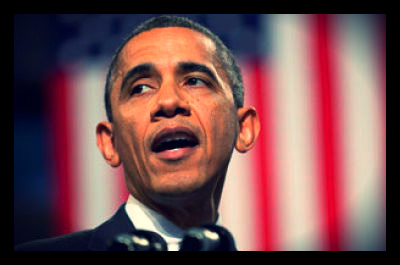
United States President Barack Obama mentioned extreme poverty during the State of the Union address on January 28 while explaining that America’s leadership is in a better position than any other country to help the world.

The president said that the leadership of the U.S. is defined “by the enormous opportunities to do good and promote understanding around the globe – to forge greater cooperation, to expand new markets, [and] to free people from fear and want.”

Obama made these references roughly one hour into the State of the Union address when discussing his administration’s stance on foreign policy. He said that his administration is proud of the diplomatic relations between the U.S. and Iran and that he would not hesitate to use his power to protect America in case anything went wrong.

Although the U.S. is responsible for maintaining order and spreading democracy, according to Obama, the U.S. is also responsible when it comes to helping those in need.

“Across Africa, we’re bringing together business and governments to double access to electricity and help end extreme poverty,” said Obama.

But what exactly does this mean? Obama referred to is a USAID program named “Power Africa.”

USAID describes Power Africa as “a U.S. Government initiative that addresses one of the most pressing challenges to sustainable economic growth and development in sub-Saharan Africa – access to electrical power.” Obama announced this program during a visit to South Africa in 2013.

Under the program, the U.S. seeks to cooperate with African governments, the private sector, and international institutions such as the World Bank in order to “add more than 10,000 megawatts (MW) of clean, efficient electricity generation capacity.”

Obama also mentioned extreme poverty in last year’s State of the Union address. He said the U.S. would work to eliminate it within the next 20 years, according to an article by Think Progress.

Although Obama mentioned extreme poverty two years in a row, the contemporary U.S. Congress remains divided on many issues. Citizens may call their congressmen to help Capitol Hill unify and tackle the issue of poverty as well.

– Juan Campos

Sources: CBS News, Think Progress, USAID
Photo: Politico

February 7, 2014
https://borgenproject.org/wp-content/uploads/borgen-project-logo.svg 0 0 Borgen Project https://borgenproject.org/wp-content/uploads/borgen-project-logo.svg Borgen Project2014-02-07 04:10:442024-06-11 02:24:08Obama and Poverty in 2014 State of the Union Address
Developing Countries, Foreign Aid, Foreign Policy, Global Poverty, Politics and Political Attention

Foreign Aid in Tajikistan

Foreign Aid in Tajikistan
Sharing a common border with Afghanistan, Tajikistan is currently one of the poorest countries in the Commonwealth of Independent States. Ranking 125 out of 187 countries in the 2012 Human Development Index, Tajikistan also suffers from bad weather conditions which heavily affect rural areas and economic stability. Currently, the volume of imports to Tajikistan is twice as high as the country’s exports causing everyday commodities to rise in price, heavily affecting the lives of many Tajikistan citizens. This has forced approximately 1.5 million Tajiks to seek employment outside of the nation.

Luckily, in recent times, Tajikistan has been able to form lasting bonds with the European Union, the Government of Russia and select Western nations. With ongoing support, Tajikistan is aiming to increase their private sector and help boost an economy which pays very little to its workers.

For example, currently, university professors and doctors make an average of $70 to $150 a month, a fact that bothers many of its political leaders.

As of late though, The European Union has announced funding for the nation of Tajikistan to the tune of $250 million Euros which will be allocated for the betterment of education, health care and rural development. Currently, three quarters of the population live in rural areas where only 7% of land is arable. These funds will be put to use in hopes of boosting the economy and stabilizing food insecure communities.

These funds will also go towards the forthcoming cooperation program which will last from 2014 to 2020. Issues regarding water management, environmental resistance, rural development, poverty reduction and economic reforms will also be addressed.

This agreement partnership between the EU and Tajikistan has been in place since 2010. Although Tajikistan remains quite poor and lacking in sustainable resources, its location in the Middle East has peaked interest for many countries which has, not surprisingly, encouraged foreign support.

Tajikistan recently re-elected Emomali Rahmon as its leader for the next 7 years which has been received by mixed reviews. Since coming into power in 1992, Rahmon has made it a priority to establish lasting relationships with many countries in hopes to build support for the nation. Only time will tell what the future has in store for foreign aid in Tajikistan, but with recent improvements in government accountability, the future seems to be a brighter than usual.

– Jeffrey Scott Haley
Feature Writer

Sources: World Food Programme, Foreign Policy Journal, Azer News
Photo: Central Asia Online

January 26, 2014
https://borgenproject.org/wp-content/uploads/borgen-project-logo.svg 0 0 Borgen Project https://borgenproject.org/wp-content/uploads/borgen-project-logo.svg Borgen Project2014-01-26 18:38:552024-05-26 23:03:46Foreign Aid in Tajikistan
Aid Effectiveness & Reform, Foreign Aid, Foreign Policy, Global Poverty, Government, Politics and Political Attention

Corruption Stifles Aid in Malawi

Corruption_Stifles_Aid_Malawi
In the wake of the recent corruption scandal known as “Cashgate,” the British Department for International Development (DfID) has frozen aid to Malawi. Experts on foreign aid are concerned the freeze might prove catastrophic for both the health and education sectors in the small country.

In November 2013, it was discovered that governmental officials in Malawi had taken aid dollars for themselves to the tune of $250 million. After the failed assassination, Budget Director Paul Mphwiyo—who was thought to be a whistle blower—and the region’s police force found money stashed in the homes of several members of the government.

Nations responsible for supplying Malawi with foreign aid promptly suspended all funds that had gone to support the Malawian government directly. Additionally, The Guardian reports “the DfID went a step further” by freezing funds that affect healthcare and education.

Malawi receives nearly half of its budget from foreign sources, meaning that its people will soon be without essential services, experts warn. To make matters worse, the United Kingdom is the largest donor to Malawi.

The breakdown, however, illustrates a difficult challenge for all donor nations, not just the U.K. For example, amid rampant and violent corruption it is difficult to rationalize making contributions to a developing nation. Likewise, pulling the plug on necessary programs creates internal instability and hardship for the people who rely on those donations.

Most Malawians survive through subsistence farming, and nearly three-quarters live on $1.25 per day or less.

Malawi is now making attempts to be more transparent with donor money, and is trying, yet again, to inspire donor confidence. However, this latest breach of trust was, for the DflD, a point of no return.

The head of the Malawi branch of the DflD, Sarah Sanyahumbi, was quoted as saying, “This is not business as usual. As far as we are concerned, the line has been crossed, so once the line has been crossed you cannot go back to what you had before.”

For many of Malawi’s most vulnerable, this is unfortunate news. The future for the young and ill in Malawi remains unclear as of yet. However, it seems unlikely it will be good without a new agreement between nations.

– Chase Colton

Sources: The Guardian, International Business Times, The Borgen Project
Photo: Mideast Posts

January 24, 2014
https://borgenproject.org/wp-content/uploads/borgen-project-logo.svg 0 0 Borgen Project https://borgenproject.org/wp-content/uploads/borgen-project-logo.svg Borgen Project2014-01-24 15:44:072024-05-26 23:06:07Corruption Stifles Aid in Malawi
Activism, Advocacy, Charity, Developing Countries, Education, Foreign Aid, Foreign Policy, Global Poverty, Philanthropy, Politics and Political Attention, Poverty Reduction

What U.S. Foreign Aid Does for Education

u.s. foreign aid
The money the United States gives out in foreign aid is usually focused in areas of direct impact, such as food to famine-stricken countries or in disaster relief efforts. Some of the lesser-known impacts are in the field of education. In particular, scholarships in foreign aid have allowed students to attend universities throughout the United States which provide more opportunities than would schools in their home countries.

This form of foreign aid is, however, not unique in the Western world. In fact, just as the United States lags behind in the overall standings for foreign aid, it falls behind its Western allies in funding for foreign scholarships as well. France leads all nations in foreign scholarship aid with 18% ($1.36 billion) of its foreign aid going to education, with Germany ranking second, at 13% ($1.05 billion), according to University World News. The U.S., on the other hand, only gives about 3.5% ($805 million) of its own foreign aid to scholarships.

U.S. foreign aid is directed to a number of other areas, but the one area that outshines all others is foreign military assistance. As it stands, roughly 38% ($14 billion) of the U.S. foreign aid budget goes to foreign military assistance. Comparing this to the budget given to foreign scholarships shows where the aims of U.S. foreign policy lie, as they push their military agendas overseas.

The military agenda of the United States looks toward the promotion of friendly democracies in places that the United States does not currently have allies. This can be seen in the United States invasions of Afghanistan and Iraq, as well as support given to rebels in Syria and Libya.  In hopes of achieving these goals, the United States pumps dollars towards friendly foreign militaries in hopes that they will create functioning democracies, with informed and supportive citizens.

In a recent Seattle Times Article, columnist Thomas L. Friedman took aim at this disparity by comparing the figures of foreign military aid for Egypt ($1.3 billion) and foreign scholarships for Jordan ($13.5 million). Friedman wrote that, “merit-based college scholarship program promote(s) tolerance, gender and social equality and critical thinking.”

These qualities of ideal democratic citizens that the United States is hoping to instill in foreigners would be much better fostered through foreign education aid, according to the first-hand observer, Friedman. While Egypt remained in a state of flux during 2013, Jordan has dedicated itself to working towards a state of democracy.  The comparison put forward by Friedman is an informative one for a casual observer, as one can see the benefits that current education aid gives and the potential of what the United States could do.

– Eric Gustafsson

Sources: National Priorities Project, University World News, Seattle Times
Photo: Giphy.com

January 15, 2014
https://borgenproject.org/wp-content/uploads/borgen-project-logo.svg 0 0 Borgen Project https://borgenproject.org/wp-content/uploads/borgen-project-logo.svg Borgen Project2014-01-15 17:15:522017-02-15 10:33:53What U.S. Foreign Aid Does for Education
Activism, Advocacy, Developing Countries, Education, Foreign Aid, Foreign Policy, Global Poverty, Philanthropy

5 Initiatives Fighting Illiteracy

swiss
Technology has, over the years, come to run our lives.  We rely upon it for anything ranging from healthcare innovation to entertainment.  Even now, you are reading this article that was composed on a computer for you to read on the Internet.  No paper newsletter for you.

It is precisely because technology is so all-encompassing for us that the following statistic is so shocking: 1 billion adults worldwide are illiterate.  Equaling 26% of the world’s total adult population, there are 1 billion people who cannot partake in the reading of this article, which you may be taking for granted.

Technology may have made reading and writing even more accessible in our sphere but in lesser-developed areas, such advancements are not seen.  According to UNESCO, the entire continent of Africa has a literacy rate of less than 60%.  Compare that to the 99% literacy rate in the United States.

However, there is hope.

Numerous organizations are dedicated to eradicating illiteracy. Here are five of the top literacy initiatives worldwide.

1. ProLiteracy

The mission statement of ProLiteracy is a perfect articulation of why literacy should be on the forefront of global advocacy: “…when individuals the world over learn to read, write, do basic math and use computers, the more likely they are to lift themselves out of poverty.”  The organization makes literacy for women in developing nations as a top action addressed by their donations and programs.

2. UNESCO Institute for Lifelong Learning

UNESCO hosts a “LitBase” website, which chronicles programs worldwide that have been successful in combating illiteracy.  In doing so, UNESCO hopes to have a go-to source for advocates interested in starting or joining the cause.

3. World Literacy Foundation

The World Literacy Foundation was founded in 2003 to promote awareness of illiteracy by bringing together various government organizations and NGOs.  Some of the programs championed by the Foundation include the Write On English writing competition in Azerbaijan, founding the Centre of Hope computer center in Uganda and the USAID-supported Fantastic Phonics computer program.

4. Global Literacy Project

A key program of the Global Literacy Project is the shipment of books and basic educational supplies throughout Africa, Asia and the Caribbean.  The Walk-for-Literacy fundraiser housed at Rutgers University is run through the Global Literacy Project as well.

5. Literacy.org

Founded at the University of Pennsylvania through a partnership with UNESCO, literacy.org (formerly the Literacy Research Center) has been training teachers and advocates of literacy since 1983.  Literacy.org also hosted a summer intensive workshop in Philadelphia for mid-career professionals interested in promoting literacy in developing countries.

– Taylor Diamond

Sources: ProLiteracy, UNESCO LitBase, World Literacy Project, Global Literacy Project, Literacy.org
Photo: Vintage 3D

January 15, 2014
https://borgenproject.org/wp-content/uploads/borgen-project-logo.svg 0 0 Borgen Project https://borgenproject.org/wp-content/uploads/borgen-project-logo.svg Borgen Project2014-01-15 17:10:482024-05-26 23:03:025 Initiatives Fighting Illiteracy
Activism, Advocacy, Economy, Food & Hunger, Foreign Aid, Foreign Policy, Global Poverty, Government

Merchant Marines and Food Aid Bill

merchant marines food aid
For some, the U.S. Merchant Marine represents an organization that shuttles American imports and exports around the world during peacetime while becoming a naval auxiliary during wartime. For others, they represent the largest obstacle to food aid reform.

Current food aid regulations stipulate that at least 80% of aid must be shipped by U.S. citizens on U.S. flagged vessels. Critics argue that needless money and time is spent hauling items around the world when food could be purchased locally in a much more timely fashion.

President Obama proposed a food aid overhaul in 2014’s fiscal budget that would reach an estimated 2 to 4 million more people within the year. Specifically, he wished to expand local and regional procurement procedures and food vouchers.

U.S. mariners were not amused by this proposal, however. When the food aid amendment attached to the farm bill reached the Congress floor, maritime lobbyists worked strenuously to ensure it wouldn’t pass, and succeeded.

The U.S. merchant marines provide a unique service for the United States. As they are not employed by United States military, they are able to service both the government and private sector.

The duality of their role in regard to the United States is significant for a number of reasons. The Navy League, a special interest group representing the U.S. maritime community, reports that they provide over 33,000 jobs for Americans, account for $1.9 million in economic output and $24 million in household earnings. Although food aid reformists argue that the shift in these numbers would be slight, by only a few hundred, Merchant Marine advocates contend that change would usher in the end of the merchant marines all together.

The Merchant Marine’s ability to transport troops and supplies during wartime, known as sealift, may be severely impacted if reform results in job loss. The U.S. Maritime Service was established by President Roosevelt in 1938 in anticipation of needed shipping vessels to both the European war front and Pacific Theater. The Merchant Marine provided invaluable service during the war, and current mariners argue that their services are still necessary.

Despite the mariners concerns, the Obama Administration has plans to counteract any negative effects the reform may usher in by providing aid directly to the U.S. Merchant Marine.

The administration proposes shifting $25 million of the efficiency savings that will be obtained through the food aid reform to the Department of Transportation’s Maritime administration. According to the White House International Food Aid Fact Sheet, this additional funding will provide a vehicle to support sustainment of militarily-useful vessels and a qualified pool of citizen merchant mariners.

Although this may not be the solution the merchant mariners were hoping for, the strong advocates for food aid reform may ensure that this is the best they can expect.

– Emily Bajet

Sources: The Center for Public Integrity, U.S. Merchant Marine FAQ, The Maritime Executive, The White House: International Food Aid Fact Sheet
Photo: Giphy.com

January 14, 2014
https://borgenproject.org/wp-content/uploads/borgen-project-logo.svg 0 0 Borgen Project https://borgenproject.org/wp-content/uploads/borgen-project-logo.svg Borgen Project2014-01-14 09:56:202016-04-05 21:03:49Merchant Marines and Food Aid Bill
Activism, Advocacy, Aid Effectiveness & Reform, Developing Countries, Foreign Aid, Foreign Policy, Global Health, Global Poverty, Health

WISH Summit Innovates Health Care Systems

bike
The inaugural World Innovation Summit for Health (WISH) – a conglomeration of entrepreneurs, business leaders, academics and technicians in the health space – convened last week in Qatar. As its title suggests, WISH serves as an arena for international delegates to create and implement innovative, nontraditional solutions to pressing issues in global health.

One participant, Londoner Lord Darzi of Denham (chairman of the Institute of Global Innovation at Imperial College), succinctly stated after the announcement of the Summit that “WISH is about action.”

Qatar’s newfound consideration as a hub for frontline innovation- principally through the Qatar Foundation- landed the nation the opportunity to host the prestigious two-day summit event. The Foundation has been on the forefront of the nation’s “visionary national health strategy” and initiated a first-of-its-kind investigation into the healthcare systems of eight major world players, the United Kingdom, the United States, Spain, Australia, South Africa, Brazil, India and Qatar. The Global Innovation Diffusion Report, unveiled on the second day of the summit, presented a well-researched report card of how each nation fosters and incorporates innovation to maximize health outcomes for their citizens.

The report noted both victories and areas in need of improvement for the eight nations of study. Each succeeded on a general level in identifying and addressing doctors and involving patients in treatment. Unfortunately, however, every nation but Qatar fell short in matching research-based suggestions with real changes in the health care space. Expert assessments of appropriate technological or practical innovations were ignored for different reasons in each nation.

In Spain and the United Kingdom, the least innovative countries, funds for research and development are scarce. New ideas simply cannot get off the ground because there is no money to put wind in their sails to begin with. Australia, Brazil and South Africa were slightly more successful than their European counterparts, but need to improve incentives for academics and policymakers who spread innovation. The United States and India showed a consistent, but small, gap between the ideal and reality.

The thorough case study concluded that innovation is most successfully spurred in the United States when incorporated into (or alongside) insurance and the accompanying payment system. Incidentally, the report identified the rollout of Patient Centered Medical Home (PCMH) programs as a major success for the U.S. in terms of innovation implementation. PCMH programs encourage primary care providers to tailor payments around patient outcomes and foster cooperation between medical and social services.

Moving forward, hot areas of progress for medical innovation will likely include: the application of mobile technology to share and store medical information; policymaking that encourages clinicians to adopt new ways of working; mobilization of resources to allow coordination between researchers and clinicians; and the development of an “innovation culture” and leadership among front line health care professionals.

Delegates representing our nation will undoubtedly confer about these recent findings and carve out a designated space for innovation in discussions touching on future policies, programs and technologies.

– Casey Ernstes

Sources: Gulf News, NCQA, PR News Wire, World Innovation Summit for Health: Home, World Innovation Summit for Health: Global Diffusion
Photo: Vintage 3D

January 14, 2014
https://borgenproject.org/wp-content/uploads/borgen-project-logo.svg 0 0 Borgen Project https://borgenproject.org/wp-content/uploads/borgen-project-logo.svg Borgen Project2014-01-14 09:54:332017-03-20 13:12:30WISH Summit Innovates Health Care Systems
Foreign Aid, Foreign Policy, Global Poverty, Philanthropy, Poverty Reduction

American Sentiment Toward Global Poverty

American sentiment global poverty
Though the United States is one of the wealthiest nations in the world, the country ranks poorly when it comes to aid and contributions to global poverty. In a ranked global list of 27 developed countries, the United States tied for 19. This gap in aid can be explained by the belief that Americans care more about helping people geographically near them than helping people who live further away.

A study conducted by the Center for Global Development established a “Commitment to Development” Index which measures the contributions of developed countries to less-developed nations around the world. The study also splits aid into 6 different sectors in order to account for every kind of assistance given by countries.

The security sector of the study, for example, deducts points from countries that give weapons to unstable or tyrannical governments. The study concluded that the United States does less than the average developed country to help underdeveloped nations, resulting from the lack of attention given to people residing in further countries.

Furthermore, a study conducted by a PhD student at Stanford found a clear correlation between citizens’ support for foreign aid and the amount of aid given by their country. In the United States, many people are very generous and give public and private donations at high levels; however, these donations are directed to fellow Americans. As it stands, a majority of Americans support donating to their fellow citizens and cutting aid in the form of food and money to foreigners.

Both studies go far in explaining the low levels of aid given by the United States of America to foreign nations. In order to increase the amount of aid given to foreign nations, the United States will have to change its attitude, thus allowing for a positive affect on the amount of aid donated overseas.

– Lienna Feleke-Eshete

Sources: Think Progress, Center for Global Development

January 5, 2014
https://borgenproject.org/wp-content/uploads/borgen-project-logo.svg 0 0 Borgen Project https://borgenproject.org/wp-content/uploads/borgen-project-logo.svg Borgen Project2014-01-05 12:50:012024-12-13 17:49:51American Sentiment Toward Global Poverty
Foreign Policy, Global Poverty, Migration, Refugees and Displaced Persons

Syrian Refugee Camps in Demand

Overfull and varying widely in accommodation, Syrian refugee camps have become an international crisis. The United Nations has made the largest humanitarian appeal for aid ever at $5 billion to relieve the situation but has received less than $2 billion to date. Some 2.2 million refugees are currently scattered across Lebanon, Jordan, Turkey, Iraq and Egypt while more Syrians are fleeing war at an alarming pace. Estimates say more than 3 million refugees will be in those areas by January.

Such numbers are startling given the Syrian population before the onset of war was only  22.5 million. Lebanon, for example, has no official camps despite having more than a million refugees in its borders and does not allow the building of permanent refugee structures. Those who can afford it rent apartments or rooms in the cities at an exorbitant rate while others share the homes of sympathetic civilians or even inhabit abandoned buildings in depressed areas. In the northeast region, an average of 17 people per household are packed together according to a study conducted by Doctors Without Borders last year.

Water, food and healthcare are rationed out slowly and insufficiently, with less to go around as numbers rise. Employment for refugees was around 20% last year in Lebanon, and the economies of Iraq, Turkey and Jordan are in little better position to provide opportunities for such a rapid influx of labor.

Dependency on humanitarian aid is heightened and the desperation of the situation has many refugees working for extremely low wages in poor conditions and engaging in child labor. Economic and physical insecurity in Jordan’s Zataari camp has led parents to arrange hurried marriages for their teenage daughters as young as 14. Matchmakers recruit young girls for Saudi husbands but often end up as prostitutes or victims of “pleasure marriages” where the suitor divorces them after consummation.

Though some of Syria’s displaced persons find bourgeois  housing in Cairo or end up in one of Turkey’s refugee camps that consist of metal trailers with access to satellite T.V. and air conditioning, most see basic necessities and sanitation as luxuries. The Domiz camp in Iraq is made up primarily of tents and has 45,000 residents despite being designed for just 30,000. In just two weeks between August and September, more than 1,500 people were treated for upper respiratory infections there by the World Health Organization (WHO).

Security is also an issue in these camps with reports of rape, theft, kidnapping and murder being common. In the Zataari camp, Jordan security forces restrict entry but lack the manpower to adequately police the camp’s 120,000 residents. Other camps in Iraqi Kurdistan and Turkey reportedly funnel arms and recruits back into Syria. In Lebanon, crime has increased by 30% and increased tensions between Hezbollah and Sunni refugees may be behind the recent bombing of the Iranian embassy in Beirut.

Syria’s bordering nations are gradually increasing restrictions for entering refugees. Lebanon and Turkey are both planning to relocate some people to camps they wish to build within Syria’s insecure borders. Only about 25% of Syria’s refugees are actually in camps now, the rest are trying to survive by their own means. There are also an additional 3.8 million who are internally displaced.

Despite their faults, the refugee camps provide essential support and the need for more camps is evident, but where they can be built and how they will be funded is not so clear.

– Tyson Watkins

Sources: Medecins Sans Frontieres, World Health Organization, United Nations High Commissioner for Refugees: Syrian Arab Republic,
United Nations High Commissioner for Refugees: Moving Refugees, The Guardian, Integrated Regional Information Networks, BBC, United Nations High Commissioner for Refugees: Syrian Regional Response Plan, Aljazeera, The Daily Star United Nations High Commissioner for Refugees: Stories from Syrian Refugees, The New York Review of Books
Photo: NPR

December 25, 2013
https://borgenproject.org/wp-content/uploads/borgen-project-logo.svg 0 0 Borgen Project https://borgenproject.org/wp-content/uploads/borgen-project-logo.svg Borgen Project2013-12-25 04:00:442024-05-25 00:32:28Syrian Refugee Camps in Demand
Advocacy, Developing Countries, Development, Economy, Foreign Aid, Foreign Policy, Global Poverty, Government, Human Rights

More than Moved

cars white background
In the midst of international mourning for Nelson Mandela and in an attempt to drive home the message of International Human Rights Day, a Brazilian NGO posed a provocative question on Tuesday, December 10.

A billboard designed by Conectas Human Rights, featured an image of Nelson Mandela and the question, “Do you feel moved by his legacy?” The text then urged the Brazilian population to act upon their emotions and “Do more than be moved.”

This campaign is driven by recent public opinion polls that reveal a negative feeling toward human rights issues in Brazil and support for more stringent laws and regulations.

Respondents to surveys administered across 134 municipalities in June 2013, support the reduction of maximum crime penalties from 18 years of age to 16, based on a belief held by 60% of the sample population that criminality is the result of ‘bad character.’

Moreover, the Datafolha Research Institute released data that reveal 26% of self-identified conservative-leaning respondents believe that homosexuality must be discouraged by society as a whole, whilst 33% believe that poverty is the result of laziness.

These emerging public opinions are linked to a reduction in funding for human rights groups, namely through foreign aid.

Brazil is widely considered to be an emerging market, the country’s role as 2014 World Cup host is evidence of this image but it disguises the fact that a growing economy does not automatically address human rights issues as seen through the need of foreign aid in assisting structural development.

It is estimated that 60% of the country’s NGOs relied on foreign aid for 80% of their budgets in 2003. Between 2008 and 2009 this aid decreased by 30% and again by another 49% in 2010 alone.

Executive Director of the Brazil Human Rights Fund, Ana Araújo, reminds us that Brazil was marked by dictatorship as recently as 30 years ago, a type of legacy that differs greatly from the one being celebrated across the globe on International Human Rights Day 2013.

Araújo argues that domestic support for human rights groups is the next, though not imminent, step, suggesting that emerging powers require more support, not less, to ensure that their emergence is ‘just.’

– Zoë Dean

Sources: Global Voices Online, Universo Online: CNT, Universo Online: Rightist Leanings, Open Democracy

December 22, 2013
https://borgenproject.org/wp-content/uploads/borgen-project-logo.svg 0 0 Borgen Project https://borgenproject.org/wp-content/uploads/borgen-project-logo.svg Borgen Project2013-12-22 14:16:582024-06-04 03:01:13More than Moved
Page 8 of 11«‹678910›»

Get Smarter

  • Global Poverty 101
  • Global Poverty… The Good News
  • Global Poverty & U.S. Jobs
  • Global Poverty and National Security
  • Innovative Solutions to Poverty
  • Global Poverty & Aid FAQ’s
Search Search

Take Action

  • Call Congress
  • Email Congress
  • Donate
  • 30 Ways to Help
  • Volunteer Ops
  • Internships
  • Courses & Certificates
  • The Podcast
Borgen Project

“The Borgen Project is an incredible nonprofit organization that is addressing poverty and hunger and working towards ending them.”

-The Huffington Post

Inside The Borgen Project

  • Contact
  • About
  • Financials
  • President
  • Board of Directors
  • Board of Advisors

International Links

  • UK Email Parliament
  • UK Donate
  • Canada Email Parliament

Get Smarter

  • Global Poverty 101
  • Global Poverty… The Good News
  • Global Poverty & U.S. Jobs
  • Global Poverty and National Security
  • Innovative Solutions to Poverty
  • Global Poverty & Aid FAQ’s

Ways to Help

  • Call Congress
  • Email Congress
  • Donate
  • 30 Ways to Help
  • Volunteer Ops
  • Internships
  • Courses & Certificates
  • The Podcast
Scroll to top Scroll to top Scroll to top