• Link to X
  • Link to Facebook
  • Link to Instagram
  • Link to TikTok
  • Link to Youtube
  • About
    • About Us
      • President
      • Board of Directors
      • Board of Advisors
      • Financials
      • Our Methodology
      • Success Tracker
      • Contact
  • Act Now
    • 30 Ways to Help
      • Email Congress
      • Call Congress
      • Volunteer
      • Courses & Certificates
      • Be a Donor
    • Internships
      • In-Office Internships
      • Remote Internships
    • Legislation
      • Politics 101
  • The Blog
  • The Podcast
  • Magazine
  • Donate
  • Click to open the search input field Click to open the search input field Search
  • Menu Menu

Archive for category: Foreign Aid

Foreign aid coverage and information.

Development, Foreign Aid, Health, United Nations, Water

WaterAid Shows Africa’s Growing Access to Water

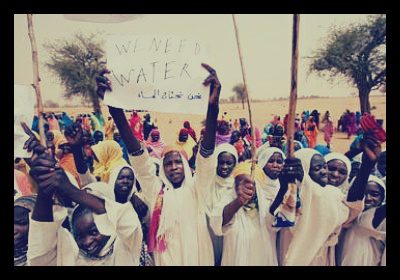
The nonprofit organization WaterAid released a new interactive map revealing that 14 nations in Africa are scheduled to have clean drinking water by the year 2030. This map was released as part of Africa Water Week, which took place from May 26 to May 31, to promote the idea that the accessibility of clean water in developing countries should have a central role in the U.N.’s post-2015 Sustainable Development Goals.

Since its establishment on July 21, 1981, WaterAid has worked to address the serious health, sanitation and hygiene issues that currently exist in a number of countries. This organization also realizes that education and a change in both policies and practices are needed so that an increase in hygiene and sanitation practices can help reduce global poverty. For more than 30 years, WaterAid has provided more than 19 million people with both clean and safe water in multiple countries, and it was even honored with a Top-Rated Nonprofit Award in 2013.

WaterAid hopes that the release of this map will encourage the U.N. to include global access to clean water, sanitation and hygiene by 2030 in their list of Sustainable Development Goals. This new set of goals is expected to expand on the Millennium Development Goals, which will reach their deadline Dec. 31, 2015. Before this deadline, the General Assembly is scheduled to confirm the Sustainable Development Goals in September. According to Water.org, water-related diseases are the cause of approximately 3.4 million deaths each year, confirming that this is a major global issue that needs to be addressed.

This map produced by WaterAid serves two very important purposes because it offers evidence that this is not only a worthy cause, but that it is also realistic and attainable. According to the map, 65.2 percent of people in Sub-Saharan Africa had access to water as of 2013, meaning that approximately 45 million people need to gain access to water per year to reach the 2030 goal. Although this is certainly a large amount of people, only 1.4 percent of the 2030 population needs to gain access to water every year in order to reach this goal.

– Meghan Orner

Sources: UN, WaterAid, WaterAid 2, Water
Photo: SAB Miller

June 5, 2014
https://borgenproject.org/wp-content/uploads/borgen-project-logo.svg 0 0 Borgen Project https://borgenproject.org/wp-content/uploads/borgen-project-logo.svg Borgen Project2014-06-05 20:34:172024-05-26 23:40:16WaterAid Shows Africa’s Growing Access to Water
Economy, Education, Foreign Aid

The Relationship Between Aid and Security

Since the end of World War II, foreign aid and national security have evolved in close proximity. Indeed, in the decade that followed, United States foreign assistance would range between 1.5 percent and 3 percent of gross domestic product (GDP.)

Since then, foreign aid has played an important role in advancing national security through several of its components: “bilateral development aid, economic assistance supporting U.S. political and security goals, humanitarian aid, multilateral economic contributions and military aid and assistance.”

However, during the Cold War, this relation began to change. As the U.S. refocused its foreign policy toward containing the Soviet Union, foreign assistance began to drop as a percentage of GDP. But still many development programs remained in place, working toward bringing about political reform and democratization. The dominant logic that political reform and development would create stable and open regimes that could resist communist ideology.

The purpose of many programs did not changed since then: expanding access to healthcare services and education, reducing infant mortality rates, reducing hunger and even protecting the environment. Following the end of the Cold War, the main purpose was refracted; by then, the main target was no longer to contain the Soviet Union but to foment development and economic growth in poor countries.

This also meant that the share of military assistance versus aid also changed. During the Cold War, almost 50 percent of the foreign aid’s budget was allocated to military assistance. By 2001, it had dropped to 24 percent. While the humanitarian and development aid budget increased from 33 percent to 46 percent. The period between the end of the Cold War and the September 11 attacks is characterized by a shift toward prioritizing economic development and opening access to healthcare and education in poor countries. Although no imminent threat existed at the time, national security consideration always remained at the heart of foreign aid.

After the attacks of September 11, this relation between national security and foreign aid changed once more. By 2005, the war on terror had the U.S. engaged in providing foreign assistance to almost 150 countries. Once more the shift was toward containment, but this time of jihadists and extremist activities. Since September 11, the region that has received the bulk of U.S. aid is the Middle East.

Despite the many ups and downs in the road of U.S. foreign aid, the world still looks to U.S. to provide leadership in response to erupting crises around the world. If we are to take a few lessons from this close relationship between aid and security, they are that no matter what the threats are, a key component of national security is a stable world and the best way to achieve is by bringing people out poverty and giving them access to healthcare and education.

Responding to crisis world wide does not have to entail military might. While development and economic aid results can be longer term than military intervention, the long history of the U.S. as a major aid contributor shows that it certainly pays off.

– Sahar Abi Hassan

Sources: Foreign Aid and Foreign Policy: Lessons for the Next Half-Century, The Foreign Policy Initiative
Photo: ForeignPolicy

June 1, 2014
https://borgenproject.org/wp-content/uploads/borgen-project-logo.svg 0 0 Borgen Project https://borgenproject.org/wp-content/uploads/borgen-project-logo.svg Borgen Project2014-06-01 14:16:112024-05-27 09:20:45The Relationship Between Aid and Security
Development, Foreign Aid, Global Poverty

Chinese Investment Provides Billions for Africa

It is no secret that Africa is one of the most attractive investment destinations in the world today. Among the countries vying for a spot in the foreign direct investment space is China – a country who has been Africa’s largest trading partner since 2009.

Chinese foreign direct investment went from $500 million in 2003 to almost $15 billion by 2012, and this year China has promised to triple Africa’s line of credit from $10 billion to $30 billion.

So where is all of the money going?

China, a beacon of infrastructure achievement itself, is investing largely in roads, rail and aviation networks around the continent.

China recently signed on to give $3.8 billion to help build the “Lunatic Line”—a rail line that will run from Nairobi to Mombasa and eventually link Uganda, Rwanda, Burundi and South Sudan. This line, which was first built in the late 19th century, has been decaying for decades due to conflict, corruption and general neglect.

China also pledged $12 billion in energy and infrastructure projects in Nigeria as well as an additional $2 billion for the China-Africa Development Fund.

Why is Chinese investment in infrastructure so important?

In a continent where only a third of Africans living in rural areas have access to an all-season road, investment in roads and rail lines allow people the freedom to travel more easily for jobs as well as for educational and health reasons. The access the infrastructure facilitates helps decrease poverty levels because people are able to access and participate in their country’s economy more easily.

Another attractive characteristic of Chinese investment for many African countries is the promise of non-interference in local politics. While loans from the International Monetary Fund or other Western nations often come with prerequisite guidelines and reforms to be met before aid or investment is received, China requires none of these. As Chinese Premier Li Keqiang aptly put, “We will not interfere in the local politics of any African country, or ask Africa for things which are impossible to observe or do.”

China, who reduced their own poverty levels by 55.7 percent from 1990 to 1997 alone, may be able to provide just what Africa needs to overcome barriers to creating a robust and thriving infrastructure and economy.

– Andrea Blinkhorn

Sources: Business Day 1, Business Day 2, Daily Mail, Heritage Foundation, Wall Street Journal
Photo: Oil and Energy Daily

May 23, 2014
https://borgenproject.org/wp-content/uploads/borgen-project-logo.svg 0 0 Borgen Project https://borgenproject.org/wp-content/uploads/borgen-project-logo.svg Borgen Project2014-05-23 04:00:172024-06-05 01:57:26Chinese Investment Provides Billions for Africa
Development, Foreign Aid, Global Poverty, United Nations

The Post-2015 Development Agenda

2015_Development_Agenda
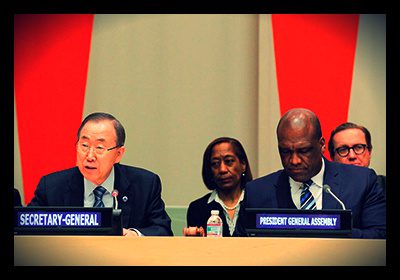
In a recent address, UN Secretary-General Ban Ki-moon and General Assembly President John Ashe stated that a framework of accountability is essential in the development of post-2015 goals and their success. President Ashe expressed that such a mechanism “must be inclusive, transparent and based on mutual respect; it must promote mutual learning; it will need to contain feedback and/or inputs from the national to the regional and global levels; and it must fully utilize the new potential of data and technology.”

Secretary-General Ban Ki-moon also recognized the possibility of failure if a system of accountability is not put into place, or if it is not implemented properly. “Any framework for accountability must apply to all, taking into account their different capacities and responsibilities. Accountability mechanisms and platforms should be nimble and decentralized.”

Established by the UN in 2000, the Millennium Development Goals were an attempt to increase development and meet the needs of a global community. The goals include:

1. Eradicating extreme poverty and hunger

2. Attaining universal primary education

3. Promoting gender equality

4. Reducing child mortality

5. Improving maternal health

6. Combating diseases such as HIV/AIDS and malaria

7. Ensuring environmental sustainability

8. Establishing a global partnership for development

The target date for the completion of these goals was set for 2015, and with less than two years left until the deadline, the UN and other global partners have begun discussing a post-2015 development agenda.

The Secretary General also stated in a report that four fundamentals must form the foundation of the post-2015 agenda: a far-reaching vision of the future firmly anchored in human rights and universally accepted values and principles, a set of concise goals and targets aimed at realizing the priorities of the agenda, a global partnership for development to mobilize means of implementation and a participatory monitoring framework for tracking progress and mutual accountability mechanisms for all stakeholders.

UNESCO released a document summarizing their own concerns of the future of the Education for All (EFA) goals after 2015. Their stated “thematic priorities” include:

1. Establishing early childhood care and education as the foundation of learning

2. Enhancing youth and adult literacy

3. Recognizing the central role of teachers for delivering quality education

4. Increasing emphasis on skills for life and for work

5. Strengthening of education for sustainable development and global citizenship

In their statement on the operationalization of a post-2015 agenda, UNESCO also recognized the need for an accountability framework that is flexible enough to account for different educational priorities across countries and adapt to changing global situations.

As development of the agenda has progressed, it has become clear that the intention is not to abandon the Millennium goals in favor of more easily attainable markers, but to continue their pursuit through more effective means.

– Kristen Bezner

Sources: UNESCO, UN General Assembly Report, UN News Centre
Photo: UN News Centre

May 7, 2014
https://borgenproject.org/wp-content/uploads/borgen-project-logo.svg 0 0 Borgen Project https://borgenproject.org/wp-content/uploads/borgen-project-logo.svg Borgen Project2014-05-07 05:00:092024-06-05 01:57:25The Post-2015 Development Agenda
Foreign Aid, Foreign Policy, Global Poverty, USAID

10 Facts about Foreign Aid From the United States

The United States Agency for International Development (USAID) was created on November 3, 1961 by President John F. Kennedy. Prior to the creation of USAID, there were many foreign assistance organizations that already existed. However, with the birth of USAID came the collaboration of all other foreign assistance programs under one common goal. This was the first time in history that a single agency was given the responsibility to cover of foreign economic development.

Here are 10 facts you may not have known about foreign aid from the United States:

1. U.S. foreign aid was shaped to serve two purposes. First, to improve lives in developing worlds by implementing ways to improve global health, further education, advance food security and much more. As stated by USAID.gov, “USAID carries out U.S. foreign policy by promoting broad-scale human progress at the same time it expands stable, free societies, creates markets and trade partners for the United States, and fosters good will abroad.”

2. In 2012, Afghanistan remained the top recipient of U.S. economic and military assistance for the fifth year in a row. Prior to that, Iraq held the top spot from 2003-2007.

3. Foreign aid from the United States is made up of a combination of obligations as well as disbursements. An obligation is a binding agreement that could have immediate results or some in the future. A disbursement is the actual amount paid by federal agencies by cash or cash equivalent during the fiscal year to meet the obligations set.

4. Though a country can rank in the list of top ten recipients based on obligations, there is no guarantee that they will receive the full disbursement. That was the case for Haiti and Columbia in 2011 that ranked in the top ten recipients by obligation but did not receive that amount in disbursements.

5. Less than one percent of the federal budget is spent on foreign assistance.

6. Foreign aid falls under discretionary spending of a whopping $1.258 trillion dollars in 2013.

7. The five primary agencies providing economic assistance include: the U.S. Department of State, USAID, the Department of the Treasury, U.S. Department of Agriculture, and the Department of Health and Human Services. These five agencies account for 93 percent of total economic assistance.

8. Sub-Saharan Africa received the largest share of economic assistance at 25 percent with twenty countries receiving over $100 million in economic assistance.

9. Almost half of U.S. foreign assistance goes to six countries that are Washington’s allies in the campaigns against terror and drug trafficking.

10. U.S. foundations amount to about $1.5 billion a year in international giving.

— Janelle Mills

Sources: USAID, USAID, Greenbook, Foreign Assistance, Reuters
Photo: Seattle Times

April 23, 2014
https://borgenproject.org/wp-content/uploads/borgen-project-logo.svg 0 0 Borgen Project https://borgenproject.org/wp-content/uploads/borgen-project-logo.svg Borgen Project2014-04-23 13:32:072024-05-26 23:28:1310 Facts about Foreign Aid From the United States
Activism, Aid Effectiveness & Reform, Developing Countries, Education, Foreign Aid, Global Poverty, United Nations

UNESCO Pushes for Millennial Education Goals

UNESCO_educational_goals_kids
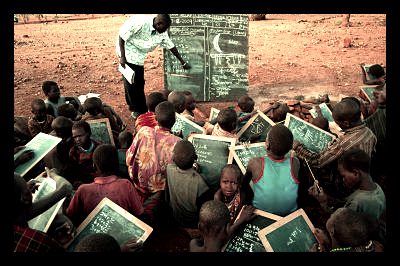
Former UK Prime Minister Gordon Brown has been a major proponent for global education since his tenure ended. He has made a number of announcements and proclamations in favor of increasing global literacy, yet recently his proposals have gained more steam. The United Nations Educational Scientific and Cultural Organization (UNESCO) has agreed to follow through with Brown’s mission statement to put 57 million children in school worldwide by next year. This falls short of the Millennium Goals that were meant to be reached by 2015.

A report from January of 2014 brought on this concern towards the Millennial Education Goals. The UNESCO report said that the goals would not be met until 2086 under current projections. While striving towards these goals 70 years in advance may seem a little optimistic, the statistics used from 2011 showed a 50% drop in out-of-school children since the beginning of the new millennium. This gives hope for a renewed commitment to make an immediate impact.

The most recent statistics on the issue come from that 2011 study, but those numbers showed 123 million young adults (15-24) lacked basic reading and writing skills. The most progress for universal primary education has been in Southeast Asia, in South Korea, India and Vietnam. Afghanistan shows the most immediate promise for the future, even with troops potentially leaving the nation at the end of the year.

The nations struggling the most to achieve universal primary education are those of Western Africa. Senegal, Mauritania, Nigeria and a number of other sub-Saharan countries still lag behind most of the developed world. Particularly for women, there remain few options and little hope for advancement. West Africa will likely be where UNESCO efforts have to focus.

Gordon Brown, as the United Nation’s Special envoy for global education, called these struggles unacceptable. He said in a recent interview, “the inequality of opportunity that they face is unfair… we have seen the makings of a civil rights struggle amongst young people.” Brown hopes that drawing on grassroots campaigns for education around the world will help bring the world closer to universal primary education.

The fight to achieve universal primary education will take on multiple fronts and be supported by different leaders. Malala Yousafzai has become a global celebrity thanks to her courage in the face of opponents of this mission. Yousafzai and Brown have begun work in Lebanon to educate the thousands of school-age children living in Syrian refugee camps. Given the ongoing Syrian conflict it is unknown how long those kids will be living in the camps, and the need is there for education to prevent a “lost generation” of kids.

The Millennium education efforts may have missed their goals by a long shot. However, the emphasis that people like Brown and Yousafzai have placed on primary education brings hope for the near future. Organizations like The Borgen Project support this passion and hope it will be shared by more people around the world. The first step toward ending global poverty will be reaching children as early as possible, and universal primary education is a key method of doing so.

– Eric Gustafsson

Photo: Globalization101
Sources:
United Nations, PBS, BBC

April 15, 2014
https://borgenproject.org/wp-content/uploads/borgen-project-logo.svg 0 0 Borgen Project https://borgenproject.org/wp-content/uploads/borgen-project-logo.svg Borgen Project2014-04-15 01:15:522020-07-25 00:44:27UNESCO Pushes for Millennial Education Goals
Aid Effectiveness & Reform, Food & Hunger, Foreign Aid, Global Poverty

Impending Famine in South Sudan

Famine_In_Sudan
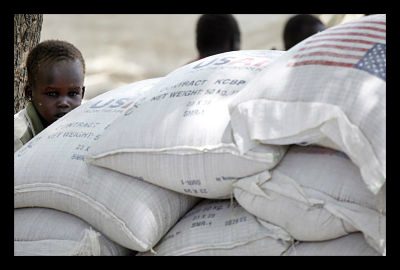
The famine in South Sudan has reached a scale similar to that in Syria. Close to one third of the population of South Sudan is already at severe risk of starvation and, unless something is done soon, the struggle will only get worse. Some are calling it a race against time.

Since the violence erupted this past December, around 255,000 people have fled to neighboring countries such as Ethiopia, Kenya and Uganda, and more than 800,000 people have been displaced inside the country. Some people have even fled north to South Sudan’s recently separated Sudan counterpart. The United Nations coordinator for humanitarian aid in South Sudan, Toby Lanzer, has appealed for the essentials such as food and water, as well as farming tools and seeds. If the South Sudanese are unable to plant their crops by the time rain comes in May, they will face the most disastrous famine in Africa since the 1980s.

According to Lanzer, aid donations have been catastrophically faltering. A United Nations appeal for $1.3 billion was not fully funded and only a quarter of the requested money went though, in an assertion that only $232 million was necessary for the bare minimum of humanitarian aid to the country. But the bare minimum is not enough, as tragic 7 million people in South Sudan are at risk of hunger. People are in such dire need of food and water that one family started boiling poisonous roots for an entire week in order to have something to eat. Many travel for days with no water whatsoever.

Violence in the country has only made matters worse. When weapons were reported to have been found in a UN convoy in March, the government and army in South Sudan understandably felt obligated to increase surveillance and security measures on UN vehicles delivering aid. The issue strained relations between the international agency and South Sudan, subsequently making aid delivery increasingly difficult.

The horrifying conditions in which people are currently living, however, can be changed. Famine implies that people are dying and, while many argue that South Sudan has not yet reached that point, the risk is very real. With enough funding reaching the people of South Sudan in a timely enough fashion, an even worse future can be avoided.

– Jaclyn Stutz

Sources: USA Today, Al Jazeera, The New York Times
Photo: UPI

April 12, 2014
https://borgenproject.org/wp-content/uploads/borgen-project-logo.svg 0 0 Borgen Project https://borgenproject.org/wp-content/uploads/borgen-project-logo.svg Borgen Project2014-04-12 04:00:462024-06-04 01:08:04Impending Famine in South Sudan
Development, Foreign Aid, Global Poverty

The Climb Out of Rural Poverty in Sri Lanka

Even before the devastating tsunami on December 2004 in Sri Lanka, over 25 percent of the population – 5 million people – were living below the poverty line. Sri Lanka‘s definition of poverty is slightly different from the common scale, they define the poverty line as an individual living with the equivalent of $12 a month.

There are an additional 3 million people living on less than $15 a month. According to the World Bank, the rural parts of the country are home to over 4 million people, which is nearly one third of the entire population. After the tsunami hit, over 38,000 people were immediately killed and hundreds of thousands more were put in danger of entering the growing levels of poverty in Sri Lanka after having their entire livelihoods wiped out. The tsunami reminded Sri Lanka, and the world, how vulnerable the rural poor are to natural disasters.

Today, Sri Lanka has largely improved in quality of life and reducing poverty. There are 1.8 million identified as impoverished, but the majority, 84.7 percent, live in rural areas. The amount of people living in poverty has more than halved in both rural and urban Sri Lanka, with a reduction from 16.3 percent in 1990 to 5.3 percent today in urban areas and from 29.4 to 9.4 percent in rural areas. Poverty has even reduced in the estate sector as well, going from 20.5 to 11.4 percent. This decline in poverty indicates that up to 2.6 million people have been rescued from poverty over upwards of 20 years.

Currently, nine out of ten people in Sri Lanka live in extremely rural areas and after a 20-year civil war, in the northern part of the country, 800,000 people were displaced from their houses and as a result their means of life have been jeopardized. Thousands of children were orphaned and there has been a drastic increase in the total amount of households headed by single mothers, which experience significantly more hardship earning money than dual-parent households. Over 40 percent of these rural poor are small farmers who are mostly concentrated in the Uva, Central, Sabaragamuwa, and Southern provinces.

Malnutrition is common among children in these regions because of slow-moving agricultural growth. There is a substantial lack of infrastructure such as electricity, roads, communication and irrigation facilities which limit opportunities for people to produce more of an income.

Fortunately, Sri Lanka, as a whole, has an opportunity to bring in foreign aid and investment to further build the economy up for the future. The government has the current goal 8 percent growth per year, which would involve the present 29 percent investment to increase to 35 percent of the GDP and even more in the years to come. Raising foreign direct investment (FDI) is critical because Sri Lanka will be more likely to receive foreign aid if it is a more attractive investment location. In order to get more foreign aid, the government needs to build better institutions as well as strengthen law enforcement so it can create a more business-friendly environment. The country has recently taken the right steps toward improvement and is on the right track to a better economy and removing the presence of poverty.

– Kenneth W. Kliesner

Sources: Daily Mirror, The Island, Rural Poverty Portal
Photo: The Great Generation

April 10, 2014
https://borgenproject.org/wp-content/uploads/borgen-project-logo.svg 0 0 Borgen Project https://borgenproject.org/wp-content/uploads/borgen-project-logo.svg Borgen Project2014-04-10 10:52:202024-06-04 03:01:17The Climb Out of Rural Poverty in Sri Lanka
Foreign Aid, Global Poverty, United Nations

Rwandan Genocide: Lessons Learned, 20 Years Later

rwandan_genocide_20_years_later_child_opt
It was only twenty years ago that the now infamous “Genocide Fax” was sent, a detailed letter to the United Nations headquarters in New York explaining the brewing events leading up to the mass slaughter that we now know as the Rwandan Genocide.

The letter, sent by the then-Force Commander of the UN peacekeeping mission for Rwanda (UNAMIR), General Romeo Dallaire, explained that ethnic Hutu extremists were stockpiling weapons and distributing them to the militias. An informant had also revealed to him that “he has been ordered to register all Tutsi in Kigali” in preparation “for their extermination.” These harrowing discoveries prompted Dallaire to contact UN headquarters, convinced that it was necessary to act. The final line of the letter read, ‘Peux ce que veux. Allons-y,’ translating to ‘Where there is a will there is a way. Let’s go.’

The UN however, decided against acting. Then-Head of UN Peacekeeping Operations, Kofi Annan, instructed Dallaire to essentially do nothing, as “unanticipated repercussions” could ensue.

The repercussions that Dallaire anticipated did ensue, following the tragic plane attack that killed then-President Habyarimana just three months later.

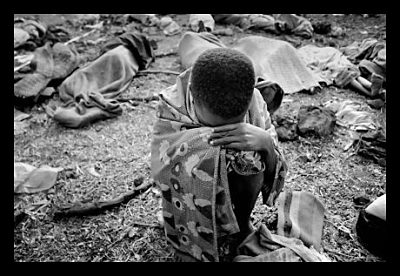
Then came the horrifying Rwandan genocide that claimed nearly one million lives in less than 100 days.

Twenty years later the nation has far surpassed anyone’s expectations. Due to an onslaught of foreign aid and a revitalized Rwandan pride, the country has built itself back and shows no signs of stopping.

Under the leadership of President Paul Kagame, more than one million Rwandans have lifted themselves out of poverty and nearly all children attend school. Investment has nearly tripled since 2005 and economic opportunities abound. Malaria deaths have fallen more than 85 percent, and nine out of every 10 Rwandans claim that they “trust in the leadership of their country.” The transformations that Rwanda has made are far from over, as the country aims to be a middle-income nation by 2020.

These achievements prove just how much can be accomplished in the face of adversity. The Rwandan people have lifted their country out of despair and created a beacon of hope to all of those who still suffer under the dark cloud of genocide.

Not only that, but they have taught us a valuable lesson.

We have a responsibility as human beings to protect each other from such mass atrocities. Unfortunately, the United Nations learned this in a painful way. However, they have now been at the forefront of putting a stop to genocides in countries such as Libya, Kenya and the Democratic Republic of the Congo.

Twenty years later we remember all of those who lost their lives in the Rwandan genocide, and we thank them for the valuable lesson that we now must put into practice.

– Mollie O’Brien

Sources: The Guardian, The Huffington Post
Photo: Global Solutions

April 10, 2014
https://borgenproject.org/wp-content/uploads/borgen-project-logo.svg 0 0 Borgen Project https://borgenproject.org/wp-content/uploads/borgen-project-logo.svg Borgen Project2014-04-10 10:34:262019-12-11 13:21:53Rwandan Genocide: Lessons Learned, 20 Years Later
Education, Foreign Aid, USAID

Education in Haiti: All Children Reading

education_haiti
March 26 marked the grand opening of a brand new school for the Lekol S&H students in Caracol, Haiti. The students celebrated the inauguration alongside United States Ambassador Pamela White, U.S. Agency for International Development (USAID) Mission Director John Groarke and Haitian officials, according to USAID Haiti’s Facebook page.

The new facility is one of many schools that fall under USAID’s All Children Reading program in Haiti. Also known as Tout Timoun Ap Li (ToTAL,) All Children Reading is one of the programs supported by U.S. and Haitian government collaboration in Haiti. Starting in 2011, Haiti’s Ministry of National Education and Vocational Training unveiled a plan to get more than 1.5 million students in school by 2016, says USAID.

The ToTAL program focuses on developing reading skills for Haitian students in first grade through third grade in the Port-au-Prince, Saint Marc and Cap Haitien areas. All Children Reading will provide more nearly 30,000 children and 900 teachers with critical reading curriculums to meet international literacy standards, says USAID. “In developing countries,” says the All Children Reading experts, “literacy leads to improved health, better education, greater employment opportunities, and more stable governments.”

The All Children Reading program partners with USAID, World Vision and the Australian government to utilize competitive science, technology and education grants to improve the school systems and educational opportunities for students in developing countries.

Awards are disseminated in two rounds, each of which has a different development focus. Round 1 “focuses on creating teaching and learning materials and education data applications to promote accountability and transparency” and has been awarded to 32 projects in more than 20 nations, according to the All Children Reading website.

Round 2 looks more to implementation strategies and technology solutions to improve education in Haiti. The three areas of focus for this branch of the project include promoting mother tongue instruction and reading materials, enhancing family and community engagement and supporting children with disabilities. All Children Reading prioritizes reading in the early school levels in order to instill strong education practices and create better and wider opportunities for children as adults.

Through programs such as ToTAL, the U.S government has trained nearly 900 teachers in new curriculum in both Haitian Creole and French. In addition, USAID has supplied Haitian students with more than 46,000 textbooks and workbooks. The ToTAL program has been introduced in more than 300 schools nationwide, such as the one in Caracol. In the years to come USAID hopes to reach more than 1 million children throughout Haiti, especially “as other partners extend the use of the program’s reading curricula and training methods beyond the development corridors.”

– Mallory Thayer

Sources: USAID, All Children Reading, Facebook
Photo: Save the Children

April 5, 2014
https://borgenproject.org/wp-content/uploads/borgen-project-logo.svg 0 0 Borgen Project https://borgenproject.org/wp-content/uploads/borgen-project-logo.svg Borgen Project2014-04-05 04:00:552024-12-13 17:50:12Education in Haiti: All Children Reading
Page 51 of 61«‹4950515253›»

Get Smarter

  • Global Poverty 101
  • Global Poverty… The Good News
  • Global Poverty & U.S. Jobs
  • Global Poverty and National Security
  • Innovative Solutions to Poverty
  • Global Poverty & Aid FAQ’s
Search Search

Take Action

  • Call Congress
  • Email Congress
  • Donate
  • 30 Ways to Help
  • Volunteer Ops
  • Internships
  • Courses & Certificates
  • The Podcast
Borgen Project

“The Borgen Project is an incredible nonprofit organization that is addressing poverty and hunger and working towards ending them.”

-The Huffington Post

Inside The Borgen Project

  • Contact
  • About
  • Financials
  • President
  • Board of Directors
  • Board of Advisors

International Links

  • UK Email Parliament
  • UK Donate
  • Canada Email Parliament

Get Smarter

  • Global Poverty 101
  • Global Poverty… The Good News
  • Global Poverty & U.S. Jobs
  • Global Poverty and National Security
  • Innovative Solutions to Poverty
  • Global Poverty & Aid FAQ’s

Ways to Help

  • Call Congress
  • Email Congress
  • Donate
  • 30 Ways to Help
  • Volunteer Ops
  • Internships
  • Courses & Certificates
  • The Podcast
Scroll to top Scroll to top Scroll to top