• Link to X
  • Link to Facebook
  • Link to Instagram
  • Link to TikTok
  • Link to Youtube
  • About
    • About Us
      • President
      • Board of Directors
      • Board of Advisors
      • Financials
      • Our Methodology
      • Success Tracker
      • Contact
  • Act Now
    • 30 Ways to Help
      • Email Congress
      • Call Congress
      • Volunteer
      • Courses & Certificates
      • Be a Donor
    • Internships
      • In-Office Internships
      • Remote Internships
    • Legislation
      • Politics 101
  • The Blog
  • The Podcast
  • Magazine
  • Donate
  • Click to open the search input field Click to open the search input field Search
  • Menu Menu

Archive for category: Foreign Aid

Foreign aid coverage and information.

Foreign Aid, Global Poverty, War and Violence

Former Senator of Wisconsin Ends War in Congo

According to a Politico article, a former Wisconsin senator ended a war in the Democratic Republic of the Congo (DRC).

Russ Feingold, who lost his seat to Republican Ron Johnson in 2010, was appointed by John Kerry to help resolve a conflict involving the Congolese government and militia M23.

“Feingold’s assignment came just as a new group of rebels, trained and equipped by Rwanda, was gaining strength in the west and even threatening to take Kinshasa, the Congolese capital,” Politico reported.

The most important lesson behind the peace negotiations, Kerry told Feingold, is “that diplomacy works, and persistence pays off.”

Kerry became familiar with Feingold’s work ethic when they sat together for years on the Senate Foreign Relations Committee.

“Russ and I served together in the Senate for some 18 years,” Kerry said during a United States Department of State press announcement in June 2013. “I have a lot of respect for a lot of qualities of Russ–his intellect, his courage, his passion–but with respect to this mission, chief among those qualities that are important right now is his expertise on Africa.”

The situation in the DRC has caused much concern for the international community lately. The United Nations peacekeeping mission in the country has an annual cost of $1.5 billion and employs 20,000 troops. Moreover, a study by the American Journal of Public Health revealed that around 48 women are raped every hour throughout the country.

Human Rights Watch also released a report condemning the war crimes committed by Rwandan officials and General Bosco Ntaganda, the leader of M23.

“Field research conducted by (HRW) in the region in May 2012 revealed that Rwandan army officials have provided weapons, ammunition, and an estimated 200 to 300 recruits to support Ntaganda’s mutiny in Rutshuru territory, eastern Congo,” HRW said.

Although Feingold was able to defeat M23 with diplomacy, Politico argues that his next big challenge is to make governance in the DRC more effective.

“Only once it gained control over, and legitimacy in, eastern Congo could there be permanent peace,” said Politico. “Until then, it would remain a place where armed militias could gang-rape women and girls in farm fields, abduct boys and turn them into child soldiers, and burn entire villages to the ground.”

Due to its weak infrastructure and widespread poverty, the DRC still has a long way to go before getting rid of these problems. However, Feingold’s accomplishment in the region may potentially guide the country towards the right direction.

– Juan Campos

Sources: Human Rights Watch, Politico, U.S. Department of State
Photo: Pulitzer Center

March 23, 2014
https://borgenproject.org/wp-content/uploads/borgen-project-logo.svg 0 0 Borgen Project https://borgenproject.org/wp-content/uploads/borgen-project-logo.svg Borgen Project2014-03-23 04:00:052024-06-05 01:57:17Former Senator of Wisconsin Ends War in Congo
Foreign Aid, Global Poverty

How Foreign Aid Saved the United States

Foreign_Aid_cartoon
A common refrain from critics of USAID is the lack of benefits they see would come back to the United States. It is hard to see the longterm benefits of these foreign aid programs, especially when things look so bad when they’re shown on the news. For many, it is easy to write off dire circumstances in distant nations as lost causes rather than potential areas of promise. Many fail to see how the United States was once such a seemingly hopeless region.

If the nations of Europe had the mentality that detractors of foreign aid have today, the United States wouldn’t have had a chance in its fight for independence from Great Britain. This decision took place during an era when it was much more difficult to give support to struggling groups from distant parts of the world.

France was one of the first countries to step up and provide foreign aid for the fledgling United States. While most of that foreign aid was military based, the loans they gave to the United States helped the nation function and get on its feet when it had few options. The loans that France made to the United States went beyond just military help. It also helped with needed supplies for the populace; supplies that kept the nation afloat.

Spain was another country that provided important foreign aid to a developing United States. Spain still had possessions in the Caribbean at the time of the Revolutionary War, making it easy for them to send over supplies to port cities that had been cut off by a British blockade. The goods that Spain was able to supply from such a close outpost helped offset the losses that many Americans were feeling in dealing with the might of the British Empire.

A number of other nations stepped in to help the United States in its struggle. The Netherlands gave some important trade support to help subvert the blockade, and even a number of Indian colonists helped the American cause. This foreign support was a key part to the war, and is arguably undervalued by people today.

While military support is most notable when looking back at this period of foreign involvement in the United States, the supplies and exports other countries provided kept the United States on its feet. It is this type of support for struggling economies that the United States as a superpower should be providing today. The U.S. is in the position to keep others from sinking from the status of a promising democracy into chaos, and organizations like The Borgen Project hope to encourage that type of foreign aid. It just repays the moral debts that the United States benefited from long ago.

– Eric Gustafsson

Sources: History, American Revolutionary War, America’s Library
Photo: Development Diaries

March 20, 2014
https://borgenproject.org/wp-content/uploads/borgen-project-logo.svg 0 0 Borgen Project https://borgenproject.org/wp-content/uploads/borgen-project-logo.svg Borgen Project2014-03-20 04:00:102017-03-20 14:06:45How Foreign Aid Saved the United States
Education, Foreign Aid, Global Poverty

Education in Cambodia Grows with Foreign Aid

Education-in-cambodia
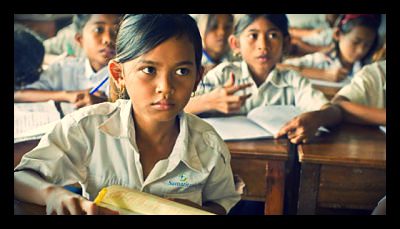
Cambodia is making strides to enhance the standard of its education system. In an attempt to do so, Cambodia’s Education, Youth and Sports Minister, Dr. Hang Chuon Naron, has reached out to Malaysia and the United States in an attempt to improve their ties and promote a relationship based on education in Cambodia.

Naron recently met with Deputy Prime Minister Tan Sri Muhyiddin Yassin to come to an understanding on the importance of education.

Many Cambodian students study in Malaysia, where education is a “number one” priority, according to Muhyiddin. Their mission is to raise the quality of life in both Cambodia and Malaysia by focusing on education; after the meeting, both Muhyiddin and Naron signed a memorandum of understanding (MoU) agreeing to work together.

Muhyiddin stated, “I hope that the MoU…would spell out more areas that Malaysia and Cambodia could work together in the education sector as well as increase the number of Cambodian students studying in our country.”

The MoU will further the growing ties between Malaysia and Cambodia and aims to raise the quality of education in Cambodia, starting at a pre-school level and extending to both private and public schools.

On February 15, Cambodia also hosted an education exhibition consisting of over 30 U.S. universities and colleges in Phnom Penh to encourage Cambodian students to further their education. Cambodian students were able to discuss degree opportunities, scholarships and what they needed to do to apply to U.S. colleges and universities, with college admissions representatives.

A U.S. embassy press statement stated, “The fair highlights U.S. government support for efforts to enhance the quality of education and expand educational and career opportunities for Cambodians.”

So far, Cambodia has approximately 100,000 high school graduates who are interested in applying to college.

– Rebecca Felcon

Sources: National News Agency of Malaysia, Shanghai Daily
Photo: Cambodia Mathematics Curriculum Development Project

March 7, 2014
https://borgenproject.org/wp-content/uploads/borgen-project-logo.svg 0 0 Borgen Project https://borgenproject.org/wp-content/uploads/borgen-project-logo.svg Borgen Project2014-03-07 14:36:002024-05-26 23:18:15Education in Cambodia Grows with Foreign Aid
Foreign Aid, Global Poverty, Government

Land Grabbing in Ethiopia Threatens Native Population

land grabbing
Natives of Ethiopia’s Omo River Valley are having their way of life threatened by state-run land grabbing projects designed to develop the area. The valley consists of the traditional lands of the Bodi tribe, which is being forced into government-run villages. These natives have no one to help them; the government’s wants only destroy their land.

Much of the development is being allocated to state-run sugar plantations. In the last 15 months, most of the tribe’s traditional lands have been wiped out. The repercussions of the government’s move will likely affect more than just the 7,000 members of the Bodi tribe.

The development consists of the construction of not only sugar plantations, but a large dam within the Omo River basin. The construction of the dam is projected to be the most devastating of the government projects. It will take the majority of the water present in the river basin with the potential to affect over 500,000 Ethiopians.

No social impact studies were done prior to the implementation of the project, the consent of the tribes occupying the river valley was not obtained and absolutely no one has received any type of compensation for the hardship endured by the forced relocation.

The dam, named Gibe III, will be responsible for adjusting river flows to aid commercial agriculture in the valley. Some believe that this will cause a severe shortage within neighboring bodies of water.

Lake Turkana is situated nearby and is expected to experience a severe drop in its water level. Some are expecting the further development of sugar plantations to result in a water level drop of 16 to 22 meters.

Due to the project’s controversial nature, it has failed to receive funding from many institutions outside of Ethiopia. The World Bank, African Development Bank and the European Investment Bank all decided not to fund the project. However, China’s Industrial and Commercial Bank (ICBC) has come through to provide funds.

Sadly, the development of the Omo River Valley is just a footnote in the long list of human rights abuses the Ethiopian government has inflicted upon its people. The government routinely makes a sham out of its “democracy” with one party winning elections time and time again despite the presence of other political parties.

Criticism of the government is routinely punished. Many journalists have been tossed in jail for simply highlighting government abuses. One journalist, Eskinder Nega, received an 18 year jail sentence for criticizing the government. There are also frequent crackdowns against the Muslim minority who have peacefully protested for the freedom to worship.

There does not seem to be much the average Ethiopian can do to evade the impact of this land grabbing development project. Barring intervention by diplomatic forces outside, the Chinese-backed development project will go on as planned and thousands of innocents will suffer for it.

– Zachary Lindberg

Sources: The Huffington Post, Human Rights Watch
Photo: Any Uak Media

March 5, 2014
https://borgenproject.org/wp-content/uploads/borgen-project-logo.svg 0 0 Borgen Project https://borgenproject.org/wp-content/uploads/borgen-project-logo.svg Borgen Project2014-03-05 04:00:212016-12-15 14:40:09Land Grabbing in Ethiopia Threatens Native Population
Foreign Aid, Global Poverty, Poverty Reduction

10 Facts for a School Report on Global Poverty

global poverty
Although it is true that poverty affects the United States, people often fail to notice how poverty ties the U.S. to the rest of the globe. Here are 10 facts about global poverty that will help you gain a better understanding of the specifics, and also earn you an A on your school report:

1. Poverty Does Not Just Affect Adults

People often overlook the fact that poverty affects a wide array of age groups, including both adults and in many cases, teens and adolescents. Children under the age of 18 are actually 60% more likely to be poor than adults. There are 2.2 billion children in the world, and approximately one billion of those children are currently living in poverty. Furthermore, 48% of the population in developing countries is comprised of impoverished children under the age of 18. In industrialized nations, the percentage of children living in poverty is 21%. Of this large population, approximately nine million children ages 5 and under will die each year from starvation, malnourishment and the inability to survive on $1.25 or less per day.

2. Cutting Global Poverty Will Positively Affect the U.S. as Well

Poverty is slowly wearing away the fabric of the U.S. society. The less the U.S. does to support developing nations, the less support we will receive in the future. Moreover, the differences in income are a threat to the level of investment in the U.S., the level of security and the nation’s profits. By investing resources in poverty stricken countries, we are also investing money in the overall security of Americans. Less money will be needed to support military forces because there will be a severe drop in hostile threats and attacks by other countries.

3. Investing in Other Countries Will Increase the Employment Rate in the U.S.

Building strong economies in developing countries will not only protect the U.S., it will also grow new economic markets. There will be an increase in market consumers as well as a rise in jobs needed to support American exports. This is especially the case since one out of five jobs in the U.S. involves exportation to growing nations. A bigger need for exports means there is a greater request for employment.

4. Heightening Employment Rates Means Lowering Overpopulation

By establishing a rich economy in other countries, the U.S. will also see a decline in overpopulation globally and domestically. Resources will become more immediate and people who were once unable to support their families medically will see a decrease in child mortality rates. It has been proven that countries with larger infant and child mortality rates also tend to be countries struggling with overpopulation.

5. A Lack of Education and Poverty Work Hand in Hand

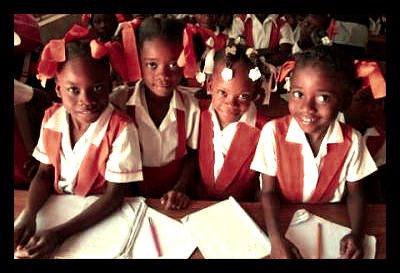
Research shows that children who are from low-income families are more likely to not attend school. Often times, in low-income households, education takes a backseat to working and caring for family members, but education is also a key determinant for creating progress and pulling developing countries out of poverty. Some families are not able to afford school uniforms and some countries, such as Haiti, require a school fee, which disables children from gaining an education. Students ages 16 to 24 years old who are in low-income families are seven times more likely to drop out of school than students from average to high-income families.

6. Geography Relates to Poverty in the United States

Poverty takes on a geographical pattern in the U.S., with a significantly larger percentage of people living in poverty in the southern states than anywhere else in the U.S. In fact, 41% of those who live in poverty within the U.S. are located within the South; this is as opposed to 24% in the West, 19% in the Midwest and 16% in the Northeast.

7. Poverty Does Not Necessarily Cause Death

The cause of death within communities faced with extreme poverty is most often a lack of sanitation and clean drinking water. As it stands, clean drinking water and sanitary conditions can lower the likelihood of disease and illness and can also help keep communities hydrated; this lowers the risk of dehydration, which can jeopardize immune systems. A failing immune system and lack of sanitary conditions combined can cause very risky conditions for younger children and infants who are already susceptible to disease.

8. Nutrition

Living in poverty often makes it difficult to eat a well-balanced and nutritionally rich diet; foods that provide the necessary ingredients to form a nutrient full meal are usually hard to afford. As such, poor affordability of healthy foods can lead to diets that do not consist of fruits, vegetables, grains and especially meat. The lack of vitamins and minerals found in these foods can cause nutrient deficiencies, which can have a negative affect on mental and physical growth. Food insecurity, as it is called when someone does not know where his or her next meal will come from, is found to correlate directly with poor nutrition.

9. Foreign Aid

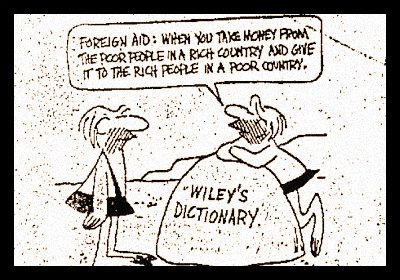
Though the public believes that Foreign Aid receives 25% of the Federal Budget, in actuality, only 1% of the Federal Budget is going to Foreign Aid. As it stands, only .5% of the Federal Budget is helping to improve poverty conditions.

10. Cost Comparisons

The U.S. annually spends $28 billion on assisting the world’s poor, but approximately $660 billion on the U.S. Military. This gap within the U.S. funding is a huge indicator of where the nation’s priorities lie. If one in 10 Americans donated their weekly coffee budget towards poverty reduction causes, it could end global poverty.

Poverty is a global issue, and in order for the U.S. to better its population internally it needs to form a positive relationship with other countries. Hopefully these 10 facts illuminate important factors that contribute to poverty and show ways to help eliminate poverty globally.

– Rebecca Felcon

Sources: Children’s Defense Fund,, Compassion, Food For the Poor, UC Davis Center for Poverty Research, The Washington Post, The Borgen Project, The Borgen Project
Photo: Mashable
February 26, 2014
https://borgenproject.org/wp-content/uploads/borgen-project-logo.svg 0 0 Borgen Project https://borgenproject.org/wp-content/uploads/borgen-project-logo.svg Borgen Project2014-02-26 16:37:162024-12-13 17:50:0610 Facts for a School Report on Global Poverty
Food & Hunger, Foreign Aid

South Sudan Food Crisis Grows

South_Sudan_Food_Crisis
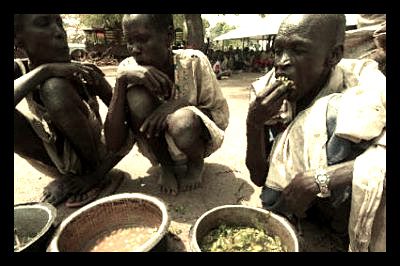
On July 9, 2011, the Republic of South Sudan gained independence from Sudan.  Since then, the newly formed nation has been engulfed in internal conflicts, claiming the lives of up to 10,000 people.  The violence has caused over 870,000 South Sudanese to flea their homes, of which over 140,000 have escaped to neighboring countries.

Meanwhile, the South Sudan food crisis continues to grow, prompting international organizations to come together for a solution.

The displacement has disrupted the nations already unstable agriculture sector.

Markets have been disrupted as the food supply chain is broken and foreign investors try to avoid the conflict.  According to United Nations estimates, 3.7 million people were already facing food insecurity, but the new wave of violence that erupted in December of 2013 has raised this figure to almost 7 million.

The timing of the conflict could not have been worse as local farmers are gearing up to plant their crops for the incoming season.  Constant relocation is forcing millions to rely on scarce food aid.  In some cities like Malakal, desperate populations have begun raiding aid supply stored in warehouses.  The UN Food and Agriculture Organization (FAO) warned that if farmers miss the planting season, it would compound food insecurity issues for this year and 2015.

Farmers that remain tied to their land are facing a shortage of agriculture inputs such as seeds and tools to cultivate their crops.  The FAO is seeking $77 million to assist the Republic of South Sudan in implementing an emergency response plan.  Their aim is to deliver farming tools, seeds and fishing equipment to 545,000 households in some of the more war-torn states of the country.

The FAO has collected just 6 percent of its total donation goal.

To complicate matters further, migrant animal herds are now intermingling with displaced human populations and their livestock.  These unvaccinated animals have potential to transmit disease and cause further complications for public health and food safety initiatives.  To combat the collapse of the vaccine supply chain, the FAO is working to build capacity within local communities and deliver basic health support.

The UN mission in South Sudan is increasing its support with 266 peacekeepers being flown in on February 4, 2014.  In total, the UN has over 12,500 peacekeepers and 1,323 police on the ground.  The UN through the FAO and the World Food Program have teamed up with ACTED, OXFAM, Save the Children, Concern Worldwide, Mercy Corps, and Joint Aid Management to provide much needed assistance throughout the country.

For anyone seeking to volunteer or donate to the South Sudan food crisis, please visit the World Food Programme.

– Sunny Bhatt

Sources: The New York Times, United Nations, BBC
Photo: Africa Review

February 24, 2014
https://borgenproject.org/wp-content/uploads/borgen-project-logo.svg 0 0 Borgen Project https://borgenproject.org/wp-content/uploads/borgen-project-logo.svg Borgen Project2014-02-24 12:36:242024-06-11 02:32:00South Sudan Food Crisis Grows
Aid Effectiveness & Reform, Developing Countries, Development, Economy, Foreign Aid, Global Poverty

Facts About U.S. Aid to Israel

U.S._Aid_to_Israel
Since 1997, Israel has received $3.1 billion annually in foreign aid from the United States. The agreement began almost two decades ago, after Israeli Prime Minister Benjamin Netanyahu spoke before a join session of congress to establish a goal for economic independence.

“Israel’s gross domestic product is at about $250 billion a year, and its per capita income is about $33,000 a year.”

Considering the nation’s level of economic development, the aid could be much more beneficial in other areas. The United Nations Human Development Index currently ranks Israel at 16th in the world and life expectancy at birth is at 81 years—two years higher than the United States itself. Israel has also been the top recipient of United States foreign aid for over the past 30 years.

The question therefore arises, how does a developed nation with per capita gross domestic product on the same level as the European Union average, receive the most amount of aid from the United States?

The answer is riddled with politics and is primarily concerned with influence in the Middle East region. The vast majority of U.S. aid to Israel actually goes to supporting Israel’s military.

The U.S. presently funds about one quarter of Israel’s defense budget.

Much of this aid ends up going to the Israel’s weapons industries. Accordingly, it is not the people of Israel who receive the majority of the aid. In fact, “replacing all American aid would cost Israelis about 1 percent of their income per year,” which is a modest figure considering that the funds could be going to developing nations.

Recent polls show that when asked about the U.S. federal budget, U.S. citizens believe that 28 percent of the budget goes to foreign aid and that the percentage ought to be reduced to 10%. In actuality, less than 1 percent of the U.S. budget goes to foreign aid.Tweet this fact

Considering that much of that 1 percent goes to the economically stable nation of Israel, other programs or nations could use the money much more efficiently.

The U.S. and Israel have had a longstanding alliance, which has contributed to their agreement in military funding. However, considering the purpose of foreign aid, contemporary third world nations facing popular suffering and instability have a far greater need for the help.

– Jugal Patel

Sources: Economonitor, Le Monde
Photo: IMEMC

February 24, 2014
https://borgenproject.org/wp-content/uploads/borgen-project-logo.svg 0 0 Borgen Project https://borgenproject.org/wp-content/uploads/borgen-project-logo.svg Borgen Project2014-02-24 12:30:042020-07-31 11:47:26Facts About U.S. Aid to Israel
Food & Hunger, Foreign Aid, United Nations

U.N. Security Council Proposes Rules Against Syria

UN Security Council
The continuing conflict in Syria between the Bashar al-Assad’s regime and opposition forces, the National Coalition, has led to a grave population in crisis where basic humanitarian needs are not being met.

But despite the push for nationwide access to United Nations relief aid, the Syrian government is determined to keep the course with restrictions. Thus, western powers of the U.N. Security Council have opined for sanctions against Syria.

Russia, however, has continued to veto such proposals.

United States President Barack Obama, alongside French President Francois Hollande, are adamant that save for Russia, the Security Council is completely in favor of aiding the undernourished population. Obama levies criticisms towards Russia in obstructing the Security Council.

The Syrian city of Homs, previously blockaded, recently received food aid under a ceasefire. While its war-torn population, ravaged by famine and in dire need of medical supplies, obtained aid; an estimated 200 individuals were evacuated. The two-year siege was broken with the delivery of a month’s worth of food.

Though the success of the recent ceasefire in Homs prevailed, the conflict is far from over.

The National Coalition also has put pressure on Russia. With peace talks currently underway in Switzerland, the Syrian opposition has expressed that the Russians should push the Syrian government towards a resolution.

In addition, the opposition proposes a transitional government that will maintain a ceasefire throughout the nation; the U.N. would run the proposed government.

U.S. Secretary of State John Kerry has also agreed on the need for a transitional government where Assad is not connected.

With discussions at a standstill and a divided U.N. Security Council, progress is slow towards rebuilding a nation where thousands of its civilians have been harmed by violence and hunger with displacement even increasing the numbers negatively afflicted by the conflict.

– Miles Abadilla

Sources: Al Jazeera, Cleveland.com, New York Times, New York Times
Photo: CS Monitor

February 24, 2014
https://borgenproject.org/wp-content/uploads/borgen-project-logo.svg 0 0 Borgen Project https://borgenproject.org/wp-content/uploads/borgen-project-logo.svg Borgen Project2014-02-24 12:13:452024-05-25 00:19:02U.N. Security Council Proposes Rules Against Syria
Foreign Aid, Foreign Policy, Global Poverty

Obama and Poverty in 2014 State of the Union Address

obama_state_of_the_union
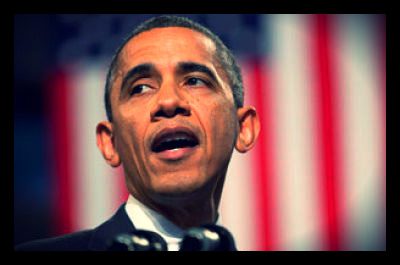
United States President Barack Obama mentioned extreme poverty during the State of the Union address on January 28 while explaining that America’s leadership is in a better position than any other country to help the world.

The president said that the leadership of the U.S. is defined “by the enormous opportunities to do good and promote understanding around the globe – to forge greater cooperation, to expand new markets, [and] to free people from fear and want.”

Obama made these references roughly one hour into the State of the Union address when discussing his administration’s stance on foreign policy. He said that his administration is proud of the diplomatic relations between the U.S. and Iran and that he would not hesitate to use his power to protect America in case anything went wrong.

Although the U.S. is responsible for maintaining order and spreading democracy, according to Obama, the U.S. is also responsible when it comes to helping those in need.

“Across Africa, we’re bringing together business and governments to double access to electricity and help end extreme poverty,” said Obama.

But what exactly does this mean? Obama referred to is a USAID program named “Power Africa.”

USAID describes Power Africa as “a U.S. Government initiative that addresses one of the most pressing challenges to sustainable economic growth and development in sub-Saharan Africa – access to electrical power.” Obama announced this program during a visit to South Africa in 2013.

Under the program, the U.S. seeks to cooperate with African governments, the private sector, and international institutions such as the World Bank in order to “add more than 10,000 megawatts (MW) of clean, efficient electricity generation capacity.”

Obama also mentioned extreme poverty in last year’s State of the Union address. He said the U.S. would work to eliminate it within the next 20 years, according to an article by Think Progress.

Although Obama mentioned extreme poverty two years in a row, the contemporary U.S. Congress remains divided on many issues. Citizens may call their congressmen to help Capitol Hill unify and tackle the issue of poverty as well.

– Juan Campos

Sources: CBS News, Think Progress, USAID
Photo: Politico

February 7, 2014
https://borgenproject.org/wp-content/uploads/borgen-project-logo.svg 0 0 Borgen Project https://borgenproject.org/wp-content/uploads/borgen-project-logo.svg Borgen Project2014-02-07 04:10:442024-06-11 02:24:08Obama and Poverty in 2014 State of the Union Address
Aid Effectiveness & Reform, Foreign Aid

Australian Foreign Assistance Cuts

Australian_Foreign_Assistance
Australian Foreign Minister Julie Bishop recently announced Australia’s plans for its foreign assistant budget in 2014 to the tune of over AUD$5 billion, which will be implemented through foreign aid expenditures. Unfortunately, Australia will be making $107 million in cuts in comparison to last year’s budget, which will ultimately affect many ongoing programs, particularly in Africa.

It was also confirmed by the Department of Foreign Affairs and Trade (DFAT) that Australia’s share of the latest round of funding towards the International Development Association (IDA,) will be cut to AUD$735 million. Bishop spoke openly about the cuts in funding recently and defended them by saying it is an effort to move away from a “hand out culture” and improve Australian foreign assistance efficiency.

“In this way, we have an aid budget that the Australian people will be proud of. We believe that this refocus of our aid budget will deliver effective outcomes. Under Labor’s last budget, they were to receive 2.5 percent of overseas development assistance (ODA.) Under this revised budget they will receive 2.7 percent of ODA- [which] is four times what these non-government organizations received from 2007 and 2008,” said Bishop.

Other organizations also spoke about the cuts, but more critically. Archie Law, the executive director of ActionAid, which operates in 40 countries internationally, said, “But what it hasn’t done until now is given a little bit more detail of where those cuts are coming from. Particularly concerning is the fact that it looks like the Africa program will be cut in half. The region which has more people living in poverty per capita than anywhere else in the world will receive half the assistance from Australia when they receive pretty little in the first place.”

While there is valid support for both sides of the situation, what is universally agreed upon is that there needs to be a healthy level of accountability overseeing how Australian aid money is spent. Australia will continue to meet many of its prior obligations such as the Multilateral Debt Relief Initiative and will focus its efforts in the 2014 year specifically in the Indo-Pacific area.

– Jeffrey Scott Haley
Feature Writer

Sources: The Australian
Photo: The Guardian

January 29, 2014
https://borgenproject.org/wp-content/uploads/borgen-project-logo.svg 0 0 Borgen Project https://borgenproject.org/wp-content/uploads/borgen-project-logo.svg Borgen Project2014-01-29 19:59:502024-06-11 02:21:51Australian Foreign Assistance Cuts
Page 52 of 61«‹5051525354›»

Get Smarter

  • Global Poverty 101
  • Global Poverty… The Good News
  • Global Poverty & U.S. Jobs
  • Global Poverty and National Security
  • Innovative Solutions to Poverty
  • Global Poverty & Aid FAQ’s
Search Search

Take Action

  • Call Congress
  • Email Congress
  • Donate
  • 30 Ways to Help
  • Volunteer Ops
  • Internships
  • Courses & Certificates
  • The Podcast
Borgen Project

“The Borgen Project is an incredible nonprofit organization that is addressing poverty and hunger and working towards ending them.”

-The Huffington Post

Inside The Borgen Project

  • Contact
  • About
  • Financials
  • President
  • Board of Directors
  • Board of Advisors

International Links

  • UK Email Parliament
  • UK Donate
  • Canada Email Parliament

Get Smarter

  • Global Poverty 101
  • Global Poverty… The Good News
  • Global Poverty & U.S. Jobs
  • Global Poverty and National Security
  • Innovative Solutions to Poverty
  • Global Poverty & Aid FAQ’s

Ways to Help

  • Call Congress
  • Email Congress
  • Donate
  • 30 Ways to Help
  • Volunteer Ops
  • Internships
  • Courses & Certificates
  • The Podcast
Scroll to top Scroll to top Scroll to top