• Link to X
  • Link to Facebook
  • Link to Instagram
  • Link to TikTok
  • Link to Youtube
  • About
    • About Us
      • President
      • Board of Directors
      • Board of Advisors
      • Financials
      • Our Methodology
      • Success Tracker
      • Contact
  • Act Now
    • 30 Ways to Help
      • Email Congress
      • Call Congress
      • Volunteer
      • Courses & Certificates
      • Be a Donor
    • Internships
      • In-Office Internships
      • Remote Internships
    • Legislation
      • Politics 101
  • The Blog
  • The Podcast
  • Magazine
  • Donate
  • Click to open the search input field Click to open the search input field Search
  • Menu Menu

Archive for category: Foreign Aid

Foreign aid coverage and information.

Developing Countries, Foreign Aid, Foreign Policy, Global Poverty, Politics and Political Attention

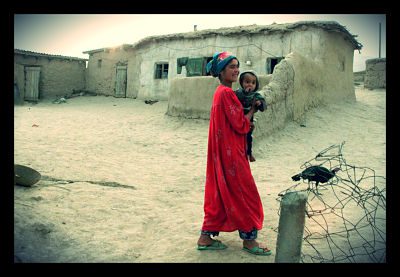
Foreign Aid in Tajikistan

Foreign Aid in Tajikistan
Sharing a common border with Afghanistan, Tajikistan is currently one of the poorest countries in the Commonwealth of Independent States. Ranking 125 out of 187 countries in the 2012 Human Development Index, Tajikistan also suffers from bad weather conditions which heavily affect rural areas and economic stability. Currently, the volume of imports to Tajikistan is twice as high as the country’s exports causing everyday commodities to rise in price, heavily affecting the lives of many Tajikistan citizens. This has forced approximately 1.5 million Tajiks to seek employment outside of the nation.

Luckily, in recent times, Tajikistan has been able to form lasting bonds with the European Union, the Government of Russia and select Western nations. With ongoing support, Tajikistan is aiming to increase their private sector and help boost an economy which pays very little to its workers.

For example, currently, university professors and doctors make an average of $70 to $150 a month, a fact that bothers many of its political leaders.

As of late though, The European Union has announced funding for the nation of Tajikistan to the tune of $250 million Euros which will be allocated for the betterment of education, health care and rural development. Currently, three quarters of the population live in rural areas where only 7% of land is arable. These funds will be put to use in hopes of boosting the economy and stabilizing food insecure communities.

These funds will also go towards the forthcoming cooperation program which will last from 2014 to 2020. Issues regarding water management, environmental resistance, rural development, poverty reduction and economic reforms will also be addressed.

This agreement partnership between the EU and Tajikistan has been in place since 2010. Although Tajikistan remains quite poor and lacking in sustainable resources, its location in the Middle East has peaked interest for many countries which has, not surprisingly, encouraged foreign support.

Tajikistan recently re-elected Emomali Rahmon as its leader for the next 7 years which has been received by mixed reviews. Since coming into power in 1992, Rahmon has made it a priority to establish lasting relationships with many countries in hopes to build support for the nation. Only time will tell what the future has in store for foreign aid in Tajikistan, but with recent improvements in government accountability, the future seems to be a brighter than usual.

– Jeffrey Scott Haley
Feature Writer

Sources: World Food Programme, Foreign Policy Journal, Azer News
Photo: Central Asia Online

January 26, 2014
https://borgenproject.org/wp-content/uploads/borgen-project-logo.svg 0 0 Borgen Project https://borgenproject.org/wp-content/uploads/borgen-project-logo.svg Borgen Project2014-01-26 18:38:552024-05-26 23:03:46Foreign Aid in Tajikistan
Aid Effectiveness & Reform, Foreign Aid, Foreign Policy, Global Poverty, Government, Politics and Political Attention

Corruption Stifles Aid in Malawi

Corruption_Stifles_Aid_Malawi
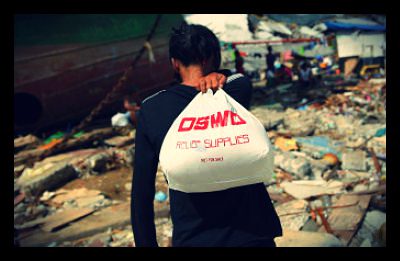
In the wake of the recent corruption scandal known as “Cashgate,” the British Department for International Development (DfID) has frozen aid to Malawi. Experts on foreign aid are concerned the freeze might prove catastrophic for both the health and education sectors in the small country.

In November 2013, it was discovered that governmental officials in Malawi had taken aid dollars for themselves to the tune of $250 million. After the failed assassination, Budget Director Paul Mphwiyo—who was thought to be a whistle blower—and the region’s police force found money stashed in the homes of several members of the government.

Nations responsible for supplying Malawi with foreign aid promptly suspended all funds that had gone to support the Malawian government directly. Additionally, The Guardian reports “the DfID went a step further” by freezing funds that affect healthcare and education.

Malawi receives nearly half of its budget from foreign sources, meaning that its people will soon be without essential services, experts warn. To make matters worse, the United Kingdom is the largest donor to Malawi.

The breakdown, however, illustrates a difficult challenge for all donor nations, not just the U.K. For example, amid rampant and violent corruption it is difficult to rationalize making contributions to a developing nation. Likewise, pulling the plug on necessary programs creates internal instability and hardship for the people who rely on those donations.

Most Malawians survive through subsistence farming, and nearly three-quarters live on $1.25 per day or less.

Malawi is now making attempts to be more transparent with donor money, and is trying, yet again, to inspire donor confidence. However, this latest breach of trust was, for the DflD, a point of no return.

The head of the Malawi branch of the DflD, Sarah Sanyahumbi, was quoted as saying, “This is not business as usual. As far as we are concerned, the line has been crossed, so once the line has been crossed you cannot go back to what you had before.”

For many of Malawi’s most vulnerable, this is unfortunate news. The future for the young and ill in Malawi remains unclear as of yet. However, it seems unlikely it will be good without a new agreement between nations.

– Chase Colton

Sources: The Guardian, International Business Times, The Borgen Project
Photo: Mideast Posts

January 24, 2014
https://borgenproject.org/wp-content/uploads/borgen-project-logo.svg 0 0 Borgen Project https://borgenproject.org/wp-content/uploads/borgen-project-logo.svg Borgen Project2014-01-24 15:44:072024-05-26 23:06:07Corruption Stifles Aid in Malawi
Activism, Advocacy, Charity, Education, Foreign Aid, Global Health, Global Poverty, Health, Nonprofit Organizations and NGOs, Philanthropy

4 Impassioned Humanitarian Leaders

Gates_Humanitarian_Leaders
Below is a list of four impassioned humanitarian leaders who are fighting to make the world a better place.

1. George Soros

George Soros has given billions of dollars over the years to humanitarian organizations. He is the financier and founder of the Open Society Foundation, an international foundation that promotes the expansion of human rights and democracy throughout the third world.

Founded in 1998, the group funds and has helped institute health and educational programs while also being driven to provide “greater fairness in political, legal and economic systems” throughout the world. The program touts initiatives such as the Burma Project, which promotes freedom of expression, as well as helping suppressed minority and political groups communicate their human right grievances in the political repressive nation of Burma.

The foundations has various programs throughout countless countries promoting freedom of expression and basic human rights.

2. Jon Hunstman

Jon Hunstman Sr. began his humanitarian activities after being diagnosed with prostate cancer in 1993. Founder of the successful Huntsman Corporation, his donations have accounted for billions of dollars. He founded the Hunstman Cancer institute, a non-profit research company that builds hospitals and develops new cancer fighting techniques.

The Hunstman Corporation regularly donates money to education institutions as well.

For example, the foundation donated 26 million dollars to Utah State University to help expand the Jon M. Huntsman School of Business. They donated another 2 million dollars to enact the Hunstman Awards for Excellence in Education that reward exceptional school teachers and volunteers.

The foundation believes a strong domestic educational system will help enact significant positive change in America.

3. Tegla Laroupe

Female Kenyan runner Tegla Laroupe came to prominence in 2003 after winning 2 interntional half-marathons, attaining multiple world marathon records, and countless other titles. After retiring from marathon running, she devoted all her time to affect change in devastated communities throughout the world.

In 2003, she established the Tegla Lorupe Peace Foundation, an organization based around helping housing projects and educating children orphaned by political violence. The foundation has built schools throughout Ethiopia, Kenya, Uganda and Southern Sudan.

The organization raises money through various programs, such as the Peace Races. The Moroto-Uganda Peace Race was held in the Moroto district of Uganda and helped raise money for orphaned children in the volatile region plagued by an unstable political situation and “banditry.”

4. Bill Gates

Bill Gates, founder of computer software powerhouse Microsoft, has spent his days of retirement giving back. He founded the Bill and Melinda Gates Foundation, which spends most of their efforts fighting poverty and health risks such as malaria. The organization tackles grave crises through 4 major program initiatives.

The Global Development Division deals with food insecurity throughout impoverished communities, as well as sanitation and housing. The Global Health Division, furthermore, promotes technological and scientific studies such as vaccines and medical treatments throughout the developing world.

Their foundation also tackles domestic issues through the United States Division through supporting higher level education and high school.

The Global Policy & Advocacy Division is, in fact, the strategic portion of the Bill and Melinda Gates Foundation, which works to help advance their policies through national and international frameworks.

– Joseph Abay

Sources: Open Society Foundations (OSF), Huntsman Corporation, Tegla Loroupe Peace Foundation, Bill and Melinda Gates Foundation
Photo: Channels

January 24, 2014
https://borgenproject.org/wp-content/uploads/borgen-project-logo.svg 0 0 Borgen Project https://borgenproject.org/wp-content/uploads/borgen-project-logo.svg Borgen Project2014-01-24 13:57:052017-12-04 12:33:444 Impassioned Humanitarian Leaders
Activism, Advocacy, Food & Hunger, Food Aid, Foreign Aid, Global Poverty, Migration, Nonprofit Organizations and NGOs, Philanthropy, Poverty Reduction, Refugees and Displaced Persons

Heavyweight Helps Syrian Refugees

evander
Evander Holyfield, former world heavyweight boxing champion, is taking on an even greater role in helping displaced communities of the Syrian refugee crisis.

On November 13, Holyfield announced that he would be working to aid the alleviation cause for an estimated of 6,500 refugees fleeing from the war-torn Syrian nation, those of whom have settled in Bulgaria. During the announcement, Holyfield noted, “Somebody helped me and that gives me the opportunity to help someone else.”

The refugee crisis that has taken shape out of the Syrian civil war has become staggering. It’s estimated that 9 million Syrians have been displaced out of a population of 23 million.  Syrians are settling in nearby countries such as Jordan and Turkey, most of where large camps have drawn the majority of foreign assistance — muting attention for the relatively small amount that has ended up in Bulgaria.

Holyfield and the Global Village Champions Foundation, the organization where he works as a Goodwill Ambassador, hope to raise awareness and deliver support for these refugees. To future add to the impact of celebrities bridging successful traction to raise awareness, the head of the Global Village Champions Foundation is musician, Yank Barry, from the 1960s band “The Kingsmen.”

The pairing might seem odd, but they are united in their hope to make the lives of the Syrian refugees at least somewhat easier.  In an interview with CNN, Holyfield stated, “at some point in time, when you leave this earth… they’ll say: What did you do for the least of them?”

Yank Barry may not be as well known in modern pop culture, but he has been actively philanthropic in recent years.  Barry founded the Global Village with Mohammed Ali in 1995, and they worked together until Holyfield took Ali’s place within the organization in 2012.  Since the founding of the organization, it has sent out 900 million meals to the needy around the globe and, according to Barry, including “5,000 tons of food to (Syrian) camps” since last year.
https://www.youtube.com/watch?v=VEInSPRIVDY

During the 1990s, Holyfield’s biggest worries were Mike Tyson’s left hook and how he would retake a heavyweight championship belt that he ended up winning five separate times.  Now, he has taken it upon himself to help the world community that he once entertained.  While recent reports have claimed that Holyfield has not retained the fortune he accumulated over the course of his boxing career, his reputable standing as a celebrity can still help causes for those that never had the opportunities he did.

While the help from private foundations like the Global Village is welcomed and inspiring for others to emulate, the global community still has plenty of work to do.  The UN says that the number of Syrian refugees registered in various EU countries ranks over 62,000 with more likely to come.  With so many of them looking for ways to get by, the hungry continue to appreciate the influencers like those in the U.S. for the help that such refugee communities could barely survive without.

– Eric Gustafsson

Sources: Fox News, CNN, Huffington Post
Photo: Vintage 3D

January 19, 2014
https://borgenproject.org/wp-content/uploads/borgen-project-logo.svg 0 0 Borgen Project https://borgenproject.org/wp-content/uploads/borgen-project-logo.svg Borgen Project2014-01-19 01:41:142024-05-26 23:01:29Heavyweight Helps Syrian Refugees
Activism, Advocacy, Charity, Developing Countries, Education, Foreign Aid, Foreign Policy, Global Poverty, Philanthropy, Politics and Political Attention, Poverty Reduction

What U.S. Foreign Aid Does for Education

u.s. foreign aid
The money the United States gives out in foreign aid is usually focused in areas of direct impact, such as food to famine-stricken countries or in disaster relief efforts. Some of the lesser-known impacts are in the field of education. In particular, scholarships in foreign aid have allowed students to attend universities throughout the United States which provide more opportunities than would schools in their home countries.

This form of foreign aid is, however, not unique in the Western world. In fact, just as the United States lags behind in the overall standings for foreign aid, it falls behind its Western allies in funding for foreign scholarships as well. France leads all nations in foreign scholarship aid with 18% ($1.36 billion) of its foreign aid going to education, with Germany ranking second, at 13% ($1.05 billion), according to University World News. The U.S., on the other hand, only gives about 3.5% ($805 million) of its own foreign aid to scholarships.

U.S. foreign aid is directed to a number of other areas, but the one area that outshines all others is foreign military assistance. As it stands, roughly 38% ($14 billion) of the U.S. foreign aid budget goes to foreign military assistance. Comparing this to the budget given to foreign scholarships shows where the aims of U.S. foreign policy lie, as they push their military agendas overseas.

The military agenda of the United States looks toward the promotion of friendly democracies in places that the United States does not currently have allies. This can be seen in the United States invasions of Afghanistan and Iraq, as well as support given to rebels in Syria and Libya.  In hopes of achieving these goals, the United States pumps dollars towards friendly foreign militaries in hopes that they will create functioning democracies, with informed and supportive citizens.

In a recent Seattle Times Article, columnist Thomas L. Friedman took aim at this disparity by comparing the figures of foreign military aid for Egypt ($1.3 billion) and foreign scholarships for Jordan ($13.5 million). Friedman wrote that, “merit-based college scholarship program promote(s) tolerance, gender and social equality and critical thinking.”

These qualities of ideal democratic citizens that the United States is hoping to instill in foreigners would be much better fostered through foreign education aid, according to the first-hand observer, Friedman. While Egypt remained in a state of flux during 2013, Jordan has dedicated itself to working towards a state of democracy.  The comparison put forward by Friedman is an informative one for a casual observer, as one can see the benefits that current education aid gives and the potential of what the United States could do.

– Eric Gustafsson

Sources: National Priorities Project, University World News, Seattle Times
Photo: Giphy.com

January 15, 2014
https://borgenproject.org/wp-content/uploads/borgen-project-logo.svg 0 0 Borgen Project https://borgenproject.org/wp-content/uploads/borgen-project-logo.svg Borgen Project2014-01-15 17:15:522017-02-15 10:33:53What U.S. Foreign Aid Does for Education
Activism, Advocacy, Developing Countries, Education, Foreign Aid, Foreign Policy, Global Poverty, Philanthropy

5 Initiatives Fighting Illiteracy

swiss
Technology has, over the years, come to run our lives.  We rely upon it for anything ranging from healthcare innovation to entertainment.  Even now, you are reading this article that was composed on a computer for you to read on the Internet.  No paper newsletter for you.

It is precisely because technology is so all-encompassing for us that the following statistic is so shocking: 1 billion adults worldwide are illiterate.  Equaling 26% of the world’s total adult population, there are 1 billion people who cannot partake in the reading of this article, which you may be taking for granted.

Technology may have made reading and writing even more accessible in our sphere but in lesser-developed areas, such advancements are not seen.  According to UNESCO, the entire continent of Africa has a literacy rate of less than 60%.  Compare that to the 99% literacy rate in the United States.

However, there is hope.

Numerous organizations are dedicated to eradicating illiteracy. Here are five of the top literacy initiatives worldwide.

1. ProLiteracy

The mission statement of ProLiteracy is a perfect articulation of why literacy should be on the forefront of global advocacy: “…when individuals the world over learn to read, write, do basic math and use computers, the more likely they are to lift themselves out of poverty.”  The organization makes literacy for women in developing nations as a top action addressed by their donations and programs.

2. UNESCO Institute for Lifelong Learning

UNESCO hosts a “LitBase” website, which chronicles programs worldwide that have been successful in combating illiteracy.  In doing so, UNESCO hopes to have a go-to source for advocates interested in starting or joining the cause.

3. World Literacy Foundation

The World Literacy Foundation was founded in 2003 to promote awareness of illiteracy by bringing together various government organizations and NGOs.  Some of the programs championed by the Foundation include the Write On English writing competition in Azerbaijan, founding the Centre of Hope computer center in Uganda and the USAID-supported Fantastic Phonics computer program.

4. Global Literacy Project

A key program of the Global Literacy Project is the shipment of books and basic educational supplies throughout Africa, Asia and the Caribbean.  The Walk-for-Literacy fundraiser housed at Rutgers University is run through the Global Literacy Project as well.

5. Literacy.org

Founded at the University of Pennsylvania through a partnership with UNESCO, literacy.org (formerly the Literacy Research Center) has been training teachers and advocates of literacy since 1983.  Literacy.org also hosted a summer intensive workshop in Philadelphia for mid-career professionals interested in promoting literacy in developing countries.

– Taylor Diamond

Sources: ProLiteracy, UNESCO LitBase, World Literacy Project, Global Literacy Project, Literacy.org
Photo: Vintage 3D

January 15, 2014
https://borgenproject.org/wp-content/uploads/borgen-project-logo.svg 0 0 Borgen Project https://borgenproject.org/wp-content/uploads/borgen-project-logo.svg Borgen Project2014-01-15 17:10:482024-05-26 23:03:025 Initiatives Fighting Illiteracy
Foreign Aid, Global Poverty, USAID

For Agencies, Foreign Aid Transparency is Key

relief_aid_transparency
The Obama Administration released data on United States foreign aid earlier this week while Congress is pushing legislation that will make such transparency law. These efforts seek to make aid more effective and to create a more open government. This is by no means, a recent occurrence.

For the past decade, the U.S. has moved toward making foreign aid accountable and transparent, which was started in 2004 with the creation of the Millennium Challenge Corporation. Initiated during the Bush Administration, it sought to generate publicly available data on foreign aid and selected which countries to give aid grants to based on how well they do in areas such as rule of law, trade policy and civil liberties.

USAID is revamping a self-audit program that seeks, in addition to being extensive and impartial, for the evaluations to be a spring of learning that the agency can build from. In this vein, they have named their first major series of evaluations USAID Forward.

The benefits of this transparency are multifold, but one of the major boons is that citizens have the ability to become better informed on what the government is doing to combat global poverty. This could do untold good since the majority of Americans vastly overestimate the amount that the United States contributes to foreign aid. The general public believes the U.S. spends 25 percent of the Federal Budget on international aid, when, in actuality, expenditure is only a paltry 0.2 percent.

In the Philippines, the Department of Budget and Management launched the Foreign Aid Transparency Hub, anagrammed as FAiTH, which provides information on what is being done with the aid received in the aftermath of Typhoon Haiyan. This is likely in response to allegations of corruption scandals in relation to foreign aid.

The accountability of aid is a high priority, and Benigno Aquino III, President of the Philippines, says that this accountability stems from gratitude: “Ultimately, FAiTH is more than a hub of information: it is an expression of appreciation for the kindness of those who stand in solidarity with our countrymen.” The pair of accountability and appreciation seems a strong one in winning further donations.

With 3,976 people dead, 1,600 missing, and another 4 million displaced and in need of basic amenities, there is great need for aid. More than $270 million has been donated thus far, and FAiTH is helping ensure further aid does not diminish amid the graft. An oft-used excuse for not donating is that the money never makes its way to those in need. Transparency is an active foe to this pernicious way of thinking, and one that is dramatically making ground.

– Jordan Schunk 

Sources: Brookings, Ingram and Adams, Huffington Post, Inquirer News

January 15, 2014
https://borgenproject.org/wp-content/uploads/borgen-project-logo.svg 0 0 Borgen Project https://borgenproject.org/wp-content/uploads/borgen-project-logo.svg Borgen Project2014-01-15 16:54:212017-03-20 13:11:36For Agencies, Foreign Aid Transparency is Key
Activism, Advocacy, Education, Foreign Aid, Global Poverty, Nonprofit Organizations and NGOs, Philanthropy, Women & Children, Women and Female Empowerment

Empowering Education: Girls Learn International

Girls_Learn_International
One in six girls in the developing world will not complete an education past the sixth grade.  Add this sobering statistic to shocking numbers which illustrate that the entire continent of Africa has less than a 60% literacy rate, and one can see just how many challenges in completing an education the youth of the developing world face.  However, girls in particular face an even greater challenge due to the widespread gender inequalities that still exist.

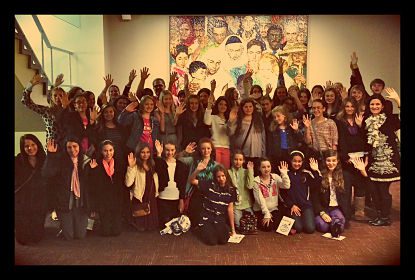
Girls Learn International (GLI) is a nonprofit, student-run organization and movement that encourages U.S. students to promote education for women throughout the world.  Lisa Alter founded the movement with her two teenage daughters in 2003.  Alongside Arielle and Jordana, Lisa began to inspire various youths to get involved in humanitarianism and women’s rights while still in school.  As a result, GLI currently has 114 chapters in over 26 states across the country. GLI also boasts partnerships with 47 schools in 11 countries, including Afghanistan, India, and Ghana.

Countries not providing equal access to education for women will end up losing out on $92 billion for their respective economies, according to Girls Learn International.  Additionally, 7 million cases of HIV/AIDS could be prevented if every child received a primary education, hence why GLI lives by the creed, “Women’s Education is a Basic Human Right.”

Furthermore, GLI has numerous partnerships and sponsors.  GLI is part of the Feminist Majority Foundation, the  Feminist Campus, and is a sister organization to Ms. Magazine.  The organization has also partnered with the Global Campaign for Education’s U.S. Chapter while also fielding a delegation to the United Nations Commission of the Status of Women.

The organization seeks to empower young women and have them take initiatives towards working for global education.  However, gender equality cannot be achieved without the contributions of idealistic young men as well.  To drive this point home, GLI boasts having an all boys’ chapter in Pennsylvania.  Regardless of gender, if you are a young person interested in providing education for women everywhere, GLI is the organization for you.

– Taylor Diamond

Sources: Girls Learn International, Global Campaign for Education
Photo: The Alternative Press

January 15, 2014
https://borgenproject.org/wp-content/uploads/borgen-project-logo.svg 0 0 Borgen Project https://borgenproject.org/wp-content/uploads/borgen-project-logo.svg Borgen Project2014-01-15 08:49:032024-06-04 03:01:13Empowering Education: Girls Learn International
Foreign Aid, Global Poverty

Okonjo-Iweala & Truth about Foreign Aid: It Works

foreign aid
Ngozi Okonjo-Iweala, as former Finance Minister of Nigeria and as a managing director of the World Bank, is no stranger to managing the correct use of funds.

Okonjo-Iweala combatted corruption in her home country of Nigeria by establishing economic reforms and facilitating government transparency. As a consequence, Nigeria became alluring to foreign investors. According to Forbes, “Nigeria is the third largest economy in Africa with nearly $50 billion in foreign reserves.”

In a 2007 Ted Talk, Okonjo-Iweala discussed the importance of correctly managing funds, in particular, that of foreign aid. And yet, aid alone is not enough; local participation brings about the necessary solutions to improve development.

Writing for The Guardian, Okonjo-Iweala sites the importance of the Global Fund to Fight Aids, Tuberculosis and Malaria in reducing Malaria and Tuberculosis deaths as well as HIV infections.  The G8 supported endeavor resulted in 4.2 million people treated for HIV, 9.7 million for Tuberculosis and 310 bed nets for Malaria prevention.

The Global Fund was established in 2002 to fight and reduce Malaria, HIV/AIDS, and Tuberculosis infections and deaths. As a multilateral aid fund, originally conceived in a G8 summit in Okinawa, Japan, the Global Fund contributed to improving global health and development saving around 9 million lives.

In Nigeria specifically, 45 million bed nets and 8.1 treatments of artemisinin-based therapy prevents and treats Malaria.

The combination of foreign aid working alongside local actors echoes the hope that Okonjo-Iweala discussed in her Ted Conference. Similarly, the Global Fund mobilizes funds from donor countries, the private and philanthropic center, social enterprises and individuals themselves. It is with the collaboration of all sectors that aid can truly improve the situation in both short and long term.

– Miles Abadilla

Sources: Forbes, The Global Fund, TED, The Guardian, The Global Fund, TED
Photo: Giphy.com

January 15, 2014
https://borgenproject.org/wp-content/uploads/borgen-project-logo.svg 0 0 Borgen Project https://borgenproject.org/wp-content/uploads/borgen-project-logo.svg Borgen Project2014-01-15 04:00:282024-05-25 00:40:46Okonjo-Iweala & Truth about Foreign Aid: It Works
Activism, Advocacy, Economy, Food & Hunger, Foreign Aid, Foreign Policy, Global Poverty, Government

Merchant Marines and Food Aid Bill

merchant marines food aid
For some, the U.S. Merchant Marine represents an organization that shuttles American imports and exports around the world during peacetime while becoming a naval auxiliary during wartime. For others, they represent the largest obstacle to food aid reform.

Current food aid regulations stipulate that at least 80% of aid must be shipped by U.S. citizens on U.S. flagged vessels. Critics argue that needless money and time is spent hauling items around the world when food could be purchased locally in a much more timely fashion.

President Obama proposed a food aid overhaul in 2014’s fiscal budget that would reach an estimated 2 to 4 million more people within the year. Specifically, he wished to expand local and regional procurement procedures and food vouchers.

U.S. mariners were not amused by this proposal, however. When the food aid amendment attached to the farm bill reached the Congress floor, maritime lobbyists worked strenuously to ensure it wouldn’t pass, and succeeded.

The U.S. merchant marines provide a unique service for the United States. As they are not employed by United States military, they are able to service both the government and private sector.

The duality of their role in regard to the United States is significant for a number of reasons. The Navy League, a special interest group representing the U.S. maritime community, reports that they provide over 33,000 jobs for Americans, account for $1.9 million in economic output and $24 million in household earnings. Although food aid reformists argue that the shift in these numbers would be slight, by only a few hundred, Merchant Marine advocates contend that change would usher in the end of the merchant marines all together.

The Merchant Marine’s ability to transport troops and supplies during wartime, known as sealift, may be severely impacted if reform results in job loss. The U.S. Maritime Service was established by President Roosevelt in 1938 in anticipation of needed shipping vessels to both the European war front and Pacific Theater. The Merchant Marine provided invaluable service during the war, and current mariners argue that their services are still necessary.

Despite the mariners concerns, the Obama Administration has plans to counteract any negative effects the reform may usher in by providing aid directly to the U.S. Merchant Marine.

The administration proposes shifting $25 million of the efficiency savings that will be obtained through the food aid reform to the Department of Transportation’s Maritime administration. According to the White House International Food Aid Fact Sheet, this additional funding will provide a vehicle to support sustainment of militarily-useful vessels and a qualified pool of citizen merchant mariners.

Although this may not be the solution the merchant mariners were hoping for, the strong advocates for food aid reform may ensure that this is the best they can expect.

– Emily Bajet

Sources: The Center for Public Integrity, U.S. Merchant Marine FAQ, The Maritime Executive, The White House: International Food Aid Fact Sheet
Photo: Giphy.com

January 14, 2014
https://borgenproject.org/wp-content/uploads/borgen-project-logo.svg 0 0 Borgen Project https://borgenproject.org/wp-content/uploads/borgen-project-logo.svg Borgen Project2014-01-14 09:56:202016-04-05 21:03:49Merchant Marines and Food Aid Bill
Page 53 of 61«‹5152535455›»

Get Smarter

  • Global Poverty 101
  • Global Poverty… The Good News
  • Global Poverty & U.S. Jobs
  • Global Poverty and National Security
  • Innovative Solutions to Poverty
  • Global Poverty & Aid FAQ’s
Search Search

Take Action

  • Call Congress
  • Email Congress
  • Donate
  • 30 Ways to Help
  • Volunteer Ops
  • Internships
  • Courses & Certificates
  • The Podcast
Borgen Project

“The Borgen Project is an incredible nonprofit organization that is addressing poverty and hunger and working towards ending them.”

-The Huffington Post

Inside The Borgen Project

  • Contact
  • About
  • Financials
  • President
  • Board of Directors
  • Board of Advisors

International Links

  • UK Email Parliament
  • UK Donate
  • Canada Email Parliament

Get Smarter

  • Global Poverty 101
  • Global Poverty… The Good News
  • Global Poverty & U.S. Jobs
  • Global Poverty and National Security
  • Innovative Solutions to Poverty
  • Global Poverty & Aid FAQ’s

Ways to Help

  • Call Congress
  • Email Congress
  • Donate
  • 30 Ways to Help
  • Volunteer Ops
  • Internships
  • Courses & Certificates
  • The Podcast
Scroll to top Scroll to top Scroll to top