• Link to X
  • Link to Facebook
  • Link to Instagram
  • Link to TikTok
  • Link to Youtube
  • About
    • About Us
      • President
      • Board of Directors
      • Board of Advisors
      • Financials
      • Our Methodology
      • Success Tracker
      • Contact
  • Act Now
    • 30 Ways to Help
      • Email Congress
      • Call Congress
      • Volunteer
      • Courses & Certificates
      • Be a Donor
    • Internships
      • In-Office Internships
      • Remote Internships
    • Legislation
      • Politics 101
  • The Blog
  • The Podcast
  • Magazine
  • Donate
  • Click to open the search input field Click to open the search input field Search
  • Menu Menu

Archive for category: Foreign Aid

Foreign aid coverage and information.

Education, Foreign Aid, Global Poverty

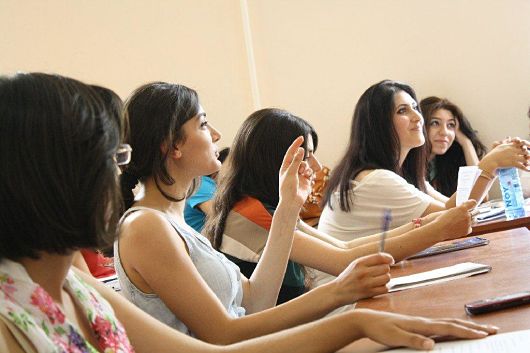
5 Facts About Education in Armenia

Education-in-Armenia
In Armenia, schools are essential for cultural survival and are highly valued with 1,600 years of literary history. The government spends about 3 percent of its annual GDP on education and has passed new laws to help increase educational standards. Armenia has found some success improving education standards and is continuing to find solutions to other educational issues.

Here are five facts you may not know about education in Armenia:

  1. 77 percent of teachers in primary schools are professionally trained. The government is attempting to increase the number of experienced school teachers by raising their monthly wages, which are below the national average. In 2005, their wages went up 65 percent, but many teachers today are still offering private tutoring in order to supplement their teaching income.
  2. Armenia ranks 59th in the world in primary school enrollment. Part of the problem with enrollment for education in Armenia is the fact that there are 18,000 children who are not enrolled in primary school. Most of the un-enrolled children are boys and they end up working to help their families, sometimes earning more than Armenian teachers.
  3. Dropout rates in Armenia are rising by 250 percent per year. Armenia’s dropout rates are low compared to neighboring countries, but the fast rise is alarming. However, the government is committed to improving education by ensuring access to a quality education for all Armenians regardless of gender, race, ethnicity and income level.
  4. 47 percent of Armenians have access to the internet, compared to only 6.4 percent in 2009. The country now ranks 61st in the world for internet access, which is crucial to the continued growth of education in Armenia.
  5. Disabled school children have limited access to education: There are about 8,500 disabled children in Armenia, and only a few of them are able to attend school. UNICEF has helped increase educational programs for children with special needs by enrolling 250 students in 18 inclusive kindergartens and 257 in 14 inclusive schools.

In 2014, the World Bank announced that they will provide $30 million for the Education Improvement Project in Armenia. Reforms taking place include implementing new educational standards and a new national curriculum and extending the educational system to include grade 12; these steps are vital to building a successful and competitive educational system in Armenia. The project will also help 12,000 children living in poverty in rural areas and boost development for electronic content.

– Donald Gering

Sources: Internet World Stats, Social Progress Imperative, UNESCO, UNICEF, World Bank
Photo: Open Source Foundation

July 1, 2015
https://borgenproject.org/wp-content/uploads/borgen-project-logo.svg 0 0 Borgen Project https://borgenproject.org/wp-content/uploads/borgen-project-logo.svg Borgen Project2015-07-01 14:02:412024-06-04 03:53:045 Facts About Education in Armenia
Foreign Aid, Foreign Policy

Tools for Achieving Foreign Policy Goals

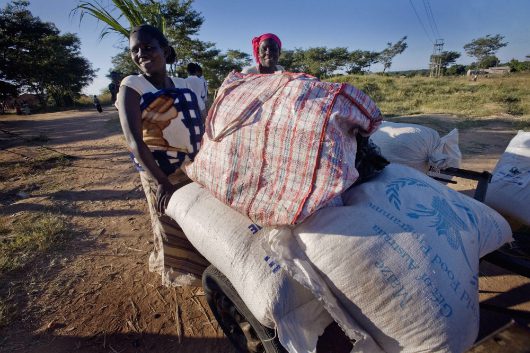
Foreign PolicyForeign policy is the manner in which a country behaves toward other members of the international community. It involves a state setting an agenda and using its resources to achieve established goals. Nations strive to achieve foreign policy goals with a combination of the instruments discussed below.
Effective Tools for Achieving Foreign Policy Goals

Diplomacy
Diplomacy is the act of working and negotiating with representatives of foreign nations to reach consensus and set the stage for future rules. This can involve working on the development of accords, treaties, alliances and conventions. Diplomats form relationships with officials from other countries to understand their perspectives, while simultaneously portraying and promoting the values and position of the United States. Although there are many images in the media depicting diplomatic meetings regarding large-scale foreign policy decisions, most diplomatic relations — especially those of particular importance — occur behind the scenes through private discussions and negotiations. In addition to discussing issues with foreign officials, diplomats meet with many other members of foreign societies, ranging from business officials to representatives of nongovernmental organizations. By cultivating connections throughout civil society, diplomats can gain a better understanding of a country’s culture in order to find common ground on which to base relations and actions.

Foreign Aid
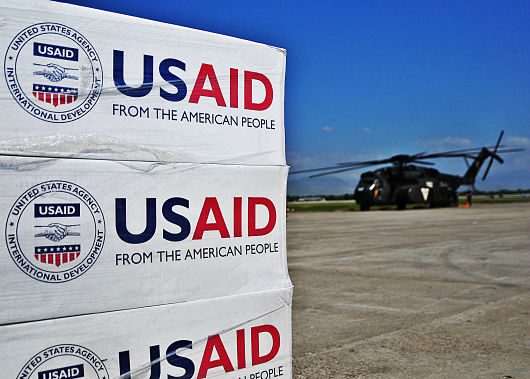
States can use foreign aid to achieve foreign policy objectives abroad, build relationships with other nations and address issues of humanitarian concern. There are various forms of aid, including foreign military aid, humanitarian assistance, food aid and general development aid. Foreign military aid involves augmenting another nation’s supply of military equipment and technological capabilities. Military aid can help a state indirectly influence the balance of power in areas abroad, therefore increasing a country’s sphere of influence. Military aid can also serve to help another country defend itself based on commonly shared ideals and values. Alternatively, states can give economic aid to other countries in order to stimulate growth or help with specific project development. The United States currently spends less than one percent of its budget on foreign aid.

Sanctions
Countries can use sanctions in an attempt to change another country’s behavior. Sanctions can be used to express dislike for a current behavior, limit opportunities for such behavior to continue and deter other countries from taking similar courses of action. Different types of sanctions include arms embargoes, trade embargoes, asset freezes and travel restrictions. Historically, sanctions have been put in place in an attempt to take a stand against human rights violations.

Military Force
Using military force — or hard power — in foreign relations involves states using their military to influence the behavior of weaker nations or directly involve themselves in the c0untry. The United States currently has the most powerful military in the world.

Deterrence
States can deter other states from taking an action by convincing opponents that the costs will exceed the benefits. This can happen through diplomacy or the threat of military action.

When making decisions that affect the international community, as many decisions do, states either behave unilaterally, bilaterally or multilaterally. Unilateral action indicates that a state is acting alone, independent of common norms or rules of world order. Unilateral actions tend to be based on self-interest rather than on international standards of behavior. Meanwhile, bilateral action indicates that two states are acting together. Finally, multilateral actions indicate a multiplayer coordination of efforts based on commonly shared norms. A nation’s approach toward cooperation with other nations in dealing with its foreign policy agenda is very influential in the effectiveness of each of the tools.

The foreign policy tools actually used are largely dependent on a nation’s foreign policy agenda. Most contemporary issues are seen to be multifaceted in nature, and will thus need to be approached with a combination of these instruments. The established goals of a state’s foreign policy agenda will also affect the choice of tools. In reality, the actual usage of these tools is not only dependent on what goals are being pursued, but on what resources are available.

– Arin Kerstein

Sources: Global Issues, Government of the Netherlands, United States Diplomacy Center
Photo: Council on Foreign Relations

June 26, 2015
https://borgenproject.org/wp-content/uploads/borgen-project-logo.svg 0 0 Borgen Project https://borgenproject.org/wp-content/uploads/borgen-project-logo.svg Borgen Project2015-06-26 05:48:572024-05-27 09:25:10Tools for Achieving Foreign Policy Goals
Foreign Aid, Global Poverty, United Nations, USAID

What is International Aid & Why Should We Care?

What is International Aid
What is International Aid? International aid is any form of needed assistance by one country, or multilateral institution, to another.

Aid is most commonly provided as official developmental assistance (ODA), which targets poverty reduction and the promotion of public welfare and economic development. The World Food Programme and the United Nations are examples of international organizations that provide significant amounts of aid to developing countries.

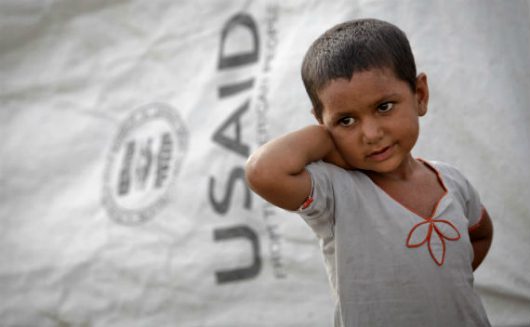
Investing in foreign aid is a just cause. The leading U.S. Government agency, USAID, alone saves more than 3 million lives each year through immunization programs. Over 850,000 people are educated about HIV prevention annually through USAID, and 40,000 have been trained to protect their countries for the long-term. Other forms of lasting education strategies include USAID’s population program, which serves more than 50 million couples worldwide, and USAID land cultivation training in Honduras that helps 21,000 families to practice subsistence farming and has reduced soil erosion by 70,000 tons.

Foreign aid is not just giving away money and resources; it means making a concerted attempt to restructure sectors in need of improvement. USAID invested $15 million in technical assistance for developing countries’ energy sectors, which created a $50 billion annual market for private power.

With all this good, would it surprise you that U.S. foreign assistance uses less than 1% of the total federal budget?

Less than 1% of the U.S. total federal budget values to about $50 billion. In comparison, the U.S. military defense budget totals to about $663 billion. To put this in per capita terms, The Guardian calculated that the U.S. spends $73 per person on aid and $1,763 per person on defense.

In 1970, The U.S. joined the ranks of many other wealthy nations with plans to give 0.7% of their gross national income as ODA. Of the twenty-three players, only five succeeded in 2011,and the U.S. was not one of them.

The U.S. gave 0.2% of their net ODA.

But why is this even a problem?

Other countries with fewer capabilities are doing more than their part while the U.S. is falling short. Public perception plays a huge role in how the budget is made and, subsequently, the degree of U.S. involvement in global aid. Americans, on average, estimated 28% of the federal budget is spent on foreign aid. Four in ten Americans also believe aid is given remotely, allowing the recipient to use it as they see fit. As a result, few people vote for budget increases.

In actuality, most U.S. foreign aid is issued to a specific issue and program with clear endpoints.

Most commonly, Americans believe foreign aid to be a waste of resources. Who does the money help and in what ways? In fact, it helps both the recipient and donor.

International aid strengthens national security, garners international support and establishes diplomatic ties between the donor and recipient countries.

Today, the donor-consumer relationship is far more influential than ever because developing countries and economies are in transition. Africa’s net growth momentum, for example, is expected to continue to rise with GDP growth increasing from 4.6% in 2015 to 4.9% in 2016. Home to five of the world’s twelve fastest growing economies, the supercontinent hosts a growing middle class and large youth population. While Africa’s political and economic history promises a challenge, its potential is enormous.

– Lin Sabones

Sources: Encyclopaedia Britannica, UN, The Guardian, OECD, USAID, CNBC
Photo: Flickr

June 15, 2015
https://borgenproject.org/wp-content/uploads/borgen-project-logo.svg 0 0 Borgen Project https://borgenproject.org/wp-content/uploads/borgen-project-logo.svg Borgen Project2015-06-15 08:33:402024-05-30 22:22:56What is International Aid & Why Should We Care?
Foreign Aid

Understanding Foreign Aid

Foreign_aid
Foreign aid is a broad term that defines the assistance of one country to another, usually a developed country helping another nation. This assistance can be monetary or otherwise and can be intended for many different purposes or reasons.

The origins of foreign aid in the United States stem from the Marshall Plan and the U.S. assisting Europe in its post-World War II recovery. More recently, the United States Agency for International Development’s stated mission is to help fledgling democracies and end extreme poverty.

Most people in the U.S. believe that foreign aid is substantially higher than its actual value, which is equivalent to or lower than one percent of the federal budget. The money sent to other countries as aid is fairly small for the U.S., yet it is capable of producing a host of benefits for the recipient countries.

Humanitarian assistance is the most common reason for giving foreign aid. The recent earthquake in Nepal triggered a response by USAID whose contribution of over $47 million have been used to help with disaster relief in the region. Other reasons for humanitarian-related aid include extreme poverty, hunger and the effort to improve global health by fighting preventable, communicable diseases that are common in the developing world.

Infrastructural development is a commonly cited purpose for aid dollars. China, for example, has been investing heavily on infrastructure in Africa, including a $15 million aid deal with Sierra Leone for fiber optics installations. This investment is only one example of how aid is used to build communications, transportation, medical and other critical infrastructure in order to help facilitate economic growth and development.

Aid earmarked for education assists countries while preparing them to be more independent. Aid programs often focus primarily on improving access to education, which can be a limiting factor for education’s effectiveness. These programs also target teachers’ training in order to improve the quality and impact of the education being provided. Building human capital by establishing skills such as basic literacy cannot be underestimated.

In the past eight years, the European Union Commission has invested well over four billion euros in improving education and literacy in multiple developing countries. They were able to put at least nine million children into schools and train hundreds of thousands of teachers in order to improve standards of education. Rudimentary reading and writing skills that are taken for granted in developed countries can change the lives of those in developing countries where literacy rates are low. Literacy can be thought of as a gateway toward further human capital and economic development.

Foreign aid can also be motivated by strategic and geopolitical forces. Helping other countries can leverage support for the gifting nation or help build strong relationships in a certain region.

Israel received the most foreign aid from the U.S. in its 2012 fiscal year. Though Israel does not face the same low literacy rates or high levels of poverty as countries in Africa, there are strong geopolitical motivations that have led to this phenomenon. In addition, five of the top ten recipients of aid in the same year were from the Middle East. Some states in the region are rife with war and turmoil. As a result, the U.S. provides foreign aid to help these states recover from the damages of war or to aid in creating and sustaining stability across the region as a whole.

Developed countries are in a position to help those in foreign countries who are in need of assistance. Foreign aid is an essential and fairly pain-free way for developed countries to fight against global poverty and support global health, education and peace.

– Martin Yim

Sources: USAID 1, RAND, Washington Post, Aid Data, USAID 2, European Commission, ABC News USAID
Photo: Georgetown Public Policy Review

June 12, 2015
https://borgenproject.org/wp-content/uploads/borgen-project-logo.svg 0 0 Borgen Project https://borgenproject.org/wp-content/uploads/borgen-project-logo.svg Borgen Project2015-06-12 08:00:272024-12-13 17:50:12Understanding Foreign Aid
Developing Countries, Foreign Aid

What is the Function of the 150 Account?

Function of the 150 Account
The U.S. budget contains scores of carve outs for specific programs, activities, and priorities. But all those individual projects are organized into broader buckets. Specifically, the federal budget is divided into 20 categories called budget functions, although it might be easier to think about them as accounts.

Each account (or function) has all the spending for a given topic, independent of which federal agency oversees the specific federal programs that will ultimately receive the money.

Function 150 is the international affairs account which includes money allocated for aid for developing nations, and consequently where a significant amount of global poverty and hunger funding falls. It’s a very diverse funding bucket. The account also includes money for operation of U.S. consulates and embassies; military assistance for our allies; economic assistance to be disbursed to new democracies; promotion of U.S. exports; payments to international organizations; and international peacekeeping efforts.

Function 150 primarily provides funding for the Departments of State, Agriculture, and Treasury, as well as the U.S. Agency for International Development and the Millennium Challenge Corporation. Funding in this account constitutes about 1 percent of the entire federal budget.

The budget process for fiscal year 2014 is far from over, in fact it’s barely started. Quite a bit needs to happen before we will know what the actual funding levels for programs are for the next fiscal year. The State Department requested approximately a total of $52 billion for the Function 150 Account in FY 2014 to fund everything from aid to developing countries to U.S. consulates and international peacekeeping missions, according to agency budget documents.

Learn more about U.S. Foreign Aid.

– Liza Casabona

Sources: House of Representatives Committee on the Budget,  State Department
Photo: Tunisia Live

April 17, 2015
https://borgenproject.org/wp-content/uploads/borgen-project-logo.svg 0 0 Borgen Project https://borgenproject.org/wp-content/uploads/borgen-project-logo.svg Borgen Project2015-04-17 04:00:542020-07-03 08:23:50What is the Function of the 150 Account?
Foreign Aid, Global Poverty, Poverty Reduction

Top Books About Global Poverty

books about poverty
Despite tremendous progress over the past few decades in eradicating global poverty, nearly a fifth of the world still lives on less than $1.25 a day. In recent years, a number of economists, academics, and political analysts have published books providing insight into the causes, effects, and solutions to global poverty. Here are some top books about global poverty that particularly stand out:

The Bottom Billion: Why the Poorest Countries are Failing and What Can Be Done About It (2007)

By Paul Collier

“Economist and Africa expert Collier analyzes why a group of 50 nations, home to the poorest one billion people, are failing. Considering issues such as civil war, dependence on extractive industries, and bad governance, he argues that the strongest industrialized countries must enact a plan to help with international policies and standards.” – Amy Lockwood, Stanford Social Innovation Review

Creating a World Without Poverty (2007)

By Muhammad Yunus

“As founder of Grameen Bank, Yunus pioneered microcredit, the innovative banking program that provides poor people mainly women with small loans they use to launch businesses and lift their families out of poverty. Now, in Creating a World Without Poverty, Yunus goes beyond microcredit to pioneer the idea of social business – a completely new way to use the creative vibrancy of business to tackle social problems from poverty and pollution to inadequate health care and lack of education.” – Yunus Centre

The Beautiful Tree: A Personal Journey into How the World’s Poorest People Are Educating Themselves (2009)

By James Tooley

The Beautiful Tree “tells the remarkable story of author James Tooley’s travels travels from Africa to Asia, and of the children, parents, teachers, and others who showed him how the poor are building their own schools and learning to save themselves.” –The Cato Institute

The End of Poverty: Economic Possibilities for Our Time (2006)

By Jeffrey Sachs

“Sachs outlines a detailed plan to help the poorest of the poor reach the first rung on the ladder of economic development. By increasing aid significantly to provide the basic infrastructure and human capital for markets to work effectively, Sachs argues such investment is not only economically sound but a moral imperative.” – Amy Lockwood, Stanford Social Innovation Review

The White Man’s Burden: Why the West’s Efforts to Aid the Rest Have Done So Much Ill and So Little Good (2006)

By William Easterly

“Easterly, a celebrated economist, presents one side in what has become an ongoing debate with fellow star-economist Jeffrey Sachs about the role of international aid in global poverty. Easterly argues that existing aid strategies have not and will not reduce poverty, because they don’t seriously take into account feedback from those who need the aid and because they perpetuate western colonial tendencies.” – Amy Lockwood, Stanford Social Innovation Review

The Wealth and Poverty of Nations (1998)

By David Landes

“The Wealth and Poverty of Nations is David S. Landes’s acclaimed, best-selling exploration of one of the most contentious and hotly debated questions of our time: Why do some nations achieve economic success while others remain mired in poverty? The answer, as Landes definitively illustrates, is a complex interplay of cultural mores and historical circumstance.” – W.W. Norton & Company, Inc

Fortune at the Bottom of the Pyramid: Eradicating Poverty Through Profits (2006)

By C.K Pralahad

“Explaining that the world’s five billion poor make up the the fastest growing market in the world, Prahalad shows how this segment has vast untapped buying power, and represents an enormous potential for companies who learn how to serve this market by providing the poor with that they need.” – Amazon

Out of Poverty: What Works When Traditional Approaches Fail (2009)

By Paul Polak

“Polak, a psychiatrist, has applied a behavioral and anthropological approach to alleviating poverty, developed by studying people in their natural surroundings. He argues that there are three mythic solutions to poverty eradication: donations, national economic growth, and big businesses. Instead, he advocates helping the poor earn money through their own efforts of developing low-cost tools that are effective and profitable.” – Amy Lockwood, Stanford Social Innovation Review

Dead Aid: Why Aid is Not Working and How There Is a Better Way for Africa (2009)

By Dambisa Moyo

“Moyo, a Zambia-born economist, asserts that aid is not only ineffective—it’s harmful. Her argument packs a strong punch because she was born and raised in Africa. Moyo believes aid money promotes the corruption of governments and the dependence of citizens, and advocates that an investment approach will do more to help reduce poverty than aid ever could.” – Amy Lockwood, Stanford Social Innovation Review

– Katrina Beedy

Sources: Stanford Social Innovation Review, Flavor Wire, Muhammad Yunus, WW Norton, Amazon
Photo: Cheryl Ann Skolnicki

February 18, 2015
https://borgenproject.org/wp-content/uploads/borgen-project-logo.svg 0 0 Borgen Project https://borgenproject.org/wp-content/uploads/borgen-project-logo.svg Borgen Project2015-02-18 11:00:452024-06-05 01:58:24Top Books About Global Poverty
Foreign Aid, Malaria

Malaria No More

malaria no more
Every 60 seconds, a child dies from a preventable and curable disease that claims the lives of 453,000 children per year—90 percent of those in Africa.

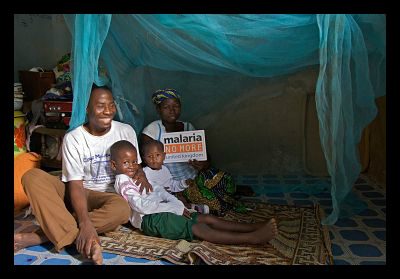
Malaria is considered one of the top three causes of death for children worldwide. But there’s one nonprofit that’s taking on the challenge to slow down the clock and lower its global threat to about half the world at risk. Malaria No More is dedicated to bringing an end to malaria deaths by engaging leaders, rallying the public and delivering lifesaving tools and education to families across Africa.

With the rate of 13,000 children losing their lives to a mosquito bite everyday, it is a critical time for this nonprofit to do its work efficiently and effectively. They do this through two sectors: lifesaving commodities and health education.

Malaria No More has covered over five million people with mosquito nets in at least 17 African countries, which to date is the surest way to prevent malaria. In Senegal, the organization conducted the first universal coverage of mosquito net distribution. In Cameroon, they inspired over 500,000 people to sleep under mosquito nets with their education campaign.

In the Fall of 2013, Malaria No More launched a campaign to deploy rapid diagnostic tests and artemisinin-based combination treatments to reduce malaria deaths in children. Rapid-diagnostic tests help expand the world’s ability to confirm malaria cases in remote settings and ensure that people get the right treatment where they need it. Likewise, artemisinin-based combination therapies act as a powerful treatment for malaria with a full course costing just one dollar to buy and deliver, curing a child one to three days time.

In addition to these lifesaving commodities, Malaria No More offers health education, which plays a vital role to preventing, diagnosing and treating the disease. For example, their NightWatch initiative has reached at least 20 million Africans by engaging mobile platforms and African leaders, from international music icons to local sports heroes, to deliver lifesaving health education.

Malaria No More works on the ground to make sure that every family in Africa has timely access to the resources they need, whether it’s providing mosquito nets to sleep under at night or the one dollar full-course treatment.

Other solutions the nonprofit suggests include indoor residual spraying to help kill mosquitoes and reduce the rate of malaria transmission in addition to the development of more vaccines for malaria and support via government funding.

Though foreign aid represents less than one percent of the U.S. federal budget, all efforts make an impact on the ground. Bridging the current funding gap and helping countries deliver lifesaving resources will help bring down the rate of malaria deaths. Since 2000, malaria mortality rates have fallen about 60 percent among children under the age of five, but there’s still much more work to do.

Thanks to technology behemoth Google, Malaria No More is closer to reaching their goals. In December 2014, Google made a huge move toward fighting against malaria by announcing a $600,000 grant to help fund a mobile phone project to combat the disease.

So how does it work? Since many Africans communicate via mobile phones, there’s no better way to collect data and send them vital information that details preventative measures that can save those in targeted areas from one of the most deadly diseases. Malaria No More will partner with a Nigerian startup called Sproxil, which helps fight the counterfeit drug market by putting codes on authentic medicines. Anyone who purchases these can now text the codes to verify the drugs.

In addition, texting codes allows Malaria No More to receive data on what drugs people are taking in remote areas as well as track the spread and treatments for the disease.

– Chelsee Yee

Sources: Malaria No More, Geek Wire, Fighting Malaria
Photo: Malaria No More

February 11, 2015
https://borgenproject.org/wp-content/uploads/borgen-project-logo.svg 0 0 Borgen Project https://borgenproject.org/wp-content/uploads/borgen-project-logo.svg Borgen Project2015-02-11 04:00:562024-05-24 23:42:30Malaria No More
Food & Hunger, Food Security, Foreign Aid, Global Poverty

The Future of Food Security

food security
According to the World Bank, the world’s population is set to reach over 9 billion by 2050. With food security already a challenge, how will agriculture meet the food security needs of a much larger population?

According to Chris Brett, global head of sustainability at Olam International, food security success will depend on what he calls the ‘four A’s’—availability, accessibility, affordability and adequacy.

Availability, says Brett, will depend on smallholders’ access to land rights and financial support. Brett believes that policy-makers should look at ways to encourage lending, and increase the extent to which farmers legally own the lands that they cultivate.

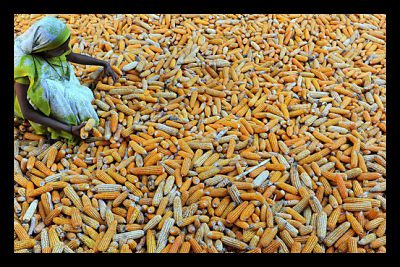
As over 2 billion people depend on smallholder farms for their livelihoods, augmenting the smallholders’ ability to prosper could potentially go a long way to reduce poverty.

Banks, however, are unlikely to lend to farmers in disaster-prone areas. Farmers in such areas face the difficult choice between investing in safe but unprofitable crops, or riskier though potentially more lucrative alternatives.

According to a recent article by Gaby Ramm and Roland Steinmann, agriculture insurance presents a potential solution to the conundrum faced by farmers in risk-prone regions. Pilot study results suggest that insurance can indeed play a role in encouraging farmers to engage in more lucrative practices. In India, farmers with rainfall insurance displayed a tendency to gravitate toward cash crops, which—though vulnerable to rainfall deficits—produce much greater returns.

Furthermore, insurance can also indirectly allow farmers access to more credit, by encouraging lenders to lend with more frequency and confidence. This, in turn, leads to further capital investments.

Smallholders can also benefit from cooperation with large-scale agriculture. According to Brett, cooperation between large-scale and small-scale agriculture can be mutually beneficial, and can increase yields through pre-financing and training in skills such as inter-cropping.

Brett also notes that, while Africa’s agricultural potential is enormous, investments in infrastructure will be necessary for that potential to be fully realized. It is estimated that Africa needs $55 million in agricultural investment to guarantee self-sufficiency.

– Parker Carroll

Sources: Poverty Action, The Guardian 1, The Guardian 2
Photo: WSJ

January 23, 2015
https://borgenproject.org/wp-content/uploads/borgen-project-logo.svg 0 0 Borgen Project https://borgenproject.org/wp-content/uploads/borgen-project-logo.svg Borgen Project2015-01-23 04:00:112020-07-17 11:25:08The Future of Food Security
Foreign Aid, Global Poverty, Hunger

Hunger in Comoros with Hope on the Rise

With high rates of hunger, infant mortality and population increase, it’s easy to see why the World Hunger Index ranked Comoros third on the list of the world’s hungriest nations. It is just one of nineteen nations still labeled as “alarming” or “extremely alarming” on the Global Hunger Index, leaving 870 million without food.

The Poverty Reduction and Growth Strategy Paper produced by the officials of Comoros stated that, “information on the economic environment supports the assumption that the socio-economic situation is deteriorating and that poverty is on the rise.”

Much of this social upheaval has been attributed to what can only be described as an unstable government. Comoros has been the site of 20 coups and attempted coups since its independence in 1975. The newest elected leader, Ikililou Dhoinine, a native born to the islands, took office in May 2011. He looks to spearhead the reduction of poverty by pledging “to stop at nothing in the fight against corruption.” Despite this hopeful claim, the people of Comoros are among the poorest in Africa and heavily dependent on foreign aid.

But others have joined the goals of Dhoinine. Dominic MacSorley, Chief Executive of Concern stated that, “firefighting with emergency aid is not enough.” Comoros conducted its own comprehensive household survey and found that many locals agreed that the way to bolster the economy was to show “importance of recovery in the private sector, particularly in the agro-foods area, to ensure a robust economic growth and achieve a significant reduction in poverty.”

Engagement Communautaire pour le Développement Durable, or the ECDD, has been working toward just that by creating a model of community landscape management integrating improved livelihoods with natural resource management.

Agroecology and Market Gardening were two of the techniques implemented. Agroecology refers to the process of conserving the land while simultaneously respecting ecological principles and learning from nature. For example, learning how the rainforest continually recycles nutrients back into the soil. Market Gardening is the process of growing vegetables to take to market for a profit.

ECDD’s project slogan, ‘Komori ya lao na meso,’ means ‘The Comoros of today and tomorrow.’ It is plain to see that this slogan was embodied at the very hearts of the ECDD efforts. These practices have set a new precedence in the hopeful fight against hunger in Comoros and the world.

– Frederick Wood II

Sources: International Food Policy Research Institute, ECDD Comoros 1, ECDD Comoros 2, BBC, trust.org, International Monetary Fund
Photo: Flickr

September 15, 2014
https://borgenproject.org/wp-content/uploads/borgen-project-logo.svg 0 0 Borgen Project https://borgenproject.org/wp-content/uploads/borgen-project-logo.svg Borgen Project2014-09-15 12:00:552024-05-27 09:18:51Hunger in Comoros with Hope on the Rise
Foreign Aid, Volunteer

The Changing Face of the Peace Corps

The Peace Corps has recently announced that, in order to increase its number of applicants, it will be making major changes to how the organization is run. Namely, the application process will be shorter and applicants will be given the ability to choose which country and program interests them.

Since the Peace Corps’ inception in 1961 by President Kennedy, the organization has drawn more than 215,000 volunteers who have served in 139 impoverished countries. Volunteers stay in their assigned country for two years where they work in a number of fields including education, health services and agriculture. As the premier international service organization in the U.S., almost everyone has heard of the Peace Corps and many aspire to volunteer with it one day.

However, the positive image of the Peace Corps has been tarnished in recent years due to some volunteers’ bad experiences, which have been shared online and seen by many.

The number of applicants, which peaked in 2009, has fallen by more than a third since. Previously, applications were 60 pages long and took more than eight hours to complete. After submitting an application, one might not hear back about an acceptance for more than a year. The new application supposedly takes less than one hour to complete and the organization is promising to reduce wait times to no more than six months.

Additionally, applicants did not have the liberty to choose which country in which they wanted to serve. Countries and programs were assigned by the Peace Corps, sending people wherever they were needed most. The new model allows applicants to list countries and programs in order of preference. While this could lead to fewer volunteers in more dangerous countries, Peace Corps Director Carrie Hessler-Radelet says she is not worried about this, as many of the people who are drawn to the two-year long volunteer lifestyle are also intrigued by the more difficult areas and programs.

Unfortunately, the problems within the Peace Corps go deeper than the application process. Sixty-four percent of volunteers are women and in the past decade more than 1,000 of them have been raped or sexually assaulted while serving. Victims say that the Peace Corps did little to nothing to educate volunteers on self-defense, relocate volunteers who felt in danger or help victims after an attack. Many victims claim the Peace Corps blamed them for the assault and made attempts to cover up the incident.

While most volunteers have a positive experience serving for the Peace Corps, there is still a question of how safe the program actually is and what the organization can do to improve this. Women who have been raped or sexually assaulted say that the Peace Corps needs to address the issue and do all they can to help the women receive treatment for any physical and emotional damage. Hessler-Radelet, who is relatively new to her position as director, has agreed that the Peace Corps has a commitment to its volunteers and should be helping them.

– Taylor Lovett

Sources: NPR, Peace Corps, ABC News
Photo: Peace Corps

August 11, 2014
https://borgenproject.org/wp-content/uploads/borgen-project-logo.svg 0 0 Borgen Project https://borgenproject.org/wp-content/uploads/borgen-project-logo.svg Borgen Project2014-08-11 11:07:272024-05-27 09:20:53The Changing Face of the Peace Corps
Page 48 of 61«‹4647484950›»

Get Smarter

  • Global Poverty 101
  • Global Poverty… The Good News
  • Global Poverty & U.S. Jobs
  • Global Poverty and National Security
  • Innovative Solutions to Poverty
  • Global Poverty & Aid FAQ’s
Search Search

Take Action

  • Call Congress
  • Email Congress
  • Donate
  • 30 Ways to Help
  • Volunteer Ops
  • Internships
  • Courses & Certificates
  • The Podcast
Borgen Project

“The Borgen Project is an incredible nonprofit organization that is addressing poverty and hunger and working towards ending them.”

-The Huffington Post

Inside The Borgen Project

  • Contact
  • About
  • Financials
  • President
  • Board of Directors
  • Board of Advisors

International Links

  • UK Email Parliament
  • UK Donate
  • Canada Email Parliament

Get Smarter

  • Global Poverty 101
  • Global Poverty… The Good News
  • Global Poverty & U.S. Jobs
  • Global Poverty and National Security
  • Innovative Solutions to Poverty
  • Global Poverty & Aid FAQ’s

Ways to Help

  • Call Congress
  • Email Congress
  • Donate
  • 30 Ways to Help
  • Volunteer Ops
  • Internships
  • Courses & Certificates
  • The Podcast
Scroll to top Scroll to top Scroll to top