• Link to X
  • Link to Facebook
  • Link to Instagram
  • Link to TikTok
  • Link to Youtube
  • About
    • About Us
      • President
      • Board of Directors
      • Board of Advisors
      • Financials
      • Our Methodology
      • Success Tracker
      • Contact
  • Act Now
    • 30 Ways to Help
      • Email Congress
      • Call Congress
      • Volunteer
      • Courses & Certificates
      • Be a Donor
    • Internships
      • In-Office Internships
      • Remote Internships
    • Legislation
      • Politics 101
  • The Blog
  • The Podcast
  • Magazine
  • Donate
  • Click to open the search input field Click to open the search input field Search
  • Menu Menu

Archive for category: Foreign Aid

Foreign aid coverage and information.

Economy, Foreign Aid, Global Poverty

What We Fail to Mention About Foreign Aid

foreign_aid
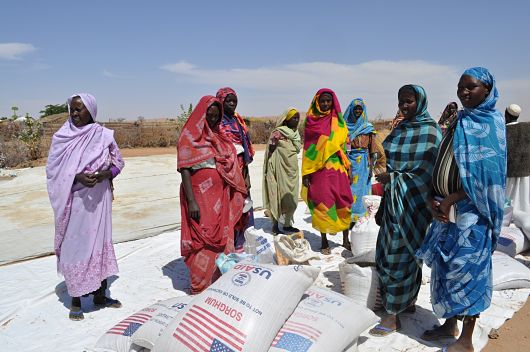
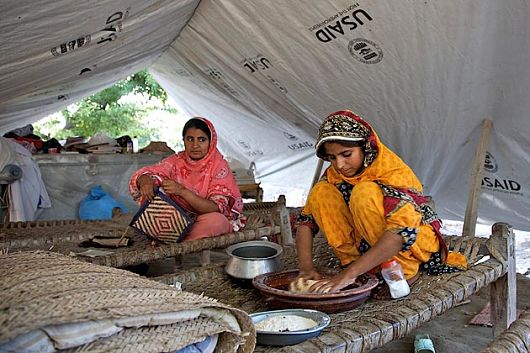
1. Foreign aid remains essential for developing nations. Providing healthcare, clean water, food, shelter, vaccines and schools can create opportunity. The catch we must avoid is generalizing these methods. Aid projects succeed when they target regions’ specific needs and histories.

2. We need to actually invest in the communities we serve. This requires “patient capital” which, according to CEO of Acumen, Jacqueline Novogratz, is “money that is invested in entrepreneurs who know their communities and are building solutions…thinking of low income people not as passive recipients of charity, but as individual customers, consumers, clients, people who want to make decisions in their own lives.” Patient capital is an inclusive approach to uplifting people out of poverty. While it requires risk, experimentation, and patience, the social impact can be enormous.

Journalist and activist, Andrew Mwenda, also advocates for wealth-creating “agents” that also give way to systems of productivity. “Wealth,” explains Mwenda, “is a function of income, and income comes from you finding a profitable trading opportunity or a well-paying job.” So, what is the solution? Entrepreneurs.

3. Economic gains in foreign aid investment beats the stock market. Paul O’Connell is the president and partner of FDO Partners, LLC, which is an investment management and research firm managing upwards to US$2.3 billion. O’Connell’s TedTalk, “Investments in the future: A new approach to foreign aid” talks about the economic gains from investing in poverty-related issues like vaccinations, education, and clean water, versus investing in the stock market. Investing in each category earns two to even six times the return in comparison to investing in stocks. O’Connell urges private investors to take the reigns on these investments because the payouts will be enormous.

– Lin Sabones

Sources: TED 1, TED 2, TED 3, Wall Street Journal, Oxfam America
Photo: USAID

August 21, 2015
https://borgenproject.org/wp-content/uploads/borgen-project-logo.svg 0 0 Borgen Project https://borgenproject.org/wp-content/uploads/borgen-project-logo.svg Borgen Project2015-08-21 01:30:112020-07-02 10:40:24What We Fail to Mention About Foreign Aid
Foreign Aid

5 Fascinating Effects of Foreign Aid on Politics

foreign_aid
Here are five ways foreign aid impacts politics:

  1. It fights terrorism – With ISIS as a major concern and a possible threat to U.S. national security, it is important to come up with different solutions. While aid alone cannot defeat ISIS, it can certainly help. Terrorist organizations have an easier time growing and residing in areas that are impoverished or unstable. Therefore, in order to prevent ISIS from growing, one tactic could be to work on building infrastructure and lowering poverty in the areas directly surrounding ISIS.
  2. It helps the U.S. compete with international rivals – China has increasingly been using foreign aid to gain influence across the world. Specifically, China is targeting Latin America and Africa. The United States needs to increase its aid to those regions if the country wishes to maintain its influence. If it does not, China could easily overtake the United States. African and Latin American countries are not the only countries that currently rely heavily on China. Russia and Greece are two other countries that may soon be heavily reliant on China as well.
  3. It helps the U.S. gain international favor – Foreign aid can make the United States’ relations with other countries much easier. Every time aid from Washington helps a life across the world, there is potential for making one more person appreciate the United States. If Washington can gain the favor of a large number of people in impoverished countries, then the United States is well on its way to being loved by that country. One major example of this is the President’s Emergency Plan for AIDS Relief. The Washington Post states that this program “has improved perceptions of the United States among the public in recipient countries.”
  4. It spreads democracy – One of USAID’s goals is democratization. One saying goes that democracies don’t go to war with democracies. USAID believes that “democratic governance and human rights are critical components of sustainable development and lasting peace.” Since the 1990s USAID has been working on spreading democracy and has so far been very successful. The reason for this success is largely due to foreign aid. According to a paper by the Munich Personal RePEc Archive, “both the Freedom House and Polity indexes indicate clear trends toward democratization over the 1975 to 2000 period.”
  5. It prevents future military conflicts – Cutting aid funding can hurt already fragile states economically. When countries are economically weak, it is easier for them to be manipulated by countries that may wish to harm the U.S. If these manipulations happen and escalate, they could lead to military conflicts in the future. According to interaction.org, “there is no doubt that foreign assistance helps ward off future military conflicts.

Unfortunately, in recent years, aid funding in the United States has decreased significantly, which is hard to believe when aid has so many positive effects on the United States’ politics and safety. Hopefully, in the coming years, politicians will turn this downward trend around in order to continue reaping these benefits.

– Clare Holtzman

Sources: Forbes, InterAction, Munich Personal RePEc Archive, USAID, Washington Post
Photo: Bloomberg

August 15, 2015
https://borgenproject.org/wp-content/uploads/borgen-project-logo.svg 0 0 Borgen Project https://borgenproject.org/wp-content/uploads/borgen-project-logo.svg Borgen Project2015-08-15 01:30:022024-12-13 18:04:445 Fascinating Effects of Foreign Aid on Politics
Aid, Foreign Aid, Foreign Policy, Global Poverty

What Bernie Sanders Could Mean For Global Poverty

Bernie_Sanders
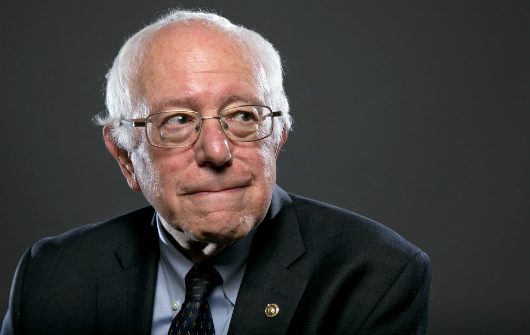
Bernie Sanders has been dubbed the “underdog Democrat” in this presidential election. As a committed ally to labor unions and the middle class, Sanders is determined to run a campaign financially unaffiliated with American billionaires.

When he announced his bid for the U.S. presidency, many doubted that he could gain enough momentum to really compete with Democrat likely, Hillary Clinton. However, after raising $15 million in 2 months and pulling 10,000 people into a campaign rally, many are seeing him as a potential threat to Clinton.

For his entire career, Sanders has dedicated himself to being the voice of the average person. He speaks for those who are not often heard due to their lack of capital. Often being described as a socialist, Sanders’ economic policy reflects his constituents’ desires, creating a world that truly gives everyone the chance to be a part of the “American Dream” regardless of race, gender, class or religious affiliation.

Because Sanders’ potential presence in the Oval Office is positive for the U.S. working class and those subject to abject poverty in America, it would also be great for global poverty abroad.

Sanders has, for a long time, rejected poverty, seeing it as something that could be eliminated by congressional help. Sanders is likely to translate his stance on American poverty to global poverty, then, under his administration, global poverty could forever change.

The Sanders administration is likely to expand its foreign aid budget, positively impacting global health and introducing proper legislation to eradicating global poverty.

To a farmer in Kenya, this could mean the ability to make a sufficient living. To women in the Philippines, this could mean greater access to family planning resources.

Bernie Sanders’ presence in the White House could not only greatly impact those living in the United States, but also those abroad. His aggressive approach to eradicating poverty would be a great asset to those subject to absolute poverty in developing countries.

– Erin Logan

Sources: Bernie Sanders, Forbes, Huffington Post 1, Huffington Post 2

Photo: Breitbart

August 8, 2015
https://borgenproject.org/wp-content/uploads/borgen-project-logo.svg 0 0 Borgen Project https://borgenproject.org/wp-content/uploads/borgen-project-logo.svg Borgen Project2015-08-08 01:30:362020-07-02 17:36:26What Bernie Sanders Could Mean For Global Poverty
Advocacy, Development, Foreign Aid, Sustainable Development Goals

Global Financing Conference Looks to End Poverty

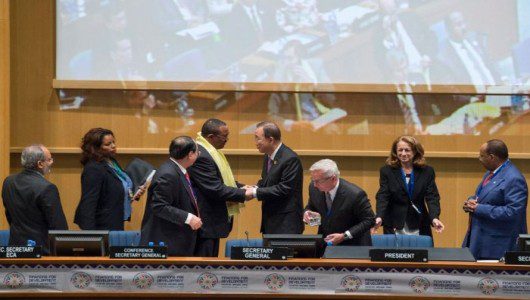
Global Financing Conference Looks to End Poverty - TBPOn July 15, leaders from all over the world will gather at a global financing conference in Addis Ababa, Ethiopia’s capital, to discuss major reforms and policies to make a legitimate dent in the issue of global poverty. This meeting marks the first of three summits in 2015 that aim to lock down funding for poverty programs worldwide. World Bank leader Jim Yong Kim summarized the magnitude of the summit by saying, “If we seize this moment we can accomplish the greatest achievement in human history.” The success of this and subsequent summits may finally put humanity on the correct path for eliminating poverty.
A topic of discussion at this summit will be on how to expand on the Millennium Development Goals, a set of eight target goals set in 2000 to combat poverty. These goals were set to expire after fifteen years, when a new summit would meet to establish new goals moving forward. The upcoming summit in Addis Ababa will spend time creating what will be known as the Sustainable Development Goals (SDGs).

The SDGs will be designed to reflect the changes in the global economy that have occurred since the initial MDGs were created. An excerpt from the World Bank’s website says, “The global development landscape has changed since the MDGs were adopted in 2000. Middle-income countries now account for a much larger share of global GDP. At the same time, inequality within many countries is on the rise and the gap between the rich and the poor is growing.” World leaders will assess a variety of new data to develop effective plans to reduce future poverty.

In order to make the eradication of poverty a reality, nations participating in this summit are preparing to raise the amount of money contributed to fighting poverty from billions to trillions of dollars. The funds necessary to achieving this goal will come “from private investment and domestic tax revenues. Foreign aid is already dwarfed by private financial flows, but it is still a precious resource, important because it reaches people and challenges that private finance alone cannot,” as reported by The Guardian.

This summit may be key in setting the stage for an entirely new era in our planet. The results of this summit and the ones that follow might be the pivotal step for stepping out of the overbearing shadow of poverty and into a bright future for generations to come.

– Diego Catala

Sources: The Guardian, World Bank
Photo: UN

August 5, 2015
https://borgenproject.org/wp-content/uploads/borgen-project-logo.svg 0 0 Borgen Project https://borgenproject.org/wp-content/uploads/borgen-project-logo.svg Borgen Project2015-08-05 07:29:552020-07-02 13:10:11Global Financing Conference Looks to End Poverty
Foreign Aid, Global Poverty, USAID

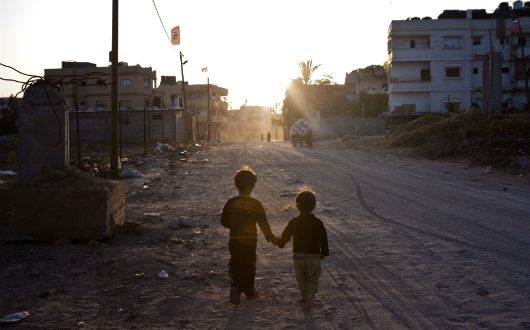
The Consequences of Cutting Aid to Palestine

Palestine
When it comes to the polarizing issue of the $400 million of foreign aid the United States is giving to Palestine, Senator Lindsey Graham (R-S.C.) says, “There’s a new game in town.”

On January 7, Senator Rand Paul (R-KY) introduced a new bill in the wake of Palestine’s application and recent acceptance to the International Criminal Court. Rand, Graham and their proponents argue that this action is in direct conflict with the one of United States’ three stipulations regarding aid to the West Bank, which is that the Palestinians will never seek to persecute Israel at the Hague.

Graham believes this bill presents a change in the dynamic between USAID, Palestine and Israel. Formerly, Israel fought against cutting assistance to Palestine and viewed international aid as an investment in national security and a movement toward the elusive “two state solution.” Rand and Graham now believe that it is time for the tide to turn in favor of a more aggressive statement.

“I cannot tell you the number of times the Israelis have engaged me to try to stop an emotional reaction by the Congress to terminate aid,” Graham said to Foreign Policy. “[But now] I’m going to lead the charge to make sure the Palestinians feel this.”

This aggressive approach is lauded as a defense of Israel, one of the United States’ closest allies. Yet research has shown that making the people of Palestine “feel” the loss of roughly $400 million could have the opposite effect, putting the civilians of the West Bank at a greater risk than ever before.

Primary defenders of the “cut aid” camp argue that aid to Palestine is akin to bankrolling the terrorist group Hamas. When they look at that $400 million, they see missiles pointed directly at Israel’s iron dome. What they do not see is the 515,000 Palestinian civilians who have been raised from poverty by the affordable water programs, infrastructural efforts and humanitarianism that flow from this aid.

According to an investigation done by the Government Accountability Office (GAO), USAID to Palestine has been carefully vetted and primarily channeled through in-kind efforts to change lives on the ground. In 2011, they found that the majority of aid was focused on the building of five hospitals, six clinics, the upgrade of 23 schools and the revamping of over 20 small- and medium-sized water systems. It was used to computerize hospitals in the main city of Mendabollah and provide 127,000 people with access to potable water.

“These aids are very helpful for us,” said Dr. Niha Sawaheh, head of the ER at the Palestinian Medical Center (a USAID project hospital) in Ramallah. “When they stop, they will affect us.”

What happens when the aid stops is not a theoretical question to Sawaheh. It is a recent memory. When the United States froze half of their allocated funds to Palestine in 2011, the hospital saw sharp declines in efficiency and diagnostic potential. After those cutbacks, the new, computerized CT system sat unused in Ramallah’s largest hospital, yet there was no discernible decline in Hamas-initiated bombings of Jerusalem.

Ghassan Khatib, a spokesman for the Palestinian government, commented that “by such a decision, [Congress is] punishing the Palestinian public in education, and in health, in a way that is very, very difficult to understand.”

Research has shown that declines in public education, health and accessibility to necessities such as clean water have little effect on ethnically charged violence like that between the Israelis and Palestinians.

In their famous 2010 paper, Professors Christopher Blattman and Edward Miguel of the University of California Berkeley argue that “greed” or the desire to improve one’s living conditions by targeting another regime is a much more powerful incentive to violence than is “grievance” or deep-rooted primordialism. “At present,” they write, “the economic motivators for conflict are better theorized than psychological or sociological factors.”

Removing the programs that allow Palestinian civilians to live above the margin — where they do not have to live on Hamas’ assurance that the downfall of Israel will put water in their wells and computers in their hospitals — will not, as some argue, quench Hamas’ thirst for terror. Rather, it would push those who in better times would not raise arms to Israel to resort to those same desperate measures. From this perspective, it is likely that Israel (America’s ally) would be the one to feel the effects of the $400 million cuts, not the terrorist groups hell-bent on Israeli destruction.

As this bill and others like it move through Congress, there is no doubt heated debate over “our duty to Israel” and the “message we send to Hamas” will circulate. Yet from a national security standpoint, the answer is simple: $400 million can buy lasting infrastructural development, something that in 30 years will drive off more missiles than even the iron dome.

– Emma Betuel

Sources: Berkley, NPR, Foreign Policy, Huffigton Post, Al-Monitor, GAO, FAS, Reuters
Photo: Caritas

July 31, 2015
https://borgenproject.org/wp-content/uploads/borgen-project-logo.svg 0 0 Borgen Project https://borgenproject.org/wp-content/uploads/borgen-project-logo.svg Borgen Project2015-07-31 01:18:472020-07-06 13:57:16The Consequences of Cutting Aid to Palestine
Education, Foreign Aid, Global Poverty

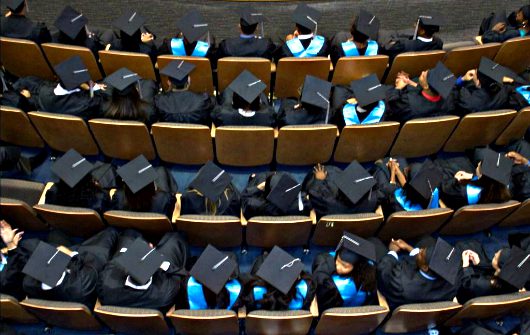
Why Does Only 2.7% of Foreign Aid Go Towards Higher Education?

higher_education
Between 2002 and 2013, developed nations invested an estimated $42.6 billion into the growth of higher education programs within developing countries. While this figure alone appears staggering in size, one must also consider the $1.6 trillion in total foreign aid these developed nations invested during the same time period. With investments in higher education responsible for only 2.7 percent of the international development budget, many are now questioning the causes of this disparity.

The United States itself invests approximately three percent of its total foreign aid budget into higher education, which is less than half of the other average contributions made by other donor countries. Many have questioned how a centrally developed nation has failed to deliver the necessary support for tertiary education programs in regions that would clearly benefit from such initiatives.

The roots of this problem may very well date back to the 1980s when the World Bank conducted a series of studies regarding the efficacy of educational programs.

The studies argued that financial investments within primary education programs resulted in double the amount of social capital for youth populations as opposed to investments within tertiary education programs. The findings also included suggestions that the benefits of a youth pursuing further education after secondary school proved substantially higher for the individual as opposed to their nation as a whole.

As a result, the global community prioritized the development of primary education systems and even focused Millennium Development Goal 2 on achieving universal primary education.

Conflicting with many of the beliefs about education adopted in the 1980s, numerous studies conducted in the past fifteen years have challenged many of the conclusions drawn by the World Bank studies.

The Organization for Economic Co-operation and Development (OECD) released a report in 2008, which instead argued that tertiary education is a vital asset to the global community as it encourages social and economic developments through the strengthening of a populations knowledge bases the creation of human capital and the application and dissemination of such knowledge.

A disparaging and growing cycle of educational failures within developing regions has also been found to be in part caused by a lack of growth within higher education. Researchers have argued that without access to strong higher education programs, the inability to train essential officials such as teachers, economic managers and political leaders, who are responsible for ensuring certain standards for the quality of education are reached, will continue to persist.

In recent years, many of the most highly motivated and qualified academic individuals within developing regions such as sub-Saharan Africa have emigrated to higher education facilities in the Western hemisphere. This mass exodus of the most talented minds has caused notable corrosion in the academic climates of universities in developing regions, facilities that are often overwrought with insufficient funding and corrupt governmental proceedings.

Government leaders of both developed and developing nations must cooperatively address the issue of increasing levels of funding for higher education programs within impoverished and underdeveloped regions. While the global community has demonstrated strong dedication in pursuing the achievement of Millennium Development Goal 2, attention must now be turned to the pursuit of universal higher education.

– James Thornton

Sources: The Conversation, Vanderbilt
Photo: Flickr

July 30, 2015
https://borgenproject.org/wp-content/uploads/borgen-project-logo.svg 0 0 Borgen Project https://borgenproject.org/wp-content/uploads/borgen-project-logo.svg Borgen Project2015-07-30 10:25:072020-07-14 09:55:15Why Does Only 2.7% of Foreign Aid Go Towards Higher Education?
Foreign Aid, Global Poverty, USAID

Can Aid Abroad Aid Detroit?

Detroit
In 2013, Detroit filed for bankruptcy. The city is full of empty factories and dirty streets. Two years ago, when crossing the border from Canada back into Detroit, my family and I commented on the dramatic change in scenery that occurs when crossing this small border. On one side of the border, the streets are immaculate and bright with blues and greens, there are ongoing construction projects, and polite signs telling drivers to, “pull over and take a nap.” On the other side in Detroit, it seemed to me that almost everything was grey and brown. Many of the people crossing the street appeared to be living in poverty.

An article by economyincrisis.org comments that the city looks, “war-torn,” partially thanks to the fact that, “American automakers shipped their jobs to Canada and Mexico.” While Detroit could use economic assistance in its transportation, educational and architectural sectors, what the city really needs is jobs. Perhaps one place that these jobs could come from could be foreign aid.

USAID has lost funding since 2009. While a loss in funding is always an issue, USAID was already understaffed in 2009.

Foreign aid is shown to boost the United States’ economy and create jobs, so why is the countries aid organization losing funding?

USAID is one source of potential in the U.S. job market. If USAID were better funded, it would have the ability to create more jobs and expand in order to have locations to manage and contain those jobs. One city that could perhaps become a place of USAID expansion could be Detroit. In addition, USAID works with many partner organizations in order to help people abroad. If USAID had the economic ability to utilize these partners more often, then the partner organizations would expand as well. This leaves yet another avenue open for expansion into Detroit, or at the very least providing some of the unemployed people there with jobs.

Detroit had an unemployment rate of 24.8 percent in 2010, according to the Bureau of Labor Statistics.

While USAID expansion could in itself be at least a partial solution to the Detroit job crisis, sending more aid abroad will also be a great solution. AIPAC.org says that “by law, nearly all of U.S. assistance must be spent on American-produced items.” If the U.S. sends more aid, then it will have to open up factories in order to create projects to keep up with the increase in aid. As the aid brings greater numbers of people out of poverty, these aid products will become purchased products.

If more people abroad can afford these products from the United States, then more people will buy them. While these factories may begin as “aid” factories, they will in the end boost the American economy. The United States was once an industrial giant and Detroit was in some ways at the center of the industry.

Perhaps the solution is to return Detroit back to its roots and get the empty “war-torn” factories running again.

– Clare Holtzman

Sources: AIPA, Bureau of Labor Statistics, The Detroit News 1, The Detroit News 2, Economy In Crisis, Foreign Policy, Jalopnik
Photo: Urban Ghosts

July 27, 2015
https://borgenproject.org/wp-content/uploads/borgen-project-logo.svg 0 0 Borgen Project https://borgenproject.org/wp-content/uploads/borgen-project-logo.svg Borgen Project2015-07-27 14:12:152024-05-27 09:26:10Can Aid Abroad Aid Detroit?
Aid, Development, Foreign Aid, Global Poverty

How Transparency Leads to Sustainable Development

How Transparency Leads to Sustainable Long-Term Development
Ever wondered where that money you donated went? The U.S. government, in partnership with USAID, has made a commitment to track international aid to more closely monitor sources of aid abroad and hold international leaders accountable for development. Up-to-date, truthful data about where international funds are going helps governments, civil service organizations and private sponsors track their money and increase the efficacy of donations.

The government recently signed on to the International Aid Transparency Initiative (IATI), an international organization that encourages NGOs, governments and international aid organizations to report data on foreign aid spending. This group estimates that $4.8 billion of EU-given aid, $2.8 billion U.S.-given aid and $13.8 billion in international donor aid was not visible. The initiative aims to have 80 percent of aid be visible; this amount, it estimates, will make the aid useful. This makes development easier to track and organizations more transparent in how they use their funds. It will encourage further donations and trust in the work of these organizations. Furthermore, IATI has developed a tool to compare spending by different aid groups and the amount of money going to different countries.

Anyone with Internet connection can now track the U.S. government’s aid efforts by country, sector and year on www.foreignassistance.gov.

Through this initiative, USAID has made a commitment to increasing its transparency in regards to foreign aid spending. Through developing a cost management plan, the organization upped its accountability and made it clear to donors where their money goes. As a result of this, USAID’s Aid Transparency Review jumped 20 points in the last year, from the “fair” category to the “good” one. The organization predicts improved donor understanding and confidence in its future projects and improvement in international development through its and other organizations’ efforts at increased accountability.

Progress does not end at transparency, however. USAID hopes to improve the knowledge base of its donors so that they can better understand the organization’s international efforts, understand where funds are going and hold governments, both those donating and accepting aid, accountable.

Through initiatives like these, international aid can become more sustainable, efficient and successful.

– Jenny Wheeler

Sources: USAID, Road To 2015
Photo: The Spectator

July 27, 2015
https://borgenproject.org/wp-content/uploads/borgen-project-logo.svg 0 0 Borgen Project https://borgenproject.org/wp-content/uploads/borgen-project-logo.svg Borgen Project2015-07-27 08:50:312024-05-27 09:25:47How Transparency Leads to Sustainable Development
Foreign Aid, Global Poverty, Human Rights

US State Department Country Reports on Human Rights Practices

Country_Reports_on_Human-Rights
On June 24, the US State Department released the Country Reports on Human Rights. The Country Reports on Human Rights are mandated by Congress in the Foreign Assistance Act of 1961 and the Trade Act of 1974. These acts describe the performance of governments that receive U.S. foreign assistance and of all United Nations member states. The performance of a government is determined by how much a country conforms to the Universal Declaration of Human Rights that outline civil, political, individual and worker rights.

The Department of State prepares these reports using information from U.S. embassies, foreign government officials, nongovernmental organizations and published reports. U.S. diplomatic missions prepare the initial drafts of the individual country reports. The Bureau of Democracy, Human Rights, and Labor (DRL) and other Department of State offices work to document, evaluate and edit the reports.

In 2014, there were a few trends in regard to human rights abuses. While many governments repressed and harmed citizens, many non-state actors also committed horrible human rights atrocities. As observed before, there is a correlation between corruption, human rights abuses and repressive governance.

Many countries had many human rights abuses. The President of Syria, Bashar Asad, continues to attack innocent civilians in an ongoing civil war between the government and citizens who oppose the government’s leadership. ISIL emerged partly because of a non-inclusive government in Iraq. In the Middle East and Africa, ISIL has both killed people and sold girls into slavery. In Nigeria, Boko Haram attacked school children and captured young girls. Countries such as China, Egypt, Eritrea, Ethiopia, Iran, Russia and Saudi Arabia do not allow open media markets and imprison journalists.

Even though many countries still do not recognize certain human rights, or disregard human rights altogether, many countries have given more rights to citizens than ever. In Afghanistan, millions elected a new President. Similarly, India had one of the largest parliamentary elections in history in 2014. Indonesia elected a leader who challenged traditional centers of power. In addition, Tunisia held its first democratic election in 2014.

These reports, along with other reports on human rights from other countries, will help educate the public about international human rights. These reports will allow citizens to learn more about human rights abuses, but they can also help people learn about human rights successes. Education is a vital step to help foster human rights internationally.

– Ella Cady

Sources: Council on Foreign Relations, U.S. Department of State
Photo: Flickr

July 22, 2015
https://borgenproject.org/wp-content/uploads/borgen-project-logo.svg 0 0 Borgen Project https://borgenproject.org/wp-content/uploads/borgen-project-logo.svg Borgen Project2015-07-22 22:05:002020-07-08 13:45:13US State Department Country Reports on Human Rights Practices
Foreign Aid, Foreign Policy

Why You Should Vote for a Candidate With Foreign Policy Experience

Rope isolated on white background
I expect that you, like most Americans, are beginning to ponder who you’re going to vote for in the upcoming presidential election. If this is the case, then you might also be causally conversing about or considering the factors most important to your decision. Let me draw your attention to one of the most significant aspects of the presidency, foreign policy.

For a President to be successful in foreign policy it is fairly likely that they will need to have foreign policy experience. When you hear the words foreign policy your mind might initially jump to the conflict in Ukraine and the threats from ISIS. The less considered aspect of foreign policy is foreign aid. If a president does not have a good deal of foreign policy experience, as we saw with President Barrack Obama, it is likely that this president may neglect foreign aid and focus only on military conflicts. This is a problem because foreign aid is integral to the United States’ economics and national security.

Foreign aid has been neglected in foreign policy and viewed as “charity” rather than as a strategy for a long time. During the Obama administration, this neglect grew. According to ForeignPolicy.com USAID, the United States’ aid organization, has had about a 16 percent drop in funding since 2009.

Before Obama was elected many concerns were raised, as described by an article in Time magazine, about Obama’s lack of experience in the foreign policy arena. The article stated that perhaps his international experience would prove to be enough.

It appears that this was not the case.

“Obama’s critics see a president adrift, lacking firm convictions or a strategy for dealing with the world,” says an article by Elias Groll on ForeignPolicy.com. Others such as Dr. Colluci on U.S. News and World Report even go as far as to describe Obama’s administration as a “foreign policy vacuum.” While perhaps this is a little extreme, it is fair to say that Obama did in fact have little experience in foreign policy and that is reflected in his actions abroad as a president.

Obama has focused too much on military conflicts and strategy and has allowed aid funding to decline significantly. Perhaps if he had had more experience he would have learned an important lesson before becoming president: that the global security that he has been working toward could be better sought through stabilizing countries economically and through building infrastructure.

Foreign aid can both spread democracy, as has been the United States’ goal since the Cold War, and fight terrorism. Perhaps Washington should return to foreign aid as a strategy, rather than continuing to use the military to maintain its sphere of influence.

The Marshall Plan could arguably be listed as one of the United States’ greatest foreign policy successes. This move gave the United States the influence it sought, stabilized countries after World War II, and spread democracy.

In addition, while poverty does not necessarily cause terrorism, reducing global poverty will reduce the human resources of terrorist organizations. Not only that, but reducing global poverty will also prevent at-risk populations from being recruited by these organizations in the future.

The next President should be someone who has had enough experience to realize the importance of foreign aid for these reasons. The president should have had enough military and aid experience to know the value of each, and enough foreign policy experience to know that the military is not the most vital part of our national security.

Even if this president does not know the importance of aid to United States’ foreign policy, I hope that at the very least they will realize that increasing U.S. foreign aid will provide a new job market for United States citizens.

– Clare Holtzman

Sources: The Borgen Project, Clingendael, Foreign Policy 1, Foreign Policy 2, Time, U.S. News & World Report

July 22, 2015
https://borgenproject.org/wp-content/uploads/borgen-project-logo.svg 0 0 Borgen Project https://borgenproject.org/wp-content/uploads/borgen-project-logo.svg Borgen Project2015-07-22 18:33:312024-05-27 09:25:54Why You Should Vote for a Candidate With Foreign Policy Experience
Page 46 of 61«‹4445464748›»

Get Smarter

  • Global Poverty 101
  • Global Poverty… The Good News
  • Global Poverty & U.S. Jobs
  • Global Poverty and National Security
  • Innovative Solutions to Poverty
  • Global Poverty & Aid FAQ’s
Search Search

Take Action

  • Call Congress
  • Email Congress
  • Donate
  • 30 Ways to Help
  • Volunteer Ops
  • Internships
  • Courses & Certificates
  • The Podcast
Borgen Project

“The Borgen Project is an incredible nonprofit organization that is addressing poverty and hunger and working towards ending them.”

-The Huffington Post

Inside The Borgen Project

  • Contact
  • About
  • Financials
  • President
  • Board of Directors
  • Board of Advisors

International Links

  • UK Email Parliament
  • UK Donate
  • Canada Email Parliament

Get Smarter

  • Global Poverty 101
  • Global Poverty… The Good News
  • Global Poverty & U.S. Jobs
  • Global Poverty and National Security
  • Innovative Solutions to Poverty
  • Global Poverty & Aid FAQ’s

Ways to Help

  • Call Congress
  • Email Congress
  • Donate
  • 30 Ways to Help
  • Volunteer Ops
  • Internships
  • Courses & Certificates
  • The Podcast
Scroll to top Scroll to top Scroll to top