• Link to X
  • Link to Facebook
  • Link to Instagram
  • Link to TikTok
  • Link to Youtube
  • About
    • About Us
      • President
      • Board of Directors
      • Board of Advisors
      • Financials
      • Our Methodology
      • Success Tracker
      • Contact
  • Act Now
    • 30 Ways to Help
      • Email Congress
      • Call Congress
      • Volunteer
      • Courses & Certificates
      • Be a Donor
    • Internships
      • In-Office Internships
      • Remote Internships
    • Legislation
      • Politics 101
  • The Blog
  • The Podcast
  • Magazine
  • Donate
  • Click to open the search input field Click to open the search input field Search
  • Menu Menu

Archive for category: Foreign Aid

Foreign aid coverage and information.

Foreign Aid, Global Poverty

How Much Does it Cost to End Global Poverty?

cost to end poverty
Today many people doubt the feasibility of poverty reduction, often citing the impossibility of raising enough funds. However a closer look at some statistics on global poverty suggests that not only is it possible to eradicate poverty, but its eradication would also come at an incredibly low cost.

  • In 2005, nearly 50% of the population in the world lived on the $2.50 per day line while 80% of the world lived under $10 a day.
  • The disparity between poor and rich is drastic as 40% of the world’s population account for 5% of the world’s income, while the richest 20% account for 75% of global income. Furthermore, the world’s richest 20% account for 76.6% of all private spending.
  • Approximately 0.13% of the global population controlled 25% of the world’s financial assets in 2004. In 2010, it was estimated that a mere 91,000 people owned one third of private financial wealth and half of offshore wealth. These extremely rich people account for only 0.001% of the world’s population.
  • In 2006, the world’s total GDP was $48.2 trillion. However, the world’s wealthiest countries also accounted for $36.6 trillion of that total.
  • The net worth of the world’s 497 billionaires is $3.5 trillion alone. These billionaires are only 0.000008% of the world’s 7 billion people.

What is the Cost of Ending Global Poverty


According to Mark Anielski, co-founder of the Canadian company Genuine Wealth, it would cost $29.39 billion to bump the incomes of 5.64 billion people to just $10 a day. This amount does not include individuals earning below $10 in developed countries.

Though the cost seems steep, in reality, $29.39 billion is only 0.5% of the estimated wealth of our billionaires. That is how much it really costs to fight global poverty. Even if income for the 80% living below $10 a day was bumped up to $20 a day, the $85.7 billion would only add up to 1.6% of the wealth of billionaires.

As indicated by these facts, the disparity between rich and poor is a significant hurdle in the fight against global poverty. Unequal income distribution means that the world’s poor have a substantially smaller piece of the pie. Yet according to these statistics, it would take very little to adjust global income to accommodate more people with a decent standard of living. Together we can eliminate global poverty.

– Grace Zhao

Sources: Troy Media, Global Issues

July 21, 2015
https://borgenproject.org/wp-content/uploads/borgen-project-logo.svg 0 0 Borgen Project https://borgenproject.org/wp-content/uploads/borgen-project-logo.svg Borgen Project2015-07-21 09:47:212020-07-09 20:06:37How Much Does it Cost to End Global Poverty?
Aid, Foreign Aid, Global Poverty

Does the US Have an Obligation to Give Money Abroad?

Does the US Have an Obligation to Give Money Abroad?
Well, do we? This question is commonly debated among politicians, intellectuals and average U.S. citizens. Is it correct to only focus on our own citizens, or should we help other countries through aid, health services and advice? This article will explore common sentiments toward and factual evidence about the effectiveness of foreign aid.

Before considering moral obligations, we should consider how much foreign aid the United States gives to other countries. The United States gives less than 1% of our $4 trillion budget to foreign aid. The Kaiser Family Foundation conducted a poll where Americans were asked to guess how much the United States spends on foreign aid. On average, respondents guessed that 26% of the budget went to foreign aid.

About one-third, or $5.3 billion, of foreign aid goes to health. About $3.1 billion goes to HIV/AIDS projects. About one-sixth, or $2.7 billion, of foreign aid goes to economic development, such as building infrastructure. Another $2.7 billion goes to humanitarian assistance or helping refugees.

Among developed countries, the United States gives one of the lowest percentages of gross national income (GNI) to foreign aid. The United States gives about 0.2% of the GNI to foreign aid. Some developed countries, such as Sweden, Norway and Luxembourg, give about 1% of their respective GNIs to foreign aid.

In sum, most Americans think that we give more money abroad than we do. Additionally, the United States gives a small percentage of its GNI to foreign aid when compared to other developed countries. Does this mean that, according to public opinion and government policy, we do not think we have much of an obligation to give money abroad?

Some people argue that the United States should focus on helping its own citizens before helping people abroad. What they don’t seem to understand is that the two can occur simultaneously. The United States can focus on helping the poor both domestically and internationally.

It is also important to consider that the poorest people in America are significantly better off than most. A person in the bottom 5% of the American income distribution is richer than 68% of people in the world. This may mean that we have more of an obligation to donate abroad than we currently do.

Still, some people may think that the problem is too large to fix; they might think that the United States cannot make a significant difference.

Global poverty is a substantial issue. However, the United States has helped to improve the living conditions of people globally. For example, more than 3 million lives are saved every year through USAID immunization programs. As a result of USAID’s population program, more than 50 million couples use family planning. These are only a few examples of how U.S. foreign aid has helped reduce global poverty and related issues.

Some may argue that foreign aid will not benefit the citizens if it is given to corrupt governments. This implies that we do not have an obligation to give to corrupt countries.

Even if a country is corrupt, this does not negate a moral obligation to help disadvantaged people. Furthermore, the Millennium Challenge Corporation, a U.S. governmental organization, helps identify countries that are committed to good governance, economic freedom and investments in their citizens. This changes the way that the United States gives foreign aid. The United States can strive to give money abroad without supporting corrupt governments.

Intuitively, it seems as though the United States does have an obligation to give money abroad. The U.S. Government has the capability to give money abroad while still helping the impoverished in our country. The United States has already made significant strides in improving global health and alleviating poverty abroad. Presumably, the United States could help even more if we allocated more money to foreign aid.

– Ella Cady

Sources: Forbes, Giving What We Can, Millennium Challenge Corporation, NPR, Organisation for Economic Co-operation and Development, USAID
Photo: The Daily Beast

July 21, 2015
https://borgenproject.org/wp-content/uploads/borgen-project-logo.svg 0 0 Borgen Project https://borgenproject.org/wp-content/uploads/borgen-project-logo.svg Borgen Project2015-07-21 09:31:422024-12-13 17:51:49Does the US Have an Obligation to Give Money Abroad?
Education, Foreign Aid, Global Poverty

US Spends Millions on ‘Ghost Schools’ in Afghanistan

ghost_schools
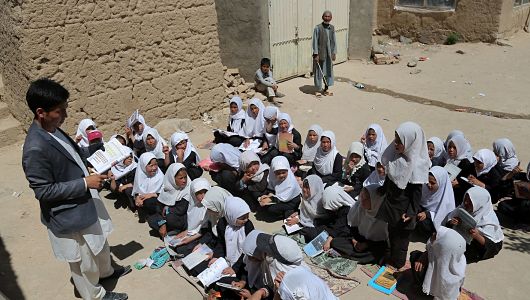
Since 2001, enrollment numbers for education in Afghanistan have increased due to international aid for ‘ghost schools’ from the U.S. as well as other world governments. In 2013, USAID reported that attendance reached eight million students—an immense increase from the 900,000 students in 2002.

So far, the U.S. has spent $769 million on education and ghost schools in Afghanistan in order to increase the number of schools, teachers and students. However, recent reports show the number of students enrolled may be exaggerated, causing many people to question if taxpayer dollars are being wasted.

Canada is not concerned with the allegations and believes the aid makes a difference in enrollment numbers along with the construction of new schools. So how many ‘ghost students’ are attending school?

John Sopko, U.S. Special Inspector General for Afghanistan Reconstruction, reported that Afghan officials counted absent students for enrollment. According to Sopko, the number of absent students in 2014 listed as “enrolled” was 1.55 million students, which means enrollment figures have still increased since 2001.

Despite the allegations or possible exaggerations, aid to education in Afghanistan is still an effective way to increase primary school enrollment numbers.

The U.S. has only spent one percent of its total rebuilding budget in Afghanistan on education. In that time, more than 13,000 schools have been built with the help of USAID and other donors. More than 180,000 teachers have been trained to support higher enrollment for school-aged children. Literacy rates in Afghanistan have increased by five percent since 2008 and about 38 percent of the population above the age of 15 is literate.

Any allegation about false data in the enrollment numbers for education in Afghanistan needs to be taken seriously, but not without recognizing the many successes created in Afghanistan’s education system.

There are many challenges to setting up an efficient educational system in Afghanistan that is sustainable. Due to low economic output and U.S. military involvement in Afghanistan, it is a more difficult environment to work in.

USAID and the World Bank have been working with the Ministry of Education to improve data reliability and improve education policies. The National Education Strategic Plan III that runs from 2014 to 2020 strives to improve education through areas such as General Education, Science and Technology and Teacher Education.

In order to protect investments and the improvements of education in Afghanistan, USAID and other organizations committed to education need to improve the way that data is reported. Also, Aid needs to continue in order to help rebuild Afghanistan and improve the lives of school-aged children within the country.

– Donald Gering

Sources: Globe and Mail, NBC News, NPR, Social Progress Imperative, USAID, Vice News
Photo: The Huffington Post

July 21, 2015
https://borgenproject.org/wp-content/uploads/borgen-project-logo.svg 0 0 Borgen Project https://borgenproject.org/wp-content/uploads/borgen-project-logo.svg Borgen Project2015-07-21 04:00:562024-06-04 01:17:40US Spends Millions on ‘Ghost Schools’ in Afghanistan
Aid Effectiveness & Reform, Foreign Aid, Global Poverty, USAID

How USAID Is Falling Apart

USAID-Falling-Apart

The United States Agency for International Development, USAID, is the United States’ lead agency for international development and poverty reduction. The organization is credited with a multitude of successes, but in recent years it has faced organizational problems that have for the most part gone unnoticed by governmental higher-ups.

These organizational pitfalls threaten the agency’s ability to combat poverty and promote development worldwide. Recently, USAID has come under attack in the news for providing the wrong geographical coordinates for health centers that the agency funded in Afghanistan. A further look into the organization to find what internal problems are facilitating such mistakes revealed administrative and staffing discrepancies.

The USAID staff has become a major debilitating problem for the agency. There seems to be a rift between new and established staff members when there needs to be collaboration and unity among them. The veterans of the agency should be advising and teaching the newer members so that when they move on or retire, the staff remains steady and prepared. According to the U.S. Global Leadership Coalition, two-thirds of USAID’s professional staff has left. Over 50% of professionals still with the organization are over retirement age. As these older employees are gearing up to leave, the agency is left with a young, new workforce. Over 70% of USAID’s younger employees have less than five years of work experience.

Another problem USAID is facing is the lack of support from Obama’s administration. The slip up in Afghanistan was acknowledged but underscored by USAID, who defended the error with the fact that knowing the geographical coordinates for the center is not the first priority. However, the mistake undermines international credibility and domestic trust in the agency. USAID officials are also claiming that as the United States continues to prepare to fully leave Afghanistan, their own on-the-ground operations are threatened by a lack of firsthand protection. However, the avoidance and negation of blame that such statements allude to may come from a larger internal frustration with a lack of attention from the government and a lack of experienced staff.

Continued increases in spending on military and defense, despite widespread support of development as a better investment for long-term national security measures, undermines the work that USAID can do. Military-led humanitarian efforts rarely focus on the real core issues contributing to the problems and instead expend energy on the symptoms, which makes it unsustainable and often ineffective in the long-term.

The development sector of the government receives only a fraction of what the military receives. Development needs to be made a priority in order for it to receive the recognition and funding that it deserves so it can not only improve countries around the world, but our own country as well.

– Emma Dowd

Sources: Foreign Policy, Huffington Post, U.S. Global Leadership Coalition
Photo: Washington Post

July 11, 2015
https://borgenproject.org/wp-content/uploads/borgen-project-logo.svg 0 0 Borgen Project https://borgenproject.org/wp-content/uploads/borgen-project-logo.svg Borgen Project2015-07-11 09:44:192024-12-13 17:51:45How USAID Is Falling Apart
Aid, Foreign Aid, Migration

The Mediterranean Migrant Crisis

migrant_crisis
At the start of July 2015, plans were announced for Britain to spend more than 300 million pounds in international aid, which is targeted towards Syria and the Sahel Region of Africa and includes countries such as South Sudan, Sudan, the Central African Republic and Nigeria. The money is supposed to help stabilize the lives of people in those regions in order to relieve the Mediterranean migrant crisis by reducing the influx of migrants traveling to the European Union, especially to Italy and Greece.

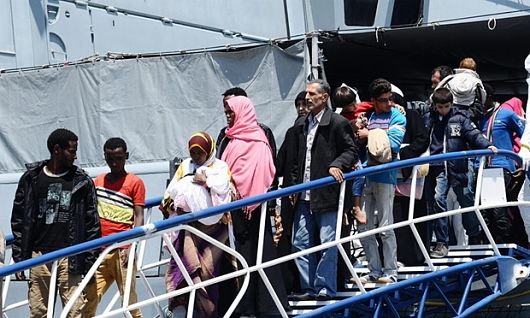
As the Washington Post states, migrants flee from their home countries to Europe because of poverty, civil war, violence and political instability. The largest number of migrants by boats are Syrians, who are attempting to flee from a civil war which has left over 200,000 dead and more than 4 million displaced. The second greatest number of refugees comes from Eritrea, which is suffering from economic issues, a repressive government and forced conscription. A large number of migrants also come from Libya, Mali and Nigeria.

As of May 2015, the U.N. estimated that over 60,000 migrants crossed over the Mediterranean Sea since the start of 2015, and another 1,800 died during the crossing.

The journey across the Mediterranean by boat is very perilous, and migrants cross because they have no other choice. They normally pay a smuggler who forces them into an old and unreliable boat (sometimes at gunpoint) and often leaves the boat halfway across the Mediterranean, relying on rescue teams from Italy and other E.U. countries to get the migrants safely to shore.

Some blame the rescue teams for the influx of immigrants. While it is true that large numbers of people attempt the dangerous journey across the Mediterranean in order to migrate into Europe — there were 220,000 unauthorized immigrants in Europe in 2014 — the rescue teams are not to blame for the large numbers of people attempting the crossing. Since Italy shut down its Mare Nostrum rescue program last October, numbers of migrants trying to cross the Mediterranean remained about the same. However, the death toll jumped dramatically. From January to April 2014, only 96 died while crossing the Mediterranean, compared to 1,500 during the first four months of 2015.

Nevertheless, some are still convinced that rescue teams are responsible for the higher number of people attempting to cross the Mediterranean, and the situation has led to the rise of the far-right in Europe, especially in Italy and France, where levels of anti-immigrant rhetoric are high.

In reality, migrants only try to cross the Mediterranean because they do not have another choice. As one migrant put it, “We are between hell and the deep blue sea.”

Britain hopes that the money it is adding to the international aid budget will help lower the number of migrants by increasing political stability in regions that are suffering. However, even if Britain’s plan works, it is still unsure what will happen to those who have already migrated to Europe. There were plans to relocate 40,000 Italian and Greek refugees to other parts of Europe, but those plans appear to have stalled due to anti-immigrant sentiments.

– Ashrita Rau

Sources: Express, The Guardian, Washington Post, The Independent, The Atlantic
Photo: The Guardian

July 9, 2015
https://borgenproject.org/wp-content/uploads/borgen-project-logo.svg 0 0 Borgen Project https://borgenproject.org/wp-content/uploads/borgen-project-logo.svg Borgen Project2015-07-09 09:11:142024-12-13 17:51:50The Mediterranean Migrant Crisis
Foreign Aid, Global Poverty, War and Violence

War: Why Winning Should Not be the Only Goal

war
The way war is operated and fought constantly changes. The goals for war differ depending on situations and needs, but in the 21st century, a trend is becoming apparent about the wars we are fighting and what needs to be accomplished by them.

We are not fighting wars between kingdoms or with outstretched swords like what was once done. Some of the current wars are still being fought over land, religion and borders, but many now are over terrorism, oil and the economy.

In recent years, wars have begun with the intention of shutting specific terrorist groups down, but in the process, have destroyed the livelihood and homes of innocent bystanders. This is, regrettably, one of the side effects of war.

However, war does not have to be left at that. Too many people misconceive that the goal of war is “winning”, regardless of what that winning entails. While, of course, losing is certainly not the goal, the goal of the wars we are commonly fighting is much greater than simply winning.

In places like Afghanistan and Iraq, there is potential to do more than take down Al-Qaeda, the Taliban, or any associated forces.

These terrorist forces should be a main focus of any war where they are the concern, but ensuring they do not regroup, or that others similar to them do not arise, is equally important in war efforts against terrorism.

A striking fact about terrorism is that it is easier for terrorist groups to form and prosper in impoverished or developing nations. Dissolving Al-Qaeda, the Taliban or ISIS are vital steps in eradicating terrorism; however, leaving the struggling nations to fend for themselves afterwards only opens up the possibility for new, more dangerous groups that could form in the wake of destruction and transformation.

Dr. Joseph Gerson, the Director of Programs of the American Friends Service Committee, recognized that to make true change with terrorism, “we must address the root causes of the attacks.”

By working to improve situations in troubled areas, problems such as terrorism can be eliminated at their roots.

From the outside, the entire nation that terrorist groups originate from are often criminalized and grouped into the same category as terrorist. This, of course, is not the case for citizens of those nations.

The Revolutionary Association of the Women of Afghanistan proved that when they urged for the “Taliban [to] be overthrown by the uprising of the Afghan nation” rather than by “a vast aggression on our country [that] will shed the blood of numerous women, men, children, young and old of our country.”

Working from the inside out is precisely what RAWA was calling for, because of their understanding that permanent change cannot be accomplished until interior progression is made.

This is not to say that troops should remain in previous war zone areas past the amount of time that is needed, or that no war efforts should be made at all. Rather, once the initial needs of war are accomplished, such as eradicating the current terrorist threats, troops should continue to aid the rebuilding of the nation so that it can become strong and dominant against any future terrorist threats.

According to The Guardian, “with more displaced people than at any time since the second world war,” helping those people and their nations that are weaker and more prone to threats is the most promising answer to achieving lasting results.

We must fight in order to protect ourselves and those around us, but ensuring that the world continues to be safe after the initial threat is gone is equally important.

“Politicians are taking the easy option of failing to understand the wider world” that is at stake if impoverished individuals and nations do not receive the aid needed.

When it is decided to step in and take action in the form of war, winning is not the only goal that should be on our minds. Improving the livelihood of those in impoverished communities and nations so that threats and issues do not reappear should also be a goal.

– Katherine Wyant

Sources: Common Dreams, The Guardian, Revolutionary Association of the Women of Afghanistan
Photo: Flickr

July 6, 2015
https://borgenproject.org/wp-content/uploads/borgen-project-logo.svg 0 0 Borgen Project https://borgenproject.org/wp-content/uploads/borgen-project-logo.svg Borgen Project2015-07-06 09:43:182020-07-13 12:04:46War: Why Winning Should Not be the Only Goal
Development, Foreign Aid, United Nations

Foreign Aid Successes and the Millennium Development Goals

foreign_aid_successes
Tracking foreign aid successes is essential to understanding how state actions affect the world’s poorest places, as well as dispelling myths about the ineffectiveness of aid. Aid works, and there have been dramatic improvements in education, health and the basic quality of life in the developing world because of it.

The Millennium Development Goals (MDGs) were established and adopted by all members of the United Nations in 2000. Some of these goals include reducing child mortality, combating HIV/AIDS rates and severely curbing extreme poverty by 2015. While not all of these goals have been met, there has been remarkable progress in others. Tracking progress toward these goals thus far can help fill in knowledge gaps about which aspects of global poverty need to be addressed the most.

For example, the rate of extreme poverty since 2000 has been cut in half (extreme poverty being defined as living on less than $1.25 per day). In about a decade, nearly half a billion people were pulled out of extreme poverty, especially in China and India. Poverty rates in Africa are also expected to fall below 40% this year. A Brookings Institute report estimates that this halving of extreme poverty rates took place as early as 2008, a full seven years before the deadline, and continued despite the global recession.

Foreign aid has also had a huge impact on global health. Another one of the MDGs was to reduce under-five child mortality by two-thirds by 2015. This goal was met in Rwanda, a country which only two decades ago was engulfed in a violent civil war; additionally, child mortality was reduced by one- to two-thirds in the last decade in some of the top U.S. aid recipients, such as Ethiopia. Globally, this amounts to a 10% reduction in infant mortality between 2005 and 2013.

Another oft-overlooked example of foreign aid successes are the health services and products that the United States Agency for International Development (USAID) provides to millions of people in the developing world. These products and services, among other things, have led to a total eradication of smallpox. One specific example of the effectiveness of USAID health programs is that U.S. foreign aid saves 3 million lives annually in the developing world through immunizations. USAID was also instrumental in providing 1.3 billion people with safe drinking water, and 750 million others with sanitation by supporting the United Nations Drinking Water Supply and Sanitation Decade.

Millennium Development Goal 6 calls to combat HIV/AIDS and other diseases. The U.S. leads the way in HIV/AIDS treatment and prevention, having established the U.S. President’s Emergency Plan for AIDS Relief (PEPFAR). Since its inception, this program has, according to the National Academies Institute of Medicine, saved millions of lives by providing antiretroviral drugs to affected regions. Additionally, the program has served as a proof-of-concept that HIV/AIDS prevention and treatment services can be effectively implemented on a large scale, something that was thought to be impossible only a few decades ago.

USAID has also helped affect change in education in the developing world. Since 1950, the rate of enrollment for children in primary school has gone from less than half to about 90% globally. Consequently, literacy rates have increased by a third in the last 25 years. Two of the Millennium Development Goals were to achieve universal primary education as well as promote gender equality. USAID is pursuing these two goals by promoting robust programs that expand access to education for women in countries like Liberia and Mali.

There are many reasons to be optimistic about the efficacy of foreign aid. Aid programs should be subject to scrutiny and review so that they may be made more efficient and target the populations that most need them. However, it is also important to take into account the many foreign aid successes that USAID and other donors have had in the developing world. Acknowledging that aid works is the first step in achieving the Millennium Development Goals.

– Derek Marion

Sources: Washington Post, Brookings Institute USAID, World Bank Foreign Affairs, IOM
Photo: International Institute for Sustainable Development

July 6, 2015
https://borgenproject.org/wp-content/uploads/borgen-project-logo.svg 0 0 Borgen Project https://borgenproject.org/wp-content/uploads/borgen-project-logo.svg Borgen Project2015-07-06 06:15:342024-12-13 17:51:39Foreign Aid Successes and the Millennium Development Goals
Development, Foreign Aid

The BRIC Countries Growing Contributions to International Aid

BRIC_countries
Times are changing in the realm of foreign aid. Recent economic downturns have caused the aid levels of traditional donors like the US, Japan and the European Union to stagnate. However, another group of countries is rising to take their places. While in the past, these countries have received large amounts of foreign aid, they have rapidly evolved into some of the biggest benefactors. These burgeoning non-traditional donors are the BRIC countries.

Devised in 2001 by Jim O’Neil of Goldman Sachs, the acronym, BRIC, indicates Brazil, Russia, India and China. Within their borders, they contain 40% of the global population, encompassing a quarter of the world’s land and constitute another quarter of the global GDP. Those are some significant fractions.

Though already substantial, the BRIC countries stand to grow into the largest economies of the 21st century. According to predictions, China will have the largest GDP in the world by 2050, nearly twice that of the US. While China’s BRIC cohorts, India, Brazil and Russia are expected to stand at third, fifth and sixth places respectively.

In coincidence with their economic expansions, the BRIC countries have also stepped up their contributions to foreign aid. Estimates place China at the head of the pack with foreign aid spending in the broad range of $4 billion to $25 billion annually. According the Council on Foreign Relations, “This higher estimate would make China the second-largest provider of aid after the United States.” The rest of the BRICs trail behind. Estimates suggest India donates up from $680 million to $2.2billion annually, followed by Brazil with $400 million to $1.2 billion and finally, Russia with $500 million a year.

Excluding China however, these levels still hardly match traditional donors such as Norway, Sweden, Australia, Japan, the UK, France, Germany and Italy. Russia’s aid spending equals approximately that of Greece, while India’s spending compares to that of Portugal.

So then, what exactly makes the BRIC foreign aid spending significant?

Though the BRICs do not spend nearly as much as traditional donors, they spend in more incisive and focused manners. According to the GHSi, “international organizations have started looking to the BRICS as potential donors and health innovators in their own right . . . These countries represent a potentially transformative source of new resources and innovation for global health and development.”

India in particular has focused on global health initiatives that have labeled it “The Developing World’s Pharmacy”. As a major manufacturer of pharmaceuticals, India makes 60% to 80% of vaccines used by the UN and 80% of all donor-funded HIV treatments to developing nations.

Growth in spending, rather than the sheer magnitude of spending, also distinctively marks BRICs from more traditional donors. According to Reuters, all BRIC countries have heavily accelerated foreign aid spending in recent years. China has quadrupled its foreign aid spending between the years 2004 and 2011. According to their estimates, Brazil’s aid spending has had an annual increase of 20% a year between the years of 2005 and 2011. In 2010, Russia’s aid spending had quadrupled since 2006.

This growth also comes at a time when some traditional donors’ spending has become stagnant. While India’s foreign aid spending has, according to Reuters, “grown . . . at a rate 10 times that of the US,” Italian foreign aid has “fallen 10 percent in [the same] period.” In 2014, other traditional donors like Canada, France and Portugal all significantly decreased foreign aid spending.

For the rapidly expanding BRIC countries, foreign aid serves as a way to galvanize their position amongst the more traditional global powers. While they still cannot quite match their more developed counterparts, their increasing foreign aid spending reflects their predicted ascension into economic prosperity.

– Andrew Logan

Sources: Asia Pathways, CFR Global Sherpa 1, Global Sherpa 2 IPS News, NCBI Reuters, The Guardian 1 The Guardian 2
Photo: Flickr

July 2, 2015
https://borgenproject.org/wp-content/uploads/borgen-project-logo.svg 0 0 Borgen Project https://borgenproject.org/wp-content/uploads/borgen-project-logo.svg Borgen Project2015-07-02 15:59:592024-06-05 03:46:36The BRIC Countries Growing Contributions to International Aid
Advocacy, Foreign Aid, Poverty Reduction

International Advocacy Organizations

international_advocacy_organizationsInternational advocacy organizations are at the heart of improving the lives of millions all over the world. But what exactly are they? How do they function? How do they differ from other “charity” organizations? How effective are they?

A simple Google search provides a basic definition of an advocacy organization: “an ‘advocacy group’ is an organized collection of people who seek to influence political decisions and policy, without seeking election to public office.” Apply this to an organization working on a global scale and voila, an international advocacy organization.

However, things get sticky when the distinction is made between an international advocacy organization and other global nongovernment organizations (NGOs). But, there is a difference between an advocacy organization and a charity or other global NGO. For example, The Borgen Project is strictly an international advocacy organization. It advocates for the world’s poor.

However, another popular NGO named UNICEF is different. It provides aid, as well as a bit of advocacy as well. This is the difference. International advocacy organizations usually focus more on advocacy and not providing physical aid to those in poverty.

ONE Campaign is a perfect example of an international advocacy organization. ONE advocates for the world’s poor, with a particular focus on those in Africa. Their mission fits the definition of an advocacy organization perfectly: “we raise public awareness and work with political leaders to combat AIDS and preventable diseases, increase investments in agriculture and nutrition, and demand greater transparency so governments are accountable to their citizens.”

ONE does not focus on raising the funds to build hospitals and schools. Instead, ONE does its work by educating and mobilizing thousands of volunteers who advocate and campaign to keep programs related to key issues regarding poverty funded by governments.

Global Citizen is another international advocacy organization, with a focus on advocacy and campaigning instead of direct aid. Global Citizen focuses on a broader group of issues and global challenges including health, education, water, sanitation and food security. Just like the ONE Campaign, Global Citizen mobilizes volunteers to campaign for awareness of these issues.

What do international advocacy organizations do to ensure efficiency and impact? The World Health Organization (WHO) suggest seven points to make sure that advocacy efforts are effective:

  1. Define the situation – identify the issue. For example, global poverty.
  2. Establish goals and objectives – specific, targeted, measurable long-term goals that can be met.
  3. Identify target audience – usually decision-makers (Congress) and people who influence decision-makers.
  4. Develop key messages – a clear, compelling, and structured message to deliver to target audiences.
  5. Develop and implement advocacy plan – plan by which messages are delivered to audience.
  6. Engage media interest – social media, advertising, and opinion pieces.
  7. Monitoring and evaluation – important to assess and monitor the impact of advocacy efforts in order to make improvements.

Global advocacy organizations are generally effective at what they do. In 2014, Global Citizen along with 18 partners successfully saw the passage of the Water for the World Act in the United States and $639 million secured for the provision of quality education to kids in impoverished countries. The ONE Campaign has a long list of successful accomplishments, including seeing the United Kingdom become the first country to meet the 0.7% as a share of national income international aid target set 43 years ago, as well as successful advocacy for the African Growth and Opportunities Act which mutually improved trade ties between the United States and Africa.

These are only a few of the many successes of Global Citizen and the ONE campaign, and only a minute number when the multitude of other international advocacy organizations around the world are taken into account. Global advocacy organizations are key to fighting poverty and with more successes, they will continue to improve the lives of millions around the world.

– Greg Baker

Sources: ONE 1, ONE 2 Global Citizen, WHO
Photo: Unicef

July 2, 2015
https://borgenproject.org/wp-content/uploads/borgen-project-logo.svg 0 0 Borgen Project https://borgenproject.org/wp-content/uploads/borgen-project-logo.svg Borgen Project2015-07-02 13:36:162024-05-27 09:25:22International Advocacy Organizations
Activism, Foreign Aid, Politics and Political Attention

The Effect of Conservative Danish Politics on Foreign Aid

danish_politicsOn June 18, Denmark’s center-left government, the Social Democrats, were ousted out of the political limelight as the country moved dramatically to the far right in favor of the ring-wing, populist and anti-immigrant Danish People’s Party (D.P.P). The Danish People’s Party is often regarded with stigma both at home and abroad and is on the outskirts of Danish politics since its founding in 1996.

However, in the most recent elections, the D.P.P. came in second place with 21.1% of the votes, only 5.2% less than the number of votes received by the leading Social Democrats. According to preliminary results published by the DR.DK, Denmark’s national broadcaster, the center-right bloc that includes the D.P.P now holds a majority of 90 seats in Parliament, which, for the first time, has elevated the D.P.P. into the centerfold of Danish politics. The results of this election come on the heels of growing unrest within Denmark over issues related to immigration and the security of the Danish welfare state. Denmark, a socialist and uber-liberal country which was voted “happiest country in the world” last year, is one of the highest-functioning welfare state programs in the world. The thanks is owed to the Danish citizens paying the highest income taxes in the world, at 60.2%.

The Danish welfare state was created in 1933 following the Social Reform Act, which sought to redirect Denmark’s attention inwards following the loss of the last remnants of the former Danish Empire, which once included Southern Sweden, Northern Germany, Iceland and Norway (and continues to include Greenland and the Faroe Islands). A “Denmark for the people” mentality was adopted, which subsequently iterated outwards into a Scandinavian-socialist ethos which has traditionally regarded foreign aid as an obvious centerpiece of Danish foreign policy. Providing welfare services “from the cradle to the grave” for citizens at home, such as free childcare, education through university and healthcare, and providing international aid to citizens abroad was regarded as two sides of the Danish-socialist-mentality coin.

The recent elections reflect the ways in which some Danes have begun to adjust their thinking about the welfare state and its relationship to those outside the “Danish family.” Similar to the recent wave of anti-immigrant parties which have popped up throughout Europe, such as the Finns Party in Finland, the Progress Party in Norway, the Sweden Democrats in Sweden and UKIP in the United Kingdom, the D.P.P. frames itself as the voice of “Old Danes” who regard the growing influx of immigrants within Denmark as a threat to the Danish welfare state and the Danish way of life.

The presence of immigrants in Denmark, who make up around nine percent of the population country-wide, in conjunction with the recent surge of 14,000 mostly Muslim asylum seekers and the Copenhagen shootings of February 14 by the 22-year-old son of Palestinian immigrants, has produced a backlash of growing nationalist sentiment in Denmark. As a result, supporters of the D.P.P. have begun to implicitly redefine how “Denmark for the people” is understood. A motto that traditionally went unchallenged, given the historically monocultural and monoethnic nature of the Danish population, is now being reformulated by the D.P.P. to function more as “Denmark for the Danes;” as the D.P.P. has proposed slashing welfare entitlements for newly arrived immigrants and refugees into the country.

Increasing exclusivity regarding Danish welfare state benefits is being matched in Parliament by talk among the D.P.P and the Liberal Party that Denmark should cut back on foreign aid in order to channel more money into welfare entitlements for native Danish citizens, especially the elderly. In 1970, the world’s richest developed countries agreed to give point seven percent of their Gross National Income (GNI) annually to international development aid.

Historically, Denmark, along with Norway, Sweden, Luxembourg and the Netherlands, has been one of the few developed countries to actually commit to reaching this target. Proposals or talks of cutting foreign aid thus represent a dramatic break from Denmark’s historically extraordinary commitment to reaching the point seven percent goal. A survey conducted for the Ministry of Foreign Affairs has also found that right-wing political opinion about foreign aid is being matched in public opinion, as support among Danes for foreign aid has fallen by 15% in the last five years. The recent shift to the right in Denmark now leaves Sweden as the only country in Scandinavia in which the center-left continues to hold the majority of political power. The Swedish equivalent to the D.P.P. – the Swedish Democrats – also continue to be regarded as political pariahs in mainstream Swedish society.

Despite Denmark’s sudden swing to the conservative anti-immigrant right, the country currently continues not only to meet but to exceed the annual point seven percent foreign development aid target.

– Ana Powell

Sources: BBC, CNN Money DR, The Guardian New York Times 1, New York Times 2 OECD
Photo: Dagens

July 2, 2015
https://borgenproject.org/wp-content/uploads/borgen-project-logo.svg 0 0 Borgen Project https://borgenproject.org/wp-content/uploads/borgen-project-logo.svg Borgen Project2015-07-02 13:10:552024-12-13 17:53:59The Effect of Conservative Danish Politics on Foreign Aid
Page 47 of 61«‹4546474849›»

Get Smarter

  • Global Poverty 101
  • Global Poverty… The Good News
  • Global Poverty & U.S. Jobs
  • Global Poverty and National Security
  • Innovative Solutions to Poverty
  • Global Poverty & Aid FAQ’s
Search Search

Take Action

  • Call Congress
  • Email Congress
  • Donate
  • 30 Ways to Help
  • Volunteer Ops
  • Internships
  • Courses & Certificates
  • The Podcast
Borgen Project

“The Borgen Project is an incredible nonprofit organization that is addressing poverty and hunger and working towards ending them.”

-The Huffington Post

Inside The Borgen Project

  • Contact
  • About
  • Financials
  • President
  • Board of Directors
  • Board of Advisors

International Links

  • UK Email Parliament
  • UK Donate
  • Canada Email Parliament

Get Smarter

  • Global Poverty 101
  • Global Poverty… The Good News
  • Global Poverty & U.S. Jobs
  • Global Poverty and National Security
  • Innovative Solutions to Poverty
  • Global Poverty & Aid FAQ’s

Ways to Help

  • Call Congress
  • Email Congress
  • Donate
  • 30 Ways to Help
  • Volunteer Ops
  • Internships
  • Courses & Certificates
  • The Podcast
Scroll to top Scroll to top Scroll to top