• Link to X
  • Link to Facebook
  • Link to Instagram
  • Link to TikTok
  • Link to Youtube
  • About
    • About Us
      • President
      • Board of Directors
      • Board of Advisors
      • Financials
      • Our Methodology
      • Success Tracker
      • Contact
  • Act Now
    • 30 Ways to Help
      • Email Congress
      • Call Congress
      • Volunteer
      • Courses & Certificates
      • Be a Donor
    • Internships
      • In-Office Internships
      • Remote Internships
    • Legislation
      • Politics 101
  • The Blog
  • The Podcast
  • Magazine
  • Donate
  • Click to open the search input field Click to open the search input field Search
  • Menu Menu

Archive for category: Foreign Aid

Foreign aid coverage and information.

Foreign Aid, Global Poverty, Humanitarian Aid

Why Foreign Aid in Iraq is Important

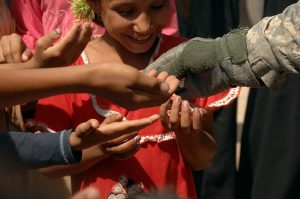
Foreign Aid in IraqAfter suffering so much war and conflict that forced many to flee from their country and led to the liberation of Iraq from the Islamic State, millions of displaced citizens are returning home. Out of six million Iraqi refugees in 2014, 3.8 million have returned to this broken country. A large number of individuals in Iraq depend on foreign aid and they still receive large donations and support every year. However, organizations providing aid have reported that donors have started to shift their focus to reconstruction instead of basic needs. Having this in mind, it is no wonder that many are worried about the people who are still unable to survive without humanitarian assistance.
Millions of Iraqi Refugees in Need

The U.N. estimates that 8.7 million people needed help from foreign aid in Iraq in 2018. This number is significantly lower than 11 million in need in 2017 but still means that there are many people in crisis. Due to the decrease in need, the U.N. requested $416 million less for emergency response aid in 2018. The U.N. still needs $569 million to make this one of the best-funded programs, but humanitarians and agencies are still concerned about donor fatigue.

As mentioned above, nearly four million refugees and internally displaced people (IDP) have returned to Iraq in the past four years. The U.N. and Iraqi government believed that more refugees would return after the Islamic State was ousted from Iraq. Their prediction was that most people would come home by the end of 2018.

However, people are returning at a far slower pace than expected meaning more Iraqis will need help for a longer period than organizations and donors are prepared for. Some refugees have even come back to camps after they realized that there were none to little opportunities for them in their hometowns. Camps in some areas such as Mosul, that had over 820,000 people displaced, are seeing higher rates of new arrivals than rates of people that are leaving.

From Emergency Aid to Reconstruction

Donors have not completely lost interest in providing foreign aid to Iraq but the focus has changed from humanitarian assistance and emergency aid to reconstruction. Instead of supporting individuals and their needs, aid is being used to rebuild the country and help it recover with infrastructure.

In February 2018, the U.N. began the two-year, Iraq Recovery and Resilience Program, the program that aims at bettering people’s lives by providing reconstruction and infrastructure reforms. The idea is that the country will become more stable and peaceful if communities are rebuilt and provided with bridges, roads, schools and hospitals. The government also has high hopes for this program as well and believes that it will make Iraqis more confident and trustful of their abilities.

Realistic Needs of People

This sounds great but the underlying reason why people are coming back to the country so slowly and often return to camps is the lack of job opportunities and places to live. Basic needs need to be met before great results can be seen from infrastructure programs and emergency aid such as food is still vitally important.

Humanitarians are concerned as many refugees have stated that they will no be able to survive without the food, shelter and support that they have received from aid organizations in the past.

As fighting in Iraq has dwindled, the country has received less and fewer media coverage. It is important that the global aid community does not forget the millions of Iraqis still in need and that donors continue to provide emergency foreign aid in Iraq directed to providing basic human needs.

– Alexandra Eppenauer

Photo: Flickr

October 12, 2018
https://borgenproject.org/wp-content/uploads/borgen-project-logo.svg 0 0 Borgen Project https://borgenproject.org/wp-content/uploads/borgen-project-logo.svg Borgen Project2018-10-12 13:00:532019-07-09 16:40:53Why Foreign Aid in Iraq is Important
Foreign Aid

Which Countries Give the Most Foreign Aid?

Which Countries Give the Most Foreign Aid?
In 2005, 15 countries agreed to dedicate 0.7 percent of their Gross National Income (GNI) to Official Development Assistance (ODA). ODA, according to the Organisation for Economic Cooperation and Development (OCED) stands for “the promotion of the economic development and welfare of developing countries”. The hope was to reach this goal by 2015, however, only seven countries reached this goal. Of these seven, five reached higher than the target percentage.

Wondering which countries give the most foreign aid? Here are the top five countries by the above-mentioned criteria.

Countries That Give the Most Foreign Aid

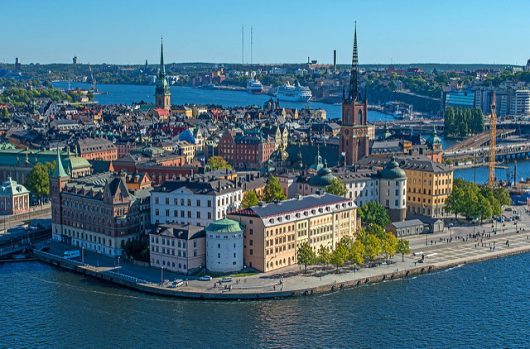
  1. Sweden – Sweden currently stands at number one in ODA support among countries from the European Union. In 2015, 1.4 percent of Sweden’s GNI, or $7.1 billion was ODA assistance. This was a dramatic increase from 2014 and was the result of in-donor refugee costs that cost $1.1 billion. That same year, over 160,000 people applied for asylum in Sweden. Most of Sweden’s ODA assistance was bilateral, meaning money was given directly to other governments. The money was mainly directed towards gender equality. More than $2 million were allocated and the focus of this money was largely geared towards population and reproductive health. During this time Sweden also integrated a Feminist Foreign Policy approach that ensures that women have the ability to access their human rights.   
  2. Norway – In 2015, Norway dedicated $4.3 billion to ODA support. This represented just over 1 percent of Norway’s GNI. This was a slight decrease from 2013, but Norway still remained above the dedicated 0.7 percent of GNI and ranks higher than most countries within the European Union. Most of Norway’s ODA support was for environmental causes. Thirty-four percent of their bilateral aid was focused on the environment (this translates to $1.3 billion). One of the biggest environmental issues that Norway addressed was climate change, and Norway developed an Oil for Development program for this mean. This program helps developing countries oversee their oil resources in a more sustainable way.
  3. Luxembourg – Luxembourg spent 0.93 percent of GNI od ODA, which totaled to $361 million. Most of this money was focused on economic development, more specifically strengthening the local private sector. Luxembourg helped developing countries economies in several ways. One of the most important was helping to improve trade performance and integration into the world economy. In total, $44 million went towards economic aid. The region that received a majority of this money was sub-Saharan Africa that took 44 percent of Luxembourg’s total bilateral aid.     
  4. Denmark – Denmark achieved 0.1 percent more than the established goal, which equated to more than $2.5 billion in ODA assistance. This was a slight increase from 2014, however, aid is expected to decrease slightly in the future. Despite this decrease, Denmark plans to remain at 0.7 percent of GNI spending towards ODA. Like Sweden, most of this money was provided to gender equality initiatives. The amount of bilateral aid that went towards gender equality was around $1 billion. Roughly 59 percent of this money had the objective of women’s empowerment. Denmark was above average in this category, since the average aid of countries from the European Union was 34 percent.
  5. The Netherlands – The last of the top five countries on the list is the Netherlands. ODA from Norway reached 0.76 percent of GNI spending or $5.8 billion in total numbers. This was an increase of 24 percent from the previous year and like Sweden, this was largely due to in-donor refugee costs. Also like Sweden, most of the Netherland’s ODA went towards gender equality, in the total of $1.6 billion. This is the result of spending toward reproductive health, water, sanitation and economic infrastructure, which all have an emphasis on gender.

Although many countries out of 15 that have promised to spend their GNI od ODA haven’t done that, the countries that did reach a goal showed that several developed countries view foreign assistance as an important piece of their economy. The top five countries presented in this text are the good examples of how can developed countries provide help to other, less developed countries.

– Drew Garbe

Photo: Flickr

September 28, 2018
https://borgenproject.org/wp-content/uploads/borgen-project-logo.svg 0 0 Borgen Project https://borgenproject.org/wp-content/uploads/borgen-project-logo.svg Borgen Project2018-09-28 14:54:562019-07-19 08:13:17Which Countries Give the Most Foreign Aid?
Foreign Aid

How the US Benefits from Foreign Aid to St. Vincent and the Grenadines

St. Vincent’sDespite appearing to be a tropical paradise to prospective tourists, St. Vincent’s population faces a harsh economic reality. Its population is currently experiencing a 30 percent unemployment rate while more than 90 percent of the people there don’t have healthcare insurance. The U.S. doesn’t have to sit on the sidelines while conditions fail to improve for those struggling to escape poverty. By reversing these statistics, The U.S. benefits from foreign aid to St. Vincent and the Grenadines.
Drug Trafficking in St. Vincent and the Grenadines

St. Vincent and the Grenadines’ high unemployment and low health insurance rates are primarily consequences of its economic downturn during the global recession of 2008 (St. Vincent had a 0.6 percent decline in GDP) and its subsequent sluggish recovery. In combination with this, the country has experienced difficult agricultural seasons over the years, particularly due to hurricanes, that have resulted in fluctuating yields with a -3 percent growth in 2015 up to a record 14.5 percent in 2016 then down to 1.7 percent GDP growth in 2017.

This is how drug trafficking gained more ground within St. Vincent’s borders. Faced with uncertain incomes year to year, an increasing number of desperate islanders have sought work growing marijuana, participating in the narcotics trade from Venezuela or both. So much so, that The U.S. State Department’s 2018 International Narcotics Reports claims that “St. Vincent continues to be a primary source for cannabis in the Eastern Caribbean.” Faced with no income or health care, illicit trafficking has become a necessary means for survival.

The drug trade has become a serious foreign policy issue for The United States along its southern border. Drugs, such as cocaine and marijuana, not only enter The U.S. through Mexican land routes but now increasingly so through Caribbean countries like St. Vincent. Drug traffickers rely on yachts, “go-fast” boats, fishing vessels and cargo ships for transporting illicit drugs up The Caribbean to The U.S. or Europe.

US  Foreign Aid in St. Vincent and the Grenadines

The U.S. Department of State and The U.S. Agency for International Development have both implemented foreign aid projects meant to improve conditions in St. Vincent while simultaneously strengthening U.S. security. This is one example of how The U.S. benefits from foreign aid to St. Vincent and the Grenadines.
The U.S. Agency for International Development has embraced a youth-centered strategy that employs the use of programs such as the Skills and Knowledge for Youth Project (SKYE), The Community, Family and Youth Resilience Program (CFYR) and the Liberty Lodge Boys Training Center. All of these U.S. sponsored programs provide funding and training for youth to get an and education and to find employment while also receiving healthcare benefits.

In particular, SKYE provides 2,000 youth in The Caribbean with counseling, employment skills training and rehabilitation services. Similarly, CYFR intends to seek out evidence-based solutions to local issues through community involvement, greater access to employment and a reformed law enforcement system. The Liberty Lodge Boys Training Center, funded and supported by USAID, has recently been re-established in order to ensure that young men will have access to education and employment and be able to provide for their families.

While these programs and initiatives are fairly young, they do have the potential to have a significant impact on the people of St. Vincent and the Grenadines. All utilize local resources with the goal of strengthening local authorities and leaders to become self-sustaining.

Another way that The U.S. benefits from foreign aid to St. Vincent and the Grenadines is through a more secure Caribbean. The U.S. Department of State has teamed up with The Department of Defense to build and maintain a stronger government and create more security in The Caribbean. This joint venture between The U.S. and The Caribbean nations is known as The Caribbean Basin Security Initiative (CBSI). The CBSI demonstrates an overlap between U.S. humanitarian and U.S. security policies.
Since 2010, The U.S. has committed $437 million in funding to the CBSI with three significant goals in mind.

  1. Reduce illicit trafficking through programs that focus on counter-narcotics to stemming the flow of illegal arms sales.
  2. Increase public safety and security by improving law enforcement and judicial institutions.
  3. The promotion of social justice through justice reform, anti-corruption reform and increased educational, social and economic opportunities for youth.

The DEA reported seizing 658.18 kg of cocaine and 267 metric tons of marijuana during the first 9 months of 2017 thanks to efforts to upgrade security measures in the area. Furthermore, they have seized $1.3 million in drug proceeds, which is used on programs to further support the country’s efforts to stamp down on drug trafficking. The funding provided by the CBSI has also led to the building and funding of new rehabilitation clinics throughout St. Vincent in order to help reduce drug addiction.

Here, poverty and security have become one in the same. U.S. foreign policy advocates are utilizing security policies and funding to better protect the people in The Caribbean while, at the same time, protecting those at home in The States. Moreover, creating better living conditions for the citizens of St. Vincent, especially the youth, is viewed as a necessity to securing The Caribbean from illicit trafficking within and outside the region.

The U.S. benefits from foreign aid to St. Vincent and the Grenadines precisely because of the fact that it strengthens regional security in the Americas. Initiatives, such as the CBSI and CFYR, demonstrate that foreign aid and poverty reduction are vital tools within U.S. foreign policy. St. Vincent and the Grenadines may be a tiny blip on the map, but with U.S. foreign aid, it could have a substantial impact on the Americas.
– Tanner Helem
Photo: Flickr

September 16, 2018
https://borgenproject.org/wp-content/uploads/borgen-project-logo.svg 0 0 Kim Thelwell https://borgenproject.org/wp-content/uploads/borgen-project-logo.svg Kim Thelwell2018-09-16 01:30:172024-05-29 22:53:15How the US Benefits from Foreign Aid to St. Vincent and the Grenadines
Foreign Aid, Global Poverty

US Benefits From Foreign Aid to Micronesia

U.S. Benefits From Foreign Aid to Micronesia

The U.S. benefits from foreign aid to Micronesia in many ways, including an increase in trade as well as domestic and global security.
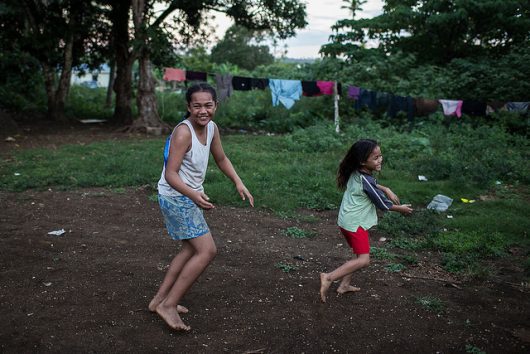
There are four basic income levels. Level 1 is extreme poverty described as the situation in which the family can barely afford to eat and must get water from wells. Level 2 is lower-middle income meaning the family can afford decent food and shoes. Level 3 is upper-middle income that means the family can afford running water and basic appliances. Level 4 is high income- family can afford a nice house and cars.

Micronesia is a Level 2 country, whereas the U.S. is a Level 4 country. The U.S. is in a position to help Micronesia’s economy grow and has been doing so since the Compact Free Association between the two countries was signed on July 18, 1947. Under the Compact, the two governments agreed to cooperate in mutual interest. Micronesia has been benefiting from this aid immensely and from the other side, the U.S. benefits from foreign aid to Micronesia have been equally impressive, including trade and security.
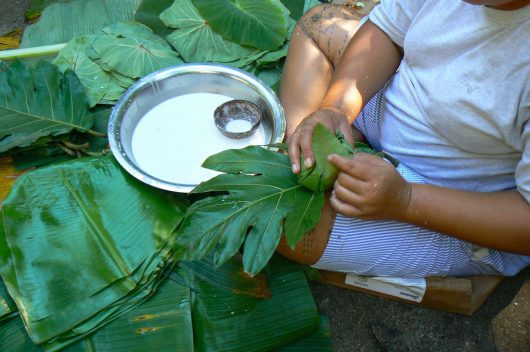
Increased trade between two countries

Whether an individual or country, the more money someone has, the more goods that someone can afford to buy. Furthermore, richer countries are more willing to trade with other countries. This trade lifts people out of poverty by letting the citizens of the poorer country gain access to more markets and sell more goods to richer customers. The newly-enriched people can then buy more expensive products. Thus, people in both countries continue buying from each other and both make money in the process.

The U.S. spent $49.9 million on foreign aid to Micronesia in 2016. This money enabled Micronesians to trade with the U.S. and other countries as well. Micronesia currently exports 26.6 percent of its GDP and has a total merchandise trade value (both imports and exports) of 74.3 percent of its GDP. The export rate is stable and the increase in the merchandise trade rate shows no sign of stopping.

Increased security for both countries

As one of the key features of the Compact Free Association, the U.S. provides defensive forces to help protect Micronesia. In return, Micronesians are free to join the U.S. military. This arrangement allows the U.S. to station military personnel near the East and South China Seas, where the majority of Asian trade and one-third of global trade takes place. As a result, the U.S. has a constant military presence in the area and can keep an eye on Chinese trade transactions, as well as 50 percent of the planet’s energy commerce.

Unfortunately, Micronesia wishes to end the Compact Free Association this year, stating that it heavily favors the U.S. If the Compact were to end, Micronesia could fall under the growing influence of China. This could make Micronesia a pawn in China’s plan to secure the China Seas and keep the U.S. out of these waters, ensuring that China can accomplish its military and national goals. In addition to undoing the U.S. benefits from foreign aid to Micronesia, this would leave nearby U.S. territories, such as Guam and American Samoa, exposed and vulnerable.

Additionally, the U.S. would be cut out of a crucial trade route to Euroasia. This means that the U.S. would have to find other and possibly longer trade routes. The fact that U.S. goods would take longer to get to their trade partners would result in a higher price of those goods. The final recipients of the goods would be unwilling to pay such prices since they were used to getting these goods at lower prices. This would lead them to reconsider their overall trade relationship with the U.S.

Ways in which the U.S. benefits from foreign aid to Micronesia cannot be overstated. Giving Micronesia more money means that Micronesians can afford to buy more American goods, resulting in the increased trade. Furthermore, it increases security for both countries by strengthening Micronesia’s overall relationship with the U.S. Both of these factors motivate the U.S. to continue helping Micronesia and, ultimately, both countries are better off with it.

– Cassie Parvaz

Photo: Flickr

September 10, 2018
https://borgenproject.org/wp-content/uploads/borgen-project-logo.svg 0 0 Borgen Project https://borgenproject.org/wp-content/uploads/borgen-project-logo.svg Borgen Project2018-09-10 18:57:482019-12-18 11:39:03US Benefits From Foreign Aid to Micronesia
Foreign Aid, Global Poverty

U.S. Benefits from Foreign Aid to the Solomon Islands

U.S. Benefits from Foreign Aid to the Solomon Islands

The Solomon Islands is a small island nation in the Western Pacific located just off the coast of Papua New Guinea. As same as for many other distant countries, many Americans might wonder how the U.S. benefits from foreign aid to the Solomon Islands? The reasoning lies primarily behind the economic and geopolitical environment of the Solomon Islands, both of which make this small country a good candidate for aid.

The relationship between U.S. and Solomon Islands

The relationship between the United States and the Solomon Islands began during World War II when the U.S. had a large-scale presence on the Islands. Today, the relationship is still very strong.

According to the U.S. State Department, the mutual goals of the United States and the Solomon Islands are:  improving regional stability, promoting democracy and human rights, combating trafficking in persons, responding to climate change, increasing trade, and promoting sustainable economic development”.

In the statement above the economic and geopolitical factors influencing U.S. investment in the Islands are emphasized. Geopolitically, The Solomon Islands lie in a strategic area. Per USAID, “A vast proportion of the world’s shipping passes through Pacific waters, making the Pacific Islands central to global security and the global economy”. For this reason, a close relationship with the Solomon Islands guarantees freedom of U.S. shipping interests and gives leverage to the United States in related conflicts, some of which occurred recently.

Furthermore, in a region that has significant geopolitical importance and was targeted by China, providing foreign aid to the Solomon Islands gives the U.S. an ally in a strategic location. This idea has been reinforced by the fact that Solomon Islands national security officials receive training and educational opportunities by the U.S. military. Clearly the U.S. Benefits from foreign aid to the Solomon Islands in this regard.

Economically, the Solomon Islands are an ideal candidate for aid since they are a relatively poor country. As a result, the impact of humanitarian aid in improving the lives of those on the island and in creating a strong relationship between the two countries is substantial.

Climate change effect on the Solomon Islands

Since this is an area highly vulnerable to the effects of climate change, U.S. foreign aid to the Solomon Islands has helped this small country cope with climate change. In 2014, the Office of U.S. Foreign Disaster Assistance pledged 250,000 dollars to help the Solomon Islands recover from Cyclone Ita, a natural disaster that affected more than 50,000 people.

This illustrates another example of how the U.S. Benefits from foreign aid to the Solomon Islands. With climate change accelerating, vulnerable island communities such as the Solomon Islands are facing a growing existential crisis. As is the case with many of the Pacific Island nations, the Solomon Islands are poor and inadequately equipped to cope with such a crisis. In order to avert a humanitarian crisis with potentially destabilizing effects for the global community, the U.S. Foreign aid to the Solomon Islands helps ensure that the island community can be better prepared for the effects of climate change. As a result, aid to island countries is acting as an upfront cost to ensure that a bigger humanitarian crisis on the horizon never happens.

Although relatively small, U.S. foreign aid to the Solomon Islands helps protect American interests in the region and prevents a larger humanitarian crisis in the country itself that would require more resources in the future.

– Taylor Pace
Photo: Flickr

September 9, 2018
https://borgenproject.org/wp-content/uploads/borgen-project-logo.svg 0 0 Borgen Project https://borgenproject.org/wp-content/uploads/borgen-project-logo.svg Borgen Project2018-09-09 05:27:572024-05-29 22:53:23U.S. Benefits from Foreign Aid to the Solomon Islands
Foreign Aid, Global Poverty

US Foreign Aid to Guinea-Bissau

U.S. Foreign Aid to Guinea-Bissau
Guinea-Bissau is a small country in Western Africa that is facing very big problems. Like many former colonies, Guinea-Bissau has long grappled with political and social instability. As a result, the country is very poor, with over two-thirds of the country living below the poverty line. Due to this reason, its citizens are very dependant on U.S. foreign aid.

Many observers admit that Guinea-Bissau’s history of political instability is the prevalent cause of the nation’s poverty. Accordingly, this instability has played a crucial role in the prevalence of a depressed economy and a large amount of drug trafficking in Guinea-Bissau, both of which add to the current destabilization of the small African nation.

Having in mind that the instability in Guinea-Bissau is a consequence of drug trafficking and poverty, U.S. foreign aid to Guinea Bissau has focused recently on tackling the drug trade and implementing governance reform. According to the U.S. Department of State, U.S. top priorities in Guinea-Bissau are the promotion of security sector reform, combat drug trafficking, prevention of infectious disease, and implementation of multi-sector reforms. It is understandable that successful implementation of these measures will improve stability in Guinea-Bissau, resulting in increased investment, sustainable development and reduced poverty.

How will U.S. foreign aid to Guinea-Bissau benefit the United States?

As a very poor and unstable nation, the benefits of foreign aid to Guinea-Bissau adhere closely to the conventional wisdom on the subject of foreign aid. To clarify, at the heart of the argument for giving aid to foreign countries is the development of countries that are helped, and increase in their self-sufficiency, which is beneficial for everyone. Foreign aid can help countries and regions become more stable by improving the quality of life while also helping to tackle destabilizing factors. In the case of Guinea-Bissau, this means helping to end the endemic problem of drug trafficking as well as protecting against the outbreak of Ebola and other diseases which could spread to the U.S.

For these reasons, it is no surprise that U.S. funding of counternarcotics and activity in Western Africa has increased in recent years. This includes the capture of various high-level figures in Guinea Bissau. The logic behind this is that by giving foreign aid (including aid to stem drug trafficking), the development of a sustainable economy can be achieved, while citizens of Guinea will become self-sufficient and able to earn a living legally.

Once this environment becomes a reality, Guinea-Bissau could then act as a player who will reduce instability in the region, leading the way to more American investment and the opening of a new large market for American goods. It is also the hope of the U.S. that such aid will create a strong mutually beneficial economic relationship between the two countries.

War on terrorism

One final way in which U.S. foreign aid to Guinea-Bissau benefits America is through terrorism reduction. In recent years U.S. anti-narcotics assistance to Guinea-Bissau and to the region of West Africa has sought to collect intelligence on terrorist activity and illicit trafficking in the region, two issues that are often interrelated. Therefore, by assisting Guinea-Bissau and other West African nations in tackling drug trafficking, the U.S. is also cracking down on the funding of terrorist groups in West Africa. The result is not only the creation of a safer West Africa but a safer and more stable global environment where the risk of terrorist groups targeting the United States is minimalized.

Although U.S. foreign aid to Guinea-Bissau is still ramping up, there are signs already that these actions will have a tangible impact on this small country, West Africa and the United States. There are already signs of progress, and there is hope that continued aid to impoverished West African countries will help to stabilize the region and the world.

– Taylor Pace
Photo: Flickr

September 5, 2018
https://borgenproject.org/wp-content/uploads/borgen-project-logo.svg 0 0 Borgen Project https://borgenproject.org/wp-content/uploads/borgen-project-logo.svg Borgen Project2018-09-05 09:39:242024-05-29 22:53:03US Foreign Aid to Guinea-Bissau
Foreign Aid, Global Poverty

How the U.S. Benefits From Foreign Aid to Lesotho

How the US Benefits From Foreign Aid to Lesotho
Situated wholly within the country of South Africa, the small country of Lesotho is a member of a very rare group of countries which exist completely within the borders of a separate state. Lesotho’s population is roughly 2 million, and its geography is mainly highland. At its $1,160 GDP per capita, it is classified as a lower- and middle-income country by the World Bank. While it may seem as though this African monarchy should not demand the foreign aid of large developed countries, due to its relatively small size (about the size of Maryland) and population, quite the opposite is true. Here is a look into how the U.S. benefits from foreign aid to Lesotho.

Economic

The U.S. is Lesotho’s largest trading partner with Lesotho sending 43.9 percent of its total exports to U.S. shores. Lesotho’s exports are mainly constituted of clothing (40 percent) and diamonds (22 percent).  Provided that these commodities are valued in the U.S., the U.S. benefits from foreign aid to Lesotho because it will continue receiving exports at the current rate, which will likely grow given increasing development. Furthermore, Lesotho also gets 93 percent of its imports from South Africa. As Lesotho benefits from foreign aid, the market for South African goods increases. So investing in this small country could potentially benefit a much broader population in South Africa. With the U.S. being South Africa’s third largest import source, this could potentially increase as the prosperity of Lesotho grows.

Regional Security

Since the end of World War II, the U.S. has made global political stability a priority in its foreign policy. Like many decolonized nations, Lesotho has had much violence in its short existence. In 1966, Britain released its colonial rule on Lesotho, and the country was founded as a monarchy. However, in 1970, the country’s first Prime Minister Chief Leabua Jonathan suspended the constitution, exiled the king and ushered in a 23-year-period of authoritarian rule, complete with multiple coups and political repression. In the last five years, there have been armed clashes between the police force and the military. Unrest in Lesotho has involved South Africa in the past, and if Lesotho were to receive foreign aid, the benefits in political stability would also permeate South Africa.

Health

In Lesotho, 24.6 percent of the adult population (15-49 years old) is infected with HIV/AIDS, compared to an estimated 18 percent of adults in South Africa. This staggering percentage, nearly a quarter of the population, is the second highest prevalence of the disease in the world. Young people make up a sizeable portion of this population, along with 13 percent of young women and 6 percent of young men in the country being HIV positive.  The U.S. benefits from foreign aid to Lesotho by achieving its goals for HIV/AIDS reduction and the improvement of global health. Lesotho is a key benefactor of the President’s Emergency Plan for AIDS Relief (PEPFAR), which is a U.S. governmental global initiative for the reduction of the global HIV/AIDS epidemic. PEPFAR would surely benefit by an increase in foreign aid funding.

Despite Lesotho’s small and landlocked status, it represents an area in which U.S. foreign aid can be utilized to help Lesotho’s people and benefit the economic, political and medical goals and interests of the United States.

– William Menchaca
Photo: Flickr

September 3, 2018
https://borgenproject.org/wp-content/uploads/borgen-project-logo.svg 0 0 Borgen Project https://borgenproject.org/wp-content/uploads/borgen-project-logo.svg Borgen Project2018-09-03 01:30:132024-05-29 22:53:00How the U.S. Benefits From Foreign Aid to Lesotho
Foreign Aid

U.S. Benefits from Foreign Aid to Tonga

U.S. Benefits from Foreign Aid to Tonga
By looking at Tonga and the United States on a map, it would seem the two countries share very little in common. However, despite their apparent differences, the U.S. and Tonga share a deep relationship and align closely with a number of important global issues.

U.S. and Tonga Relations

Evidence of this relationship is shown through U.S. foreign aid to Tonga, aid which directly and indirectly comes back to benefit the U.S. This aid takes various forms, including grants from the U.S. Office of Foreign Disaster Assistance to help Tonga recover from natural disasters and grants from USAID to support climate proofing the vulnerable island country.

Tonga also receives Foreign Military Financing, providing the opportunity for Tongan officers to come to the U.S. for training and education, fostering a close relationship between U.S. and Tongan armed forces. The U.S. also provides $21 million per year to Pacific island countries, including Tonga, in accordance to the Tuna Fisheries Treaty, which gives U.S. fishing vessels access to Pacific island fisheries.

Economy

In purely economic terms, the benefit is relatively minimal. Although the U.S. is one of Tonga’s primary trade partners and runs a trade surplus with the island country, the surplus is only about $11 million annually. However, the trade surplus and role of the U.S. as a primary trading partner with Tonga does indicate that U.S. foreign aid to Tonga has played a part in establishing closer economic ties between the two countries.

Stability

The biggest way the U.S. benefits from foreign aid to Tonga is stability, both in the Pacific region and the world. When foreign aid is injected into a country to help it recover from a disaster, or to help it become more self-sufficient, everybody wins. In such a case, foreign aid has a stabilizing effect, preventing large migrations, saving lives and helping to prevent future disasters. The result, besides the obvious humanitarian benefit and lives saved, is the stabilization of a volatile region and the fostering of a close ongoing relationship looking towards the future between the recipient and the donor of aid. In this case, the U.S. benefits greatly from a stable and closely aligned Tonga for various reasons. On one hand, friendly relations with Tonga and the U.S. allows for mutually beneficial cooperation between both countries, such as access to Tongan tuna fisheries by U.S. fishing vessels.

Friendly Relations

Friendly relations between the U.S. and Tonga, as facilitated by U.S. foreign aid to Tonga, also benefit the U.S. by giving it a close ally in the Pacific, a highly important geopolitical area. The importance of Tonga as a U.S. ally was recently reinforced during the RIMPAC military exercises in the Pacific. Among 26 nations to join the exercise, Tonga was the only country from the Pacific islands to participate. The inclusion of Tonga in such an important exercise indicates its importance to the U.S., while also demonstrating how U.S. foreign aid has brought the two nations together.

The most important takeaway from analyzing the relationship between the U.S. and Tonga is that foreign aid from the U.S. has been mutually beneficial. Because of U.S. support, Tonga has been able to recover faster from natural disasters and is working with the U.S. in preventing such disasters in the future. In return, the U.S. has gained a valuable ally in the Pacific.

– Taylor Pace
Photo: Flickr

September 2, 2018
https://borgenproject.org/wp-content/uploads/borgen-project-logo.svg 0 0 Borgen Project https://borgenproject.org/wp-content/uploads/borgen-project-logo.svg Borgen Project2018-09-02 01:30:402024-05-29 22:53:02U.S. Benefits from Foreign Aid to Tonga
Foreign Aid, Global Poverty

U.S. Benefits From Foreign Aid to Samoa

Samoa aid
A common misconception suggests that the United States has nothing to gain from providing aid to other countries. Some people might support the international affairs budget out of a desire to help save humanity, but there is more to providing foreign aid than that. For example, the U.S. benefits from foreign aid to Samoa when it helps increase exports and prevents damage to the island caused by natural disasters. The funding that goes towards programs overseas is not a one-time donation. Samoa will be given the tools necessary to build a self-reliable community and in turn, Samoa’s improved contribution to the global market promotes economic growth in the United States, too.

Samoa has repeatedly been victim to natural disasters that have stunted its economic growth. Tsunamis can destroy crops and natural resources, negatively impacting Samoa’s involvement with foreign trade. Since it is part of the Asia Pacific region, which has experienced significant economic growth, the destruction of Samoa’s natural resources interferes with export shipments going to the United States.

An estimated $180 billion in damages and lost resources occurs every year due to natural disasters. Within the past 20 years, $93.2 billion was spent on relief while only $13.5 billion was put towards disaster prevention. The U.S. benefits from foreign aid to Samoa by minimizing damage to the environment and saving potential exports.

To combat tsunamis and the rising sea levels, USAID encourages communication among countries in the Asia Pacific region with the use of the Pacific Disaster Center’s warning system. It compiles information from weather radars to notify Samoa when storms are headed in its direction. The Secretariat of the Pacific Community helps protect agriculture, while USAID lets stakeholders know when there is a particularly strong harvest.

In recent years, the Strategy for the Development of Samoa (SDS) announced plans to help preserve natural resources and vulnerable species. This includes replanting trees that bear fruit and restoring marine ecosystems. So far, USAID has dedicated $96 million to the entire Asia Pacific region.

The U.S. benefits from foreign aid to Samoa because it depends on Samoa’s agricultural and fishing industries. These are also two of the largest sources of income within Samoa. When help focuses on protecting crops and fisheries, Samoa increases its ability to participate in the global market.

Foodstuffs make up 40 percent of what the U.S. imports from Samoa, and nearly a quarter comes from its fish. In total, $6.76 million worth of product is sent to the United States. In addition to helping Samoa’s environmental plans, the SDS seeks to grow the country’s economic involvement through boosting productivity in the business sector. This will have a positive impact on trading with the United States.

Many other goals outlined in the SDS are designed to help Samoa and the countries that do business with it. Farmers are receiving materials to improve their harvests and hopefully reach a 20 percent increase in crops grown within Samoa.

Higher employment rates in the businesses that produce exports are predicted to help the agricultural and fishing industries. Also, financial services are looking to improve the performance of small business owners. Samoa can maximize the number of resources saved from natural disasters when all companies follow the correct protocol in the event of an emergency.

Foreign aid is an investment. The United States’ efforts to promote a thriving economy in Samoa will be returned in the form of better trade opportunities. Natural disasters and low production rates affect more than just Samoa. Thus, it is in the interest of other countries, such as the United States, to provide foreign aid to Samoa.

– Sabrina Dubbert

Photo: Flickr

August 30, 2018
https://borgenproject.org/wp-content/uploads/borgen-project-logo.svg 0 0 Borgen Project https://borgenproject.org/wp-content/uploads/borgen-project-logo.svg Borgen Project2018-08-30 01:30:262019-12-18 13:03:07U.S. Benefits From Foreign Aid to Samoa
Foreign Aid

A Glimpse of President Trump’s Foreign Aid Policy So Far

Trump's Foreign Aid Policy
President Donald Trump ran his presidential campaign with promises to put “America First” and prioritize the problems in the United States before concerning himself with the issues in other countries. Thus far, over a year into his presidency, President Trump’s administration has materialized campaign promises into actions, which they believe work towards achieving their goal of “Making America Great Again.” On multiple occasions, these actions have threatened the security and influence of U.S. foreign aid and development assistance.

The Administration has taken steps to reduce the size and scale of aid programs like The United States Agency for International Development (USAID) and has also threatened to withhold aid to long-term recipient countries. Countries that receive U.S. aid use the resources they’ve been given for a wide number of projects, but the majority of them focus on poverty-alleviation efforts and development assistance. There are still at least two years left in the Presidency of Donald Trump, but here is a recap of major decisions regarding President Trump’s foreign aid policy during the first half of his administration.

2017

May 10, 2017– President Trump nominates Mark Green as the new USAID administrator. Mark Green received bipartisan support in his nomination as he has often sought to foster bipartisan approaches to U.S. foreign assistance. Green served as the former US Ambassador to Tanzania, and before that, he was acting president of The International Republican Institute.  

May 23, 2017– The White House released its 2018 budget proposal: “America First: A Budget Blueprint to Make America Great Again.” The budget put forth by The Trump Administration requested a 33 percent reduction in funding for The State Department and USAID. The budget proposal also intimated plans to merge The State Department and USAID in order to “pursue greater efficiencies through reorganization and consolidation.”

October 2017– There were 97 applicants, already in the pre-employment process with USAID, who were denied foreign placement due to a hiring freeze imposed on the program by Secretary of State Rex Tillerson. Tillerson defended the hiring freeze arguing that it helped, “increase efficiency.”

Dec 20, 2017– President Trump threatened to cut off U.S. aid to any member of The U.N. General Assembly who votes for a resolution condemning his decision to recognize Jerusalem as the capital of Israel. President Trump delivered his threat at a cabinet meeting following a letter sent to the U.N. General Assembly by U.S. Ambassador to The United Nations Nikki R. Haley, in which she warned that the U.S. would note the countries who voted for the resolution. Regardless of the threats made by President Trump, a large number of countries in The U.N. General Assembly still voted not to pursue diplomatic missions in the city of Jerusalem in order to avoid exacerbating existing conflicts between Israel and Palestine. 

2018

Jan 2018– The Trump Administration announced its plans to withhold the majority of U.S. aid to Pakistan. The White House cited the Pakistani government’s unwillingness to aggressively confront international terrorists and militant groups in their region as the reason behind the withholding of aid.

Jan 2018– President Trump ordered some $65 million to be withheld from The United Nations Relief and Works Agency (UNRWA). UNRWA provides humanitarian and development assistance to Palestinian refugees. The President ordered the withholding of funds noting concerns over how the organization was run.

Feb 12, 2018– The White House released its 2019 budget proposal: “An American Budget.” The proposal furthers it’s 2017 stance on The State Department and USAID requesting a 26 percent reduction of funds for the programs. The budget revealed a continuing trend in President Trump’s foreign policy to shrink the size of The State Department.

Each new president has their own understanding of the role that foreign aid plays in the advancement of American interests in the international community. President Trump’s foreign aid policy has revealed to America his hesitation to support the distribution of American resources to developing/emerging international markets. The President has emphasized his opinion that more efficient work can be done to improve America by investing more in domestic relief projects and less in international ones.

– Clarke Hallum
Photo: Flickr

August 24, 2018
https://borgenproject.org/wp-content/uploads/borgen-project-logo.svg 0 0 Borgen Project https://borgenproject.org/wp-content/uploads/borgen-project-logo.svg Borgen Project2018-08-24 01:30:532024-12-13 17:58:53A Glimpse of President Trump’s Foreign Aid Policy So Far
Page 26 of 61«‹2425262728›»

Get Smarter

  • Global Poverty 101
  • Global Poverty… The Good News
  • Global Poverty & U.S. Jobs
  • Global Poverty and National Security
  • Innovative Solutions to Poverty
  • Global Poverty & Aid FAQ’s
Search Search

Take Action

  • Call Congress
  • Email Congress
  • Donate
  • 30 Ways to Help
  • Volunteer Ops
  • Internships
  • Courses & Certificates
  • The Podcast
Borgen Project

“The Borgen Project is an incredible nonprofit organization that is addressing poverty and hunger and working towards ending them.”

-The Huffington Post

Inside The Borgen Project

  • Contact
  • About
  • Financials
  • President
  • Board of Directors
  • Board of Advisors

International Links

  • UK Email Parliament
  • UK Donate
  • Canada Email Parliament

Get Smarter

  • Global Poverty 101
  • Global Poverty… The Good News
  • Global Poverty & U.S. Jobs
  • Global Poverty and National Security
  • Innovative Solutions to Poverty
  • Global Poverty & Aid FAQ’s

Ways to Help

  • Call Congress
  • Email Congress
  • Donate
  • 30 Ways to Help
  • Volunteer Ops
  • Internships
  • Courses & Certificates
  • The Podcast
Scroll to top Scroll to top Scroll to top