• Link to X
  • Link to Facebook
  • Link to Instagram
  • Link to TikTok
  • Link to Youtube
  • About
    • About Us
      • President
      • Board of Directors
      • Board of Advisors
      • Financials
      • Our Methodology
      • Success Tracker
      • Contact
  • Act Now
    • 30 Ways to Help
      • Email Congress
      • Call Congress
      • Volunteer
      • Courses & Certificates
      • Be a Donor
    • Internships
      • In-Office Internships
      • Remote Internships
    • Legislation
      • Politics 101
  • The Blog
  • The Podcast
  • Magazine
  • Donate
  • Click to open the search input field Click to open the search input field Search
  • Menu Menu

Archive for category: Foreign Aid

Foreign aid coverage and information.

Foreign Aid, Global Poverty, Government, USAID

The Cost of Government Shutdown on Foreign Aid

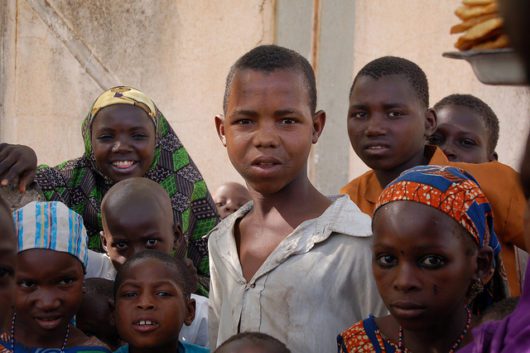
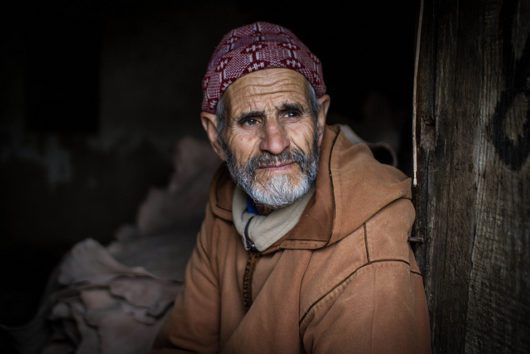
government shutdownAs the current government shutdown stretches into day 21, the effects are starting to show. But, the effects of the current shutdown aren’t just being felt at home. The cuts to funding for the State Department and the U.S. Agency for International Development (USAID) have been felt around the world. Here is the cost of the government shutdown on foreign aid.
Who is Affected By the Shutdown?

The partial shutdown began on December 22 when Congress and the President were unable to come to an agreement on funding for Trump’s border wall. Since then, it has affected multiple federal departments including Agriculture, Homeland Security, Interior, State and USAID. More than 800,000 federal employees have been furloughed or forced to work without pay, and the effects have been far-reaching. National parks have been shut down, airline travel has been strained and immigration courts have been backlogged.

USAID, which was created by President Kennedy in the 1960s, began as a way to lead international development and humanitarian services. Due to the cuts from the shutdown, about half of the agency’s employees have been furloughed, making it hard for the agency to continue operations. Previously funded projects and NGOs will continue to operate, but no new funding will be started or given. Furthermore, interaction and oversight from the department have steeply declined, decreasing the effectiveness of all programs.

Foreign Affairs

U.S. foreign development and affairs are not the only areas being impacted. The State Department has been affected by the shutdown as well. The State Department represents the government in foreign affairs, and many of its 75,000 employees work overseas. Since funding to the State Department has been cut off, most of those employees are not working or are working for no pay, meaning that all foreign relations are “running on fumes.” This is a problem because, without proper funding, the department cannot continue to do the tasks assigned to it, like alleviating tensions in the middle east.

In terms of the world’s poor, the loss of activity at both the USAID and the State Department will have a huge impact. Without any new funding or programs that help struggling nations with water and sanitation, health, education and climate change, the Agency for International Development will not be able to continue its work of providing humanitarian assistance to struggling nations.

The current shutdown, which is tied for the longest shutdown in history, has no end in sight. The continued lack of funding for USAID and the State Department means that the cost of the government shutdown on foreign aid will be huge. Since USAID works in more than 100 countries, the cost of the government shutdown will be felt by millions around the world. Without a fully functioning State Department to conduct diplomacy abroad, the situation will only get worse.

– Peter Zimmerman

Photo: Pixabay

January 13, 2019
https://borgenproject.org/wp-content/uploads/borgen-project-logo.svg 0 0 Kim Thelwell https://borgenproject.org/wp-content/uploads/borgen-project-logo.svg Kim Thelwell2019-01-13 01:30:102019-04-23 17:27:42The Cost of Government Shutdown on Foreign Aid
Foreign Aid, Global Poverty, Humanitarian Aid

Reductions in US Aid to the World’s Least Developed Countries

Reduction in U.S. Aid to the World’s Least Developed Countries
According to the United Nations Development Program’s (UNDP) 2018 Human Development Report, 33 of the 38 countries considered to have low human development are in located Africa.  Regardless of this fact, the U.S. may still be cutting aid to Africa. However, they are not the only ones. there have recently been significant reductions in U.S. aid to the world’s least developed countries.

Life Expectancy Rates in the Least Developed Countries

The UNDP determines rankings in its Human Development Index (HDI) by measuring levels of health, education and standard of living. Longevity, expected and mean years of schooling as well as per capita income all figure into the country’s final ranking. Of the world’s 10 least developed countries, the U.S. has reduced its aid to five: Liberia, Sierra Leone, Chad, the Central African Republic (CAR) and Niger.

Life expectancies in these countries range from 52.2 years in Sierra Leone to 63 years in Liberia. The CIA World Factbook’s latest data cites fewer than one physician per thousand members of the population in all five countries. In part due to poor sanitation, with anywhere from 78 to 89 percent of people in these countries lacking access to improved sanitation facilities, their populations are extremely vulnerable to major infectious diseases.

School life expectancies range from 5.4 years in Niger to 10 years in Liberia. Mean years of schooling among people over twenty-five are however much lower, with Liberia being the highest at 4.7 years. In Liberia, Sierra Leone and CAR, less than half of the population is literate. In Chad and Niger, these figures are reduced to less than a quarter.

People Below the Poverty Line

Gross National Income (GNI) per capita is measured in international dollars, which account for currency exchange rates and use purchasing power to essentially convert foreign currencies into their equivalent in U.S. dollars. In CAR, Niger and Liberia, these figures are below one thousand international dollars per person. In Chad and Sierra Leone, they are below two thousand.

According to the World Factbook, most recent estimates place 70 percent of people in Sierra Leone below the poverty line, and approximately 50 percent of those in Liberia, Chad, and Niger. The World Factbook has no data regarding the poverty line in CAR.

Conflict to Aid Discrepancies

All five of these countries have suffered some extent from turmoil in the late 1900s and early 2000s, including various rebellions, a coup d’état in Liberia, CAR and Niger and a civil war in Sierra Leone, Chad, and Liberia. Chad, Niger, CAR and Sierra Leone have particularly large numbers of internally displaced people. Conflicts in bordering countries have likewise pushed nearly 10,000 refugees into Liberia, and hundreds of thousands into Chad, Niger and CAR, putting additional strain on these countries.

From 2015 to 2017, CAR and Niger have seen the lowest reductions in aid disbursements, at about $4 million for CAR and $14 million for Niger. U.S. aid to Chad and Sierra Leone was reduced by close to $30 million in both countries. Liberia stands out among the five, having received $224 million less in aid disbursements in 2017 than in 2015.

Over this period, all but Liberia have received well below the average in aid to Sub-Saharan countries despite having lower levels of development. This trend has continued into the first quarter of 2018. To the credit of the United States, the reductions in U.S. aid to the world’s least developed countries have not meant an overall reduction in aid. The average amount of U.S. aid to this region has increased from $179 million in 2015 to $208 million in 2017.

Much of the aid received in Niger and CAR, and nearly all of it in Chad goes toward emergency response. Disparities in aid disbursements could be based on the need for emergency response rather than human development levels, with more money going to countries such as Nigeria, where conflict has killed tens of thousands since 2009.

Long-Term Initiatives Needed for Development

While emergency response takes precedence, initiatives that address such areas as basic health and education are important for fostering long-term progress in development. Niger, CAR, Chad, Liberia and Sierra Leone are among those most in need of these long-term initiatives. This could be difficult considering the reductions in U.S. aid to the world’s least developed countries.

In comparison to the 2015 Human Rights Report, the 2018 report shows that the least developed countries have made slight progress in their development, even if they have not progressed in terms of rank. Reductions in U.S. aid to the world’s least developed countries could have a serious effect on the progress in these countries. The fact that progress has been made does not mean that there is not significant progress still to be made that requires U.S. aid.

– Ashley Wagner
Photo: Flickr
December 14, 2018
https://borgenproject.org/wp-content/uploads/borgen-project-logo.svg 0 0 Borgen Project https://borgenproject.org/wp-content/uploads/borgen-project-logo.svg Borgen Project2018-12-14 01:30:132024-05-29 22:57:17Reductions in US Aid to the World’s Least Developed Countries
Aid, Foreign Aid, Global Poverty

The Militarization of U.S. Foreign Aid to Africa

The Militarization of U.S. Foreign Aid to Africa
“If you don’t fully fund the State Department, then I need to buy more ammunition” – Secretary of Defense Gen. Mattis. This kind of sentiment expressed by Gen. Mattis is shared by military and civilians alike. As the gap between foreign aid and military expenses increases, so does the concern from these officials toward the militarization of U.S. foreign aid to Africa.

The 2019 U.S. Proposed Budget Changes

The proposed 2019 budget from the Trump Administration underscores this worry. In the anticipated budget, the Dept. of Defense would receive an estimated $686 billion, which would be an increase of $80 billion (13 percent) from 2017. In comparison, the Dept. of State and the U.S. Agency for International Development would only see a budget of $25.8 billion; which means a $9 billion decrease (26 percent) from 2017 levels.

Furthermore, 2016 serves as a case study for how these resources are being applied in Africa. Of the $26 billion given to Africa through USAID, the Dept. of Defense was actually the leading implementing agency (beating out even USAID). While USAID carried out $9.5 billion worth of foreign aid operations, the Dept. of Defense oversaw $10 billion worth. Alongside low funding due to Congressional budget approval, civilian agencies don’t have the resources to operate, disperse and oversee foreign aid.

On the ground, the picture is becoming more and more clear. It was the Dept. of Defense, not the Dept. of State, that was the first to conduct high-level meetings and summits in African countries, such as Libya, Malawi, Chad and Djibouti, signifying it as the lead diplomatic agency in Africa.

Concerns with an Increasing U.S. Military Presence in Africa

When looking at the statistics, America’s leading military officials are among some of the most vocal advocates against the militarization of U.S. foreign aid to Africa. They worry that by cutting aid and favoring the military in poverty-stricken parts of the world, the U.S. is creating an environment for even more conflict. More specifically, they claim that by choosing military bases over schools, the U.S. is allowing more openings for militant groups, hurting U.S. interests in the long-run by pushing development aside.

For instance, Gen. Carter Ham, the former commander of Africa Command, sees the favoring of the military over diplomacy as a loss of hope for the people of Africa. Per his example, a young Nigerian man faced with no work, education or healthcare would much sooner turn to a militant group that offers money, prestige and a purpose.

His view is echoed by a 2017 testimony submitted to the Senate Armed Services Committee. This testimony was written by a long list of retired U.S. military officials, including Gen. Petraeus, Gen. McChrystal and Adm. Michael Mullen. Here, they stated, “…how much more cost-effective it is to prevent a conflict than to end one.” Their views reinforce the idea that Africa is much better served by civilian agencies than by military ones.

The Importance of Civilian Agencies in Africa

Not only do U.S. military officials recognize the harm of militarizing aid but also the importance of returning this role back to civilian agencies. Before leaving office, former Secretary of Defense Robert Gates highlighted the importance of the Dept. of State in a 2010 speech. In this speech, he emphasized the necessity of keeping the Dept. of State as the main actor for conducting foreign policy because foreign aid and security reinforce one another. In addition, he called for a new foreign policy, requiring all sectors of U.S. foreign policy to form new partnerships and implement U.S. interests for long-term successes.

Now, the militarization of U.S. foreign aid to Africa does not mean that the military is an adversary to foreign aid. All of the examples used in this article critiquing this militarization process have all been expressed by current or retired military officials who are simply recognizing the need for humanitarian aid and the limits of military power.

Preventing conflict certainly makes more sense than instigating it, but it is up to U.S. citizens to decide whether a voter or a 3-star general holds Congress accountable for a better foreign policy towards Africa. Or in the words of Alexander Laskaris, a senior Dept. of State official with African Command: “How do we operate in an environment when we are willing to send peacekeepers, but we’re not willing to take the steps necessary to make peace?”

– Tanner Helem
Photo: Flickr
December 5, 2018
https://borgenproject.org/wp-content/uploads/borgen-project-logo.svg 0 0 Borgen Project https://borgenproject.org/wp-content/uploads/borgen-project-logo.svg Borgen Project2018-12-05 01:30:192024-05-29 22:52:50The Militarization of U.S. Foreign Aid to Africa
Foreign Aid, Global Poverty, USAID

What is USAID?

What is USAID
The United States Agency for International Development (USAID) is often brought up when people talk about spending bills for foreign aid and in policy reports analyzing the government foreign assistance programs. They do not explain what USAID actually is, what its purpose is, who is in charge of it, or what are its responsibilities as an organization.

The text below will go through the history of USAID, its importance to the United States government, and the organization’s responsibilities in the fiscal year 2019.

History of USAID

In the fall of 1961, U.S. Congress passed the Foreign Assitance Act. This act formally separated military and non-military aid since before this point political and military spending was not differentiated from development spending. The bill also mandated for the creation of an agency that will be responsible for managing the new category of economic and development aid. President John F. Kennedy, shortly after the passing of the bill, created USAID by executive order.

The creation of USAID unified several existing programs and operations, including the Food for Peace Program, loans from the Development Loan Fund and the economic assistance from International Cooperation Agency. By unifying these operations, USAID provided a new focus on aiding other countries.  

Who is in charge of USAID and what is USAID responsible for?

USAID largely follows the policy directions of the President, State Department and the National Security Council. It can be stated with the certainty that it is not a completely interdependent agency. USAID is not responsible for military aid whose responsibility falls primarily to the Department of Defense. Instead, USAID is concerned with humanitarian and development aid.

Since its formation, USAID’s scope of humanitarian aid expanded. USAID’s assistance now includes global health, gender equality, water and sanitation, education and many other categories. It also works in several regions all over the world including Asia, the Middle East and Africa.

A good example of what USAID does as an organization is the program called Promoting Gender Equality in National Priority Programs Project (PROMOTE) in Afghanistan. This program aims to increase female participation in the total workforce by offering women internships to build up their resume and network.

It will also help the economic development of Afghanistan by creating a larger workforce. According to an evaluation made by USAID in 2017, 237 women got a job in the first year of the program’s implementation. Also, 98 percent of the women who were helped into internships by USAID reported that they were working in a women-friendly workplace.

What is USAID planning on doing in 2019?

USAID and the State Department will receive $39 billion from the president’s budget. USAID is responsible for managing $16 billion of this amount that is just below half of all the money allocated to foreign aid. USAID hopes to accomplish several objectives in the fiscal year 2019 including providing leadership in response to national disasters and human crises, improving global health by stopping the spreading of diseases and improving transparency of the organization’s activities and its spendings.

To summarize, what is USAID? USAID is an organization that is the primary executor of foreign aid spending of the United States. It oversees billions of dollars every year with the goal of helping developing nations economically, socially and politically. USAID does this through the creation of government programs to help those who need it most.

– Drew Garbe
Photo: Flickr

November 18, 2018
https://borgenproject.org/wp-content/uploads/borgen-project-logo.svg 0 0 Borgen Project https://borgenproject.org/wp-content/uploads/borgen-project-logo.svg Borgen Project2018-11-18 07:30:322024-06-06 00:15:26What is USAID?
Foreign Aid, Global Poverty

US Foreign Aid to Belarus: The Gateway to the East

Belarus
Although much of Europe has changed since the end of the Cold War, Belarus certainly has not. The leadership of this tiny-landlocked country of more than 9.5 million people has forcefully held onto its Soviet-style economy. So much so that Belarus is often described as Europe’s last dictatorship. Despite this, U.S. foreign aid to Belarus could help foster a new economy and a new partnership.

Belarus Holding Russian Standards

Belarus is a relatively new country, gaining independence from The Soviet Union in 1991. In 1994, Belarus’ first president, Alexander Lukashenko, was elected and has subsequently been the nation’s only president so far. His reign has seen a steady consolidation of power and a weakening of a democratic institution. Because of this, the West has experienced tense relations in regards to aiding and working with the Belarusian government.

Moreover, the state’s economy is comparable to the Soviet model of a centralized economy. Around 50 percent of Belarus’ workforce is employed by state-owned entities, which make up 75 percent of the country’s GDP. This has produced an extremely rigid economic structure that is not rational in a highly globalized world.

While poverty had fallen from 60 percent in 2001 to around 1 percent in 2013, Belarus was still not on steady ground. It was able to reduce poverty rapidly because of favorable energy pricing and productivity growth with its largest trading partner, Russia.

Belarus in Crisis

However, these factors are no longer in play for the benefit of Belarus. Productivity in Russia has dropped while energy prices have increased alongside the accumulation of debt to Russia. Hit by a recession in 2014-2016, the economy’s fragile structure was exposed when poverty increased by 3 percent in Belarus overall with 6 percent in rural areas.

On top of this, the Belarusian state has been unable to adapt to national and transnational health and safety issues. First, Belarus is currently experiencing an epidemic of noncommunicable diseases (NCDs). The U.N. Development Program reports that 89 percent of all deaths in the country are due to NCDs.

Second, human trafficking has become such a significant problem that The U.S. Dept. of State labeled Belarus as a tier 3 country when it comes to trafficking (the worst tier attainable). Here, Belarus serves as an important ‘gate-keeper’ that buffers The E.U. from, or exposes it to, the spread of human and drug trafficking.

What can be done about this situation? E.U., U.N. and U.S. foreign aid to Belarus have begun to answer this question.

U.S. Agency for International Development (USAID)

The first focus of USAID is strengthening the private sector. USAID has implemented numerous projects over the years that have been tasked with helping build a stronger Belarusian economy. One project, called TechMinsk, is a technical and business boot camp for young entrepreneurs and start-ups. As of 2017, $7 million has been invested in 200 entrepreneurs and 90 start-ups newly introduced to Belarus’ economy. Through educational training and international programs, more than 6,000 enterprises have been strengthened and/or created.

The second focus of USAID is to create a stronger civil society in order for a freer form of government to flourish. Civil society organizations (CSOs) are an essential part of this plan. CSOs are meant to increase the involvement of the general public in policy-making decisions. As of 2016, 140 CSOS had been trained and funded, totaling more than 8,000 hours. Each year, more than 60 Belarusian professionals from different sectors (business, law, education, government and civil society) are selected for exchange programs in The U.S. These professionals are exposed to the innovations of U.S. nongovernmental organizations and how to apply these innovations in Belarus.

United Nations Development Program & the European Union

The U.N. has been at the forefront of engaging Belarus with the rest of the world. While free-market businesses only form about 30 percent of the Belarusian economy, the government has invited The U.N. to provide aid and expertise in expanding this percentage. Although Belarus ranks poorly for its control of human trafficking, its government has joined The U.N. Group of Friends United against Human Trafficking. Here, the Belarusian government will receive foreign aid and advice on how to best stop the surge of trafficking through Eastern Europe

The E.U. and Belarus have continued trade relations, although, relations have been strained. However, in 2014, Belarus and The E.U. initiated a new relationship. After years of tense relations and sanctions, 2014 saw the renewed interest on both sides for important talks regarding visa liberalization.

Belarus Working Toward a Better Tomorrow

While Belarus hasn’t let go of its tightly controlled government and economy, foreign aid is changing the narrative. These national and international bodies listed above have all taken steps to open Belarus up to the greater world and expose its people to ideas of different societies and freer economies.

Here, interests overlap on both sides. On the West’s side, it has a vested interest in stopping the spread of human trafficking throughout Europe and The U.S. In comparison, Belarus needs a counterbalance against its dependency on the Russian government and economy. Foreign aid has slowly opened up Belarus to build a sturdier and freer nation. However, more U.S. foreign aid to Belarus will be needed in order to create a strong, new ally in Eastern Europe.

– Tanner Helem

Photo: Flickr

November 7, 2018
https://borgenproject.org/wp-content/uploads/borgen-project-logo.svg 0 0 Borgen Project https://borgenproject.org/wp-content/uploads/borgen-project-logo.svg Borgen Project2018-11-07 06:30:222024-05-29 22:53:39US Foreign Aid to Belarus: The Gateway to the East
Foreign Aid, Global Poverty

Global Relations: A Brief History of US Foreign Aid Policy

Brief History of US Foreign Aid Policy
When hearing the term “foreign aid,” one probably thinks of the U.S. giving money to poor countries for food and water. While this assumption is partially correct, U.S. foreign aid is also a means of economic and political strategic fodder for the U.S. Foreign aid often includes providing money to foreign countries for militarization efforts or providing assistance from the U.S. military itself.

U.S. Foreign Aid

While some oppose the U.S. giving aid to other countries in favor of using the same money to bolster the U.S. economy and provide national security, they usually do so under the false pre-tense that around 25 percent of our national budget is geared toward foreign aid; the real number is only around 1.5 percent.

In fact, foreign aid acts as economic investment with other countries and creates trading allies, providing a return on investment. Also, foreign aid works to provide national security for the U.S. by stabilizing countries rife with conflict and poverty; such measures often end wars before they even begin. This notion was confirmed by a letter to President Trump from over 120 retired generals, urging the president to reconsider the ‘benefits’ of the proposed cuts to the foreign aid budget.

Throughout the history of U.S. foreign aid, one can simply follow our military. Here are four of the big shifts in U.S. foreign aid policy.

Marshall Plan

Foreign aid, as we consider it now, started post-WWII. In 1947, two years after the war, Secretary of State George C. Marshall insisted at a Harvard commencement ceremony that the U.S. needed an aggressive plan to rebuild Europe. The Marshall Plan, officially known as the European Recovery Program, passed the next year.

In the next four years, the U.S. provided more than $13 billion in aid to European nations. The move, while helpful, was also tinged with a political agenda — the U.S. needed allies in Europe against an emerging enemy, the Soviet Union. The U.S. remains close allies with these European nations and 13 of them are current NATO members.

President Harry S Truman supplemented the humanitarian efforts provided by the Marshall Plan with further military and economic aid to allies in Europe by way of the Point Four Program, a technical aid program aimed at sharing U.S. technology and knowledge of agriculture and industry. This measure was ultimately a gesture meant to create allies against the emerging USSR. Truman then signed the Mutual Security Act of 1951, which replaced the Marshall Plan and shifted its priorities to containing the spread of communism.

Foreign Assistance Act of 1961

The United States Agency for International Development (USAID) was created out of the Foreign Assistance Act of 1961 by President John F. Kennedy. The assumption was that by combining foreign aid programs, the U.S. could be a better leader and moral authority for the rest of the world (read: prevent the spread of communism).

USAID is now the main operator of U.S. foreign aid programs, leading development and humanitarian efforts across the globe ranging from the Feed the Future program, a global food security program providing funding, health services, water and protection to aiding peoples suffering from conflicts in South Sudan.

The Cold War

In the 1970s, the focus of foreign aid shifted from economic and political development, to meeting “basic human needs.” This lead to an emphasis on food production, nutrition, health and education — all means to providing developing countries with the means to be self-sufficient. Still, there was a political tinge. The U.S. was largely acting on anti-communism interests and Middle East peace initiatives. As a result of these priorities, Israel and Egypt became large recipients from U.S. aid.

Toward the end of the 1980s, Congress was tasked with reducing the national deficit and foreign aid was at less than 1 percent of the national budget. Still, foreign aid followed into the same countries as our military including Panama in 1990 after the U.S. invaded Panama during Operation Just Cause under President George H. W. Bush.

Due to the end of the Cold War and Congress’s continued efforts to maintain the budget deficit, foreign aid remained less than 1 percent of the federal budget until the U.S. invasion of Iraq in 2003.

Contemporary Foreign Aid

From 2003-2014, Iraq and Afghanistan received increases in economic and military assistance from the U.S. Afghanistan became the largest recipient of U.S. aid in 2017 at $4.7 billion. President George W. Bush also created the U.S. President’s Emergency Plan for AIDS Relief (PEPFAR) in 2003, which supports over 14 million people in over 50 countries living with HIV/AIDS. PEPFAR’s website claims to have helped more than 2.2 million babies to be born HIV-free to pregnant women living with HIV and AIDS.

In 2008, President Obama renewed PEPFAR and also signed the U.S. President’s Policy Directive on Global Development. The Obama administration called it the first of its time, but the measure resembles Kennedy’s act to instill the U.S. by way of foreign assistance and development at the forefront of moral and economic authority globally. The directive has a wide berth of goals aimed at providing increased global food security, global health and national security by working on poverty-related issues in impoverished nations.

Today, President Trump continues to insist we trim the U.S. foreign aid budget by over 30 percent, which will inevitably cut some humanitarian programs entirely. The Trump administration claims the cuts will go to bolstering national security, but as we’ve learned and as over 120 retired generals stated to President Trump, U.S. foreign aid is a form of national security.

– Nick Hodges
Photo: Flickr

November 7, 2018
https://borgenproject.org/wp-content/uploads/borgen-project-logo.svg 0 0 Kim Thelwell https://borgenproject.org/wp-content/uploads/borgen-project-logo.svg Kim Thelwell2018-11-07 01:30:232024-05-29 22:57:32Global Relations: A Brief History of US Foreign Aid Policy
Foreign Aid, Global Poverty

US Congress Defends Foreign Aid

US Congress
In mid-August 2018, the Trump administration announced that it was considering freezing more than $3 billion in unspent foreign assistance funding allocated to The State Department and The U.S. Agency for International Development. The proposal, put forth by The Office of Budget and Management, would place a freeze on all unspent foreign aid funding for 45 days. During that time, the U.S. Congress would have to either approve the proposed cuts or reject them and mandate the administration to allocate the funds as specified by the Congressional budget. 

Budget Cuts Proposal Did Not Follow Procedure

The funding freeze would have taken effect less than 45 days before the end of the fiscal year; therefore, it would not have provided Congress with the required legal timeframe set to address the proposed rescissions before the close of the fiscal year to the return of the frozen funds to the U.S. Treasury. The precedent for the Trump administration’s move is spelled out in The Congressional Budget and Impoundment Control Act, which allows unspent funds to be frozen for 45 days by the administration. However, the legality of this current move by the President has been questioned given the disregard for the required review time by Congress.

A letter sent to Secretary of State Mike Pompeo and OMB Director Mick Mulvaney, vice chairman of the Senate Appropriations Committee, from Sen. Patrick J. Leahy (D-Vt.), warned against thwarting the will of Congress by submitting recessions without giving lawmakers the required time to act. Senate Foreign Relations Committee Chairman Bob Corker (R-Tenn.) also questioned the proposed plan saying, “It would be a step of bad faith […] I don’t how they can do that legally.”

The concerns expressed by Senators Leahy and Corker reflect a continuing Congressional resistance to Presidential attacks on U.S. foreign assistance funding. This attempt to roll back foreign aid spending is not the first time that the current administration has made clear its lack of interest in bolstering international development. The President’s 2018 and 2019 budget proposals recommended a 28 percent cut in funding for The State Department and USAID. In addition, the budgets have implied a need to consolidate USAID and The State Department into one group, therefore, reducing the size and autonomy of the U.S. government’s foreign aid program.

Bi-Partisan Support of Foreign Aid Remains Strong

Despite the intentions of the executive branch, lawmakers on both sides of the aisle have remained in support of foreign aid programs and have largely disregarded budget recommendations from The White House and maintained established levels of foreign aid funding. Many members of The U.S. Congress have spoken out in favor of the benefits that foreign aid brings to The U.S., citing programs like The President’s Emergency Plan for AIDS Relief (PEPFAR), which has played a major role in reducing the global AIDS death toll by half since 2005, and The President’s Malaria Initiative (PMI), which has saved an estimated 7 million lives since 2000, as essential governmental initiatives.

Recognizing the bipartisan resistance in The U.S. Congress and from State Department head Mike Pompeo, the Trump administration announced in late-August that it would be dropping the proposal. Sen. Patrick J. Leahy praised this move commenting, “Rescinding funds that had been agreed to by Congress and signed into law by the President, in the waning days of the fiscal year, would have set a terrible precedent and harmed programs that further United States interests around the world.” Secretary of State Mike Pompeo has also received acknowledgment for his defense of the funding for his department, which would have been reduced by almost ten percent had the administration’s proposal been enacted.

Though, in this case, the fund allocated by The U.S. Congress for foreign assistance programs was left in place, the Trump administration has set a precedent throughout its term of hostility towards that aspect of the bureaucracy.  In this sense, there is much at stake for the future of U.S. foreign assistance. However, what has been demonstrated thus far is that lawmakers in The U.S. Congress remain in support of foreign assistance/ development and will take action to uphold its place within the U.S. government.

– Clarke Hallum

Photo: Flickr

November 4, 2018
https://borgenproject.org/wp-content/uploads/borgen-project-logo.svg 0 0 Borgen Project https://borgenproject.org/wp-content/uploads/borgen-project-logo.svg Borgen Project2018-11-04 01:30:372024-05-29 22:53:28US Congress Defends Foreign Aid
Foreign Aid, Global Poverty

US Benefits from Foreign Aid to Burkina Faso

U.S. Benefits from Foreign Aid to Burkina Faso

To the public, information about the U.S. benefits from foreign aid to Burkina Faso other countries is largely absent. Meanwhile, aid to Burkina Faso is at risk. After the election of President Trump in 2016 and his “America First” policy that pushes for decreases in U.S. humanitarian aid up to 37 percent, aid programs operating in Burkina Faso are placed in a questionable situation. Will they be able to continue operating?

The Marie Stopes Ladies

The Marie Stopes Ladies is a nongovernmental organization that works to provide family planning advice and sexual health-related services to the people of Burkina Faso. This country has an unsustainable fertility rate of 5.5 births per woman and is in desperate need of the services the MS Ladies provide. With policies such as “America First,” coupled with a push to cut funding towards any organizations which abortion and post-abortion care, organizations such as the MS Ladies, which was previously entirely funded with a grant of $1.25 million from the USAID, will no longer be eligible for any money. The nongovernmental organizations remain ineligible for funding even if the abortion care and advice are funded by other sources.

Given the reality of the foreign aid situation and the fact that the existence of many organizations, not just the MS Ladies, is at risk, it is important to address the many U.S. benefits from foreign aid to Burkina Faso—and leverage these benefits as a motive to sustain and possibly increase the aid budget.

Benefits for Burkina Faso and for the US

Intuitively, one should know how U.S. aid benefits Burkina Faso: efforts are focused on providing security, education and health-related programs. In fact, eradicating malaria in Burkina Faso is part of the President’s Malaria Initiative, designed under the administration of President Bush to treat and prevent malaria in sub-Saharan Africa. Thus, Burkina Faso would benefit from mitigating hunger, fostering education and economic growth, as well as increased life expectancies through a healthier population.

Yet, these benefits are also part of how the U.S. benefits from foreign aid to Burkina Faso. In fighting malaria in Burkina Faso, the U.S. becomes closer to reaching the goals of the President’s Malaria Initiative. By providing food security and treating other illnesses, the U.S. helps create a country that is more economically viable and can serve as a  potential economic partner. While the top import to the United States from Burkina Faso is gold, the U.S. has many investment possibilities in an emerging economy through its communications and energy sectors, not just mining.

Moreover, working with and providing humanitarian aid to Burkina Faso fosters greater safety at home. U.S. relations with Burkina Faso often focus on counterterrorism efforts, as well as general peacekeeping. Maintaining friendly relations also supports the U.S. goal of democratization in the region, a goal which truly hits the pulse of patriotism. To support democracy and peacekeeping abroad, what should be an essential underlying ideology of the United States, offers a far more rational notion of patriotism than the entirely self-interested rhetoric of “America First.”

The Support of US Citizens

The U.S. citizens generally support foreign aid. The U.S. benefits from foreign aid to Burkina Faso because the people from the U.S. believe it is a good thing. Only 5 percent of Americans, according to a Kaiser Family Foundation, knew how little the U.S. spent on foreign aid. The average guess was 26 percent of the federal budget. The actual total is less than 1 percent.

Once made aware of the discrepancy, less than 30 percent of participants thought the U.S. should decrease its foreign aid budget. Policies such as “America First” work as misdirections: they suggest to a public which is comfortable with, and supportive of a much larger foreign aid budget, that the U.S. is overspending. Providing aid, instead, proves governmental responsibility, and efficacy, to its people.

The Human Development Index value for Burkina Faso (assessed in 2017) is at 0.423 and it ranks the country in the bottom five countries in the world. Yet, while there is evidence Burkina Faso needs aid, in ten years it saw its value increase over 23 percent. That same span of time saw the average life expectancy increase over five years, and the average number of years of schooling increased by 64 percent. To continue these trends, the U.S. needs to continue providing aid, both for Burkina Faso and for itself.

To really put “America First” means also to care about the rest of the world. The U.S. benefits from foreign aid to Burkina Faso, but the U.S. needs to continue working to provide greater benefits for both parties.

– William Wilcox
Photo: Flickr

October 26, 2018
https://borgenproject.org/wp-content/uploads/borgen-project-logo.svg 0 0 Borgen Project https://borgenproject.org/wp-content/uploads/borgen-project-logo.svg Borgen Project2018-10-26 01:30:442024-05-29 22:53:21US Benefits from Foreign Aid to Burkina Faso
Foreign Aid, Global Poverty

International Affairs Budget: Prevent Funding Cuts

International affairsThe International Affairs Budget is a crucial investment in foreign aid and development. Fighting diseases and epidemics, providing humanitarian aid and educating children who are most vulnerable to dropping out and not receiving an education are just some of the areas where funding is applied. Those suffering from poverty are less likely to receive aid and proper health services necessary to prevent and cure illnesses.

Thinking about more recent epidemics, such as the Ebola and Zika virus, it can be seen that funding for health-related programs within The International Affairs Budget was crucial to lowering the statistics of those who are affected. Up to now, 16 percent of The International Affairs Budget is dedicated to global health funding. This includes maternal and child healthcare, nutrition and tackling diseases such as polio and HIV/AIDS.

The Polio Virus Around the World

The Polio vaccine is a great example of a threat that could be eradicated with the correct application of foreign aid. Polio, also known as Poliomyelitis, is an infectious disease that causes paralysis and possibly death. According to The Polio Global Eradication Initiative, as of 1988, polio has infected and paralyzed over 1,000 children daily worldwide.

In 1931, Sir Macfarlane Burnet and Dame Jean MacNamara were able to identify multiple strains of polio, which became known as types 1, 2, and 3. In 1955, a polio vaccine was introduced from wild-type poliovirus strains that were killed, therefore inactive. Also known as IPV, this form of the vaccine has been able to eliminate polio from countries such as Scandinavia and the Netherlands.

In 1961, the oral polio vaccine, a mixture of the 3 strains of polio, was introduced. The strains selected are less likely to originate within the body and be spread to others. Due to the high rates of success of the OPV, alongside its low cost to purchase, this version of the vaccine has been key in globally eliminating polio.

Despite these 2 forms of vaccines being available, The Polio Global Eradication Initiative reports that 430 million children are still at risk of contracting polio, mainly in Africa and Asia. As of February 2015, The United States government approved a $228 million in funds to tackle the elimination of polio.

Once a pandemic, now the rates of polio have been reduced by 99.99 percent because of funding that has gone towards research and creating initiatives such as The Global Polio Eradication Initiative to continually fight polio.

The Smallpox Virus Around the World

Variola virus, also known as smallpox, was an infectious disease that caused fever and a specific type of progressive skin rash. While many recovered from the disease, three out of 10 died and, of those who survived, many had large scars left on their body.

Looking back at the history, there had been several global outbreaks of smallpox from China to Africa to Australia. In 1959, The World Health Organization (WHO) started a plan to eradicate smallpox, but it was difficult to obtain funding and countries willing to participate. When The Intensified Eradication Program started in 1967, progress was made in areas such as South America, Asia and Africa. One thing that became clear was that, with the eradication of smallpox, comes lower medical expenses.

For instance, when smallpox was finally eradicated in 1980, quarantine conditions no longer had to be initiated. When combined with the costs of the disabilities of those who had survived the disease after fighting smallpox, the savings were around $1 billion. Therefore, it can be concluded that with funding, comes research and initiatives, which heightens the likelihood of vaccines and lowers medical expenses both domestically and globally.

HIV/AIDS Around the World

Around $330 million of the global health percentage of The International Affairs Budget has been dedicated to HIV/AIDS. Out of these funds, $275 million will be shared with Gavi, The Vaccine Alliance. According to The Lancet, AIDS-related deaths, when comparing 2005 to 2016, have decreased .9 million. In addition, the rates of new infections have decreased by 16 percent.

One reason for this decrease is because of increased treatments that are available due to an increase in funding. Therefore, if funding is reduced, inversely, there would be a rise in infection rates of HIV/AIDS due to lack of research, services and education about preventing the virus.

As readers can see, The International Affairs Budget is crucial to the progression of global health. Instances such as polio, smallpox and HIV/AIDS are prime examples of how funding can be the key to reduction and even eradication. With increased funding, comes increased research, cures, education and prevention techniques. E-mail your senators and representatives today to urge their support and protection for the funding of The International Affairs Budget.

– Jessica Ramtahal

Photo: Flickr

October 14, 2018
https://borgenproject.org/wp-content/uploads/borgen-project-logo.svg 0 0 Borgen Project https://borgenproject.org/wp-content/uploads/borgen-project-logo.svg Borgen Project2018-10-14 01:30:592024-05-29 22:53:10International Affairs Budget: Prevent Funding Cuts
Aid, Foreign Aid, Global Poverty, Refugees and Displaced Persons

US Aid Benefits Refugees from Venezuela

Aid that Benefits Refugees VenezuelaLatin America is experiencing one of its worst ever migration crises. This region has experienced multiple population movements in its history. Venezuela has seen a mass exodus of people due to four years of economic downfall and the subsequent impoverishment of the citizens.

The Reasons Behind Venezuela Crisis

The problem has been further exacerbated by the re-election of the dictatorial President Nicolas Maduro. The economic policies of President Maduro and former President Hugo Chavez have mismanaged the country’s vast oil reserves and sent the country spiraling into depression. The government has cut imports by over 75 percent, choosing to use its own currency to balance the $140 billion debt. This is an extremely bad decision in a country that produces almost exclusively oil.

The result has been an enormous lack of services within the country and the decrease in GDP. These policies have remained unchanged or challenged because of Maduro’s stranglehold on the country’s media and legal system, in addition to his brutal responses to protests. Accusations of corruption and conspiracies surrounding drug trafficking have plagued Maduro’s career but haven’t challenged his rule in any meaningful way. The United States has responded to these allegations by sanctioning Maduro but this had relatively no effect on Maduro’s behavior. Realizing this fact, the U.S. turned their attention towards aid that benefits Venezuela refugees.

Refugee Crisis in Venezuela

Hopes for change internally seem bleak and have pushed over two million refugees into surrounding countries. At first, refugees are going to neighboring Ecuador, Peru and Columbia, countries that have been very welcoming in the past. Recently, however, the sheer number of migrants leaving Venezuela has forced its neighbors to take more aggressive policies.

Ecuador began blocking entry to refugees fleeing Venezuela with no passports. This policy came after the country declared a state of emergency due to the crisis. Peru and Columbia also announced their plan to adopt a similar policy and to deport migrants that are already within the country but without proper documentation. The policies of both the Government of Venezuela and its neighbors have trapped Venezuelan migrants in makeshift towns along the border, with limited resources. Most Venezuelan migrants sold their possessions in order to leave their country and have little to nothing in these towns.

The Aid of United States to Venezuela

Fortunately, the United States has played an instrumental role in providing aid that benefits refugees from Venezuela. The U.S had already provided $16 million in aid for the refugees through the United Nations Refugee Agency and another $6 million to help Columbia deal with their influx of refugees.

This money helped establish the infrastructure that is maintaining abovementioned makeshift towns and providing necessary health care for millions of people. Recently, the United States sent a life-saving resource to the shores of Columbia. Secretary of Defence, Jim Mattis, is sending a U.S. Navy Hospital Ship to help treat refugees in Colombia and surrounding Latin American countries. Hospital ships provide surgical care from some of the top military physicians in the world. They are protected by international law and help ease the burden on domestic medical institutions, which could influence many of these Latin American countries to take more beneficial positions towards refugees.

U.S. aid for refugees has a ripple effect on the countries that are hosting them because they have more resources at their disposal. This could change their policies in a meaningful way and end this migration process in the most positive way positive.

– Anand Tayal

Photo: Flickr

October 12, 2018
https://borgenproject.org/wp-content/uploads/borgen-project-logo.svg 0 0 Borgen Project https://borgenproject.org/wp-content/uploads/borgen-project-logo.svg Borgen Project2018-10-12 13:30:182019-07-09 16:39:35US Aid Benefits Refugees from Venezuela
Page 25 of 61«‹2324252627›»

Get Smarter

  • Global Poverty 101
  • Global Poverty… The Good News
  • Global Poverty & U.S. Jobs
  • Global Poverty and National Security
  • Innovative Solutions to Poverty
  • Global Poverty & Aid FAQ’s
Search Search

Take Action

  • Call Congress
  • Email Congress
  • Donate
  • 30 Ways to Help
  • Volunteer Ops
  • Internships
  • Courses & Certificates
  • The Podcast
Borgen Project

“The Borgen Project is an incredible nonprofit organization that is addressing poverty and hunger and working towards ending them.”

-The Huffington Post

Inside The Borgen Project

  • Contact
  • About
  • Financials
  • President
  • Board of Directors
  • Board of Advisors

International Links

  • UK Email Parliament
  • UK Donate
  • Canada Email Parliament

Get Smarter

  • Global Poverty 101
  • Global Poverty… The Good News
  • Global Poverty & U.S. Jobs
  • Global Poverty and National Security
  • Innovative Solutions to Poverty
  • Global Poverty & Aid FAQ’s

Ways to Help

  • Call Congress
  • Email Congress
  • Donate
  • 30 Ways to Help
  • Volunteer Ops
  • Internships
  • Courses & Certificates
  • The Podcast
Scroll to top Scroll to top Scroll to top