• Link to X
  • Link to Facebook
  • Link to Instagram
  • Link to TikTok
  • Link to Youtube
  • About
    • About Us
      • President
      • Board of Directors
      • Board of Advisors
      • Financials
      • Our Methodology
      • Success Tracker
      • Contact
  • Act Now
    • 30 Ways to Help
      • Email Congress
      • Call Congress
      • Volunteer
      • Courses & Certificates
      • Be a Donor
    • Internships
      • In-Office Internships
      • Remote Internships
    • Legislation
      • Politics 101
  • The Blog
  • The Podcast
  • Magazine
  • Donate
  • Click to open the search input field Click to open the search input field Search
  • Menu Menu

Archive for category: Food & Hunger

Information and stories on food.

Food Security

Top 4 Ways to Address Food Security

ways-to-address-food-security-fruit.opt
The UN and other aid organizations are working to address food security in the world’s poorest countries. According to the UN Development Program’s (UNDP) African Human Development Report, food security is key to improving the lives of many of the world’s poorest people.

At the heart of eradicating extreme poverty is addressing the widespread hunger and malnutrition that kills hundreds of children every day. Food production is a determining factor in the achievement of other human development goals such as education and health care. Without adequate nutrition, people lack energy to pursue economic activities.

A productive approach to addressing food security is more complex than simply growing more food. The chief economist for the UNDP Regional Bureau for Africa, Pedro Conceicao, argued that economic growth does not necessarily reduce poverty and food insecurity. This suggests that accessibility, empowerment, and purchasing power drive change, and that a strategic, interdisciplinary approach is necessary to address food security. The Report focused on four ways to address food security:

  • Food production: investments in agricultural research, infrastructure, and inputs will increase food production. This will improve food security, especially for agricultural communities.
  • Adequate nutrition: improving food security does not necessarily improve nutrition. Efforts to alleviate malnutrition should be coordinated with developments in sanitation, clean water, and health services.
  • Resilience: building resilience is key to decreasing the need for emergency aid. Systems such as crop insurance and employment guarantees strengthen communities and reduce vulnerability.
  • Empowerment: gender equality, access to good land, technology, and information on good agricultural practices are necessary for achieving food security.

Sustainable progress does not happen overnight. As the Millennium Development Goals demonstrate, long-term coordinated efforts in multiple sectors are needed to improve food security. In order to achieve sustainable rather than short-term food security, development organizations also need to address environmental conservation, natural resource management, and the often opposing influences of big agribusiness and local ecology.

– Kat Henrichs

Source: IRIN News
Photo: Security and Sustainability Forum

April 6, 2013
https://borgenproject.org/wp-content/uploads/borgen-project-logo.svg 0 0 Borgen Project https://borgenproject.org/wp-content/uploads/borgen-project-logo.svg Borgen Project2013-04-06 08:38:282020-05-04 08:14:44Top 4 Ways to Address Food Security
Food & Hunger, Health

Childhood Stunting Has Long-Term Effects

Childhood Stunting Has Long-Term EffectsChildhood stunting occurs when chronic malnutrition stunts a child’s growth, both physically and mentally. Over 180 million children worldwide suffer from this condition. The problem is concentrated in certain countries. In fact, 21 countries account for more than 80 percent of documented stunted growth cases.

Healthy nutrition is most important in the first five years of life.  In six countries (Afghanistan, Burundi, Ethiopia, Madagascar, East Timor, and Yemen), 50 percent or more of children under 5 years old are stunted. This number is terrifying because stunting can lower cognitive capacity for life.  Children who suffer from stunting have a reduced ability to learn.  This poor nutrition can affect future earnings and success.  Any inadequate nutrition within the first two years of life is permanent and irreversible.

Being four to six inches shorter than their peers is the most superficial concern for stunted children.  They are “five times more likely to die from diarrhea due to physiological changes in a stunted body.”  Furthermore, the typical stunted brain has fewer cells and fewer connections between cells, which means impaired functioning.

childhood stunting

Despite these numerous health effects, childhood stunting continues to receive little to no media attention.  Organizations like UNICEF work to combat malnutrition, but people do not realize the effects of this extreme malnutrition.

UNICEF and its partners provide cost-effective solutions, such as vitamin A supplements, iodized salt, and therapeutic foods.  Its famous Plumpy’nut is a peanut-based food that helps malnourished children gain up to two pounds per week.

Childhood stunting is preventable, and it is time for people to understand their effects. Numerous studies and organizations name hunger as the “gravest single threat to the world’s public health.”  The effects of hunger alter a community’s culture, economy, and overall well-being.

– Whitney M. Wyszynski

Source: TIME
Photo: Fast Company

April 3, 2013
https://borgenproject.org/wp-content/uploads/borgen-project-logo.svg 0 0 Borgen Project https://borgenproject.org/wp-content/uploads/borgen-project-logo.svg Borgen Project2013-04-03 10:00:042020-06-01 05:58:31Childhood Stunting Has Long-Term Effects
Education, Food Security, Foreign Aid, USAID

US AID and Nepal Partner to Educate on Agriculture

US AID and Nepal Partner to Educate on Agriculture
Nepal Economic, Agriculture, and Trade Activity (NEAT), a 32-month program funded by USAID, aims to “promote economic growth, reduce poverty, increase food security, and improve lives” throughout Nepal. As part of the program, USAID and Nepal have partnered up through the Nepal Ministry of Agriculture Development to distribute educational materials on agricultural practices in the hopes of improving the production of agriculture in the country.

Through the funding provided by USAID, more than 263,000 pamphlets were handed out detailing specific agricultural instructions, both written in Nepali and as visuals in order to aid those citizens who are illiterate. The pamphlets detail “critical agriculture practice” on 13 types of crops and 3 species of livestock.

The NEAT program has improved the agricultural education of 67,510 households throughout 20 districts of Nepal with a regular lack of access to proper food sources. Thus far, the project has already allowed area farmers to see an increased income of $8.5 million collectively. These farmers and households have had increased access to markets and are better educated on agricultural practices such as pest and disease control, use of fertilizer, improved seed, and “post-harvest handling.”

The Director of USAID’s Social, Environmental, and Economic Development Office, John Stamm, maintained that USAID is dedicated to creating sustainable development solutions, including the NEAT program – which will allow Nepalese citizens greater resources for continuing to improve their lives long after the program ends in August of 2013.

– Christina Kindlon

Source: USAID

March 31, 2013
https://borgenproject.org/wp-content/uploads/borgen-project-logo.svg 0 0 Borgen Project https://borgenproject.org/wp-content/uploads/borgen-project-logo.svg Borgen Project2013-03-31 14:30:432020-06-01 00:46:00US AID and Nepal Partner to Educate on Agriculture
Development, Food Security

Scientific Breakthrough in Stressed Free Crops

Scientific Breakthrough in Stress: Free CropsThe ability to grow crops in acidic soil environments has, up until recently, been feasible with only a few species of maize. However, current scientific research into the genes responsible for plant tolerance may enable the cultivation of stressed free crops in soils once considered impossible, opening up exciting new frontiers in the field of sustainable farming.
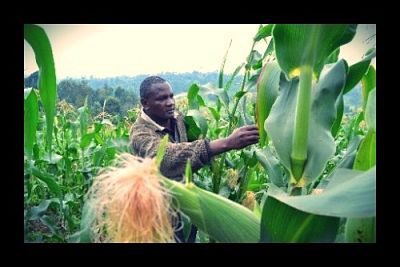
Researchers from Cornell University in cooperation with the United States Department of Agriculture (USDA) and the Boyce Thompson Institute for Plant Research have been conducting fascinating studies into the high aluminum tolerance of Ethiopian Maize and Brazilian Sorghum. Why aluminum? Well to start, the aluminum present in the clay of soils with a highly acidic pH dissolves, which is toxic when absorbed by nearby root systems. Amazingly, researchers were able to break down the genome of the aluminum tolerant species of maize and identify key gene copies known as MATE1 that were linked to the unusual trait. Moreover, by isolating and identifying the genes that enable crops to thrive in lands regarded as non-arable, stress-free crops can be grown in all types of climates and soil compositions.

In regards to stressed free crops, USDA Director of the Agricultural Research Service Leon Kochian remarked that “Aluminum tolerance in Maize is associated with higher MATE1 gene copy number. This could be a key factor for other traits of agricultural importance.”

The prospect of farmers being able to grow stress-free crops in areas that were once written off as unusable gives pause for optimism in nations that have been plagued with chronic food shortages and low soil efficacy. By unlocking the amazing potential of stressed free crops, remote areas that were once dependent on foreign aid can now reach the goal of sustainable development through aluminum tolerant maize.

– Brian Turner
Source: Science Daily
Photo:Nation Sydication

March 26, 2013
https://borgenproject.org/wp-content/uploads/borgen-project-logo.svg 0 0 Borgen Project https://borgenproject.org/wp-content/uploads/borgen-project-logo.svg Borgen Project2013-03-26 12:00:112020-05-26 01:11:11Scientific Breakthrough in Stressed Free Crops
Food Aid, Food Security

FAO Encourages Food Security in North Korea

FAO Encourages Food Security in North Korea
With their recent posturing and threats of nuclear destruction to both South Korea and the United States, North Korea has been a hot topic of many newspaper headlines and evening news programs. Surprisingly though, little attention has been paid to the chronic lack of food security in North Korea, an issue that the United Nation’s Food and Agricultural Organization (FAO) has been trying to address for years.

The gross human rights violations of Kim Jong-un notwithstanding, North Korean civilians have been the greatest casualty of the failed agricultural and food reapportionment policies of the government. By shutting out much of the international community, including various NGOs and aid workers, progress has been slow in devising a realistic solution to the problem of food security in North Korea. The most recent FAO mission report on food security in North Korea is startling, with both soybean oil and vegetable production down dramatically, raising concerns that were highlighted by mission leader Kisan Gunjal when he remarked that “The country needs to produce more protein-rich foods like soybean and fish and to put more effort into growing two crops a year so a more varied diet is available for everyone.”

However, there were bright spots on the horizon as annual staple food production has been growing over the past couple of years, effectively mitigating the amount of acute malnutrition in the population. Overall, the FAO was satisfied with the improvements their targeted aid has made in specific areas, yet considerable headway still remains in combating children’s vulnerability to shock and pregnant and nursing mothers’ levels of malnutrition. DPRK Country Director Claudia von Roehl commented on the status of food security in North Korea when stating that while harvest figures were optimistic, “the lack of proteins and fats in the diet is alarming” as there are still about two million children in the country who are in need of healthy, balanced diets.

– Brian Turner

Source: FAO News
Photo: Time

March 16, 2013
https://borgenproject.org/wp-content/uploads/borgen-project-logo.svg 0 0 Borgen Project https://borgenproject.org/wp-content/uploads/borgen-project-logo.svg Borgen Project2013-03-16 20:52:362024-05-24 23:44:23FAO Encourages Food Security in North Korea
Food & Hunger, Food Security, Global Poverty, Health, Technology

Arab Spatial Tracks Food Security

Arab Spatial Tracks Food SecurityA new web-based tool called Arab Spatial has recently launched and will provide aid workers and researchers access to valuable data relating to food security and malnutrition information throughout the Middle East. Previously, aid workers and activists noticed a lack of data on resources including food and water – data that is typically used in important policy and resource distribution decisions. Even if a country did have relevant information on these issues, the data was not efficiently being shared between countries and regions.

Now, researchers and aid workers can turn to Arab Spatial, an online tool developed by the International Food Policy Research Institute (IFPRI) that should house all food security information for the Arab world in one easily-accessible location.

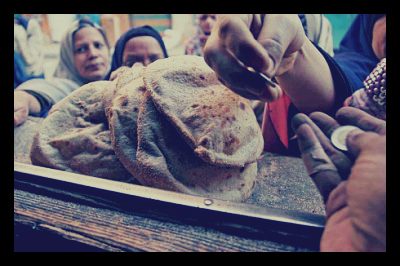
Food security is an enormous issue in the region, where many countries must import many of their basic food staples, and where war and fighting have exacerbated hunger and perpetuated poverty. Abeer Etafa, the representative of the World Food Program, said that “millions of families” throughout the region were having difficulties obtaining food, and with the events surrounding the Arab Spring and other civil unrest and upheaval, have had to face rising instability and lost wages as well.

Although the struggle of millions to obtain the food necessary to survive is known, it has been very difficult for researchers and aid organizations to quantify; IFPRI says that not many countries in the Middle East have poverty figures widely available, and even when they do, it is unclear how accurate said figures are.

To combat this issue, Arab Spatial will aggregate data on food based on national, regional, and local areas, and the data can be used to create maps showing “more than 150 food security and development-related indicators related to poverty, malnutrition, disease, production and prices, public finances, exports and imports.”

IFPRI also asserted that economic development and proper nutrition and food security are vital to each other, and one cannot be successful without the other. It is clear that eradicating the challenges to make food accessible will create sustained economic growth and development throughout the Middle East.

IFPRI hopes that Arab Spatial will be used by government officials, researchers, humanitarian aid workers, and journalists, and most importantly, decision-makers in addressing food security.

– Christina Kindlon

Source: IRIN

March 15, 2013
https://borgenproject.org/wp-content/uploads/borgen-project-logo.svg 0 0 Borgen Project https://borgenproject.org/wp-content/uploads/borgen-project-logo.svg Borgen Project2013-03-15 19:31:382024-05-24 23:44:55Arab Spatial Tracks Food Security
Children, Food Aid, Health

How Can Golden Rice Help End World Hunger

How Can Golden Rice Help End World HungerDr. Gerard Barry, project leader for the International Rice Research Institute (IRRI), is developing a type of genetically modified rice called “Golden Rice.” This rice contains the essential nutrient beta-carotene, the source of vitamin A, which is often lacking in the diets of people living in poverty. The GMO rice is referred to as “Golden” because beta-carotene produces an orange color once added to the rice. Dr. Barry and IRRI are working to address vitamin A deficiency in developing countries and hope that Golden Rice is the answer.
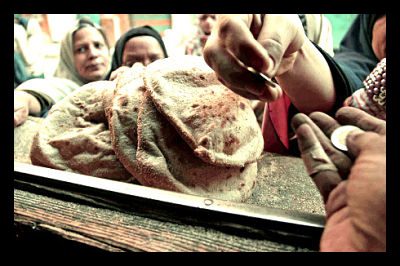

In an interview with National Public Radio, Dr. Barry spoke enthusiastically about engineering new types of rice pointing out that it is the staple food of a couple of billion people. His passion for the crop led to a career at IRRI and he quickly began working on Golden Rice which he explains has the potential to greatly benefit those living in impoverished conditions. IRRI hopes to distribute the GMO rice in Bangladesh and the Philippines, where the institute is located.

Vitamin A deficiency is a result of malnourishment and a limited diet. The consequences of this deficiency include tissue damage, blindness, and a weakened immune system. For those millions of people affected by vitamin A deficiency, one cup of Golden Rice a day could provide half the amount needed for a healthy diet. “This product has the potential to reduce the suffering of women and children and save lives,” said Dr. Barry. IRRI is working with nonprofit organizations to ensure the super rice reaches those who need it most. Once it has passed food and safety regulations, we will begin to see the real impact of Golden Rice.

– Mary Penn
Source: IrishCentral
Photo: Forbes

March 12, 2013
https://borgenproject.org/wp-content/uploads/borgen-project-logo.svg 0 0 Borgen Project https://borgenproject.org/wp-content/uploads/borgen-project-logo.svg Borgen Project2013-03-12 10:53:182020-05-24 23:29:22How Can Golden Rice Help End World Hunger
Food Security

Knowledge is Power: Arab Spatial and Food Security in the Middle East

    Arab spatial
    A new tracking tool to measure levels of food security in the Middle East was launched in February. International Food Policy Research Institute (IFPRI) created the tool, known as Arab Spatial, with support from the International Fund for Agricultural Development (IFAD) and the Consultative Group on International Agricultural Research (CGIAR).

    The Middle East has long struggled with food security, and researchers, officials, and activists have had a difficult time addressing the problem due to a lack of information. Now, humanitarian aid workers and policymakers working to address food security issues in the region can turn to Arab Spatial for the most up-to-date information on malnutrition, rainfall, crop yields, and much more.

    Recent political upheaval has amplified food insecurity in the region. Many Middle Eastern countries depend on foreign imports of staples such as wheat flour. Political and social turmoil has disrupted commerce and economies, leading to lost jobs and even greater struggles for everyday people to put enough food on the table. Statistics on poverty in the Middle East are infrequent and often inaccurate; only about half of the countries provide public access to the numbers.

    But Arab Spatial will contribute to more open communication about how best to meet basic human needs in one of the least stable areas of the globe. Perrhian al-Riffai, a senior research analyst with IFPRI, said of Arab Spatial, “High quality and freely accessible knowledge is power, especially for evidence-based research for effective and efficient policy design and implementation throughout the Arab world.”

    Arab Spatial measures food security at the national, regional, and local level. More than 150 food security indicators, including information related to poverty, malnutrition, climate, crop production and prices, disease, and trade, can be used to create maps and data. This valuable information should give governments, NGOs, and non-profit organizations working to end food insecurity in the region more power to do so.

    – Kat Henrichs

    Source: IRN Middle East
    Photo: IRN

March 11, 2013
https://borgenproject.org/wp-content/uploads/borgen-project-logo.svg 0 0 Borgen Project https://borgenproject.org/wp-content/uploads/borgen-project-logo.svg Borgen Project2013-03-11 13:39:022020-04-24 02:36:02Knowledge is Power: Arab Spatial and Food Security in the Middle East
Food Security

Dupont Invents Life Saving Packaging

Dupont Invents Life Saving Packaging
DuPont, in collaboration with Simonalbag, recently launched “MixPack,” the first flexible package in Mexico capable of combining high-and-low resistance seals. This new technology is proving to be a life saving solution to malnutrition in rural communities.

Between 1,000 and 3,000 Tarahumaras indigenous people live in the remote caves of Chihuahua, Mexico. They are isolated and poor, when droughts come they have no access to drinkable water, and no water for farming – thus unable to feed themselves.

The MixPack product is a bag with two compartments, which are separated by an internal seal made of DuPont Surlyn®. This solution prevents the mixing of the milk powder with the purified water that is contained within the same packaging unit. Then, when needed, by squeezing the package, the inner seal breaks mixing the ingredients – resulting in a nutritious and healthy drink for children.

Dupont has started a program that provides milk for children living in these areas. CEO Alvaro Navarro states that MixPack was the result of a dream to help people nourish their children but have no way to refrigerate baby milk or do not have a source of drinking water. He projects MixPack will revolutionize flexible packaging around the world.

“I have a dream and a mission to alleviate hunger through science and innovation,” said Navarro

– Mary Purcell
Source:Youtube

March 5, 2013
https://borgenproject.org/wp-content/uploads/borgen-project-logo.svg 0 0 Borgen Project https://borgenproject.org/wp-content/uploads/borgen-project-logo.svg Borgen Project2013-03-05 15:53:292020-05-19 22:05:10Dupont Invents Life Saving Packaging
Food Aid

Proposed Changes to US Food Aid Policy Cause Controversy

US-food-aid-Ethiopia-1_opt
Changes to the US Food Aid policy may be in the works for this fiscal year’s budget. President Obama recently proposed that the US shift its food aid policy from one of sending US-grown food products abroad to sending cash instead. This would be the largest change in the history of US food aid policy since programs were initiated in 1954.

Food aid groups, international development organizations, and US businesses are at odds over the proposed reform. Anti-hunger groups including Oxfam and Bread for the World, as well as the Modernizing Foreign Aid Network and the Chicago Council on Global Affairs, issued a joint statement this week in support of reforming US food aid policy. US farm, shipping, and labor groups, members of Congress’s Agriculture Committee, and the Alliance for Global Food Security are against any proposed reform.

The proposed policy changes have both benefits and drawbacks. One benefit is that by sending cash instead of food, the money can be used to purchase food locally. This would save both time and energy, and support local agricultural economies. A 2012 Cornell University study on food aid found that local purchasing “can often afford valuable cost and time savings.”

Opponents of the proposed reform argue that the Obama administration intends to cut funding to programs across the board, which would hurt aid recipients and US food providers alike. Producing, shipping, and transporting US-grown food overseas creates jobs and supports the economy of the United States. Sending food abroad that is marked with the US flag also serves as a low-cost form of national security, by providing physical evidence of US good will and assistance.

Since the inception of programs such as Food for Peace, some international development experts have argued that the programs were more concerned with developing a market for American food products and providing benefits to US farmers and agribusinesses, than with feeding the hungry. The former executive director of the World Food Program, Catherine Bertini, stated in an email, “I am one who welcomes a 21st century proposal that is more responsive to the needs of the hungry and a more efficient use of taxpayer dollars.”

The United States is the largest food aid donor in the world, providing over $2 billion a year in food aid. Conflicts over its role in international aid are nothing new. While the possibility exists for beneficial changes to US food aid policy, any proposed spending cuts to food aid programs should be considered with the 925 million people across the globe who suffer from hunger in mind.

– Kat Henrichs

Sources: National Journal, Reuters
Photo: Stephen Raburn

March 2, 2013
https://borgenproject.org/wp-content/uploads/borgen-project-logo.svg 0 0 Borgen Project https://borgenproject.org/wp-content/uploads/borgen-project-logo.svg Borgen Project2013-03-02 09:32:342020-04-17 14:39:17Proposed Changes to US Food Aid Policy Cause Controversy
Page 77 of 78«‹75767778›

Get Smarter

  • Global Poverty 101
  • Global Poverty… The Good News
  • Global Poverty & U.S. Jobs
  • Global Poverty and National Security
  • Innovative Solutions to Poverty
  • Global Poverty & Aid FAQ’s
Search Search

Take Action

  • Call Congress
  • Email Congress
  • Donate
  • 30 Ways to Help
  • Volunteer Ops
  • Internships
  • Courses & Certificates
  • The Podcast
Borgen Project

“The Borgen Project is an incredible nonprofit organization that is addressing poverty and hunger and working towards ending them.”

-The Huffington Post

Inside The Borgen Project

  • Contact
  • About
  • Financials
  • President
  • Board of Directors
  • Board of Advisors

International Links

  • UK Email Parliament
  • UK Donate
  • Canada Email Parliament

Get Smarter

  • Global Poverty 101
  • Global Poverty… The Good News
  • Global Poverty & U.S. Jobs
  • Global Poverty and National Security
  • Innovative Solutions to Poverty
  • Global Poverty & Aid FAQ’s

Ways to Help

  • Call Congress
  • Email Congress
  • Donate
  • 30 Ways to Help
  • Volunteer Ops
  • Internships
  • Courses & Certificates
  • The Podcast
Scroll to top Scroll to top Scroll to top