• Link to X
  • Link to Facebook
  • Link to Instagram
  • Link to TikTok
  • Link to Youtube
  • About
    • About Us
      • President
      • Board of Directors
      • Board of Advisors
      • Financials
      • Our Methodology
      • Success Tracker
      • Contact
  • Act Now
    • 30 Ways to Help
      • Email Congress
      • Call Congress
      • Volunteer
      • Courses & Certificates
      • Be a Donor
    • Internships
      • In-Office Internships
      • Remote Internships
    • Legislation
      • Politics 101
  • The Blog
  • The Podcast
  • Magazine
  • Donate
  • Click to open the search input field Click to open the search input field Search
  • Menu Menu

Archive for category: Food & Hunger

Information and stories on food.

Developing Countries, Food Aid

Why General Petraeus Supports International Aid

u-s-general-david-petraeus-smiles-as-he-prepares-to-testify-USAID_international_aid_opt
The United States Military takes a huge piece of the American Federal Budget, with 23% of spending allocated to defence. The armed forces are carrying a heavy responsibility in a time when national security is at the forefront of most citizens’ minds, with threats and responsibilities so numerous that the country has come to merit possessing the world’s most powerful army.

Taking this into consideration, it seems unlikely – and significant – that General David Petraeus, who had an illustrious career within the army – is outspokenly advocating the continued funding of foreign aid.  Petraeus recently wrote an impressive op-ed in Politico outlining the many potential benefits of continuing development work, as well as the moral and strategic importance of doing so. He offers the gentle reminder that America’s influence does not come solely from its military muscle but also from what he calls its ‘softer’ power, i.e. its generosity and ability to contribute to the betterment of other nations.

A strategist at heart, Petraeus’ argument is more sense than sentiment. Seen from a strategic standpoint, General Petraeus expounds on the benefits of past development work. He provides real life examples of how assistance has led to results in the past, such as the stabilization of the Latin American region, which has blossomed into new markets and is less threatened by instability. He points out the need for continued restructuring programs in the countries that have already seen US intervention, namely Afghanistan, where he emphasizes how the subsequent relief work is as important as the initial military intervention.

The US is one of the world’s largest contributors to foreign aid from a purely quantitative standpoint. Yet, in comparison to its economy, the US is somewhat conservative. Currently, the United States spends less than 0.19% of its GDP on foreign aid, less than some of the major European countries and falling significantly short of the UN’s goal of 0.7% of GDP. As Petraeus points out, “The State Department budget is still less than 5 percent of the military’s — and the number of Foreign Service officers worldwide is less than half the number of soldiers in a single Army division.”

In addition, General Petraeus highlights some of the past successes of investment in foreign aid. Not only that, he pinpoints areas that may need the US’s help in coming years, including Egypt, the Democratic Republic of the Congo and transitional governments such as Libya, Yemen and Mali.

Citizens and activists have long recognized the need for foreign aid; it is a heartening sign that figures as influential as Petraeus are adding their voice.

– Farahnaz Mohammed

Source: Politico
Photo: IBT

May 26, 2013
https://borgenproject.org/wp-content/uploads/borgen-project-logo.svg 0 0 Borgen Project https://borgenproject.org/wp-content/uploads/borgen-project-logo.svg Borgen Project2013-05-26 05:47:422020-06-18 19:50:41Why General Petraeus Supports International Aid
Food & Hunger, Food Security, Global Poverty

Eating Insects Could Fight World Hunger

eating-insects-to-fight-world-hunger
Entomophagy, or the practice of eating insects, could fight world hunger and global warming. A 200-page report, released by the UN Food and Agriculture Organization (FAO), at the organization’s Rome headquarters, is calling for restaurants, chefs, and food writers to promote eating insects.

According to the FAO, insects provide high-quality protein and nutrients compared to meat and fish. They can also be an important food supplement for undernourished children,  reproduce quickly, and leave a low environment footprint. Insects are high in protein, and can also be rich in copper, iron, phosphorus, manganese, magnesium, selenium and zinc. Furthermore, insects are four times more efficient in turning feed mass into edible meat, which suggests that food could be produced more cheaply and with fewer emissions.

The long history of entomophagy starts with grasshoppers served “toasted in a little oil with garlic, lemon and salt” on the streets of Oaxaca, Mexico and fly eggs called “Mexican caviar” that Montezuma devoured. Currently, two billion people worldwide indulge in the delicacy. However, consumer digestion will remain an issue when integrating insects into the Western diet. While ingesting insects outright makes many Westerners squeamish, reports by the FDA suggest that insect fragments can already be found several food products such as wheat and tomato juice but is safe to eat on a small scale.

Though this new protein may not find it’s way onto dinner plates in the near future, eating insects could fight would hunger and is an firm step forward in maintaining food security world wide.

– Kira Maixner

Source: The Telegraph

May 26, 2013
https://borgenproject.org/wp-content/uploads/borgen-project-logo.svg 0 0 Borgen Project https://borgenproject.org/wp-content/uploads/borgen-project-logo.svg Borgen Project2013-05-26 04:43:102024-12-13 17:49:20Eating Insects Could Fight World Hunger
Food Aid, Food Security

Effects of Food Aid Reform

Effects of Food Aid Reform

Since the proposed changes to the US system of food aid, many have voiced concerns about the shift away from domestic agriculture and towards local food supplies in developing countries. But how will food aid reform affect US shipping and agriculture?

Devex journalist, John Alliage Morales, reports after the US Agency for International Development (USAID) Administrator Rajiv Shah testified before the Senate Appropriations Subcommittee on State and Foreign Operations held May 7, 2013. Shah defended President Obama’s proposal to reform the $1.5 million US Food Aid Program: it would only affect about 300 employees in the shipping industry and 0.2 percent of American agricultural exports.

The six-decade old food aid program was designed primarily to help American farmers by purchasing their surplus, and American shipping companies by requiring at least 75 percent of the goods to be transported to countries in need on U.S.-flagged vessels.

Under Obama’s proposal for fiscal year 2014, the government would still buy food from farmers, but only up to 55 percent of the total, allowing the USAID to source the remaining 45 percent from local or regional markets closer to the crisis areas. USAID estimates that the $1.8-billion new program could reach an additional four million people simply by freeing up money spent on shipping and other costs.

Responding to queries from senators on the reform’s impact to local agriculture, Shah said: “We think the net change would be close to 0.2 percent of total value of U.S. agriculture export.”

“There are other sources of market demand,” added the USAID chief, who stressed that it is “inaccurate” to say that no one will buy the agricultural produce that would no longer be purchased by the government.

Ten years ago, USAID bought and shipped 5.5 million metric tons of food, but today this figure is down to 1.8 million metric tons. In addition, shipping costs have tripled over the same period of time, eating away about 25 percent of the budget, which could have been used to buy more food.

Shah noted that if the reform is approved by Congress, only about eight to ten ships or about 300 employees of the shipping industry will no longer benefit from the food aid program. That accounts for 0.2 percent of the total 15,000 workers in the American maritime shipping sector, he added.

“Of course, we expect that those ships will have other business activities, some of which will come from Department of Defense, some of which will come from elsewhere that they can pursue,” the official said.

– Maria Caluag

Source: Devex
Photo: US News

May 21, 2013
https://borgenproject.org/wp-content/uploads/borgen-project-logo.svg 0 0 Borgen Project https://borgenproject.org/wp-content/uploads/borgen-project-logo.svg Borgen Project2013-05-21 08:00:492020-06-21 22:23:35Effects of Food Aid Reform
Food Aid

Transparency Initiative Improves Aid

iati_International_Aid_Transparency_Initiative

The International Aid Transparency Initiative (IATI) offers a solution for those that assume corruption in developing countries prevent aid from reaching the most impoverished. The IATI makes information about aid spending easier to access, use, and understand through its website.

Developing countries face huge challenges in accessing up-to-date information about aid – information that they need to plan and manage those resources effectively. Similarly, citizens in developing countries and in donor countries lack the information they need to hold their governments accountable for the use of those resources.  In a foreword to the IATI 2012 annual report, UK Development Secretary Justine Greening MP says: “Transparency of aid flows is critical to good aid delivery. It helps reduce waste, fight corruption and makes sure money gets to the people who need it most.”

IATI is a voluntary, multi-stakeholder initiative that seeks to improve the transparency of aid in order to increase its effectiveness in tackling poverty. IATI brings together donors and developing countries, civil society organizations and other experts in aid information who are committed to working together to increase the transparency of aid.

Over 140 organizations are now publishing their data to the IATI in an open data platform that gives a timely, comprehensive and comparable picture of aid flows in order to improve accountability and impact.  Germany is the latest country to begin publishing its data in line with the IATI common standard, with Russia signaling its intention to join. Meanwhile IATI’s membership has grown to include 37 donor signatories who together represent 75% of global official development finance.

– Maria Caluag

Source: IATI

May 10, 2013
https://borgenproject.org/wp-content/uploads/borgen-project-logo.svg 0 0 Borgen Project https://borgenproject.org/wp-content/uploads/borgen-project-logo.svg Borgen Project2013-05-10 04:00:462024-12-13 17:49:19Transparency Initiative Improves Aid
Food & Hunger, Food Security

3 Ways That GMOs Encourage Global Food Security

GMOs_opt
Despite the obvious concerns that genetically modified crops (GMOs) generate in regards to water usage and biodiversity, GMOs are – at present – the only viable option for feeding a worldwide population of 9 billion people by 2050. Why embark upon a policy of greater investment in GMOs as opposed to organic farming? Considering both the land and climate constraints of many developing nations, the strengths of GMOs lie primarily in their ability to adapt to challenges that would otherwise be prohibitive to organically grown crops. The following are 3 ways that GMOs encourage global food security.

1. GMO’s production yields are higher – As the global population increases, greater pressure will be placed on the agricultural industry to produce yields large enough to meet both local and international demands. GMOs encourage global food security by maximizing the potential of long established independent farmers and agribusinesses, a tool considered invaluable for maintaining adequate food supplies in developing countries still lacking the requisite knowledge and infrastructure for conventional farming.

2. GMOs use less land – As land starved countries of the global south continue to experience the high birth rates and greater population density of economic development, the low land usage of GMOs encourage global food security by increasing the productivity of their farmers without stifling growth. GMOs offer emerging economies the distinct advantage of developing previously underutilized areas without the accompanying sacrifices of farmland.

3. GMOs are more affordable – The inevitable cost increases that occur when demand outpaces supply will be an significant issue as the worldwide population increases; however, GMOs encourage global food security by keeping the price of food low enough to feed those with even the most meager of financial resources. GMOs are able to better withstand the climatic, pest, and blight challenges that would otherwise devastate organically grown crops, leading to the supply shortfalls and price increases that cripple poverty stricken communities.

– Brian Turner

Source Science Daily
Photo Chuck Haney Photography

May 7, 2013
https://borgenproject.org/wp-content/uploads/borgen-project-logo.svg 0 0 Borgen Project https://borgenproject.org/wp-content/uploads/borgen-project-logo.svg Borgen Project2013-05-07 10:00:322020-05-26 08:47:233 Ways That GMOs Encourage Global Food Security
Food Security, Global Poverty

Indonesia and Regional Food Security

regional-food-security-in-indonesia
Sufficiency, self-reliance, accessibility, utilization and affordability are key principals in providing food security. Policy makers must focus on maintaining a balance in these principals. When demand is not met by supply, the shortfall can lead to unstable food accessibility. 

Self-sufficiency, in many countries, remains the key to continuously providing food security. However, in Indonesia, self-sufficiency has come under threat and the integral agricultural market is at risk. The livelihood of subsistence farmers is increasingly impacted by global issues such as climate change, international food price volatility, and the increasing demand for food from a growing population. The fluctuation and rise in prices of staple foods such as rice, garlic, and onions is leading Indonesia to cooperate with its neighbors to ensure the future of food security nationally and regionally. 

Currently, Indonesia’s food policy is based on the aim of self-sufficiency and production is sustained within the economy to such a level that it could eventually lead to a food crisis. While this encourages small-scale farming, it makes food availability uncertain for many of the nation’s poor and compromises a well-balanced diet. While recent changes in dietary patterns and private-sector investment in agriculture will allow for growth and diversification in agricultural production, it may not be enough. As the country of highest productivity and production of rice in the Association of Southeast Asian Nations, Indonesia could potentially generate earnings in the regional market. Subsequently, local markets would gain a boost from the benefits of an export-oriented economy. 

Since 1979, East Asian countries have integrated rice reserves to create a formal Strategic Plan of Action on Food Security in 2009 with the end goal being regional food security. While regional food security still has yet to be accomplished, many strides have been made in regional crop risk management, insurance schemes, strategies for regional transportation, and public-private partnerships. Indonesia holds the potential to strengthen self-sufficiency and national food security through aid to domestic competitiveness, systematic cash transfers, and cooperation with non-state stakeholders to minimize the adverse impacts of open food trade regimes. Implementation of these policies and principals would eventually lead to the accomplishment of national and regional food security for Indonesia and East Asia.

– Kira Maixner

Source: The Jakarta Globe
Photo: New Security Beat

May 2, 2013
https://borgenproject.org/wp-content/uploads/borgen-project-logo.svg 0 0 Borgen Project https://borgenproject.org/wp-content/uploads/borgen-project-logo.svg Borgen Project2013-05-02 12:31:042020-05-26 07:57:34Indonesia and Regional Food Security
Food & Hunger, Food Security

Flood Resistant Grass Hybrid Can Create Food Security

Flood Resistant Grass Hybrid Can Create Food Security
The effects of flooding are catastrophic to agricultural production and soil efficacy due to the resulting root suffocation – via decreased oxygen availability in the soil – and accompanying topsoil erosion. Furthermore, as global weather patterns change and previously arid areas are exposed to unseasonably high annual rainfall, an increased emphasis is being focused into developing grasses that help to attenuate the impact of flooding. In a breakthrough that’s hypothesized to help bolster global food security in the face of unpredictable weather, a newly discovered flood resistant grass hybrid may shift the advantage towards local farmers.

The newly hybridized Festulolium species of grass, grown by a collaboration between UK researchers from Aberystwyth University, Lancaster University, and University of Nottingham, combines the impressive growth rate of ryegrass with the deep root systems of the meadow fescue grass.

How exactly does the flood resistant grass hybrid help to protect crops? By deploying the Festulolium grass in and around agricultural areas, the quick turnover and absorptive qualities of the hybrid grass help to decrease water run off by more than 51 %. Thus, the sensitive roots of the crops are protected from drowning as the Festulolium grass retains much of the water and serves as a barrier to flooding.

In regards to the newly developed food resistant grass hybrid, James Hutton Institute scientist Kit Macleod noted that, “Hybrid grasses of this type show potential for reducing the likelihood of flood generation, whilst providing pasture for food production under conditions of changing climate.”

Through the development of a flood resistant grass hybrid, a much needed ally in the fight against global climate change as been identified. And thanks to the continued research towards finding innovative methods of flood reduction and water retention, adequate levels of food security will be maintained despite the unpredictable effects of climate change.

– Brian Turner

Source Science Daily
Photo NPR

May 1, 2013
https://borgenproject.org/wp-content/uploads/borgen-project-logo.svg 0 0 Borgen Project https://borgenproject.org/wp-content/uploads/borgen-project-logo.svg Borgen Project2013-05-01 10:00:482020-06-17 01:08:56Flood Resistant Grass Hybrid Can Create Food Security
Development, Food & Hunger, Food Security

U.S. Army to Encourage Food Security in Afghanistan

Afghanistan Farming_opt
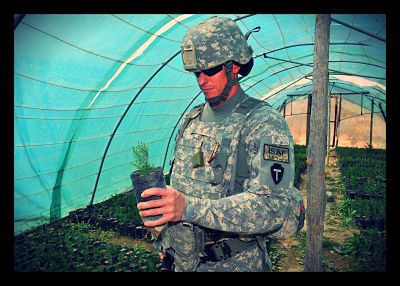
For the past 12 years, the US Army has primarily been assigned to the role of peacekeeper in support of the NATO led military operations in Afghanistan. Subsequently, as the security operations draw to a close and military personnel began a phased withdrawal, coalition forces have a renewed focus on the long-term economic benefits of sustainable farming in Afghanistan. Sadly, many of the invaluable skill sets necessary for high yield farming have been lost, a consequence of the frequent military incursions that have occurred over the last half-century. In an effort to both ameliorate local poverty levels and build agricultural capacity, NATO is calling for the US Army to encourage food security in Afghanistan.

Soldiers of the 5-19 Agribusiness Development Team of the Indian National Guard have spent the last year instructing Afghan farmers of the Khowst Provice in the basics of farming. What tasks are being covered in the course curriculum? Army instructors are focusing on row planting, pest control, livestock care, and green house management; all important techniques that will enable farmers to increase crop yields and pass along the requisite knowledge, skills, and abilities of sustainable farming to future generations. Thus far, the program assigning the US Army to encourage food security in Afghanistan has reaped substantial dividends, with local farmers taking pride in their yearly harvests and neighboring villages working towards the purchase of farm equipment in the near future.

In regards to the policy calling for the U.S. Army to encourage food security in Afghanistan, U.S. Army Major Gregory Motz noted that, “This is the best job I have had in the Army. To be able to see the progress the Afghans have made in a year and know that it isn’t because we did it for them, but with them…The agricultural community in Khost has made leaps and bounds in the last five years. It is really exciting to be part of that.”

A program calling for the U.S. Army to encourage food security in Afghanistan is a much needed reason to be optimistic about the future of the war torn nation, as the economic opportunities afforded by a newly invigorated agricultural industry will serve as positive legacy that will outlast the violence of the last decade. Furthermore, by laying the necessary groundwork required for a rich food security program to take hold, the citizens of Afghanistan can look forward to a future high in agricultural sustainability and economic development.

– Brian Turner

Source: ClarksVilleonline
Photo: National Guard News

April 30, 2013
https://borgenproject.org/wp-content/uploads/borgen-project-logo.svg 0 0 Borgen Project https://borgenproject.org/wp-content/uploads/borgen-project-logo.svg Borgen Project2013-04-30 09:21:512020-05-26 07:55:03U.S. Army to Encourage Food Security in Afghanistan
Children, Food Aid, Food Security, Foreign Aid, Global Poverty, Health

What is Childhood Stunting?

childhood stunting
Childhood stunting effects a massive percentage of the world’s youth. UNICEF estimates that some 39% of children in the developing world are stunted. 40% of children in sub-Saharan Africa are stunted and in East and South Asia, estimates climb as high as 50% of children. The numbers tally in at 209 million stunted children in the developing world.

Childhood stunting is a condition that is defined as height for age below the fifth percentile on a reference growth curve. If, within a given population, substantially more than 5% of an identified child population have heights that are lower than the curve, then it is likely that said population would have a higher-than-expected prevalence of stunting. It measures the nutritional status of children. It is an important indicator of the prevalence of malnutrition or other nutrition-related disorders among an identified population in a given region or area.

Aside from inadequate nutrition, there are several other causes of childhood stunting. These include: chronic or recurrent infections, intestinal parasites, low birth weight, and in rare cases, extreme psychosocial stress without nutritional deficiencies. Several of these factors are influenced by each other. Low birth weight is correlated with nutritional deficiencies, and inadequate nutrition is correlated to chronic or recurrent infections.

One of the serious consequences of stunting is particularly impaired cognitive development.  When a child has inadequate access to food, their body conserves energy by first limiting social activity and cognitive development in the form of apathetic and incurious children. These children may not develop the capacity to adequately learn or play. Then the child’s body will limit the energy available for growth.

Fortunately, studies have found that improvement in diet after age two can restore a child to near-normal mental development. Conversely, malnutrition after age two can be just as damaging as it is before age two. However, it is important to note that once stunting is established, it typically becomes permanent.

The reasons stated above serve as important reminders of why foreign aid and programs aimed at eliminating extreme malnutrition and nutritional deficiencies are so vital. The impact of new legislation focusing on increasing USAID and other foreign aid is substantial. Stunting can be seriously limited through the introduction of increased access to food security in the developing world. Knowledge of the facts surrounding stunting is also an important step in working to combat and eliminate childhood stunting worldwide.

– Caitlin Zusy

Sources: UNICEF, Future of Children

April 29, 2013
https://borgenproject.org/wp-content/uploads/borgen-project-logo.svg 0 0 Borgen Project https://borgenproject.org/wp-content/uploads/borgen-project-logo.svg Borgen Project2013-04-29 10:34:522024-05-24 23:49:03What is Childhood Stunting?
Development, Food & Hunger, Health

New Public Health Policy of Aflatoxin Prevention in Ghana

Poison Corn_opt
Of the many climatic, soil, and logistical challenges the Ghanaian agricultural industry has had to overcome in order to encourage economic growth and production capacity, none have posed a greater threat to crop efficacy than that of aflatoxin exposure. Aflatoxin – a cancer caused by product of the fungi Aspergillus – found in yam chips, groundnuts, cassava, and maize has been a chronic public health concern faced by much of the local farmers and agribusinesses of the sub-Saharan country. In an effort to ameliorate the carcinogenic side effects of the compound, health officials are working to implement a policy of aflatoxin prevention in Ghana.

Thanks in part to the increased coordination between the Food Research Institute (FRI), Ministry of Food and Agriculture (MOFA), and support funding from the Southern African Trust, a newly invigorated policy of aflatoxin prevention in Ghana will be launched. What exactly does the new prevention program entail? FRI officials are asking for mechanical driers – needed to quickly dry the grains – along with requisite storage facilities in order to prevent contamination during the rainy season. Once implemented, this robust policy of quick drying and storage is expected to mitigate the public health effects of the aflatoxin compound.

In regards to aflatoxin prevention in Ghana, FRI official George Anyebuno noted that, “These toxins are also potent causes of cancer and suppress the immune system, causing humans and animals to be more susceptible to diseases… But they are not often visible on the corn when purchased; once the maize is infected, nothing can be done to remove the toxins as they are very stable compounds even at high temperatures making the maize unwholesome.”

Thanks to a newly energized policy of aflatoxin prevention in Ghana, the chronic health and agricultural problems caused by the hazardous compound will now be addressed. Furthermore, through the deployment of a policy that includes public health awareness, prevention, and interdepartmental cooperation, the resulting health problems caused by aflatoxin contamination will finally be eliminated.

– Brian Turner

Source Ghana Business News
Photo Tree Hugger

April 29, 2013
https://borgenproject.org/wp-content/uploads/borgen-project-logo.svg 0 0 Borgen Project https://borgenproject.org/wp-content/uploads/borgen-project-logo.svg Borgen Project2013-04-29 09:46:482020-05-26 07:44:46New Public Health Policy of Aflatoxin Prevention in Ghana
Page 75 of 78«‹7374757677›»

Get Smarter

  • Global Poverty 101
  • Global Poverty… The Good News
  • Global Poverty & U.S. Jobs
  • Global Poverty and National Security
  • Innovative Solutions to Poverty
  • Global Poverty & Aid FAQ’s
Search Search

Take Action

  • Call Congress
  • Email Congress
  • Donate
  • 30 Ways to Help
  • Volunteer Ops
  • Internships
  • Courses & Certificates
  • The Podcast
Borgen Project

“The Borgen Project is an incredible nonprofit organization that is addressing poverty and hunger and working towards ending them.”

-The Huffington Post

Inside The Borgen Project

  • Contact
  • About
  • Financials
  • President
  • Board of Directors
  • Board of Advisors

International Links

  • UK Email Parliament
  • UK Donate
  • Canada Email Parliament

Get Smarter

  • Global Poverty 101
  • Global Poverty… The Good News
  • Global Poverty & U.S. Jobs
  • Global Poverty and National Security
  • Innovative Solutions to Poverty
  • Global Poverty & Aid FAQ’s

Ways to Help

  • Call Congress
  • Email Congress
  • Donate
  • 30 Ways to Help
  • Volunteer Ops
  • Internships
  • Courses & Certificates
  • The Podcast
Scroll to top Scroll to top Scroll to top