• Link to X
  • Link to Facebook
  • Link to Instagram
  • Link to TikTok
  • Link to Youtube
  • About
    • About Us
      • President
      • Board of Directors
      • Board of Advisors
      • Financials
      • Our Methodology
      • Success Tracker
      • Contact
  • Act Now
    • 30 Ways to Help
      • Email Congress
      • Call Congress
      • Volunteer
      • Courses & Certificates
      • Be a Donor
    • Internships
      • In-Office Internships
      • Remote Internships
    • Legislation
      • Politics 101
  • The Blog
  • The Podcast
  • Magazine
  • Donate
  • Click to open the search input field Click to open the search input field Search
  • Menu Menu
Blog - Latest News
Development, Food Security

Scientific Breakthrough in Stressed Free Crops
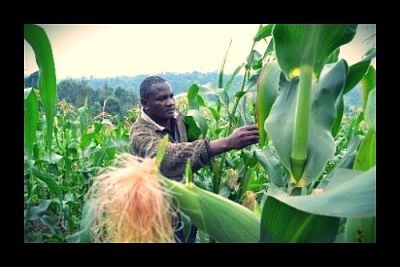
Scientific Breakthrough in Stress: Free CropsThe ability to grow crops in acidic soil environments has, up until recently, been feasible with only a few species of maize. However, current scientific research into the genes responsible for plant tolerance may enable the cultivation of stressed free crops in soils once considered impossible, opening up exciting new frontiers in the field of sustainable farming.

Researchers from Cornell University in cooperation with the United States Department of Agriculture (USDA) and the Boyce Thompson Institute for Plant Research have been conducting fascinating studies into the high aluminum tolerance of Ethiopian Maize and Brazilian Sorghum. Why aluminum? Well to start, the aluminum present in the clay of soils with a highly acidic pH dissolves, which is toxic when absorbed by nearby root systems. Amazingly, researchers were able to break down the genome of the aluminum tolerant species of maize and identify key gene copies known as MATE1 that were linked to the unusual trait. Moreover, by isolating and identifying the genes that enable crops to thrive in lands regarded as non-arable, stress-free crops can be grown in all types of climates and soil compositions.

In regards to stressed free crops, USDA Director of the Agricultural Research Service Leon Kochian remarked that “Aluminum tolerance in Maize is associated with higher MATE1 gene copy number. This could be a key factor for other traits of agricultural importance.”

The prospect of farmers being able to grow stress-free crops in areas that were once written off as unusable gives pause for optimism in nations that have been plagued with chronic food shortages and low soil efficacy. By unlocking the amazing potential of stressed free crops, remote areas that were once dependent on foreign aid can now reach the goal of sustainable development through aluminum tolerant maize.

– Brian Turner
Source: Science Daily
Photo:Nation Sydication

March 26, 2013
Share this entry
  • Share on Facebook
  • Share on X
  • Share on WhatsApp
  • Share on Pinterest
  • Share on LinkedIn
  • Share on Tumblr
  • Share on Vk
  • Share on Reddit
  • Share by Mail
https://borgenproject.org/wp-content/uploads/borgen-project-logo.svg 0 0 Borgen Project https://borgenproject.org/wp-content/uploads/borgen-project-logo.svg Borgen Project2013-03-26 12:00:112020-05-26 01:11:11Scientific Breakthrough in Stressed Free Crops

Get Smarter

  • Global Poverty 101
  • Global Poverty… The Good News
  • Global Poverty & U.S. Jobs
  • Global Poverty and National Security
  • Innovative Solutions to Poverty
  • Global Poverty & Aid FAQ’s
Search Search

Take Action

  • Call Congress
  • Email Congress
  • Donate
  • 30 Ways to Help
  • Volunteer Ops
  • Internships
  • Courses & Certificates
  • The Podcast
Borgen Project

“The Borgen Project is an incredible nonprofit organization that is addressing poverty and hunger and working towards ending them.”

-The Huffington Post

Inside The Borgen Project

  • Contact
  • About
  • Financials
  • President
  • Board of Directors
  • Board of Advisors

International Links

  • UK Email Parliament
  • UK Donate
  • Canada Email Parliament

Get Smarter

  • Global Poverty 101
  • Global Poverty… The Good News
  • Global Poverty & U.S. Jobs
  • Global Poverty and National Security
  • Innovative Solutions to Poverty
  • Global Poverty & Aid FAQ’s

Ways to Help

  • Call Congress
  • Email Congress
  • Donate
  • 30 Ways to Help
  • Volunteer Ops
  • Internships
  • Courses & Certificates
  • The Podcast
Link to: Author Chinua Achebe Dies at 82 Link to: Author Chinua Achebe Dies at 82 Author Chinua Achebe Dies at 82 Link to: 5 Reasons Africa May Be A Future Leader in Science and Technology Link to: 5 Reasons Africa May Be A Future Leader in Science and Technology 5 Reasons Africa May Be A Future Leader in Science and Technology
Scroll to top Scroll to top Scroll to top