• Link to X
  • Link to Facebook
  • Link to Instagram
  • Link to TikTok
  • Link to Youtube
  • About
    • About Us
      • President
      • Board of Directors
      • Board of Advisors
      • Financials
      • Our Methodology
      • Success Tracker
      • Contact
  • Act Now
    • 30 Ways to Help
      • Email Congress
      • Call Congress
      • Volunteer
      • Courses & Certificates
      • Be a Donor
    • Internships
      • In-Office Internships
      • Remote Internships
    • Legislation
      • Politics 101
  • The Blog
  • The Podcast
  • Magazine
  • Donate
  • Click to open the search input field Click to open the search input field Search
  • Menu Menu

Archive for category: Extreme Poverty

Information and news about poverty

Extreme Poverty, Global Poverty, Sustainable Development Goals

Energy Poverty as the New Global Poverty Metric

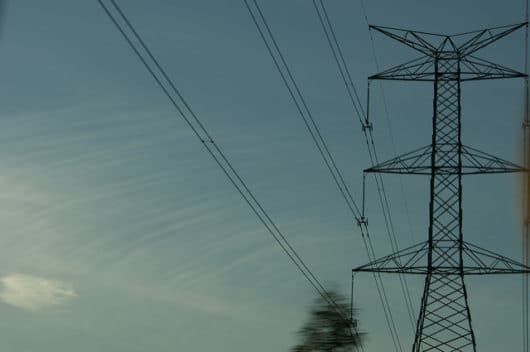
Energy Poverty
Eliminating global poverty will not be accomplished strictly through emerging opportunities and resources for the world’s most vulnerable people but will be done by redefining ideas about poverty. Instead of defining poverty by a purchasing power baseline, Rajiv Shah, the current Rockefeller Foundation President, thinks we should define and measure poverty in terms of power connectivity and electrification, in other words, energy poverty.

Rajiv Shah, former United States Agency for International Development (USAID) Administrator, suggested this idea at the Affordable and Clean Energy for All event in Washington, D.C. Shah points to the idea that poverty is traditionally measured by a “basket of goods” stemming from a “total calories mindset.” Energy poverty defines poverty by the extent of the lack of access to modern energy.

Poverty Definitions Today

Currently, poverty is defined with a mere dollar amount. Extreme poverty is defined as a daily income of less than $1.90, and moderate poverty is living on less than $3.10 a day. The idea of moving from defining poverty from purchasing power to energy accessibility has some weight to it. For example, India in the 1970s defined poverty as the ability to purchase 2,100 to 2,400 calories of food per day depending on if the person was living in the city or in rural areas. In 2011, the Suresh Tendulkar Committee, a namesake for the late economist Suresh Tendulkar, defined living below the poverty line as spending between 27.2 and 33.3 Indian rupees (or between $0.38 and $0.46) per month on electricity, food, education and health.

This measure is thought to be far too conservative, but it does touch on the expanse of resources and services, specifically electricity, that factor into basic living standards. India is said to have 300 million people with little or no access to electricity. That is roughly 23 percent of its population. By taking energy poverty into consideration, a much clearer picture of global poverty rates can be analyzed.

Providing Energy to Areas In Need

Shah and the Rockefeller Foundation are not just providing mere lip service to the conversation on extreme poverty but also real energy service. The Rockefeller Foundation sponsors Smart Power for Rural Development, a $75 million program launched in 2015 that brings solar power to villages. This program has already powered 100 Indian villages with mini-grids that supply renewable energy to over 40,000 people.

Investments in mini-grids such as Smart Power for Rural Development or the $20 million raised from Husk Power Systems (the largest for an Indian mini-grid company) are thought to be the most efficient solutions for securing energy goals for sustainable development. Without reliable energy connectivity, almost half Of the United Nations’ 17 Sustainable Development Goals for 2030 cannot be achieved. Two of such goals are “no poverty” and “affordable and clean energy.”

Energy is vital to attaining Development Goals such as health, education, inequality and food security. “Access to reliable electricity drives development and is essential for job creation, women’s empowerment and combating poverty,” says Gerth Svensson, chief executive at Swefund, a Swedish development finance institution that works to eliminate poverty by establishing sustainable businesses.

Metrics to Define Energy Poverty

Defining poverty through the proxy of energy poverty can leave vague perceptions. Yet, one metric illuminates the reality of what it means to be energy poor. Energy poverty is being quantified by the Multidimensional Energy Poverty Index (MEPI). The MEPI measures energy deprivation, as opposed to energy access. It is made up of five dimensions: cooking, lighting, services provided by means of household appliances, entertainment/education and communication.

Each dimension has one indicator to measure the importance of the activity, with an exception to cooking, which has two indicators. Each indicator has a binary threshold that indicates the presence or lack of a product or service. Energy poverty defined through the cooking dimension is measured by cooking with any fuel besides electricity, natural or biogas since it would leave a family vulnerable to indoor pollution. The lack of several other products or services complete the index—the lack of access to electricity (lighting), a refrigerator (household appliances), a radio or television (entertainment/education), and a landline or mobile phone (communication).

Measuring Poverty Through Energy

According to BRCK, a Kenyan organization that works to furnish internet connectivity to frontier markets, 18 of Africa’s 54 total nations have at least between 50 and 75 percent of their population without access to electricity, and 16 have more than 75 percent of their population lacking. On the measure of communication, only four of those nations have mobile-phones access for more than half their population, the highest being South Africa at 68 percent.

Using the current standard, roughly 736 million people worldwide are considered to be living in extreme poverty, yet 1.1 billion people were still living without access to electricity in 2017. The means for microeconomic power and poverty alleviation via education, healthcare, business and communication seem to be less about cash flow and more so concerning reliable energy flow, redefining poverty with the idea of energy poverty.

– Thomas Benjamin
Photo: Flickr
January 5, 2019
https://borgenproject.org/wp-content/uploads/borgen-project-logo.svg 0 0 Borgen Project https://borgenproject.org/wp-content/uploads/borgen-project-logo.svg Borgen Project2019-01-05 01:30:572024-05-29 22:57:23Energy Poverty as the New Global Poverty Metric
Extreme Poverty, Global Poverty

Living in Extreme Poverty: A Global Decline

Living in Extreme Poverty: A Global Decline
Less than 40 years ago, close to 42 percent of the world’s population was living in extreme poverty. People living under these conditions often cannot buy basic necessities like food and do not have access to clean water. They face starvation and disease on a daily basis.

However, in 2018, the world has become a better place, slowly but surely. By today’s reckoning, fewer people than ever before are living in extreme poverty, and it is something to celebrate. Though there is still a lot of work to be accomplished, the fact of the matter is that extreme poverty is declining everywhere.

Decades of Extreme Poverty Decline

The current standard of determining extreme poverty is whether someone is living on less than $1.90 per day. There is often debate over whether extreme poverty is truly ending or if contemporary standards for determining poverty rates are too low. Current research has determined that extreme poverty rates are declining no matter what amount per day is being used. 

Despite the negative effects of the 2008-2009 financial crisis on the global economy, the world community has made significant strides towards ending extreme poverty. A report published by The World Bank in 2016 found that from 1981 to 1990, the percentage of those living in extreme poverty had declined from 42 percent to 35 percent.

The later study published that from 1990 to 2013, the number of people living in extreme poverty had reduced to 10.7 percent, meaning that, in those two decades, about 1.1 billion people around the world clambered out of extreme poverty.  

Between 2008 and 2013, The World Bank found that earnings increased by 40 percent for those living in extreme poverty. And just between 2012 and 2013, the number of those living in extreme poverty dropped by 100 million people. After 2016, that number lowered to 9.1 percent.

Crucial Steps to Reducing Extreme Poverty

Using data identified as beneficial in lowering a country’s poverty rate, The World Bank boiled their findings down to six crucial steps that a country could make to lower their poverty rates.

  • Universal health coverage
  • Universal access to quality education
  • Making cash transfers to poor families
  • Rural infrastructure — especially roads and electrification
  • Progressive taxation
  • Early childhood development and nutrition

The World Bank study noted that the most significant declines in extreme poverty came from the Pacific Islands and East Asia. Approximately 50 percent of those still living in extreme poverty today will be found in Sub-Saharan Africa. This region of the world will require the highest amount of foreign aid and relief efforts looking into the future.

How To Help

Those individuals who are fortunate enough to live in areas of the world predominantly above the poverty line can do their part by contacting their representatives at both the local and national level. Furthermore, continued support through foreign aid is crucial to the ongoing development of regions that need help the most. Today, it’s estimated that 775 million people still live below the poverty line, often on less than $1.90 a day. The global effort is getting closer to eliminating that number every day.

– Jason Crosby
Photo: Flickr

October 30, 2018
https://borgenproject.org/wp-content/uploads/borgen-project-logo.svg 0 0 Borgen Project https://borgenproject.org/wp-content/uploads/borgen-project-logo.svg Borgen Project2018-10-30 01:30:552024-05-29 22:53:30Living in Extreme Poverty: A Global Decline
Extreme Poverty, Global Poverty

10 Facts About Poverty’s Role in Terrorism

poverty's role in terrorism
There seems to be a close connection between poverty and terrorism. In fact, many argue that poverty breeds terrorism. Even if it does not do so in a direct manner, one only needs to look closer to find the intricate ties between poverty and terrorism. Poverty’s role in terrorism becomes clearer when viewed through the lens of interconnectedness that unravels and unpacks the consequences of poverty. For instance, poverty often deprives people of an adequate education and can lead to marginalization in society, both of which can result in extremist beliefs among impoverished people. These 10 facts about poverty’s role in terrorism make the connection clearer.

10 Facts About Poverty’s Role in Terrorism

  1. The world’s most dangerous nations are also among the poorest. For instance, the Global Terrorism Index (GTI) in 2012 revealed that lower-middle-income countries accounted for seven of the 10 countries most affected by terrorism. Nations such as Iraq, India, Pakistan, Afghanistan and Nigeria, which were among the 10 most dangerous countries, also struggle with rampant poverty.
  2. Poverty often deprives people of the ability to obtain an adequate education, and a lack of education leaves many people vulnerable to negative influences. Oftentimes, children from low income or extremely poor families only able to receive an education at madrassas or religious schools, which are targeted by violent extremists looking to indoctrinate and recruit innocent youngsters. Additionally, the top ten most dangerous countries in the 2012 GTI consisted of nations with high illiteracy rates.
  3. Impoverished people often grow up in marginalized and poor areas, which are overlooked by the government. A deep sense of marginalization can lead such people to engage in terrorist activities.
  4. Poverty often goes hand-in-hand with poor governance in a nation. In fact, sometimes poor governance continues the cycle of poverty. Poor people in such nations often feel marginalized not only because of their status but also the hopelessness that comes with the justified mistrust in their government. As a result, they might join groups that promote extremist actions in order to feel like they are being heard and their needs are being considered.
  5. Feelings of deprivation that are caused by being unemployed or the fear of unemployment can lead to extremist thoughts in people, thereby inviting them to engage in terrorist activities. For instance, a 2005 study found a significant positive correlation between state-level unemployment and the incidence of right-wing extremist crimes.
  6. Poor healthcare or lack of access to healthcare is very common in poor countries. In fact, most of the 10 most dangerous countries in the 2012 GTI are also among the places where the most people die from preventable diseases.
  7. More than the lack of material resources, the feeling that an individual cannot make meaningful life choices to alter their living conditions can also lead some to engage in desperate acts. Poverty strips people of their dignity, opportunities and meaningful choices.
  8. Terrorist groups’ community development activities demonstrate a link between insurgency and extreme poverty. For instance, Hamas spends most of its resources providing social, cultural, welfare and educational activities for the Palestinian people, and the Taliban built madrassas to offer free education to poor children in Pakistan and Afghanistan.
  9. Even among those living in first world countries, a propensity toward terrorism has been found in groups that live below the poverty line. For instance, according to a 2008 Census Bureau study, American Somalis, 82 percent of whom live near or below the poverty line, are the largest group traveling to fight with jihadist groups abroad.
  10. World leaders agree that poverty is linked to terrorism. For instance, in reference to budget cuts, Secretary of Defense James Mattis famously said, “If you don’t fund the State Department fully, then I need to buy more ammunition ultimately.”

These 10 facts about poverty’s role in terrorism demonstrate that a lack of access to basic necessities can make people desperate enough to engage in terrorist activities. Hopefully, acknowledging poverty as one of the root causes of terrorism will help people find ways to eradicate it altogether.

– Mehruba Chowdhury

Photo: Flickr

March 12, 2018
https://borgenproject.org/wp-content/uploads/borgen-project-logo.svg 0 0 Borgen Project https://borgenproject.org/wp-content/uploads/borgen-project-logo.svg Borgen Project2018-03-12 07:30:272019-11-29 14:39:3810 Facts About Poverty’s Role in Terrorism
Education, Extreme Poverty, Global Poverty

A Cyclical Dilemma: How Lack of Education Creates Poverty

lack of education creates poverty
The connection between lack of education and poverty is of a cyclical nature, with each one leading to the other. Documentation of how lack of education creates poverty dates as early as the 1966 publication of the Coleman Report, as this report demonstrated that, when compared to their middle and upper-income counterparts, lower income students were less likely to perform well in school.

When looking at the connection between education and poverty, it is essential to consider a variety of factors, including health and women’s empowerment. Since each of these factors is improved when people are better educated, improving these factors then helps to decrease global poverty.

Education and Health

Educated people are less likely to suffer from poor health since they better understand how to prevent the contraction of various diseases. A study in Uganda demonstrated that in rural Uganda, those who were educated were 75 percent less likely to suffer from HIV/AIDS. HIV/AIDS rates are cut in half among younger people who are educated through primary school.

Education is also linked to maternal health and the health of children. When mothers are more educated, they are more likely to seek care during pregnancy, and they are better equipped to care for their children. Mothers that are educated are 50 percent more likely to seek immunization for their children than mothers who have no schooling.

Additionally, children of educated mothers are over twice as likely to live to the age of five than children of uneducated mothers. Statistics documenting the link between education and health — specifically the health of women and mothers — also demonstrate how education improves women’s empowerment.

Education and Women’s Empowerment

Young girls who are educated are less likely to marry at a young age. This fact means that they have a higher chance of entering into the workforce and not relying on their husbands and families for financial support. Women’s empowerment through education is another factor that demonstrates how lack of education creates poverty.

Women who are educated are able to develop better decision-making skills which allow them to succeed in the workforce. For women who are educated beyond grades three and four, each additional year of education leads to 20 percent higher wages, a fact that clearly demonstrates the link between education and poverty.

How to Improve

Research clearly indicates that if people lack the basic skills to read and do simple math, they will be less likely to get a job. An inability to get a job creates a clear pathway to poverty; however, lowering school fares and increasing investment in the education sector are key ingredients in improving the amount of educated people.

Between the years 2002 and 2007, an estimated 40 million more children were able to attend school, according to the Global Campaign for Education. This increase in educational attendance was due to a variety of factors including lowering school fares in countries such as Kenya, Tanzania, Uganda and Burundi, and the increase in investment in education in Latin America.

Though many people claim that poverty is what causes poor education, they fail to recognize the complicated cyclical nature of the dilemma as a whole. In fact, many studies demonstrate how lack of education creates poverty. With the proper investment in education, more people can have access to education, enter the workforce and not fall into poverty.

– Haley Rogers

Photo: Flickr

January 9, 2018
https://borgenproject.org/wp-content/uploads/borgen-project-logo.svg 0 0 Borgen Project https://borgenproject.org/wp-content/uploads/borgen-project-logo.svg Borgen Project2018-01-09 01:30:502024-05-29 22:30:03A Cyclical Dilemma: How Lack of Education Creates Poverty
Developing Countries, Disease, Extreme Poverty, Global Poverty, Health

Top 20 Countries with the Lowest Life Expectancy

countries with the lowest life expectancyThere are a lot of factors that contribute to a country’s life expectancy. Some of these contributing factors are economic conditions, diet, public health, access to medical care, wars, crime rate etc. Because of this, a lot of the countries on this list are African countries plagued by poverty.
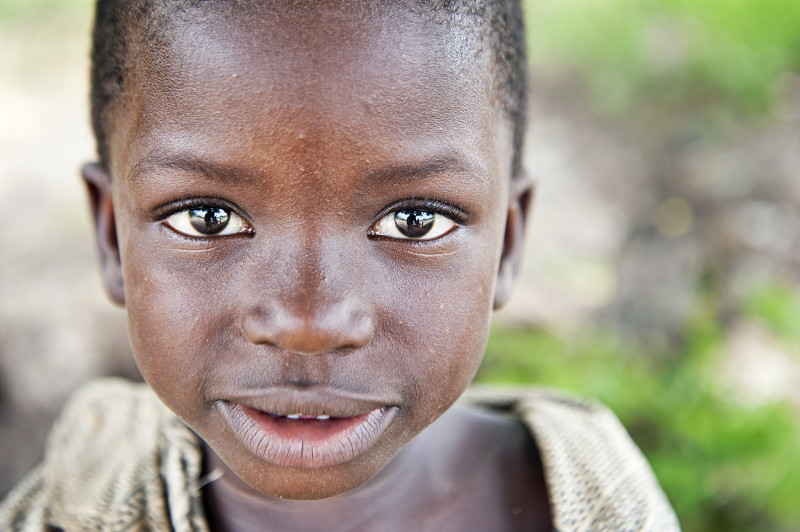
According to the CIA’s World Factbook, these are the top 20 countries with the lowest life expectancy as of 2017.

  1. Chad – 50.6
  2. Guinea-Bissau – 51.6
  3. Afghanistan – 51.7
  4. Gabon – 52.1
  5. Swaziland – 52.1
  6. Zambia – 52.7
  7. Central African Republic – 52.8
  8. Somalia – 52.8
  9. Lesotho – 53
  10. Mozambique – 53.7
  11. Nigeria – 53.8
  12. Burkina Faso – 55.9
  13. Niger – 55.9
  14. Uganda – 55.9
  15. Sierra Leone – 58.6
  16. Cameroon – 59
  17. Cote d’Ivoire – 59
  18. Republic of the Congo – 59.8
  19. Zimbabwe – 59.8
  20. Angola – 60.2

The overwhelming majority of these countries are in sub-Saharan Africa. According to Africa Check, the top five causes of death in 2017 in Africa were lower respiratory tract infections, HIV/AIDS, diarrheal diseases, stroke and Ischemic heart disease. The major reasons for these causes of death are unsafe water, poor sanitation, insufficient hygiene, lack of resources and economic conditions. Living conditions dramatically affect life spans and are a major reason why these countries have the lowest life expectancy.

However, there has been a significant improvement in a lot of these countries and their life expectancy numbers. For example, Zimbabwe and Zambia’s longevity has increased by 38 percent since the year 2000. And, overall, of the 37 countries that have seen increases in their life expectancy numbers by more than 10 percent since 2000, 30 are in sub-Saharan Africa. Additionally, not even one sub-Saharan country had its life expectancy fall between the years 2000-2014.

There is still a lot of progress that needs to be made in order for these countries with the lowest life expectancy to increase their numbers, but regardless, there has been a substantial improvement in these struggling countries.

– McCall Robison

Photo: Flickr

January 3, 2018
https://borgenproject.org/wp-content/uploads/borgen-project-logo.svg 0 0 Borgen Project https://borgenproject.org/wp-content/uploads/borgen-project-logo.svg Borgen Project2018-01-03 07:30:452024-05-29 22:30:01Top 20 Countries with the Lowest Life Expectancy
Extreme Poverty, Food & Hunger, Global Poverty, Health

Top 10 Facts About Poverty in Africa

Poverty in Africa Facts Statistics Suffering Poverty Line
How bad is poverty in Africa? The situation is improving, but Africa remains the poorest continent on Earth. But what many people may not know are the effects of poverty in Africa—including hunger, disease and a lack of basic necessities.


Leading Facts About Poverty in Africa


  1. Seventy-five percent of the world’s poorest countries are located in Africa, including Zimbabwe, Liberia and Ethiopia. The Central African Republic ranked the poorest in the world with a GDP per capita of $656 in 2016.
  1. According to Gallup World, in 2013, the 10 countries with the highest proportion of residents living in extreme poverty were all in sub-Saharan Africa. Extreme poverty is defined as living on $1.25 or less a day. In 2010, 414 million people were living in extreme poverty across sub-Saharan Africa. According to the World Bank, those living on $1.25 a day accounted for 48.5 percent of the population in that region in 2010.
  1. Approximately one in three people living in sub-Saharan Africa are undernourished. The Food and Agriculture Organization (FAO) of the United Nations estimated that 239 million people (around 30 percent of the population) in sub-Saharan Africa were hungry in 2010. This is the highest percentage of any region in the world. In addition, the U.N. Millennium Project reported that over 40 percent of all Africans are unable to regularly obtain sufficient food.
  1. In sub-Saharan Africa, 589 million people live without electricity. As a result, a staggering 80 percent of the population relies on biomass products such as wood, charcoal and dung in order to cook.
  1. Of the 738 million people globally who lack access to clean water, 37 percent are living in sub-Saharan Africa. Poverty in Africa results in more than 500 million people suffering from waterborne diseases. According to the U.N. Millennium Project, more than 50 percent of Africans have a water-related illness like cholera.
  1. Every year, sub-Saharan Africa misses out on about $30 billion as productivity is compromised by water and sanitation problems. This amount accounts for approximately five percent of the region’s gross domestic product (GDP), exceeding the total amount of foreign aid sent to sub-Saharan Africa in 2003.
  1. Due to continuing violence, conflict and widespread human rights abuses, the United Nations High Commissioner for Refugees (UNHCR) reports that 18 million people are of concern to the agency, including stateless people and returnees.
  1. Fewer than 20 percent of African women have access to education. Uneducated African women are twice as likely to contract AIDS and 50 percent less likely to immunize their children. Meanwhile, the children of African women with at least five years of schooling have a 40 percent higher chance of survival.
  1. Women in sub-Saharan Africa are more than 230 times more likely to die during childbirth or pregnancy than women in North America. Approximately one in 16 women living in sub-Saharan African will die during childbirth or pregnancy; only one in 4,000 women in North America will.
  1. More than one million people, mostly children under the age of five, die every year from malaria. Malaria deaths in Africa alone account for 90 percent of all malaria deaths worldwide. Eighty percent of these victims are African children. The U.N. Millennium Project has calculated that a child in Africa dies from malaria every 30 seconds, or about 3,000 each day.

– Jordanna Packtor

Sources: Global Issues, World Hunger, World Bank, World Population Review, The Richest, Johns Hopkins Malaria Research Institute, UNHCR, The Water Project, Gallup, Global Finance


1. Donate
2. Email Congress
3. Volunteer


November 7, 2017
https://borgenproject.org/wp-content/uploads/borgen-project-logo.svg 0 0 Borgen Project https://borgenproject.org/wp-content/uploads/borgen-project-logo.svg Borgen Project2017-11-07 04:00:192024-06-04 01:07:57Top 10 Facts About Poverty in Africa
Aid, Extreme Poverty, Global Poverty, Government

5 Things the US Needs to Know About Extreme Poverty

Extreme PovertyNot all poverty is created equal. Poverty in a developed country is not the same as poverty in a developing nation. Here are 5 things the U.S. needs to know about extreme poverty.
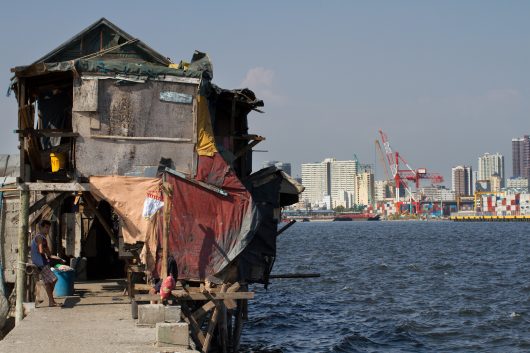
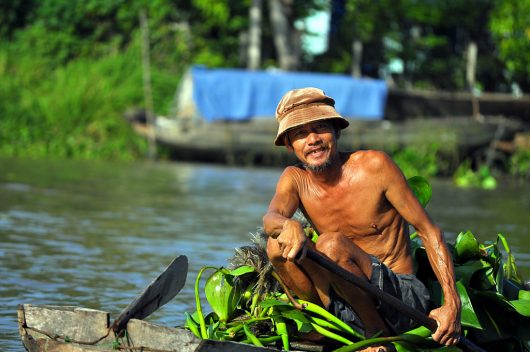
  1. People who live in extreme poverty are deprived of basic human needs such as access to food, clean water and shelter. To be classified as a person living in extreme poverty, one must be living on or below $1.90 a day.
  2. Extreme poverty in a developing nation is different from poverty in a developed nation. The U.S. is a developed nation. In the U.S., government benefits keep millions of Americans out of poverty. These programs mostly tend to target women, children and the elderly, the nation’s (and the world’s) most vulnerable populations. Due to programs such as Social Security, unemployment benefits and food stamps, these people are shielded from the harsh realities of extreme poverty.
  3. Unfortunately, government benefits tend not to exist in developing countries to aid their poor. In addition, due to fear of corruption, the world’s poorest do not receive as much foreign aid as their better-off peers. Low-income countries remain in poverty due to being too poor to be trusted with funds. An effect of this is that the most defenseless population in the world, children, suffers the consequences. The World Health Organization estimates that about 16,000 children under the age of five die each day from preventable causes associated with extreme poverty. The causes of death are lack of access to clean water, lack of access to healthcare, malaria, newborn infections, poor nutrition and diarrhea. Death from these ails is unfathomable in developed countries.
  4. An estimated 766,010,000 people live in extreme poverty today. This is double the size of the U.S.’s population
  5. The number of people in extreme poverty is declining. In 1990, there were 1.1 billion people living in extreme poverty. Today the number is 766 million. This is an amazing feat that can be attributed to a combination of factors such as trade between developed nations and developing nations, foreign aid that reinvigorated economies, increased education, improved infrastructures and investment in basic health.

As with most things in life, poverty cannot be viewed through a single lens. It is a complex social issue, but gains over the past few decades have shown that it is a solvable issue. With continued foreign aid and trade, the world can get that much closer to realizing the goal of eradicating extreme poverty by 2030.

– Jeanine Thomas

Photo: Flickr

October 20, 2017
https://borgenproject.org/wp-content/uploads/borgen-project-logo.svg 0 0 Kim Thelwell https://borgenproject.org/wp-content/uploads/borgen-project-logo.svg Kim Thelwell2017-10-20 07:30:412024-05-29 22:27:405 Things the US Needs to Know About Extreme Poverty
Extreme Poverty, Global Poverty

Philippines’ Poverty Rate: Rural Communities Still Left Behind

Philippines' Poverty Rate
The Philippines’ poverty rate decreased from 25.2% in 2012 to 21.6% in 2015, according to the Family Income and Expenditure Survey (FIES) conducted by the Philippine Statistics Authority (PSA).

The drop in the Philippines’ poverty rate coincides with a steady decline for extreme poverty in the country. In 2015, 12.1% of the population lived in extreme poverty. Those who classify as living under extreme poverty are those whose earnings cannot buy three meals a day.

But despite the decline in these numbers, there are still glaring problems regarding the issue of poverty. One of the more prominent ones is the continued prevalence of poverty within most of the basic sectors in the country. Five of the nine basic sectors determined by the PSA—farmers (34.3%), fishermen (34.0), children belonging to families with income below the official poverty threshold (31.4), self-employed and unpaid family workers (25.0) and women belonging to poor families (22.5)—have higher poverty rates than the general population (at 21.6%). Farmers and fishermen consistently registered as the two sectors with the highest poverty incidence since 2006.


Poverty in the Philippines


Not surprisingly, the poorest regions in the country lay in the rural and agricultural areas, particularly in the island of Mindanao, an underdeveloped region that has also served as a battleground for Muslim militants and government forces for decades. The Autonomous Region of Muslim Mindanao (ARMM) registered the highest poverty incidence in the survey. Additionally, 53.4% of its 3,781,387 residents live below the poverty threshold and 30.1% live in extreme poverty.

In contrast, the Philippine capital of Metro Manila had the lowest proportion of the poor. Only 6.5% of the population lived below the official poverty line.

The downward trend in the Philippines’ poverty rate has most experts hopeful that poverty will continue to fall. Some are quick to cite that despite the fall in numbers, there are still more than 26 million Filipinos who remain poor, with 12 million lacking the means to feed themselves.

However, most agree that addressing the basic roots of poverty also must address graver issues that stem from it. Drops in the Philippines’ overall poverty rate do not matter to those who see no way out in war-torn towns, says counterinsurgency expert Justin Richmond. “The widespread vulnerability that you see in every area dealing with radicalization is lack of economic opportunities,” Richmond says in an interview with Rappler, a Philippine news organization.

Richmond also maintains that only in improving the standard of living in underdeveloped areas can the government truly prevent a possible radicalization of citizens.

“It’s all based on vulnerability,” Richmond concludes.

– Bella Suansing

Photo: Flickr

August 9, 2017
https://borgenproject.org/wp-content/uploads/borgen-project-logo.svg 0 0 Borgen Project https://borgenproject.org/wp-content/uploads/borgen-project-logo.svg Borgen Project2017-08-09 01:30:552020-07-21 07:41:02Philippines’ Poverty Rate: Rural Communities Still Left Behind
Extreme Poverty, Global Poverty

The Road to Ending Poverty in Laos

Poverty in Laos
Laos is a poor communist country — the result of a complicated history. Since declaring sovereignty in 1954 American contributions poignantly shape Laos’s physical landscape, albeit initially with bombs. More recent U.S. administrations, alongside international investors, have bequeathed the type of strategic investments in Laos that encourage economic development and social prosperity. Poverty in Laos is shifting.

The Lao people experienced a prolonged period of civil war and armed conflict immediately following independence. After years of abounding poverty, the economy writhed amid growing American anti-communist actions in neighboring Vietnam and Cambodia. The fighting soon leached across Laotian borders as part of a wider U.S. bombing campaign. While Laotians initially measured U.S. contributions only in terms of explosive tonnage, current administrations have retooled U.S. foreign policy in Laos to encourage growth. These efforts require a detailed understanding of Laos and its people.

Agrarianism dominates Laotian society. Rural farmers require an adequate road system to bring the agricultural goods market. In 2015, only 14 percent of all roadways in Laos were paved. Poverty in Laos exists predominantly in rural areas, the same locations growing crops with inadequate transportation infrastructure.

Transportation network improvements implemented in the late 1990s provided proof of a strong correlation between targeted infrastructure investment and rural poverty reduction. The Lao Peoples Democratic Republic (PDR) government conducts household surveys every fifth year, the Lao Expenditure and Consumption Survey, which enables the study of poverty rates. Peter Warr, a professor of agricultural economics at the Australian National University, compared the two surveys that bracket the late 90s improvements to imply, “about 13 percent (one-sixth) of the reduction in rural poverty incidence… can be attributed to wet season road access.”

Poverty in Laos and War

The combined impacts of civil war and a U.S. bombing campaign in Laos staunched civil progress and economic prosperity. In an effort to help improve impoverish conditions in the country, a U.S. State Department’s principal foreign policy objective regarding assistance to Laos is to help the country meet its development goals.

President Obama visited Laos in September 2016, marking the first trip by any U.S. president to the country. Likely his last Asian tour as president, Obama’s trip highlighted the U.S. strategy to rebalance Asia and the Pacific. In a speech to the people of Laos, the president alluded to the U.S.’s assumed role to end extreme poverty through “transformative investments.” Obama also discussed diplomatic efforts that resonated strongly with two U.S. national security interests: prosperity and international order.

The president pledged $90 million over the next three years to help Laotians clear American unexploded ordinance. “Over nine years—from 1964 to 1973—the U.S. dropped more than 2 million tons of bombs here in Laos—more than we dropped on Germany and Japan combined during all of World War II,” President Obama stated. The pledge enables Laotian health and prosperity within its borders and supports international order by strengthening Asia-Pacific alliances.

According to sources for Radio Free Asia, “Road construction and renovation in Laos are usually plagued by corruption with exorbitant costs.” Assistance simply does not end after the deposit. The U.S. must follow through, providing the appropriate accountability and oversight.

The takeaway reveals how detailed research, analysis and understanding allow the investor to achieve broader returns as well as dividends. Road investments and UXO removal, while altruistic to end poverty in Laos, stimulate Laotian autonomy and economic progress. An economically independent and prosperous Laos promotes the success of broader U.S. National Security Strategic goals.

– Tim Devine

Photo: Flickr

October 30, 2016
https://borgenproject.org/wp-content/uploads/borgen-project-logo.svg 0 0 Borgen Project https://borgenproject.org/wp-content/uploads/borgen-project-logo.svg Borgen Project2016-10-30 01:30:452020-05-28 09:35:12The Road to Ending Poverty in Laos
Extreme Poverty, Global Poverty

10 Facts About Poverty In Malawi

Malawi is a landlocked country in southeastern Africa bordered by Tanzania, Mozambique and Zambia. The country also borders Lake Malawi, also known as Lake Nyasa. Lake Malawi accounts for more than one-fifth of the country’s total area, making it a significant geographical feature. Poverty in Malawi has been at critical levels for decades. Of the approximately 21.8 million people in the country, about 50.7% lived below the national poverty line in 2019.

Many Malawians work in agriculture and it is hard for them to produce enough crops to maintain an income above the international poverty line. With parental death, disease and crop failure, the obstacles that many Malawians face are abounding. Below are the leading facts that thoroughly explain and illuminate the pressing issue of poverty in Malawi.

  1. In Malawi, there are more than 900,000 adults living with HIV. The infection rate is twice as high among women as it is among men. Additionally, only 88.3% of adults living with HIV know that they are HIV-positive and about 98% of them are receiving antiretroviral treatment (ART).
  2. Only 67.3% of Malawi’s population can read and write by the age of 15. This is partially attributed to a lack of access to quality education, a high number of student to teacher ratio, teacher absenteeism and a low enrolment rate.
  3. Due to poverty, poor access to health care, disease and food shortage, the average life expectancy for a Malawian is 63 years, which is 25 years more than it was in 1960, according to the World Bank. Further, The median age for Malawians is 20.3 years old.
  4. There are only 0.05 doctors for every 1,000 individuals in Malawi. As a result, millions in Malawi do not have access to standard health care services.
  5. Malawi’s economy is mainly agricultural, with 80% of the population living in rural areas. Additionally, the sector contributes 30% of the country’s national gross domestic product (GDP).
  6. The International Fund for Agricultural Development (IFAD) is working in harmony with Malawi’s government to promote agricultural growth in rural areas. This is an effort to reduce poverty throughout Malawi.
  7. About 30% of Malawian children do not start primary school (which is free) and only 33% of those who enroll will go on to complete it. Secondary and higher education is mostly attended by those of households above the international poverty line, predominantly due to the enrollment fees.
  8. Malawi is one of the world’s most impoverished countries, ranking 172 out of 193 countries on the Human Development Index.
  9. As of 2015, more than one million Malawi children were orphaned due to HIV/AIDS.
  10. In addition to IFAD, Access Health Africa, an international nonprofit, is providing Malawians with access to quality health services, education and resources through community initiatives. The organization has provided 160 general surgeries and reached more than 1,000 people.

The people of Malawi face great hardships; however, with the help of nonprofits like IFAD and Access Health Africa, there is hope for an increased economy, health services and better school systems. This, in turn, will decrease disease, orphaned children and overall poverty in Malawi.

– Bella Chaffey

Photo: Flickr
Updated: June 01, 2024

August 10, 2016
https://borgenproject.org/wp-content/uploads/borgen-project-logo.svg 0 0 Borgen Project https://borgenproject.org/wp-content/uploads/borgen-project-logo.svg Borgen Project2016-08-10 01:30:012024-06-01 12:43:4010 Facts About Poverty In Malawi
Page 2 of 10‹1234›»

Get Smarter

  • Global Poverty 101
  • Global Poverty… The Good News
  • Global Poverty & U.S. Jobs
  • Global Poverty and National Security
  • Innovative Solutions to Poverty
  • Global Poverty & Aid FAQ’s
Search Search

Take Action

  • Call Congress
  • Email Congress
  • Donate
  • 30 Ways to Help
  • Volunteer Ops
  • Internships
  • Courses & Certificates
  • The Podcast
Borgen Project

“The Borgen Project is an incredible nonprofit organization that is addressing poverty and hunger and working towards ending them.”

-The Huffington Post

Inside The Borgen Project

  • Contact
  • About
  • Financials
  • President
  • Board of Directors
  • Board of Advisors

International Links

  • UK Email Parliament
  • UK Donate
  • Canada Email Parliament

Get Smarter

  • Global Poverty 101
  • Global Poverty… The Good News
  • Global Poverty & U.S. Jobs
  • Global Poverty and National Security
  • Innovative Solutions to Poverty
  • Global Poverty & Aid FAQ’s

Ways to Help

  • Call Congress
  • Email Congress
  • Donate
  • 30 Ways to Help
  • Volunteer Ops
  • Internships
  • Courses & Certificates
  • The Podcast
Scroll to top Scroll to top Scroll to top