• Link to X
  • Link to Facebook
  • Link to Instagram
  • Link to TikTok
  • Link to Youtube
  • About
    • About Us
      • President
      • Board of Directors
      • Board of Advisors
      • Financials
      • Our Methodology
      • Success Tracker
      • Contact
  • Act Now
    • 30 Ways to Help
      • Email Congress
      • Call Congress
      • Volunteer
      • Courses & Certificates
      • Be a Donor
    • Internships
      • In-Office Internships
      • Remote Internships
    • Legislation
      • Politics 101
  • The Blog
  • The Podcast
  • Magazine
  • Donate
  • Click to open the search input field Click to open the search input field Search
  • Menu Menu

Archive for category: Development

Information and stories on development news.

Development, Disease, Global Poverty, Health

CFHI and Omni Med Tackle Preventable Diseases in Uganda

CFHI
Less than half of the population in Uganda has access to health care. In addition, the country suffers from a deficit of 1.5 million health workers. It is therefore not surprising that treatable diseases are the leading cause of death in Uganda.

The government created the Village Health Team program in 2001 to focus on the lack of health workers. The joint program “Community Health Workers & Global Health” will be based in Uganda’s Mukono District, 13 miles from the capital Kampala. The Child Family Health International organization offers global health education programs that “broaden students’ perspective on global health.”

Child Family Health International (CFHI) is partnering with Omni Med to expand health care capacity from rural to central Uganda. This expansion will improve Omni Med’s training and surveillance of Village Health Team and allow participants to assist the locally-led capacity building and quality assurance.

Omni Med began its work in Uganda in 2008 and has since trained over 1,200 community health workers and established protected water sources and cookstoves as well as distributing insecticide-treated nets. These teams include health educators in rural villages who make a big difference in the health of the world’s poorest people.

Village Health Teams are elected by local villagers and tasked with educating locals with preventative health information, referring sick people to health care centers and tracking health trends for Uganda’s Ministry of Health.

Child Family Health International Global Health Scholars, also known as participants, will assist the Village Health Teams in providing locals in rural Mukono with the best preventative tool: knowledge.

Scholars will accompany the teams on their home visits, train and maintain the team’s health knowledge by teaching in quarterly meetings and aiding in other Omni Med local activities.

“We believe strongly that it is not enough to feel good about what we do–we have to measure the impact we make, and then adjust our programs based on the data,” president and founder of Omni Med, Dr. Ed O’Neil Jr said.

– Marie Helene Ngom

Sources: PRweb, CFHI
Photo: Flickr

November 25, 2015
https://borgenproject.org/wp-content/uploads/borgen-project-logo.svg 0 0 Borgen Project https://borgenproject.org/wp-content/uploads/borgen-project-logo.svg Borgen Project2015-11-25 01:30:172024-05-27 09:28:23CFHI and Omni Med Tackle Preventable Diseases in Uganda
Charity, Developing Countries, Development, Global Poverty

Lottie Moon: A Southern Belle

Lottie_Moon
Why do citizens in the poorest states give the most to charity? When it comes to statewide charitable funds, this question seems to arise time and time again. As for the reason – research has suggested the answer lies in religion.

In 2013, Southern Baptists gave approximately $153,000 to the International Foreign Mission Board through the Lottie Moon Christmas Offering. Each Christmas, Southern Baptists participate in this tradition through donations. Who is Lottie Moon, and how does she continue to fight global poverty?

Charlotte Digges “Lottie” Moon was born on Dec. 12, 1840, to a wealthy Virginia family. She cherished education and became the first woman to obtain a master’s degree from a southern college. Around age 18, she became a Christian and desperately desired to become involved with foreign mission work. At the time, this field was closed to single women.

Moon’s sister, Edmonia, began writing to the secretary of the Foreign Baptist Foreign Mission Board, Henry Tupper. Surprisingly, he agreed to let them help, and in 1873 at age 32, Moon and her sister arrived in Tengchow, China.

Moon wasn’t there simply to teach her religion, she was a reformist. She taught school and was a strong advocate for women. Moon fought ardently against the women’s practice of foot binding. In foot binding, a woman’s toes are forced to curl down into her heel, producing a crescent shape. Even though foot binding was a symbol of the elite, it was painful and harmful to the body.

Even though many other missionaries fled, Moon remained in China during the Russo-Japanese War of 1904-1905. Starvation surrounded her, so she took in children and animals, even refusing to eat if they could not.

She wrote home suggesting a week of prayer and offerings be set aside for missions during Christmas. People responded and the Women’s Missionary Union was born. The union is alive and productive in the South today; it collects more than $20 million annually for Southern Baptist mission work overseas.

Eventually, Moon herself fell ill. She did not want to leave China, but her colleagues sent her home on a ship. She died in 1912 on Christmas Eve, and there are conflicting stories about her exact cause of death.

Nevertheless, Lottie Moon has become a beloved friend of Southern Baptists and a martyr among missionaries. Sandra Spears, a Southern Baptist from Mississippi, said she learned about Lottie Moon as a child and has given to the cause for more than 50 years. It’s a tradition.

It should be noted that even though the donations received for the Lottie Moon Christmas Offering are designed for mission work, they aren’t solely spent on building churches and supporting missionaries. Some of the work could be considered “humanitarian” as the missionaries provide meals, medical resources and a host of other critical needs that exist in developing countries.

A 7-year-old boy who was growing up Southern Baptist in the Deep South asked his mother, “When does Lottie Moon ever get paid off?” A humorous question from a child, but when it comes to lifting others out of poverty and giving to help others, the possibilities seem endless.

– Dana McLemore

Sources: BDC Online, History’s Women, The Pathway, Cornell University
Photo: Wikimedia

November 24, 2015
https://borgenproject.org/wp-content/uploads/borgen-project-logo.svg 0 0 Borgen Project https://borgenproject.org/wp-content/uploads/borgen-project-logo.svg Borgen Project2015-11-24 10:26:582024-05-27 09:28:23Lottie Moon: A Southern Belle
Developing Countries, Development, Food & Hunger, Global Poverty

Millennium Development Goals Successes

Millennium_Development_GoalsAs 2015 comes to a close and the world takes a look at the progress that has been made in global poverty relief, it is clear that significant progress has been achieved. The list of what has been accomplished is extensive, but here are some of the top Millennium Development Goals successes:

  1. Between 1990 and 2015 the number of people living in extreme poverty went from 1.9 billion to 836 million people. That’s 1,090 million people who no longer live in poverty.
  2. The number of primary school age children who were out of school dropped globally from 100 million to 57 million. That’s 43 million more children able to go to school.
  3. In 1990, for every 100 boys that attended school in Asia, there were only 74 girls attending. That number has now risen from 74 to 103 girls.
  4. The number of infant deaths under age 5 has declined from 12.7 million to in 1990, to 6 million today.
  5. In 1990, only 2.3 billion people had access to clean drinking water. That number has now climbed to 4.2 billion.
  6. 99 percent of all countries have more women in parliament than they did in 1990.
  7. The child mortality rate has been reduced from 90 deaths per 1,000 live births to 43 deaths per 1,000 live births, and it continues to fall.
  8. The number of people living on only $1.25 a day has gone from 47 percent in 1990 to 14 percent in 2015.

While the Millennium Development Goals have had many successes, some goals have not been reached. World leaders have come together once again to decide on the new long-term sustainability goals, building on the past successes.

According to the UN, The Sustainable Development Goals, “will break fresh ground with ambition on inequalities, economic growth, decent jobs, cities and human settlements, industrialization, energy, climate change, sustainable consumption and production, peace and justice.”

– Drusilla Gibbs

Sources: The Guardian, UN
Photo: Flickr

November 24, 2015
https://borgenproject.org/wp-content/uploads/borgen-project-logo.svg 0 0 Borgen Project https://borgenproject.org/wp-content/uploads/borgen-project-logo.svg Borgen Project2015-11-24 01:30:062024-05-27 09:28:22Millennium Development Goals Successes
Development, Global Poverty, Health

Results of the Millennium Development Goals

millennium_development_goalsIn the year 2000, world leaders agreed upon the Millennium Development Goals to address extreme poverty.
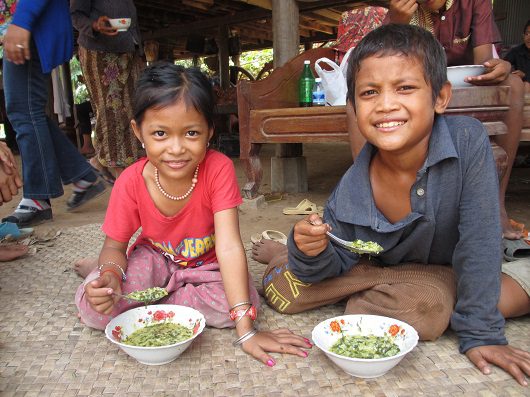
According to the United Nations Development Programme (UNDP), “the eight Millennium Development Goals (MDGs) form a blueprint agreed to by all the world’s countries and all the world’s leading development institutions. They have galvanized unprecedented efforts to meet the needs of the world’s poorest.”

Now that 2015 is coming to an end, the world is evaluating the success of the MDGs. While the overall targets were not met, significant progress has been made toward achieving several of the stated goals.

The official report declares, “The 15-year effort to achieve the eight aspirational goals set out in the Millennium Declaration in 2000 was largely successful across the globe, while acknowledging shortfalls that remain. The data and analysis presented in the report show that with targeted interventions, sound strategies, adequate resources and political will, even the poorest can make progress.”

In terms of fighting poverty, the MDGs produced the largest and most successful anti-poverty movement so far in the world’s history. With every country focused on the effort, the results have been impressive and inspirational.

For example, looking closer at the goal of education: “Primary school enrollment figures have shown an impressive rise, but the goal of achieving universal primary education has just been missed, with the net enrollment rate increasing from 83 percent in 2000 to 91 percent this year,” according to The Guardian.

Each target area received similar improvements. But the biggest result that has come from the MDGs is a determination to succeed in ensuring sustainability for future generations of the world’s citizens. Since the conclusion of the MDGs, countries have regrouped and pushed on into phase two: the Sustainable Development Goals (SDGs).

The UN has caught hold of the vision and is pressing forward. “The United Nations is… defining Sustainable Development Goals as part a new sustainable development agenda that must finish the job and leave no one behind.”

– Katherine Martin

Sources: UNDP 1, UNDP 2, The Guardian, UN
Photo: Pixabay

November 22, 2015
https://borgenproject.org/wp-content/uploads/borgen-project-logo.svg 0 0 Borgen Project https://borgenproject.org/wp-content/uploads/borgen-project-logo.svg Borgen Project2015-11-22 01:54:132024-12-13 18:05:25Results of the Millennium Development Goals
Children, Development, Education, Global Poverty

Cambodia Children for Change

children_for_changeThe Khmer Rouge genocide is a historic atrocity that devastated the people of Cambodia from 1975-1979. The country is still struggling to rehabilitate its debilitated economy and depleted resources.

After the genocide, families’ structures were left fragmented and splintered. The disruption of the family unit left little hope or vision of the future. Many families in Cambodia chose to have their children earn income to help sustain the family as opposed to attending school.

These children are at high risk of exploitation. The Children for Change in Cambodia organization is dedicated to helping children who have been exploited, are being exploited or who are at a high risk for being exploited. It has created programs, as well as classes and services designed to encourage success for this demographic.

The Children for Change is a nonprofit organization in Phnom Penh that serves to heal historical wounds through the use of education and exposure to opportunities.

The school sits on the outskirts of Phnom Penh in one of the red light districts. It is a small and community-based organization that strives to help children in the most vulnerable areas.

The school offers various programs unique to the area. Program Design, Academic Bridge to Success, Vocational training and Program Assessment are examples of programs specially designed to enhance the academic experience for students.

The Children for Change in Cambodia also conducts social action projects. These assist students in giving back to their communities. The purpose is to emphasize the importance of community, to instill pride in their communities and to learn from community leaders and other role models.

In Cambodia, primary schools have the most students, followed by the lower secondary and upper secondary schools. Private and traditional schools segregate by age. This serves as a further deterrent for older kids to start school when they are not considered the proper age.

The Children for Change, Cambodia welcomes students of all ages and all levels. All of the classes have multiple ages. The ages of the students range from five to 16 years of age. Classes are based upon the level of education of the students.

In addition, the organization has emergency services for their students in need. For example, they give temporary housing to students when it is no longer safe to go home or to those who are experiencing homelessness.

Those that need emergency housing are not uprooted from school or familiar surroundings. This is important because many of the students have had transient lifestyles. The organization is sensitive to the unique needs of the population it serves.

The Children for Change, Cambodia provides educational services and social support to young students that are at high risk of trafficking. Quality education and skill-building techniques increase the likelihood of excelling in society.

– Erika Wright

Sources: Cultural Quest, The Children for Change, Cambodia, Time
Photo: Flickr

November 22, 2015
https://borgenproject.org/wp-content/uploads/borgen-project-logo.svg 0 0 Borgen Project https://borgenproject.org/wp-content/uploads/borgen-project-logo.svg Borgen Project2015-11-22 01:30:082020-06-24 20:03:52Cambodia Children for Change
Children, Development, Education, Global Poverty

Dollar a Week Private Schools in Developing Countries

Private_Schools_in_Developing_CountriesPrivate schools costing as little as $1 per week are beginning to take off in the developing world.

According to the World Bank, one-fifth of primary-school students are enrolled in private schools across developing countries. This is twice as many as there were 20 years ago. Many private schools in developing countries are also unregistered, so this number is thought to be even higher.

Private schools are a great alternative to overcrowded public schools. For example, in Mathare, a slum located in Kenya, there are only four public schools available for nearly half a million people. Private schools are necessary in these communities in order to accommodate such a large amount of students.

The fastest growing private schools are low-cost and accommodate people living on less than $2 a day. They are usually run by entrepreneurs or charities within these poor communities.

James Tooley, a professor at University of Newcastle, said, “These private schools, my research has shown, outperform the government schools, at a fraction of the cost.”

Ken-Ade Private School was founded in April of 1990 and has grown into a successful private school in Makoko, Nigeria. It is one of the 32 unregistered private schools located in Makoko. In December 2008, there were 185 students enrolled and 13 staff members.

The school offers many different subjects including Handwriting, Computer Studies and Agricultural Science. It offers extracurricular activities as well, such as a reading club, a drum band and an all girls choir.

Ken-Ade charges around $4 a month, which is practical for a family who only earns $1 per day. Not all children have to pay fees, though. According to Mr. Bawo Sabo Elieu Ayeseminikan, owner of Ken-Ade, there are orphaned students that are allowed to attend school for free.

According to Tooley, 75 percent of all school children in communities similar to Makoko are attending private schools. This is considerably higher than those who attend public schools.

Tooley also found in his research that private schools in these regions, whether registered or not, outperformed public schools in all subjects. Overall, private schools achieved higher success than public schools with only a quarter of teacher salary costs.

The private schools described above provide a grass-roots solution to achieving universal basic education. They give children in developing countries an opportunity to have an education where they are the priority. Private schools are a successful alternative to public schools and continue to grow in poor communities across the globe.

– Jordan Connell

Sources: CATO Institute, The Economist 1, The Economist 2, Ken-Ade Private School Website
Photo: Wikimedia

November 21, 2015
https://borgenproject.org/wp-content/uploads/borgen-project-logo.svg 0 0 Borgen Project https://borgenproject.org/wp-content/uploads/borgen-project-logo.svg Borgen Project2015-11-21 11:50:532020-06-24 20:05:00Dollar a Week Private Schools in Developing Countries
Development, Global Poverty

Aliko Dangote is Paving the Road to Success in Africa

Dangote
Aliko Dangote is known not only as the wealthiest person in Africa but also as the continent’s largest donor. This year, Dangote appeared in Forbes business magazine’s list of the most powerful people on the planet. Dangote is known for utilizing the rich agricultural land of his native country, Nigeria, to generate profits.

In 1981, Dangote founded the Dangote Group, a conglomerate offering products ranging from flour and salt to cement. The cement sector of the Dangote Group has operations in Nigeria and 14 other African countries, and Dangote Cement is the only Nigerian company on the Forbes Global 2000 Companies.

Despite his success, Dangote’s critics accuse him of using his political connections with African leaders to ban imports from his competitors. In 2012, only five percent of Dangote Cement was publicly traded.

However, Dangote claims the primary purpose behind his business strategies was and is to use Africa’s resources to bring money to Africa. This type of business approach is called “backward integration,” a process wherein a country uses its own production to replace imports.

Nigeria’s abundance of limestone provides the country with easy access to concrete. This concrete, Dangote argues, could improve Nigeria’s roads. In September of this year, Dangote urged the federal government to consider concrete roads in lieu of bitumen roads claiming that the concrete is cheaper and more durable.

In addition, concrete roads supposedly require less maintenance and upkeep. The concrete road discussion is being rigorously debated among members of the Nigeria Economic Summit Group (NESG).

Of course, in most parts of the world, accessible roads are vital to transportation. Nigeria has the largest road network in West Africa and the second largest south of the Sahara. Whether or not the discussion is about concrete roads, improving a country’s infrastructure is pivotal to both broadening its economy and increasing its opportunities for advancement.

– Dana McLemore

Sources: Economist, Forbes, Reuters, The News Nigeria, Vanguard Newspapers
Photo: Wikimedia

November 21, 2015
https://borgenproject.org/wp-content/uploads/borgen-project-logo.svg 0 0 Borgen Project https://borgenproject.org/wp-content/uploads/borgen-project-logo.svg Borgen Project2015-11-21 11:34:392024-12-13 18:05:24Aliko Dangote is Paving the Road to Success in Africa
Development, Global Poverty

Australia’s Aid for Trade Program

Aid_for_Trade_Program
The end of 2015 has proven to be the time to shift focus. Worldwide, countries have shifted from the Millenium Development Goals (MDGs) to the Sustainable Development Goals (SDGs). On a smaller scale, Australia is shifting focus in its aid programs.

Aid for Trade was launched in 2014 with a two-year budget of $823 million. Its main agenda is based on the idea that “no country has achieved high and lasting growth without participating in international trade.”

According to the Australian Government’s Department of Foreign Affairs and Trade (DFAT), “aid for trade supports the aid program’s key objectives of reducing poverty and lifting living standards through sustainable economic growth.”

The Aid for Trade investment from 2014-15 was used to build productive capacity in agriculture, economic infrastructure and trade policy and regulations.

According to the EUROPA, through continued innovations in how aid is tackled, various governments and organizations have found that trade is able to:

  • Boost development and reduce poverty
  • Enhance competition
  • Open access to new markets and new materials
  • Encourage innovation
  • Expand business opportunities and removes barriers to new markets
  • Expand choice and lowers prices for consumers
  • Cut government spending
  • Strengthen ties between nations
  • Create new jobs

As 2015 comes to an end, Australia’s Aid for Trade program moves into a new year of helping developing countries boost their economies through trade. DFAT estimates its budget to be $698 million for 2016.

When considering what to expect from the new year, one must look to the past. Over the few years of the aid for trade program, more women have been empowered, trade has been increased, infrastructure and finances have been improved, along with health and agriculture.

One example of an Australia Aid for Trade success story from DFAT states that, “Australia worked with the World Bank and other donors to help Lao PDR undertake the necessary trade reforms to join and benefit from WTO membership. As part of the reforms, Laos reduced the clearance times for goods by non-customs agencies by 42 percent.”

According to DFAT, “Aid for Trade supports developing countries’ efforts to better integrate into and benefit from the global rules-based trading system, implement domestic reform, and make a real economic impact on the lives of their citizens.”

– Katherine Martin

Sources: Gov.au 1, Europa, Gov.au 2
Photo: Wikimedia

November 21, 2015
https://borgenproject.org/wp-content/uploads/borgen-project-logo.svg 0 0 Borgen Project https://borgenproject.org/wp-content/uploads/borgen-project-logo.svg Borgen Project2015-11-21 01:30:312024-05-27 09:28:23Australia’s Aid for Trade Program
Development, Education, Global Poverty, United Nations

Real Change from the Education 2030 Framework for Action

Education_2030_Framework
The Education 2030 Framework for Action (FFA) was adopted and launched at a meeting held alongside the 38th UNESCO General Conference at the organization’s headquarters on Nov. 4.

Governments and private sector investors from around the world agreed to support the FFA, committing to make the Education 2030 agenda a success by 2030.

The FFA is designed as a consultation program, working alongside government education organizations. The program intends to keep educational stakeholding on track toward achieving the 2030 Education agenda.

UNESCO’s Director-General Irina Bokova said that she is hopeful that the FFA will help to encourage and enforce the four principles of the Agenda: the universal right to quality free and compulsory education; the acknowledgement that education is a public responsibility; the importance of providing adults with lifelong learning opportunities; and that gender equality is paramount.

“The conviction guiding our policy is that inequality is not a matter of fate,” said Director-General Bokova. “We have the responsibility to act to ensure that students’ background does not determine their educational prospects and future opportunities.”

But the FFA is concerned with more than students’ test scores and attendance. The program is intended to create a foundation for global citizenship, peace promotion, human dignity and tolerance.

Through using education as a holistic and inspirational medicine, UNESCO is hoping that Education 2030 will improve global educational prospects.

UNESCO was not alone in the unveiling of the FFA, partnering with the powerful co-convenors of Education 2030, including the United Nations Development Programme, the United Nations Populations Fund, the United Nations High Commissioner for Refugees, the United Nations Children’s Fund, the United Nations Entity for Gender Equality and the Empowerment of Women, and the World Bank.

But the Director-General Bokova acknowledged that it’s going to take more than a list of big-name supporters to make the FFA a success. It’s going to take a serious financial commitment from individual governments.

“This calls for new funding, to bridge the annual U.S. $40 billion funding gap, to invest where needs are most acute. We need every country to meet the target of allotting six percent of Gross Domestic Product to education,” said Director-General Bokova. “We need to reach the overall goal of directing 0.7 percent of all Official Development Assistance to education. To leave no one behind, we need more investment and smarter investment, backed by stronger policies.”

President of the World Bank Group Jim Yong Kim added to Director-General Bokova’s point, saying, “To end poverty, boost shared prosperity, and achieve the Sustainable Development Goals, we must use development financing and technical expertise to effect radical change. We must work together to ensure that all children have access to quality education and learning opportunities throughout their lives, regardless of where they are born, their gender, or their family’s income.”

– Claire Colby

Sources: UNESCO, Women of China
Photo: Flickr

November 20, 2015
https://borgenproject.org/wp-content/uploads/borgen-project-logo.svg 0 0 Borgen Project https://borgenproject.org/wp-content/uploads/borgen-project-logo.svg Borgen Project2015-11-20 01:30:152024-06-04 04:33:52Real Change from the Education 2030 Framework for Action
Development, Global Poverty

Google Invests in Renewable Energy Resources Overseas

Renewable_Energy_Resources
Google is not only known for its innovative technology, but also for its support of sustainability and clean energy. Google has also made a name for itself on Wall Street, investing billions in clean energy sources that have contributed to its $727 share price.

During 2011, Google made its first international investment of nearly $5 million in one of the largest solar plants in Brandenburg, Germany. The project has an 18.65 MW that powers enough energy for 5,000 homes. The majority of the modules used to create the project were from German companies who lead in the renewable energy sector.

In May of 2013, Google invested $12 million in the Jasper Power Project: Investing in South African Solar. The project will fund a 94W solar photovoltaic plant that will ultimately provide electricity to 30,000 families.

The project was developed by The Renewable Energy Independent Power Producer Procurement Program (REIPPPP) that promotes clean energy development.

Last month, Google made its third international investment of $12 million in support of the Lake Turkana Wind Power Project in northern Kenya. Google Director of Energy and Sustainability Rick Needham plans to see more investments in renewable energy resources in the developing world from Google.

He states, “The fastest growing economies are here, and there’s a strong need for critical power. Economies are being held back because they don’t have enough power — and yet they have wonderful renewable resources. These nations can meet their future and growing energy needs by tapping into some of the best renewable resources in the world.”

According to Bloomberg, renewable energy companies First Solar Inc. and SunPower Corp developed a business model that converts income from the wind and solar farms into dividends for investors. Renewable energy projects are eligible for tax benefits and see a reduced price for a solar power system under contract with Google.

If more corporate investors took advantage of these benefits, demands may grow; prices and the industry’s financing costs go down. Google has invested more than $2 billion to fund renewable energy resources programs that together will generate enough electricity to power half a million homes.

– Kelsey Lay

Sources: Bloomberg, Google 1, Google 2, Google Finance, Lake Turkana Wind Power Project, Wired
Photo: Wikimedia

November 20, 2015
https://borgenproject.org/wp-content/uploads/borgen-project-logo.svg 0 0 Borgen Project https://borgenproject.org/wp-content/uploads/borgen-project-logo.svg Borgen Project2015-11-20 01:30:112020-06-24 19:55:33Google Invests in Renewable Energy Resources Overseas
Page 119 of 163«‹117118119120121›»

Get Smarter

  • Global Poverty 101
  • Global Poverty… The Good News
  • Global Poverty & U.S. Jobs
  • Global Poverty and National Security
  • Innovative Solutions to Poverty
  • Global Poverty & Aid FAQ’s
Search Search

Take Action

  • Call Congress
  • Email Congress
  • Donate
  • 30 Ways to Help
  • Volunteer Ops
  • Internships
  • Courses & Certificates
  • The Podcast
Borgen Project

“The Borgen Project is an incredible nonprofit organization that is addressing poverty and hunger and working towards ending them.”

-The Huffington Post

Inside The Borgen Project

  • Contact
  • About
  • Financials
  • President
  • Board of Directors
  • Board of Advisors

International Links

  • UK Email Parliament
  • UK Donate
  • Canada Email Parliament

Get Smarter

  • Global Poverty 101
  • Global Poverty… The Good News
  • Global Poverty & U.S. Jobs
  • Global Poverty and National Security
  • Innovative Solutions to Poverty
  • Global Poverty & Aid FAQ’s

Ways to Help

  • Call Congress
  • Email Congress
  • Donate
  • 30 Ways to Help
  • Volunteer Ops
  • Internships
  • Courses & Certificates
  • The Podcast
Scroll to top Scroll to top Scroll to top