• Link to X
  • Link to Facebook
  • Link to Instagram
  • Link to TikTok
  • Link to Youtube
  • About
    • About Us
      • President
      • Board of Directors
      • Board of Advisors
      • Financials
      • Our Methodology
      • Success Tracker
      • Contact
  • Act Now
    • 30 Ways to Help
      • Email Congress
      • Call Congress
      • Volunteer
      • Courses & Certificates
      • Be a Donor
    • Internships
      • In-Office Internships
      • Remote Internships
    • Legislation
      • Politics 101
  • The Blog
  • The Podcast
  • Magazine
  • Donate
  • Click to open the search input field Click to open the search input field Search
  • Menu Menu

Archive for category: Development

Information and stories on development news.

Development, Global Poverty, United Nations

MDG Failures

MDG Failures MDGs
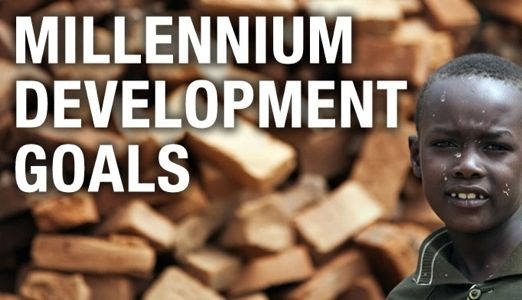
As 2015 comes to a close and the world takes a look at the progress that has been made, it is clear that while much has been accomplished — with more than a billion people having been lifted out of poverty — many of the Millennium Development Goals (MDGs) were not complete successes, and some failed outright. Discussed below are the MDG failures and their implications.

Shortcomings: Assessing the MDG Failures

One of the major MDG failures is the fact that the success of the goals was not experienced equally across the globe; this in itself is a major defeat. Consider a few of these statistics from different countries concerning the same MDGs.

Extreme Poverty 50 Percent Reduction Rate:

  1. Southeastern Asia exceeded the goal for extreme poverty reduction by 16 percent
  2. Southern Asia exceeded the goal by 12.5 percent
  3. Northern Africa scraped by at about 1.2 percent
  4. Sub-Saharan Africa was by far the most behind. It did not even meet the goal for extreme poverty reduction and was 12.5 percent away from doing so.

The extreme poverty reduction goal of at least a 50 percent reduction in those living on $1.25 a day arguably had the best statistics for each country; from there it goes steadily downhill. This trend can be seen throughout the different Millennium Development Goals. Sub-Saharan Africa was far from reaching its goals, and not one country achieved the goal set for maternal mortality rate reduction.MDG_failures

Gender inequality was also a focus of the MDGs, but unfortunately, according to the United Nations, “gender inequality persists in spite of more representation of women in parliament and more girls going to school. Women continue to face discrimination in access to work, economic assets and participation in private and public decision-making.”

Although there were huge successes achieved through the MDGs, it is important to note that more than 800 million people continue to live in extreme poverty.

According to the U.N., “children from the poorest 20 percent of households are more than twice as likely to be stunted as those from the wealthiest 20 percent and are also four times as likely to be out of school. In countries affected by conflict, the proportion of out-of-school children increased from 30 percent in 1999 to 36 percent in 2012.”

In addition, the numbers for global emissions of carbon dioxide as well as water scarcity are disheartening. There has been a 50 percent increase in carbon dioxide emissions and water scarcity affects more than 40 percent of the world in comparison to 1990 statistics.

Although there have been failures in trying to implement the goals, all hope is not lost. Progress in the form of the Sustainable Development Goals is already being made.

Global leaders are regrouping, and as the U.N. Secretary-General Ban Ki-moon says, “The emerging post-2015 development agenda, including the set of Sustainable Development Goals, strives to build on our successes and put all countries, together, firmly on track towards a more prosperous, sustainable and equitable world.”

– Drusilla Gibbs

Sources: IRIN News, UN
Photo: Flickr, Pixabay

November 19, 2015
https://borgenproject.org/wp-content/uploads/borgen-project-logo.svg 0 0 Borgen Project https://borgenproject.org/wp-content/uploads/borgen-project-logo.svg Borgen Project2015-11-19 11:23:252024-12-13 18:05:12MDG Failures
Development, Global Poverty

New Innovative Cooking Stove Uses 50 Percent Less Fuels

New_Innovative_Cooking_ Stove_Uses_50_Percent_Less_FuelsCooking stove design studio and manufacturer BURN envisions a cleaner, healthier and more sustainable future for Africa with the help of an innovative cooking stove just larger than a soup pot. The Jikokoa, a modern design of East African jikos, reduces many negative impacts of traditional stoves and is 100 percent manufactured in Kenya.
Although significant progress has been made with high tech stove designs, successfully manufacturing, distributing and maintaining an affordable product is a challenge. In partnership with the Paradigm Project, a social enterprise that aims to leverage business for social good, and other investors, BURN developed a scalable business model with the Jikokoa, one of several cooking solutions from the U.S. based design studio.

Chief Product Officer Boston Nyer says, “Our priorities are: Protect the forests and the environment; help people alleviate the burden of poverty; and improve health.” The Jikokoa targets each of these priorities. Requiring less fuel slows deforestation, quicker and more efficient cooking saves time and money and reduced emissions provide a healthier cooking environment.

Kenya and many other countries in Africa traditionally rely on a three-stone fire fueled with wood or charcoal. Since the 1990s, Africa has seen significant deforestation for fuel and charcoal production. Research by the Berkeley Air Monitoring Group confirmed the Jikokoa provides a 50 percent reduction in fuel use and a 37 percent reduction in CO concentrations.

Along with impacts on the greater African region, households using the Jikokoa cooking stove reported both time and monetary savings. Many women managing the fire and cooking spent less time gathering fuel. Household fuel costs also dropped due to the Jikokoa’s efficient use of biomass fuels allowing money to be reinvested into homes and farms.

Smoke inhalation from other cooking methods is a huge concern, especially for women and children. Without a change in household practices, it is estimated that by 2030 more people in Africa will die from smoke inhalation than by malaria and tuberculosis combined.

The $40 Jikokoa is designed to be affordable and durable. BURN also works to provide financing for users in developing areas. Typically, the Jikokoa pays for itself in two and a half months from money saved on fuel.

Other jikos are available at a lower initial cost but require more fuel, increasing the overall expense. Since beginning operations in Kenya in 2013, BURN has sold 100,000 Jikokoa cooking stoves in East Africa. The company aims to locally manufacture and sell 1 million stoves in the next decade.

BURN estimates over the next ten years, Jikokoa cooking stoves will eventually save 123 million trees, reduce carbon emissions and save families more than $1 billion in food costs.

However, the Jikokoa is only the first step. BURN plans to continue designing innovative cooking solutions and producing a line of clean-burning stoves that use a variety of sustainable fuels. Three of these new clean-burning products are scheduled to launch in 2016.

– Cara Kuhlman

Sources: AFK Insider, Berkeley Air Monitoring Group, Burn Design Lab, Inhabitat, The Paradigm Project
Photo: Flickr

November 19, 2015
https://borgenproject.org/wp-content/uploads/borgen-project-logo.svg 0 0 Borgen Project https://borgenproject.org/wp-content/uploads/borgen-project-logo.svg Borgen Project2015-11-19 01:13:472024-12-13 18:05:24New Innovative Cooking Stove Uses 50 Percent Less Fuels
Children, Development, Food & Hunger, Global Poverty

MDGs: What They Achieved After 15 Years

MDGsAt the Millennium Summit in 2000, history was made when a record number of world leaders gathered to adopt the U.N. Millennium Declaration, committing nations to cutting extreme poverty in half through the Millennium Development Goals (MDGs) by 2015 and eradicate poverty through the Sustainable Development Goals (SDGs) by 2030.

Through the agreement, the MDGs target different dimensions of poverty including hunger, disease, insufficient shelter, gender inequality, global education and environmental sustainability.

With an expiration date of December 2015, the achievements made through the MDGs provide evidence that poverty can be eliminated worldwide by 2030.

MDG 1: Cut Extreme Hunger and Poverty in Half

Since 1990, the amount of people living on less than $1.25 per day decreased from 1.9 billion to 836 million in 2015. While extreme poverty was cut in half, extreme hunger narrowly missed the mark, dropping from 23.3 percent to 12.9 percent.

MDG 2: Achieve Universal Primary Education

Primary School Enrollment has seen a slight rise, increasing from 83 percent in 2000 to 91 percent in 2015.

MDG 3: Eliminate Gender Disparity in Education and Empower Women

Since 1990, approximately two-thirds of developing countries have achieved gender unity. In Southern Asia, the primary school enrollment ratio favors girls over boys in 2015.

MDG 4: Reduce Child Mortality by Two-Thirds

The child mortality rate decreased from 12.7 million in 1990 to 6 million in 2015. In addition, the measles vaccine compared to 2000 covered almost 10 percent more children worldwide.

MDG 5: Reduce the Maternal Morality Rate by 75 Percent

Compared to 1990, the maternal mortality rate has been cut in half, narrowly missing the 75 percent benchmark.

MDG 6: Combat HIV/AIDS, Malaria and Other Diseases

Since 2000, the number of new HIV infections decreased by 40 percent, dropping from 3.5 million to 2.1 million in 2013.

MDG 7: Increase Environmental Sustainability

In 2010, the goal to increase access to clean water was achieved five years early. Since 1990, 2.6 billion people have gained access to improved drinking water.

MDG 8: Develop an Open Partnership for Development

Overseas development assistance from developed nations to developing countries increased 66 percent. With the expansion of technology, Internet infiltration increased significantly from 6 percent in 2000 to 43 percent in 2015.

– Alexandra Korman

Sources: The Guardian
Photo: NaijaLog

November 15, 2015
https://borgenproject.org/wp-content/uploads/borgen-project-logo.svg 0 0 Borgen Project https://borgenproject.org/wp-content/uploads/borgen-project-logo.svg Borgen Project2015-11-15 09:33:272024-12-13 18:05:23MDGs: What They Achieved After 15 Years
Activism, Development, Global Poverty, Health

How Human Waste Could Be the New Power Source

human_waste
In today’s age of technology developments and exciting advances, there is still a population of up to 1.3 billion people living without access to electricity. The IEA, or International Energy Agency, shows that “this is the equivalent to 18 percent of the global population and 22 percent of those living in developing countries.”

While this is true, though, the world recognizes that energy is essential to economic development. UN studies have stated, “Energy provides mobility, heat, and light; it is the fuel that drives the global economy. But the production and use of coal, oil, and gas cause air pollution and climate change, harming public health and the environment.”

In response, studies have been made to find the most cost-efficient way to provide eco-friendly energy sources. The new power source that is currently being tested comes in the form of human waste.

To show the true potential of the source, the United Nations University created a study to find the value of human waste in terms of energy.

The study showed that “biogas from human waste, safely obtained under controlled circumstances using innovative technologies, is a potential fuel source great enough, in theory, to generate electricity for up to 138 million households – the number of households in Indonesia, Brazil, and Ethiopia combined.”

With that number in mind, the UNU’s Institute in Canada estimated “that biogas potentially available from human waste worldwide would have a value of up to US$ 9.5 billion in natural gas equivalent.”

The waste would be dried and charred, producing a sludge-like substance similar to coal but with the added bonus of being eco-friendly.

With all of these facts, however, the concept is still a major taboo in people’s eyes. To combat this, experts have shown that the world already reuses water and nutrients from wastewater and continue to fight for the new energy source potential.

With World Toilet Day on Nov. 19 being around the corner, the U.N. hopes to combat the stigma. UNU-INWEH Director Zafar Adeel stated that it will hopefully “promote new thinking and to continue puncturing the taboos in many places that inhibit discussion and perpetuate the disgrace and tragedy of inadequate human waste management in many developing world areas. This report contributes to that goal.”

– Katherine Martin

Sources: World Energy Outlook, UN Foundation, UNU
Photo: Pixabay

November 14, 2015
https://borgenproject.org/wp-content/uploads/borgen-project-logo.svg 0 0 Borgen Project https://borgenproject.org/wp-content/uploads/borgen-project-logo.svg Borgen Project2015-11-14 01:30:432024-12-13 18:05:21How Human Waste Could Be the New Power Source
Development, Global Poverty, Technology

Project Loon Helps Internet Access Soar to New Heights

project_loon
Project Loon, a product of Google X, the semi-secret research and development facility run by Google, is an innovative operation providing inexpensive or free wi-fi to people living in remote rural areas around the world via a fleet of huge helium-filled balloons floating in the stratosphere.

According to Google, these balloons can deliver widespread economic and social benefits by bringing internet access to the 60 percent of the world’s population who don’t have it. A large portion of those 4.3 billion people live in rural or extremely remote areas where telecommunications companies haven’t found it worthwhile to build cell towers or other infrastructure.

Here’s how Project Loon will work: steered by wind and equipped with solar panels with enough power to charge the battery for use at night, each balloon will be able to power itself using entirely renewable energy sources.

Constructed out of a thin plastic similar to a heavyweight trash bag, the balloons float in the stratosphere, a layer of the earth’s atmosphere stretching about 32 miles above the surface. Flying twice as high as airplanes and operating above the weather, the balloons help mobile operators extend wireless networks into more sparsely populated and remote terrain.

With a lifespan currently lasting just over 100 days, each balloon can provide connectivity to a ground area of about 50 miles in diameter using LTE wireless communications technology. LTE, short for long-term evolution, is the standard for wireless communications in high-speed data for mobile phones and data terminals.

In order to use LTE, Project Loon partners with telecommunications companies to share cellular spectrum so that people will be able to access the internet directly from their phones or other LTE-enabled devices. The signal is then passed across the balloon network and back down to the global internet on Earth.

In Indonesia, Project Loon is teaming up with the country’s three largest wireless carriers in 2016 to test its high-altitude, wind propelled balloons. Their lofty goal is to deliver internet coverage across large pockets of the nation where 83 percent of the population currently is without internet access.

If successful, Project Loon’s collaboration with Indonesian mobile operators Indosat, Telkomel and XL Axiata would result in speeds fast enough to surf websites, stream videos or make purchases. It is estimated that 100 million people in Indonesia who are not currently connected to the internet will gain access through Project Loon.

“This is a way of changing the world,” says Mike Cassidy, Project Loon’s leader in an interview with MIT Technology Review. For just hundreds of dollars per day, the operation of one Loon balloon should be able to serve a few thousand connections at any time.

For a school principal in a rural area of northeastern Brazil, where Linoca Gayoso Castelo Branco School resides and internet service is nonexistent, she experienced the benefits of the balloons firsthand.

“It was just for some minutes, but it was wonderful,” says ­Silvana Pereira. That day’s lesson on Portugal was enhanced by Wikipedia and online maps. “They were so involved that the 45 minutes of a regular class wouldn’t be enough to satisfy their demand for knowledge,” says Pereira.

And that is just the beginning.

– Kara Buckley

Sources: Google 1, Google 2, Google 3, Technology Review 1, Technology Review 2, USA Today
Photo: Wikimedia

November 13, 2015
https://borgenproject.org/wp-content/uploads/borgen-project-logo.svg 0 0 Borgen Project https://borgenproject.org/wp-content/uploads/borgen-project-logo.svg Borgen Project2015-11-13 01:30:482024-05-27 09:28:19Project Loon Helps Internet Access Soar to New Heights
Developing Countries, Development, Food & Hunger, Global Poverty, Health

Cooking Up a Solution to Poverty and Malnutrition in Haiti

malnutrition_in_haiti
A chef connects solutions to poverty and malnutrition in Haiti with cooking.

Chef José Andrés has discovered a new approach to solving poverty in Haiti, and it starts in the kitchen.

In Huffington Post’s recent feature on Andrés, Lifestyle Blog Editor Zoë Lintzeris details Andrés’ love affair with Haiti, describing his innovative ideas to improve the country’s cooking conditions and, subsequently, save it from poverty.

Andrés’ solution focuses on improving cooking apparatus to decrease safety hazards in the cooking process with his “clean cook stoves.”

Cooking safety hazards in the region include the use of “dirty” firewood and coal, two fuel sources that are unsustainable and not very profitable.

These dangerous methods have gone hand in hand with deforestation and pollution in the region. Erosion of soil, extreme and frequent flooding, degradation of water resources and habitat destruction are some forces linked to socioeconomic turmoil.

“Haiti has the highest rates of deforestation of any country in the world — a mere 2 percent of Haiti’s original forests remain,” says TriplePundit.

In turn, deforestation is responsible for a large portion of Haiti’s increasing poverty rate. Haiti’s real GDP growth has slowed down in the past two years, going from 4.2 percent in 2013 to a forecasted 1.7 percent in 2015, according to the World Bank.

GOOD Magazine suggests that “efficient stoves can help in the meantime, according to Jean Kim Chaix, the founder of the Charcoal Project, which aims to become a clearinghouse on charcoal alternatives and a consultant for green entrepreneurs.”

The Charcoal Project has undertaken a project to provide an energy efficiency program for schools, to teach them to produce fuel for cooking and lighting.

The project utilizes wood and stoves that reduce smoke and save fuel, which is just what Andrés is shooting for with his clean cookstoves.

The Global Alliance for Clean Cookstoves, hosted by the UN foundation, is Andrés’ initiative to save lives and protect the environment by creating a global market for “clean and efficient household cooking solutions.”

The Alliance has set out a 10-year goal to foster the adoption of clean cookstoves and fuels in 100 million households by 2020.

Andrés also discussed Haitian cuisine in his PBS special, “Undiscovered Haiti with José Andrés.” In the video, he describes the deep ties between the food and the country’s history and culture.

Andrés’ relationship with Haiti has led him to uncover a revolutionary solution to a problem that has a long history. Perhaps economic prosperity really can start in the kitchen.

– Ashley Tressel

Sources: Huffington Post, Good.is, TriplePundit, World Bank, Charcoal Project, Clean Cook Stoves
Photo: SCINet

November 13, 2015
https://borgenproject.org/wp-content/uploads/borgen-project-logo.svg 0 0 Borgen Project https://borgenproject.org/wp-content/uploads/borgen-project-logo.svg Borgen Project2015-11-13 01:30:192024-06-04 04:33:52Cooking Up a Solution to Poverty and Malnutrition in Haiti
Development, Food Aid, Foreign Aid, Global Poverty

Myths about Foreign Aid

myths_about_foreign_aid
The fact is that some 795 million people in the world do not get enough food to lead healthy, productive lives, and the vast majority of the world’s hungry live in developing countries. The following are three myths about foreign aid:

1. We shouldn’t bother. Our small contributions won’t make a difference in such an enormous problem as global poverty. When it comes to world hunger, the “one person can’t make a difference” myth can be easily dispelled.

Here in the U.S., mosquitoes are aggravating little pests; however, in Africa, mosquitoes are deadly. In 2005, the Against Malaria foundation was founded; it implements practical, cost-efficient, insecticide-treated bed nets to fight this preventable disease.

Over the past 15 years, approximately 663 million cases have been prevented in Africa — roughly 68 percent of that reduction is contributed to the distribution of a billion bed nets. Each bed net costs around $5, lasts for three to four years and protects two people. So, yes, as little as five bucks can make a difference in a global problem, and this, of course, is just one example.

2. We have no idea where our money really goes. Those fundraisers are scams. Unfortunately, the existence of corruption persists all over the world, and that isn’t a myth. Along with the endless benefits the internet provides there are also the ceaseless hoaxes, which are often in the disguise of charitable organizations.

To some extent, it seems as if charities and even the word “donate” tend to act as repellents, triggering apprehension and uneasiness. Fortunately, programs, such as the Millennium Challenge Account, and laws, such as the Foreign Corrupt Practices Act, monitor and help safeguard aid. And when in doubt, research the organization before providing any type of aid. Consumer Affairs is one helpful website.

3. Taking care of others in developing countries implies that we are failing to “take care of ourselves.” On the contrary, the more independent others become, the more consumers we acquire. Actually, our nation’s safety strengthens as we lift others out of poverty.

Three major myths about foreign aid busted and many more to be exposed. The following are three ways we can effectively help eradicate global poverty and hunger:

  1. Research the organization before providing aid.
  2. Get active and lobby for the world’s poor. Call and/or email Congress in support of poverty reduction. The Borgen Project provides an efficient, simple method to contact Congress.
  3. Believe that you can make a difference in a global epidemic. The very act of providing aid to another is itself a gift.

– Dana McLemore

Sources: Against Malaria, DTIC, FAO, KFF
Photo: Flickr

November 12, 2015
https://borgenproject.org/wp-content/uploads/borgen-project-logo.svg 0 0 Borgen Project https://borgenproject.org/wp-content/uploads/borgen-project-logo.svg Borgen Project2015-11-12 01:30:202020-06-24 19:26:30Myths about Foreign Aid
Development, Global Poverty, Technology, United Nations

Virtual Reality Films Provide Powerful Insights

virtual_reality_films
It is unlikely that the average American will experience poverty firsthand in Africa, South America or elsewhere. However, with the adoption of virtual reality (VR) technology, citizens across the globe can gain insight into what it is like to live in poverty, deal with life-threatening diseases or survive without basic necessities.

In a change from traditional advocacy campaigns, the United Nations collaborated with VR Director and Pioneer Chris Milk to release two virtual reality films in 2015.

The first, “Clouds Over Sidra,” follows a 12-year-old Syrian refugee through her day at a bustling camp of 84,000 in Jordan. The film captures a 360-degree view, a navigable window into the young refugee’s world.

“Waves of Grace,” the second VR film for the UN Millennium Campaign, is narrated by a Liberian Ebola survivor confronting a still fragile community. Scenes of life, illness and death with unimaginable detail document the scale and impact of the Ebola crisis in a country with more than 10,000 cases.

Gabo Arora, co-creator of “Waves of Grace” and senior advisor for the UN Millennium Campaign, thinks incorporating VR experiences into the campaign against Ebola “will promote greater understanding of the socio-economic impact of the disease and empathy for those who continue to overcome it.”

Strong responses to the films upon release indicate the powerful emotions virtual reality films inspire. In addition to spotlighting an issue, VR conveys an experience many viewers react to with increased empathy and compassion.

Organizations utilizing virtual reality films noted a higher contribution rate after individuals viewed the film and an increase in monthly contributions. The films demonstrate the potential of VR to immerse viewers and ignite empathy. In turn, this drives fundraising and advocacy.

In March of 2015, the Humanitarian Pledging Conference for Syria added a screening of “Clouds Over Sidra” in the hope of increasing support for displaced Syrians. The conference raised $3.8 billion in funds, $1.5 billion more than projected. Other organizations have also turned to VR to convey refugee experiences.

The Clinton Global Initiative also released the short VR film “Inside Impact: East Africa” following President Clinton and Chelsea Clinton’s trip to visit CGI sponsored programs in East Africa.

The featured programs, called commitment sites by the organization, include rural solar power use, malaria prevention education and supplying hearing aids to people in need.

According to The Clinton Foundation, when speaking at CGI’s annual meeting, President Clinton emphasized the effectiveness of the VR experience. “I think that the film will give people the opportunity to understand the difference CGI members can make in a whole different way,” he says.

In November 2015, the New York Times debuted NYT VR, a virtual reality application for storytelling. The inaugural story, titled “The Displaced,” follows three children displaced from their homes in Lebanon, South Sudan and Ukraine.

According to the New York Times, Editor of the New York Times Magazine Jake Silverstein echoes Arora about VR’s potential for impact and says, “This new filmmaking technology enables an uncanny feeling of connection with people whose lives are far from our own.”

Although still an expensive medium for storytelling, VR offers an intensified and comprehensive experience. Viewers see the multi-faceted world of poverty and the solutions that they can support.

– Cara Kuhlman

Sources: The Clinton Foundation, Fast Company, The New York Times, Smithsonian Magazine, UN Millennium Campaign, Vrse.works, The Wall Street Journal
Photo: Flickr 

November 11, 2015
https://borgenproject.org/wp-content/uploads/borgen-project-logo.svg 0 0 Borgen Project https://borgenproject.org/wp-content/uploads/borgen-project-logo.svg Borgen Project2015-11-11 01:30:192024-12-13 18:05:23Virtual Reality Films Provide Powerful Insights
Children, Development, Global Health, Global Poverty, Health

Reach Every Mother and Child Act: Ending Preventable Deaths

Reach Every Mother and Child Act
The Reach Every Mother and Child Act of 2015 would work to end the preventable deaths of mothers, newborns and young children in developing countries.

U.S. Senators Chris Coons, D-Del., and Susan Collins, R-Maine, introduced the Reach Act this summer as a solution for deaths related to pregnancy and childbirth.

“Over the past several years, we have made great strides in saving moms, babies, and kids in some of the poorest parts of the world, but it’s clear that more help – and more resources – are needed,” Sen. Coons said in a press release.

The Reach Act seeks to build on the progress made over the past few years in maternal-child health. According to Countdown to 2015’s report for this year, the global maternal mortality ratio has decreased by 45 percent over the past two decades, and the number of maternal deaths has dropped from about 523,000 a year to 289,000.

Maternal education and income growth have had a significant impact on the improvement of conditions for mothers and children in developing countries, the Institute for Health Metrics and Evaluation said, as well as technological innovations in medicine and other areas.

However, problems such as HIV, poor hospital conditions, and malnutrition still plague mothers and children in those countries. The Reach Act would help provide the means to solve these problems.

If enacted, the Act would:

  • Require a ten-year strategy to achieve the goal of ending preventable maternal, newborn, and child deaths by 2035;
  • Establish a permanent Maternal and Child Survival Coordinator at USAID who would be focused on implementing the ten-year strategy and verifying that the most effective interventions are scaled up in target countries.s
  • Require the Administration to develop a financing framework that would allow the use of U.S. government dollars to leverage additional commitments from the private sector, nonprofit organizations, partner countries, and multinational organizations.

The Reach Every Mother and Child Act of 2015 is currently being referred to the House Committee on Foreign Affairs.

Email your congressional leaders in support of the Reach Every Mother and Child Act and help save the lives of 600,000 women and 15 million children by 2020.

– Ashley Tressel

Sources: Senate, Health Data, Countdown to 2015: Maternal, Newborn & Child Health Data
Photo: Flickr

November 10, 2015
https://borgenproject.org/wp-content/uploads/borgen-project-logo.svg 0 0 Borgen Project https://borgenproject.org/wp-content/uploads/borgen-project-logo.svg Borgen Project2015-11-10 01:30:532024-12-13 18:05:22Reach Every Mother and Child Act: Ending Preventable Deaths
Children, Development, Global Poverty

Ubuntu in the Heart of Poverty

Ubuntu

Ubuntu is a Zulu word that translates to “human kindness.” The Ubuntu Education Fund aims to create long lasting change in the impoverished townships of Port Elizabeth in South Africa.

The effectiveness of the program can be credited to its three over-arching programs: household sustainability, health and education. This strategy has “received international acclaim from Bill Clinton to the World Economic Forum.”

“Why can’t our poor children in Africa have an education? Why does it have to be a privilege? Why can’t it be a child’s right?” stated CEO and Co-Founder of The Ubuntu Education Fund Jacob Lief at the grand opening of the Ubuntu Center on Sept. 16, 2010.

The Ubuntu Center is located in the heart of Port Elizabeth’s townships, one of the largest slums in the world. The center offers a pediatric HIV center, pharmacy, classrooms, computer labs and a theater.

“Ubuntu graduates attain successes that few in their community ever realize and, in doing so, they are redefining what the world believes to be possible in disadvantaged communities,” stated Lief.

Since its establishment in 2010, the Ubuntu Center has supported the 2,000 children and indirectly supported the community. A study conducted by McKinsey & Company found that “Ubuntu graduates will contribute $195,000 to society, while their peers will cost society $9,000.”

In addition to providing child health care, the pediatric clinic offers prenatal and postnatal care, HIV and TB testing and treatment.

“Ubuntu’s impact is transformative – from HIV-positive mothers giving birth to healthy, HIV-negative babies, to vocational-tracked youth in our Ubuntu Pathways (UP) program securing employment,” said Lief.

The program also provides child protection services and psychosocial counseling to ensure stable homes in order for children to thrive in their education. The dynamic school program included university scholarships and “job readiness training.”

The program emphasizes “depth rather than breadth of impact” which is why within four years of joining Ubuntu, 82 percent of people are “on-track towards stable health and employment,” said Lief.

Former President Bill Clinton visited the Ubuntu Center in August 2013 and had this to say: “Ubuntu has come so far. We’re very proud of your work. This is an amazing organization that actually ensures its people are taken care of.”

Chelsea Clinton, his daughter, added, “The Ubuntu model is incredible; you start early and work with children their entire lives.”

– Marie Helene Ngom

Sources: Forbes, Ubuntu Blog, YouTube
Photo: Flickr

October 30, 2015
https://borgenproject.org/wp-content/uploads/borgen-project-logo.svg 0 0 Borgen Project https://borgenproject.org/wp-content/uploads/borgen-project-logo.svg Borgen Project2015-10-30 01:30:412024-12-13 17:54:09Ubuntu in the Heart of Poverty
Page 120 of 163«‹118119120121122›»

Get Smarter

  • Global Poverty 101
  • Global Poverty… The Good News
  • Global Poverty & U.S. Jobs
  • Global Poverty and National Security
  • Innovative Solutions to Poverty
  • Global Poverty & Aid FAQ’s
Search Search

Take Action

  • Call Congress
  • Email Congress
  • Donate
  • 30 Ways to Help
  • Volunteer Ops
  • Internships
  • Courses & Certificates
  • The Podcast
Borgen Project

“The Borgen Project is an incredible nonprofit organization that is addressing poverty and hunger and working towards ending them.”

-The Huffington Post

Inside The Borgen Project

  • Contact
  • About
  • Financials
  • President
  • Board of Directors
  • Board of Advisors

International Links

  • UK Email Parliament
  • UK Donate
  • Canada Email Parliament

Get Smarter

  • Global Poverty 101
  • Global Poverty… The Good News
  • Global Poverty & U.S. Jobs
  • Global Poverty and National Security
  • Innovative Solutions to Poverty
  • Global Poverty & Aid FAQ’s

Ways to Help

  • Call Congress
  • Email Congress
  • Donate
  • 30 Ways to Help
  • Volunteer Ops
  • Internships
  • Courses & Certificates
  • The Podcast
Scroll to top Scroll to top Scroll to top