• Link to X
  • Link to Facebook
  • Link to Instagram
  • Link to TikTok
  • Link to Youtube
  • About
    • About Us
      • President
      • Board of Directors
      • Board of Advisors
      • Financials
      • Our Methodology
      • Success Tracker
      • Contact
  • Act Now
    • 30 Ways to Help
      • Email Congress
      • Call Congress
      • Volunteer
      • Courses & Certificates
      • Be a Donor
    • Internships
      • In-Office Internships
      • Remote Internships
    • Legislation
      • Politics 101
  • The Blog
  • The Podcast
  • Magazine
  • Donate
  • Click to open the search input field Click to open the search input field Search
  • Menu Menu

Archive for category: Development

Information and stories on development news.

Activism, Development, Global Poverty

This Holiday Season, Fight Global Poverty at the Dinner Table

fight_global_poverty
As the holidays approach, many people’s thoughts turn to opportunities to donate to those in need. Those who wish to fight global poverty over the holidays can do so by cooking dinner with ingredients certified by Fair Trade USA.

Fair Trade USA is a nonprofit organization that acts as a third party between consumers and international suppliers. It uses “a market-based approach that gives farmers fair prices, workers safe conditions and entire communities resources for fair, healthy and sustainable lives,” according to the group’s website.

Fair Trade USA began in 1998 under the leadership of founder Paul Rice, and now operates in 80 countries across the globe.

When consumers buy Fair Trade USA-certified products, the proceeds aid the organization’s campaign to promote equality, dignity and self-sufficiency among farming communities that are mired in poverty.

According to the Consultative Group on International Agricultural Research (CGIAR), the solution to poverty and hunger around the world is not plowing more land and increasing crop production, but farming smarter.

In 2009, Frank Rijsberman, CEO of CGIAR, suggested reducing agriculture-based poverty by developing methods to achieve greater crop output from existing land and delivering this research to farmers in developing countries.

Fair Trade USA exemplifies Rijsberman’s advice, as it helps farmers generate their crops as efficiently as possible. Imports from developing countries are targets of exploitation because the producers lack the resources and knowledge to barter fair trade.

Fair Trade USA monitors the business transactions of farmers and their consumer clients to ensure the farmers aren’t disadvantaged.

When farmers receive fair prices for their crops, they have the means to improve their livelihood, send their children to school and afford medicine.

More than 570 million farms exist in the world, with 90 percent relying on family labor, so relieving agriculture-based poverty helps children get their education and significantly reduces poverty across the globe.

In addition to its poverty-reduction tactics, Fair Trade USA’s website offers a multitude of recipes involving its certified ingredients. Every turkey, cheesecake and bowl of sorbet helps fight global poverty by enabling a family to put food on its table.

– Sarah Prellwitz

Sources: Fair Trade USA, Global Agriculture, VOA News, WDRB, WSJ
Photo: Wheatsville Co-op

December 8, 2015
https://borgenproject.org/wp-content/uploads/borgen-project-logo.svg 0 0 Borgen Project https://borgenproject.org/wp-content/uploads/borgen-project-logo.svg Borgen Project2015-12-08 01:30:052024-05-27 09:28:30This Holiday Season, Fight Global Poverty at the Dinner Table
Development, Food & Hunger, Global Poverty

Six Surprising Causes of Hunger

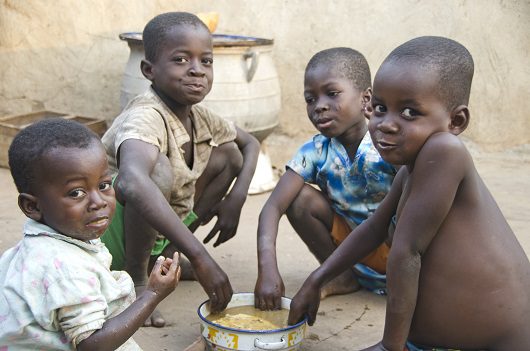
hungerOne in eight people go hungry each day, but the world produces enough food to feed the entire population and more. Why haven’t countries eradicated hunger? Can’t governments simply reorganize food distribution to feed everybody? The answer is much more complicated.

Here are six causes of hunger that are not often considered:

  1. Poor infrastructure and vehicles – Many developing countries lack the resources to build sufficient roads, which impedes food transportation. In some countries, motor vehicles are also in short supply, so the majority of transportation is on foot, bicycle or on the backs of livestock. With these methods of transportation, fresh food would spoil quickly. Rural areas must rely on the natural resources around them, and if those resources aren’t enough, the inhabitants may go hungry.
  1. Deforestation – Forests act as a safety net during times of food shortage: communities can rely on nuts, edible plants and forest animals until crops are ready for harvest, or food is imported. Deforestation robs people of these resources. In fact, one out of six people rely directly on forests for food. Furthermore, deforestation can lead to overworked soil, which in turn leads to soil erosion. If soil becomes unfit for crops, farmers and surrounding settlements become at risk for famine.
  1. War – In times of national and international strife, one popular tactic towards achieving victory is destroying the enemy’s food supply. Soldiers will steal animals, demolish food markets and set fields on fire to force the other side into submission. While an effective ploy, it leaves citizens with a major food crisis that may take decades to resolve. Refugees of war often face hunger complications as they struggle to scrape together a living or find a home. The world is seeing this problem right now, as hungry Syrians scatter across the globe in search of shelter and nourishment.
  1. Foreign trade – When a food crisis occurs at a local level, it can also have far-reaching effects. Countries that rely on the export of goods from that area suddenly can’t receive necessary supplies. “Overall, in the last two decades there has been an increase in the number of trade-dependent countries that reach sufficiency through their reliance on trade,” Paolo D’Odorico—who conducted a study on climate change and crop production—told Natural World News.
  1. Discrimination – In every country, groups of people are poorer than their neighbors due to religious, racial or gender-based discrimination. If groups are not well-received by their community, it becomes very difficult for them to ward off hunger. They may be banned from restaurants and food markets, unable to find employment, unlawfully incarcerated and overlooked by government welfare programs.
  1. Cheap food – Sometimes, the hunger problem is a matter of quality, not quantity. If people purchase and consume cheap, unhealthy food, they will reach their proper calorie intake, but still suffer severe nutrient deficiencies. This situation is known as “hidden hunger.” Unborn babies and toddlers are especially vulnerable because they need specific nutrients to develop and become resilient to disease.

– Sarah Prellwitz

Sources: Bread.org, Global Issues, Nature World News, WFP
Photo: Lifted Hands Foundation

December 7, 2015
https://borgenproject.org/wp-content/uploads/borgen-project-logo.svg 0 0 Borgen Project https://borgenproject.org/wp-content/uploads/borgen-project-logo.svg Borgen Project2015-12-07 01:30:092024-05-27 09:24:06Six Surprising Causes of Hunger
Development, Global Poverty, Health

New Zero TB Cities Project Launched in India

zero_tb_cities
An alliance of international and domestic health organizations has created the Zero TB Cities project in an effort to drastically reduce tuberculosis (TB) infections around the world. Chennai, India is one of the coalition’s first targets.

According to the World Health Organization, 2.6 million people in India are infected with TB, accounting for 23 percent of global TB cases.

Pamela Das, Executive Editor of The Lancet said in an Editorial, “The goal is to help communities move to zero deaths from tuberculosis in their own way, and create ‘islands of elimination,’ which will hopefully reverse the overall tuberculosis epidemic.”

The project will be using a comprehensive method at a community level to tackle the disease. The “island of elimination” strategy is a simple strategy that pushes for better use of current tools and methods for attacking TB.

Zero TB Cities relies on the collaboration between local governments, institutions and grassroots associations to provide life-changing treatment. The partnership of the Municipal Corporation of Chennai, Chennai-based REACH and the National Institute of Research in Tuberculosis (NIRT) will conduct the project.

Although TB is an airborne disease, Tom Nicholson, head of the project, said that it can be controlled and has been in the past.

According to Dr. Suvanand Sahu, Deputy Executive Director of the Stop TB Partnership in Geneva, the transmission of TB is much higher in cities because people live in close proximity to each another and infection spreads quickly.

In Chennai, the project will actively search for people infected with TB and treat them to interrupt transmission cycles and reduce mortality. The project will also provide preventative TB treatments for people in high-risk areas and routine monitoring for early and accurate diagnosis.

Nicholson, an associate in research at the Duke Center for International Development (DCID) in Durham, said he believes that any city can reach “pre-elimination phase”. This phase refers to a relatively TB free environment found in wealthy countries as a result of Zero TB Cities.

– Marie Helene Ngom

Sources: TheHindu, Indread, TBfacts
Photo: Flickr

December 6, 2015
https://borgenproject.org/wp-content/uploads/borgen-project-logo.svg 0 0 Borgen Project https://borgenproject.org/wp-content/uploads/borgen-project-logo.svg Borgen Project2015-12-06 01:30:342020-06-24 20:27:39New Zero TB Cities Project Launched in India
Development, Global Poverty

Cooking to Produce Electricity in Malawi

Cooking to Produce Electricity in Malawi
Thermoelectric generators that use heat from clay stoves to produce electricity are becoming a popular tool in Malawi where efforts are being made to protect the environment.

Developed with the help of Irish Aid, the thermoelectric generator also provides an affordable option for Malawians to access electricity from a clean energy source.

The device is bolted to a clay cooking stove and uses the heat from everyday cooking to charge devices such as phones, LED lights and radios. The electrical current is created by the differential in temperature between two metal parts.

Malawi is one of the least developed countries in the world. Fewer than one out of every 100 rural people have access to grid electricity and more than 85 percent of people live in rural areas.

Aidan Fitzpatrick, Head of Development at Irish Aid, said, “At the very best by 2025, only 20 percent of the population will have grid electricity, so there will still be a huge need to find energy solutions for the majority of Malawians.”

The Irish aid group worked to create a device that would be easy to use for people and could use while cooking to create electricity. The group focused on a generator that would create and sustain community jobs.

A thermal engineering research group joined with Concern Universal and Irish Aid in Malawi to design an electricity generator that could fit on a clay stove, which are already in use as part of the government’s plan to produce two million clean stoves by 2020.

The group decided to use a trial-and-error design process because there are already many innovative solutions to produce electricity.

According to lead engineer, Professor Tony Robinson, “We needed to design something to withstand an extreme environment, requiring no training or maintenance so people can plug in their phone or light while they’re cooking and get on with their lives without having to go search for firewood every day. On top of that, it had to be cheaply produced in Malawi with locally available materials.”

The generators will eventually be made locally for around 20 euros. Many families in Malawi will be able to purchase the generators through microfinance options.

Concern Universal Project Manager, Blessings Kambombo, said; “Once it is rolled out, it will make a huge difference to rural communities not only by improving their quality of life but providing business opportunities and therefore choices.”

– Jordan Connell

Sources: BBC News, The Irish Times
Photo: Flickr

December 6, 2015
https://borgenproject.org/wp-content/uploads/borgen-project-logo.svg 0 0 Borgen Project https://borgenproject.org/wp-content/uploads/borgen-project-logo.svg Borgen Project2015-12-06 01:30:212020-06-24 20:28:08Cooking to Produce Electricity in Malawi
Development, Global Poverty, Health, Sanitation, Water

Water, Sanitation and Hygiene: Better Nutrition for The Poor

sanitation_and_hygieneExtreme poverty makes access to clean water and nutritional food difficult for millions of people. Sanitation and hygiene also suffer as survival becomes the focus.

However, poor sanitation and hygiene often lead to diseases which cause diarrhea and fluid loss. These conditions can also result in malnutrition as more food is being expelled rather than processed and used. With a little help and knowledge, sanitation, hygiene and clean water can reverse the tide of disease and improve nutrition.

Take for example the situation in the Yarou Plateau village in Mali from the USAID blog:

“People used to use any open space for bathroom needs. Flies could easily find fecal matter lying around, and from there land on food, spreading diseases like diarrhea and intestinal worms. Fecal matter in open areas also contaminated the groundwater, which villagers use for drinking and preparing food. Diarrhea can worsen malnutrition, and the undernourished already have weakened immune systems — making them more susceptible to intestinal infections and more severe episodes of diarrhea.”

To combat the malnutrition these diseases cause, the World Health Organization has set some global targets for 2025:

  1. 40 percent reduction in the number of children under the age of five who have had their growth stunted
  2. 50 percent reduction in the number of women of a reproductive age who experience anemia
  3. 30 percent reduction in babies born with a low birth weight
  4. A halt in the increase of childhood obesity
  5. 50 percent increase in breastfeeding exclusivity during the first six months of a baby’s life

USAID says malnutrition “is an underlying factor in almost half of all child deaths” and also increases a child’s chance of dying from preventable illnesses such as pneumonia and diarrheal disease. These diseases cause anemia, loss of appetite and a decrease in the body’s ability to properly absorb nutrients.

Two years ago, conditions in the Yarou Plateau village changed for the better. The village has improved its sanitation by building more than 60 latrines and fixing ones they already had.

In addition to Yarou Plateau, more than 179 other villages have been able to improve sanitation and hygiene through support from USAID’s project WASHplus.

The program works not only to improve water, sanitation and hygiene but also to reduce “diarrheal diseases and malnutrition.” WASHplus introduces and promotes proper hand washing, water treatment and food preparation and storage.

Where proper sanitation and hygiene practices are initiated and properly implemented, the poor and those living in underdeveloped countries can avoid illness and get the nutrition they need to grow, thrive and break the cycle of poverty.

– Drusilla Gibbs

Sources: USAID, WHO
Photo: Flickr

December 5, 2015
https://borgenproject.org/wp-content/uploads/borgen-project-logo.svg 0 0 Borgen Project https://borgenproject.org/wp-content/uploads/borgen-project-logo.svg Borgen Project2015-12-05 01:30:502024-05-27 09:28:26Water, Sanitation and Hygiene: Better Nutrition for The Poor
Development, Global Poverty, Health, Technology

Why Drones Could Soon Be Delivering Health Care

DronesPending Aviation Authority approval, drones could soon be used to deliver healthcare to patients in developing countries.
Drones, or unmanned aircraft, can be controlled by remote or autonomously. They can be used for a variety of things including surveillance, leisure and weaponry. Now, the potential has been unlocked for drones to help the field of healthcare.

Timothy Amukele, a pathologist at Johns Hopkins, is one of the people exploring this possibility. Recognizing that access in many third world countries is inadequate and expensive, he thought, why not drones?

“If we now have a cheaper way to move samples, it’s a good thing, especially for patients who are hard to reach, whether they live in rural areas or places without good roads,” Amukele said.

In order to stabilize health throughout Africa, access to medicine is necessary. One of the main reasons medicine becomes undeliverable is poor road conditions.

According to the Africa Development Bank, in 2010 only 34 percent of rural Africa had adequate road access. That small percentage is further crippled by the fact that those roads are poor quality and the government was unwilling to grant money for their repair.

Right now, helicopters or motorcycles are the best means of transportation throughout rural Africa. While motorcycles are cheaper to operate, they also have their disadvantages.

Motorcycles are smaller, eliminating the possibility for large amounts of cargo to be transported. Helicopters, on the other hand, make more sense because they are larger and avoid roads altogether. However, the operational costs are excessive.

Drones, potentially, are a solution to that logistical issue. The unmanned aircraft do not need to deal with traveling across haphazard roads. They are also significantly less expensive to operate, as they do not require fuel.

Drones can also help alleviate the number of patients a physician has to help for non-threatening medical issues. According to the World Bank, Bhutan only has one physician for every 3,333 people.

Having the ability to send drones to deliver medicine would cut down on the number of patients a physician would have to see. This would free up time for doctors to be able to attend to patients in desperate need of care.

Even though the idea of drones providing healthcare services is new, there are many positive attributes. Still, more must be achieved and learned to allow for this conception to become a reality.

– Alyson Atondo

Sources: MIT, The Conversation, Washington Post, Benzinga
Photo: Flickr

December 5, 2015
https://borgenproject.org/wp-content/uploads/borgen-project-logo.svg 0 0 Borgen Project https://borgenproject.org/wp-content/uploads/borgen-project-logo.svg Borgen Project2015-12-05 01:30:122024-12-13 18:05:28Why Drones Could Soon Be Delivering Health Care
Development, Food & Hunger, Global Poverty

Reaching Millions Through Feed the Future

Feed_the_FutureA Nov. 5 event on Capital Hill co-hosted by NGO alliance InterAction announced the progress of Feed the Future, the U.S. government’s global hunger and food security initiative.

In 2014 alone, the organization reportedly reached nearly 19 million households and helped nearly seven million farmers gain access to new tools and technologies.

New data demonstrates that through Feed the Future and other U.S. government efforts, childhood stunting rates have declined in Ethiopia, Ghana and parts of Kenya. These rates have dropped between 9 and 33 percent in recent years while areas in Uganda have seen a 16 percent drop in poverty.

In Honduras, Feed the Future is helping to reduce both poverty and stunting for its program participants.

Led by the U.S. Agency for International Development (USAID), the organization is working towards pioneering a comprehensive approach to ending hunger and creating global change. Feed the Future draws on the resources and expertise of 10 other U.S. government partners.

The organization currently focuses on small farm holders, particularly women, across 19 countries globally.

“Through Feed the Future, the United States is partnering across borders and across sectors to unlock the transformative potential of agriculture,” Eric Postel, the Associate Administrator for USAID, said.

“This global effort is empowering rural farming families to lift themselves out of poverty and hunger, and the results are clear. From Asia to the Caribbean to Africa, Feed the Future is helping raise crop yields and incomes, reduce stunting and poverty, and improve child nutrition.”

With nearly 800 million people suffering from chronic hunger, and with the world’s population projected to increase to more than nine billion by 2050, ensuring that everyone has enough nutritious food to eat will require a 60 percent increase in agricultural production without adversely affecting the environment.

According to Postel, “Going forward, USAID and our partners will continue working to ensure everyone has the nutritious food they need to lead full, healthy lives.”

– Kara Buckley

Sources: Feed the Future 1, Feed the Future 2, USAID
Photo: Flickr

December 4, 2015
https://borgenproject.org/wp-content/uploads/borgen-project-logo.svg 0 0 Borgen Project https://borgenproject.org/wp-content/uploads/borgen-project-logo.svg Borgen Project2015-12-04 01:30:142024-05-27 09:28:26Reaching Millions Through Feed the Future
Development, Global Poverty

Democratic Growth in Burkina Faso

Democratic Growth in Burkina Faso
Burkina Faso’s recent presidential election marks a turning point for the West African country, which has been locked in a power struggle for decades.

November 29 marked the first truly democratic election in Burkina Faso in 30 years. Roch Marc Christian Kabore won the presidential election in a significant statement of democratic promise for the long-suffering country.

However, the election did not go off without a hitch. Presidential guard forces, led by General Gilbert Diendéré, staged a coup in September by taking the transitional president and prime minister hostage, pushing the election back two months. Fortunately, the popular movement successfully shut down the attempt according to U.N. Dispatch.

Newly elected President Kabore founded the Movement of People for Progress (MPP), a social democratic party that opposes former president Compaore’s Congress for Democracy and Progress party (CDP).

This election brings much-needed change that will lift Burkina Faso out of its period of civil strife. Between power struggles and economic downfall, this country has seen it all in the past few decades.

“A poor country even by West African standards, landlocked Burkina Faso has suffered from recurring droughts and military coups,” the BBC said.

Poor, indeed, Burkina Faso ranks 181 out of 187 in the United Nations Development Programme’s (UNDP) 2014 Human Development Index.

The election not only brings the promise of democratic growth, but also socio-economic growth in the country. Ethiopia is another country which is benefitting from socio-economic and democratic transformation, as Sudanese government officials reportedly commended its federal system for guaranteeing sustainable peace and economic development.

“The Sudanese delegates said the Ethiopian federal system was the foundation for stability and socio-economic development achieved following the constitutional-based introduction of the system,” the Sudan Tribune said.

Now that democratic rule has been established in Burkina Faso, President Kabore can focus on building the country’s economy and a sustainable future.

– Ashley Tressel

Sources: UN Dispatch 1, UNDP, UN Dispatch 2, Reuters, BBC, Sudan Tribune
Photo: Flickr

December 2, 2015
https://borgenproject.org/wp-content/uploads/borgen-project-logo.svg 0 0 Borgen Project https://borgenproject.org/wp-content/uploads/borgen-project-logo.svg Borgen Project2015-12-02 01:30:202024-12-13 18:05:30Democratic Growth in Burkina Faso
Development, Global Poverty, Sustainable Development Goals

Why Foreign Aid is Important for the SDGs

SDGs
The recent announcement of the Sustainable Development Goals (SDGs) in September creates a shift in the mentality towards foreign aid and international development.

While the previous United Nations (U.N.) initiative for development, the Millennium Development Goals (MDGs) focused strictly on improving the conditions for those in developing countries, the SDGs apply to every country.

The SDGs include 17 target goals on various issues such as climate change, economic growth, women’s rights, equality and health. This is an expansion from the MDGs, which included eight goals.

Furthermore, by making SDGs relevant to every country that ratifies them, the SDGs blur binaries such as developing/developed, global north/global south and first world/third world.

As Professor Heinrietta Moore, director of the UCL Global Prosperity Institute, said in an op-ed published in The Guardian, “we are all developing countries from now on.”

The U.N. is hopeful that this shift in mentality will promote teamwork, collaboration and partnerships between countries across boundaries. Furthermore, the SDGs create a list of goals that all countries must work towards. No country has already completed the SDGs.

While all countries must strive to complete the SDGs, some countries are more equipped to do this than others. Funding will be critical to achieving the SDGs. Currently, it costs $30 billion per year to eradicate global hunger and another $66 billion per year to provide a social safety net to help those in extreme poverty.SDGs

However, the most critical goal is implementing long-term positive change to meet the SDGs. According to Dr. Kohona, a former chief of the U.N. Treaty Section, building and maintaining the infrastructure required will come at an astronomical price.

He roughly estimates that annual investments to infrastructure will cost $7 trillion per year. These investments will be crucial to meeting SDGs targets on water, electricity, agriculture and transportation.

Naturally, this $7 trillion cost must be shared, but how it will be shared has yet to be fully determined. The development assistance commitment made by developed countries to share 0.7 percent of their GNP with developing countries would be a great start.

Presently, this commitment is not fulfilled by all countries. The U.S., for example, invests less than 0.2 percent. On average, countries who have agreed to share 0.7 percent of their GNP send about 0.3 percent.

Funding this investment in infrastructure could also be supported through other initiatives on a national level. U.S. legislation, such as the Electrify Africa Act and the Reach Every Mother and Child Act, if ratified, would fit under this category.

In a recent letter received by the author from President Obama regarding foreign policy states “ultimately, we will brighten America’s future and the lives of countless women and men by growing the ranks of prosperous, capable, and democratic states that can work with us in the decades ahead.”

Hopefully, our intentions are matched by our actions, and this is done on a global level. While incredibly ambitious, every bit of progress made towards the SDGs indicates an improvement in someone’s livelihood.

– Priscilla McCelvey

Sources: The Borgen Project, The Guardian, IPS News, Personal letter from the President
Photo: Flickr, Wikipedia

December 1, 2015
https://borgenproject.org/wp-content/uploads/borgen-project-logo.svg 0 0 Borgen Project https://borgenproject.org/wp-content/uploads/borgen-project-logo.svg Borgen Project2015-12-01 01:30:112020-06-24 20:13:54Why Foreign Aid is Important for the SDGs
Development, Global Health, Global Poverty, Sanitation

Water and Sanitation for Nicaraguans

Water and Sanitation for Nicaraguans


The Nicaraguan urban poor have a long-standing history of lacking access to basic services, such as water and sanitation. In the capital city, Managua, the Greater Managua Water and Sanitation Project (PRASMA) was devised to create new water and sanitation infrastructure throughout the city.

This includes a system of low-cost sewage networks designed to target the poor regions of Managua. Although the PRASMA was a solid start, city officials realized that more was needed if they hoped to achieve their goal of reaching universal piped water connectivity.

The Ministry of Finance and Public Credit (MHCP) reached out to the World Bank for funding to create the Nicaraguan Water and Sewerage Enterprise (ENACAL) in order to expand 15,798 water and 19,716 sewer connections to some of the poorest households.

Before ENACAL was launched, only 26.5 percent of households had access to piped water. Only 1.2 percent had in-house toilets. The majority of the population, more than 72 percent, used latrines. The remaining portion of the population concerned city officials the most, with more than 26 percent lacking access to any sanitation services.

Among the poorest neighborhoods, it was not uncommon to see raw sewage running down the streets. In other impoverished neighborhoods, even for those connected to piped-in water, service was less than reliable. Some households received water as infrequently as two hours per day.

Since collecting $20 million in credit and $20 million in grant money from the World Bank to get ENACAL operational, the project has improved service reliability for 161,896 Nicaraguans as well as increasing the overall financial sustainability of its operations.

The World Bank reported a little less than half of the money was used to expand and add additional infrastructure. The remainder of the funds were used to optimize technical efficiency and strengthen institutional activities.

Moving forward, ENACAL is developing the Master Plan for Operational Efficiency in Managua. This focuses on non-revenue water reduction and the optimization of energy efficiency.

With the assistance in the funding of $300 million from the World Bank and other international donors, continued improvements under the Program for Human Water and Sanitation will take place over the course of the next 15 years.

Thus far, ENACAL has benefited 62,295 residents and improved the percentage of households with access to water for 16 or more hours a day to 72 percent.

– Claire Colby

Sources: Central America Data, World Bank
Photo: University of Colorado Boulder

November 26, 2015
https://borgenproject.org/wp-content/uploads/borgen-project-logo.svg 0 0 Borgen Project https://borgenproject.org/wp-content/uploads/borgen-project-logo.svg Borgen Project2015-11-26 01:30:452024-12-13 18:05:26Water and Sanitation for Nicaraguans
Page 118 of 163«‹116117118119120›»

Get Smarter

  • Global Poverty 101
  • Global Poverty… The Good News
  • Global Poverty & U.S. Jobs
  • Global Poverty and National Security
  • Innovative Solutions to Poverty
  • Global Poverty & Aid FAQ’s
Search Search

Take Action

  • Call Congress
  • Email Congress
  • Donate
  • 30 Ways to Help
  • Volunteer Ops
  • Internships
  • Courses & Certificates
  • The Podcast
Borgen Project

“The Borgen Project is an incredible nonprofit organization that is addressing poverty and hunger and working towards ending them.”

-The Huffington Post

Inside The Borgen Project

  • Contact
  • About
  • Financials
  • President
  • Board of Directors
  • Board of Advisors

International Links

  • UK Email Parliament
  • UK Donate
  • Canada Email Parliament

Get Smarter

  • Global Poverty 101
  • Global Poverty… The Good News
  • Global Poverty & U.S. Jobs
  • Global Poverty and National Security
  • Innovative Solutions to Poverty
  • Global Poverty & Aid FAQ’s

Ways to Help

  • Call Congress
  • Email Congress
  • Donate
  • 30 Ways to Help
  • Volunteer Ops
  • Internships
  • Courses & Certificates
  • The Podcast
Scroll to top Scroll to top Scroll to top