• Link to X
  • Link to Facebook
  • Link to Instagram
  • Link to TikTok
  • Link to Youtube
  • About
    • About Us
      • President
      • Board of Directors
      • Board of Advisors
      • Financials
      • Our Methodology
      • Success Tracker
      • Contact
  • Act Now
    • 30 Ways to Help
      • Email Congress
      • Call Congress
      • Volunteer
      • Courses & Certificates
      • Be a Donor
    • Internships
      • In-Office Internships
      • Remote Internships
    • Legislation
      • Politics 101
  • The Blog
  • The Podcast
  • Magazine
  • Donate
  • Click to open the search input field Click to open the search input field Search
  • Menu Menu

Archive for category: Development

Information and stories on development news.

Development, Global Poverty

EARTH University Teaches Sustainability to Communities

EARTH_university

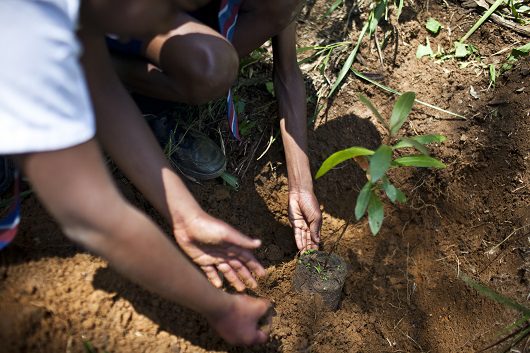
EARTH University focuses on public health and environmental sustainability. The school is based in Costa Rica and began supporting underdeveloped communities in 1990.

The founders of EARTH University’s goals were to teach young people from the Caribbean and Latin America how to use sustainable methods to help their communities thrive.

Now, 25 years later, EARTH University’s impact has spread from Latin and South America to regions in Asia and Africa. EARTH University offers rigorous undergraduate programs that elicit graduates in just four years.

Graduates from EARTH University learn how to utilize sustainable agricultural methods to create prosperous and just communities. Programs offered include agricultural sciences and natural resources management.

The curriculum at EARTH University is based on four guiding principles.

  1. The first principle guides the college to educate its students in technical and scientific knowledge to ensure they practice accurate and sustainable agricultural practices in the future. This helps alumni manage their natural resources and have a prosperous agricultural career.
  2. EARTH University works hard to help its students develop personally by exposing them to positive attitudes and values. The EARTH community fosters self-awareness, empathy, respect and tolerance, while using teamwork, effective communication and lifelong learning to promote peace and understanding.
  3. The University teaches ethical entrepreneurship. During a student’s first three years of schooling, he or she engages in an intensive entrepreneurial project. The project prepares students to leave EARTH University with the knowledge and experience needed to run their own business to help their community develop positively.
  4. EARTH University is dedicated to applying their resources to train their students in sustainability. EARTH’s curriculum promotes maintaining a healthy environment, and graduates are equipped with the knowledge to grow sustainable crops and prevent issues like soil erosion. And with this knowledge, graduates are able to help their communities rise out of poverty.

https://www.youtube.com/watch?v=iKkOBFWkF9M

As of 2014, EARTH University had 422 students from 43 countries in the Americas, Africa, Asia and Europe. According to the EARTH University website, graduates like Claudia Jeronimo, who graduated in 2005, return home to use their newfound knowledge of sustainability and social justice to revitalize their communities.

Jeronimo has worked hard since graduating to promote gender equality and food security in her community. Since its inauguration, almost 2,000 students have graduated from EARTH University, with 97 percent of them dedicating their knowledge and experience to assist their home communities.

– Julia Hettiger

Sources: Explore, Earth, Consortium Earth
Photo: Flickr

October 29, 2015
https://borgenproject.org/wp-content/uploads/borgen-project-logo.svg 0 0 Borgen Project https://borgenproject.org/wp-content/uploads/borgen-project-logo.svg Borgen Project2015-10-29 01:30:542024-05-27 09:28:15EARTH University Teaches Sustainability to Communities
Development, Education, Global Poverty

Global Education Industry Summit Challenges Education

Global Education Industry Summit Challenges Education Systems

The First Global Education Industry Summit brought together education policy makers and education-related industry leaders to exchange ideas on how education has evolved and revealed strategies for innovation.

Held in Helsinki, Finland on Oct. 19 and 20, the summit was the ideal location because Finland is known for its strong education system.

“Finland’s education system is well regarded worldwide for its teacher education approach, and for the status that the teaching profession enjoys,” said Education Minister Hekia Parata.

The summit was jointly organized by the Organization for Economic Cooperation and Development (OECD), the European Commission (EC) and the Finnish Ministry of Education and Culture.

During the summit, Finland’s Minister of Education and Culture Sanni Grahn-Laasonen discussed the importance of social change and how this correlates with keeping children in school and continuing their education.

“We need to challenge our education systems in order to keep up with current social change and expectations to encourage people to learn continuously,” said Grahn-Laasonen.

Since the digital era has made an immense impact on education, Finland announced it will introduce a new national curriculum emphasizing digital skills in August 2016.

Ranked fifth in the world for education, Finland also desires to place more emphasis on phenomenon-based learning.

Instead of passively receiving information from teachers in traditional subject learning, students have the opportunity to work alongside teachers to develop projects while taking responsibility for their own learning.

Phenomenon-based learning also deals with the incorporation of modern technology, in particular, online instruction and game-based learning.

Through these strategies, Finland hopes to prepare its students for the evolving demands of higher education and an ever-changing workforce.

“One of the common themes of the discussions was how much education systems can learn from each other, but it is also important to recognize that each system is particular to its own culture and society,” says Minister Parata.

While the next summit will be held in Israel in 2016, representatives and international organizations hope education reforms will trigger more students to receive the education they deserve to succeed.

– Alexandra Korman

Sources: Noodle, Ranking America, Scoop, Xinhua Net
Photo: Flickr

October 29, 2015
https://borgenproject.org/wp-content/uploads/borgen-project-logo.svg 0 0 Borgen Project https://borgenproject.org/wp-content/uploads/borgen-project-logo.svg Borgen Project2015-10-29 01:30:082024-05-27 09:28:15Global Education Industry Summit Challenges Education
Development, Global Poverty, Health, Technology

The Virtual Care Clinic Introduces Hologram House Calls

hologram_house_calls

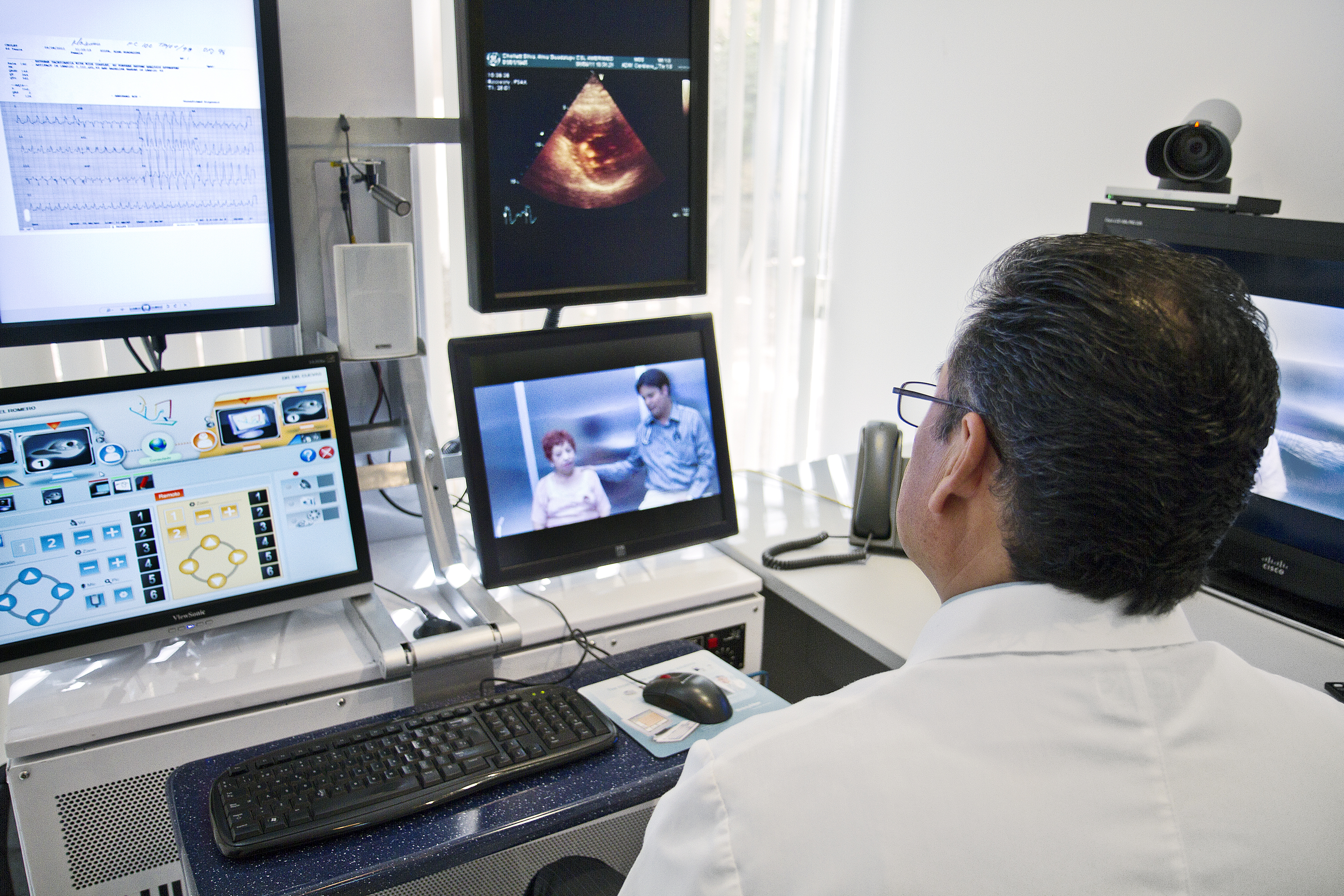
The Virtual Care Clinic, recently announced by the University of Southern California, is a pioneer in the field of virtual health care that promises easily accessible and personalized health care across the globe.

The two main components of this virtual clinic are hologram house calls, which stream video to individuals and an app that assesses someone’s needs based off of archived data as well as the information the patient provides.

The ninth annual University of Southern California’s Body Computing Conference was heralded by the announcement of hologram house calls, a prime feature to the previously announced Virtual Care Clinic which is currently under development.

The house call consists of a hologram or video beamed across the globe to wherever a patient in need resides, giving an incredible advantage for doctors to assess a patient with a little more contextualization.

This feature is important because it allows for a quick diagnosis and also allows doctors to further understand the situation of health care recipients, most of whom live in poverty.

The hologram house call is an essential extremity of the Virtual Care Clinic because this alone provides easily accessible care not just domestically but abroad, which is really an amazing feat.

Just by using the hologram house call anybody may speak to a trained medical physician in seconds and be given a diagnosis in minutes; the potential for giving health care guidance shrinks from providing establishments to providing a device that will stream the video.

Also, the house call operates with wearable or injectable technology that logs data in order to provide an almost complete examination; with these technologies working together, it is as if one were visiting a real doctor who would give him or her a precise consultation.

Along with the hologram house call, a second part of the virtual care clinic is less data intensive and focuses more on providing consistent, non-personnel type of aid.

With the app, all one must do is insert his or her age, medical condition and history of diseases that run in the family to be given accurate and helpful information on what kind of treatment to seek and when to seek it.

The potential for this technology is overwhelming considering that the mobile tech industry is ever-growing in places where development is occurring faster every day. Conceivably, the Virtual Care Clinic would provide consistent and affordable health care with the ultimate utility of being completely mobile.

– Emilio Rivera

Sources: University of Southern California, Co.Design, Popular Science
Photo: Wikipedia

October 29, 2015
https://borgenproject.org/wp-content/uploads/borgen-project-logo.svg 0 0 Borgen Project https://borgenproject.org/wp-content/uploads/borgen-project-logo.svg Borgen Project2015-10-29 01:30:052024-12-13 18:05:18The Virtual Care Clinic Introduces Hologram House Calls
Children, Development, Education, Global Poverty

The Rising Potential For “The Educational Journey of a Girl”

“Over 31 million primary school-age girls are out of school despite progress in achieving universal primary education,” a report published by the Global Business Coalition for Education found.

This study was released on the International Day of the Girl Child, a time “to recognize girls’ rights and the unique challenges girls face around the world,” says the UN.

The study produced an infographic and report which followed a female’s educational journey from birth to adulthood, offering insight into the obstacles faced by many seeking an education.

The infographic illustrated many of the disadvantages girls must overcome but, due to their circumstances, may be unable to. For example, a child born to a literate mother is five times more likely to survive beyond the age of 5.

However, girls who start engaging in child labor tend to be between 5-7 years old and few of them are given the opportunity of enrolling in school, which means millions never make it.

While the study recognizes that many businesses already do a great deal to empower girls in secondary education, the report encouraged companies to begin making investments at an earlier age.

“Examining the wider life cycle of a girl and investing sooner would have economic and societal benefits and help companies to support girls to become the leaders, consumers, employees, employers and innovators of the future,” says A World at School, a global campaign working to place all children in school.

After surveying 32 companies that invest in girls, the report discovered that early support in a child’s education is more helpful and transformative because it aids in building foundations in subjects, such as numeracy and literacy, which could advance them later in life.

The study suggests that the key to enabling more girls to receive an education lies in early investment; starting early will help prepare them with the necessary skills they will need to advance at work and in life.

In fact, the infographic also revealed that girls who complete both primary and secondary education “are likely to earn income, have fewer unwanted pregnancies, and break the poverty cycle.”

To build a more involved and sustainable role in girls’ educational development, the report has issued the following recommendations:

  1. Build broad-based partnerships
  2. Invest now, invest early
  3. Expand the business case for girl’s education
  4. Grow the evidence base
  5. Strengthen the corporate voice for girl’s education
  6. Play an active role in addressing the global crisis
  7. Make the health and education link for girls
  8. Train the next generation of employees and business leaders
  9. Work with the international donor community to scale what works in girl’s education

For many children’s education, their only hope rests in receiving support during their early years. As Executive Chair of GBC-Education Sarah Brown said, “We know all too well that the economic empowerment of a woman does not start when she is an adult. It starts when she is a girl.”

– Nikki Schaffer

Sources: A World at School, UN
Photo: A World at School

October 28, 2015
https://borgenproject.org/wp-content/uploads/borgen-project-logo.svg 0 0 Borgen Project https://borgenproject.org/wp-content/uploads/borgen-project-logo.svg Borgen Project2015-10-28 01:30:552024-12-13 18:05:17The Rising Potential For “The Educational Journey of a Girl”
Development, Global Poverty

Renewable Energy Campaigns Scheduled for Africa

Maasai-Green-Energy-Africa-solar-2-537x393Countries like Ghana, Kenya and the Congo have been making drastic improvements with regards to health, business and reducing overall poverty.

However, there is still a long way to go to completely eradicate poverty issues. Several countries and organizations have banded together in order to continue making progress in these areas.

One such project that is underway is the United Kingdom’s Energy Africa campaign. The goal of this campaign, as stated by the UK’s government site, is to “help Africa to achieve universal energy access by 2030. A reliable electricity supply is one of the most powerful tools for lifting people out of poverty and ending dependency on aid.”

Despite drastic improvements that have been made in Africa, USAID still reports, “Two out of three people in Sub-Saharan Africa lack access to electricity.”

Addressing this issue, the UK’s Energy Africa campaign states that “together with African governments, investors, businesses, NGOs, think tanks and other donors, DFID will work to increase investment in off-grid energy firms, overcome regulatory barriers, foster innovation, and accelerate delivery of solar energy systems to households across Africa.”

The UK alone is not the only group interested in renewable energy in Africa, though. The IRENA, International Renewable Energy Agency, has shown high hopes for an improved Africa through energy changes.

The IRENA recently came out with a report, Africa 2030, that outlines these hopes. In the report it is stated that “modern renewable energy will provide a prominent alternative to support the African population, which is striving for better living standards, more comfort, and fewer health hazards and avoiding extreme inconveniences.”

The main focus is to switch Africa to four key energy sources: biomass, hydropower, wind and solar power. While this large switch sounds expensive, professionals have shown it as a necessary investment.

The IRENA report has shown that “the abundance and high quality of renewable-energy resources render renewables economically competitive, in particular as the costs of renewable technologies are rapidly decreasing. Recent renewable-energy project deals concluded in Africa will deliver power at some of the lowest costs worldwide.”

The Energy Africa campaign was launched on Oct. 22. The promise of success in renewable energy campaigns is there. The hope to bring reliable and sustainable energy to everyone brings the promise of really “lifting people out of poverty and ending dependency on aid.”

— Katherine Martin

Sources: Gov.uk, USAID, IRENA
Photo: Assets Inhabitat

October 27, 2015
https://borgenproject.org/wp-content/uploads/borgen-project-logo.svg 0 0 Borgen Project https://borgenproject.org/wp-content/uploads/borgen-project-logo.svg Borgen Project2015-10-27 01:30:152024-12-13 18:05:18Renewable Energy Campaigns Scheduled for Africa
Development, Global Health, Global Poverty, Health, USAID

USAID Grants Palladium Health Policy Plus

palladium_health_policy_plus

USAID tasked Palladium with implementing Health Policy Plus (HP+), which is a five-year $185 million project that focuses on strengthening health policy, financing, governance and advocacy in developing countries.

The initiation of Palladium Health Policy Plus is in perfect timing with the establishment of the new Global Sustainable Health Goal (SDGs).

It directly focuses on Goal 3, which is to “ensure healthy lives and promote well-being for all at all ages,” and goal 17: “strengthen the means of implementation and revitalize the global partnership for sustainable development.”

Palladium is greatly experienced in leading initiatives on social and economic development. They have led projects in 84 countries in collaboration with the U.S. Government and World Bank.

Ed Abel, president of Palladium’s U.S. business unit, said: “We are grateful to USAID in recognizing Palladium’s leadership in bringing positive impact to its global effort to end extreme poverty and promote resilient, democratic societies through health policy and financing.”

HP+ builds upon the previous Health Policy Project (HPP) that ended on Sep. 29, 2015. HPP was active from 2010 to 2015 and was implemented in 48 countries worldwide.

The USAID-funded HP+ was initiated on Aug. 28, 2015. Palladium plans on using the following “four pillars” to achieve success: International Development, Strategy Execution Consulting, Research Development and Training and finally Impact Investing.

These approaches will also take into account gender equality and equity issues, family planning and reproductive health (FP/RH), maternal and child health (MCH) and HIV and AIDS.

Palladium will be working in collaboration with Avenir Health, Futures Group Global Outreach, Plan International USA, Population Reference Bureau, RTI international, The White Ribbon Alliance for Safe Motherhood and ThinkWell.

Suneeta Sharma, HP+ Director, commented: “We’re looking forward to collaborating with USAID, health ministries and civil society actors worldwide to foster more equitable, sustainable, rights-based health services, supplies and delivery systems using evidence-based approaches for decision making and resource allocation.”

– Marie Helene Ngom

Sources: PRNewswire, Federal Grants, UN Sustainable Development, Palladium
Photo: Rachel Yang

October 26, 2015
https://borgenproject.org/wp-content/uploads/borgen-project-logo.svg 0 0 Borgen Project https://borgenproject.org/wp-content/uploads/borgen-project-logo.svg Borgen Project2015-10-26 01:30:162020-06-24 18:05:44USAID Grants Palladium Health Policy Plus
Development, Global Health, Global Poverty, Health

Sustainable Blood Flow in West Africa

sustainable_blood_flow
Sisu Global Health has developed a device that recycles blood without using electricity for hospitals in developing countries.

According to the World Health Organization (WHO), “75 countries report collecting fewer than 10 donations per 1,000 population.” The vast majority of these countries are located in Africa.

Not only is blood itself in short supply (and expensive), clean and effective ways to obtain and transmit it are also lacking.

Of the donations low-income countries receive, only 16% are monitored through external quality assessment schemes, says the WHO. This leads to the continued spread of diseases, such as HIV.

In addition, unnecessary and unsafe transfusions run rampant in low-income clinics, creating even more problems.

Fortunately, a hospital in West Africa came up with a blood-collecting technique that would become the inspiration for a revolution in blood technology.

When Carolyn Yarina and Gillian Henker visited the hospital, they saw doctors use a cup to collect and reuse blood from internal bleeding, reports The Baltimore Sun.

Using this idea as a foundation, they created Sisu Global Health, a medical device company for emerging markets.

Their breakthrough technology, called the Hemafuse, is a manual autotransfusion device used to retransfuse a patient’s own blood during an internal hemorrhage, according to their website.

The Hemafuse does not need electricity to run, which makes it the perfect solution for clinics in developing countries.

With such a revolutionary, environmentally-friendly product, Sisu has already attracted attention from big-time investors.

According to The Baltimore Sun, the company has obtained a $100,000 investment from AOL Co-Founder Steve Case, after entering his “Rise of the Rest” startup competition.

Yarina and Henker have stumbled onto an immensely valuable idea here, one that will help ensure blood safety and sustainable blood flow in countries that have a desperate need for plasma.

– Ashley Tressel

Sources: Baltimore Sun, WHO, SISU Global Health, Rise of Rest

October 25, 2015
https://borgenproject.org/wp-content/uploads/borgen-project-logo.svg 0 0 Borgen Project https://borgenproject.org/wp-content/uploads/borgen-project-logo.svg Borgen Project2015-10-25 01:30:492024-05-27 09:28:12Sustainable Blood Flow in West Africa
Development, Global Poverty

Kenya-South Sudan Highway Alleviates Regional Poverty

Kenya-South Sudan Highway
With support from the World Bank Group, the governments of Kenya and South Sudan, as well as other stakeholders, recently inaugurated a new project that will upgrade a critical trade route connecting the two countries.

The updated route will make trade easier between the two countries, improve livelihoods for people living in the northwest region and alleviate regional poverty.

Currently, the Kenya-South Sudan highway, which runs through Trans Nzoia, Turkana and West Pokot counties, is a rugged track. It’s hard for vehicles to pass the deteriorated area.

Travelers run the risk of encountering bandits along the route and also pay fares that are an average of six times the price for a comparable distance on good roads.

The East Africa Transport, Trade and Development Facilitation Project will rehabilitate a 309-kilometer trek of land to create a safe route for goods and people along the Lokichar, Nadapal/Nakodoc road in the northwest region of Kenya.

The World Bank Group launched $500 million to support other activities designed to improve the livelihoods for those living in the region and to improve regional competitiveness.

Diarietou Gaye, World Bank country director for Kenya, says, “This new project is unique in its own right, because of its size, geographical coverage, and the range of activities it will undertake, targeting the specific needs of the vulnerable communities in Trans Nzoia, Turkana and West Pokot counties.”

Including 1.5 million people, those counties are home to some of the country’s poorest and most vulnerable people.

The rehabilitation of this section will cost $676 million, among which the Kenya government will contribute $176 million. Other development partners, such as the African Development Bank, German Development Bank and the European Union have shown interest in financing the reconstruction of the remaining sections.

The World Bank Group, with other development partners such as the African Development Bank and China, will support $80 million for the other 400-kilometer section in South Sudan, from its capital Juba to the border with Kenya.

In addition to rehabilitating the trade and transport corridor, the project will facilitate the construction of a 1,000-kilometer fiber optic connection between Kenya and South Sudan, as well as a one-stop border post to facilitate cross-border transport and trade between the two countries.

When the corridor is upgraded, traveling and sending goods from Kenya’s Port of Mombasa to Juba will be much faster.

Moreover, the project will also offer water and sanitation services, build domestic and export markets for livestock, agricultural produce, fisheries and mineral products, and facilitate extraction of petroleum resources in the recently discovered oil fields in Turkana and neighboring counties.

In addition, the project will create jobs and income opportunities for members of the local communities.

– Shengyu Wang

Sources: The World Bank, Chr. Michelsen Institute
Photo: Flickr

October 20, 2015
https://borgenproject.org/wp-content/uploads/borgen-project-logo.svg 0 0 Borgen Project https://borgenproject.org/wp-content/uploads/borgen-project-logo.svg Borgen Project2015-10-20 01:30:132020-06-25 21:40:45Kenya-South Sudan Highway Alleviates Regional Poverty
Development, Global Health, Global Poverty, Health

Clinton Global Initiative Launches Health Plan

Clinton Global InitiativeA lack of access to adequate health care is often a risk factor or symptom of poverty, as the inability to prevent or treat illnesses in a timely, affordable manner can devastate communities.

Following the aftermath of the Ebola crisis, USAID, the Clinton Global Initiative and other organizations have teamed up to create the Aspen Management Partnership for Health.

The Aspen Management Partnership for Health (AMP Health) is the first multi-sectoral partnership in the community health sector to focus on the leadership driving community health systems in developing nations.

Specifically, AMP Health hopes to strengthen the leadership and management of community health organizations. AMP Health combines the power of several different organizations in order to facilitate effective change.

This multi-sectoral partnership utilizes the power of USAID, the Aspen Institute, MDG Health Alliance, Born Free Africa, Margaret A. Cardill Foundation, GlaxoSmithKline, Partners in Health, the Harvard School of Public Health and McCann Health.

The partnership was announced at the Clinton Foundation’s 2015 Annual Meeting as one of their Commitments to Action for the Clinton Global Initiative.

“In addition to establishing mentor networks and cross-country convenings, the partners will recruit, train, and deploy in-country management professionals to work side-by-side with Ministries of Health on high-priority community health projects, ultimately strengthening health systems,” Clinton Foundation Vice Chair Chelsea Clinton said at the meeting.

The networks of trained, values-oriented health care professionals will be critical in advancing community health systems in developing nations.
Initially, the partnership will be utilized in sub-Saharan Africa, where community health interventions could save up to three million lives per year.

It will prove particularly relevant to reducing child and maternal mortality rates.

AMP Health incorporates businesses, governments, educational institutions, think tanks, multilateral organizations, and philanthropic foundations in order to affect change for community health systems.

While this may be just one of the Clinton Foundation’s 3,200 Commitments to Action, it carries much power and support from myriad organizations.

As a result of the multi-sectoral partnership, AMP Health can support sub-Saharan Africa as it works to prevent future epidemics, lower child and maternal mortality rates, and manage the treatment of chronic, non-communicable diseases.

– Priscilla McCelvey

Sources: Aspen Institute, Market Watch
Photo: Flickr

October 19, 2015
https://borgenproject.org/wp-content/uploads/borgen-project-logo.svg 0 0 Borgen Project https://borgenproject.org/wp-content/uploads/borgen-project-logo.svg Borgen Project2015-10-19 01:30:552020-06-25 21:42:11Clinton Global Initiative Launches Health Plan
Activism, Development, Global Poverty

Why We Need More Activists

Why We Need More Activists
When the world’s problems seem too big, too complicated and too terrifying to even try and solve, the words of Margret Meade always seem to provide much-needed perspective, “Never doubt that a small group of thoughtful, committed citizens can change the world. Indeed, it’s the only thing that ever has.”

Activism, as defined by the Cambridge Dictionary, is “the use of direct and noticeable action to achieve a result, usually a political or social one.” By this definition, an activist is someone who does an action on behalf of a cause.

The traditional method of activism usually involved a picket and a protest. However, with the introduction of the Internet and the expanding access to information and connectivity, activism has begun presenting itself in diverse, and arguably more effective, ways.

Activism has played a role in ending slavery, protecting civil rights, promoting equality for women and many other issues, but as the way activism works begins to change, the need for activists grows.

Before globalization and the hyper interconnectivity of our world through trade and online access, problems were handled generally at a local level. Communities pushed against government policies they disagreed with or pushed for social change they deemed fit.

As issues expand to a global level, so must activism. But unlike the past, those most affected by certain life debilitating issues do not have the access needed to have their voices heard.

activistsNearly half of the world’s population — a staggering 3 billion people — live on less than $2.50 a day.

While the international poverty line has been drawn at living on a $1.25 or less a day, which more than 1.3 billion people do, it is important to acknowledge that a significant portion of the people living on earth today is barely getting by. Poverty is especially rampant in undeveloped nations.

So in addition to dealing with economic insecurity, citizens of poor countries have few avenues for social, political or economic change. They cannot simply sign a petition for their government to implement better social programs.

Many of them live in rural communities far removed from their governments, and most of the governments in developing countries are unable or unwilling to help their citizens break the bonds of poverty.

This is why we need more activists. Half of our world is essentially voiceless. They cannot adequately act on behalf of their own cause, but that does not mean they should not be heard. If the portion of our population, who has enough, did enough, then couldn’t we all have enough?

We need to use activism to scream that global poverty must be eradicated.

There is what seems like endless ways to become a voice for someone who needs to have their needs heard.

Join organizations who have made it their mission to address global poverty in one way or another, volunteer at their events, rally your friends to become involved, contact your local and federal governing representatives to encourage them to join the fight.

It does not matter how you choose to be an activist, it only matters that you act.

– Brittney Dimond

Sources: Do Something, BMartin, Cambridge Dictionary, One, Permanent Culture Now, Activists Handbook
Photo: Pixabay, Wikipedia

October 19, 2015
https://borgenproject.org/wp-content/uploads/borgen-project-logo.svg 0 0 Borgen Project https://borgenproject.org/wp-content/uploads/borgen-project-logo.svg Borgen Project2015-10-19 01:30:142024-12-13 18:05:15Why We Need More Activists
Page 121 of 163«‹119120121122123›»

Get Smarter

  • Global Poverty 101
  • Global Poverty… The Good News
  • Global Poverty & U.S. Jobs
  • Global Poverty and National Security
  • Innovative Solutions to Poverty
  • Global Poverty & Aid FAQ’s
Search Search

Take Action

  • Call Congress
  • Email Congress
  • Donate
  • 30 Ways to Help
  • Volunteer Ops
  • Internships
  • Courses & Certificates
  • The Podcast
Borgen Project

“The Borgen Project is an incredible nonprofit organization that is addressing poverty and hunger and working towards ending them.”

-The Huffington Post

Inside The Borgen Project

  • Contact
  • About
  • Financials
  • President
  • Board of Directors
  • Board of Advisors

International Links

  • UK Email Parliament
  • UK Donate
  • Canada Email Parliament

Get Smarter

  • Global Poverty 101
  • Global Poverty… The Good News
  • Global Poverty & U.S. Jobs
  • Global Poverty and National Security
  • Innovative Solutions to Poverty
  • Global Poverty & Aid FAQ’s

Ways to Help

  • Call Congress
  • Email Congress
  • Donate
  • 30 Ways to Help
  • Volunteer Ops
  • Internships
  • Courses & Certificates
  • The Podcast
Scroll to top Scroll to top Scroll to top