Dollar a Week Private Schools in Developing Countries
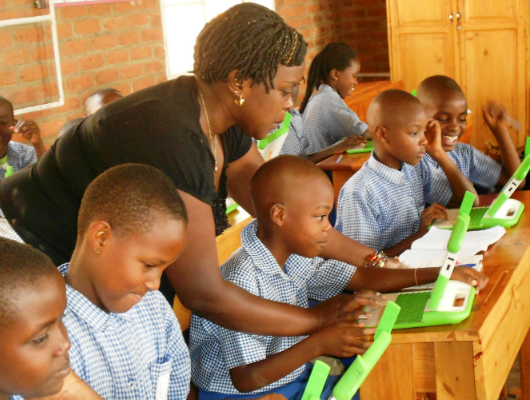 Private schools costing as little as $1 per week are beginning to take off in the developing world.
According to the World Bank, one-fifth of primary-school students are enrolled in private schools across developing countries. This is twice as many as there were 20 years ago. Many private schools in developing countries are also unregistered, so this number is thought to be even higher.
Private schools are a great alternative to overcrowded public schools. For example, in Mathare, a slum located in Kenya, there are only four public schools available for nearly half a million people. Private schools are necessary in these communities in order to accommodate such a large amount of students.
The fastest growing private schools are low-cost and accommodate people living on less than $2 a day. They are usually run by entrepreneurs or charities within these poor communities.
James Tooley, a professor at University of Newcastle, said, “These private schools, my research has shown, outperform the government schools, at a fraction of the cost.”
Ken-Ade Private School was founded in April of 1990 and has grown into a successful private school in Makoko, Nigeria. It is one of the 32 unregistered private schools located in Makoko. In December 2008, there were 185 students enrolled and 13 staff members.
The school offers many different subjects including Handwriting, Computer Studies and Agricultural Science. It offers extracurricular activities as well, such as a reading club, a drum band and an all girls choir.
Ken-Ade charges around $4 a month, which is practical for a family who only earns $1 per day. Not all children have to pay fees, though. According to Mr. Bawo Sabo Elieu Ayeseminikan, owner of Ken-Ade, there are orphaned students that are allowed to attend school for free.
According to Tooley, 75 percent of all school children in communities similar to Makoko are attending private schools. This is considerably higher than those who attend public schools.
Tooley also found in his research that private schools in these regions, whether registered or not, outperformed public schools in all subjects. Overall, private schools achieved higher success than public schools with only a quarter of teacher salary costs.
The private schools described above provide a grass-roots solution to achieving universal basic education. They give children in developing countries an opportunity to have an education where they are the priority. Private schools are a successful alternative to public schools and continue to grow in poor communities across the globe.
– Jordan Connell
Sources: CATO Institute, The Economist 1, The Economist 2, Ken-Ade Private School Website
Photo: Wikimedia
