• Link to X
  • Link to Facebook
  • Link to Instagram
  • Link to TikTok
  • Link to Youtube
  • About
    • About Us
      • President
      • Board of Directors
      • Board of Advisors
      • Financials
      • Our Methodology
      • Success Tracker
      • Contact
  • Act Now
    • 30 Ways to Help
      • Email Congress
      • Call Congress
      • Volunteer
      • Courses & Certificates
      • Be a Donor
    • Internships
      • In-Office Internships
      • Remote Internships
    • Legislation
      • Politics 101
  • The Blog
  • The Podcast
  • Magazine
  • Donate
  • Click to open the search input field Click to open the search input field Search
  • Menu Menu

Archive for category: Children

Information and stories addressing children.

Children, Global Poverty

Froggy Sink: Better Hygiene and Sanitation Saves Lives

froggy_sink
Parents know that it can be difficult to get their child to wash their hands or brush their teeth. Sometimes, to get kids to do what is best for them, you have to make it fun.

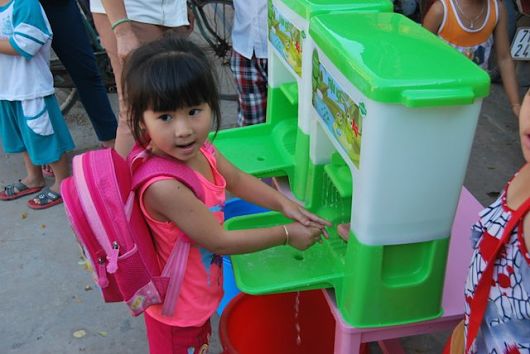
A new toy can help prevent children from getting sick with diseases or diarrhea. It is a bright green and white plastic box that has frogs and a colorful logo on it.

LaBobo is the newest toy sink produced by nonprofit WaterSHED. It has been launched in Cambodia, where access to basic hygiene and sanitation needs ranks last in Southeast Asia and 110th in the world, contributing to the deaths of 10,000 children per year.

The World Health Organization (WHO) reports that nearly 800,000 children die every year from lack of sanitation, which leads to diseases.

LaBobo sells the frog toy sink at $15, making it a very affordable product, and the sink dispenses 15 liters of water. Instead of giving out buckets and soap, WaterSHED takes an innovative approach to helping solve sanitation problems in developing countries.

“If you give people a bucket and a piece of soap, more often than not you will find the bucket ends up being used for something else,” says Geoff Revell, WaterSHED’s regional program manager.

In one year, WaterSHED has sold 10,000 units in Cambodia. Regular hand-washing and sanitation is a significant challenge in Cambodia, where only 44 percent of Cambodians are able to wash their hands with soap and 60 percent of the rural population defecate in the open.

WaterSHED is working on marketing tools to bring LaBobo to Vietnam, which also has low sanitation standards.

Forty percent of the global population lacks basic sanitation. LaBobo does not help decrease the number of people who do not have access to sanitation, but it does increase the number of children who will wash their hands.

In places like Niger, where only 18.3 percent of the population has access to improved sanitation facilities, there needs to be stronger commitments from the international community to ensure that residents can access proper sanitation.

Diseases are a cross-national threat. But by investing in sanitation facilities and innovative ways to improve children’s sanitation, the large number of deadly diseases these children could become afflicted with can be reduced.

– Donald Gering

Sources: Good News Network, Reuters, Social Progress Imperative, WaterSHED, WHO
Photo: Good News Network

August 9, 2015
https://borgenproject.org/wp-content/uploads/borgen-project-logo.svg 0 0 Borgen Project https://borgenproject.org/wp-content/uploads/borgen-project-logo.svg Borgen Project2015-08-09 01:30:402024-05-27 09:27:21Froggy Sink: Better Hygiene and Sanitation Saves Lives
Children, Education, Global Poverty

Primary Education in Brazil Improves

primary_education
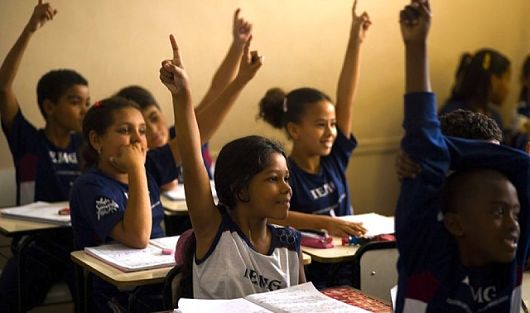
Historically, Brazil’s educational system has been lacking. Primary education was mandatory but extremely ineffective. Even tertiary education was offered with insufficient supplies and buildings. While Brazil is still behind many nations in its scope of educational initiatives, progress has been made especially in regards to Brazil’s primary education.

UNESCO’s 2015 data reports that among 15-24 year olds, 99% of females and 98% of males are literate, as compared to only 82% in 1980. The general population’s literacy rates are also improving as 72% of the total population aged 65 and older are literate whereas only 42% were literate in 1980.

Education in Brazil is compulsory between the ages of 4-14 with attendance and completion rates improving. Primary school completion is well over 100 percent – a number possible because of the inclusion of older students returning to school or the students who may have repeated a grade – which exceeds most developed countries.

This shows improvement because people who were previously uneducated are now going to school. However, it also shows that there has been a serious educational gap for Brazil to overcome. Smaller classrooms are also the average as the teacher/student ratio is currently around 20:1.

While those numbers are amazing, much work can still be done. When comparing Brazil’s literacy and math skills to other countries, the Organization for Economic Cooperation and Development (OECD) “ranked Brazil 53rd out of 65 countries, behind nations such as Bulgaria, Mexico, Turkey, Trinidad and Tobago, and Romania” (HuffingtonPost).

One of their higher education institutions, the University of Sao Paulo, also falls far behind being ranked on a global university scale at 178 out of 200 institutions. This could pose a future problem for Brazil as their economy is becoming more vibrant; they will not have adequate educated workers coming through their educational system.

Another problem that can skew the astounding numbers presented is the disparity between those students in wealthier parts of the country and those students living in extreme poverty. The educational system is not maintained by the nation as a whole; each individual municipality is responsible for the maintenance of their schools. Much like what is seen in the United State’s educational districts, the schools maintained in wealthier municipalities are given more money while the poorer ones lack the same resources.

Children in poorer parts of the country are also subject to absenteeism due to malnutrition, child labor and high examination failure. So although education is free and compulsory, many children are still falling through the cracks especially those in poverty.

The UN has addressed this very issue as countries are progressing towards the Millennium Development Goal (MDG) #2, Achieve Universal Primary Education.

In a UN article, a press report by Mr. Lake says, “In setting broad global goals the MDGs inadvertently encouraged nations to measure progress through national averages. In the rush to make that progress, many focused on the easiest-to reach children and communities, not those in greatest need. In doing so, national progress may actually have been slowed.”

This appears to be the case in Brazil. Many children are in school and the benefits are being seen through national literacy rates. But many children are still left behind and not in school like they ought to be.

Hopefully, the media attention surrounding Brazil’s sporting events over the next few years will help draw out this disparity and some permanent changes can be made for those children still not receiving an adequate education. Even with so much still to do though, the quality of education in Brazil is improving.

– Megan Ivy

Sources: Brazil, Huffington Post, The Global Economy, UN 1, UN 2, UNESCO
Photo: The Rio Times

August 9, 2015
https://borgenproject.org/wp-content/uploads/borgen-project-logo.svg 0 0 Borgen Project https://borgenproject.org/wp-content/uploads/borgen-project-logo.svg Borgen Project2015-08-09 01:30:312024-05-27 09:27:20Primary Education in Brazil Improves
Activism, Children, Global Poverty, Hunger

Celebrities Team Up with Feeding America

Feeding America
As part of a series by the organization Feeding America, “Say No to Summer Hunger” is teaming up with local food banks to serve much-needed summer meals to kids facing hunger.

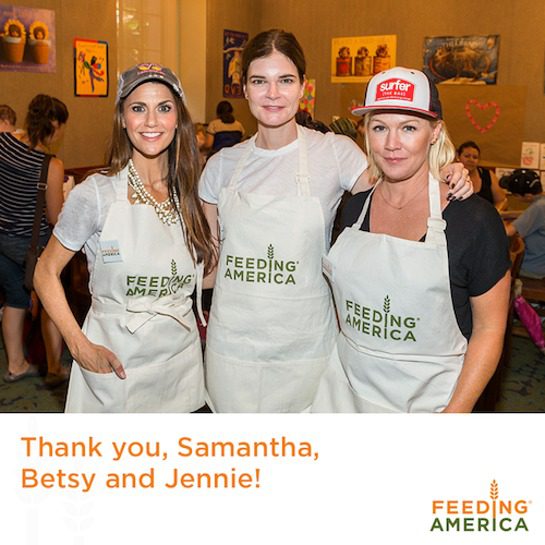
In an event that was in partnership with the Los Angeles Regional Food Bank, Jennie Garth famous from the television show 90210 and actress Samantha Harris served free and nutritious lunches to dozens of kids and teens.

The event was located in a library is located in Los Angeles County, where the number of children living in food-insecure households ranks highest in the nation, with 591,000 children who may not know where they will find their next meal.

“Child hunger exists in communities all across America,” said Garth. “There should be no reason that a child in this country is allowed to go hungry.”

Nationally, upwards of 22 million children rely on free or reduced-priced meals to nourish them during the school year. However, during the summer months, only 2.7 million children have access to free or reduced-price meals through summer feeding programs. This creates a huge deficit in the amount of nutrition these children are receiving during a crucial period of their development.

As Samantha Harris said during the event, “Summer should be spent outside playing with friends, not worrying where or if you will eat lunch that day. Kids need energy, and food is fuel!”

This is why organizations like Feeding America exist: to feed America’s hungry through a nationwide network. Having celebrity members spread awareness by using their name, real change can be made, along with hopefully inspiring a call to action from other members of the community.

Feeding America’s “Say No to Summer Hunger” has and will hold events across the country for the duration of the summer months.

– Alysha Biemolt

Sources: Look to the Stars, Feeding America, Think Progress
Photo: Look to the Stars

August 9, 2015
https://borgenproject.org/wp-content/uploads/borgen-project-logo.svg 0 0 Borgen Project https://borgenproject.org/wp-content/uploads/borgen-project-logo.svg Borgen Project2015-08-09 01:30:002024-12-13 18:04:38Celebrities Team Up with Feeding America
Children, Global Poverty, Refugees and Displaced Persons

Burundian Child Refugees Flee to Tanzania

Burundian_Child_Refugees
The remote Nyarugusu refugee camp in Western Tanzania has seen a sharp rise in child refugees from the neighboring country to the east. Children have been flooding over the border to escape violence surrounding the recent elections in Burundi.

The amount of Burundian child refugees arriving to the camp increased from about 1600 at the end of May to approximately 2600 by July 19th.

The children are not just arriving in larger numbers according to Lisa Parrott, interim country manager of Save the Children Tanzania, but they are also reaching the camp in much worse shape physically and mentally, most having walked for days with nothing but the clothes on their backs and no food or water. Many have witnessed atrocious acts of violence in their homes and along the way to Tanzania. Some of the children have even seen their own parents or other family members murdered by militia.

On July 21 2015, Burundian President Pierre Nkurunzizain won re-election after running for a third term. In the wake, violence erupted and gunfire rang out. These elections had been hotly protested with President Pierre Nkurunzizain’s opposition claiming that he was not eligible to run again. After the elections, the opposition boycotted the vote and fighting in the country intensified.

The child refugees arriving at the Nyarugusu refugee camp are not eating properly and are having terrible problems sleeping and interacting with others. About a fifth are infants with severe signs of malnutrition, anemia, malaria, diarrhea and other conditions.

The Nyarugusu camp has become one of the biggest settlements in the world comprised of mostly the Congolese who have lived in the camp since the 1990s. At 60,000 people, the already overcrowded camp has more than doubled with almost 80,000 Burundians entering over the years and the recent influx of children has only made the camp more strained.

The overflow of the population is being housed in churches and schools, causing fears that schools will not be able to operate, starving more children of a valuable education. Competition for resources such as food rations, shelter, cooking facilities and firewood, clothing, health care, and clean water intensifies every day with tensions running high.

Save the Children, an organization working in developing nations to inspire breakthroughs in the way the world treats children and to achieve immediate and lasting change in their lives, believes that every child has the right to survival, protection, development and participation.

Save the Children is on the ground in Tanzania and, with the help of local partners, are setting up child health services such as constructing Temporary Learning Centers (TLC) and creating Child Friendly Places (CFP), expected to reach 1200 children.

Life in refugee camps like Nyarugusu is difficult for thousands of people already mired in extreme poverty, but with groups like Save the Children, those seeking refuge from increasing violence in surrounding communities can find some relief and access to basic human needs.

– Jason Zimmerman

Sources: Save the Children, Reuters
Photo: Flickr

August 7, 2015
https://borgenproject.org/wp-content/uploads/borgen-project-logo.svg 0 0 Borgen Project https://borgenproject.org/wp-content/uploads/borgen-project-logo.svg Borgen Project2015-08-07 01:30:472024-05-27 09:27:14Burundian Child Refugees Flee to Tanzania
Advocacy, Children, Developing Countries, Education, Gender Equality, Global Poverty

Harry Styles Speaks In Video About Education

Harry_Styles

On July 27, Harry Styles of One Direction spoke in a video sanctioned by his campaign, action/1D, about his views on global education and those who deserve a better quality of life.

“I want to live in a world where every child can go to school,” Styles said at the beginning of the video.

Styles, along with bandmates Louis Tomlinson, Liam Payne and Niall Horan, recently launched the action/1D campaign to inspire fans and promote awareness for global education, poverty, climate change, disease and inequality.

With action/1D, supporters can get involved in the campaign by posting pictures and videos that correspond to a topic related to the cause. Fans of One Direction can also catch the boys in videos where each band member will begin with the phrase: “I want to live in a world where…”

In Styles’ video, he spoke about how much he enjoyed school, and the children that he met in Ghana who dream of getting an education. These children cannot afford school, Styles said, and they spend their days working instead of learning.

“At the moment, they have to work all day every day just to earn enough to eat,” Styles said.
The “What Makes You Beautiful” singer brings light to a continuing problem.

According to UNICEF, there are almost 624,000 children not in primary school. Those who do receive an education do not learn the tools required to be successful in secondary school or professional work.

“Often, the school environment is not conducive to learning: classes are overcrowded, water and sanitation facilities are lacking and trained teachers and school books are in short supply,” UNICEF reports.

For those children with disabiliites, education is even more difficult to attain. According to the 2010 national census, 20% of children with physical disabilities are not attending school.

In addition, gender inequality does not provide for an equal amount of girls in school as boys. The national average amount of education is seven years, and in Northern Ghana, girls attend school for just three years.

“Making education available to 100 percent of people around the world is one way to ensure that poverty declines,” the article said.

Along with The Borgen Project, Styles and other members of action/1D agree that education a key to ending extreme poverty. One Direction’s campaign, which is associated with a similar organization, action/2015, seeks to create a world where education, along with health, climate change and inequality, are no longer a problem.

This year, two U.N. summits will gather some of the most influential people in the world. During each conference, these leaders will formulate plans to fix these issues.

With the help of these conferences, numerous humanitarian organizations and Styles, extreme poverty just might end; as Styles pointed out in his video, this change can begin with education.

“Going to school could literally change their lives, but for now, all they can look forward to is a life of struggle, and they deserve so much more,” he said.

Action/1D asks fans of the band to group together to make a difference. To contribute to the cause and to learn more about the campaign, visit the action/1D website.

– Fallon Lineberger

Sources: Action/1D 1, Action/1D 2, Action/2015, The Borgen Project, United States Census, Twitter, UNICEF
Photo: Sugarscape

August 6, 2015
https://borgenproject.org/wp-content/uploads/borgen-project-logo.svg 0 0 Borgen Project https://borgenproject.org/wp-content/uploads/borgen-project-logo.svg Borgen Project2015-08-06 07:45:042024-06-04 01:17:41Harry Styles Speaks In Video About Education
Children, Development, Education, Global Poverty

The School Fund Connects Investors with Students

the_school_fund
There are 63 million secondary school-aged children around the world who are unable to attend school. In West and Central Africa, this number amounts to 40 percent of their youth population. In India, 16 million children of lower and secondary school age do not receive an education. The School Fund works with investors to provide resources and funds to developing regions to help children in need.

On average, an individual’s wage increases 15 to 25 percent for each additional year of schooling he or she receives. Girls and young women who receive an education are far less likely to become a child bride and typically grow up to be healthier and more educated about sex. Women who receive an education are more prone to have healthier children and smaller families. Education can also help girls grow up to become leaders in their communities.

The School Fund operates its services by first helping investors find students to support. This process is determined by selecting a student based on their country, gender, academic interests or fundraising deadlines. The second step helps the investors decide how much to donate, and step three allows the donators to stay in touch with the students they have helped in order to see how they are contributing the funds to their education.

The School Fund has been able to provide scholarships to over 1,100 students in Africa, Asia and Latin America, totaling over US$400,000 in funds used for tuition, uniforms, materials, exam fees and food. Students have been funded by over 3,500 donors, representing more than 1,500 years of education.

The organization was founded by Matt Severson and Andrew Perrault in 2009. Having been friends for many years and sharing interests in both traveling and development, the pair traveled to Tanzania in 2007 while still in high school. While there, they were both touched by how friendly and thoughtful the residents were. Even though many of them lived in poverty, they were still willing to share with the two of them.

During his travels, Matt Severson met a young boy named John Medo. Medo came from a family of seven who lived on US$45 a month. John Medo was intelligent — he had aced all of the exams necessary for secondary school, but his family could not afford the US$150 fee for tuition. When Severson met Medo, he was working to become a farmer. Matt Severson was inspired by John Medo’s kindness and decided to provide funds for his schooling. This marked the beginning of The School Fund.

Over the next two summers, Severson and Perrault worked to expand and build The School Fund from the ground up. Now The School Fund supports students in Tanzania, Haiti, the Philippines and many other places in the world. As Matt Severson puts it, there are many other “John Medos” in the world who need support to attend school. The School Fund plans to continue to connect investors with students in need.

– Julia Hettiger

Sources: The School Fund 1, The School Fund 2, UNICEF
Photo: Ghana Culture Politics

August 6, 2015
https://borgenproject.org/wp-content/uploads/borgen-project-logo.svg 0 0 Borgen Project https://borgenproject.org/wp-content/uploads/borgen-project-logo.svg Borgen Project2015-08-06 01:30:282024-06-05 03:46:40The School Fund Connects Investors with Students
Children, Global Poverty, Health

Alwaleed Philanthropies to Support Childhood Immunization

On July 13, 2015, Alwaleed Philanthropies announced their commitment to protecting the lives of children through immunization programs. They have signed an agreement with Gavi, the Vaccine Alliance, worth $1 million.

According to its website, “Alwaleed Philanthropies supports and initiates projects around the world, regardless of gender, race, or religion. [They] collaborate with a range of philanthropic, governmental and educational organizations to combat poverty, empower women and the youth, develop communities, provide disaster relief and create cultural understanding through education.”

Alwaleed Philanthropies has supported thousands of projects in over 90 countries and served millions of people across the globe for over 35 years.

The agreement with Gavi, the Vaccine Alliance was negotiated in January at the Gavi Pledging Conference. This is the first time Alwaleed Philanthropies has provided support to Gavi.

The contribution from Alwaleed Philanthropies is multiple projects to support the vaccine needs in Timor Leste, Kiribati, Armenia, Azerbaijan, Moldova and Guyana for the 2016 to 2020 period.

Gavi’s Resource Mobilization and Private Sector Partnerships Managing Director Marie-Ange Sarakao-Yao say, “We are very pleased that His Royal Highness Prince Alwaleed Bin Talal has decided to support Gavi through Alwaleed Philanthropies. Immunization is one of the most effective ways of reducing preventable deaths in the poorest countries and thanks to this contribution, Gavi will be able to support developing countries with vaccines that protect children against preventable diseases.”

Every year, nearly 22 million children do not receive a full course of even the most basic vaccines. These children are mainly in poor countries. More than one in five of all children who die before the age of five lose their lives to vaccine-preventable diseases.

Since 2000, Gavi has invested more than $3.8 billion to introduce vaccines to the members of the Organization of Islamic Cooperation (OIC). For the 2016 to 2020 period, Gavi predicts that 60% of its funding will support immunization programs in OIC who are eligible for Gavi support.

Since its introduction in 2000, Gavi has helped developing countries immunize over a billion children, saving seven million lives. World leaders joined German Chancellor Angela Merkel in January to raise $7.5 billion to ensure Gavi supported programs anticipated for the 2016 to 2020 time period

With this contribution, Gavi will be able to support an additional 300 million children with vaccines. Because of the funding it is receiving, Gavi is taking the steps to ensure all children will survive vaccine-preventable diseases. Because not all families can afford vaccines, Gavi is the bridge between healthy children and the future of vaccinated children.

– Kerri Szulak

Sources: Alwaleed Bin Talal Bin Abdulazaz Al Saud, Gavi, the Vaccine Alliance
Photo: Alwaleed Philanthropies

August 2, 2015
https://borgenproject.org/wp-content/uploads/borgen-project-logo.svg 0 0 Borgen Project https://borgenproject.org/wp-content/uploads/borgen-project-logo.svg Borgen Project2015-08-02 06:19:402024-05-27 09:26:23Alwaleed Philanthropies to Support Childhood Immunization
Children, Education, Global Poverty

Child Empowerment International Provides Education in Sri Lanka

Child Empowerment International provides schooling for underprivileged children in Sri Lanka
Children living in areas in Sri Lanka affected by war commonly do not have access to the resources and funds needed to receive an education. Many of these children suffer from posttraumatic stress disorder and issues due to their harsh living conditions. Child Empowerment International works to help children who have been negatively affected by war and other violent experiences overcome difficulties, cope with reality and receive an education.

Child Empowerment International establishes day schools in the refugee centers and communities these children live in. Over the past 17 years, the organization helped increase an individual’s future earnings by ten percent through education and training. Their staff of over 200 teachers prepares students for testing in Sri Lanka, which is based on the British education system. Studies conducted by Child Empowerment International have shown students graduating from their program score in the top five percentile on these standardized exams.

Students are taught basic school subjects like grammar and biology and receive career training to become carpenters, seamstresses, chefs, mechanics and hotel managers. Many students are also taught English and computer skills.

Child Empowerment International was started in 1998 to provide children living in war ridden zones holistic care. The organization started with 17 schools, but by the following year they were up to 29 schools. Child Empowerment International began by training teachers and counselors to mentor children who had suffered from sexual abuse and other traumatic experiences.

Founder Adam Salmon worked to establish a textbook-exporting company in Sri Lanka in 1994, but decided to change his line of work when he realized there were large numbers of abandoned children not receiving aid from other organizations. As the founder, he manages the hundreds of teachers working for Child Empowerment International and dedicates his time to improving the lives of the 6,800 children impacted by the organization.

The organization also dedicated themselves to helping the survivors of the tsunami that struck Sri Lanka in 2004. Several hundred students were orphaned by catastrophe and Child Empowerment International lost 126 of their students. The organization worked to find homes for children, provide resources and rebuild the schools lost to the storm.

Today, Child Empowerment International has over 80 schools established in Sri Lanka and other impoverished communities. Their newest project enacted in 2010 is working to provide education and healthcare to children in Uganda.

Students at their schools have successfully graduated from university and gained professional experience in the profession of their choice, with many of them becoming teachers or health professionals. Child Empowerment International is gathering quantitative data of the impact of their work on an individual’s success. Publication of this is set for 2017.

– Julia Hettiger

Sources: Child Empowerment, Global Giving, Matador Network
Photo: Porticus

August 1, 2015
https://borgenproject.org/wp-content/uploads/borgen-project-logo.svg 0 0 Borgen Project https://borgenproject.org/wp-content/uploads/borgen-project-logo.svg Borgen Project2015-08-01 01:33:512020-07-03 12:33:30Child Empowerment International Provides Education in Sri Lanka
Children, Global Poverty

Global Health Investments Save 34 Million Children

Global Health Investments Work: 34 Million Children Saved Since 2000
New data has been able to reveal that global health investments have been able to save 34 million children since 2000. Several of these international collaborations have decreased child mortality rates in half for those under the age of 5 in several countries.

The United Nations’ Millennium Declaration was created on September 2000 as a list of goals that would help reduce global poverty in half by 2015. One of the goals in the Millennium Declaration included providing better health access and lowering children mortality rates throughout the world.

Countries within the United Nations pledged to provide aid in order to reduce mortality rates in children under the age of 5. The goal was to have a two-thirds reduction by 2015.

In June 2015, the United Nations declared that its goal had been reached in several countries but much could still be done to improve child mortality rates in other regions.

A major concern from governments with the Millennium Development Goals was how to account for accountability. The Institute for Health Metrics and Evaluation (IHME) at the University of Washington and the U.N. Secretary-General’s Special Envoy for Financing the Health Millennium Development Goals and for malaria were able to create a solution.

The IHME at the University of Washington and the U.N. reached out to medicinal agencies and non-governmental organizations that were given the child mortality reduction task. International collaborations with scientists allowed both organizations to create a scorecard that kept track of foreign aid and the progress made in different regions of the world.

This scorecard will continue to be used to further promote investments in children’s global health and as a way for people around the world to hold the regions receiving the aid accountable.

For now, the scorecard is being used to reveal how much direct impact foreign aid can have on global health for children. The statistics showed that only US$4,205 is needed to keep a child healthy from birth until 5 years of age.

Low and middle income countries helped turn low child mortality rates into a reality by providing US$133 billion in children’s global health investments. The international aid that was invested helped saved 20 million children.

Meanwhile, private and public donors contributed US$73.6 billion and saved 14 million young lives. The majority of the donors were from low- and middle-income countries according to the data.

In comparison, the United States was able to save 3.3 million children by using only one-third of its less than 1 percent foreign aid budget plan.

Much of the aid went to providing vaccines, HIV/AIDs testing, sanitation and nutrition. Although much has been accomplished, the United States Agency for International Aid (USAID) has stated that the United States has the ability to do much more for young children.

According to the USAID’s 5th Birthday Campaign, 6.6 million children will die this year before their fifth birthday. The campaign states that that is nearly 18,000 children dying per day – most of them dying from preventable causes.

Through the 5th Birthday Campaign the U.S. will continue investing in family parenting, vaccines, sanitation and nutrition to help more children live beyond their fifth birthday.

Internationally, the United States has agreed to work with other countries in funding the Global Financing Facility. A post-2015 organization that will work toward further reaching the United Nations Secretary-General’s Global Strategy for Women’s, Children’s and Adolescents’ Health and the Sustainable Development Goals.

International governments and public and private donates have agreed on a US$12 billion budget for the Global Financing Facility. While the U.N. Millennium Development Goals sought to lower child mortality rates by two-thirds, the Global Financing Facility aims to completely lower maternity and child mortality rates by 2030.

With 2030 only a few years away the Global Financing Facility has a ticking clock. However, seeing how the U.N. Millennium Development Goals were able to succeed, the Global Financing Facility is having a positive start with much international support.

– Erendira Jimenez

Sources: USAID, WHO, Un Millenium Project, Scaling Up Nutrition, Washington

Photo: Universityofwashington

August 1, 2015
https://borgenproject.org/wp-content/uploads/borgen-project-logo.svg 0 0 Borgen Project https://borgenproject.org/wp-content/uploads/borgen-project-logo.svg Borgen Project2015-08-01 01:30:552024-05-27 09:26:25Global Health Investments Save 34 Million Children
Children, Disease, Education, Global Poverty, Health

Deworming Rwanda

Deworming campaign Improving School Attendance in Rwanda
Unquestionably, one of the most effective weapons fighting global poverty today is education, and in Rwanda, a small country in central eastern Africa, it’s essential. Absence is commonplace however, with children suffering from abdominal pain, diarrhea and nausea. Attendance in school is difficult for children with soil-transmitted helminth infections.

In collaboration with Ministries of Health, a campaign to combat the disease was launched by the World Health Organization (WHO) and has shown success in getting students back in school.

According to WHO, soil-transmitted helminth infections are among the most common infections worldwide and affect the poorest and most deprived communities. They are transmitted by eggs present in human feces, which contaminate soil in areas where sanitation is poor. The disease is easily contracted by walking barefoot on contaminated soil or eating contaminated food.

The main species that infect people are the roundworm (Ascaris lumbricoides), the whipworm (Trichuris trichiura) and the hookworms (Necator americanus and Ancylostoma duodenale).

Soil-transmitted helminth causes a spectrum of health problems, from the indiscernible to the severe, which can includ abdominal pain, diarrhea, blood and protein loss, rectal prolapse and physical and mental retardation. The severity of infection is directly related to the worm burden.

The disease, one of the most common parasitic ailments in the world, affects approximately 2 billion people, nearly two thirds of the world’s population, and it is estimated that 4 billion others are at risk.

In Rwanda, illnesses can be extraordinarily bad. According to WHO, ninety-five percent of school aged children living in the Musanze District were suffering in 2007, one of the highest rates in the country.

There, soil-transmitted helminth is contracted mainly from dirty water, fetched from nearby Lake Ruhondo and those who use the stagnant water from the former banks of the Mukungwa River. Open defecation is still practiced in the area and sanitation is almost non-existent.

In 2007, whole families were getting sick. Parents stayed home caring for sick children, which prevented them from being able to work, and children were too sick to go to school or earn a menial income raising livestock or growing vegetables.

Worldwide, the WHO has been working tirelessly to control the spread of soil-transmitted helminth by facilitating wider access to preventive medicine such as albendazole and mebendazole. According to Dr. Antonio Montresor, Medical Officer for WHO in the Department of Control of Neglected Tropical Diseases, the deworming campaign reached more than 395 million children in 2014, making it one of the largest global public health interventions.

In the Musanze District of Rwanda, the WHO provides the necessary medications to local schools, which are then disseminated to the population. Since the program started, the rate of children with intestinal worms has been reduced by nearly 20 percent.

Education is essential in alleviating global poverty. Every day a child is absent from class, the likelihood they can break the endless cycle disappears a little more. The WHO is striving to keep students in school and families healthy, making a chance to prosper a reality.

– Jason Zimmerman

Sources: WHO 1, WHO 2
Photo: TheGuardian

August 1, 2015
https://borgenproject.org/wp-content/uploads/borgen-project-logo.svg 0 0 Borgen Project https://borgenproject.org/wp-content/uploads/borgen-project-logo.svg Borgen Project2015-08-01 01:30:222024-05-27 09:26:24Deworming Rwanda
Page 111 of 137«‹109110111112113›»

Get Smarter

  • Global Poverty 101
  • Global Poverty… The Good News
  • Global Poverty & U.S. Jobs
  • Global Poverty and National Security
  • Innovative Solutions to Poverty
  • Global Poverty & Aid FAQ’s
Search Search

Take Action

  • Call Congress
  • Email Congress
  • Donate
  • 30 Ways to Help
  • Volunteer Ops
  • Internships
  • Courses & Certificates
  • The Podcast
Borgen Project

“The Borgen Project is an incredible nonprofit organization that is addressing poverty and hunger and working towards ending them.”

-The Huffington Post

Inside The Borgen Project

  • Contact
  • About
  • Financials
  • President
  • Board of Directors
  • Board of Advisors

International Links

  • UK Email Parliament
  • UK Donate
  • Canada Email Parliament

Get Smarter

  • Global Poverty 101
  • Global Poverty… The Good News
  • Global Poverty & U.S. Jobs
  • Global Poverty and National Security
  • Innovative Solutions to Poverty
  • Global Poverty & Aid FAQ’s

Ways to Help

  • Call Congress
  • Email Congress
  • Donate
  • 30 Ways to Help
  • Volunteer Ops
  • Internships
  • Courses & Certificates
  • The Podcast
Scroll to top Scroll to top Scroll to top