• Link to X
  • Link to Facebook
  • Link to Instagram
  • Link to TikTok
  • Link to Youtube
  • About
    • About Us
      • President
      • Board of Directors
      • Board of Advisors
      • Financials
      • Our Methodology
      • Success Tracker
      • Contact
  • Act Now
    • 30 Ways to Help
      • Email Congress
      • Call Congress
      • Volunteer
      • Courses & Certificates
      • Be a Donor
    • Internships
      • In-Office Internships
      • Remote Internships
    • Legislation
      • Politics 101
  • The Blog
  • The Podcast
  • Magazine
  • Donate
  • Click to open the search input field Click to open the search input field Search
  • Menu Menu

Archive for category: Children

Information and stories addressing children.

Children, Development, Education, Global Poverty

40% of African American Children Living in Poverty

African_American
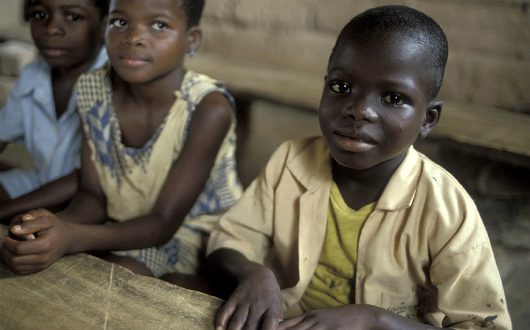
For the first time since the United States began keeping Census records, the number of African American children in poverty has surpassed that of white children. As of 2013, there were reportedly 4.2 million African American children living below the poverty line versus 4.1 million white children. What makes this statistic even more alarming is the fact that white children outnumber African American children under the age of 18 by three to one.

According to an article by USA Today published on July 16 of this year, “The poverty rates for Hispanic, white and Asian children improved as the United States emerged from an economic recession, but for African-American children, little changed. Poverty is defined as living in a household with an annual income below $23,624 for a family of four.” African American children have suffered more than any other demographic in the United States over the past few decades.

Location is largely to blame for the disparity among African American children. Poor black neighborhoods have remained in poverty for decades without any real sign of improvement. The poverty numbers are highly concentrated in these primarily urban, black areas. Detroit has emerged as a hot-spot for African American children.

In the Michigan city, roughly 60 percent of these children are in poverty, significantly higher than anywhere else in the area. An excerpt from CBS reporting on the matter says, “In Detroit, the jobs have left, the good schools have left, there is poor transportation, high insurance rates, and difficulty getting reasonably good paying jobs.” African American children in poverty suffer as a direct result of their environment.

This trend will continue to increase and spread rapidly across the country if real change does not come soon. More African American children are continually falling behind because of a lack of proper education and social reform. The numbers will continue to grow until the government begins to take this situation seriously.

– Diego Catala

Sources: USA Today, CBS Global
Photo: Flickr

July 22, 2015
https://borgenproject.org/wp-content/uploads/borgen-project-logo.svg 0 0 Borgen Project https://borgenproject.org/wp-content/uploads/borgen-project-logo.svg Borgen Project2015-07-22 19:12:042020-07-08 13:45:5840% of African American Children Living in Poverty
Children, Education, Global Poverty, Health

Fighting Ebola with Liberty and Justice

Fighting_Ebola
When the Ebola virus attacks the human body, the symptoms include muscle pain, vomit, fever and unexplained hemorrhage. While these symptoms are tragic and often fatal, there are no surprises when it comes to the virus itself—we know what it looks like and we can visibly see the damage it leaves in its wake. When the Ebola virus attacks an economy, however, as it did in Liberia in 2014, we know little about the exact symptoms and even less about the treatments available to combat it.

Until 2014, Chid Liberty, the founder of fair trade clothing manufacturer Liberty and Justice, had run his operations out of his native Liberia with ease. This changed almost overnight with the Ebola outbreaks of 2014.

“We had built the company up to a 500,000 orders per month and in a flash we were out of business,” Liberty said in an interview with Madame Noir. “The Ebola epidemic left us and the hundreds of workers and families that were depending on us stranded without income.”

Our economies are just as vulnerable as our immune systems, and can succumb to Ebola just as easily. It is estimated by the World Bank Group that nearly 50 percent of working adults in Liberia lost their jobs after the outbreak. However, Liberty refused to close his doors at the behest of the disease. Instead he turned his ingenuity into a tonic for the symptoms of Ebola and founded UNIFORM, a company based in Liberia dedicated to making affordable school uniforms for children who had been forced to leave school due to Ebola.

Liberia already has one of the lowest rates of primary education enrollment rates in Africa. According to The Global Economy website, an average of only 53.85 percent children reported having completed primary school between 1978 and 2011.

School attendance often incurs costs far beyond those of just tuition—the prices of books, the inability to work a salaried job, and even the cost of the mandatory uniform act as considerable deterrents to struggling families. The uniforms especially act as barriers to school attendance. Abdul Latif Jameel confirmed this in his 2009 study in Kenya, in which he discovered that providing children with free uniforms reduced school absenteeism by 44 percent and decreased dropout rates (particularly among girls) by a third.

Liberty’s UNIFORM brand has embraced the challenge of mollifying the effects of Ebola on the education of Liberia’s children. Their kick starter campaign, which has $174,760, has already given away 7,000 new school uniforms, all of which are being manufactured by small factories throughout Liberia (Madame Noir).

“I am very proud to be working on such a project,” said Ms. Annie Blamo to the UN Ebola Response team. Blamo is a worker in the Monrovian Liberty and Justice factory who has been manufacturing uniforms for the N.V. Massaquoi school, Blamo’s eight-hour days paid off when her son returned to school in early May. “We are so happy for what this factory has done for the children at the N.V. Massaquoi school and their name will be forever remembered.”

UNIFORM’s kick starter campaign will continue to accept donations until July 16, 2015.

– Emma Betuel

Sources: Ebola Response, Madame Noire, Poverty Action Lab, Time Dotcom
Photo: New York Post

July 21, 2015
https://borgenproject.org/wp-content/uploads/borgen-project-logo.svg 0 0 Borgen Project https://borgenproject.org/wp-content/uploads/borgen-project-logo.svg Borgen Project2015-07-21 14:38:002024-06-04 01:17:40Fighting Ebola with Liberty and Justice
Children, Education, Refugees and Displaced Persons

Malala Opens Girls School for Syrian Refugees

Malala-Yousafzai-All-Girls-School-Syrian-Refugees
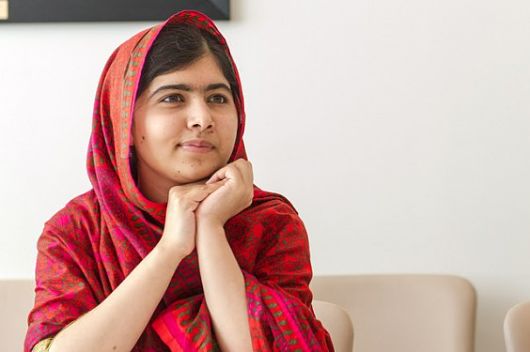
The Malala Yousafzai All-Girls School opened on July 12 to Syrian refugees—for girls who have fallen victims to displacement. Malala Yousafzai opened the school on behalf of the 28 million children who are kept from classrooms because of armed conflict. The event also marked Malala Yousafzai’s 18th birthday, of which she was proud.

Malala Yousafzai is no stranger to armed conflict, as she was attacked in her native Pakistan in 2012 because of her support and efforts to campaign for girls’ rights and education. For this brave act, Malala was in fact awarded the Nobel Peace Prize in 2014.

Yousafzai currently believes that world leaders are failing Syria’s children. At the opening of the school she stated, “On this day, I have a message for the leaders of this country, this region and the world: you are failing the Syrian people, especially Syria’s children. This is a heart-breaking tragedy — the world’s worst refugee crisis in decades.”

That is why this school is one small step on Yousafzai’s part to help the children of the war-torn country. This effort is applauded by Antonio Guterres, the UN High Commissioner for Refugees. He stated, “We are really heartened by Malala’s ardent support for the education of refugee girls whose aspirations have already been so cruelly cut short by war. These children are the future of Syria; we must not jeopardize that by denying them the basic right to education while they are in exile”.

The newly opened school will serve around 200 Syrian girls living in refugee camps in the Bekaa Valley region along the Lebanese border, to which many Syrians have fled.

This school will stand as a testament to the perseverance and strength of the Syrian children and hopefully become inspiration to the similar creation of future schools.

– Alysha Biemolt

Sources: Look to the Stars, UNHCR, PBS, Voanews
Photo: Sampsonia Way

July 21, 2015
https://borgenproject.org/wp-content/uploads/borgen-project-logo.svg 0 0 Borgen Project https://borgenproject.org/wp-content/uploads/borgen-project-logo.svg Borgen Project2015-07-21 13:07:322024-12-13 17:52:06Malala Opens Girls School for Syrian Refugees
Children, Global Poverty, Health

Deworming School-Age Children

deworming_school_age_children

The World Health Organization estimates that 1.5 billion people, 24% of the world’s population, have a worm infection. Infected people usually have soil-transmitted helminth infections caused by the most prevalent worm species: roundworms, whipworms and hookworms.

These worms are spread through direct contact with contaminated soil caused by open defecation in impoverished, usually tropical, regions. The contact with human feces is a result of poor sanitation, feces contaminating crops and children walking barefoot.

The worm’s eggs can be ingested on food that has not been properly washed or cooked as well as through the consumption of food when people eat with dirty hands. Some worm larvae are also able to work their way through a person’s skin to enter into the body, especially through the soles of children’s bare feet.

When a child has a worm infection, his or her health is compromised. Symptoms are not always pronounced, but rather show up slowly and can sometimes be hard to detect. The worms leech essential nutrients away from a child’s body causing malnutrition, anemia, lethargy and cognitive repression due to lack of nutrients. These issues can cause children to be so physically weakened that school is missed and absenteeism rises.

Thankfully, even though worms are one of the most prevalent infections in poverty stricken areas, it is also has one of the easiest and most cost-effective forms of treatment. Several organizations are working toward deworming children. Innovations for Poverty Action (IPA) and Deworm the World Initiative are two that have teamed up in this effort. Together they were able to deworm over 35 million children in 2012!

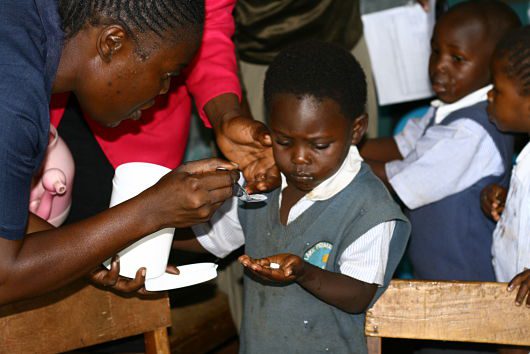
Deworming school-age children was possible through school initiatives. They have found that deworming children at school with a pill is highly effective for two reasons.

1. It is so easy that teachers can be trained to administer the medicine, which relieves the costs of needing medical specialists on site.

2. The medicine is safe even if a child is not currently infected. If 20% of the children in a region are known to have worms, then every child can be dewormed safely without the possibility of side effects. This will reduce any possible infections.

The medicine cost is very low as well. The actual medicine only costs a few pennies per child; factoring in all the costs associated with administering the medicine, the cost is still less than 50 cents per child. To be the most effective, the medicine needs to be administered twice a year. Since costs are so low, that goal is financially feasible.

A trial conducted in the early 2000s in Kenya found that by administering the medicine, school absenteeism fell by 25% and younger children were found to have cognitive gains. A separate study found that through deworming children’s bodies were better able to fight off other diseases, such as malaria, because essential nutrients were not being depleted by the worms.

Currently, Deworm the World is working quite intensely in India’s Bihar State, Delhi State and Rajasthan State, as well as in Kenya. The organization is able to work through the schools in those areas, treating millions of children. Those children are now given a much greater chance to excel in school since worms are not stealing their body’s resources.

Deworming children cannot be the sole answer, since the source of the worms needs to be addressed in the regions as well. Proper sanitation, clean water, uncontaminated food and children wearing shoes are still needed to ensure new worm infections do not occur.

But while those issues are being worked on, deworming children is giving infected children a chance to thrive in their education, since they are more energetic and focused during their studies and missing much less school than before.

– Megan Ivy

Sources: CDC, Evidence Action, Innovations for Poverty Action, WHO
Photo: What Gives

July 21, 2015
https://borgenproject.org/wp-content/uploads/borgen-project-logo.svg 0 0 Borgen Project https://borgenproject.org/wp-content/uploads/borgen-project-logo.svg Borgen Project2015-07-21 10:58:312024-05-27 09:25:49Deworming School-Age Children
Children, Education, Global Poverty

With Successes Come Education Struggles

education_struggles
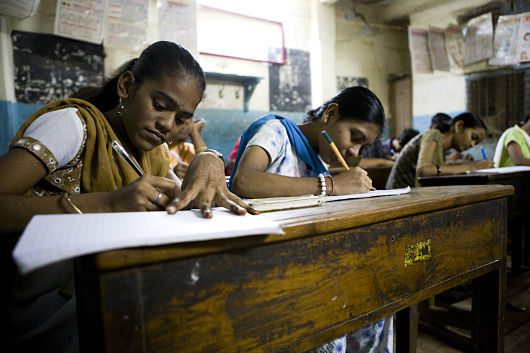
There have been many successes for girl’s education in the developing world. Challenges remain, however, creating a puzzle for problem solvers around the world.

Girls face many more education struggles than boys do. This is especially the case during puberty. For one girl living in Uganda who wants to be a doctor, lack of proper toilets causes embarrassment and results in missed days at school. “Some toilets don’t have doors and so we fear to enter as people can see or enter the toilets at any time. At the toilets, they don’t have water to flush or wash, and so it’s complicated to attend school when I have my period.”

While some might think this is a minor issue in the grand scheme of things, the United Nations Educational, Scientific and Cultural Organization or UNESCO has found differently. One in 10 girls across Africa miss school during their period. Half of girls attending school in Ethiopia miss between one and four days of school a month because of menstruation.

In India, the problem is even worse. Sixty-six percent of schools there do not have functioning toilets. Without private toilets, girls’ health is put at risk. Coupled with the stigma and taboos associated with menstruation and periods, and the result is often that girls drop out of school in the developing world.

Another issue that also affects girls’ education in Africa is child marriage. Every year, 15 million girls 18 or under marry. In Sub-Saharan Africa, 40 percent are married before 18, and 12 percent before they are even 15. In Chad, the number of girls married under age 15 jumps to 29 percent. Even with minimum age laws, marriages still go ahead with parental consent.

This has implications for young women’s education. Once they are married, they are expected to fulfill duties at home which leaves them with them no time to pursue their studies. This begins a vicious circle: without education girls are not informed of their rights and are able to act on them.

Despite these challenges, there have been huge gains in education for girls around the developing world. By 2012, most countries had reached the Millennium Development Goal target of girls primary education parity with boys. For many countries this meant that for every 100 boys, 97 girls also attended primary school.

However, even in this victory lies a caveat – not all countries have actually reached full parity. Sub-Saharan Africa enrollment rate for primary school-aged girls was still languishing at 75 percent in 2010. “Three-quarters of the countries that have not achieved parity at the primary level enroll more boys than girls at the start of the school cycle.” To equalize enrollment at the beginnings of school years would be to achieve parity.

Afghanistan stands out as a beacon of success when it comes to girls’ education, especially with the Taliban influence in the area that discourages girls in school. Girls enrollment in 2014 reached 3.75 million girls. In 2002, only 191,000 were enrolled.

While there are still big problems girls face around the developing world when it comes to attending school, it is important to acknowledge the victories. More work is needed but if progress continues, more successes will come.

– Gregory Baker

Sources: The Guardian 1, The Guardian 2, The Guardian 3, The Guardian 4, The Guardian 5, UN Women
Photo: The Better India

July 17, 2015
https://borgenproject.org/wp-content/uploads/borgen-project-logo.svg 0 0 Borgen Project https://borgenproject.org/wp-content/uploads/borgen-project-logo.svg Borgen Project2015-07-17 15:18:482020-07-10 19:31:49With Successes Come Education Struggles
Children, Global Poverty, Health, Water

Celebrities High-Five For UNICEF

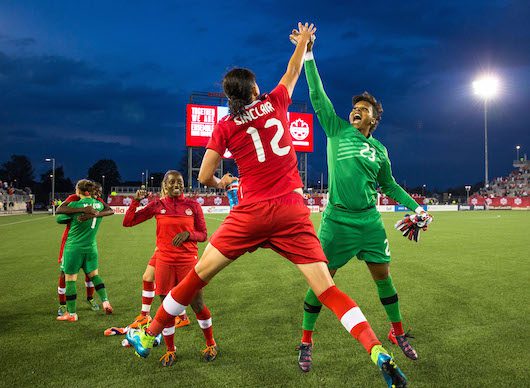
UNICEF In association with the FIFA Women’s World Cup Canada 2015, Canadian and U.S. celebrities are participating in the #HighFiveIt campaign for UNICEF with the universal high-five gesture.
According to UNICEF, almost one thousand children die every day worldwide because of the lack of clean water. Conditions are worsened for those without proper nutrition, immunizations, safety and infant health.

The #HighFiveIt campaign raises money to develop strategies to solve these issues as well as implement the plans created. UNICEF will also help to educate the areas that suffer from these problems with techniques that continue to improve upon the tactics that UNICEF will put in place.

In Canada, Karina LeBlanc, the Canadian Women’s National Team goalkeeper and UNICEF ambassador, helped start the campaign by high-fiving Christine Sinclair, the captain of Canada’s team.
UNICEF asks that supporters take part in #HighFiveIt by posting a photo or video of a high-five during a sporting match, tagging five friends in the post and donating to UNICEF.

Among the supporters are many celebrities who have pledged to help save lives of children in poor areas. Disney Channel stars Calum Worthy, Raini Rodriguez and Laura Marano are giving their high-fives for UNICEF, and so are Rico Rodriguez from “Modern Family” and Peter Mooney, Missy Peregrym, Priscilla Faia and Erin Karpluck from “Rookie Blue.”

In addition, several other Canadian and American politicians, athletes and celebrities are pledging to #HighFiveIt to save citizens in poor areas.

UNICEF Canada’s Chief Development Officer, Sharon Avery, said that she is very pleased with the support from these celebrities as their backing will draw a lot of attention to the cause.

“It’s wonderful to see our homegrown talent, along with several American celebrities, taking part in this campaign to save lives,” Avery said. “I’ve seen the impact of UNICEF’s work with children in Honduras and Dominica and am excited to have my passions — soccer and reaching children through UNICEF — come together with #HighFiveIt.”

Though their involvement was very important, celebrities were not the only people taking part in #HighFiveIt. 7,238 UNICEF fans took part in the Guinness World Record for the greatest number of people simultaneously giving a high-five. This event broke the previous record by 2,542 people.

With such a large number of supporters giving high-fives, UNICEF hopes to reach their goals. The organization’s website offers five different life-saving options to donate to, the first being “greatest gift.” If the donator chooses to give to “greatest gift,” the money will be presented to areas that need change the most.

“Children living in conflict and vulnerable situations will benefit from your generosity,” UNICEF said.

By selecting “infant health,” the donator will fund the implementation of baby-friendly hospitals, training of health-care workers and breastfeeding education for mothers. If the supporter chooses “vaccines,” the donation will be used to provide vital vaccinations for tetanus, polio, measles and other life-threatening diseases. By clicking on “nutrition,” the funding will go to efforts to end starvation and malnutrition, and with the selection of “water,” the donation will be used to create water-catchment devices for a better opportunity to provide clean water to developing areas.

Because UNICEF presents the chance of choosing to give directly to causes that the supporter prefers, the organization has created a more personal donation experience. That being said, each dollar the supporter gives to their choice source will be matched by UNICEF, up to two million dollars.

Celebrities and fans of UNICEF can potentially raise more than four million dollars with this promise. To join the cause and help save the lives of people in need, go to unicef.ca or search #HighFiveIt.

– Fallon Lineberger

Sources: Look to the Stars, UNICEF 1, UNICEF 2, UNICEF 3
Photo: Newswire

July 13, 2015
https://borgenproject.org/wp-content/uploads/borgen-project-logo.svg 0 0 Borgen Project https://borgenproject.org/wp-content/uploads/borgen-project-logo.svg Borgen Project2015-07-13 14:06:162024-12-13 17:51:54Celebrities High-Five For UNICEF
Children, Global Poverty

Nonprofit Helps Reduce Child Labor in Cambodia

Nonprofit Helping Reduce Child Labor in Cambodia-TBP

In 2012, the U.S. Department of Labor estimated that about 28% of the Cambodian national population ages 5 to 14–nearly 900,000 children–participated in child labor practices.

World Vision is a nonprofit organization working to reduce the prevalence of Child Labor in Cambodia by providing educational and household assistance to low-income families. The organization is operating a four-year child labor reduction project known as EXCEL, which has already assisted over 20,000 children and receives annual funding from the U.S. Department of Labor.

When asked how the organization plans to continue to reduce child labor rates within Cambodia, World Vision administrator Imelda Ochavillo responded, “If you want to reduce it significantly we should have very comprehensive interventions that would include continuous poverty alleviation, provision of alternative sources of income, decent employment for youth, and education should be made accessible.”

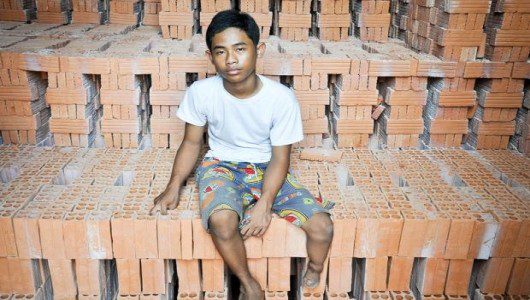
U.N. findings report that, of the 430,000 Cambodians under the age of 18, nearly half participate in roles that the International Labor Organization regards as “the worst forms of child labor.” These practices include agricultural production, construction, brick-making, fishing, street vending and illegal child solicitation.

Cambodia maintains one of the highest incidences of child labor practices within Asia and the Pacific, as a U.S. Department of Labor Study estimated the average frequency of child labor for this global region rested at 9.3% in 2013.

Researchers argue that significant disparities within Cambodia’s educational infrastructure and economic development programs have fostered a national environment that encourages child labor practices. In many rural areas of Cambodia, access to educational opportunities is limited and requires children to travel long distances despite a lack of public transportation systems. The persistence of children not accessing educational institutions due to limited infrastructural systems and safety concerns has led many low-income families to allow their children to enter the labor force.

Veng Heang, Director of the Child labor Department in Cambodia, explained recently in an interview that despite decreasing child labor by nearly 50% within the country since 1999, his administration remains determined to have less than 375,000 Cambodians under the age of 18 participating in the national labor force by 2015.

“Not only in 2015, but after 2015–we have to work very carefully on quality of education, food security and especially income generation for the poor,” Heang insisted.

Along with nonprofit organizations such as World Vision, the government of Cambodia has continued to demonstrate strong dedication to reducing the frequency of child labor at a national level. The country completed a National Child Labor Survey in 2013 to study the relative occurrences of child labor practices within sub-national areas and lead multiple operations to combat forced labor and child sexual exploitation, showing that Cambodia recognizes the necessity for further progress within this issue.

With Cambodia continuing to record high annual rates of child labor practices, efforts by both the national government and foreign aid entities to improve infrastructure, educational opportunities and regulatory services are essential in advancing the fight.

– James Thornton

Sources: United States Department of Labor 1, Learning English, United States Department of Labor 2
Photo: World Vision

July 12, 2015
https://borgenproject.org/wp-content/uploads/borgen-project-logo.svg 0 0 Borgen Project https://borgenproject.org/wp-content/uploads/borgen-project-logo.svg Borgen Project2015-07-12 11:16:342024-05-27 09:25:26Nonprofit Helps Reduce Child Labor in Cambodia
Children, Education, Global Poverty

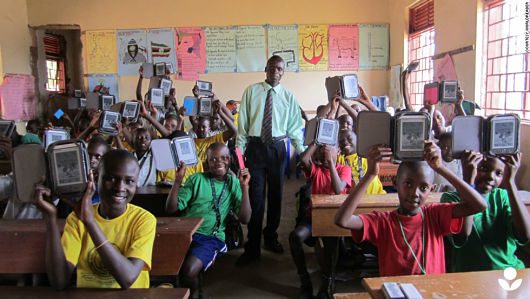
Bangladeshi Floating Schools Redefine Accessible Education

Bangladesh’s Floating Schools Redefine Accessible Education
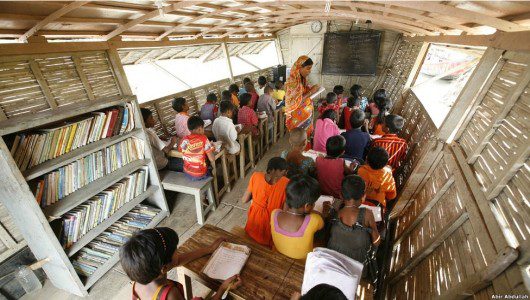
Since 2002, 70,000 children have benefited from Shidhulai Swanirvar Sangstha’s 20 solar-powered floating schools. Bangladesh, a nation plagued by incessant monsoons, often has a disrupted school year. During the rainy season, roads become impassable, closing upwards of 4,000 schools for months at a time.

Global warming is an omnipresent reality in Bangladesh, with climatologists projecting that one-fifth of the nation will be submerged by 2050. Geographically, Bangladesh is acutely sensitive to the effects of climate change, owing to the Bengal delta—the world’s largest glacial melting from the Himalayas—as it runs off into the rivers, raising the sea level, which in turn pushes inland.

Frustrated by the month-long interruptions during his childhood education, Mohammed Rezwan believed there was a more viable solution to Bangladesh’s education woes, so instead of avoiding the floods, he embraced them.

The concept was if children marooned by floods could not attend school, then the school should come to them. “Many friends and relatives were denied access to education,” Rezwan said. “I thought, if the children cannot come to school because of floods, then the school should go to them by boat.”

In 1998, Rezwan founded Shidhulai Swanirvar Sangstha, a nonprofit centered on mobile, accessible education, with a mere $500. In 2002, he introduced his first school boat. Then, in 2003, donations started flooding in (pun intended).

From the United States, the Global Fund for Children donated $5,000, followed by $100,000 from the Levi Foundation and, finally, the Bill and Melinda Gates foundation gave $1 million.

The funds enabled Rezwan to build more school boats. Noka, traditional Bangladeshi boats, cost $18,000 to modify into a proper school boat, with weatherproof window vanes, solar panels and arched metal beams. An additional $6,500 a year covers teachers’ salaries and overhead.

The boats are large: stretching 50-feet long and 15-feet wide. Each boat holds roughly 30 to 35 children or adults and is equipped with a laptop, library and other electronic resources. For many of Shidhulai’s students—particularly girls—the school boats are their only opportunity to access technology.

Shidhulai provides three classes, lasting two to three hours a day, six days a week, up to grade four. Students are taught the Bengali alphabet, along with essential life skills, such as how to purify water from contaminated sources. This relatively modest education is all many of these children will ever receive.

Adults attend classes too; their curriculum covers more practical matters. Topics range from proper use of insecticide to climate change adaptation to increasing crop yields—all essential skills in Bangladesh’s agricultural economy.

Shidhulai’s ultimate gesture of accessibility takes the form of portable lanterns given to each child, who can then study at night from home. The lanterns are low-cost and solar-powered, keeping with the renewable solar energy of the school boats.

The existential question facing Shidhulai is its financial sustainability. Critics claim that, while the school boats are an ingenious form of adaption, they are not sustainable, since solar power requires vast amounts of energy.

Undaunted, Rezwan aspires to open 100 more boats within the next five years, spreading his organization’s reach to roughly 100,000 people.

To boost Shidhulai’s viability, Rezwan plans to rebrand the solar lamps currently used as instructional tools and sell them as hurricane lamps.

“Building on that concept, we plan to sell hurricane lamps for around 500 taka ($7.30) each, and the villagers will have to pay 40 taka (about US $0.60) a month to recharge each lamp on our boats,” said Rezwan.

As roughly 78 million Bangladeshis currently go without electricity, relying instead on kerosene or fossil fuel for light, the market for Shidhulai’s solar lamps looks very bright indeed.

– Bilal Ibrahim

Sources: IRIN, WISE Initiative,, New York Times
Photo: BBC

July 12, 2015
https://borgenproject.org/wp-content/uploads/borgen-project-logo.svg 0 0 Borgen Project https://borgenproject.org/wp-content/uploads/borgen-project-logo.svg Borgen Project2015-07-12 10:33:552020-07-10 19:43:59Bangladeshi Floating Schools Redefine Accessible Education
Children, Global Poverty, Poverty Reduction

Child Poverty in Wales Remains Highest in the UK

child_poverty_in_Wales

Child poverty in Wales is currently one of the largest issues facing the United Kingdom.

Under the U.K. government’s Child Poverty Act, which was recently scrapped due to poverty levels across the U.K. remaining high, a child is defined as living in poverty when they are “living in a household with an income below 60 percent of the UK average of £453 a week.”

Based on these guidelines, over 2.3 million children across the U.K. are currently living in poverty, or about one in six. With one-third of children living in poverty, Wales currently has the highest child poverty rate in the U.K. outside of the city of London.

In response to these recent figures, Work and Pensions Secretary Iain Duncan Smith stated that poverty issues in Wales are “deep rooted,” while a severe lack of public transportation has left communities without access to better jobs.

Wales’ Children’s Commissioner, Professor Sandy Holland, has been an open advocate for reform of the Welsh government’s child poverty programs. Speaking to ITV.com, she lamented that child poverty statistics in Wales are “unacceptably high.”

“The different life chances for children, whether you’re living in the poorest fifth of society or the richest fifth, they’re really stark and we’ve done nothing in the last eight years to reduce that inequality,” Holland said.

Despite a rise in employment across the U.K. since 2010, poverty in Wales has remained unaffected. Speaking to the BBC, Dr. Sarah Lloyd-Jones, director of Cardiff’s education charity People and Work Unity, says that policy reform is the first big step Wales needs to take to start improving its statistics.

“We have an approach that says we’ll look at basic skills and structures to help people survive in poverty but we need to be more ambitious,” she said. “We need to be saying, ‘Why aren’t we getting engineers out of this community, why aren’t we getting doctors or chemists?’”

– Alexander Jones

Sources: BBC 1, BBC 2, ITV
Photo: BBC

July 12, 2015
https://borgenproject.org/wp-content/uploads/borgen-project-logo.svg 0 0 Borgen Project https://borgenproject.org/wp-content/uploads/borgen-project-logo.svg Borgen Project2015-07-12 09:12:582024-12-13 17:51:48Child Poverty in Wales Remains Highest in the UK
Children, Education, Global Poverty

How Poverty Affects Children’s Language Skills

How Poverty Affects Children’s Language Skills-TBP

Decades worth of research has shown that children from low-income families are at a higher risk of entering school with poor language skills compared to more privileged students. On average, they score two years behind on standardized language development tests.

New research has shown that this achievement gap could begin at as early as 18 months, and by the age of two, children from low-income families show a six-month gap in language proficiency. By the age of three, the difference in vocabulary can be so large that children would have to attend additional schooling to catch up. Furthermore, poor children have more difficulty understanding abstract language and possess lower reading and writing skills, which increases the odds that the child will drop out of school in the future. They often struggle with phonological awareness skills: the ability to consciously manipulate a language’s sound system.

There are many factors that contribute to this trend. Birth to the age of three is a critical period for language development, as the brain is rapidly growing and developing. Parents who are less educated may not know the importance of consistently using language with their baby, which can cause a delay in early language skills. Parental engagement from birth can help bridge this gap, regardless of income level.

Parents who are struggling financially may not have the time or resources to devote to reading to their children. This affects a child’s emerging literacy skills. Building a foundation for strong literacy skills must begin early, and the process of acquiring these skills begins at birth, so it is imperative that parents make an active effort to read to their children.

The vast difference in vocabulary between children of different income levels relates to their exposure to varied vocabulary at home. In the span of one year, children from poor families are exposed to 250,000 utterances at home, while children from wealthy families hear four million. Discussion in low-income households is often focused on daily living concerns, such as what to eat, what to do and other practical topics. Therefore, children may be unprepared for a different type of discussion in a school setting.

There are various strategies that educators and parents can use to close the achievement gap. Early education and intervention are extremely important. High-quality preschool programs produce the best results, particularly when children begin such programs during infancy. Equally important is educating and empowering families. Teaching parents the importance of reading to children, talking with their children as much as possible and building vocabulary by giving words meaningful context can lead to positive outcomes. Working with multiple generations of the family is the best way to promote literacy and language skills at home.

Language connects us all; therefore, it is necessary to foster children’s communications skills from a very young age. With the appropriate combination of early intervention and parental engagement, it is entirely possible for children from low-income families to overcome the language achievement gap.

– Jane Harkness

Sources: American Speech-Language-Hearing Association, Global Post, Stanford News
Photo: Flickr

July 11, 2015
https://borgenproject.org/wp-content/uploads/borgen-project-logo.svg 0 0 Borgen Project https://borgenproject.org/wp-content/uploads/borgen-project-logo.svg Borgen Project2015-07-11 09:05:502024-06-05 03:46:37How Poverty Affects Children’s Language Skills
Page 113 of 137«‹111112113114115›»

Get Smarter

  • Global Poverty 101
  • Global Poverty… The Good News
  • Global Poverty & U.S. Jobs
  • Global Poverty and National Security
  • Innovative Solutions to Poverty
  • Global Poverty & Aid FAQ’s
Search Search

Take Action

  • Call Congress
  • Email Congress
  • Donate
  • 30 Ways to Help
  • Volunteer Ops
  • Internships
  • Courses & Certificates
  • The Podcast
Borgen Project

“The Borgen Project is an incredible nonprofit organization that is addressing poverty and hunger and working towards ending them.”

-The Huffington Post

Inside The Borgen Project

  • Contact
  • About
  • Financials
  • President
  • Board of Directors
  • Board of Advisors

International Links

  • UK Email Parliament
  • UK Donate
  • Canada Email Parliament

Get Smarter

  • Global Poverty 101
  • Global Poverty… The Good News
  • Global Poverty & U.S. Jobs
  • Global Poverty and National Security
  • Innovative Solutions to Poverty
  • Global Poverty & Aid FAQ’s

Ways to Help

  • Call Congress
  • Email Congress
  • Donate
  • 30 Ways to Help
  • Volunteer Ops
  • Internships
  • Courses & Certificates
  • The Podcast
Scroll to top Scroll to top Scroll to top