• Link to X
  • Link to Facebook
  • Link to Instagram
  • Link to TikTok
  • Link to Youtube
  • About
    • About Us
      • President
      • Board of Directors
      • Board of Advisors
      • Financials
      • Our Methodology
      • Success Tracker
      • Contact
  • Act Now
    • 30 Ways to Help
      • Email Congress
      • Call Congress
      • Volunteer
      • Courses & Certificates
      • Be a Donor
    • Internships
      • In-Office Internships
      • Remote Internships
    • Legislation
      • Politics 101
  • The Blog
  • The Podcast
  • Magazine
  • Donate
  • Click to open the search input field Click to open the search input field Search
  • Menu Menu

Archive for category: Children

Information and stories addressing children.

Children, Education, Inequality

UN Study Says Global Education Has Declined

Global_Education
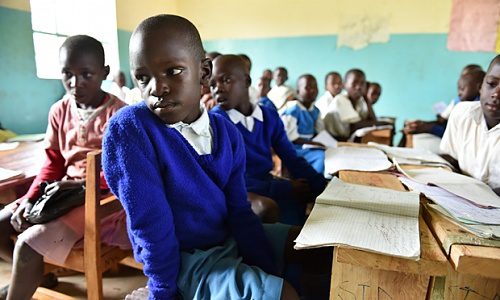
The number of children and young adolescents receiving education has worsened in a time when primary and secondary education goals have been put in place, according to the UNESCO Institute for Statistics (UIS).

In a study released this month, the UIS data for the school year in 2013 shows that 124 million children and young adolescents have either dropped out of school or never started school. This number rose by 2 million since 2011. The number of primary school aged children not in school increased by 2.4 million between 2010 and 2013. Of these 59 million children, 9 percent are denied the right to education. In addition, there are almost 65 million young adolescents not receiving an education.

The UIS study offers two causes to explain the rise in children and young adolescents out of school.

First, areas in Sub-Saharan Africa have struggled to provide schooling to communities with populations of people aged mostly 6 to 15 years. These developing areas have not yet created stable economies to create proper schools and education systems for the majority of their citizens.

The second reason that the UIS focuses on is the grand procedures that were taken by many countries to create greater access to education. These measures launched global education at the start of the century but did little to institute strategies for continual improvement.

To fix this problem, Irina Bokova, UNESCO’s Director General, agrees with the report that new methods and “serious commitments” must be implemented to reach communities with the least amount of children and young adolescents in school.

“Targeted interventions are needed to reach the most marginalized children and youth who are out of school today, including those with disabilities; from ethnic, religious or linguistic minorities; and children affected by armed conflict,” the UIS study said.

The study also said that the large attempts to end gender discrimination in education have not been successful. In South and West Asia, less than half of the children and young adolescents receiving education are girls.

“While the gap is considerably smaller than in the early 2000s, UIS data show little improvement in recent years, despite the many campaigns and initiative designed to break the barriers that keep girls out of school,” UIS said.

With hopes of changing these numbers, a summit in September will host world leaders in hopes of creating new Sustainable Development Goals to address education.

Although this is a great step for bettering global education, improving education will be more difficult than ever. The World Education Forum in Korea in May 2015 said that in order to achieve education goals, 12 years of funding must be given. Additionally, the Education for All (EFA) Global Monitoring Report team has projected that a sum of at least US$39 billion will be needed to fund universal satisfactory secondary education by 2030.

Aaron Benavot, Director of the EFA GMR, also said that funding needs to be drastically increased: “Aid needs to be shooting upwards, not creeping up by a few percentage points.”

Benavot said that The Oslo Summit on Education for Development and the Third Financing for Development Conference in Addis Ababa in August will show whether or not donors are willing. In agreement with Benavot, the UIS suggests that improvement from the levels reached in 2010 does not look promising, and donors must move education to the top of their list to really make a difference. A large change in funding must be made in order to start a worldwide effort for access to education. This year will show if our world is truly ready to fight for education.

– Fallon Lineberger

Sources: UNESCO 1, UNESCO 2, United Nations
Photo: Saturno

July 31, 2015
https://borgenproject.org/wp-content/uploads/borgen-project-logo.svg 0 0 Borgen Project https://borgenproject.org/wp-content/uploads/borgen-project-logo.svg Borgen Project2015-07-31 01:50:062024-06-11 02:48:12UN Study Says Global Education Has Declined
Activism, Children, United Nations

Celebrating World Youth Skills Day

world_youth_skills_day
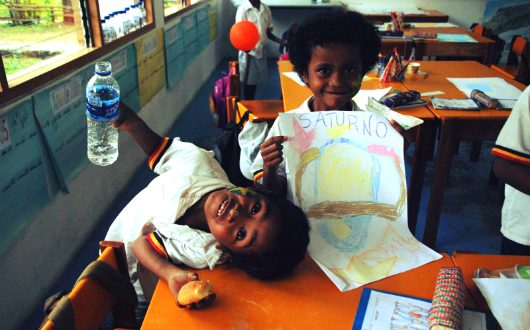
On July 15, 2015, the world celebrated the first annual World Youth Skills Day. Founded by the United Nations General Assembly this past winter, the goal of this day is to raise awareness of the need for training youth in the development of general life and work skills. It is also a part of the Sustainable Development Goals for the United Nations, which emphasizes the importance of education and skills training. In June 2014, following a meeting with John W. Ashe, the President of the UN General Assembly, the Sri Lankan Minister for Youth Affairs and Skills Development during the World Conference on Youth in May 2014, a draft resolution for World Skills Day was put forth for the 68th session of the General Assembly, according to a United Nations press release.

The day included a number of panels and presentations across the globe. One such event was titled “Investing in Youth and Ensuring Decent Jobs to Harness the Demographic Dividend” at the Financing for Development Conference in Addis Ababa, Ethiopia, which was attended by Ahmad Alhendawi, the U.N. Secretary General’s Envoy on Youth.

This day also reinforces the need for education in order to further economic development in the country. By educating the youth, they are more prepared for jobs, and by getting a more skilled labor force, the country may provide for greater economic opportunities individually and for the country.

According to the U.N. Secretary-General, Ban Ki-moon, “Skills development reduces poverty and better equips young people to find decent jobs. It triggers a process of empowerment and self-esteem that benefits everyone.”

– Rachelle Kredentser

Sources: UN 1, UN 2, UN 3, UN 4, UNESCOV, World Skills Day
Photo: Save the Children

July 31, 2015
https://borgenproject.org/wp-content/uploads/borgen-project-logo.svg 0 0 Borgen Project https://borgenproject.org/wp-content/uploads/borgen-project-logo.svg Borgen Project2015-07-31 01:30:322024-06-11 02:48:12Celebrating World Youth Skills Day
Children, Education, Global Poverty, Refugees and Displaced Persons

The Young Syrian Refugees

Young_Syrian_Refugees
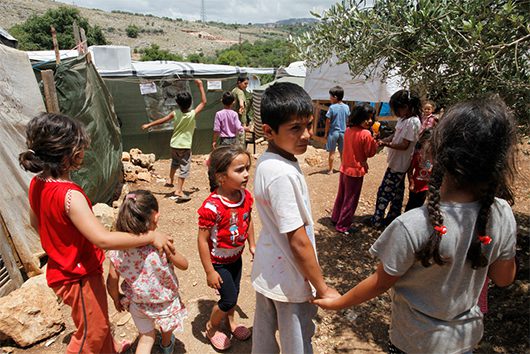
Since the civil war in Syria broke out just three years ago, four million people have sought refuge in the neighboring countries of Lebanon, Turkey, Jordan, Iraq and Egypt. So far, 100,000 have been killed. 7,000 of them are children.

The Middle East’s biggest refugee camp, Zaatari, lies in Jordan. It shelters 120,000 Syrians in a community divided into 12 districts. It costs $500,000 to run the camp. Camp workers dole out 500,000 pieces of bread and 3.5 million liters of water a day. Three-fourths of residents are women and children.

Of the 650,000 people that fled Syria to arrive in Turkey, one-third are allowed into refugee camps. There is no room for the res; they have to fend for themselves. Nizar Najjar is the assistant director of Camp Bab al-Salameh. He explains, “Sometimes we do not have the capacity to receive new refugees. Some people (are forced to) just put up their tents in fields.”

Those in camps do not have it much better. Dr. Al-Naser is a part of a group called “Medical Relief for Syria”. He says that the spread of disease is a big concern. “It’s a problem with sanitation, how to dispose of bathing water and used toilet water. There are lakes of waste in some areas.” Trucks bring in the camp’s only source of freshwater.

Young Syrian refugees are often traumatized. They have faced the horrors of being under siege, losing their homes and being separated from their families. Groups that flee travel by night and hide during the day. Some are shot at by fighter jets. Even once they reach the border, shelling still echoes in the distance.

Sara* is a 12-year old girl who fled Syria with her mother and brother along with her aunt, uncle and grandmother one year ago. She does not know the whereabouts of her father, who was kidnapped in 2013. The family was forced to leave once they lost touch with a brother-in-law that was providing them with money and resources.

Sara’s family arrived at a camp in Lebanon run by activists. They managed to find a simple apartment. It gives them a safe place to stay, but it is not insulated and floods as soon as it rains. Rent and electricity cost $230 each month. Back in Syria, they were a middle-class family, and now charities help them with essentials like food, rent and medical expenses. Sara’s grandmother has diabetes and high blood pressure.

It also costs money to renew visas, which is now mandated every six months. Many times, families are forced to return to Syria because they cannot afford it. It is difficult for refugees to find jobs and earn money. Sara’s 14 year-old brother makes $30 each week working for a nearby mechanic.

Affording school is nearly out of the question with high costs of transportation, books and other fees. Sara loved school back in peace-time Syria and completed grade five. She has not been in school for over three years now but is able to take French and English language classes that are offered by aid agencies in the area.

Antonio Guterres is the UN commissioner for refugees. He asks countries around the world do more to help these displaced people, including raising money to support them and their host countries. The president of the World Bank, Jim Yong Kim, makes a similar request. He also hopes to rebuild Syria and add more access to basic public services.

Sara dreams of becoming a doctor and for her country’s healing. “I want this war to end. I expect the world is so much bigger, with so many more people. With time, the world changes. I hope the war will be over one day.”

*Names has been changed to protect her identity

– Lillian Sickler

Sources: Care, Daily Mail, The Guardian, CBS News, World Vison, The Daily Beast, MIC, NPR
Photo: Flickr

July 28, 2015
https://borgenproject.org/wp-content/uploads/borgen-project-logo.svg 0 0 Borgen Project https://borgenproject.org/wp-content/uploads/borgen-project-logo.svg Borgen Project2015-07-28 06:23:442024-12-13 17:52:09The Young Syrian Refugees
Charity, Child Poverty, Children, Global Poverty

Gaming For Good: Changing Lives Through Gaming

The video game industry is a $10.5 billion per year industry. With the level of financial power held by this form of entertainment, there is a great opportunity for gaming to become a major force for good. Gaming For Good is an organization that seeks to fulfill this opportunity. The organization encourages players to purchase “points” through donations made to charitable efforts by Save the Children International. These points can then be spent on games such as Psychonauts, Splice and Worms Revolution.

Gaming for Good was founded by Bachir Boumaaza, better known by his online nickname “Athene.” Athene has been described within gaming media as “the best gamer in the world,” and holds records ranging from the first to reach level 60 in Diablo III to the most hands of online poker played in one month. This organization is a way for the online celebrity to take what is clearly more than a hobby for him and use it to make a difference.

This method is working incredibly well. Along with partnering with major gaming media such as Twitch TV, the site won a Webby Award in 2013. More importantly, the charity has been an absolute powerhouse in terms of fundraising. In 2013, the organization reached $10 million in donations. The organization’s recent support of charity efforts in Nepal came with a request of $200,000. It raised over $805,000 for relief in Nepal thus far.

Everybody has a hobby. For some it is collecting, for others painting and, for many, that hobby is gaming. With gaming being such a successful industry, this organization does something amazing by mobilizing that success to promote change in the developing world.

Gaming for Good can be visited here.

– Andrew Michaels

Sources: Polygon, Kotaku 1, Kotaku, Save the Children , Webby Awards, Save the Children
Photo: Dual Shockers

July 27, 2015
https://borgenproject.org/wp-content/uploads/borgen-project-logo.svg 0 0 Borgen Project https://borgenproject.org/wp-content/uploads/borgen-project-logo.svg Borgen Project2015-07-27 14:12:232024-12-13 17:52:00Gaming For Good: Changing Lives Through Gaming
Children, Education, Global Poverty

Corazones para Peru Provides Helps Children

Corazones_para_Peru
Herzen für eine neue Welt (Hearts for a New World) was founded in Konigstein, Germany in 1998. Their project, Corazones para Peru, works to improve living conditions for children and families in the Peruvian Andes’ Chicon Valley near Cusco. In the past 17 years, Corazones para Peru has established a children’s village, multiple schools and two health centers.

The children’s village, located in Munaycha, Peru, has become home to over 80 orphaned or abandoned children. The village features a healthcare system, schools and a bridge program for college students in need of a place to live. The health facilities service over 400 people a month providing them with immediate healthcare, vaccinations and pharmaceutics.

Volunteers for Corazones para Peru have built 13 schools, allowing 1,000 children to receive an education. Along with these schools, members of the organization established kindergartens to prepare 50 children a year for school.

The village is supplied by an organic agricultural center, and volunteers have planted over 20,000 trees to prevent soil erosion and contribute to the economy of the village. It also features two psychologists, a social assistant, a pedagogue and three trained cooks to help raise the children physically and mentally apt to grow up to be healthy and well adults. Seven live-in dormitory matrons and 16 trained volunteers also contribute to the village staff.

Schools built in the village are equipped with jungle gyms, gymnasiums and recreational centers and all follow Corazones para Peru’s meal program. Many times, children have to walk many miles to reach schools just to spend the whole day learning on an empty stomach. The meal program eradicates this issue by supplying schools with meals for students. Throughout the last couple of years, Corazones para Peru has invested two million dollars to supply schools with basic educational materials like blackboards, books and pencils.

German volunteers teach English, physical education and extracurricular classes to students in the village. In addition, they teach them valuable skills like teamwork and tolerance and provide them with financial and personnel support.

Corazones para Peru’s project, Learning with Heart, strives to help children, especially young girls, receive an education. In Peru, completion of secondary school is a requirement for apprenticeships and attending universities. Many residents miss their chance of receiving an education because the school is too expensive or the family experiences a great financial loss from the loss of labor. Learning with Heart supports families with monthly funds so their children can attend school and become who they want to be.

Hearts for a New World plans to continue working in Peru for many years with the goal of rounding out future generations of Peruvians to create a better living environment and community for Peru’s residents.

– Julia Hettiger

Sources: Herzen Helfen, Shoulder To Shoulder, Matador Network
Photo: Flickr

July 27, 2015
https://borgenproject.org/wp-content/uploads/borgen-project-logo.svg 0 0 Borgen Project https://borgenproject.org/wp-content/uploads/borgen-project-logo.svg Borgen Project2015-07-27 09:07:552020-07-14 10:16:51Corazones para Peru Provides Helps Children
Children, Development, Global Poverty

ANDENI Aiding Orphans and Adoptive Families

ANDENI
In September of 1997, Gloria Nieto and her husband, Angel, adopted a baby girl from China. They already had a 4-year-old biological daughter and wanted a second child. Adoption from a developing country seemed like a great option.

Adopting baby Irene was an arduous process—more than they believed it should have been. One big legal issue was that the Spanish government did not understand that the adopted children would have to become Spanish citizens.

When Gloria and Angel came back to their home in Spain, they met with other adoptive parents and decided to start a non-governmental organization that would help future Spanish adoptions from China. The group of adoptive families met in Madrid and made the NGO official. ANDENI translates into English as the National Association for Defense of Children.

There are two avenues for foreign adoption in Spain. One is through the government, the other is with private adoption agencies. ANDENI helps families adopting through the government.

The organization has a central office in Madrid. A small number of administrative people work there for a salary. The remaining workers are volunteers. Each part of Spain has its own leader that serves as a spokesperson and a source of guidance for families. Instead of having to contact the government for help, parents can contact their section leader.

Parents who begin the process of adopting from China join ANDENI by donating every three months or so to the organization. Donations are based on what the family decides it can pay—there is no obligatory donation amount.

The organization provides families with adoption assistance for every step of the journey. They learn what has to be done in Spain before they go to get their child as well as what has to be done in China. The organization helps parents fill out adoption papers, prepares them for their trip to China and provides them with a translator and a safe travel agency.

After parents successfully adopt their child, they become a part of the ANDENI community of adoptive families. The group supports each other and their adoptive children as they grow up. Both of Gloria and Angel’s daughters, Aida and Irene, now work with grown adopted children. Irene counsels teenagers on how being adopted affects their identity.

In its 18 years, ANDENI has helped 4,500 families. Spain is second to the U.S. in the number of children adopted from China. Proportionally, they are #1. Spain is currently home to 18,000 adopted Chinese children.

In recent years, Chinese adoptions have been slowing worldwide. There are fewer children in orphanages and the Chinese government gives priority to national adoptions. People that began the adoption process in 2006, are just now starting to get their children.

This is great news for orphans in China and suggests a positive outlook for poverty levels there. Yet for ANDENI, it means fewer families are joining and fewer volunteers are needed. Volunteer numbers have fallen from 2,100 at its peak to just 1,600. Many families have stopped paying since they have lost their jobs due to the Spanish economy.

To adapt, ANDENI began to focus on orphans and people living in poverty in China. They started collecting money to send to Chinese orphanages to pay for amenities like washing machines, air conditions, food, clothing, etc. One of the poorest providences in China, Yunnan, received enough money from ANDENI to build four schools and hospitals.

In total, ANDENI has raised and sent one million dollars to China. The organization collaborates with the Chinese government to ensure that the funds are doled out appropriately.

As for the future of ANDENI, Gloria’s family sees it collaborating with other NGOs helping orphans and others in need living in third-world countries such as Sierra Leone in Africa.

– Lillian Sickler

Sources: ANDENI, ANDENI Valencia
Photo: Flickr

July 27, 2015
https://borgenproject.org/wp-content/uploads/borgen-project-logo.svg 0 0 Borgen Project https://borgenproject.org/wp-content/uploads/borgen-project-logo.svg Borgen Project2015-07-27 08:56:522020-07-14 10:38:51ANDENI Aiding Orphans and Adoptive Families
Child Soldiers, Children, Global Poverty

The Street Children of Mogadishu

street_children
For the residents of Mogadishu, Somalia’s capital and largest city, it is not uncommon to see clusters of unaccompanied children gathering by coffee shops, theaters and restaurants. Often, they carry rags and polish to make quick money cleaning windshields and shining shoes.

These kids are not only just astray from parents, but have made makeshift homes on the inhospitable tarmac of Mogadishu’s dense urban grid. Sadly, the sight of these street children is just an accustomed part of life in the capital.

These children live their lives in tight competition, sometimes lining up in front of mosques 20 strong to scrub shoes for a mere $0.10 a piece at most. Yet, without any main provider, guardian or parent, it is all they can hope for.

In 2008, estimates placed the total amount number of street children at over 5,000. However, in 2011, Somalia experienced its worst famine in over 60 years, which decimated the livestock and the crops of numerous families. This left many parents without their livelihoods or a means of supporting for their children. Consequentially, more kids flocked to the streets in search of money.

Recent estimates have shown that in just three years, the number of street children in Somalia more than doubled; in 2011, 5,000 had expanded to an excess of 11,000.

This total is only predicted to increase.

Ironically, a Somali bill aimed at ending the recruitment of child soldiers is expected to exasperate the problem; often an unfortunate escape route for impoverished youth, child soldiering keeps children off the street.

While helping to eradicate child soldiering, this bill does nothing to provide former child soldiers with support or assistance that could help them assimilate back into their communities. Many inevitably will end up on the streets.

Escaping child soldiering is just one of many causes that lead children to take to the streets. Some street children simply have no other option but to live on the streets. They may have been abandoned by their family or indeed have no family.

Others may have a home to stay in but spend days and some nights in the streets. Often, this is due to overcrowding in the home or sexual and physical mistreatment. Others still may actually live on the streets with their entire family after losing a home to natural disaster, destitution or conflict.

These various children all share one common issue however; they struggle to obtain even the most basic and due rights. According to a UN report, “In reality, children in street situations are deprived of many of their rights – both before and during their time on the streets – and while on the street, they are more likely to be seen as victims or delinquents than as rights holders.”

Unlike other children their age, street children lack access to basic services such as education, healthcare and are more susceptible to prevalent social and health issues. They experience higher rates of STDs, HIV/AIDS, unwanted pregnancies, and violence, suicide and traffic accidents.

In 2011, UNICEF conducted a study on street children in Ukraine that produced shocking results. More than a fifth had reported using injected drugs and close to two thirds of girls had experience with prostitution. Only a measly 13 percent used condoms in their casual sexual encounters.

These issues require more government and NGO involvement and the implementation of child protection services. Various countries in disparate regions have all found solutions that provide street children with the rights deprived of them.

In Ethiopia, Somalia’s African neighbor, UNICEF has partnered with the country’s police academy in order to train 36,000 officers about children’s rights and protection. Other countries like Brazil, India and Canada have implemented small scale interventions that provide community based support to those on the streets.

Somalia itself has indicated its desire to expand resources for the street children that crowd its capital. Mohamed Abdullahi Hasan, the Somali minister of youth and sports, told Al Jazeera “We are trying to create centers to house these children. But we have no funds. On many occasions we have been promised funds, but we have not yet seen any.” Until Somalia recovers from its national turmoil, it will struggle to improve the lives of its youngest citizens.

– Andrew Logan

Sources: Al Jazeera, The Gaurdian, WHO, libdoc.who.int, United Nations
Photo: Flickr

July 24, 2015
https://borgenproject.org/wp-content/uploads/borgen-project-logo.svg 0 0 Borgen Project https://borgenproject.org/wp-content/uploads/borgen-project-logo.svg Borgen Project2015-07-24 19:32:492024-05-27 09:26:08The Street Children of Mogadishu
Children, Global Poverty

UNICEF’s 2015 Progress for Children Report Reflects on Successes and Challenges

progress_for_children_report
At the Millennium Summit in September 2000, world leaders came together to adopt the UN Millennium Declaration, committing to working towards eliminating global poverty. The Millennium Development Goals are time-bound, specific targets for addressing extreme poverty in many forms, such as income, hunger, disease, lack of shelter, and exclusion. Eight general goals were set forth: eradicate extreme hunger and poverty, achieve universal primary education, promote gender equality and empower women, reduce child mortality, improve maternal health, combat HIV/AIDS, malaria, and other diseases, ensure environmental sustainability, and develop a global partnership for development.

Many of the targets were intended to help the world’s children. Leaders planned to reduce the under-five mortality rate by two-thirds, ensure that all children would be able to complete a full course of primary school, and eliminate gender disparity at all levels of education.

2015 is the deadline for the MDGs, and UNICEF takes a critical look at how life for children has changed since 1990 in their report “Progress for Children.” Today, the chances that a child will not only survive, but enjoy a higher quality of life, have increased significantly, but there is still plenty of work to be done.

Great strides have been made in certain areas. Overall, the number of people living in extreme poverty has decreased, from 1.9 billion to one billion. Children today enjoy better nutrition, with a 41 percent decrease in stunting rates. Furthermore, they are more likely to get a primary school education, with the number of out of school children reduced from 104 million to 58 million. Four regions have also achieved gender parity at primary school level. The mortality rate for children under five has also fallen by 53 percent. Worldwide, most children born today enjoy many advantages over children born in 1990.

Sadly, these achievements have not reached every child. UNICEF states that the most marginalized and vulnerable children are still struggling in many areas. Children from the poorest households still endure many hardships. They are twice as likely to die before age 5. When it comes to education, they are less likely to achieve minimum learning standards, and poor girls are particularly disadvantaged in this area. Adolescent girls are disproportionately effect by HIV, accounting for two-thirds of all new HIV infections among adolescents. The gap in child marriage for rich and poor girls has also increased. Clearly, the work does not stop with the end of the MDGs’ timeline.

The UN is currently working on a new set of goals to chart a course for future progress in fighting global poverty: the Sustainable Development Goals. While developing new targets, they must consider that the most disadvantaged children cannot be left behind again. These new goals must be set with the primary objective of helping the world’s poorest children see a better future.

– Jane Harkness

Sources: UN, UNICEF, WHO
Photo: Uwezo

July 24, 2015
https://borgenproject.org/wp-content/uploads/borgen-project-logo.svg 0 0 Borgen Project https://borgenproject.org/wp-content/uploads/borgen-project-logo.svg Borgen Project2015-07-24 19:30:532024-05-27 09:26:15UNICEF’s 2015 Progress for Children Report Reflects on Successes and Challenges
Children, Global Poverty, Health, Women & Children

Save Lives At Birth Challenge Encourages Innovation

Save_Lives_At_Birth

The Save Lives At Birth Challenge seeks to improve the chances of survival for mothers and newborns in developing nations. Their aim is to leapfrog existing products and conventional approaches to find the best possible solution to a difficult problem.

In Sub-Saharan Africa, women are 136 times more likely to die in childbirth than in developed countries. From the beginning of labor through the following 48 hours, the mother and newborn are at the highest risk of infection and complications, and the Save Lives At Birth Challenge seeks to change these unfavorable odds.

The Save Lives At Birth Challenge takes on the leapfrogging mentality: skip intermediary steps and get right to the fastest, smartest and cheapest solution. Each year, Save Lives At Birth offers grant money to innovators with big ideas that will help women and children.

One remarkable innovation that received this grant money was the Gene-Radar, created in Cambridge, Massachusetts. It’s an iPad-sized device that accurately tests for diseases such as HIV in less than an hour. In the developing world, it can take up to two weeks to get blood tests and cost up to $200. The Gene-Radar is still in production, however, by the time it is on the market it will be 10 to 100 times cheaper than the current option.

Using the Gene-Radar, health workers would simply have to take a prick of blood, place it on a nano chip, then place the chip in the device and have results within the hour. This would allow the health worker to easily identify the problem, and for the patient to quickly receive treatment.

Another innovation that received grant money was thought up by a car mechanic, Jorge Odón, who got the idea after watching a video on how to remove the lost cork from a wine bottle. He realized the same trick could be used to save a baby stuck in the birth canal. Odón’s invention is shockingly simple: an attendant would slip a lubricated plastic bag around the baby’s head, inflate to grip and then pull the bag until the baby emerges.

Doctors say this invention has enormous potential in the developing world. Odón has created a solution to a problem that has been around for years. It is innovation like this that the Save Lives At Birth Challenge seeks and promotes.

– Hannah Resnick

Sources: Save Lives At Birth 1, Save Lives At Birth 2, Saving Life at Birth 3, USAID
Photo: Save Lives At Birth

July 23, 2015
https://borgenproject.org/wp-content/uploads/borgen-project-logo.svg 0 0 Borgen Project https://borgenproject.org/wp-content/uploads/borgen-project-logo.svg Borgen Project2015-07-23 09:40:102020-07-07 14:37:13Save Lives At Birth Challenge Encourages Innovation
Charity, Children, Education, Global Poverty, Philanthropy

XPrize Sets Sights on Bringing Literacy to 250M Children Worldwide

literacy

New data from the UNESCO Institute for Statistics states that global literacy rates for youths and adults have been on the rise. Sixty percent of all countries that provided data in 2012 reported overall literacy rates of 95% or higher.

Still, there is a great need for a solution in this regard. The report also said that “An estimated 250 million children around the world cannot read, write, or demonstrate basic arithmetic skills. Many of these children are in developing countries without regular access to quality schools or teachers.”

These statistics ultimately became a project for a nonprofit called XPrize. XPrize runs competitions that aim to produce technology to benefit humankind. An ongoing competition that began in 2014 requires that teams develop an open source software that enables children in developing countries to teach themselves basic reading, writing and arithmetic.

XPrize launched a 6-month registration period and all teams have 18 months to develop their own solution. Currently, there are 198 registered teams. The top five finalists with the best results will receive one million dollars. The ultimate grand prizewinner will receive 10 million dollars as the top performing team solution.

Click here for more information on how to get involved and remain updated on the progress of the competition.

XPrize believes that children are a solution to global poverty, and that many of the world’s greatest minds are untapped due to a lack of basic education. “By enabling a child to learn how to learn, that child has opportunity–to live a healthy and productive life, to provide for their family and their community, as well as to contribute toward a peaceful, prosperous and abundant world.”

For the competition’s promotional video, several children  were asked what their ultimate life goals were. So many of those goals have seemed unrealistic due to their location and state of living. However, with support from XPrize, those dreams can become a reality.

– Anna Brailow

Sources: Xprize 1, Xprize 2, Tech Crunch, UIS, YouTube
Photo: CNN

July 23, 2015
https://borgenproject.org/wp-content/uploads/borgen-project-logo.svg 0 0 Borgen Project https://borgenproject.org/wp-content/uploads/borgen-project-logo.svg Borgen Project2015-07-23 08:47:272024-12-13 17:54:02XPrize Sets Sights on Bringing Literacy to 250M Children Worldwide
Page 112 of 137«‹110111112113114›»

Get Smarter

  • Global Poverty 101
  • Global Poverty… The Good News
  • Global Poverty & U.S. Jobs
  • Global Poverty and National Security
  • Innovative Solutions to Poverty
  • Global Poverty & Aid FAQ’s
Search Search

Take Action

  • Call Congress
  • Email Congress
  • Donate
  • 30 Ways to Help
  • Volunteer Ops
  • Internships
  • Courses & Certificates
  • The Podcast
Borgen Project

“The Borgen Project is an incredible nonprofit organization that is addressing poverty and hunger and working towards ending them.”

-The Huffington Post

Inside The Borgen Project

  • Contact
  • About
  • Financials
  • President
  • Board of Directors
  • Board of Advisors

International Links

  • UK Email Parliament
  • UK Donate
  • Canada Email Parliament

Get Smarter

  • Global Poverty 101
  • Global Poverty… The Good News
  • Global Poverty & U.S. Jobs
  • Global Poverty and National Security
  • Innovative Solutions to Poverty
  • Global Poverty & Aid FAQ’s

Ways to Help

  • Call Congress
  • Email Congress
  • Donate
  • 30 Ways to Help
  • Volunteer Ops
  • Internships
  • Courses & Certificates
  • The Podcast
Scroll to top Scroll to top Scroll to top