• Link to X
  • Link to Facebook
  • Link to Instagram
  • Link to TikTok
  • Link to Youtube
  • About
    • About Us
      • President
      • Board of Directors
      • Board of Advisors
      • Financials
      • Our Methodology
      • Success Tracker
      • Contact
  • Act Now
    • 30 Ways to Help
      • Email Congress
      • Call Congress
      • Volunteer
      • Courses & Certificates
      • Be a Donor
    • Internships
      • In-Office Internships
      • Remote Internships
    • Legislation
      • Politics 101
  • The Blog
  • The Podcast
  • Magazine
  • Donate
  • Click to open the search input field Click to open the search input field Search
  • Menu Menu

Archive for category: Children

Information and stories addressing children.

Advocacy, Children, Global Poverty

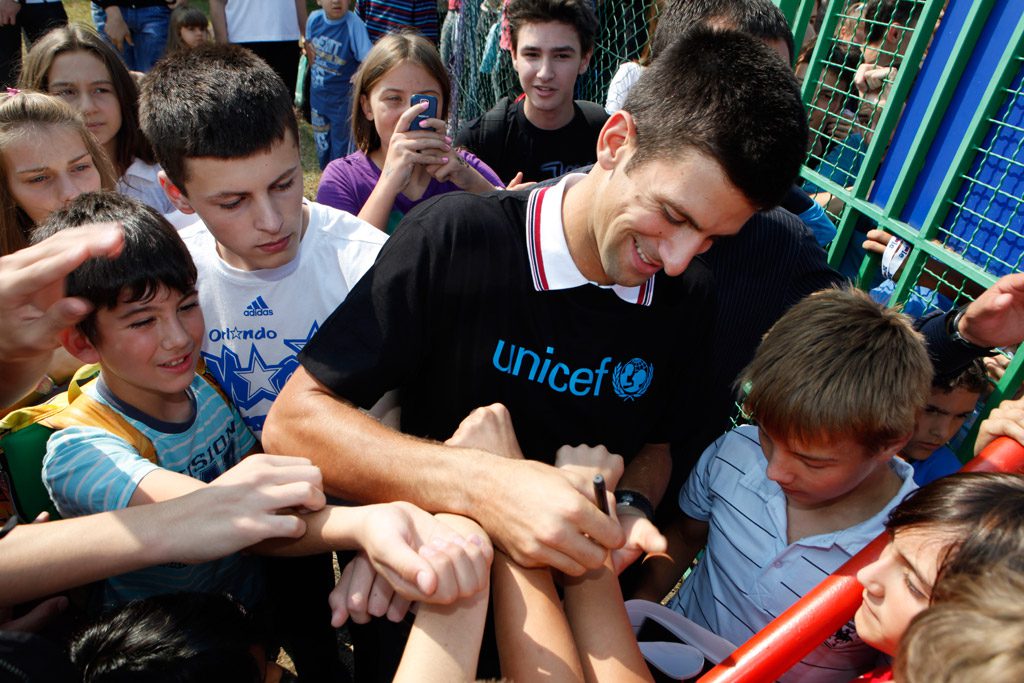
Novak Djokovic Takes on New Role at UNICEF

Novak_Djokovic
Novak Djokovic, the number one men’s tennis player in the world, has added a new honor to his list of accomplishments: United Nations Children’s Fund Celebrity Goodwill Ambassador.

Djokovic championed children’s rights for years before his appointment in late August. He previously served as UNICEF’s Serbia Ambassador, and his own organization, the Novak Djokovic Foundation, works to improve children’s lives in Serbia by cooperating with Serbian schools, local organizations and non-governmental organizations.

The Foundation “has focused its activities towards the improvement of conditions in which children in Serbia get education, grow up and play.”

Djokovic’s foundation and UNICEF work to uphold the United Nations’ Convention on the Rights of the Child. These rights include the ability to have access to services such as education. Djokovic joined UNICEF in 2011 as the Serbian Ambassador and has since visited Serbian schools with UNICEF.

“The early years of life are crucial. When well nurtured and cared for in their earliest years, children are more likely to survive, to grow in a healthy way, to have fewer illnesses, to develop thinking, language, emotional and social skills and become productive and successful citizens of society,” he said about his commitment to children’s causes.

Djokovic joins a list of Goodwill Ambassadors famous for sports, film, theater and more. He and David Beckham are among the most notable athletes currently serving as Goodwill Ambassadors. With their fame, these ambassadors help to bring children’s issues to the forefront of public consciousness, and Djokovic has already shown his dedication to improving children’s lives.

– Rachelle Kredentser

Sources: UN, ESPN, UNICEF 1, UNICEF 2
Photo: UN

September 28, 2015
https://borgenproject.org/wp-content/uploads/borgen-project-logo.svg 0 0 Borgen Project https://borgenproject.org/wp-content/uploads/borgen-project-logo.svg Borgen Project2015-09-28 00:37:302024-12-13 17:50:25Novak Djokovic Takes on New Role at UNICEF
Children, Developing Countries, Global Health, Global Poverty

NeoVent Reaches Babies in the Developing World

Developing World's Babies Can Now Breathe Easier
In rural parts of the developing world, health care is iffy at best. If there is a healthcare facility, it often lacks trained employees and equipment. The equipment may even be outdated due to the expense to update it. And, too often, people traveling to a healthcare facility die in their travels.

This is the case seen in newborns when they are born in a rural village and must make the voyage to the nearest healthcare facility. It is very common for premature newborns to have difficulty breathing.

“Hospitals supply continuous positive airway pressure (CPAP) to keep the lungs ‘open’ as the baby breathes on its own. However, very premature babies who cannot breathe on their own require dual pressure treatment along with CPAP to provide both negative and positive pressure to the lungs at a normal breathing frequency.”

In first world countries, this is an easy fix because they are usually born at a hospital with the necessary equipment. However, this is not true in the rural parts of the developing world. Babies that need treatment for underdeveloped lungs do not have access to the dual pressure treatment system because the equipment is expensive, difficult to operate, or hard to upkeep.

According to the World Health Organization, the mortality rate of premature infants in underdeveloped countries can be up to eight times higher than in the U.S., due to lack of resources. But there is hope for the newborn babies of the developing world.

Stephen John and Joseph Barnett, two engineering students at Western Michigan University (WMU), invented the NeoVent. This device is an easy-to-operate dual-pressure system that is aimed at helping premature babies breathe.

“The NeoVent consists of an innovative oscillatory relief valve, and is driven by excess air generated by the CPAP machine. Air at a constant pressure is transported from the CPAP machines into the child’s airway via a tube. The tube is submerged into water to produce bubbles, which are caught in a small inverted bowl on the relief valve.”

As this tube fills bubbles, a positive pressure is applied to the infant’s lungs, bringing in air. And as the bubbles disperse, a negative pressure is applied to the infant’s lungs, pulling air out of the lungs. This is seen as a breathing motion on the infant’s chest.

By keeping the developing world in mind, John and Barnett have priced the machine at a mere $25. The engineering students plan to implement the NeoVent in limited resource facilities in Nepal, Kenya and Uganda.

John and Barnett received $3,500 as U.S. winners of the 2015 James Dyson Award. The students plan to use this money to start clinical trials and manufacture a second round of production level devices.

The NeoVent also won the Lemelson-MIT undergraduate “Cure It” competition and the Brian Thomas Entrepreneurial competition at Western Michigan University. In addition to these awards, NeoVent is also the recipient of a VentureWell E-teams grants and a research grant from WMU’s honors college.

NeoVent maybe not look like the expensive technology in state of the art hospitals, but it functions just the same. By creating an effective and affordable device, John and Barnett will be saving many premature infants’ lives in the developing world.

– Kerri Szulak

Sources: Machine Design, WMU News
Photo: Flickr

September 21, 2015
https://borgenproject.org/wp-content/uploads/borgen-project-logo.svg 0 0 Borgen Project https://borgenproject.org/wp-content/uploads/borgen-project-logo.svg Borgen Project2015-09-21 01:30:322020-06-25 19:28:40NeoVent Reaches Babies in the Developing World
Children, Education, Global Poverty

500,000 Refugee Children Return to School

refugee_children
When we reminisce about our childhood afternoons spent in school, they usually include fond memories immersed in boundless creativity and new learning experiences.

Although we likely did not realize it at the time, these crucial hours of education contributed to our empowerment to become smart and driven citizens within our communities.

Imagine what missing just a year of schooling would mean for a child.

This year, 500,000 Palestinian refugee children will start school on time due to last-minute donations which secured funding for the upcoming school year.

“There had been warnings that the school year in 685 UN-run schools would be delayed for months because the agency was short of $101 million to fund the 2015-16 academic year. Protests against the potential move were held by Palestinian refugees in the Gaza Strip and by staff at the agency’s headquarters in Amman,” states an article by A World at School.

The Commissioner-General Pierre Krahenbuhl of the United Nations Work and Relief Agency (UNRWA) an agency for Palestinian refugees, announced that $80 million had come in allowing students to return to school within the countries of Palestine, Jordan, Lebanon and Syria.

According to A World at School, for students, this means schools will reopen in Palestine on August 24, in Jordan on September 1, in Lebanon on September 7 and in Syria on September 13.

The UNRWA recognizes the importance of education and was disheartened by the potential risk of schools not opening due to a funding shortfall. With the danger of millions of children being robbed of their education in a time of great conflict caused by war zones and migration, the ability of so many children to stay in school is a tremendous achievement.

Currently, the UNRWA describes themselves as a human development and humanitarian service, which “encompass primary and vocational education, primary health care, relief and social services, infrastructure and camp improvement, microfinance and emergency response, including in situations of armed conflict.”

Today, the UNRWA has contributed to 479, 519 student’s educations, awarded 344,493 loans to those in financial need and supported 301,015 refugees through the Social Safety Net.

It is only through the support and patronage of others that schools have the hope of thriving and remaining open for students.

– Nikki Schaffer

Sources: UNRWA, A World at School
Photo: Pixabay

September 18, 2015
https://borgenproject.org/wp-content/uploads/borgen-project-logo.svg 0 0 Borgen Project https://borgenproject.org/wp-content/uploads/borgen-project-logo.svg Borgen Project2015-09-18 08:14:332024-12-13 18:05:05500,000 Refugee Children Return to School
Children, Global Poverty, Health, Hunger

Eva Longoria and LG Raise Money For No Kid Hungry

eva_longoria
Last week, Eva Longoria hosted an LG Electronics USA product launch in Hollywood for the company’s new ranges with ProBake Convection technology to benefit the No Kid Hungry Campaign.

A-list celebrities and VIP guests like actress Kaley Cuoco-Sweeting, chef Angel Estrada and actor Jesse Metcalfe, gathered for a family oriented event sponsored by LG. The occasion featured cooking activities and games, as well as interactive culinary demonstrations highlighting the new cooking technology.

The fun-filled afternoon also served to raise awareness and support for the No Kid Hungry campaign that is sponsored by Share Our Strength, an organization that helps to provide food for children and families in need. Fittingly, the charity also empowers families to cook healthy meals together.

The Desperate Housewives star said that she really values the importance of family and passing down recipes to loved ones.

“I come from a tight-knit family where we value the importance of gathering for meals and celebrations, and I’m thrilled to join LG to encourage families to do the same, all while benefitting such a fantastic cause,” Longoria said.

Longoria supports a worthy cause — malnutrition is a continuing problem. According to Action Against Hunger, 3.5 million children die each year from malnutrition.

To help eradicate this problem, the No Kid Hungry campaign asks for donations for hungry children and lists ways for people to improve the lives of the impoverished. The campaign’s website focuses on using food as a tool to create a better value of life, stating that “another kid falls behind and never catches up” without proper nourishment.

The campaign also seeks to provide parents the tools to create and offer nutritious meals to their children. Supporting No Kid Hungry, LG encouraged the community to start their own “PostBake sales” in their neighborhoods using kits gifted by the event to all attendees.

Longoria hosted her own bake sale at the LG event. The award-winning cookbook author and co-restaurateur shared her cooking expertise during her live demonstrations. Her culinary creations were all recipes from her New York Times bestselling cookbook, “Eva’s Kitchen: Cooking with Love for Family and Friends.”

In addition, she helped organize pizza and flatbread baking, cake and cookie decorating, a themed photo booth and more.

Since the event, LG and Longoria have helped connect struggling kids with more than 345 million meals. The benefit also helped to launch school breakfast programs, recruit summer meals sites, and helped to provide grants to the most effective hunger-fighting organizations to help end child hunger in their communities, according to the No Kid Hungry website.

Not only is the campaign feeding kids, but it is also making their dreams come true.
Straight-A students and sisters, Jeane and Jahnique love to run, dance and cheerlead, and with the help of No Kid Hungry, they are able to do these activities with more energy.

“When I eat, it makes me run faster,” one sister said.

No Kid Hungry has helped many more kids in different areas. The operation’s website shows several more stories like this one. To read these stories and to learn how to support these kids, visit the No Kid Hungry website.

– Fallon Lineberger

Sources: Action Against Hunger, Look to the Stars, No Kid Hungry 1, No Kid Hungry 2, Vimeo
Photo: Homemade Mimi

September 18, 2015
https://borgenproject.org/wp-content/uploads/borgen-project-logo.svg 0 0 Borgen Project https://borgenproject.org/wp-content/uploads/borgen-project-logo.svg Borgen Project2015-09-18 01:30:452020-06-26 12:46:01Eva Longoria and LG Raise Money For No Kid Hungry
Children, Global Poverty, Human Rights, United Nations

10 Ways the UNCRC Helps Children Around the World

children_around_the_world
The Convention on the Rights of the Child (UNCRC), passed in 1989, is the most widely accepted human rights treaty. This landmark piece is the first international treaty to ensure the civil, political, social, cultural and economic rights of all children under eighteen.

The treaty has 42 articles that are guided by four main principles. First, all children are equal and have the same rights. Second, every child has the right to have his or her basic needs fulfilled.

Third, every child has the right to protection from abuse and exploitation. Fourth, every child has the right to express his or her opinion and be respected.

All member states, except for the U.S. and South Sudan, have ratified the UNCRC. Here are ten ways in which the UNCRC supports children around the world:

10 Ways the UNCRC Helps Children Around the World

  1. It changed the way lawmakers and governments view children. Prior to the passing of the treaty, it was acceptable to view children as passive objects that were products of their parents. Through the UNCRC, children are viewed as distinct individuals with lives, needs and opinions separate from that of their parents.
  2. It gives power to international bodies to intervene to support children’s rights. The passage of the UNCRC gives aid agencies and relief operations more power, particularly with regards to children’s health, safety and well-being. Since 1998, for example, UNICEF has been able to rescue more than 100,000 child soldiers.
  3. It empowers international organizations into holding nations accountable. When nations are pressured or face sanctions for human rights violations, they are more likely to make efforts to fix things. Furthermore, it enables international bodies to create regulatory framework to ensure children’s rights are protected outside of their country, such as with refugees, immigrants, trafficking victims and asylum-seekers.
  4. It acknowledges that children exist and have the rights of citizens. Articles mandate that children have a right to documentation and their culture, even if it is not the culture supported by their country. This is especially important for children of marginalized ethnic groups and populations, such as the Rohingya in Myanmar and the Yadizis living under ISIS territory.
  5. It addresses children with disabilities. Children with disabilities worldwide are often excluded and marginalized, particularly when it comes to education. By saying that all children are entitled to the same rights, it empowers children whose voices are frequently silenced.
  6. It improves the quality of life for children around the world. By bringing children into the spotlight, it raises awareness for children’s rights. Working to improve the lives of children in developing countries is an indication that progress is being made. In the fight against global poverty, people are often fighting for the children. The UNCRC helped make impoverished children a more visible population for policymakers and governments to consider.
  7. It explicitly states that children have the right to go to school. As education becomes increasingly powerful as a means for empowerment, especially in developing countries, it is critical that everyone has the opportunity to go to school. Education leads to knowledge, employment and potential income, which benefits all families. By not excluding certain children from education (girls, special-needs children, children of marginalized ethnic groups), communities develop more power to fight global poverty at home and worldwide.
  8. It prohibits forced labor. Many articles mandate that children working is only acceptable if they are not exposed to hazardous conditions or violence and if the work does not interfere with their education. Most importantly, the children working must choose to; their parents cannot force them.
  9. It empowers children directly. Articles in the UNCRC state that children have the right to be heard. The old tenet that “children should be seen, not heard” is seen as an infringement against a child’s rights. A child knowing that they can stand up for themselves is a powerful thing.
  10. With it now comes the World’s Children’s Prize! Established in 2000, the World’s Children’s Prize (WCP) holds annual elections in which children vote on a children’s rights hero.

More than 36.5 million children have cast their votes in the WCP; more than 60,000 schools in 113 different countries take part in the opportunity to educate children about their rights and let them choose a hero for their cause. Past winners of the WCP include Nelson Mandela and Malala Yousafzai.

The UNCRC was a landmark human rights treaty that empowers children and those who help them. A quarter of a century later, progress still needs to be made, but much is to be celebrated.

More children receive access to health care, birth registration, nutrition and schooling, and reductions have been made in infant mortality, children trapped in forced labor, and children recruited into the armed forces.

Let’s hope that further support from policymakers, governments and international organizations continue to promote children’s rights worldwide.

– Priscilla McCelvey

Sources: Amnesty International, UNICEF, United Nations Human Rights, The World’s Children’s Prize
Photo: Flickr

September 16, 2015
https://borgenproject.org/wp-content/uploads/borgen-project-logo.svg 0 0 Borgen Project https://borgenproject.org/wp-content/uploads/borgen-project-logo.svg Borgen Project2015-09-16 01:30:562024-12-13 18:04:5310 Ways the UNCRC Helps Children Around the World
Children, Education, Global Poverty

Kenyan-Educated Student Receives a BTEC Award

btec
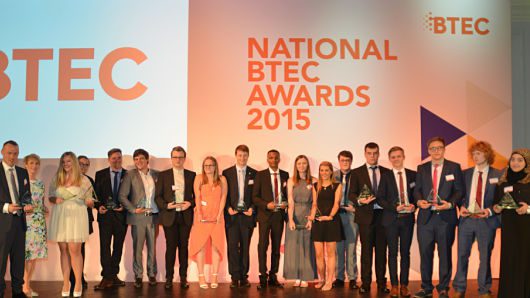
Last week, a Kenyan-educated student at Braeside High School, George Benson Lyimo, was given the award for “Outstanding BTEC International Student of the Year 2015” at the National BTEC Awards in London. Among more than 800 nominations, Lyimo received the award that recognizes top performers among more than one million students studying business and technology.

The school where Lyimo is educated originally struggled with providing a quality primary education for kids. According to UNICEF, enrollment levels for primary school rose nine years ago from 5.9 million children in school to 7.5 million in the time span of four years. The primary school completion rate also increased at this time from 62 percent to almost 80 percent.

To pursue a better education in Kenya, the award winner left his home in Tanzania in 2012 to earn a specialized diploma from the Pearson-owned Business and Technology Education Council (BTEC). He said that he feels lucky to have received a good education because some areas in Kenya and Tanzania are still developing their education systems.

“In the country I come from, not so many people are privileged and my hopes for the future are that I can go and make Tanzania a better place. I want to give back to the world. I want to make the world a better place,” Lyimo said.

The young student’s dreams may be well in his reach.

Lyimo received this award for his courage and dedication to his studies. The judges praised the student for leaving home to pursue business and technology and for ultimately performing very well in school. Lyimo earned top marks in his classes, receiving a triple-starred distinction. According to his teachers, he was quiet, but motivated in class.

“George was quite a shy character, but clearly had a determination and interest, particularly in technology,” Lyimo’s high school’s Executive Headteacher Andy Hill said.

He was creative and innovative as a business student, launching his own social network called Texeer.com. He aided the school’s IT department, although he had no previous computer training. Lyimo seems to have a knack for business computing.

Lyimo will put his talent to good use. The high school graduate will go on to student business and computing at Huddersfield University in the United Kingdom.

Not only did Lyimo excel in classes, but he also contributed to charitable organizations. He organized events to support children’s education in Kenya.

In conjunction with his business and technology diploma and his charity work, Lyimo feels that he has grown as a businessman and a person. “My BTEC has helped me understand so much about creating new things to solve new problems and meet the needs of current and future generations,” he said.

In response to all of his hard work, one of his classmates said this: “He’s an all-around amazing person, and I don’t think I know anyone who deserves this award more than he does.”

– Fallon Lineberger

Sources: Standard Digital News, UNICEF
Photo: FE Week

September 12, 2015
https://borgenproject.org/wp-content/uploads/borgen-project-logo.svg 0 0 Borgen Project https://borgenproject.org/wp-content/uploads/borgen-project-logo.svg Borgen Project2015-09-12 10:00:222024-05-27 09:27:40Kenyan-Educated Student Receives a BTEC Award
Children, Education, Global Poverty

Solar Powered Classrooms Coming to Kenya

Solar Powered Classrooms Coming to Kenya
Kenya currently ranks 101st in the world in access to basic information, which includes literacy rates, primary and secondary school enrollments, and gender parity in secondary enrollment. In addition, only 39 percent of the population has internet access.

Safaricom Foundation, an African telco, is looking to change the current landscape by providing every student a school with a room full of computers to boost education in Kenya.

A 20-by-9-foot classroom can hold up to 40 students and be equipped with 11 desktop computers. Each classroom comes with monitors, a server, and a projector. The building is made from local materials to boost local revenues while providing a building with educational value.

Aleutia is a company which builds computers for schools and clinics that are powered by solar panels at a cost of about $20,000. They are currently building solar powered classrooms in 47 villages around Kenya. $10,000 goes toward structural costs and the other $10,000 goes toward the equipment. The solar panels come pre-installed in order to reduce costs.

Two classrooms can be preloaded onto a 40-foot flatbed truck.

Aleutia’s founder, Mike Rosenberg, wants to create local micro-grids that will power communities and allow the power to transfer as needed. So if the school has extra power available it can be transferred to a clinic building that is using more power.

Kenya has made significant progress since 1999 to ensure that more children are getting an education and becoming more literate. They spend on average 6.7 percent of their GNP on education, which is an increase from 5.4 percent in 1999. However, one million children are still not attending school.

Primary education in Kenya is free, but families do not have the money or resources to provide for their children to excel in school and compete globally. The classrooms from Aleutia and Safaricom can reduce the costs for families and help Kenyan children become more competitive on the global level by providing them with resources not available to other parts of the world.

An estimated 20,000 kids will benefit from the classrooms in 47 Kenyan counties that are gaining energy from the sun to provide internet access and learning resources to students.

– Donald Gering

Sources: Fast Company, Good News Network, Social Progress Imperative, UNESCO
Photo: Google Images

September 10, 2015
https://borgenproject.org/wp-content/uploads/borgen-project-logo.svg 0 0 Borgen Project https://borgenproject.org/wp-content/uploads/borgen-project-logo.svg Borgen Project2015-09-10 06:45:142024-12-13 18:05:01Solar Powered Classrooms Coming to Kenya
Children, Global Poverty, Women & Children

Maternal Instinct: Indian Women Take on a Corrupt Medical System


A group of 40 volunteers is cracking down on the corrupt medical system in India and taking a stand against the country’s soaring rate of maternal deaths.

Prenatal care at government-run medical facilities is supposed to be free of charge, but as Monika Singh discovered, not every woman is aware of this, and some doctors are more than willing to exploit their ignorance.

“Why are you charging for medicine? It’s supposed to be free for pregnant women in a government hospital,” challenged Singh when a doctor tried to make an ill mother-to-be pay for her medicine.

Armed with Nokia phones and a list of codes, Singh and fellow volunteers routinely visit a number of villages, interviewing expecting and new mothers and families. Using simple numeric codes, interviewees can text the volunteer’s details of their pregnancy and related care. For example, texting the number 25 means no ambulance was available when needed.

Cases of women being turned away from hospitals, women being extorted and forced to bribe their way to treatment, and even cases of women dying on the way to the hospital after being denied treatment at multiple clinics are just a few of the examples of the rampant corruption of the Indian medical system.

An estimated 50,000 women in India die each year from pregnancy-related causes, accounting for 17 percent of global maternal deaths each year. While there are countries with much higher rates of maternal death, the sheer volume of annual maternal deaths is unprecedented.

Aside from malnutrition and a lack of enforcement of laws meant to protect expecting mothers, many women say they are too afraid to pursue their rights, even when they know them. “They don’t have the courage to pursue their rights proactively. That’s the challenge,” said Singh. But the presence of volunteers is encouraging more women to speak out about the injustices they have faced.

Improvements have been seen, however, since Singh and her fellow volunteers took to the streets. Working with the End Maternal Mortality Now (EndMMNow) scheme, the volunteers say it is now the doctors who are afraid of them, not the other way around.

“The workers fear these volunteers. They’re afraid they will report a case about them, so now they do their jobs properly,” said Arpana Choudhury, who follows up on reported cases.

The EndMMNow program compiles the reports that they receive to create an interactive map, clearly showing areas needing the most urgent attention, hoping that a clear depiction of the need for reform will prompt much-needed government attention.

– Gina Lehner

Sources: The Guardian, WHO
Photo: Flickr

September 6, 2015
https://borgenproject.org/wp-content/uploads/borgen-project-logo.svg 0 0 Borgen Project https://borgenproject.org/wp-content/uploads/borgen-project-logo.svg Borgen Project2015-09-06 09:17:532024-05-27 09:27:41Maternal Instinct: Indian Women Take on a Corrupt Medical System
Children, Developing Countries, Education, Global Poverty

Developing Countries Need to Raise Enrollment of Disabled Children

disabled
A new report released last week by Human Rights Watch (HRW) has detailed how an estimated 500,000 children with physical and mental disabilities are not enrolled within South Africa’s primary education system.

The monitoring group underscores within their report the growing trend worldwide of children with disabilities failing to become enrolled in primary education programs, specifically in developing countries and regions grappling with conflict.

The report was compiled based on individual interviews with 70 parents across South Africa; researchers traveled throughout KwaZulu-Natal, Limpopo, Gauteng and the Northern and Western Capes in late 2014.

In reference to South Africa, the report asserts, “Although the government claims it has achieved the MDG of enrolling all children in primary schools by 2015, HRW found that in reality, across South Africa many children with disabilities are not in school.”

The report also details the failure of many primary schools to accommodate disabled students and provide adequate educational services, as well as inherent discrimination against certain students through the application of additional fees.

Hannah Kuper, the co-director of the International Centre for Evidence in Disability at the London School of Hygiene and Tropical Medicine, argued in a recent interview, “Many, if not most, of disabled children are not enrolled in schools in developing countries. We need to raise awareness that disabled children have the right to attend school, and that including them often involves only small changes in the school or teaching methods, or even just in attitudes.”

She offered potential solutions for this problem in detail — “The first thing that we need is more data in order to know how to enroll children with disabilities in school. We need to know which children are most excluded and why, in order to see how to overcome these barriers. And we need to know what works best to address the needs of disabled children when they are in school, so that they can have the best education possible.”

The Malawian Ministry of Education announced that they had successfully mainstreamed over 90,000 disabled children into their primary school systems as part of their Inclusive Education Program. The program has also offered funding for structural modifications to schools, including the installation of ramps and handicap restrooms compatible with disabled students.

The author of the HRW report, Elin Martínez, questioned the complacency of the South African government in discriminating against education opportunities for disabled children. “The South African government needs to admit that it is not providing quality education to all of its children – in fact, no schooling at all to many who have disabilities.”

Qinisela, a South African mother of an eight-year-old with Down’s Syndrome, told HRW researchers, “We tried to put him in a [mainstream] school but they said they couldn’t put him in that school because he has disabilities […] because of Down’s Syndrome he isn’t like other children so they [said they] can’t teach him. At the therapy, they promised to phone if there’s a space in a special school. I’ve been waiting since last year.”

The Sustainable Development Goals (SDGs), which were designed by the United Nations to replace the near completed Millennium Development Goals (MDGs), will be put into place next year and include several regulations intended to improve the lives of disabled children, specifically within primary education and employment.

South Africa has attempted to remain active in the push disability advocacy, as they adopted policies to prohibit the exclusion of disabled children from primary education in 2001 and were one of the first countries to ratify the United Nations Disability Rights Convention in 2007. Despite these significant policy advancements, many officials have expressed concerns about disabled children’s access to primary education not just in South Africa, but across the developing world.

Jo Bourne, the Chief of Education for UNICEF, warned in a press statement, “Despite recent progress, there are still some 59 million primary-age children and 65 million adolescents out of school—often children living in poverty, girls, children with disabilities, children from ethnic minorities, children living in conflict or those engaged in child labour. These children and young people are among the most disadvantaged citizens from across the developing world and are not only excluded from the opportunity of education and learning for their own individual development, they are missing out on the opportunity to contribute to their communities and economies when they reach adulthood.”

– James Thornton

Sources: Malawi Nyasa Times, The Guardian
Photo: The Guardian

September 5, 2015
https://borgenproject.org/wp-content/uploads/borgen-project-logo.svg 0 0 Borgen Project https://borgenproject.org/wp-content/uploads/borgen-project-logo.svg Borgen Project2015-09-05 08:41:322020-06-30 19:08:20Developing Countries Need to Raise Enrollment of Disabled Children
Children, Global Poverty, Health, Hunger

New Zealand Gang Feeds Children

new_zealandThe Tribal Huk gang of Ngaruawahia, in New Zealand, has been working for the last four years to help feed the country’s poor children. Every day, the gang has been making and delivering sandwiches to thirty-one schools in the area and putting food in more than four hundred hungry children’s mouths.

Jamie Pink, the president of the organization, called Kai 4 the Future, knows what it is like to grow up in poverty. As a child, he barely ever had enough food for himself. When he grew to be an adult, he knew he wanted to do something about it. Although he does admit he likes violence, he says he liked helping people even more.

Now, Tribal Huk leases fifty acres of farmland around Horotiu and Ngaruawahia, and owns dozens of beef, sheep and pigs. Some animals are sold to finance the foundation while the rest go in the sandwiches.

In New Zealand, 270,000 children live below the poverty line, according to the country’s Children’s Commissioner. Although the government has implemented a $9.5 million program in the last couple of years to help solve the problem, children remain hungry.

Pink laments that New Zealand has enough water, food and other resources- sheep even outnumber people ten to one- to support their population, but children are still going hungry. He hopes to get government assistance so the gang can make even more sandwiches every day.

He is also hoping to start a new trust in which people donate just $5 a week to the Foundation. If 50,000 people pay this amount for a year, they would collect $30 million – enough to feed every hungry child in the country.

– Radhika Singh

Sources: Stuff, RadioNZ
Photo: Stuff

September 5, 2015
https://borgenproject.org/wp-content/uploads/borgen-project-logo.svg 0 0 Borgen Project https://borgenproject.org/wp-content/uploads/borgen-project-logo.svg Borgen Project2015-09-05 07:06:322024-05-24 23:56:18New Zealand Gang Feeds Children
Page 109 of 137«‹107108109110111›»

Get Smarter

  • Global Poverty 101
  • Global Poverty… The Good News
  • Global Poverty & U.S. Jobs
  • Global Poverty and National Security
  • Innovative Solutions to Poverty
  • Global Poverty & Aid FAQ’s
Search Search

Take Action

  • Call Congress
  • Email Congress
  • Donate
  • 30 Ways to Help
  • Volunteer Ops
  • Internships
  • Courses & Certificates
  • The Podcast
Borgen Project

“The Borgen Project is an incredible nonprofit organization that is addressing poverty and hunger and working towards ending them.”

-The Huffington Post

Inside The Borgen Project

  • Contact
  • About
  • Financials
  • President
  • Board of Directors
  • Board of Advisors

International Links

  • UK Email Parliament
  • UK Donate
  • Canada Email Parliament

Get Smarter

  • Global Poverty 101
  • Global Poverty… The Good News
  • Global Poverty & U.S. Jobs
  • Global Poverty and National Security
  • Innovative Solutions to Poverty
  • Global Poverty & Aid FAQ’s

Ways to Help

  • Call Congress
  • Email Congress
  • Donate
  • 30 Ways to Help
  • Volunteer Ops
  • Internships
  • Courses & Certificates
  • The Podcast
Scroll to top Scroll to top Scroll to top