Steps Towards Equality: Girls’ Education in Argentina
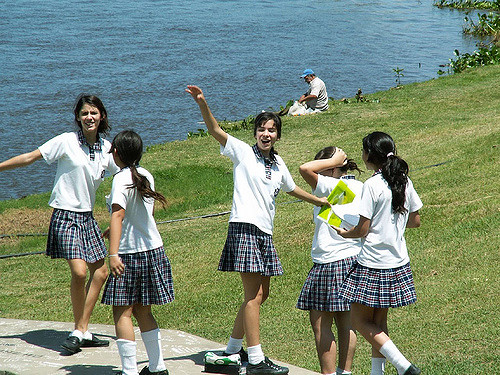
Argentina is a nation known for its efforts towards gender equality. As a nation that has made progressive strides towards equal opportunity with the election of its first female president, Cristina Fernández de Kirchner in 2007, the nation stands as a model for the rest of the world for allowing more women to obtain positions of power.
The journey for any woman to obtain a position in the field of their choice starts when they’re a child. However, girls’ education in Argentina, and the process for women to have successful careers presents a complicated path.
Even though Argentina has a high literacy rate among its citizens and has many highly-educated women, cultural norms still subject women and girls to second-class status, and threaten their opportunity to obtain jobs in the field of their choice.
Education Equality: A Class Matter
Access to a quality primary education for girls in Argentina isn’t as much subjected to gender as much as it’s subjected to class. According to the Women News Network, Argentinian girls who come from the two poorest sectors of Argentinian society are more vulnerable to dropping out of school at an earlier age (due to limited resources).
The National Institute of Statistics and Census of Argentina, also known as INDEC, states that “society must have an equal distribution of educational opportunities among both genders on all levels.” As far as secondary education, women have been shown consecutively to be more highly educated.
The World Bank, as of the year 2016, posited that more women from middle- and higher-income households achieved a secondary education, compared to their male counterparts. However, more men from lower-income households had a secondary education compared to women.
Education Doesn’t Guarantee Equal Opportunity for Women
A cultural conflict that threatens the effectiveness of girls’ education in Argentina is Machisimo — a societal ideal that favors the dominance of men in Argentinean society. Due to the country’s traditional values, women are largely subjected to discrimination and even abuse when it comes to defending their educational rights.
The workforce is a sector of Argentinian society that still awaits progression to grant women as equal an opportunity for the job of their choice. According to the World Bank, as of the year 2016, men over the age of 15 had a 73 percent participation rate in the labor force, compared to 47 percent of women.
The Inter Press Service (IPS) states that even when Argentinian women do gain employment, often times it is in “informal and low productivity sectors.”
Voices of Change: Girls’ Education in Argentina
The plights women have endured in Argentinian society has created resistance from women and men ready to make their voices heard. The non-profit organization, Ni Una Menos (Not One Less), developed after citizens started collaborating to protest against Machisimo. The organization has since taken its message to the forefront of Argentinian society to advocate for women’s rights and protection against violence.
As Argentinian women continue to advocate for change in their societies, it remains a possibility that as more laws are implemented to protect women’s rights, a more promising future for the younger generations can be ensured. This future would guarantee that girls education in Argentina isn’t futile.
– Lois Charm
Photo: Flickr
