• Link to X
  • Link to Facebook
  • Link to Instagram
  • Link to TikTok
  • Link to Youtube
  • About
    • About Us
      • President
      • Board of Directors
      • Board of Advisors
      • Financials
      • Our Methodology
      • Success Tracker
      • Contact
  • Act Now
    • 30 Ways to Help
      • Email Congress
      • Call Congress
      • Volunteer
      • Courses & Certificates
      • Be a Donor
    • Internships
      • In-Office Internships
      • Remote Internships
    • Legislation
      • Politics 101
  • The Blog
  • The Podcast
  • Magazine
  • Donate
  • Click to open the search input field Click to open the search input field Search
  • Menu Menu

Archive for category: Aid Effectiveness & Reform

Information and stories about aid effectiveness and reform

Aid Effectiveness & Reform

Will Africa be Middle-Class by 2040?

middle-class-in-africa
The issue of Africa’s emerging economy has been a staple of global news for the past few years. Many realize now that political stability is starting to become common throughout many African nations, and economic stability is following suit. The recent case of Somalia is a good example. Somalia has had its first fair election since the start of its civil war and even established a new constitution. And now they are enjoying the benefits of an improving economy, particularly in the capital city of Mogadishu.

Carlos Lopes, the UN Under-Secretary-General and Executive Secretary of the Economic Commission for Africa (ECA), is one of the experts who is extremely optimistic about Africa’s economic future. He explains that African economies are gradually shifting from a reliance on the agricultural sector to a reliance on the industrial sector. He claims that the economic conditions are in place for most African countries to be middle income level by the year 2040.

Lopes argues that in the coming years, African nations should not have to rely as much on the export of soft commodities (e.g. cocoa, cotton, and sugar) to other countries, and that there will be a transformation into an industrialized economy. “Yes, we need to produce agricultural products big-time—but for Africa,” not for export to other countries, says Lopes.

We are already seeing signs of the growth of the middle class in Africa. Over the last decade, six of the world’s 10 fastest growing economies were African nations, and the World Bank even recently stated that about half of the countries in Africa had attained middle-class income status. Jacob Zuma, President of South Africa, recently argued that the emerging middle class and the youthful population are going to be game-changers in how Africa deals with economic issues in the future. Zuma noted that the expansion of the middle class is beneficial for Africa, because it means a growth in a population with skills to help manage the economy.

Regional executive for Starwood Hotels in Africa recently said that “Africa’s middle class is almost as large as the entire populations of Russia and Brazil combined.” At this rate, it seems that Lopes’ prediction of a complete middle-class transformation in Africa is not so far off.

– Sagar Desai

Sources: IOL South Africa, AllAfrica, HowWeMadeItInAfrica
Photo: Boing Boing
July 27, 2013
https://borgenproject.org/wp-content/uploads/borgen-project-logo.svg 0 0 Borgen Project https://borgenproject.org/wp-content/uploads/borgen-project-logo.svg Borgen Project2013-07-27 20:21:372016-02-16 11:54:23Will Africa be Middle-Class by 2040?
Activism, Aid Effectiveness & Reform, Development, Health

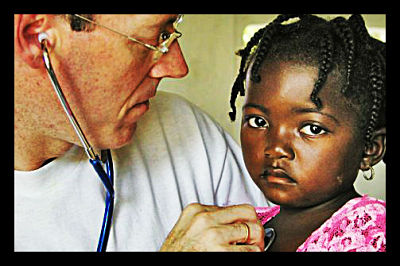
Paul Farmer Fights for Human Right to Health

farmer_human_health
While many human rights activists address a wide spectrum of issues, Paul Farmer focuses his efforts on an often-overlooked human right – the right to health.

Farmer is a medical anthropologist at Harvard Medical School and the founding director of Partners in Health, an international organization that seeks to address the health problems of the poor. An enthusiastic human rights advocate, Farmer believes that human rights organizations have focused too much on political and civil rights, which cannot be enjoyed when people lack access to basic healthcare and nutrition.

Farmer says that his experience working as a doctor in countries like Haiti and Rwanda revealed to him that ill health is usually “a symptom of poverty and violence and inequality” that can only be remedied by “bringing…many others” into a movement to recognize basic human rights.

Farmer points out that many of his patients “can vote but…can’t get medical care or clean water,” highlighting the discrepancy between the constitutional rights of the world’s poor and the basic human right to health that they are regularly denied. So how, when millions of people die each year due to poverty-induced ill health, can the global community even begin to establish health as a fundamental and inalienable human right?

Farmer says that the key is to “go to people with power and try to get their help.” He acknowledges that Partners in Health and similar aid organizations cannot singlehandedly establish health as a globally-recognized human right, but ordinary people can make a difference in the lives of the world’s poor and sick simply by letting those in power know they care.

While the poverty and illness present in the world may appear overwhelming, Farmer stresses that we must not assume that those in power will not help. In order to change the world, though, we have to ask.

– Katie Bandera

Sources: NPR, NY Times, WHO
Photo: The Daily Beast

July 14, 2013
https://borgenproject.org/wp-content/uploads/borgen-project-logo.svg 0 0 Borgen Project https://borgenproject.org/wp-content/uploads/borgen-project-logo.svg Borgen Project2013-07-14 05:48:492024-12-13 17:49:27Paul Farmer Fights for Human Right to Health
Advocacy, Aid Effectiveness & Reform, Children, Education, Foreign Aid

Child Sponsorship Works

 child-sponsorship-works-borgen-project-compassion-international_opt
When people ask how to help the poor, child sponsorship often is suggested. Indeed, for a small amount of money each month, organizations allow individuals to sponsor a child and help to provide education, food, and clothing for them. In return, the sponsors get a picture of the child and quarterly or annual updates from the organization regarding their child.  It has long seemed like an easy way to make an impact. The question many people ask, however, is does it really work? One development economist decided he was going to find out.

It seemed no one had ever been interested in finding the answer despite the fact that 9 million children are sponsored worldwide and more than $5 billion dollars per year is invested in child sponsorship programs. For organizations, obviously the stakes were high. If they allowed researchers to study the effectiveness of their programs, what would they do if they came back ineffective? After several years, one organization decided to allow themselves to be studied under one condition: anonymity.

The study initially looked at individuals in Uganda, studying 809 individuals including 188 who were sponsored as children. The results from the first study were any economist’s dream. The data clearly showed large and statistically significant impacts on the educational outcomes of sponsored children. It appeared the program was actually working! To solidify the results, the study was conducted in six other countries: Uganda, Guatemala, the Philippines, India, Kenya and Bolivia. Data was obtained on 10,144 individuals and the results were consistent with the first study. 27 to 40% more sponsored children complete secondary school and 50 to 80% more complete a college education. In addition to effects on education, the study found that sponsored children were also more likely to gain meaningful employment.

As a result of the study, the sponsorship organization removed the anonymity clause. Compassion International was the organization that allowed its program to be scrutinized; the results were clear that child sponsorship works. It helps lift kids and families out of poverty and provides them with hope. For more information about child sponsorship, visit Compassion International at www.compassion.com.

– Amanda Kloeppel
Sources: Christianity Today, Compassion International

July 13, 2013
https://borgenproject.org/wp-content/uploads/borgen-project-logo.svg 0 0 Borgen Project https://borgenproject.org/wp-content/uploads/borgen-project-logo.svg Borgen Project2013-07-13 06:00:172020-05-14 11:01:29Child Sponsorship Works
Aid Effectiveness & Reform, Malaria, USAID

USAID Distributes 12 Mil Mosquito Nets in Ghana

Nets to Ghana
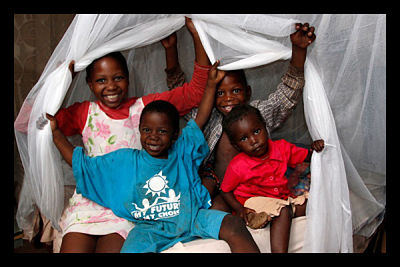
The Promoting Malaria Prevention and Treatment (ProMPT) Project in partnership with USAID and the Ghana Health Service has developed an innovative way to distribute mosquito nets in Ghana. The ProMPT project has delivered over 12 million mosquito nets to prevent the spread of malaria in Ghana. The four year project has given households training on how to use treated mosquito nets that are covered with insecticide to kills the mosquitoes. USAID was a major donor of the $20 million dollar project and support from the U.S. and Ghana governments was strong.

The Ghana Health Service has worked hard to educate citizens against malaria. The ProMPT project strengthened malaria prevention through door-to-door mosquito net distribution, increasing prevention efforts geared towards pregnant women, and improving malaria treatment in health care facilities. The project also utilized community volunteers to educate households on the proper way to hang a mosquito net.

USAID acknowledged the success of the project was only possible through the collaborative efforts of the USAID, the Ghana Health Service, and the government of Ghana. The holistic nature of the project and the inclusion of factors relating to prevention, education, and treatment led to a drastic reduction in malaria-caused deaths. Program officers encourage other organizations to adopt the collaborative model in other malaria prevention projects.

In Ghana, malaria is a major problem for the country’s overall health. Over 40% of outpatient illnesses and visits in health care facilities are contributed to malaria as well as a third of all admissions. The World Health Organization attributed around 14,000 annual childhood deaths in Ghana to malaria as well. The goal is to reduce the impact of malaria in Ghana by 75% by the year 2015.

The program worked to put at least one net in every dwelling place as well as educate health care workers on proper malaria management and prevention. Areas of focus were especially on women who are pregnant and health care facility management of malaria care. The program has so far trained 21,000 health care workers in over 2,000 health care facilities. The ProMPT project officially ended in March,but Ghana plans to continue the efforts began in the prevention of malaria.

– Amanda Kloeppel

Source: Science Codex
Photo: Ghana Health Nest

July 13, 2013
https://borgenproject.org/wp-content/uploads/borgen-project-logo.svg 0 0 Borgen Project https://borgenproject.org/wp-content/uploads/borgen-project-logo.svg Borgen Project2013-07-13 04:40:302020-05-14 11:05:41USAID Distributes 12 Mil Mosquito Nets in Ghana
Aid Effectiveness & Reform, Philanthropy

Will Grenada Get its Jubilee?

grenada_debt_relief

Grenada, a small Caribbean island with a population of 105,000, just might be changing the world. The nation is negotiating an unprecedented debt-relief program with its creditors around the world, and their decisions could define a new standard of debt-freedom for billions of people.

Small Economy, Big Problems

After a socialist coup and U.S. invasion in the 1980’s, the island nation has struggled to sustain itself. Revenue from its current biggest export, nutmeg, hardly matches its economic struggles. A US-EU banana trade war in the 90’s eliminated its biggest source of income, hurricanes Ivan and Emily ravaged its homes and infrastructure in 2004 and 2005, and tourism has plummeted since the 2008 recession. Unemployment has reached 30%, and there is no end in sight.

To prop up its deteriorating economy, Grenada has borrowed substantial sums from private bondholders, governments, and multilateral institutions like the World Bank and International Monetary Fund. Unfortunately, the assistance failed to properly kickstart the economy, and now those creditors are calling in their debts—debts that almost exceed Grenada’s gross national income. Last March, Grenada defaulted on most of its payments, and more are due this month. But a new Grenadian organization is rethinking the nation’s approach.

The Jubilee

Grenada’s Conference of Churches (CCG) is calling for a “Jubilee”—a radical reduction of Grenada’s 1 billion dollar debt. Inspired by the biblical concept of debt forgiveness in Leviticus 25, the CCG is recommending a debt restructuring based on the World Bank’s Heavily Indebted Poor Countries Initiative, independent mediation by sympathetic nations like Norway and Germany, and budget readjustment so that debt relief funds economic development in-country.

“While the obligation to repay loans must be acknowledged,” their statement reads, “the governments of small nations are not helpless at the mercy of their creditors.” The CCG’s response has invigorated Jubilee advocacy networks across the globe, and international support for their cause is growing. Other Caribbean countries have negotiated debt restructures, such as Belize’s 10-20% debt reduction earlier this year, but Grenada’s look to be the precedent for radical debt reform. Their negotiations have implications for billions of people living in indebted countries throughout the developing world.

Whatever happens, Grenada’s creditors are looking at inevitable losses. “They may initially take a tough line, but Grenada always has the option simply to sit it out,” an anonymous source said, “Recovery through litigation is unlikely to be a serious proposition for bondholders.”

– John Mahon

Source: The Guardian, Financial Times, Now Grenada
Photo: Marsh Analytics

July 9, 2013
https://borgenproject.org/wp-content/uploads/borgen-project-logo.svg 0 0 Borgen Project https://borgenproject.org/wp-content/uploads/borgen-project-logo.svg Borgen Project2013-07-09 10:35:062017-03-20 13:03:14Will Grenada Get its Jubilee?
Aid Effectiveness & Reform, Women and Female Empowerment

The Trickle-Up Solution to Global Poverty

trickle-up
The Trickle Up aid foundation is turning traditional conceptions of foreign aid on its head, saying that, “investing in individuals at the grassroots level is the most powerful antidote to extreme poverty.”

Attempts to address global poverty have typically originated in large, global corporations whose tactics have been to give foreign aid or to invest in business at the highest level of society in the assumption that benefits from newfound societal organization and prosperity would “eventually trickle down to the rest of the population.”

Glen and Mildred Robbins Leet, the founders of Trickle Up, however, rejected this model as the only way to help the world’s poor, maintaining that the foreign aid money given to developing countries often got lost in corruption at the top societal levels, never quite reaching the country’s poorest members that needed the help most.

Thus, Trickle Up sought a change. Glen and Mildred believed in individuals’ power to create lasting change for themselves, and started a program in which they gave $100 grants to ten people in developing countries, urging them to launch their own microbusinesses.

Along with the small sum of money, the Leets’ model also provided basic business ownership training to their fund recipients, The Trickle Up method relies on the idea that humans feel empowered when they feel trusted and encouraged.

Trickle Up primarily focuses on women as agents of change because they believe that if women have equitable access to and control over resources, a country’s economic development will follow

Trickle Up’s website provides ample information about understanding the program’s ideology, the grant system, and rural poverty itself in an attempt to spread awareness and invite action. By empowering the world’s poor directly, Trickle Up is building a much-needed foundation for a human-rights driven and economically stable developing world.

 – Alexandra Bruschi

Source: Trickle Up
Photo: Life

July 6, 2013
https://borgenproject.org/wp-content/uploads/borgen-project-logo.svg 0 0 Borgen Project https://borgenproject.org/wp-content/uploads/borgen-project-logo.svg Borgen Project2013-07-06 05:04:252016-02-11 15:33:40The Trickle-Up Solution to Global Poverty
Aid Effectiveness & Reform, Developing Countries, Extreme Poverty

Bread For The World Institute

Bread For The World Institute

Finding up-to-date information on research concerning hunger, poverty, and agriculture can be a difficult task.  To make this easier, the Bread for the World Institute compiles all their research into easy-to-understand formats. Bread for the World Institute is the research arm of Bread for the World. The institute focuses on research in several key areas including U.S. hunger and poverty, trade and agriculture, the Millennium Development Goals, maternal and child nutrition, immigration, global hunger and poverty, foreign assistance to reduce poverty, and climate change and hunger.  The staff work on policy analysis focused on hunger and strategies to end it. They use their research to educate world leaders, policymakers, and the public about hunger in the United States and abroad.

Within each research area, working papers can be found highlighting current research and findings happening. In addition, the institute is committed to the idea that development assistance does indeed work. They have a section of seven short essays telling stories and providing facts relating to the results of effective development aid. The essays are available for use by anyone from activists to politicians to Sunday school teachers. The essays serve to help individuals get a better picture of the fight against global hunger and extreme poverty.

The Bread for the World Institute also has a blog that provides current updates on what is going on within the fight to end world hunger and extreme poverty. The blog breaks down some of the information into a more comprehensible format. The goal of the institute and the research is to help people become informed and take action in the fight.

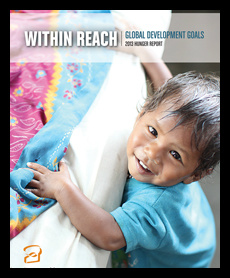
The 2013 Hunger Report is also produced by the Bread for the World Institute. The Hunger Report looks at issues surrounding global hunger such as malnutrition and food insecurity. The 2013 edition calls for a final push towards meeting the Millennium Development Goals.  Overall, the Bread for the World Institute is an excellent resource for information and facts on global hunger and on the fight to end it.

– Amanda Kloeppel
Source:Bread for the World Institute,Hunger Report

July 2, 2013
https://borgenproject.org/wp-content/uploads/borgen-project-logo.svg 0 0 Borgen Project https://borgenproject.org/wp-content/uploads/borgen-project-logo.svg Borgen Project2013-07-02 16:29:462024-06-04 02:43:54Bread For The World Institute
Advocacy, Aid Effectiveness & Reform

Food Aid Reform Act 2

Food Aid Reform Act 2
A proposal to improve U.S. efforts to fight global poverty and hunger by reforming U.S. food aid policies to reach more people at a lower cost, faster and more efficiently was rejected by the House of Representatives in June.

The amendment to the Farm Bill proposed giving the U.S. Agency for International Development (USAID) the option of “local and regional purchase” to buy food closer to the region and people that would ultimately receive it. The amendment was voted down 220 to 203.

Under current policies, nearly all U.S. food aid must be purchased from domestic producers and half of it must be shipped overseas on U.S. ships. The stringent requirements are hampering U.S. aid from reaching those that most need it in a timely manner, critics charge.

The amendment was a watered-down version of the proposed bipartisan Food Aid Reform Act (H.R. 1983) that was introduced in April by Congressman Ed Royce (R-Calif.) who chairs the House Foreign Affairs Committee, and Rep. Karen Bass (D-Calif.). President Obama has also proposed a similar overhaul of how the U.S. delivers food aid.

Proponents of food aid reform point out that the fight isn’t over. A full list of which representatives voted for and against the food aid reform is easily available and provides a great opportunity for supporters of changing the system to continue to push those who voted against the amendment. It was a close vote, with 220 Democrats and Republicans voting against the proposal, while 203 voted in favor of it. (Eleven members did not vote.)

Is your representative on the “no” list? See the full list below.

220 No Votes (Democrats in italics):

Robert Aderholt (R-Ala.)
Rodney Alexander (R-La.)
Robert E. Andrews (D-N.J.)
Ron Barber (D-Ariz.)

Lou Barletta (R-Pa.)
John Barrow (D-Ga.)
Joe Barton (R-Tex.)
Joyce Beatty (D-Ohio)
Dan Benishek (R-Mich.)
Sanford D. Bishop Jr. (D-Ga.)
Timothy Bishop (D-N.Y.)

Rob Bishop (R-Utah)
Charles W. Boustany Jr. (R-La.)
Robert Brady (D-Pa.)
Bruce L Braley (D-Iowa)

Paul C. Broun (R-Ga.)
Corrine Brown (D-Fla.)
Julia Brownley (D-Calif.)

Larry Bucshon (R-Ind.)
Cheri Bustos (D-Ill.)
Ken Calvert (R-Calif.)
Dave Camp (R-Mich.)
John Campbell (R-Calif.)
Shelley Moore Capito (R-W.Va.)
Michael E. Capuano (D-Mass.)
John Carney (D-Del.)

John Carter (R-Tex.)
William Cassidy (R-La.)
Kahty Castor (D-Fla.)
Judy Chu (D-Calif.)
William “Lacy” Clay Jr. (D-Mo.)
James E. Clyburn (D-S.C.)

Howard Coble (R-N.C.)
Mike Coffman (R-Colo.)
Tom Cole (R-Okla.)
Chris Collins (R-N.Y.)
K. Michael Conaway (R-Tex.)
Gerald E. “Gerry” Connolly (D-Va.)
Paul Cook (R-Calif.)
Tom Cotton (R-Ark.)
Joe Courtney (D-Conn.)
Kevin Cramer (R-N.D.)
Rick Crawford (R-Ark.)
Henry Cuellar (D-Tex.)
Elijah Cummings (D-Md.)
Rodney Davis (R-Ill.)
Suzan DelBene (D-Wash.)
Jeff Denham (R-Calif.)
Scott DesJarlais (R-Tenn.)
Mario Diaz-Balart (R-Fla.)
John Dingell (D-Mich.)
Mike Doyle (D-Pa.)

John J. Duncan Jr. (R-Tenn.)
Renee Ellmers (R-N.C.)
William Enyart (D-Ill.)
Blake Farenthold (R-Tex.)
Chaka Fattah (D-Pa.)
Stephen Fincher (R-Tenn.)
John Fleming (R-La.)
J. Randy Forbes (R-Va.)
Jeff Fortenberry (R-Neb.)
Rodney Frelinghuysen (R-N.J.)
Marcia L. Fudge (D-Ohio)
Tulsi Gabbard (D-Hawaii)
Pete Gallego (D-Tex.)
John Garamendi (D-Calif.)
Joe Garcia (D-Fla.)

Cory Gardner (R-Colo.)
Jim Gerlach (R-Pa.)
Bob Gibbs (R-Ohio)
Chris Gibson (R-N.Y.)
Bob Goodlatte (R-Va.)
Kay Granger (R-Tex.)
Sam Graves (R-Mo.)
Al Green (D-Tex.)
Gene Green (D-Tex.)
Tim Griffin (R-Ark.)
Morgan Griffith (R-Va.)
Raul Grijalva (D-Ariz.)
Michael Grimm (R-N.Y.)
Janice Hahn (D-Calif.)
Colleen Hanabusa (D-Hawaii)

Gregg Harper (R-Miss.)
Andy Harris (R-Md.)
Vicky Hartzler (R-Mo.)
Denny Heck (D-Wash.)
Jaime Herrera Beutler (R-Wash.)
Brian Higgins (D-N.Y.)
Ruben Hinojosa (D-Tex.)

Richard Hudson (R-N.C.)
Duncan D. Hunter (R-Calif.)
Darrell Issa (R-Calif.)
Sheila Jackson Lee (D-Tex.)
Lynn Jenkins (R-Kan.)
Henry C. “Hank” Johnson Jr. (D-Ga.)
Bill Johnson (R-Ohio)
Eddie Bernice Johnson (D-Tex.)
Sam Johnson (R-Tex.)
Walter B. Jones (R-N.C.)
David Joyce (R-Ohio)
Marcy Kaptur (D-Ohio)
William Keating (D-Mass.)
Robin Kelly (D-Ill.)

Mike Kelly (R-Pa.)
Daniel Kildee (D-Mich.)
Derek Kilmer (D-Wash.)

Steve King (R-Iowa)
Pete King (R-N.Y.)
Adam Kinzinger (R-Ill.)
Ann Kirkpatrick (D-Ariz.)
John Kline (R-Minn.)
Doug LaMalfa (R-Calif.)
James Lankford (R-Okla.)
Tom Latham (R-Iowa)
Robert E. Latta (R-Ohio)
Sander Levin (D-Mich.)
Daniel Lipinski (D-Ill.)

Frank LoBiondo (R-N.J.)
David Loebsack (D-Iowa)
Billy Long (R-Mo.)
Alan Lowenthal (D-Calif.)
Frank Lucas (R-Okla.)
Blaine Luetkemeyer (R-Mo.)
Stephen F. Lynch (D-Mass.)
Daniel Maffei (D-N.Y.)
Sean Patrick Maloney (D-N.Y.)
Jim Matheson (D-Utah)
Jim McDermott (D-Wash.)
Mike McIntyre (D-N.C.)

Buck McKeon (R-Calif.)
David McKinley (R-W.Va.)
Jerry McNerney (D-Calif.)
Pat Meehan (R-Pa.)
Michael Michaud (D-Maine)
Candice Miller (D-Mich.)
George Miller (D-Calif.)

Markwayne Mullin (R-Okla.)
Tim Murphy (R-Pa.)
Grace Napolitano (D-Calif.)
Richard E. Neal (D-Mass.)
Gloria Negrete McLeod (D-Calif.)

Randy Neugebauer (R-Tex.)
Kristi Noem (R-S.D.)
Rick Nolan (D-Minn.)
Devin Nunes (R-Calif.)
Alan Nunnelee (R-Miss.)
Bill Owens (D-N.Y.)
Steven Palazzo (R-Miss.)Bill Pascrell Jr. (D-N.Y.)
Ed Pastor (D-Ariz.)
Steve Pearce (R-N.M.)
Ed Perlmutter (D-Colo.)
Gary Peters (D-Mich.)
Collin C. Peterson (D-Minn.)
Mark Pocan (D-Wis.)

Ted Poe (R-Tex.)
Bill Posey (R-Fla.)
Nick Rahall (D-W.Va.)
Tom Reed (R-N.Y.)
David G. Reichert (R-Wash.)
Jim Renacci (R-Ohio)
Cedric Richmond (D-La.)
Scott Rigell (R-Va.)
Martha Roby (R-Ala.)
Mike Rogers (AL) (R-Ala.)
Mike Rogers (MI) (R-Mich.)
Tom Rooney (R-Fla.)
Ileana Ros-Lehtinen (R-Fla.)
Peter J. Roskam (R-Ill.)
Keith Rothfus (R-Pa.)
Jon Runyan (R-N.J.)
Dutch Ruppersberger (D-Md.)
Tim Ryan (D-Ohio)
Linda T. Sánchez (D-Calif.)
Loretta Sanchez (D-Calif.)

Steve Scalise (R-La.)
Kurt Schrader (D-Ore.)
Allyson Y. Schwartz (D-Pa.)

Austin Scott (R-Ga.)
Pete Sessions (R-Tex.)
Terri A. Sewell (D-Ala.)
Carol Shea-Porter (D-N.H.)
Brad Sherman (D-Calif.)

John Shimkus (R-Ill.)
Bill Shuster (R-Pa.)
Mike Simpson (R-Idaho)
Kyrsten Sinema (D-Ariz.)
Albio Sires (D-N.J.)

Jason Smith (R-Mo.)
Adrian Smith (R-Neb.)
Lamar Smith (R-Tex.)
Steve Southerland (R-Fla.)
Steve Stivers (R-Ohio)
Steve Stockman (R-Tex.)
Marlin Stutzman (R-Ind.)
Eric Swalwell (D-Calif.)
Bennie G. Thompson (D-Miss.)

Glenn W. Thompson (R-Pa.)
Mac Thornberry (R-Tex.)
Pat Tiberi (R-Ohio)
Dina Titus (D-Nev.)
Paul D. Tonko (D-N.Y.)

Michael Turner (R-Ohio)
Fred Upton (R-Mich.)
David Valadao (R-Calif.)
Juan Vargas (D-Calif.)
Marc Veasey (D-Tex.)
Filemon Vela (D-Tex.)
Peter Visclosky (D-Ind.)

Ann Wagner (R-Mo.)
Timothy J. Walz (D-Minn.)
Daniel Webster (R-Fla.)
Lynn A. Westmoreland (R-Ga.)
Ed Whitfield (R-Ky.)
Roger Williams (R-Tex.)
Robert J. Wittman (R-Va.)
Steve Womack (R-Ark.)
Robert Woodall (R-Ga.)
Kevin Yoder (R-Kan.)
Don Young (R-Alaska)

ABSTAINED/did not vote
Emanuel Cleaver (D-Mo.)
Alcee L. Hastings (D-Fla.)
Rush Holt (D-N.J.)
Mike Honda (D-Calif.)
Rick Larsen (D-Wash.)
Ed Markey (D-Mass.)
Carolyn McCarthy (D-N.Y.)

Gary Miller (R-Calif.)
Frank Pallone Jr. (D-N.J.)
Harold Rogers (R-Ky.)
Louise Slaughter (D-N.Y.)

– Liza Casabona

Sources: U.S. House of Representatives U.S. House Clerk’s Office Humanosphere OXFAM
Photo: Reuters

June 26, 2013
https://borgenproject.org/wp-content/uploads/borgen-project-logo.svg 0 0 Borgen Project https://borgenproject.org/wp-content/uploads/borgen-project-logo.svg Borgen Project2013-06-26 10:48:142024-05-25 00:00:14Food Aid Reform Act 2
Aid Effectiveness & Reform, Food Aid

Food Aid Reform Act: The Facts

Food Aid Reform Act
On Wednesday, June 12 discussions continued on Capitol Hill in an attempt to push forward a modernization of US international food aid policy according to the Guardian’s Cydney Hargis.  HR 1983, the Food Aid Reform Act, would remove laws requiring US food aid to be grown in the United States and then shipped to the receiving countries.  Instead, it would allow food aid to be purchased in areas local to the countries receiving it.  The impact of the Food Aid Reform Act would be twofold:  it would eliminate the time and costs required to ship the food, and it would further stimulate the economies of countries or regions that are receiving US food aid.

Under the Food Aid Reform Act, aid could reach the receiving country up to 14 weeks sooner, giving up to 4 million people better access to food.  It would also significantly decrease transportation costs of US food aid, which make up 50 percent of the US food aid budget.  Right now US food aid has to travel 7,000 miles to reach its destination and that food chain is vulnerable, especially in conflict zones such as what we are seeing right now in Syria.

The other aspect of the Food Aid Reform Act is the stimulation of the local economy where the food is being produced.  When the US ships food to developing countries as aid, the US food can crowd out locally produced food.  This is especially important considering that most of the world’s poorest and those without food security are small farmers.  In shipping food to aid the poorest in the developing world, the US can prevent these farmers from being able to sell their crops at a profitable price, thereby harming the very people which USAID is supposed to be helping.

Purchasing food aid locally will raise the demand for local food, thereby driving up the price and enabling farmers to gain more profit out of the crops they sell.  This profit can then be put towards things like better fertilizers, water pumps, and other things which increase the productivity of these farmers.  When these farmers increase their productivity their communities will develop their food security, fixing the very reason that food aid would have to be provided to these developing nations in the first place.

The Food Aid Reform Act is a piece of bipartisan legislation that will go a long way to modernize US foreign aid.  It will help stimulate developing economies to bring them further towards contributing significantly to the global economy, which will ultimately lead to a more prosperous international community as a whole.

– Martin Drake

Source: The Guardian, House Committee on Foreign Affairs
Photo: ONE

June 24, 2013
https://borgenproject.org/wp-content/uploads/borgen-project-logo.svg 0 0 Borgen Project https://borgenproject.org/wp-content/uploads/borgen-project-logo.svg Borgen Project2013-06-24 15:02:422024-05-24 23:57:04Food Aid Reform Act: The Facts
Aid Effectiveness & Reform, Development, Global Poverty

What is the Multi-Dimensional Poverty Index?

What is the Multi-Dimensional Poverty Index?
Measuring poverty can be tricky. Income is a good place to start, but it does not tell the whole story. A recent graduate can live comfortably on the same amount on which a family of four would struggle.

Researchers have begun to search for more comprehensive measures of poverty.  One such measure is the Multi-Dimensional Poverty Index (MPI), created by Sabina Alkire at the Oxford Poverty and Human Development Initiative. This index takes the answers to ten questions – two on education, two on health, and six on living standards – and combines them into a single index. Different questions are weighted differently. Whether your children are enrolled in primary education, for instance, counts three times more than whether you have electricity. Higher scores indicate higher levels of poverty. Households with composite scores over 33% are considered to be in poverty.

One problem with the MPI is that its weightings are arbitrary. Whether access to clean water or access to education matters more is up for debate. Yet despite its shortcomings, the Multi-Dimensional Poverty Index has drawn attention to specifics of poverty that income does not address.

– David Wilson

Source: The Economist
Photo: Inquirer Business

June 23, 2013
https://borgenproject.org/wp-content/uploads/borgen-project-logo.svg 0 0 Borgen Project https://borgenproject.org/wp-content/uploads/borgen-project-logo.svg Borgen Project2013-06-23 06:29:002020-07-03 00:33:05What is the Multi-Dimensional Poverty Index?
Page 11 of 16«‹910111213›»

Get Smarter

  • Global Poverty 101
  • Global Poverty… The Good News
  • Global Poverty & U.S. Jobs
  • Global Poverty and National Security
  • Innovative Solutions to Poverty
  • Global Poverty & Aid FAQ’s
Search Search

Take Action

  • Call Congress
  • Email Congress
  • Donate
  • 30 Ways to Help
  • Volunteer Ops
  • Internships
  • Courses & Certificates
  • The Podcast
Borgen Project

“The Borgen Project is an incredible nonprofit organization that is addressing poverty and hunger and working towards ending them.”

-The Huffington Post

Inside The Borgen Project

  • Contact
  • About
  • Financials
  • President
  • Board of Directors
  • Board of Advisors

International Links

  • UK Email Parliament
  • UK Donate
  • Canada Email Parliament

Get Smarter

  • Global Poverty 101
  • Global Poverty… The Good News
  • Global Poverty & U.S. Jobs
  • Global Poverty and National Security
  • Innovative Solutions to Poverty
  • Global Poverty & Aid FAQ’s

Ways to Help

  • Call Congress
  • Email Congress
  • Donate
  • 30 Ways to Help
  • Volunteer Ops
  • Internships
  • Courses & Certificates
  • The Podcast
Scroll to top Scroll to top Scroll to top