• Link to X
  • Link to Facebook
  • Link to Instagram
  • Link to TikTok
  • Link to Youtube
  • About
    • About Us
      • President
      • Board of Directors
      • Board of Advisors
      • Financials
      • Our Methodology
      • Success Tracker
      • Contact
  • Act Now
    • 30 Ways to Help
      • Email Congress
      • Call Congress
      • Volunteer
      • Courses & Certificates
      • Be a Donor
    • Internships
      • In-Office Internships
      • Remote Internships
    • Legislation
      • Politics 101
  • The Blog
  • The Podcast
  • Magazine
  • Donate
  • Click to open the search input field Click to open the search input field Search
  • Menu Menu

Archive for category: Aid Effectiveness & Reform

Information and stories about aid effectiveness and reform

Aid Effectiveness & Reform, Foreign Policy

US Military Leaders Want Congress Helping Poor

US Military Leaders Want Congress Helping Poor
Foreign aid has long been a very small piece of the United States’ federal budget, coming in at less than 1%. But this does not reflect the important significance of that aid, diplomacy, and development strategies have in the world. The National Security Council is now joining the fight for increased foreign policy funding lead by its leaders Admiral James M. Loy and General Michael W. Hagee.

In a letter to the Appropriations Committee, the two co-chairs explain their position saying, “Our nation’s military strength is not sufficient on its own to defend America’s security, protect our most vital national interests, sustain and bolster economic growth and, in particular, address the deep-rooted causes of violence and instability around the world. To deal with these challenges, the U.S. must balance strategically all three aspects of national power and international influence—defense, diplomacy, and development.”

These military leaders have first-hand seen the need for assistance overseas and encourage the greater focus of foreign aid because it will be able to achieve goals at a far lower cost “in lives and dollars” than the military can. Condoleezza Rice, former Secretary of State, also spoke on the necessity of supporting international development saying, “It is a vital investment in the free, prosperous, and peaceful international order that fundamentally serves our national interest.”

Promoting national and international security is vital to the U.S.’s strength as a nation, and can be better attained if proper funding is allotted. The National Security Council knows firsthand the international efforts taken for civilian assistance, and the co-chairs saw their resources for assistance often insufficiently funded and staffed. This lack of funding puts a serious damper on any efforts we may undertake in terms of diplomacy and development, where proper funding and investment could cause a dramatic decrease in poverty and hunger levels around the world.

– Sarah Rybak

Source: USGLC,The Foreign Policy Initiative
Photo: Elevation Networks

June 22, 2013
https://borgenproject.org/wp-content/uploads/borgen-project-logo.svg 0 0 Borgen Project https://borgenproject.org/wp-content/uploads/borgen-project-logo.svg Borgen Project2013-06-22 07:53:402024-05-24 23:54:45US Military Leaders Want Congress Helping Poor
Aid Effectiveness & Reform, Food & Hunger, Food Aid, Food Security

Food Aid Reform Act Faces Fight in Congress

Food Aid Reform Act Faces Fight in Congress

Initial support for reforms to food aid came from both parties. It turns out everyone believes money for food aid in emergency situations should go to feed people. The problem comes when determining how that aid should work and where it should be spent. President Obama has introduced reforms to policy dating back to the Eisenhower era, but the food aid reforms have hit trouble in Congress.

The discussion is focused on whom the US should buy food in emergency situations.  Currently, the US purchases food from US farmers and ships it overseas. Reforms to food aid include using money allocated to purchase food from overseas farmers. The US is currently one of the only major food-producing nations that still ships its food overseas rather than purchasing food directly from poorer farmers.

The money involved is around $2 billion; US agriculture is expected to bring in $128 billion of profits this year, making this a small amount in comparison. For poor farmers around the world, it is life-changing. It allows farmers in developing nations to improve their crops and continue to produce and sell their goods. This amount also would help prevent food insecurity, a source of unrest in many nations. Food insecurity is often accompanied by other insecurities as well.

Nigeria’s Minister of Agricultural and Rural Development, Akinwnumi Adesina, is a major supporter of the reforms. The money would help Nigeria continue to promote national security and help farmers grow economically. The Obama plan would shift the $2 billion spent on food aid to the USAID and allow them to use it to purchase food overseas.  Farmers would get a subsidy for at least the first year to replace some of the lost profit. In addition, 55% of food aid dollars will still go to American farmers.

Food aid reforms are long overdue and a key to promoting global development worldwide. They are also a key step in helping the US keep nations secure and conflict at a minimum. The reforms will help countries like Nigeria shift away from food dependence to food independence and become growing, thriving economies.

Call your Congressional leaders today and request they support the Food Aid Reform Act (H.R. 1983).

– Amanda Kloeppel
Source: Bloomberg

June 21, 2013
https://borgenproject.org/wp-content/uploads/borgen-project-logo.svg 0 0 Borgen Project https://borgenproject.org/wp-content/uploads/borgen-project-logo.svg Borgen Project2013-06-21 04:00:042020-07-03 00:18:37Food Aid Reform Act Faces Fight in Congress
Advocacy, Aid Effectiveness & Reform

7,000 Miles Saved with Food Aid Reform

7,000 Miles Saved with Food Aid Reform
Food Aid Reform is a big topic as lawmakers are working hard to get the bill passed through Congress. The reform will modernize policy that is outdated in the current global marketplace.  The food aid reform will enable USAID to purchase more locally grown food in emergency situations rather than shipping food from US suppliers. This change will save time, money, and improve local economies and the livelihoods of local farmers.

The Food Aid Reform Act would eliminate requirements that food must be purchased from the US and sent on US ships. It would enable food to be delivered quicker and reach an estimated 2 to 4 million more people. The increased flexibility would allow on the ground organizations more freedom to make decisions and meet needs quicker. In addition to increased efficiency, the reform would lower shipping costs significantly.

Right now, USAID spends 50% of it’s food aid budget on shipping. If food is purchased in the mid-west of US, it is transported to a US port, put on a ship, and sailed 7,000 miles around the world where it is unload and transported by land to the emergency area. This does not seem like the most profitable use of government funds when food is available in many of these economies for purchase. This will allow USAID to save the 7,000 mile trek it must send food on currently. The food aid reform would also help to stimulate local economies.

Now is an excellent time to call your Congressional Representative and ask them to support the Food Aid Reform Act. Find their information here.

– Amanda Kloeppel
Source: Independent Daily European Express
Photo: House Committee on Foreign Affairs

June 20, 2013
https://borgenproject.org/wp-content/uploads/borgen-project-logo.svg 0 0 Borgen Project https://borgenproject.org/wp-content/uploads/borgen-project-logo.svg Borgen Project2013-06-20 04:00:172020-07-03 00:24:247,000 Miles Saved with Food Aid Reform
Aid Effectiveness & Reform, Developing Countries, Extreme Poverty

Economic Freedom Essential to Reduce Poverty

Economic_Freedom_Poverty
Poverty is a global issue affecting every nation on earth. Over the past hundred years, life expectancy ranged from 30 to 40 years for many people. And if they made it that far, often they did so without adequate food, clothing, and shelter. The past decade has seen massive reductions in the numbers of the global poor, but there is still much work to be done. Today, the number of people in the world living on less than $1 a day is down to around 20% and dropping.

Essential to reducing poverty is economic freedom. China and India have become leaders in economic enterprise and in improving the economic freedoms within their nations. As a result, they have seen millions of people lifted out of poverty. To back up the numbers, the Cato Institute and Canada’s Frazier Institute put out a report called the Economic Freedom of the World report. The study annually looks at five major indicators of economic freedom. Those indicators are size of government, legal system and property rights, sound money, freedom to trade internationally, and regulation. From the indicators, the report lists 141 countries in terms of economic freedom.

The report has found that countries with higher levels of economic freedom grow more rapidly, have higher per capita incomes, and greater longevity than countries with lower levels of economic freedom. The top fifth of countries had per capita incomes seven times higher than the the bottom fifth and the results among the poor are significant. The poor in the bottom tenth in terms of economic freedom had incomes of $1,061 versus poor in the top tenth who had incomes around $8,735.

The report also pointed out that income inequality does not seem to be a factor in economic freedom. As a country becomes more free, the rich do not grow richer at the expense of the poor. Rather the poor also gain an advantage.  Economic freedom improves wealth which also improves health and mortality rates especially among women and children.

People are the solution to poverty and equal distribution of economic freedom will have a greater impact on reducing poverty than redistribution of wealth.

– Amanda Kloeppel
Source: The York Daily Record
Photo: The Guardian

June 20, 2013
https://borgenproject.org/wp-content/uploads/borgen-project-logo.svg 0 0 Borgen Project https://borgenproject.org/wp-content/uploads/borgen-project-logo.svg Borgen Project2013-06-20 04:00:002016-02-08 14:27:16Economic Freedom Essential to Reduce Poverty
Advocacy, Aid Effectiveness & Reform, Global Poverty

Anti-Hunger Rally in London Precedes G8 Summit

billgates
Over the weekend, a rally in London attended by thousands sought to raise awareness around the issue of global hunger and encourage leaders, before the G8 summit later this month, to make ending hunger a top priority. The rally was in London’s famous Hyde Park. It was hosted by the “Enough Food for Everyone – IF” campaign and boasted the likes of Bill Gates and “Slumdog Millionaire” director Danny Boyle.

Prime Minister David Cameron hosted talks on malnutrition and led the discussion around the fight against global hunger. Boyle believes we can end hunger and that is necessary to do so.  Boyle hopes in a day when no countries which participate in the Olympics will have children dying of hunger. It’s a high goal, but a realistic one according to supporters at the rally.

The G8 summit is set to be held in Northern Ireland on June 17-18 and the rally hoped to put malnutrition on the radar of governments, NGOs, businesses, and nonprofits attending the summit. Cameron discussed the topic with Vice President of Brazil Michel Temer and received a pledge of $4.15 billion by 2020 and a renewed commitment to fight against hunger and malnutrition.  Also in attendance were representatives from 19 African countries, numerous donor countries such at the US and Japan, the EU, the World Bank, the World Health Organisation, and UNICEF.

A rally bringing together some of the global leaders in the fight against poverty and hunger is sure to make waves and spread awareness, which is what the Prime Minister hoped to do. Leaders are encouraging those at the G8 summit to focus priorities on hunger and malnutrition. Such action is another important step in the creation of the next generation of development goals.

–  Amanda Kloeppel

Source: The News
Photo: The Guardian

June 19, 2013
https://borgenproject.org/wp-content/uploads/borgen-project-logo.svg 0 0 Borgen Project https://borgenproject.org/wp-content/uploads/borgen-project-logo.svg Borgen Project2013-06-19 04:01:392016-04-15 16:21:34Anti-Hunger Rally in London Precedes G8 Summit
Aid Effectiveness & Reform

The Resource Curse in Developing Countries

resource-curse-foreign-investment
“What is a house without food?” A report from the NGO Human Rights Watch poses this question straight from the lips of a resettled farmer in Mozambique. The report examines Mozambique’s coal mining boom due to foreign investment, documenting the resettling of farmers in resource-rich areas that causes food insecurity.

In Mozambique in particular, the mining companies Vale and Rio Tinto displaced local communities from 2009-2011, a move that majorly disrupted daily life for almost 1400 households. For many of these displaced families, the investment in natural resources that should have brought increased profits to the region and country instead jeopardized regular access to food, water, and income opportunities.

The Paradox of Plenty

Statistically, countries with a high amount of natural resources experience lower economic growth and a slower development rate than countries with less natural resources. This is known in economic theory as the “resource curse,” or the paradox of plenty. Multibillion dollar companies investing in these countries’ economies promise a “trickle-down” effect that rarely — if ever — improves the quality of life and average daily income.

A number of phenomena are linked to the “resource curse.” From a historical perspective, regions with visible high amounts of natural resources are seen as more attractive targets for conquest and imperialism. With this precedent of constant push and pull of conquering countries, the host region’s development of governance and infrastructure is stunted. These regions, while relatively stable in governance now, developed with a major disadvantage in the modern economic environment.

Another chief indicator of the “resource curse” is rampant corruption on both state and local level. Extractive industries often collude with corrupt governments to allow them mining or logging rights to land claimed by indigenous people. In the Indian state of Andhra Pradesh, indigenous communities who should have been protected by constitutional law from exploitation of their land were bypassed entirely when their state leaders covertly gave foreign companies leases to mine bauxite.

While corruption on the ground level could theoretically be bypassed entirely if a foreign company advocated for the rights of the people in the surrounding region, the “resource curse” is certainly not limited to an individual country’s ability to manage its own natural resources. While Rio Tinto and Vale did implement relocation plans approved by the Mozambican government, company representatives did acknowledge the poor arability of the land to which households were relocated.

Growth Poles

Even so, the World Economic Forum sees foreign investment in the natural resource sector as a key part of making Africa’s economies more globally competitive. Growth poles — simultaneous investments coordinated in many sectors to support self-sustaining industrialization — are posed in the Africa Competitiveness Report 2013 as a way to make investing in the host country profitable.

A WEF project entitled “The Madagascar Integrated Growth Poles Project” tested the concept of growth poles, partnering both public agencies and private corporations (including Rio Tinto) to develop infrastructure, provide skills education for both the engineering and hotel industries, and improve the process of business creation. These projects improved the overall business environment in Madagascar, according to the WEF. In 2005, private investment in Madagascar was US$84 million; this number increased to US$1045 million in two years.

What sets “growth poles” apart from isolated foreign investment is dedication to expanding the market in the host country. While the largest investments may initially be extraction of natural resources, they serve as profitability assurance for other firms to invest – both international and domestic.

Responsible Foreign Investment

The key to responsible foreign investment in a country experiencing the “resource curse,” is the balancing of the investor’s profits and economic development for the host country. Partnership of MNCs (multinational corporations) and NGOs hold the most promise, because while companies – both in-house and international – ultimately invest in natural resources for the bottom line, aid and development ventures can improve the standard of living in the communities most affected by natural resource development.

Furthermore, in order for foreign investments to improve developing countries, they should not be isolated or exploitative. These ventures must be planned so as to strengthen and not undermine existing enterprises in the host country. Foreign business investments that help host countries the most are ones that promote and supplement investment in all sectors.

Responsible implementation of foreign investment in Africa’s natural resources is rare. If WEF’s Growth Poles Project is any indicator, there are ways to improve a country’s chances against the “resource curse.” MNCs Rio Tinto and Vale certainly have the resources and precedent to face Mozambique’s mining backlash with an increased dedication to developing growth poles in the region, and in their other investments, to improve development.

– Naomi Doraisamy

Source: BBC,Human Rights Watch,World Economic Forum,World Watch
Photo: AEFJN

June 18, 2013
https://borgenproject.org/wp-content/uploads/borgen-project-logo.svg 0 0 Borgen Project https://borgenproject.org/wp-content/uploads/borgen-project-logo.svg Borgen Project2013-06-18 07:05:482024-06-04 02:43:52The Resource Curse in Developing Countries
Advocacy, Aid Effectiveness & Reform, Developing Countries, Development, Foreign Aid

The Listening Project

the-listening-project-international-aid
The Listening Project began as an attempt to capture the side of international developmental aid that we don’t often get to hear. It’s conductors, Mary B. Anderson, Dayna Brown and Isabella Jean, wanted to collect the experiences of those who receive aid, so as to better outline their expectations and understand their realities.

The project’s main objective is to highlight the importance of critical feedback from those whose lives it affects most deeply. They discovered that there was an overwhelmingly popular opinion among the 6,000 people interviewed that the notion of aid is good, but its implementation is increasingly bad.

They found that those receiving international assistance generally held expectations that it would contribute not only to the economic betterment of their country but also to its increased political and social conditions. Ultimately, they hoped that the support they received would garner a relationship with the international community based on solidarity.

Almost every interview began along the lines of: “We very much appreciate the assistance… but…” The “but” was nearly always followed by a personal example of a negative externality produced by their country’s growing dependence on foreign aid. The interviewees agreed that their reality does not meet their expectations. While the stories concerning aid were all very cheerful in the short-term, they grew to be disheartening in the long-term.

The chief negative effect identified in the interviews typically involved an increase in the general sentiment of powerlessness and dependency. Those interviewed said that, at times, international actors bring projects that wind up perpetuating the need for more projects and more assistance. Additionally, the influx of public funds often leads actors within the country to create policies and projects that assume these funds will always be available. These practices establish an endless cycle of dependency.

Interviewees also noted how aid can increase tension between groups. Often this is brought on by a sense of relative deprivation caused by specific targeting of aid of one group and not of another. Because foreign agencies sometimes assign aid along ethnic or religious lines- divisions that may have caused violent conflict in the past- there runs a danger of reigniting long-standing prejudices.

Finally, interviewees say that the solidarity they hoped would come from aid has instead lead to a sense of mistrust toward aid agencies. The main suggestion of a great number of those interviewed was that there should be an increase in consultation. Aid agencies need to observe more closely the local social dynamics that play out in different cultural contexts before administering to the people.

On a more uplifting note, many observed an increasingly positive impact on the status of women. Many international programs focus on the improvement of the lives of women, and a great number have been successful at helping women become empowered. These programs often serve two purposes: to increase the capabilities of women and to force men to realize how this increase can contribute to the betterment of their community as a whole.

Before the project, the researchers wanted to emphasize that they in no way disagreed with the potential foreign assistance holds to bring positive impacts to the billions of people living in poverty worldwide. Their take on the issues of aid revolves around problems of implementation, not motivation.

They state in their book Time to Listen: Hearing People on the Receiving End of International Aid that the main problems stem from the historical focus on disaster response instead of prevention. They suggest that a proactive approach to humanitarian issues is the most helpful in the long-term. They also cite certain aid agencies’ adoption of business principles and mechanisms as a prevalent issue. Aid agencies sometimes adhere too closely to the interests of their profit-seeking donors while failing to respond appropriately to the needs of aid recipients.

Additionally, when local partners are used as “middle men,” it creates a wider disconnect between donor and recipient. This can provide an opportunity for the diversion of funds and most certainly breeds “competition instead of collaboration.”

The Listening Project aims to bring these contradictions between expectations and realities to light. Since its beginnings in 2005, the project has influenced multiple aid agencies to adopt policies that can better address the issues raised by the aid recipients. As the voices of these people are heard, the awareness of the need for changes in the way foreign assistance is provided also increases.

– Kathryn Cassibry

Source: The Listening Project
Photo: Global Humanitarian Assistance

June 17, 2013
https://borgenproject.org/wp-content/uploads/borgen-project-logo.svg 0 0 Borgen Project https://borgenproject.org/wp-content/uploads/borgen-project-logo.svg Borgen Project2013-06-17 06:34:002024-06-04 01:03:12The Listening Project
Aid Effectiveness & Reform, Foreign Aid, Global Poverty, USAID

Pact: Building Local Promise

Pact
Pact is a United States based non-governmental organization (NGO) that focuses on developing communities in regions of the world plagued by health crises, resource dependence, and extreme poverty. Its unique operating procedure partners donors with local communities in such regions as Southeast Asia, Eastern Europe, and sub-Saharan Africa. Pact was founded in 1971 to oversee the distribution of small-scale USAID grants to development assistance organizations.

Pact’s three core values of (a) local solutions, (b) partnerships, and (c) results, put people at the center of their approach. With over 10,000 local partners, Pact customizes its system for every community. For example, Pact leads a development project in Ethiopia funded by USAID. It involves local and federal governments, NGOs, and nonprofits to provide health treatment and formal education for nearly 50,000 kids and adults.

The NGOs focus on local solutions, allowing vulnerable populations to take responsibility for the aid they will receive. Capacity development is highly prioritized in the regions served by Pact; local governments are developed, infrastructure is improved, and effective governance systems are formed.

Partners with Pact, small and large organizations alike, are also assured of progress with tangible success. The organization publishes a yearly report, called “Measuring Pact’s Mission,” where six different impact areas are examined. These impact areas include health, livelihood, natural resource management, and state-society engagement.

While accountability and effectiveness are frequent concerns of NGOs, Pact is the first USAID partner to publish its program data to the International Aid Transparency Initiative (IATI). IATI aims to provide information about NGO spending and its measurable results. While the Initiative is relatively new – the first annual report of IATI was published at the end of April 2013 – it promises a clear picture of where aid money goes.

Pact works in more than 25 countries worldwide, and its program services are incredibly diverse. These programs include formal schooling for children in several African nations, the improvement of health care for HIV/AIDS patients in the Ukraine, and the responsible micro-financing of productive enterprises in Myanmar. Pact’s holistic view of global development and its commitment to aid transparency make the organization a prime example for other development-focused NGOs.

– Naomi Doraisamy

Sources: Pact, International Aid Transparency Initiative
Photo: Pact Facebook

June 17, 2013
https://borgenproject.org/wp-content/uploads/borgen-project-logo.svg 0 0 Borgen Project https://borgenproject.org/wp-content/uploads/borgen-project-logo.svg Borgen Project2013-06-17 06:14:512024-12-13 17:49:22Pact: Building Local Promise
Aid Effectiveness & Reform

Effective Public-Private Partnership

Effective Public-Private Partnership
A significant challenge to the work of nonprofits and NGOs is finding funds and negotiating with private companies to provide goods and services. The GAVI Alliance, however, does just that. Founded by the Bill & Melinda Gates Foundation, the GAVI Alliance (formerly the Global Alliance for Vaccines and Immunizations) has taken public-private partnerships to a new level in the years since 2000.

The GAVI Alliance focuses on negotiating prices for vaccines against such diseases as yellow fever, measles, Human Papillomavirus (HPV), and diphtheria. The vaccine industry often provides these life-saving vaccines at prices far too high for anyone in the developing world to afford, but with the help of the GAVI Alliance, vaccines can be provided at a significantly lower cost.

This practice of public-private partnership allows monoliths in the vaccine industry to provide large amounts of vaccines at manufacturing cost. The high volume of demand can also minimize production costs that contribute to the significantly higher normal costs in the developed world. And while vaccine prices remain high in the developed world, “in a sense,” journalist Gary Stern writes, “wealthier people [in industrialized countries] are subsidizing the lowered prices for poorer people.”

Lower costs can mean life or death for those in the developing world. For example, a recent agreement between GAVI and two HPV-vaccine providers Merck and Glaxo-Smith-Kline brought the price of a $130-dose vaccine to $4.50 a dose for developing countries. These vaccines against HPV — a major risk factor for cervical cancer — are expected to be administered to over 30 million girls by 2020.

The GAVI Alliance also focuses on strengthening health systems in the host country. Instead of GAVI immunization programs operating independently in the midst of poorly developed healthcare systems, the Alliance also provides funding for health system strengthening (HSS) for health service delivery and the establishment of permanent health centers.

With these two focuses, the GAVI Alliance not only contributes where the need is greatest — providing vaccinations for high-risk populations — but strengthens host-countries’ capacity to help themselves in the future, maximizing its effectiveness through a public-private partnership.

– Naomi Doraisamy

Source: GAVI Alliance
Photo: GAVI Alliance

June 16, 2013
https://borgenproject.org/wp-content/uploads/borgen-project-logo.svg 0 0 Borgen Project https://borgenproject.org/wp-content/uploads/borgen-project-logo.svg Borgen Project2013-06-16 04:55:072024-06-05 01:53:31Effective Public-Private Partnership
Aid Effectiveness & Reform, Children, Global Poverty, Health, Women and Female Empowerment

Kenyan Girls Protected from Cervical Cancer

kenya_girls_students_smiling_cervical_cancer_opt
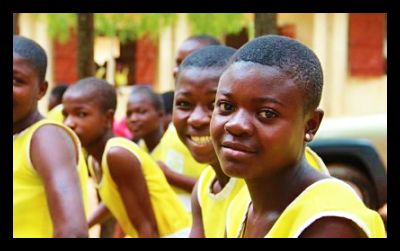
Every year, approximately 275,000 women lose their lives to cervical cancer. The vast majority of these women live in developing countries where it is difficult to access the necessary healthcare, and where the ability to screen, diagnose and treat the life-threatening cancer is rarely available. However, the fight against cervical cancer in developing countries received an unprecedented boost when the GAVI Alliance announced recently that it had guaranteed a record low price of $4.50 per dose for the human papillomavirus (HPV) vaccines.

For the first time, the GAVI Alliance will make the vaccination available to girls of a school age on a widespread scale, and at an affordable price. The GAVI Alliance has already begun their vaccination program in Kenya where cervical cancer is responsible for the deaths of more Kenyan women than any other cancer. In the past, most of the HPV vaccine programs have only been available in richer countries despite the fact that the need for these programs has always existed in developing countries. Dr. Seth Berkley, CEO of the GAVI Alliance, said that through their partnership with WHO and UNICEF, their support for HPV vaccines is “bridging the gap between rich and poor countries, enabling HPV vaccines to reach girls no matter where they live.”

The vaccine is distributed in three doses, and since Kenya has high enrollment rates among girls, schools will become the main centers for the HPV vaccines. With the support of community health workers, the treatment will also be available to girls who are unable to attend school, and who are often at higher risk of contracting the disease.

Seven other sub-Saharan countries will also receive support from the GAVI Alliance in the near future; Ghana, Lao PDR, Madagascar, Malawi, Niger, Sierra Leone and Tanzania. The GAVI Alliance estimates that by 2020, it will have immunized more than 30 million girls in 40 countries. In these countries, where access to diagnosis and treatment is seldom available, providing a preventative vaccine is the clearly preferred option. This news provides hope to millions of girls and women in developing countries who remain at risk of contracting cervical cancer.

– Chloe Isacke
Source: GAVI Alliance,Impatient Optimists
Photo: WUSC

June 13, 2013
https://borgenproject.org/wp-content/uploads/borgen-project-logo.svg 0 0 Borgen Project https://borgenproject.org/wp-content/uploads/borgen-project-logo.svg Borgen Project2013-06-13 04:00:092024-06-05 01:53:31Kenyan Girls Protected from Cervical Cancer
Page 12 of 16«‹1011121314›»

Get Smarter

  • Global Poverty 101
  • Global Poverty… The Good News
  • Global Poverty & U.S. Jobs
  • Global Poverty and National Security
  • Innovative Solutions to Poverty
  • Global Poverty & Aid FAQ’s
Search Search

Take Action

  • Call Congress
  • Email Congress
  • Donate
  • 30 Ways to Help
  • Volunteer Ops
  • Internships
  • Courses & Certificates
  • The Podcast
Borgen Project

“The Borgen Project is an incredible nonprofit organization that is addressing poverty and hunger and working towards ending them.”

-The Huffington Post

Inside The Borgen Project

  • Contact
  • About
  • Financials
  • President
  • Board of Directors
  • Board of Advisors

International Links

  • UK Email Parliament
  • UK Donate
  • Canada Email Parliament

Get Smarter

  • Global Poverty 101
  • Global Poverty… The Good News
  • Global Poverty & U.S. Jobs
  • Global Poverty and National Security
  • Innovative Solutions to Poverty
  • Global Poverty & Aid FAQ’s

Ways to Help

  • Call Congress
  • Email Congress
  • Donate
  • 30 Ways to Help
  • Volunteer Ops
  • Internships
  • Courses & Certificates
  • The Podcast
Scroll to top Scroll to top Scroll to top