• Link to X
  • Link to Facebook
  • Link to Instagram
  • Link to TikTok
  • Link to Youtube
  • About
    • About Us
      • President
      • Board of Directors
      • Board of Advisors
      • Financials
      • Our Methodology
      • Success Tracker
      • Contact
  • Act Now
    • 30 Ways to Help
      • Email Congress
      • Call Congress
      • Volunteer
      • Courses & Certificates
      • Be a Donor
    • Internships
      • In-Office Internships
      • Remote Internships
    • Legislation
      • Politics 101
  • The Blog
  • The Podcast
  • Magazine
  • Donate
  • Click to open the search input field Click to open the search input field Search
  • Menu Menu

Archive for category: Aid Effectiveness & Reform

Information and stories about aid effectiveness and reform

Activism, Aid Effectiveness & Reform, Charity, Food & Hunger, Food Aid, Food Security, Global Poverty, Health

Food Aid in Puntland, Somalia

puntland_cyclone
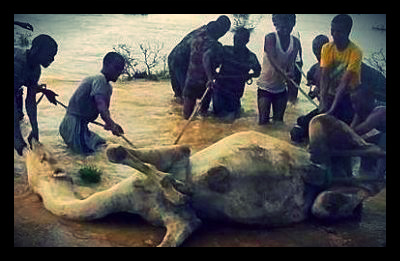
On November 10, a deadly cyclone raged through the region of Puntland, located in Somalia’s northeastern coast. Though the cyclone has reportedly killed up to 300 people, the death toll has not yet been verified. Many of these victims were children and elderly, both of which are more vulnerable to hypothermia and exposure. Moreover, the United Nations says as many as 30,000 people are in need of food aid.

Whole villages have been washed away by the storm, thus forcing local aid workers to struggle to reach the stranded victims due to the damaged infrastructure. Furthermore, large portions of roads have been damaged, driving aid workers to deliver food aid on foot. Many people are also missing, especially in coastal towns where fisherman and their boats have been lost at sea.

Pastoralists have been hit the hardest since their livestock and poorly built homes and barns have been washed away. The region does not normally experience rain so the area’s infrastructure has not been built to withstand this sort of storm. In fact, some of the worst hit villages have lost 90 percent of their livestock to icy rain and flooding.

Moreover, areas infamous for pirates such as the port of Ely are some of the worst affected. This is worrisome as the 2004 Tsunami was considered one of the major triggers of the pirate attacks off the coast of Somalia where 736 people and 32 ships were held hostage.

The World Food Programme (WFP) recently arrived in Puntland and transported 340 metric tons of food including cereal and vegetable seeds to the worst affected areas of Bossaso, Banderbayla, Dongoroyo and Eyl. In total 27, 000 people have been given a month’s worth of food rations. In addition Puntland’s government sent 32 trucks of emergency supplies throughout the needed areas.

Once emergency aid has been distributed and the region is no longer in a state of disaster the WFP will begin recovery work to rebuild the infrastructure of the area. The Food-for-Assets initiative is a recovery program run by the WFP that assists communities in rebuilding their infrastructure in a way that would better withstand a future natural disaster. Moreover, community workers are paid in food rations for assisting with the development.

Further south in Middle Shabelle, flooding has devastated the town of Jowhar and surrounding areas, pushing over 10,000 people to flee their homes. Their water supplies have, furthermore, been contaminated increasing the risk of waterborne diseases, while all standing crops and livestock in the area have been destroyed or lost. The International Committee of the Red Cross has provided 25,800 people with emergency essentials such as kitchen sets, clothes and sleeping mats.  They have also been able to stop flooding and repair riverbanks in five locations and distributed emergency food aid and water.

– Lisa Toole

Sources: AllAfrica: Food Aid, AllAfrica: Twin Natural Disasters, Yahoo, World Food Programme, Aljazeera

January 1, 2014
https://borgenproject.org/wp-content/uploads/borgen-project-logo.svg 0 0 Borgen Project https://borgenproject.org/wp-content/uploads/borgen-project-logo.svg Borgen Project2014-01-01 17:22:102024-05-25 00:37:18Food Aid in Puntland, Somalia
Aid Effectiveness & Reform, Global Poverty, Politics and Political Attention

Fast For Families

Fast_For_Families
On the 11th day of a hunger strike, Vice President Joe Biden made a surprise visit to a Fast for Families strike tent on the National Mall in Washington. The Vice President then prayed with the group and encouraged their efforts to bring immigration reform.

The U.S. Senate passed a bipartisan immigration bill (S.744) in June. However, the House of Representatives has been deadlocked on the issue. Fast for Families supporters have vowed to fast until the House votes on the immigration reform bill that has already passed in the Senate. The Fast for Families effort in Washington is in conjunction with local fasts and events taking place in congressional districts all over the country.

The Vice President’s visit inspired the fasters as he addressed the crowd saying, “[w]e’re going to win this.” Vice President Biden and President Barack Obama have struggled to keep immigration issues in the spotlight since the President made a promise to bring immigration reform in his campaign.

Biden also said during his visit to the Fast for Families tent, that the 11 million undocumented men, women, and children working for citizenship are already Americans. Throughout the first eleven days, Fast for Families has been visited by many public officials including Rep. David Valadao (R-CA), Secretary of Labor Tom Perez, Secretary of Agriculture Tom Vilsack, House Minority Leader Nancy Pelosi (D-CA), and Reverend Jesse Jackson.

Fasters have vowed that they will continue fasting until they can no longer sustain themselves or are “medically prevented” from continuing. Long time immigration reform activists participating in the fast received the Vice President’s visit and message as inspiring. In fact, Biden’s visit, in connection with House Speaker John Boehner’s recent comments at a news conference on November 21 that immigration reform is not dead, has offered hope to immigration reform advocates and a sign that the change they hope for is coming.

For more information and Fast for Families updates, please visit fast4families.org.

– Daren Gottlieb

Sources: Time, Los Angeles Times, Fast for Families
Photo: Media Heavy

December 15, 2013
https://borgenproject.org/wp-content/uploads/borgen-project-logo.svg 0 0 Borgen Project https://borgenproject.org/wp-content/uploads/borgen-project-logo.svg Borgen Project2013-12-15 04:00:552024-06-05 01:53:41Fast For Families
Aid Effectiveness & Reform, Food & Hunger, Food Aid, Global Poverty

Typhoon Haiyan Highlights Food Aid Hindrances

typhoon_haiyan_food_aid_hindrance
Located in the northwestern Pacific, comprised of more than 7,000 islands, the Philippines suffers more storms each year than any other nation in the world.

To date, Typhoon Haiyan is the most catastrophic natural disaster to strike the Philippines. More than 9.7 million people have been affected, with over 3 million of them being displaced due to the storm.

The death toll continues to rise, hitting 3,637 casualties. In a country where poverty and inequality remain a challenge, climatic disasters only thwart the growth of the economy and the citizens.

Typhoon Haiyan destroyed 384,000 acres of rice, corn, and other crops, totaling $105 million worth of damage. These crops are staples in the diets of Filipino culture and countries surrounding them; the damage  is a devastating blow.

With the recent FARM bill heavily under debate in the House and Senate, Congress is in a position to provide the U.S. international food aid program with the flexibility necessary to effectively respond to natural disasters.

Just days after Haiyan struck the Philippines, the USAID’s Office of Food for Peace devoted $7.75 million from the International Disaster Assistance account. These funds will be used to purchase foods for the Philippines and neighboring countries in need.

Currently, 1,100 tons of rice positioned in Sri Lanka are in transit to the distraught area, but are not expected to arrive until December 2. In addition, 55 tons of emergency food products were airlifted from the U.S. to provide aid.

The United States is the top respondent in the world to humanitarian crisis situations around the globe. America’s humanitarianism displays the desire to help others that runs true to core human values.

Yet with food aid come various restrictions that deter not only the process of giving assistance, but the steps to receiving it as well. Food aid restricts the U.S. to only being able to send nutrients that are grown on U.S. soil.

The commodities are then shipped across the ocean; had the U.S. sent rice rather than Sri Lanka, it may have taken 10-12 weeks to arrive. This timeline can be twice as damaging as the storms themselves, considering the starvation and hunger needs that take place immediately after a natural catastrophe.

The argument currently under scrutiny is that it would be much more beneficial to send money; a resource that can be received immediately with limited restrictions.

Although the United States was able to provide financial support, had Typhoon Haiyan taken place at any other time, assistance may not have been available. Due to stipulations on aid, the U.S. may have been limited on cash from responding to crises earlier in the fiscal year.

The U.S. government does not have the flexibility to purchase food resources in any market except its own – a crippling factor that prevents America from being able to reach its full potential of assistance.

Even with the support that has been provided, Typhoon Haiyan has emphasized major errors that exist within food aid. This past spring, President Obama proposed a total reform of food aid. This presidential bid would have forced Congress to consider food aid a foreign aid issue – separating food aid from domestic agricultural issues.

In turn, this would have removed the stipulations that currently surround food aid. President Obama’s proposal was rejected, however, and the FARM bill continues to be ironed out in a special committee in Congress.

– Samaria Garrett
Sources: Common Dreams, Fox News, Brookings

December 8, 2013
https://borgenproject.org/wp-content/uploads/borgen-project-logo.svg 0 0 Borgen Project https://borgenproject.org/wp-content/uploads/borgen-project-logo.svg Borgen Project2013-12-08 04:00:092024-05-25 00:31:49Typhoon Haiyan Highlights Food Aid Hindrances
Aid Effectiveness & Reform

A Top Donor of Humanitarian Aid

Turkey_Top_Donor_in_Humanitarian_Aid
In 2012, Turkey surprised the world by giving more than $1bn in humanitarian aid, placing 4th on the list of the world’s top donors. Which countries find themselves on this list? The top three are the United States ($3.8bn), the European Union ($1.9bn) and the United Kingdom ($1.2bn). Despite Turkey’s economic crisis a few years ago, the country has managed to recover in record time, allocating a large budget for international humanitarian aid.

A sum of this aid has already been working for developing countries such as Somalia. Turkey’s aid program has promoted growth in a country displaced by war and hunger. Since the implementation of Turkey’s government assistance for Somalia there are new school buildings, several projects for rural villages underway and the possibility of new hospitals. Turkey has provided scholarships for students and have advised the Somalis every step of the way. Turkey has even provided a monthly budget of $4.5m per month of additional aid. Red Crescent, Turkey’s primary humanitarian organization has helped with this development throughout Somalia. They have built new health clinics, decontaminated water supplies and cleared trash to better the health of Samalis. Samali ambassadors have called Turkey, “a savior sent by God to Somalia.”

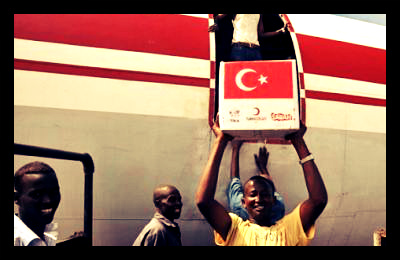
Now a year later, Turkey continues to offer aid. After Typhoon Haiyan hit the Phillipines, Turkey’s Red Crescent sent an Airbus cargo plane filled with tents, blankets and other vital supplies. In total they have given over 65 tons of aid items. Several of Turkey’s humanitarian aid organizations have also sent rescue teams, food packages and have begun work on aid campaigns.  To believe Turkey once received development assistance after its civil war and now contributes alongside superpowers is truly remarkable.

– Maybelline Martez

Sources: The Guardian, The Guardian Aid Effectiveness, World Policy, World Bulletin
Photo: Key Media

December 6, 2013
https://borgenproject.org/wp-content/uploads/borgen-project-logo.svg 0 0 Borgen Project https://borgenproject.org/wp-content/uploads/borgen-project-logo.svg Borgen Project2013-12-06 17:31:322024-05-30 22:22:54A Top Donor of Humanitarian Aid
Activism, Aid Effectiveness & Reform, Global Poverty, Nonprofit Organizations and NGOs

Louis and Anne Abrons Foundation

abrons_foundation_gala_henry_street

The Louis and Anne Abrons Foundation is a private foundation stationed out of New York, NY. Started in 1951, the Abrons Foundation provides gifts, grants, and loans to other organizations in need. Today, its assets range roughly from $10,000,000 to $50,000, 000.

From schools like New York University (NYU) and Wilberforce University to institutions like the Metropolitan Opera House and Henry Street Settlement, the foundation has donated to all types of causes. Most recipients of the Abrons Foundation hail from areas like the District of Columbia, Illinois, Ohio and New York, though funding is not limited to these areas.

Richard Abrons, acting President of the Abrons Foundation, wishes to keep the majority of foundation spending near the home office in New York. “As the president of the Louis and Anne Abrons Foundation, I have overseen grants to more than 200 nonprofits… Most benefit our city (New York), which is our emphasis,” he said in an interview with The Huffington Post.

Richard Abrons is also a well-known playwright in the New York and Los Angeles communities. He is extremely well educated, receiving his BA from Yale, his MBA from Columbia and his MFA from NYU. In addition to the Abrons Foundation, Richard Abrons is Managing Director of First Manhattan Co., an investment management company, and Vice Chairman and former President of the Henry Street Settlement. He is also the director of GrowNYC.

–Meagan Hurley

Sources: Huffington Post, Idiologic, GuideStar, FAQs
Photo: Henry Street


October 23, 2013
https://borgenproject.org/wp-content/uploads/borgen-project-logo.svg 0 0 Borgen Project https://borgenproject.org/wp-content/uploads/borgen-project-logo.svg Borgen Project2013-10-23 16:58:432024-06-05 01:53:41Louis and Anne Abrons Foundation
Aid Effectiveness & Reform, Global Poverty

5 Facts About SKS Finance

vikram_akula_sks_finance
Originally an NGO formed in 1997, SKS Finance became a for profit company in 2005 when it was incorporated as an non-banking finance company (NBFC). Its mission is to provide low-income households with financial services, primarily in India, but potentially across the globe. Here are five facts about the company:

1. The company’s goal is to use microfinance as a tool for reducing poverty and increasing economic opportunity by providing access to insurance and credit. Loans start at about Rs. 2,000 to Rs. 12,000, or about $44-$260. These loans are typically given to poor women in order to help them expand their businesses. Poor women act as guarantors on each other’s loans, using a group lending model. According to SKS Finance, the loans are collateral-free and have a 99% repayment rate.

2. A variety of financial companies including Axis Bank, Barclays, BNP Paribas, CitiBank, HSBC, South Indian Bank, and ING Bank Vysvya have invested in and partnered with SKS Finance.

3. SKS Finance core values are: customer first, ethics always, and consistent quality. This involves transparency with customers, not offering bribes, and fostering innovation without cutting corners. Currently, the company is in the process of rebranding itself. SKS Finance is focusing on removing ambiguities about the company rather than making many specific changes. This need for rebranding came after founder Vikram Akula’s departure from the company and the upheaval that came with legislation passed in 2010. In the recent legislation, the Andhra Pradesh government sought to regulate the micro finance sector’s practices in terms of loan recovery and interest rate charges.

4. As of June 30 of this year, SKS has 51 LAKHS, and 1255 branches in India. The company has helped people like Ameena Bi set up a small mattress selling shop with her husband and a flower shop with the aid of her father. Currently Ameena earns INR 300 or $6 a day and her husband, Abdul, earns between INR 300 and INR 400, or $8.50, a day, whereas just three years before they were making INR 120 or $2 a day.

5. In 2011, Vikram Akula, the founder of SKS Microfinance, left the company amidst much turmoil. In hopes of an impending return, Akula suggested in September that the company had lost its way again. His statements were similar to the narrative that forced his departure two years ago. While current leadership at SKS is more than reluctant to give Akula any role in the company, he has ties with Biksham Gujja, chairperson of SKS Trust. SKS Trust, the largest shareholders in SKS Finance, nominated Akula for the seat now in dispute. SKS Trust is meant to serve SKS borrowers and acts as the largest shareholder in the company. Various people in the company have different attitudes regarding Akula’s possible return. Some say Akula has not made any attempts to return on his own, others that he has no support, and still others believe Akula’s actions are hostile in nature. Some have said there is a lot of support for Akula, otherwise he wouldn’t have received SKS Trust’s nomination. The effect of this public squabbling on SKS borrowers has yet to be fully realized, but doubts are being raised, especially by those worried about the interests of SKS Finance’s beneficiaries.

– The Borgen Project

Sources: SKS India, Business Standard, Economic Times, Times of India
Photo: Hugedatabase.net

October 12, 2013
https://borgenproject.org/wp-content/uploads/borgen-project-logo.svg 0 0 Borgen Project https://borgenproject.org/wp-content/uploads/borgen-project-logo.svg Borgen Project2013-10-12 17:12:172024-12-13 17:49:435 Facts About SKS Finance
Aid Effectiveness & Reform

Keita Becomes New Mali Leader

Keita
The traditionally conflict-ridden state, Mali, recently elected former Mali Prime Minister Ibrahim Boubacar Keita as president. Keita won in a landslide presidential run-off with 78 percent of the national vote. This election was designed to bring stability back to Mali after a recent coup and Islamist rebel takeover of northern Mali. This election also marks a transition back to democracy after 18 months of crisis.

46 percent of 6.8 million registered voters casted their ballots on August 11, 2013. Soumaila Cisse was one of Keita’s competitors and received only roughly 22 percent of the vote, coming second in the run-off election. With this victory, Keita has been awarded a strong mandate bringing peace to Mali. But in addition to trying to secure a lasting peace with the Tuareg separatist rebels in northern Mali, Keita also needs to address military reforms, widespread corruption, and the economic crisis.

This election holds major implications because it is designed to unlock billions in international aid that have been offered to Mali in good faith. Aid to this country by international donors had been blocked after both the 2012 coup and insurgency by radical Islamist forces sent Mali into turmoil. With this election and revival of democracy in Mali, Keita will have access to over 4 billion dollars in reconstruction aid. Additionally, the United Nations will be deploying 12,600 troops in peacekeeping missions as France withdraws their 3,000 troops. In January, France helped the Mali government fight and repel the Islamist insurgents in Timbuktu, Gao, and Kidal.

Although Keita and the return of democracy are welcomed by many, a significant number of Mali southerners are opposed to funding the northerners as they try to recover from Islamist rebel occupation because they blame the north for the country’s current crisis.

Another divisive problem that exists is the promotion of coup leader Captain Amadou Sanogo to the rank of lieutenant general. Sanogo and his forces have been linked to serious crimes such as attacks and torture of civilians. This promotion has been highly scrutinized by groups such as the Human Rights Watch. This scrutinization is the first step to investigations of Sanogo and his departure from the military.

Regardless of the problems and obstacles ahead, Keita is known to be tough and a blunt speaker, but he has affirmed his commitment to bring peace and security reunite the people of Mali. The hope is now that Keita remains true to the people and does not appoint his political backers as a way to repay favors and fill cabinet position with his cronies.

– Rahul Shah

Sources: Reuters, Zee News, BBC
Photo: la Croix

August 30, 2013
https://borgenproject.org/wp-content/uploads/borgen-project-logo.svg 0 0 Borgen Project https://borgenproject.org/wp-content/uploads/borgen-project-logo.svg Borgen Project2013-08-30 04:14:022020-07-09 21:04:51Keita Becomes New Mali Leader
Advocacy, Aid Effectiveness & Reform

Global Poverty Top 5 Books

global_poverty
If you are looking to know more about global poverty and modern international issues, the list below will give you a good starting point. Enjoy your reading!

1. Half the Sky: Turning Oppression into Opportunity for Women Worldwide (Nicholas Kristof and Sheryl WuDunn) – Gender Equality

In their latest publication, Nicholas Kristof and Sheryl WuDunn captivate readers with accounts of women across the developing world. The struggles of these women are devastating and immense: more women have been murdered due to their gender than people killed in all of the 20th century genocides combined. Yet, amongst the murder, sexual assault and misogyny that so many women still face in regions characterized by poverty, Kristof and WuDunn have uncovered stories of resilience and hope. Tellingly, the struggle for gender equality simultaneously remains the paramount moral struggle of the 21st century, as well as the greatest source of optimism for the future.

2. Mountains Beyond Mountains: The Quest of Dr. Paul Farmer, a Man Who Would Cure the World (Tracy Kidder) – Public Health

 In a non-fiction biography, Tracy Kidder illuminates the industrious philanthropist and physician Paul Farmer and his transformative work fighting tuberculosis in Haiti. Harvard-educated and a MacArthur “genius,” Farmer works tirelessly as an advocate for those most in need of modern medicine. Intricately and beautifully, Mountains Beyond Mountains conveys the dire medical needs of those living in abject poverty while also illuminating the radical change that can stem from one person.

3. Behind the Beautiful Forevers: Life, Death, and Hope in a Mumbai Undercity (Katherine Boo) – Global Poverty

Having lived in Bombay’s Annawadi slum for three years, Katherine Boo’s newest work illuminates the lives of those who live on the edge of traditional poverty and widespread globalization, a precarious position unique to the 21st century and India. The narrative, which follows the struggles and triumphs of the slum’s residents, uncovers the grace and poignancy in those too often forgotten, those whose real, daily struggles stretch beyond the reach of the Western imagination.

4. The Dragon’s Gift: The Real Story of China in Africa (Deborah Brautigam) – Chinese Politics in Africa

Deborah Brautigam’s latest book on global poverty demystifies the recent upsurge in Chinese aid throughout Africa. The account, which addresses the tendentious, ongoing conversation revolving around the reality of the Chinese involvement, addresses the surplus of opinions concerning the nature of such aid. Brautigam dismisses myths and underscores facts, providing a lucid account of Chinese aid. Instead of simplifying the conversation to a discussion of merely advantageous economics, Brautigam provides intelligent and interesting insights into China as an unexpected philanthropic force.

5. The Bottom Billion: Why the Poorest Countries are Failing and What Can Be Done About It (Paul Collier) – Global Poverty

Written by one of the world’s foremost experts on African economies, Paul Collier transforms the traditional way in which readers think about global poverty and aid. Collier’s solutions, many of which revolve around empowerment and domestic sustainability, captivate and motivate. Imbued with a wealth of information, The Bottom Billion is an essential text for anyone involved in the struggle against global poverty.

– Anna Purcell

Sources: NY Times, Huffington Post, The Guardian
Photo: Global Fusion

August 24, 2013
https://borgenproject.org/wp-content/uploads/borgen-project-logo.svg 0 0 Borgen Project https://borgenproject.org/wp-content/uploads/borgen-project-logo.svg Borgen Project2013-08-24 12:49:332024-05-25 00:19:04Global Poverty Top 5 Books
Activism, Advocacy, Aid Effectiveness & Reform, Foreign Aid

The Borgen Project Advocates for Foreign Aid

mcdermottmeeting
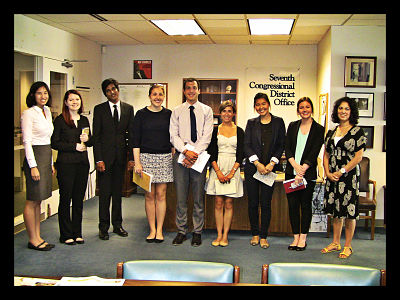
Today, The Borgen Project team paid a visit to Congressman McDermott’s district office in Seattle. They advocated for a stronger international affairs budget, passing the Food Aid Reform Act and the Electrify Africa Act, and other issues related to global poverty.

Laurie Goodman, a PR Intern, said, “This was my first time lobbying in a congressional office and it was a great experience. I definitely suggest that others to contact their local leaders.”

The Borgen Project encourages everyone to schedule a meeting with their local congressional offices and advocate for eradicating poverty.

– Abby Stewart 

August 5, 2013
https://borgenproject.org/wp-content/uploads/borgen-project-logo.svg 0 0 Borgen Project https://borgenproject.org/wp-content/uploads/borgen-project-logo.svg Borgen Project2013-08-05 15:00:352024-05-24 23:40:29The Borgen Project Advocates for Foreign Aid
Aid Effectiveness & Reform, Malaria, Philanthropy

4 TED Talks on Philanthropy

Movies that Matter, Jeff Skoll

Highlight Quote: “One is the gap in opportunity – this gap that President Clinton last night called uneven, unfair and unsustainable – and, out of that, comes poverty and illiteracy and disease and all these evils that we see around us. But perhaps the other, bigger gap is what we call the hope gap. And someone, at some point, came up with this very bad idea that an ordinary individual couldn’t make a difference in the world. And I think that’s just a horrible thing. And so chapter one really begins today, with all of us, because within each of us is the power to equal those opportunity gaps and to close the hope gaps.”

Many TED talks focus on the real, the practical and the pragmatic – on harnessing the abstract powers of good and common sense of humanity in a real life way. Yet many of these talks can leave us, as ordinary citizens feeling somewhat inadequate and unable to make an impact. Jeff Skoll, producer of films including An Inconvenient Truth, Murderball, North Country, Good Night and Good Luck, and Syriana, gives us a talk about how he, as an ordinary citizen, worked his way slowly to Hollywood. Once there, he was able to make a difference by inspiring and spreading awareness through films.

Mosquitos, Malaria and Education, Bill Gates

Highlight Quote: “But I – I’m optimistic. I think people are beginning to recognize how important this is, and it really can make a difference for millions of lives, if we get it right. I only had time to frame those two problems. There’s a lot more problems like that — AIDS, pneumonia – I can just see you’re getting excited, just at the very name of these things. And the skill sets required to tackle these things are very broad. You know, the system doesn’t naturally make it happen. Governments don’t naturally pick these things in the right way. The private sector doesn’t naturally put its resources into these things.”

Perhaps the world’s most recognizable philanthropist, Bill Gates is characteristically shrewd, practical, clear, forward thinking and unexpectedly funny. By asking us to consider how to solve two big problems: malaria and education – Gates shows us how businesslike thinking and determination can solve widespread social problems. In only 18 minutes, Gates gives us a TED talk that is small in stature but big in ideas.

Aid versus Trade, Ngozi Okongo-Iweala

Highlight Quote: “But we are talking about “Africa: the Next Chapter” because we are looking at the old and the present chapter – that we’re looking at, and saying it’s not such a good thing. The picture I showed you before, and this picture, of drought, death and disease is what we usually see. What we want to look at is “Africa: the Next Chapter,” and that’s this: a healthy, smiling, beautiful African. And I think it’s worth remembering what we’ve heard through the conference right from the first day, where I heard that all the important statistics have been given – about where we are now, about how the continent is doing much better. And the importance of that is that we have a platform to build on.”

In 2007, Okongo-Iweala, the former finance minister of Nigeria and director at the World Bank, had the unenviable task of summarizing four days of TED talks. In 22 minutes, she draws from personal experience, global leaders, real-life examples and observations to illustrate the lessons from the conference regarding effective aid, morality, and the pitfalls in the current methods of development assistance.

Cheetahs vs. Hippos, George Ayitteh

Highlight Quote: “Africa is more than a tragedy, in more ways than one. There’s another enduring tragedy, and that tragedy is that there are so many people, so many governments, so many organizations who want to help the people in Africa. They don’t understand. Now, we’re not saying don’t help Africa. Helping Africa is noble. But helping Africa has been turned into a theater of the absurd. It’s like the blind leading the clueless.”

Many ask the question, why is Africa still in the state it is, with so much money being poured into it and so much work being done by so many different organizations? In this talk, Ayitteh addresses some of the problems in development; some coming from Africa itself and others with foreign sources – and more importantly, how to address them. Ayitteh’s talk can be applied to a number of other scenarios and teach us that aid is a practice that needs close monitoring and attention in order to be effective.

– Farahnaz Mohammed

July 31, 2013
https://borgenproject.org/wp-content/uploads/borgen-project-logo.svg 0 0 Borgen Project https://borgenproject.org/wp-content/uploads/borgen-project-logo.svg Borgen Project2013-07-31 04:14:562013-07-31 11:16:104 TED Talks on Philanthropy
Page 10 of 16«‹89101112›»

Get Smarter

  • Global Poverty 101
  • Global Poverty… The Good News
  • Global Poverty & U.S. Jobs
  • Global Poverty and National Security
  • Innovative Solutions to Poverty
  • Global Poverty & Aid FAQ’s
Search Search

Take Action

  • Call Congress
  • Email Congress
  • Donate
  • 30 Ways to Help
  • Volunteer Ops
  • Internships
  • Courses & Certificates
  • The Podcast
Borgen Project

“The Borgen Project is an incredible nonprofit organization that is addressing poverty and hunger and working towards ending them.”

-The Huffington Post

Inside The Borgen Project

  • Contact
  • About
  • Financials
  • President
  • Board of Directors
  • Board of Advisors

International Links

  • UK Email Parliament
  • UK Donate
  • Canada Email Parliament

Get Smarter

  • Global Poverty 101
  • Global Poverty… The Good News
  • Global Poverty & U.S. Jobs
  • Global Poverty and National Security
  • Innovative Solutions to Poverty
  • Global Poverty & Aid FAQ’s

Ways to Help

  • Call Congress
  • Email Congress
  • Donate
  • 30 Ways to Help
  • Volunteer Ops
  • Internships
  • Courses & Certificates
  • The Podcast
Scroll to top Scroll to top Scroll to top