• Link to X
  • Link to Facebook
  • Link to Instagram
  • Link to TikTok
  • Link to Youtube
  • About
    • About Us
      • President
      • Board of Directors
      • Board of Advisors
      • Financials
      • Our Methodology
      • Success Tracker
      • Contact
  • Act Now
    • 30 Ways to Help
      • Email Congress
      • Call Congress
      • Volunteer
      • Courses & Certificates
      • Be a Donor
    • Internships
      • In-Office Internships
      • Remote Internships
    • Legislation
      • Politics 101
  • The Blog
  • The Podcast
  • Magazine
  • Donate
  • Click to open the search input field Click to open the search input field Search
  • Menu Menu

Archive for category: Aid Effectiveness & Reform

Information and stories about aid effectiveness and reform

Aid Effectiveness & Reform, Developing Countries, Development, Economy, Foreign Aid, Global Poverty

Facts About U.S. Aid to Israel

U.S._Aid_to_Israel
Since 1997, Israel has received $3.1 billion annually in foreign aid from the United States. The agreement began almost two decades ago, after Israeli Prime Minister Benjamin Netanyahu spoke before a join session of congress to establish a goal for economic independence.

“Israel’s gross domestic product is at about $250 billion a year, and its per capita income is about $33,000 a year.”

Considering the nation’s level of economic development, the aid could be much more beneficial in other areas. The United Nations Human Development Index currently ranks Israel at 16th in the world and life expectancy at birth is at 81 years—two years higher than the United States itself. Israel has also been the top recipient of United States foreign aid for over the past 30 years.

The question therefore arises, how does a developed nation with per capita gross domestic product on the same level as the European Union average, receive the most amount of aid from the United States?

The answer is riddled with politics and is primarily concerned with influence in the Middle East region. The vast majority of U.S. aid to Israel actually goes to supporting Israel’s military.

The U.S. presently funds about one quarter of Israel’s defense budget.

Much of this aid ends up going to the Israel’s weapons industries. Accordingly, it is not the people of Israel who receive the majority of the aid. In fact, “replacing all American aid would cost Israelis about 1 percent of their income per year,” which is a modest figure considering that the funds could be going to developing nations.

Recent polls show that when asked about the U.S. federal budget, U.S. citizens believe that 28 percent of the budget goes to foreign aid and that the percentage ought to be reduced to 10%. In actuality, less than 1 percent of the U.S. budget goes to foreign aid.Tweet this fact

Considering that much of that 1 percent goes to the economically stable nation of Israel, other programs or nations could use the money much more efficiently.

The U.S. and Israel have had a longstanding alliance, which has contributed to their agreement in military funding. However, considering the purpose of foreign aid, contemporary third world nations facing popular suffering and instability have a far greater need for the help.

– Jugal Patel

Sources: Economonitor, Le Monde
Photo: IMEMC
February 24, 2014
https://borgenproject.org/wp-content/uploads/borgen-project-logo.svg 0 0 Borgen Project https://borgenproject.org/wp-content/uploads/borgen-project-logo.svg Borgen Project2014-02-24 12:30:042020-07-31 11:47:26Facts About U.S. Aid to Israel
Aid Effectiveness & Reform, Developing Countries, Development, Economy, Global Poverty

TOMS Shoe Company: Buy a Pair, Give a Pair

Toms_Shoe_Charity
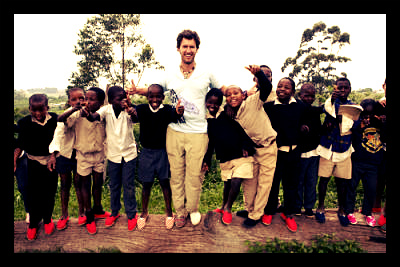
Most people have heard of TOMS shoe company, or even own a pair of TOMS themselves. The shoes are comfortable and casual as well as fashionably cute for everyday wear. In addition, for every pair of shoes purchased from TOMS, another pair is given away to someone in need.

The company has recently been criticized for hurting economies struggling against poverty by taking away business with their shoe give-aways.

A for-profit company, TOMS’s mission is to help societies that are lacking in basic supplies such as shoes. They have announced their plan to produce one third of shoes in the countries in which they donate the extra pair.

Blake Mycoskie, the founder of TOMS shoe company, has stated that the company is looking forward to helping solve more global issues such as clean water, nutrition and education. The company is examining ways to expand their product lines and business model to help further improving the quality of lives of those suffering from poverty around the world.

TOMS website shares how providing shoes to children helps give them the ability to go to school, to work and to participate in their communities without fear of injury and illness that can easily happen with bare feet.

Shoes are a basic need for everyone, and having kids in school, working and being healthy is a huge factor in breaking societies out of poverty.

The TOMS team calculates how many pairs of shoes they sell and match that number in pairs that they will give away.

Partners that operate community health programs in foreign countries work with TOMS to figure out sizes, quantities, and delivery costs. TOMS covers all of the shipping and distribution, and corrects their methods based on feedback from their ‘giving partners’ that are actually working in the societies TOMS donates to.

More and more companies are beginning to realize that making a positive difference in the lives of others is actually a very profitable venture. More than a billion people are living on less than two dollars per day, and that is a huge customer base for a company to cater to.

Viewing the world’s poor as a market share is an innovative and successful way to start a business and simultaneously free people from the cycle of poverty.

The cycle is often perpetuated by illness, malnutrition, unemployment and lack of medical care; these are problems that businesses can solve with new products and services. TOMS is only one of the companies that is thriving in the business world and helping people who really need it every step of the way. Additionally, TOMS personalizes their shoe donations for the different countries they assist. In January 2014, members of the company visited Tanzania and learned that almost half of the residents are under the age of fourteen years old.

This helps them decide types and quantities of shoes to distribute to Tanzania versus another country with alternative statistics. The more successful TOMS becomes, the more people across the globe are receiving shoes and the ability to walk to a better future on their own.

– Kaitlin Sutherby

Sources: The Huffington Post, Toms, Toms Stories
Photo: Forbes

February 23, 2014
https://borgenproject.org/wp-content/uploads/borgen-project-logo.svg 0 0 Borgen Project https://borgenproject.org/wp-content/uploads/borgen-project-logo.svg Borgen Project2014-02-23 04:00:312024-12-13 17:50:04TOMS Shoe Company: Buy a Pair, Give a Pair
Aid Effectiveness & Reform, Economy, Food & Hunger, Food Aid, Food Security, Global Poverty

Hunger in Zimbabwe

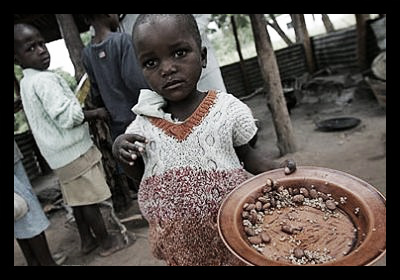
zimbabwe_food_hunger
Drought in Zimbabwe is reaching epic proportions as nearly one million people are at risk of food insecurity. According to the 2013 Zimbabwe Vulnerability Assessment Committee (ZimVAC,) food insecurity levels will affect roughly 2.2 million Zimbabweans at the peak of hunger season between January and March in the upcoming year. Zimbabwe already suffers from high poverty rates as approximately 72 percent of citizens currently below the poverty line and nearly 14.7 percent of the population is HIV prevalent.

Zimbabwe relies heavily on rain-fed agriculture, which has since plummeted since last season’s drought.  As the need for food increases, maize, a primary source of food in Zimbabwe, continues to rise in price making it more difficult on a population who already lives on less than a $1 a day. Making matters worse, the World Food Programme (WFP) recently announced that their initial plan of providing support for 1.8 million people will be drastically reduced.

“We’d been hoping to have scaled up our seasonal relief operations to reach 1.8 million people in the coming months with distributions of food aid, in some areas, cash transfers. Despite generous contributions from donors such as (United States,) (United Kingdom,) Japan, Australia, ECHO and the central Emergency Relief Fund (UN CERF), it’s now looking like all this will not be possible because of a shortage of funds. In fact, we’ve had to cut rations for one million of our beneficiaries in recent months and there are likely to be deeper cuts as from next month,” said WFP in a statement to the media.

Of the $86 million funding dispersed by the previous listed countries, only half of it has been implemented into relief intervention. “Rising food prices are making matters worse — in some areas, they are as much as double what they were last year,” says WFP communications manager Tomson Phiri.

These rising prices in the market are heavily affecting food security and although WFP is short on funding, they are hoping to raise another $60 million over the next 6 months in an effort to implement relief and recovery operations.

– Jeffrey Scott Haley
Feature Writer

Sources: World Food Programme, World Food Programme, Zimeye
Photo: The Telegraph

February 8, 2014
https://borgenproject.org/wp-content/uploads/borgen-project-logo.svg 0 0 Borgen Project https://borgenproject.org/wp-content/uploads/borgen-project-logo.svg Borgen Project2014-02-08 04:00:472024-12-13 17:49:57Hunger in Zimbabwe
Aid Effectiveness & Reform, Children, Economy, Extreme Poverty, Global Poverty

Are Needy Children in Nigeria Invisible?

children_nigeria
As the most populous country in all of Africa, the Federal Republic of Nigeria is made up of over 250 ethnic groups. The following are the most populous: Fulani and Hausa, 29 percent; Yoruba, 21 percent; Igbo, 18 percent and Ijaw 10 percent.  They also have a significant split in religion, with 50 percent of the population being Muslim and 40 percent of the population being Christian.

With the largest population in Africa, Nigeria has 174,507,539 people and is ranked as having the 8th highest amount of people in the world.  Of all those people, 76,461,896 are fourteen years of age or younger, meaning 43.8 percent of Nigerians are children.  Of that 43.8 percent, about 60 percent lack birth certificates, meaning they are not permitted to use many government facilities that would normally be free with proper proof of citizenship.

Nigeria’s government is trying to reform its petroleum-based economy, but through all the corruption in that sector, it is not focusing as much on the youth in need.  On top of that, presidential elections are tarnished by substantial violence and irregularities and the country has been undergoing long-lasting religious and ethnic conflicts, which also takes focus away from the children in need.  These children need help; about 1,000,000 children die each year in Nigeria before their fifth birthday (10 percent of the global total.) What they need to save more lives is continuous investment and organized scaling up of essential newborn, maternal, and juvenile health interventions.

In Nigeria, there are numerous state hospitals that are free for children under the age of five, but the only dilemma is that the majority of these children do not have birth certificates.  This is a catch-22 because the hospitals admit patients under five for free with proof of age, but these children have never had any way to prove how old they truly are.  From there, they have no choice but to go to a private hospital for treatment where they are forced to pay $45 (a trivial amount for a life-saving medication in the United States,) but an unfathomable expense for the people living in this region, especially since most of them live on less than a dollar per day.

The number of children lacking birth certificates in Nigeria is up to about 17,000,000, a number second only to India, which has 71,000,000 unregistered children.  According to UNICEF, one out of every three children in Sub-Saharan Africa does not “officially exist,” but does that mean that they do not still need help?  The undocumented children in Nigeria are denied education and healthcare and often times have their rights abused.  Their parents often times cannot even help them because in these rural areas many are uneducated and are not aware of how important it is to register their children.

The deficiency of birth records in Nigeria also causes an error in the government’s efforts to track demographic information.  Without the proper information on how many children need hospitalization or immunization, the government cannot tell how many vaccines it needs from organizations like UNICEF, it cannot tell how many children have already died nor the cause of death.

The good news is UNICEF is trying to convince people to register their children and trying to increase the number of registration centers in Nigeria so the families can have easier access.  They plan on having 65 percent to 70 percent of children be registered with official birth certificates within the next few years.

– Kenneth W. Kliesner

Sources: CIA World Factbook, Voice of America ,UNICEF
Photo: The Guardian

February 2, 2014
https://borgenproject.org/wp-content/uploads/borgen-project-logo.svg 0 0 Borgen Project https://borgenproject.org/wp-content/uploads/borgen-project-logo.svg Borgen Project2014-02-02 04:00:382024-05-26 23:07:46Are Needy Children in Nigeria Invisible?
Aid Effectiveness & Reform, Foreign Aid

Australian Foreign Assistance Cuts

Australian_Foreign_Assistance
Australian Foreign Minister Julie Bishop recently announced Australia’s plans for its foreign assistant budget in 2014 to the tune of over AUD$5 billion, which will be implemented through foreign aid expenditures. Unfortunately, Australia will be making $107 million in cuts in comparison to last year’s budget, which will ultimately affect many ongoing programs, particularly in Africa.

It was also confirmed by the Department of Foreign Affairs and Trade (DFAT) that Australia’s share of the latest round of funding towards the International Development Association (IDA,) will be cut to AUD$735 million. Bishop spoke openly about the cuts in funding recently and defended them by saying it is an effort to move away from a “hand out culture” and improve Australian foreign assistance efficiency.

“In this way, we have an aid budget that the Australian people will be proud of. We believe that this refocus of our aid budget will deliver effective outcomes. Under Labor’s last budget, they were to receive 2.5 percent of overseas development assistance (ODA.) Under this revised budget they will receive 2.7 percent of ODA- [which] is four times what these non-government organizations received from 2007 and 2008,” said Bishop.

Other organizations also spoke about the cuts, but more critically. Archie Law, the executive director of ActionAid, which operates in 40 countries internationally, said, “But what it hasn’t done until now is given a little bit more detail of where those cuts are coming from. Particularly concerning is the fact that it looks like the Africa program will be cut in half. The region which has more people living in poverty per capita than anywhere else in the world will receive half the assistance from Australia when they receive pretty little in the first place.”

While there is valid support for both sides of the situation, what is universally agreed upon is that there needs to be a healthy level of accountability overseeing how Australian aid money is spent. Australia will continue to meet many of its prior obligations such as the Multilateral Debt Relief Initiative and will focus its efforts in the 2014 year specifically in the Indo-Pacific area.

– Jeffrey Scott Haley
Feature Writer

Sources: The Australian
Photo: The Guardian

January 29, 2014
https://borgenproject.org/wp-content/uploads/borgen-project-logo.svg 0 0 Borgen Project https://borgenproject.org/wp-content/uploads/borgen-project-logo.svg Borgen Project2014-01-29 19:59:502024-06-11 02:21:51Australian Foreign Assistance Cuts
Aid Effectiveness & Reform, Foreign Aid, Foreign Policy, Global Poverty, Government, Politics and Political Attention

Corruption Stifles Aid in Malawi

Corruption_Stifles_Aid_Malawi
In the wake of the recent corruption scandal known as “Cashgate,” the British Department for International Development (DfID) has frozen aid to Malawi. Experts on foreign aid are concerned the freeze might prove catastrophic for both the health and education sectors in the small country.

In November 2013, it was discovered that governmental officials in Malawi had taken aid dollars for themselves to the tune of $250 million. After the failed assassination, Budget Director Paul Mphwiyo—who was thought to be a whistle blower—and the region’s police force found money stashed in the homes of several members of the government.

Nations responsible for supplying Malawi with foreign aid promptly suspended all funds that had gone to support the Malawian government directly. Additionally, The Guardian reports “the DfID went a step further” by freezing funds that affect healthcare and education.

Malawi receives nearly half of its budget from foreign sources, meaning that its people will soon be without essential services, experts warn. To make matters worse, the United Kingdom is the largest donor to Malawi.

The breakdown, however, illustrates a difficult challenge for all donor nations, not just the U.K. For example, amid rampant and violent corruption it is difficult to rationalize making contributions to a developing nation. Likewise, pulling the plug on necessary programs creates internal instability and hardship for the people who rely on those donations.

Most Malawians survive through subsistence farming, and nearly three-quarters live on $1.25 per day or less.

Malawi is now making attempts to be more transparent with donor money, and is trying, yet again, to inspire donor confidence. However, this latest breach of trust was, for the DflD, a point of no return.

The head of the Malawi branch of the DflD, Sarah Sanyahumbi, was quoted as saying, “This is not business as usual. As far as we are concerned, the line has been crossed, so once the line has been crossed you cannot go back to what you had before.”

For many of Malawi’s most vulnerable, this is unfortunate news. The future for the young and ill in Malawi remains unclear as of yet. However, it seems unlikely it will be good without a new agreement between nations.

– Chase Colton

Sources: The Guardian, International Business Times, The Borgen Project
Photo: Mideast Posts

January 24, 2014
https://borgenproject.org/wp-content/uploads/borgen-project-logo.svg 0 0 Borgen Project https://borgenproject.org/wp-content/uploads/borgen-project-logo.svg Borgen Project2014-01-24 15:44:072024-05-26 23:06:07Corruption Stifles Aid in Malawi
Advocacy, Aid Effectiveness & Reform, Global Poverty

Broadway Success is Fleeting

Broadway
Daniel Craig and Rachel Weisz had already solidified their fame and fortune in the acting world before their 2013 hit on Broadway.  The pair starred in Harold Pinter’s play ‘Betrayal,’ which earned an impressive $17.5 million in only 14 weeks.  Though the play itself was not fawned over by critics, the opportunity to see the married couple on stage drew so many individuals that the play became the year’s second highest grossing play on Broadway.  Nora Ephron’s play ‘Lucky Guy’ held the top position, garnering $23 million in 18 weeks.  The duo is known for its humanitarian work, so how does their recent gig stack up to their causes?

One of Weisz’s focuses is the World Food Programme, for whom she appears in a short promotional video.  The United Nations organization published a projection of 2013 needs for emergency programs, topping $1.45 billion.  The West African sector was projected to require just over $81 million for Ghana, Liberia, and regional refugees and displaced persons due to instability in Mali.  The play’s $17.5 million is just short of 25 percent of the entire projected need of West Africa.

Meanwhile, Craig supports the Afghanistan Relief Organization (ARO.)  The ARO works to provide direct assistance to Afghanis who need it, with a range of programs including Infant Care Kits, Teacher Training, and a Greenhouse Project that provides seeds to farmers and food to the hungry.  The organization’s 2006 total expenses were $189,629.  The Broadway play’s earnings could provide the ARO with 92 more years of services at the same cost, or exponentially increase the operating budget and thus provide more, and higher quality services to more people.

The play’s 14 weeks on Broadway earned more money than most individuals in the world will earn in their lifetimes, and more money than some humanitarian organizations will spend in their existence.  It is safe to say any of Weisz’s or Craig’s favorite humanitarian causes would be thrilled to receive $17.5 million to further their aims.

– Katey Baker-Smith

Sources: Afghan Relief, World Food Programme
Photo: SMS Gif

January 15, 2014
https://borgenproject.org/wp-content/uploads/borgen-project-logo.svg 0 0 Borgen Project https://borgenproject.org/wp-content/uploads/borgen-project-logo.svg Borgen Project2014-01-15 01:10:202024-12-13 17:49:54Broadway Success is Fleeting
Activism, Advocacy, Aid Effectiveness & Reform, Developing Countries, Foreign Aid, Foreign Policy, Global Health, Global Poverty, Health

WISH Summit Innovates Health Care Systems

bike
The inaugural World Innovation Summit for Health (WISH) – a conglomeration of entrepreneurs, business leaders, academics and technicians in the health space – convened last week in Qatar. As its title suggests, WISH serves as an arena for international delegates to create and implement innovative, nontraditional solutions to pressing issues in global health.

One participant, Londoner Lord Darzi of Denham (chairman of the Institute of Global Innovation at Imperial College), succinctly stated after the announcement of the Summit that “WISH is about action.”

Qatar’s newfound consideration as a hub for frontline innovation- principally through the Qatar Foundation- landed the nation the opportunity to host the prestigious two-day summit event. The Foundation has been on the forefront of the nation’s “visionary national health strategy” and initiated a first-of-its-kind investigation into the healthcare systems of eight major world players, the United Kingdom, the United States, Spain, Australia, South Africa, Brazil, India and Qatar. The Global Innovation Diffusion Report, unveiled on the second day of the summit, presented a well-researched report card of how each nation fosters and incorporates innovation to maximize health outcomes for their citizens.

The report noted both victories and areas in need of improvement for the eight nations of study. Each succeeded on a general level in identifying and addressing doctors and involving patients in treatment. Unfortunately, however, every nation but Qatar fell short in matching research-based suggestions with real changes in the health care space. Expert assessments of appropriate technological or practical innovations were ignored for different reasons in each nation.

In Spain and the United Kingdom, the least innovative countries, funds for research and development are scarce. New ideas simply cannot get off the ground because there is no money to put wind in their sails to begin with. Australia, Brazil and South Africa were slightly more successful than their European counterparts, but need to improve incentives for academics and policymakers who spread innovation. The United States and India showed a consistent, but small, gap between the ideal and reality.

The thorough case study concluded that innovation is most successfully spurred in the United States when incorporated into (or alongside) insurance and the accompanying payment system. Incidentally, the report identified the rollout of Patient Centered Medical Home (PCMH) programs as a major success for the U.S. in terms of innovation implementation. PCMH programs encourage primary care providers to tailor payments around patient outcomes and foster cooperation between medical and social services.

Moving forward, hot areas of progress for medical innovation will likely include: the application of mobile technology to share and store medical information; policymaking that encourages clinicians to adopt new ways of working; mobilization of resources to allow coordination between researchers and clinicians; and the development of an “innovation culture” and leadership among front line health care professionals.

Delegates representing our nation will undoubtedly confer about these recent findings and carve out a designated space for innovation in discussions touching on future policies, programs and technologies.

– Casey Ernstes

Sources: Gulf News, NCQA, PR News Wire, World Innovation Summit for Health: Home, World Innovation Summit for Health: Global Diffusion
Photo: Vintage 3D

January 14, 2014
https://borgenproject.org/wp-content/uploads/borgen-project-logo.svg 0 0 Borgen Project https://borgenproject.org/wp-content/uploads/borgen-project-logo.svg Borgen Project2014-01-14 09:54:332017-03-20 13:12:30WISH Summit Innovates Health Care Systems
Activism, Advocacy, Aid Effectiveness & Reform, Global Poverty, Philanthropy

The Case Against Gift Aid

The Case Against Gift Aid
Initiated less than forty years ago, the UK Gift Aid incentive aggrandizes donations received through select charities by providing tax deductions to the donor.

By means of Gift Aid, charities are able to reclaim the basic tax rate (20%) of the donation at no cost to the donor. For example, if an individual donates £10 using Gift Aid, the charity itself receives £12.50. With non-monetary contributions, the original tax is added back in to the overall value of the item. Thus, if a table valued at £100 is supplied, the charity is able to retain the item at £125.

However, before one is eligible to provide a Gift Aid donation, a form documenting basic personal information such as name, home address and information about the designated charity is required. Furthermore, this form is rather versatile in that it can be applied to future donations as well. On the surface, Gift Aid appears ingenious and innovative, and in many ways, it is. Yet, like many other programs wrought by good intentions, this incentive should be wary of also being susceptible to corruption.

For one, Gift Aid is plagued by complexity and ambiguity in its guidelines and operations.

Revenue and Customs declare that the donated items are in fact the possessions of the donor and the charity in question acts as a mere representative. Therefore, it is the donor — not the organization — who has the authority to not only give all or a portion of the sale’s proceeds but also to retain all or a portion of the profits. Meaning, an individual may decide to utilize Gift Aid out of greed and a personal, profit agenda rather than benevolence and an honest desire to give back to others.

The mandatory Gift Aid forms are composed in such a manner that donors are not held accountable for whether proceeds are bequeathed to the charity or not. Thus, an individual could legally sell his or her belongings using the Gift Aid incentive and keep all of the proceeds — leaving the charity, which handles the actual selling of the item, bereft of any profit.

According to the Institute of Fundraising, “the goods are the property of the owner until they are sold, and after they are sold, [the owner] has the right to keep some or all of the proceeds.” Although individuals who are initially willing to sell their personal belongings under Gift Aid may not initially expect to monetarily gain from the transaction.  Because this gaping loophole still exists, the incentive may be vulnerable, or opens an opportunity with the advantage, to misuse.

– Phoebe Pradhan

Sources: HM Revenue and Customs, The Guardian
Photo: Vintage 3D

January 12, 2014
https://borgenproject.org/wp-content/uploads/borgen-project-logo.svg 0 0 Borgen Project https://borgenproject.org/wp-content/uploads/borgen-project-logo.svg Borgen Project2014-01-12 13:34:242020-08-29 00:12:14The Case Against Gift Aid
Aid Effectiveness & Reform, Global Poverty

Aid Uses: Well-being or Market Growth?

Aid Uses Well-being or Market Growth
It is an important question that continues to factor in how each relief agency uses its funding: whether aid should be used mainly to stimulate economic growth or to provide for the basic needs of struggling and vulnerable people.

The history of international aid seems to have been forged by colonizers like Germany, France and Britain providing support to foster economic development in the colonies.

This system has survived to this day, but is it the right system? In other words, does it provide the most good to the most people? If aid helps build economies, in many senses it goes from the top down, as money is distributed from the private sector to employees. However, much can happen to the money as it trickles down.

It would seem that the best thing would be to cut out the middleman and give the money directly to the institutions that know the impoverished intimately and have the ability to provide for the needs of the people. Following the Haitian earthquake in 2010, only 10% of the $6 billion in aid was given to the Haitian government.

National and local institutions are essential in providing basic amenities to the poor, such as healthcare and clean water.

Instead, funding is being channeled into dead investments, such as job training for jobs without living wages. Relief agencies need to partner with local institutions with the goal of eventually handing off the responsibility of distributing the funds if they hope to make a lasting and beneficial change in the lives of the poor.

The food, medicine and supplies that are given to the world’s poor from NGOs only do so much, whereas creating sustainable healthcare and clean water establishments have much greater potential for curbing poverty. It is a reflection of the proverbial phrase ‘Give a man a fish and you feed him for a day. Teach a man to fish and you feed him for a lifetime.’

However, there is much to be said for stimulating local businesses. The success of the Marshall Plan should offer us an example of what can happen when aid is invested into market growth the right way. The Marshall Plan provided loans for local businesses, which were paid back to the governments, who in turn used it to strengthen commercial infrastructure. Furthermore, ensuring local businesses could succeed was a prerequisite in qualifying for the plan. With this strategy the Marshall Plan helped rebuild the economies of Western Europe.

Although the problems faced by the world’s poor stay the same- lack of food, housing, healthcare, clean water, etc.- the potential resources that can help are different. This is why results-based programs are so important. Given proper information, relief agencies are better able to fulfill the needs of the poor. The best solutions seem to happen when donors partner with national and local institutions to attack the underlying barriers that exist in moving out of poverty.

– Jordan Schunk

Sources: Australian Broadcasting Company, Businessweek, Foreign Affairs
Photo: Giphy.com

January 12, 2014
https://borgenproject.org/wp-content/uploads/borgen-project-logo.svg 0 0 Borgen Project https://borgenproject.org/wp-content/uploads/borgen-project-logo.svg Borgen Project2014-01-12 11:40:302020-08-29 00:12:29Aid Uses: Well-being or Market Growth?
Page 9 of 16«‹7891011›»

Get Smarter

  • Global Poverty 101
  • Global Poverty… The Good News
  • Global Poverty & U.S. Jobs
  • Global Poverty and National Security
  • Innovative Solutions to Poverty
  • Global Poverty & Aid FAQ’s
Search Search

Take Action

  • Call Congress
  • Email Congress
  • Donate
  • 30 Ways to Help
  • Volunteer Ops
  • Internships
  • Courses & Certificates
  • The Podcast
Borgen Project

“The Borgen Project is an incredible nonprofit organization that is addressing poverty and hunger and working towards ending them.”

-The Huffington Post

Inside The Borgen Project

  • Contact
  • About
  • Financials
  • President
  • Board of Directors
  • Board of Advisors

International Links

  • UK Email Parliament
  • UK Donate
  • Canada Email Parliament

Get Smarter

  • Global Poverty 101
  • Global Poverty… The Good News
  • Global Poverty & U.S. Jobs
  • Global Poverty and National Security
  • Innovative Solutions to Poverty
  • Global Poverty & Aid FAQ’s

Ways to Help

  • Call Congress
  • Email Congress
  • Donate
  • 30 Ways to Help
  • Volunteer Ops
  • Internships
  • Courses & Certificates
  • The Podcast
Scroll to top Scroll to top Scroll to top