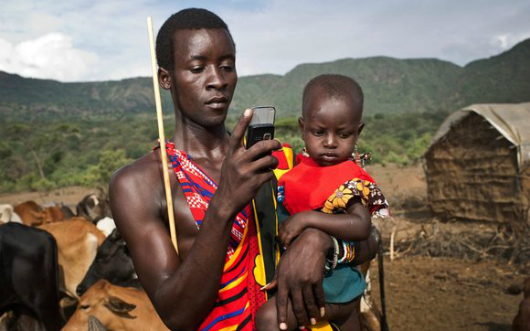
 Kenya’s national energy grid reaches less than 20 percent of the country’s population, leaving millions of people in remote locations without access to energy in Africa. Because of this, many turn to alternatives sources of energy that are much more expensive and harmful to the environment, such as kerosene and diesel.
Developers have strived to solve this problem with solar micro-grid technology. However, in remote areas, it is difficult to keep a system working reliably and keep customers paying regularly. Recognizing Kenya’s utilization of mobile technology, the founders of SteamaCo have created technology that eliminates the necessity for constant outside intervention. SteamaCo’s development allows remote-management capabilities of monitoring, control, and payments for micro-grid owners via mobile technology.
This technology allows micro-grid operators to monitor grid performance via SMS updates on their cell phones and allows customers to manage their payments over mobile payment plans. Over 1,000 households and businesses currently depend on this technology, which is used at 25 sites in East Africa. The company’s software, Steama, facilitates 100 mobile payments and 4,000 messages regarding data per day.
While the company initially focused on the production and installation of renewable energy systems, it strayed to micro-grids in order to increase electricity access on a broader scale. Micro-grid owners buy the hardware and then SteamaCo licenses them the software on a monthly basis.
The company’s hardware switches on and off services remotely, while the operators can watch and control the system remotely in real-time using the cloud software. Steama processes monitoring information and payment notifications from mobile-money providers, updating the hardware accordingly when payments are made.
The software allows operators to view their micro-grids and extract data from the Steama dashboard, which provides them several options to observe and analyze system performance. Steama sends data regarding individual power usage, overall system performance and individual payments. It can also be programmed to send custom alerts. SteamaCo sends data via SMS messages because it is known to be one of the most reliable forms of communication off the grid.
These features allow micro-grids to function much more efficiently. The technology allows micro-grid owners to troubleshoot problems before they grow too serious, therefore saving companies time and money. It also helps them better analyze system capacity to see how they can expand the services they provide.
The technology provides consumers a cheap and reliable energy alternative to diesel, kerosene, and other popular systems. While in-home solar energy platforms are available to provide lighting and charge mobile phones in many locations, it is too expensive for most individual users to manage these off-grid systems. SteamaCo provides flexibility for customers who can prepay using mobile money programs in small amounts. The software also provides free balance checks and reminders when credit is low, all via SMS.
Payment depends on the micro-grid owner, but most customers pay a connection fee of approximately 10 U.S. dollars and then pay between two to four U.S. dollars per kWh used. By enabling customers to provide prepayments for small increments of power using mobile money, SteamaCo is opening up many possibilities for poor people in remote locations.
Along with increasing household convenience, increased access to energy in Africa also opens up many new business opportunities in remote areas. The technology allows high-power equipment to be used, including music systems, televisions, irons, and hair-dryers. The increased access to power has enabled local entrepreneurs to open up hair salons, electrical repair shops, and night clubs, all boosting the economy.
Not only does this technology bring more reliable energy to current users in Africa, but this reliability also provides a solution to a large issue seen by many potential investors in micro-grid technology. Because of this, Ashden International awarded SteamCo the Ashden International Gold and Business Innovation Awards for the company’s success in building technology that helps investment in micro-grids, therefore expanding the potential reach of electricity access significantly.
“SteamaCo’s innovative product is helping to take energy access in off-grid rural areas to the next level,” the Ashden judging panel stated. “By developing hardware and cloud-based software to remotely monitor energy use and payments, it has overcome one of the key barriers to making micro-grids investable.”
In its two years of installing these systems, SteamaCo has partnered with several micro-grid investors to increase grid efficiency. The company designed the hardware to be used with various types of technology, so several SteamaCo management systems are used in many off-grid areas. The company is looking to expand its opportunities in other remote areas to increase its reach and impact.
– Arin Kerstein
Sources: Ashden, Global Energy Network Institute, The Guardian, Reuters, SteamaCo
Photo:The Sunday Times

Effects of Open Defecation in India
The government launched the Swachh Bharat Mission last year, which promises 110 million toilets built in the next five years in an effort to make India an “open defecation free country.” In an added bonus, the waste collected would be converted to fertilizer and other forms of energy. Lauded as a “sacred mission” that would coincide with the 150th anniversary of Mahatma Gandhi’s birth, this mission has gained approval from almost all sections of the government and society.
But most people from rural areas have shown an unwillingness to discontinue their habits of open defecation even if they are given toilets. Many people who already have toilets in their house forgo its use in favor of defecating in the open. In 40 percent of households that had a toilet, at least one member chose not to use it at all. They believe that defecating in the open is more natural and healthy, and that building a latrine in the house brings impurity to it. The two-thousand-year-old Hindu text, called the “Laws of Manu,” encourages open defecation.
Community toilets also have the added problem of being—by nature—shared, and people from different castes, religions and economic status are not willing to use the same toilet, even if they come from the same village.
However, open defecation practices remain a huge health and safety risk, and issues will only increase as India’s population grows. There have been hundreds of cases of women being raped as they leave their homes after dark. In one notorious case, two women from Utter Pradesh were raped, murdered and hung on trees after they were defecating in an open field.
India’s dense population also means that even in rural areas, human feces are not easily kept away from fields, wells and food. Bacteria and worms in feces are often accidentally ingested. This results in a range of health problems from diarrhea to enteropathy, a chronic sickness that prevents the absorption of calories and nutrients. Many specialists believe that the problems open defecation causes are the reason 50 percent of Indian children are malnourished.
A government study comparing Muslim and Hindu households supports these conjectures. The study found that 25 percent fewer Muslim families defecated in the open and also had lower child mortality rates than Hindu families—even though Muslims in India are poorer and less educated than their Hindu counterparts. In the few areas where more Muslims defecated in the open than Hindus, they had higher child mortality rates.
Social norms and habits need to be changed if open defecation is to be successfully fought. Simply building more toilets will not do the job. The government has already taken some steps to educate people about the dangers of open defecation and reward those who use latrines. In Haryana for instance, it launched the “No Toilet, No Bride” campaign that urged women to only marry men whose home had a toilet.
– Radhika Singh
Sources: Scroll, Government of India, The Economist, BBC,
Photo: Flickr
Mobile Technology to Provide Energy in Africa
Developers have strived to solve this problem with solar micro-grid technology. However, in remote areas, it is difficult to keep a system working reliably and keep customers paying regularly. Recognizing Kenya’s utilization of mobile technology, the founders of SteamaCo have created technology that eliminates the necessity for constant outside intervention. SteamaCo’s development allows remote-management capabilities of monitoring, control, and payments for micro-grid owners via mobile technology.
This technology allows micro-grid operators to monitor grid performance via SMS updates on their cell phones and allows customers to manage their payments over mobile payment plans. Over 1,000 households and businesses currently depend on this technology, which is used at 25 sites in East Africa. The company’s software, Steama, facilitates 100 mobile payments and 4,000 messages regarding data per day.
While the company initially focused on the production and installation of renewable energy systems, it strayed to micro-grids in order to increase electricity access on a broader scale. Micro-grid owners buy the hardware and then SteamaCo licenses them the software on a monthly basis.
The company’s hardware switches on and off services remotely, while the operators can watch and control the system remotely in real-time using the cloud software. Steama processes monitoring information and payment notifications from mobile-money providers, updating the hardware accordingly when payments are made.
The software allows operators to view their micro-grids and extract data from the Steama dashboard, which provides them several options to observe and analyze system performance. Steama sends data regarding individual power usage, overall system performance and individual payments. It can also be programmed to send custom alerts. SteamaCo sends data via SMS messages because it is known to be one of the most reliable forms of communication off the grid.
These features allow micro-grids to function much more efficiently. The technology allows micro-grid owners to troubleshoot problems before they grow too serious, therefore saving companies time and money. It also helps them better analyze system capacity to see how they can expand the services they provide.
The technology provides consumers a cheap and reliable energy alternative to diesel, kerosene, and other popular systems. While in-home solar energy platforms are available to provide lighting and charge mobile phones in many locations, it is too expensive for most individual users to manage these off-grid systems. SteamaCo provides flexibility for customers who can prepay using mobile money programs in small amounts. The software also provides free balance checks and reminders when credit is low, all via SMS.
Payment depends on the micro-grid owner, but most customers pay a connection fee of approximately 10 U.S. dollars and then pay between two to four U.S. dollars per kWh used. By enabling customers to provide prepayments for small increments of power using mobile money, SteamaCo is opening up many possibilities for poor people in remote locations.
Along with increasing household convenience, increased access to energy in Africa also opens up many new business opportunities in remote areas. The technology allows high-power equipment to be used, including music systems, televisions, irons, and hair-dryers. The increased access to power has enabled local entrepreneurs to open up hair salons, electrical repair shops, and night clubs, all boosting the economy.
Not only does this technology bring more reliable energy to current users in Africa, but this reliability also provides a solution to a large issue seen by many potential investors in micro-grid technology. Because of this, Ashden International awarded SteamCo the Ashden International Gold and Business Innovation Awards for the company’s success in building technology that helps investment in micro-grids, therefore expanding the potential reach of electricity access significantly.
“SteamaCo’s innovative product is helping to take energy access in off-grid rural areas to the next level,” the Ashden judging panel stated. “By developing hardware and cloud-based software to remotely monitor energy use and payments, it has overcome one of the key barriers to making micro-grids investable.”
In its two years of installing these systems, SteamaCo has partnered with several micro-grid investors to increase grid efficiency. The company designed the hardware to be used with various types of technology, so several SteamaCo management systems are used in many off-grid areas. The company is looking to expand its opportunities in other remote areas to increase its reach and impact.
– Arin Kerstein
Sources: Ashden, Global Energy Network Institute, The Guardian, Reuters, SteamaCo
Photo:The Sunday Times
How Faith is Fighting Ebola in Sierra Leone
In a country that has witnessed Ebola’s devastating effects, religious leaders from all walks of life have come together to work to end the epidemic. Of the 27,479 confirmed cases of Ebola reported by the World Health Organization, over 13,000 have been reported in Sierra Leone.
The Freetown-based NGP, Focus 1000 came up with the idea to use interfaith dialogue to educate citizens about the dangers of Ebola. In a country that is 78 percent Muslim and 21 percent, Christian, it has been one of the most successful means of combating the deadly disease.
One of the main causes of the unprecedented spread of Ebola was the lack of understanding that Ebola spread through bodily fluids even after the victim had died. Muslim and Christian burial rites composed of family members washing the deceased patients. Coupled with mistrust of the government and aid worker’s body disposal protocols, it created a situation where infections were being passed along routinely.
Ramadan Jollah, the chief Imam of the Jam’iyatul Haq Mosque in Freetown explained, “Sierra Leone has a clear understanding of what religion really is — that religion is not there to create problems between people but instead to bring people together.” Together, Muslim and Christian leaders have used their anointed trust to help their communities follow health protocols.
The Imam has used verses of the Qur’an to appeal to Ebola prevention tactics. The Qur’an allows Muslims who are martyred to be buried in their clothing without being washed. He quotes the Prophet of Islam imploring Muslims to wash their hands regularly.
Similarly, Reverend Christiana Sutton-Koroma addresses her congregation in a small church. The Reverend quotes passages from the Bible’s Book of Numbers – prohibiting people from coming into contact with corpses that can infect them.
She dispels myths of burial washing and also avoiding seeking care in case of infection. Members of her congregation take her message very serious and many go home to spread the message to their families, friends, and neighbors.
International NGOs such as World Vision have followed suit, creating venues for Muslim leaders to address Christian congregations and vice versa. It is not uncommon in Sierra Leone to have multi-faith families. Christians pray for their sick Muslim neighbors in churches and Muslims pray for their Christian counterparts in mosques.
The tactics are working. Sierra Leone, while having the most cases of confirmed Ebola, has also the least mortality percentage in comparison to their neighbors in Guinea and Liberia. New cases have begun to rapidly decline. In May 2015, the country declared itself Ebola-free for the first time. Although it did not last long, progress is being made.
USAID has pledged to send the US $126 million to the three countries-Liberia, Sierra Leone, and Guinea- to strengthen their health care systems by providing crucial support such as vaccines and vitamins. The United Nations says US 88.1 million dollars is needed to support the “last mile” of the international response to the Ebola outbreak in West Africa. Foreign Aid, coupled with faith, is fighting Ebola in Sierra Leone, and together they are winning.
– Adnan Khalid
Sources: Al Jazeera, Ebola Deeply, USAID, World Health Organization, World Vision International 1, World Vision International 2
Photo: Caritas
Victoria Beckham Participates in Save the Children Clothing Sale
Victoria Beckham, singer and wife of soccer player, David Beckham, participated in the ‘Fashion Saves Lives’ Sale, which gave one-hundred percent of its profit to the program Save the Children.
In 1919, Eglantyne Jebb and Dorothy Buxton started a fund for Save the Children, which would assist children in areas of conflict. Today, the organization acts in 120 countries, providing basic care for children, such as education, health care, protection, food and water. The ultimate goal of the organization is to end child deaths from preventable diseases by 2030.
Recently, Victoria Beckham donated 25 of her daughter’s outfits to the cause. Three-year-old Harper’s donated clothes consisted of iconic brands such as Gucci, Ralph Lauren, Stella McCartney, Charlotte Olympia, Chloe, Roksanda Ilincic, and Marc Jacobs.
Hours before the sale began, bargain shoppers lined up outside of a London shop hoping to be the first to purchase one of the toddler’s outfits.
Only five minutes into the sale on June 18, one of the 25 outfits was purchased. The prices per outfit ranged from approximately 393 to 786 U.S. dollars.
One of Harper’s designer dresses was even placed on an online eBay auction, which ran from June 18-28.
At the auction, Victoria Beckham said, “As a mother, I passionately believe that all children, wherever they live, have the right to a happy, healthy life.”
Fifteen other celebrities, including fellow Spice Girl, Melanie C and actor, Stanley Tucci, donated clothing to the 10 day sale.
Victoria Beckham and the other celebrities who participated are advocates for Save the Children and they all campaign for world leaders to protect and save children worldwide.
Declaring that anyone can make a difference, Victoria Beckham says, “Everyone out there can do their part by purchasing or donating, ensuring children all around the world have the opportunity of a brighter future.”
– Kelsey Parrotte
Sources: Express, Save the Children 1, Save the Children 2
Photo: Mirror
International Advocacy Organizations
A simple Google search provides a basic definition of an advocacy organization: “an ‘advocacy group’ is an organized collection of people who seek to influence political decisions and policy, without seeking election to public office.” Apply this to an organization working on a global scale and voila, an international advocacy organization.
However, things get sticky when the distinction is made between an international advocacy organization and other global nongovernment organizations (NGOs). But, there is a difference between an advocacy organization and a charity or other global NGO. For example, The Borgen Project is strictly an international advocacy organization. It advocates for the world’s poor.
However, another popular NGO named UNICEF is different. It provides aid, as well as a bit of advocacy as well. This is the difference. International advocacy organizations usually focus more on advocacy and not providing physical aid to those in poverty.
ONE Campaign is a perfect example of an international advocacy organization. ONE advocates for the world’s poor, with a particular focus on those in Africa. Their mission fits the definition of an advocacy organization perfectly: “we raise public awareness and work with political leaders to combat AIDS and preventable diseases, increase investments in agriculture and nutrition, and demand greater transparency so governments are accountable to their citizens.”
ONE does not focus on raising the funds to build hospitals and schools. Instead, ONE does its work by educating and mobilizing thousands of volunteers who advocate and campaign to keep programs related to key issues regarding poverty funded by governments.
Global Citizen is another international advocacy organization, with a focus on advocacy and campaigning instead of direct aid. Global Citizen focuses on a broader group of issues and global challenges including health, education, water, sanitation and food security. Just like the ONE Campaign, Global Citizen mobilizes volunteers to campaign for awareness of these issues.
What do international advocacy organizations do to ensure efficiency and impact? The World Health Organization (WHO) suggest seven points to make sure that advocacy efforts are effective:
Global advocacy organizations are generally effective at what they do. In 2014, Global Citizen along with 18 partners successfully saw the passage of the Water for the World Act in the United States and $639 million secured for the provision of quality education to kids in impoverished countries. The ONE Campaign has a long list of successful accomplishments, including seeing the United Kingdom become the first country to meet the 0.7% as a share of national income international aid target set 43 years ago, as well as successful advocacy for the African Growth and Opportunities Act which mutually improved trade ties between the United States and Africa.
These are only a few of the many successes of Global Citizen and the ONE campaign, and only a minute number when the multitude of other international advocacy organizations around the world are taken into account. Global advocacy organizations are key to fighting poverty and with more successes, they will continue to improve the lives of millions around the world.
– Greg Baker
Sources: ONE 1, ONE 2 Global Citizen, WHO
Photo: Unicef
The Effect of Conservative Danish Politics on Foreign Aid
However, in the most recent elections, the D.P.P. came in second place with 21.1% of the votes, only 5.2% less than the number of votes received by the leading Social Democrats. According to preliminary results published by the DR.DK, Denmark’s national broadcaster, the center-right bloc that includes the D.P.P now holds a majority of 90 seats in Parliament, which, for the first time, has elevated the D.P.P. into the centerfold of Danish politics. The results of this election come on the heels of growing unrest within Denmark over issues related to immigration and the security of the Danish welfare state. Denmark, a socialist and uber-liberal country which was voted “happiest country in the world” last year, is one of the highest-functioning welfare state programs in the world. The thanks is owed to the Danish citizens paying the highest income taxes in the world, at 60.2%.
The Danish welfare state was created in 1933 following the Social Reform Act, which sought to redirect Denmark’s attention inwards following the loss of the last remnants of the former Danish Empire, which once included Southern Sweden, Northern Germany, Iceland and Norway (and continues to include Greenland and the Faroe Islands). A “Denmark for the people” mentality was adopted, which subsequently iterated outwards into a Scandinavian-socialist ethos which has traditionally regarded foreign aid as an obvious centerpiece of Danish foreign policy. Providing welfare services “from the cradle to the grave” for citizens at home, such as free childcare, education through university and healthcare, and providing international aid to citizens abroad was regarded as two sides of the Danish-socialist-mentality coin.
The recent elections reflect the ways in which some Danes have begun to adjust their thinking about the welfare state and its relationship to those outside the “Danish family.” Similar to the recent wave of anti-immigrant parties which have popped up throughout Europe, such as the Finns Party in Finland, the Progress Party in Norway, the Sweden Democrats in Sweden and UKIP in the United Kingdom, the D.P.P. frames itself as the voice of “Old Danes” who regard the growing influx of immigrants within Denmark as a threat to the Danish welfare state and the Danish way of life.
The presence of immigrants in Denmark, who make up around nine percent of the population country-wide, in conjunction with the recent surge of 14,000 mostly Muslim asylum seekers and the Copenhagen shootings of February 14 by the 22-year-old son of Palestinian immigrants, has produced a backlash of growing nationalist sentiment in Denmark. As a result, supporters of the D.P.P. have begun to implicitly redefine how “Denmark for the people” is understood. A motto that traditionally went unchallenged, given the historically monocultural and monoethnic nature of the Danish population, is now being reformulated by the D.P.P. to function more as “Denmark for the Danes;” as the D.P.P. has proposed slashing welfare entitlements for newly arrived immigrants and refugees into the country.
Increasing exclusivity regarding Danish welfare state benefits is being matched in Parliament by talk among the D.P.P and the Liberal Party that Denmark should cut back on foreign aid in order to channel more money into welfare entitlements for native Danish citizens, especially the elderly. In 1970, the world’s richest developed countries agreed to give point seven percent of their Gross National Income (GNI) annually to international development aid.
Historically, Denmark, along with Norway, Sweden, Luxembourg and the Netherlands, has been one of the few developed countries to actually commit to reaching this target. Proposals or talks of cutting foreign aid thus represent a dramatic break from Denmark’s historically extraordinary commitment to reaching the point seven percent goal. A survey conducted for the Ministry of Foreign Affairs has also found that right-wing political opinion about foreign aid is being matched in public opinion, as support among Danes for foreign aid has fallen by 15% in the last five years. The recent shift to the right in Denmark now leaves Sweden as the only country in Scandinavia in which the center-left continues to hold the majority of political power. The Swedish equivalent to the D.P.P. – the Swedish Democrats – also continue to be regarded as political pariahs in mainstream Swedish society.
Despite Denmark’s sudden swing to the conservative anti-immigrant right, the country currently continues not only to meet but to exceed the annual point seven percent foreign development aid target.
– Ana Powell
Sources: BBC, CNN Money DR, The Guardian New York Times 1, New York Times 2 OECD
Photo: Dagens
Sierra Leone’s Ban on Visibly Pregnant Girls Attending School
The ban is in effect because visibly pregnant girls supposedly set a bad example for their classmates. Sierra Leone’s minister of education, Minkailu Bah, argued that “innocent girls” could be influenced by those who are pregnant and pregnancy rates could increase.
Bah’s statement is far from the truth. Having pregnant classmates would most likely cause a drop in pregnancy rates. NPR explains that teen pregnancies in the United States dropped almost 6 percent from watching the MTV show, 16 and Pregnant. Girls who see their classmates pregnant would be less likely to become pregnant themselves.
Sierra Leone is one of the most dangerous places for expectant mothers, with high rates of maternal and child mortality. One-third of pregnant women in Sierra Leone are teenagers. The teenage pregnancy rates and incidences of maternal and child mortality were decreasing before Ebola, but have increased once again. Incidences of sexual violence rose during the Ebola epidemic, and girls, especially those who had lost a relative to Ebola, traded sex for supplies to help them survive.
The ban on educating pregnant girls is also detrimental because many girls see pregnancy as a turning point and are encouraged to work even harder to get an education because they know that they will have to support themselves as well as their children. The fact that girls who are inspired to get an education are not allowed to access it is extremely worrisome. If Sierra Leone lifts its ban, it will give these girls an opportunity to support themselves.
The ban also fails to acknowledge girls who are pregnant as a result of rape. Seventeen-year-old Isatu Gbanky was a student in Sierra Leone but was not allowed to return to school after it reopened because she was pregnant. Isatu said, “I was raped by a fellow student. He forced me to have sex while I was fetching water for my family. I hope the government makes an exception for girls like me.”
Isatu’s story is unfortunately not unique, but the government has yet to lift the ban on pregnancy for either rape victims or those who became pregnant through consensual sex. However, there is hope that the ban will end soon. The UN Population Fund (UNFPA), Irish Aid and the Department for International Development are working with Sierra Leone, and may be able to come to an agreement over a temporary solution which would involve pregnant girls getting a formal education outside the classroom. Since teenage pregnancy rates in Sierra Leone are so high, if this agreement is reached, it will be extremely significant for education levels throughout the country.
Pregnant girls attending school does not cause higher pregnancy rates. If Sierra Leone wants to lower its rate of teenage pregnancies, it needs to focus on making school cheaper and more accessible, rather than banning pregnant girls who want to attend. Girls who know that they can gain an education and have a future are less likely to get pregnant and more likely to focus on their schooling.
– Ashrita Rau
Sources: The Guardian, NPR, VOA, NY Times
Photo: The Huffington Post
Controversial Hepatitis C Drug Patent Rejected by China
A prodrug is a precursor of a drug. It is inactive or partially inactive until it is metabolically converted within the body. The Initiative for Medicines, Access & Knowledge, a group of lawyers and scientists based in New York, opposed the patent application on the grounds that the drug is not a new invention; it is “old science” derived from a line of antiretroviral drugs. I-MAK and Natco Pharma Ltd. did the same in India when Gilead’s hepatitis C drug patent request was turned down in January. I-MAK also legally challenged Gilead’s patents or patent applications in Argentina, Brazil, Russia and Ukraine. Such challenges are hoped to enable the production of a much less expensive generic version of Solvadi.
Gilead, a California-based firm, has been criticized for its pricing of Solvadi at $1,000 a pill in the United States. The 12-week course of treatment costs $84,000, a prohibitive cost for rich and poor alike. Adding to the cost, Solvadi must also be used in combination with at least one other antiviral drug. Since December 2013, when sofosbuvir was first approved in the United States, Gilead was sufficiently pressured to lower the price, agreeing to do so in 2014 for 91 developing countries.
Hepatitis C is found around the world but is most prevalent in developing countries, especially Central and East Asia and North Africa. The World Health Organization (WHO) estimates that as many as 150 million people are infected with chronic hepatitis C. The influential organization recently added Sovaldi to its list of essential medicines and pressed for lower prices.
Solvaldi/sofosbuvir offers a far better treatment plan than drugs currently in use: a 12- to 24-week course of once-daily pills with few minor side effects and a superior rate of cure. The currently used drug, interferon, is administered by injection several times a week for at least six months with a number of major side effects, and most patients suffer a relapse requiring more treatment.
According to Doctor’s Without Borders’ Director of Policy and Analysis, Rohit Malpani, Gilead’s price should reflect the cost of research and development, but, instead, it reflects what it believes the market will bear. This is because, he adds, Gilead paid $11 billion to acquire Pharmasset, the original producer of the drug. Other countries have made agreements with Gilead for lower prices. Egypt, which has the highest prevalence of the disease, has a deal with Gilead to lower its price by 99% after rejecting Gilead’s bid for a patent. India has also been in talks with Gilead to reduce the price since 2014.
No vaccine exists to prevent hepatitis C. According to the WHO, 350,000 to 500,000 people die every year due to liver diseases resulting from hepatitis C. Without a much less expensive generic version of Solvadi, it is unlikely that this figure will change any time soon.
– Janet Quinn
Sources: BioPharmaDIVE, IRIN, Reuters 1, Reuters 2, World Health Organization,
Photo: Everyday Health
Street Children of Thailand
Most of us know our birth dates, where we are sleeping tonight and who are parents are. But for street children of Thailand, those three pieces of information are unlikely to be known.
The United Nations estimated that there is a population of 150 million street children worldwide. Due to Thailand’s growing population and economic issues, a large percentage of the street children reside in Thailand.
Street children in Thailand range from 1.5 to 18-years-old; all living on the street for various reasons. A study by The Nation found that although children are on the street for different reasons, the majority of them are because of family problems.
The economic crisis that hit Southeast Asia in the ’90s sent many families into a panic and scramble for money and resources. Though some street children are living with their families, a good portion of them is separated from their families.
World Street Children News published an article in which they interviewed a 14-year-old boy that was selling cigarettes and candy on the streets while living behind a school. When asked why he was living in such a harsh environment, he revealed that his family needed the money and living on the streets was cheaper.
Children just like this boy crowd the streets in Thailand, as well as other impoverished cities around the world. Begging to clean your shoes or car, sell you any item they can, or simply for money has become the only option for many children.
Unlike the 14-year-old World Street Children News interviewed, it is common that street children were dropped off at doorsteps as a baby and soon either ran away or were kicked out of the establishment. These children have no birth date, no family and no security.
Making matters worse, a majority of children dropped off to live on the street or in an orphanage are not registered at birth. Their lack of government records makes them, as UNICEF calls them, “invisible.”
With hundreds of undocumented children, the government easily overlooks the problems in its streets. Without any type of help or recognition, street children often fall into bad habits or are pulled into dangerous industries.
Drugs, theft and sex trafficking are three of the most prominent issues street children either join in on or are forced into. Drugs and theft are two options that many children turn to because of their situation. Often times older children teach younger ones how to properly steal in order to survive and introduce them to the drugs.
Sex trafficking, however, can be introduced into children’s lives in a variety of ways. Some, desperate for work and a way to live, turn to prostitution. By offering themselves up to the sex industry, they are commonly pushed further into it through sex offenders and traffickers.
A growing issue in Thailand among the sex industry is child pornography. Thailand currently has no laws restricting child pornography, and as a rapidly expanding genre, Thai films are frequently being shipped to countries with stricter laws. As this disturbing fad continues, more and more children are being pulled from the streets of Thailand to be used in pornographic films.
Since the economic crisis of the ’90s, Thailand has yet to return to a level of stability that they once had. By aiding the street children of the nation, Thailand could achieve the economic growth they once experienced.
Children growing up and becoming active in the Thai community would decrease the continual rate of malnourished and impoverished people in Thailand. Putting people back to work could help restart the economy and, in turn, decrease the future number of children living on the street.
Organizations like Kaya Children International, Family For Every Child, and Childlife are working to get children off of the street and into homes and schools where they can survive and prosper.
Providing the essentials to these children will allow them to grow, rather than struggle, and improve their nation and the world.
– Katherine Wyant
Sources: The Star, Street Children News, Wayback Machine, Kaya Children International, Kaya For Every Child, Childlife,
Photo: Chiangrai Times
How Tourism Can Revamp a Country’s Image
The travel and visitation to other countries, known as tourism, not only allows for personal exploration and adventure, but it also serves as a key factor in maintaining international relations and the international economy. Here are some reasons why tourism can help redefine a country’s image:
1. Tourism campaigns can change the way foreigners perceive a country.
A prime example of this phenomenon is seen in South Africa. In South Africa’s history filled with racially-based conflict and identity challenges, the detrimental period of apartheid has become one of the nation’s most well-known historical markers. The government, largely through the tourism sector, has successfully managed to secure its newfound democratic identity as an interracially knit community of diverse peoples which is equally supportive of all races and ethnicities. Through various video and advertising campaigns, the country created a new label for itself: the rainbow nation. Since then, South Africa’s tourism sector has seen widespread growth, and the country’s efforts to unite its ethnically and culturally diverse population has led to a revamping of the entire economic sector, largely caused by tourism.
2. Tourism boosts the economy.
Tourism is widely used as a tool to ignite economic and internal progress. According to the U.S. Travel Association, the tourism industry generates over two point one trillion dollars in economic output every year. This type of large-scale spending is often the sole savior for countries buried in debt. Additionally, 15 million jobs are supported by travel expenditures (includes eight million directly in the travel industry and seven million in other industries). Think about the wide variety of employment opportunities here: airlines, tour guides, travel consultants, and many more.
3. Tourism creates domestic and foreign appreciation of culture and heritage.
When you visit another country, you gain a sense of appreciation for that country’s existing culture and heritage. Many travelers use tourism solely for this purpose: to learn and appreciate the diverse ways in which other people live their lives. This appreciation, however, goes both ways. When a country creates tourism campaigns and celebrates its own national pride and beauty in order to convince foreigners to visit, this also fosters a sense of citizens’ pride and national identity.
4. Tourism can help a country re-populate.
Tourism Excellence, a business created to help the tourism industry prosper, said, “In many areas tourism has helped to slow or halt the drift to cities, by not only making the local area and its employment opportunities more attractive to young people, but by attracting ‘sea changers and ‘tree changers’ from major population centers.” Increasing an area’s population can transform a place from being a small town to a highly-populated, desirable location to live, which has unending benefits for a country’s image.
All of these points further clarify the importance of the tourism industry to a country. Travel and tourism remain essential components of a country’s economic, cultural, and social success.
– Hanna Darroll
Sources: Tourism Excellence, U.S. Travel Association
Photo: Karibu