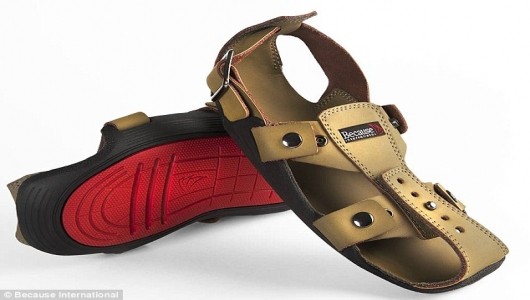
Idaho native Kenton Lee’s “The Shoe That Grows” has seen quite a bit of media frenzy for its fascinating innovation. An idea that has been in the making since 2007, the unique invention could serve as the answer to those in developing regions who lack shoes.
Following his 2007 graduation from Northwest Nazarene University, aspiring philanthropist Kenton Lee embarked on monthly mission trips from Ecuador to Kenya. What would soon catch his attention was a stop at a Kenyan orphanage, where over 140 children with parents who died from AIDS resided.
While walking to a church, the fresh graduate spotted a 6-year-old girl wearing a white dress and a pair of shoes that were “four- or five-sizes too small.” They were so undersized that holes were made for the girl’s toes to hang out. Lee was also astonished by the unsanitary conditions within the orphanage, including a lack of clean water and on-and-off electricity.
Following the sighting, Lee spoke with the director of the orphanage to seek further information as to why the young girl and others lacked durable footwear. The director disclosed to Lee that shipments of shoe donations were made a year prior, but because those in need happen to be kids, they easily outgrow the shoes as they age. The optimistic designer later found that over 300 million children in developing countries lack shoes, resulting in the contraction of soil-transmitted diseases such as threadworms and Guinea worms.
Upon returning to the United States, Lee sparked an idea that could maintain comfortable footwear to poverty-stricken children in developing regions. That idea was The Shoe That Grows, but Lee knew his plan would not come to light if he did not seek help from a supportive team of volunteers to push his idea into effective force.
The year 2009 would mark Kenton Lee’s founding of Because International, a nonprofit organization to help propel the innovative shoe idea into the media. Following backfire from failed efforts to get big-name shoe companies like Nike onboard, Lee and voluntary members partnered with shoe development company Proof of Concept to pull the “growing shoe” design together.
Lee would explain in an interview with Buzzfeed that the base of the creation is a sandal made with compressed rubber material similar to tires. It was also indicated that the sandal could last up to 10 years with the help of durable leather and heavy-duty buckles.
The optimistic contributor later added in 2011 that the shoe could grow from a size 5 to a size 12, enabling users to adjust their shoe as their feet grow.
In 2012, Kenton Lee shared that, because Proof of Concept undergoes a 16-week shoemaking process, funding support would be urgently needed. Hence, in October 2012, Lee and Because International launched a two-week fundraising campaign via Crowdrise to meet a desired goal of $4,000 in order to produce a prototype of the innovative shoe. When enough money was raised, Lee and his wife traveled back to Kenya to test out 100 prototypes in four schools. Much to his liking, the disadvantaged schoolchildren “loved them,” and with a few tweaks, Lee had the final product ready in 2014.
In October 2014, Idaho news station KTVB was among the first to get a glance of the finished product, and they later disclosed on their official website that each pair would be sold for $10. The following year, British publication Daily Mail noted that the sandal-based wear had increased by $30. However, it also said that if 100 pairs were purchased, the price would be reduced to $12.
Alternately, Because International launched a digital page requesting willing donors to contribute $15 to fill duffle bags with 50 pairs of shoes each. Once filled, each bag is sent off to its destination to aid shoeless people.
While the growing shoe has accumulated praise, a few critics have remained skeptical of its potential performance, arguing that the product will fail like previous similar ideas attempted by other shoemakers. For example, created in 2002, the company INCHworm designed footwear that retained an accordion-like segment that could expand three sizes. However, the product immediately faced criticism when stockers failed to understand its purpose due to the shoe “only filling one niche,” and only serving as a “casual slip-on,” rather than being marketed as a sneaker or a dress shoe. Moreover, its price of over $45 did not sit well with consumers, which resulted in American disinterest and limited production in the United Kingdom.
By a stark contrast, Kenton Lee’s invention is not strictly designed for American sale, but rather for a wider release overseas for the betterment of underprivileged kids. With the global sale in perspective, individuals like Jacksonville State University professor Pam Hill hope the product is not “just limited to tropical or sub-tropical regions,” but is also geared toward children in “inclement [or] snowy” regions who lack the same essentials.
Some have been weary of the product’s production in China, where they hope the procession units will not add any unnecessary material that could pose as a harmful threat to the children. Lee, however, has noted that the factories have been long proponents of Proof of Concept.
With five nonprofit establishments backing the product, alongside a successful $50,000 crowdfunding campaign, 2,500 units have been sold in disadvantaged regions from Colombia and Peru to Kenya and Haiti. The Shoe That Grows is ready to make an impact. But when success is ultimately achieved, what will be next on Lee’s list?
Lee and Because International plan to produce a second project, tentatively titled “A Better Bed-net,” which will supply bedding to orphaned kids in mosquito-infested areas. The bedding is to be equipped with netting that will trap disease-carrying mosquitoes that try to make their way into orphan shelters. For now, Kenton Lee and his supportive network are carefully taking one step at a time to ensure that they are truly living up to their motto: “Making things better by making better things.”
– Jefferson Varner IV
Sources: The Shoe That Grows 1, The Shoe That Grows 2, OregonLive, Buzzfeed, Smithsonian, KTBV, Youtube 1, Daily Mail Online 1, Daily Mail Online 2, Youtube 2, CNN Money, The Cultureist, AOL Money UK, Idaho Entrepreneurs
Photo: Daily Mail

Peace in Mali Between Government and Northern Factions
The Agreement for Peace and Reconciliation between Malian parties and Algeria-led Mediation Team was signed in early May 2015 in Mali’s capital city Bamako. The spokesperson for the United Nations, the Secretary-General Ban Ki-moon, implored Malians to reinstitute peace in Mali and anticipate a long-lasting ceasefire. On 20 June 2015, a member of the Arab Movement of Azawad, Sidi Ibrahim Ould Sidati, signed his name to the amended version of the Algerian Accord on behalf of the Coordination of Azawad Movements (CMA) in the presence of northern Mali’s community leaders and international sponsors.
According to Ban Ki-moon, the official signing of the Agreement for Peace and Reconciliation was 15 May 2015. The Agreement received a signature from the CMA on 20 June. Pleased with the addition and recognition from CMA, a coalition of armed groups, Ki-moon wants to remind participants that Mali and Malians must adhere to reconciliation efforts and ensure accountability to maintain promising endeavors toward peace.
The Secretary-General’s statement in Bamako reassures Mali that the United Nations supports both parties under the enactment of the Agreement. Ki-moon congratulates the parties and their momentous achievement toward securing peace. He also recognizes the neutral amity expressed by the text of the document.
Conflict has stirred unrest since the 1960s as Tuareg rebel forces fought with the Malian government over discourses relating to ethic discrimination and misrepresentation. The modified Algerian Accord has aligned Mali’s President Ibrahim Boubacar Keita with Mahamadou Djeri Maiga, vice-president and spokesperson of the Transitional Council of the State of Azawad.
Mahamadou Djeri Maiga, a senior member of CMA, feels mediation tactics are close to resolving divisional conflicts between northern and southern Mali. The nation wants peace for each side of the conflict. The purpose of the Algerian Accord is to revitalize the country’s north, which stationed Tuareg revolts against governmental forces.
The Accord’s connections aim to mend national struggles with diversity and radical Islamist movements. Both aspire to end turbulence altogether with the Accord standing in good-conscience with the Agreement for Peace and Reconciliation.
CMA was waiting for amendments to the Accord until 5 June. Marking their commitment to the Accord required provisions that will allow Tuareg armed groups to create partnerships with security in the north and grant representation for northern inhabitants in governmental institutions. As of 19 June, unity in Mali provokes members of the coalition to withdrawal from the town Menaka.
The mistrust began in 2012 when censure formed against southern sub-Saharan groups for not upholding the interest of northern factions. Tuareg separatists confiscated several northern towns and cities before Al-Qaeda radicals further exploited hostility. The Islamist radicals were overthrown by French military efforts.
The gap between the north and south deepened with nearly five hundred thousand seeking refuge in other countries according to UN Office for the Coordination of Humanitarian Affairs (OCHA) monitored by Jens Laerke. The ceasefire, known as the Ouagadougou Preliminary Agreement, was reinstated on 23 May 2014 to end hostilities in Kidal. Rebelling armed groups break the original contract by carrying out militaristic and administrative positions of power in several towns.
Albert Gerard Koenders, Special Representative of the Secretary-General for Mali, and Abel Aziz, Mauritania’s President and current Chairman of the African Union, pledge to end the hostility. Armed groups who originally applied their signatures to the document agree again to a ceasefire as humanitarian conditions worsen when attacks against UN Multidimensional Integrated Stabilization (MINUSMA), the Malian government forces and France’s Operation Serval amplify.
Nearly 400,000 original inhabitants returned to the north since the signing of the Ouagadougou Preliminary Agreement. The will for peace is evident with miles still to trek. Mahamadou Djeri Maiga will continue to scan for evidence of positive results on the ground after the signing. In the meantime, Ki-moon hopes the Agreement for Peace and Reconciliation is an inspiration to others in the political process.
– Katie Groe
Sources: UN 1, UN 2, GN Network, UN 3,
Photo: Wikimedia Commons
A Look at Poverty in Norway
The world’s richest country is Norway. The population of Norway is 4.5 million people. Despite the wealth of the country due to oil commodities, poverty in Norway still exists. In the capital of Oslo, 8.3 percent of the population suffers from poverty. The populations that are affected the most by poverty are immigrants, families with children and single parents, and those who are on social security.
As of 2014, child poverty is on the rise in Norway. It is estimated that 78,000 children are suffering at this time. Three point four percent of children are living in a state of ‘relative’ poverty. In Norway, it is defined as households with income below 50 per cent of the national median.
Of the children of Norway, 3.4 percent of children live below 50 percent of the poverty level, 1.6 percent of the children live below 40 percent of the poverty level and 7.5 percent live 60 percent below the poverty level.
In Norway, the defining features of their national estimates of the percentage of the population falling below the poverty line are based on surveys of sub-groups. The results are then adjusted based upon the number in each group. However, it is important to remember that wealthier nations generally employ more generous standards of poverty than poorer nations.
Poverty in Norway
Norway is considered to be a relatively rural country as compared to other countries within the EU. Only half of its population lives in cities and towns that have above 8,000 residents. Living conditions are said to be an issue for the impoverished. Overcrowded living conditions accompanies economic straddles in their cities. There are many problems in northern Norway, among their municipalities.
In Norway, a long standing and successful social welfare system exists. It has strong fiscal redistribution mechanisms designed to aim both at the impoverished and at a regional level. It is for this reason alone, that it is said that absolute poverty is rare. As it stands, Norway has 11 percent of the population under low-income level.
In comparison to the other European Union countries, the household poverty threshold is higher in Norway. In Norway, elderly people have a higher low-income risk than comparative age groups, compared to other European countries. In stark contrast, the vulnerable groups of Norway experience the opposite.
The contrast is even starker in oil-rich Norway, where the poorest 38 percent of the people fare better, on average, than the poorest 38 percent of Americans, despite a lower median per capita GDP.
-Erika Wright
Sources: CS Monitor, Index Mundi, News in English, Panam Post, UNICEF,
Photo: Romania Insider
Muhammed Yunus Turns 75
Try to buy a house without a mortgage loan or start a business without a business loan. For most of the world’s population, even in developed countries, these tasked are difficult. In the developing world, where financial services are virtually nonexistent for millions of the poor, opportunity is a myth and breaking an endless cycle of poverty seems hopeless.
Bangladesh celebrated one of its own as Muhammed Yunus turned 75 years old on June 28th. Often thought of as the pioneer of the modern micro finance concept, Muhammed Yunus has, for decades, been an advocate for social business practices and alleviating global poverty.
Mohammed Yunus was born in Bangladesh India and is a social entrepreneur, banker, economist and civil society leader who was awarded the Nobel Peace Prize in 2006 for founding the Grameen Bank.
The Grameen Bank is a microfinance organization and community development bank founded in Bangladesh that makes small loans known as micro-credit or “grameencredit”, without collateral requirements to impoverished entrepreneurs.
The Oxford dictionary defines micro-finance or micro-credit as the lending of small amounts of money at low interest to new businesses in the developing world.
During his tenure as a professor of economics at Chittagong University in the 1970s, Muhammed began experimenting with providing small loans to women in the tiny village of Jobra. Today, the World Bank estimates approximately 160 million people in developing nations are using micro-finance.
Yunus Social Business, an organization co-founded and chaired by Muhammed Yunus, calls itself a company created with the sole purpose of solving a social problem in a financially self-sustainable way.
Muhammed Yunus, with the success of the Grameen Bank and his concept of social business, among many other accomplishments, has won 112 international awards, received 55 doctorate degrees from 20 universities, was ranked by Time Magazine as one of the top 100 public intellectuals of the world and has authored internationally acclaimed books, published and translated into numerous languages.
Today Muhammed Yunus, as he reaches age 75, is celebrated all over the world and is still very much involved in the mission to fight global poverty. Recently, Yunus Social Business (YSB) launched its first social business accelerator in Uganda, a land locked country in East Africa, haunted by conflicts resulting in millions of deaths and plagued with child slavery. With the implementation of the program, Yunus Social Business hopes to address social and environmental problems in Uganda in a financially sustainable manner by promoting and empowering social businesses through the provision of business development services, impact investment funds and related technical support.
Uganda, an impoverished nation and an area of operation for the Lord’s Resistance Army (LRA), a rebel group listed by the U.S. as a terrorist organization, could benefit from the Yunus Social Business model and possibly emerge from a society torn by war.
Through the implementation of micro-finance and the ideology of social business, societies around the world, mired for centuries in poverty could become self-sustainable and thanks, in part to Muhammed Yunus, more could lead rich fulfilling lives.
– Jason Zimmerman
Sources: Kiva, Prothom-Alo, World Bank, Yunus Social Business 1, Yunus Social Business 2
Photo: Huffington Post
Ugandan Journalists Rap About Social Justice
Music is a powerful, emotional and memorable way to spread a message, something Zoe Kabuye is perfectly aware of.
At 14 years old, Kabuye is a professional rapper in Uganda using her creative drive to make music that focuses on social issues and children’s rights. Known professionally as MC Loy, Kabuye became the youngest rapping newscaster in Africa last year and now appears regularly on NewzBeat, a Ugandan television show featuring artists that report the news musically.
As rap music becomes increasingly popular in East African countries, more and more hip-hop artists emerge as socially and politically aware artists who use their talent to spread a message. Unfortunately, media in Africa is often censored and regulated by the government; rap, however, permits free speech, making it a rare and excellent way to spread hard-hitting social issues.
Kabuye began rapping at a very young age and in 2012 she rapped for Uganda’s president, Yoweri Museveni, at a celebration for the country’s 50th year of independence. Now, she addresses issues regarding social justice, including sexual abuse, limited access to education, and corruption in the Ugandan school system.
Successful and informative, Kabuye earned her career with raw talent and guidance from 28-year-old rapper Sharon Bwogi. Professionally known as Lady Slyke, Bwogi recruited Kabuye to join NewzBeat and is one of the most admired female rappers in Uganda. Her music centers on human rights, child abuse, youth empowerment, and peace.
Every Saturday, NewzBeat is presented in English and Luganda, the language of Uganda. Each episode runs for five minutes featuring four local, regional, and international stories. The program is not afraid to address the hard-hitting and controversial topics; in fact, NewzBeat thrives on informing the people about these issues, covering subjects such as poverty, government corruption and Uganda’s desire to outlaw mini-skirts.
The television program has gained a loyal group of followers since it first aired last year, attracting viewers with its unique musical foundation. Uganda’s youth is especially interested in NewzBeat and as the leaders of future generations, this is a huge thumbs up. It is important to educate today’s youth about social issues so they can formulate opinions and make change.
Positively employing their talents, Bwogi and Kabuye have shed light on the real issues in the world. They yearn for social justice and are effectively using their voices to make a difference. This dynamic duo raises awareness and takes action to address what’s wrong with the world. Lady Slyke and MC Loy just dropped the mic.
– Sarah Sheppard
Sources: Take Part, The Guardian 1, The Guardian 2
Photo:CFM News
Who Is My Congressman? Scott Peters
I am embarrassed to admit that before interning for The Borgen Project, I did not have any idea who my Congressman was. I spend most of my time going to school out of state, so I am not too in touch with the politics of my hometown. However, no matter what state I am in, it matters who is representing my interests, so I have done a little research on my House hero.
I live in San Diego, which is in California’s 52nd Congressional district. The Representative for this district is none other than Democrat Scott Peters. Have not heard of him? Not to worry, here are some quick facts on this West Coast politician.
Peters was actually born in Ohio and raised in Michigan, but he has spent the entirety of his political career serving the people of San Diego. He received his Bachelor of Arts at Duke University, and went on to graduate from law school at New York University. Peters then moved to the Golden State, and after a 15 year career as an environmental lawyer, was elected to San Diego City Council. He later became the city’s first City Council President.
I am extremely proud of my beautiful city. Little did I know that I can attribute much of this to Peters, who helped lead the $2 billion redevelopment of downtown San Diego and the widespread cleanup of the beaches and bays.
After a storied City Council tenure, Peters was elected to the House of Representatives in 2012. He currently serves on the House Armed Services Committee and the House Judiciary Committee, and previously served on the House Committee on Science, Space and Technology. He is a member of the House Democratic Caucus, the New Democrat Coalition and the No Labels Caucus.
Peters is listed as the fourth most independent Democrat in Congress and is a known problem solver. He often brings people together in order to resolve complex issues. His office is very responsive to constituent recommendations and requests, and I have been pleased with the in-depth emails I have received.
As a resident of San Diego for 21 years, I finally figured out who my voice in Congress is, and I encourage all of you to find out for yourself what distinguished individual is making your case on the Hill.
– Katie Pickle
Sources: US House of Representatives, Scott Peters
Photo: Times of San Diego
The Shoe That Grows
Idaho native Kenton Lee’s “The Shoe That Grows” has seen quite a bit of media frenzy for its fascinating innovation. An idea that has been in the making since 2007, the unique invention could serve as the answer to those in developing regions who lack shoes.
Following his 2007 graduation from Northwest Nazarene University, aspiring philanthropist Kenton Lee embarked on monthly mission trips from Ecuador to Kenya. What would soon catch his attention was a stop at a Kenyan orphanage, where over 140 children with parents who died from AIDS resided.
While walking to a church, the fresh graduate spotted a 6-year-old girl wearing a white dress and a pair of shoes that were “four- or five-sizes too small.” They were so undersized that holes were made for the girl’s toes to hang out. Lee was also astonished by the unsanitary conditions within the orphanage, including a lack of clean water and on-and-off electricity.
Following the sighting, Lee spoke with the director of the orphanage to seek further information as to why the young girl and others lacked durable footwear. The director disclosed to Lee that shipments of shoe donations were made a year prior, but because those in need happen to be kids, they easily outgrow the shoes as they age. The optimistic designer later found that over 300 million children in developing countries lack shoes, resulting in the contraction of soil-transmitted diseases such as threadworms and Guinea worms.
Upon returning to the United States, Lee sparked an idea that could maintain comfortable footwear to poverty-stricken children in developing regions. That idea was The Shoe That Grows, but Lee knew his plan would not come to light if he did not seek help from a supportive team of volunteers to push his idea into effective force.
The year 2009 would mark Kenton Lee’s founding of Because International, a nonprofit organization to help propel the innovative shoe idea into the media. Following backfire from failed efforts to get big-name shoe companies like Nike onboard, Lee and voluntary members partnered with shoe development company Proof of Concept to pull the “growing shoe” design together.
Lee would explain in an interview with Buzzfeed that the base of the creation is a sandal made with compressed rubber material similar to tires. It was also indicated that the sandal could last up to 10 years with the help of durable leather and heavy-duty buckles.
The optimistic contributor later added in 2011 that the shoe could grow from a size 5 to a size 12, enabling users to adjust their shoe as their feet grow.
In 2012, Kenton Lee shared that, because Proof of Concept undergoes a 16-week shoemaking process, funding support would be urgently needed. Hence, in October 2012, Lee and Because International launched a two-week fundraising campaign via Crowdrise to meet a desired goal of $4,000 in order to produce a prototype of the innovative shoe. When enough money was raised, Lee and his wife traveled back to Kenya to test out 100 prototypes in four schools. Much to his liking, the disadvantaged schoolchildren “loved them,” and with a few tweaks, Lee had the final product ready in 2014.
In October 2014, Idaho news station KTVB was among the first to get a glance of the finished product, and they later disclosed on their official website that each pair would be sold for $10. The following year, British publication Daily Mail noted that the sandal-based wear had increased by $30. However, it also said that if 100 pairs were purchased, the price would be reduced to $12.
Alternately, Because International launched a digital page requesting willing donors to contribute $15 to fill duffle bags with 50 pairs of shoes each. Once filled, each bag is sent off to its destination to aid shoeless people.
While the growing shoe has accumulated praise, a few critics have remained skeptical of its potential performance, arguing that the product will fail like previous similar ideas attempted by other shoemakers. For example, created in 2002, the company INCHworm designed footwear that retained an accordion-like segment that could expand three sizes. However, the product immediately faced criticism when stockers failed to understand its purpose due to the shoe “only filling one niche,” and only serving as a “casual slip-on,” rather than being marketed as a sneaker or a dress shoe. Moreover, its price of over $45 did not sit well with consumers, which resulted in American disinterest and limited production in the United Kingdom.
By a stark contrast, Kenton Lee’s invention is not strictly designed for American sale, but rather for a wider release overseas for the betterment of underprivileged kids. With the global sale in perspective, individuals like Jacksonville State University professor Pam Hill hope the product is not “just limited to tropical or sub-tropical regions,” but is also geared toward children in “inclement [or] snowy” regions who lack the same essentials.
Some have been weary of the product’s production in China, where they hope the procession units will not add any unnecessary material that could pose as a harmful threat to the children. Lee, however, has noted that the factories have been long proponents of Proof of Concept.
With five nonprofit establishments backing the product, alongside a successful $50,000 crowdfunding campaign, 2,500 units have been sold in disadvantaged regions from Colombia and Peru to Kenya and Haiti. The Shoe That Grows is ready to make an impact. But when success is ultimately achieved, what will be next on Lee’s list?
Lee and Because International plan to produce a second project, tentatively titled “A Better Bed-net,” which will supply bedding to orphaned kids in mosquito-infested areas. The bedding is to be equipped with netting that will trap disease-carrying mosquitoes that try to make their way into orphan shelters. For now, Kenton Lee and his supportive network are carefully taking one step at a time to ensure that they are truly living up to their motto: “Making things better by making better things.”
– Jefferson Varner IV
Sources: The Shoe That Grows 1, The Shoe That Grows 2, OregonLive, Buzzfeed, Smithsonian, KTBV, Youtube 1, Daily Mail Online 1, Daily Mail Online 2, Youtube 2, CNN Money, The Cultureist, AOL Money UK, Idaho Entrepreneurs
Photo: Daily Mail
A Children’s Storybook App, Sir Roger Moore and UNICEF
Sir Roger Moore is lending his voice to a worthy cause. The James Bond veteran partnered with GivingTales, a new app geared toward children, to raise funds for the United Nations Children’s Fund, more commonly known as UNICEF.
Released on June 18, 2015, GivingTales is a collection of Hans Christian Andersen fairy tales, narrated by Sir Moore, Dame Joan Collins, Ewan McGregor and Stephen Fry. The free children’s app is available on iOS, Android and Windows Phone.
“I’ve been a long time admirer of Hans Christian Andersen’s work, and I think it’s a wonderful collection of fairy stories for children and adults alike,” said Moore, a UNICEF goodwill ambassador since 1991.
Moore’s narration of “The Princess and the Pea” is included with download, but other stories narrated by Collins, McGregor and Fry are available as in-app purchases for $3.99 each. Thirty percent of the proceeds will be donated to UNICEF United Kingdom to help children and mothers in developing countries around the world.
The stories in GivingTales are presented in a contemporary yet timeless way, teaching important lessons with lively animation and modern language.
GivingTales CEO Jacob Moller explained that the app seeks to keep the essence of Andersen’s work, while simultaneously condensing the stories into 6 to 10 minute shorts. Through A-list narration and animated illustrations by Hungarian artists, GivingTales provides classic stories with a breath of fresh air and entertainment.
Developed by renowned illustrators and producers, GivingTales is confident that it will succeed in the tech market, having future plans to introduce a new story with a new narrator every six to eight weeks. According to Sir Moore, American celebrities will also eventually narrate. Currently, the app is only in English, but will be available in other languages in the near future.
Having a strong relationship with UNICEF, GivingTales hopes to positively change the lives of many children around the world with the profits that they earn. Additionally, the children downloading and listening to the books will benefit educationally, from reading along or learning a new lesson from the story.
Because GivingTales is new and young, it must fiercely market itself in order to successfully contribute to UNICEF. Tech savvy Sir Moore, however, is already busy promoting the app on his Twitter account, advocating for the children who need it most.
– Sarah Sheppard
Sources: The Guardian, Look to the Stars
Photo: iDigital Media
How Can I Shop Ethically?
Clothes, food, technology. These are things everybody needs but also have strong associations to ethical problems. Shopping ethically is a growing concern for many people, yet the idea that ethical purchases are not affordable is pervasive. In addition, the constant bad news surrounding the practices of companies makes it seem impossible to be an ethical shopper. All of this leaves many of us with one question:
How can I shop ethically?
It is a question being asked a lot these days. And even though it might not seem easy, a little extra attention can go a long way, and it is not as expensive as it may seem. Here’s a few easy ways to shop ethically.
Do Your Research
In the fight to shop ethically, research is everything.
The biggest companies can afford to market themselves as ethical to shoppers. This allows them to manipulate concerned consumers into purchasing their products.
Luckily, there are ways to know what you’re buying before you buy it. Ethicalconsumer.org, for instance, ranks products in a variety of categories based on different metrics. Much of this information is available for free on the site, though some more in-depth information requires a subscription.
Doing research on products is a good way to be sure that what you’re buying is an ethical choice. In addition to researching, remaining vigilant in reading labels to spot companies notorious for ethical violations, such as Coca Cola and Nestle, is a key element in shopping ethically.
Thrift Shop
Goodwill currently operates over 2,500 stores in the United States. Savers operates over 270 stores. There are also countless independent thrift stores, providing good clothing for a low price. For consumers looking to ethically shop, thrift stores provide an affordable way to avoid incentivizing the abusive practices of the larger clothing industry.
Unethical labor practices is the biggest concern proponents of ethical consumerism have regarding the clothing industry. Though a variety of clothing sources exist that do not support this, many of these sources are not cost-effective. By purchasing clothing at a thrift shop, fashion-conscious activists can both avoid feeding into unethical labor chains and support their local communities.
Make it a Treat
Let’s get this out of the way: most ethical chocolates and coffees will be more expensive than their less ethical alternatives. Unfortunately, the exploitation of the developing world that is all too common within these industries is, more often than not, a cost-cutting measure. When cocoa farmers in the $16 billion-per-year chocolate industry receive between $30 and $100 per year, this is a measure by those in power to cut costs.
This does mean that, in general, most ethical chocolates and coffees will be a bit less friendly to your wallet. But by treating these items as occasional treats, you can save up for the ethical, and better, brands and indulge guilt free.
Shopping ethically is just as much about what we don’t buy as it is what we buy. When chocolate from Côte d’Ivoire, where CNN stated slavery within the chocolate industry is “normal,” is purchased, shoppers incentivize the highly unethical practice. Though more expensive and ethical options may not be purchased with the same regularity, purchasing them exclusively while buying chocolate less exclusively both supports ethical production of chocolates and rejects the lack of ethics within the chocolate industry.
Ethical consumerism is a increasing concern. This is good, but it is also easy to feel nihilistic when faced with a structure which, previously, hasn’t had to take things into account. But by being smart and patient, consumers can find easy and affordable ways to shop according to ethics.
– Andrew Michaels
Sources: Ethical Consumer, Time Green America, CNN Blogs
Photo: Natura Magazine
Report Uncovers Decline of Global Health Funding
According to a new report, countries around the world contributed 1.6% less to global health projects in 2014 as compared to 2013. This is only the second time in the past 15 years a reduction in funding has been documented.
The report, published by The Institute for Health Metrics and Evaluation in Seattle, shows that while global health funding grew by 5.4% annually in the 1990s and increased to 11.3% annually from 2000-2010, it stalled around a year later.
Overall, the world has contributed $227.9 billion to global health funding in poorer countries since the turn of the century, when the United Nations revealed its Millennium Development Goals.
The eight goals, which focus on providing monetary funding to pressing global issues, led to a surge in global health funding.
The largest donor has consistently been the United States, which gave $12.4 billion last year toward the treatment and prevention of AIDS and malaria in developing countries.
However, only three nation’s governments increased overall funding between 2013 and 2014: the United Kingdom, Australia and Japan.
Specifically, funds allocated to improving maternal health around the world decreased by 2.2% and supplies used for the treatment and prevention of tuberculosis were cut by 9.2%.
In addition to revealing the decrease in funding for global health projects, the report also gives insight into disease funding. It shows that some treatments and programs are favored over others.
For example, last year, over $3 billion was allocated toward vaccines for children, over $1 billion was spent on children nutrition initiatives, and $778 million was put toward family-planning projects.
In contrast, only $164 million was spent addressing mental health issues and only $31 million was used for anti-tobacco programs.
David Molyneux, Peter Hotez and Alan Fenwick are three scientists who became frustrated that certain treatments and programs receive more funding than others. Specifically, the three wanted the world to know about 17 largely ignored diseases in the world’s poorest countries.
These diseases can result in blindness, deformed limbs and stunted growth, but are ignored because they have disappeared from the developed world.
With 1.4 billion people suffering from these illnesses, which include onchocerciasis, lymphatic filariasis and leishmaniases, the scientists decided to stimulate awareness about them by coining the term “neglected tropical diseases.”
Molyneux and Hotez first used the term at a World Health Organization (WHO) meeting in Berlin in 2003 to “market” the diseases to politicians and private foundations. It was approved at another WHO meeting the following year, which was also in Berlin.
As a result, the Department of Control of Neglected Tropical Diseases was formed, and since 2006, around a billion dollars has been pledged by government and aid organizations to the fight against neglected tropical diseases.
Pharmaceutical companies are also donating 1.4 billion treatments of the diseases each year, resulting in 700 million people being treated in 2014.
In addition, last month Dr. Matshidiso Moeti, who directs WHO operations in Africa, announced a plan to create an entity with the sole purpose of directing work related to neglected tropical diseases. This is just one part of efforts by the international community to rid the continent of some of these diseases within the next five years.
While some treatments and programs are favored over others, people like Molyneux, Hotez and Fenwick are giving a voice to those in developing countries suffering from largely ignored illnesses such as the neglected tropical diseases.
– Matt Wotus
Sources: International Business Times, International Business Times, Humanosphere
Photo: Johns Hopkins University
Education in Bangladesh Sails on Despite Floods
Ripped apart by rivers, drenched by monsoons and floating just above the sea, Bangladesh is like the toe that the Himalayas are using to test the waters of the Indian Ocean. All of this exposure to water leads to yearly flooding, an immense challenge for the developing nation of 156 million. From crop loss to infrastructure damage, the costs of flooding are massive hurdles to poverty reduction; the floods in 2004 costed the country seven billion dollars. Perhaps the most insidious impacts of the floods is their disruptive effects on education in Bangladesh.
Founded in 1998, the Bangladesh nonprofit Shidhulai Swanirvar Sangstha, recognized how the floods prohibited students from making it to school and decided to bring the school to them. They achieve this by bringing boats up the flooded waterways, which serve as both school buses and schools.
A fleet of 22 boats sail up the swollen rivers stopping to pick up children before they dock and class begins. Each boat takes around 30 children and has a small library and access to the world’s largest library through computers hooked up to the Internet and powered by solar panels.
With primary school attendance around 80%, increasing access to education is high on the agenda. The boat schools provide classes to an estimated 1,810 children. Although many more remain in need, Shidhulai Swanirvar Sangstha reaches some of the most vulnerable.
What’s more, the boat schools provide critically-needed adult education that focuses on sustainable agriculture, healthcare and climate change adaptation. These programs holistically target the restraints that keep them in poverty.
For example, the climate change workshops help farmers develop production methods, such as floating vegetable gardens and raising fish and ducks, that can endure longer flooding periods and raising sea levels, both of which are effects of a changing climate. The lessons on sustainable agriculture help farmers to reduce erosion and pollution, and increase yields. These programs work together to clean the environment, increase access to food and boost incomes. Healthcare, Shidhulai Swanirvar Sangstha’s other focus, brings medicines and doctors to rural parts of the country that have no access to clinics, keeping the populations healthy throughout the year.
What is even more important is that the success of the floating school model appears to be scalable. Many other parts of the world face similar issues that climate change will exacerbate. Cambodia, Nigeria, the Philippines, Vietnam and Zambia are all testing this innovative development strategy. The humanitarian arm of the United Nations that focuses on children and mothers, UNICEF, praises this method as “having a transformative impact upon education and communities in flood-prone regions.”
– John Wachter
Sources: Shidhulai Swanirvar Sangstha, World Bank BBC, UNICEF 1 UNICEF 2
Photo: Tenders On Time