Corporations have a variety of ways to contribute to poverty relief. Methods include matching employee donations, promoting employee volunteerism, providing donations in kind and simply providing grants to or partnering with charitable organizations. Some even partner with governmental institutions such as the United States Agency for International Development in hybrid public/private aid ventures.
Corporations disperse funds to a plethora of good causes, but some have a particular focus on poverty reduction, development and public health initiatives internationally. Among the most generous corporations that support poverty-reduction programs are Chevron, Johnson and Johnson, Microsoft, JP Morgan Chase and General Electric.
In 2013, Chevron donated $274.3 million, or 0.6% of its pretax profits to charitable organizations. The company has an employee donation matching program that covers up to $10,000 per year and $3,000 for retirees. Being a highly globalized corporation, Chevron sponsors a variety of international development programs, such as the Niger Delta Partnership Initiative Foundation, which provides livelihood training to residents of the Niger Delta. Last year, Chevron pledged an additional $40 million to the program.
Johnson and Johnson donated $966.3 million in 2012 in cash and goods, a full 7% of its profits that year. Johnson and Johnson has a particularly robust corporate philanthropy program, doubling employee donations to eligible nonprofits. They also have a particular focus on global health issues. For example, the company partnered with the United Nations, the World Bank and the World Health Organization to support the U.N.’s Health Four+ Initiative, providing health care and obstetric training to populations in low-resource settings in Tanzania and Ethiopia.
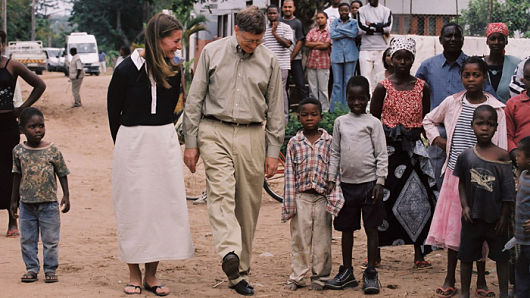
While Microsoft’s philanthropic activities are often associated with the co-founder Bill Gates’ Foundation, the company itself has a very generous donor program that provided $948.6 million worth of in-kind donations and $112.2 million in cash donations in 2014. Microsoft’s corporate philanthropy does not have a particular focus on poverty reduction, however, they provide technology and software to about 86,000 nonprofit organizations globally.
JP Morgan Chase donates to several different kinds of philanthropic causes, contributing $210.9 million in 2013. On top of their donations, the company also provides capital for impact investment funds, supporting a wide variety of international economic development ventures. The company partnered with the Bill and Melinda Gates Foundation to create one such project, the Global Health Investment Fund, which invests in the development of medical technologies that target diseases such as malaria and tuberculosis, which disproportionately affect the developing world. Another fund that JP Morgan Chase supports is the African Agricultural Capital Fund, which invests in agribusiness in East Africa, targeting small holder farms and rural economies.
General Electric is particularly committed to corporate philanthropy, having been the first company to introduce an employee donation matching program, which now supports up to a generous $50,000 per year. In 2013, the $154.8 million that GE donated went to initiatives such as its Developing Health Globally Program, which sponsors medical training and technological assistance in Rwanda, Ghana, Uganda, Myanmar and Indonesia.
Most large corporations have fairly long-standing traditions of giving back to their communities and supporting international development through corporate philanthropy programs. Corporations typically donate anywhere from 1% to 5% of their annual profits to such programs, sometimes even partnering with government agencies such as the United Stated Agency for International Development. However, it is worth noting that state solutions to poverty reduction continue to have the greatest funding potential. For example, Official Development Assistance in the United States alone amounted to about $30 billion in 2013, or 0.18% of the budget, many billions of dollars more than the top 10 corporate donors combined that year. While corporate donations are essential to the fight against poverty, official state aid could, if properly harnessed, represent the greatest solution to poverty worldwide.
– Derek Marion
Sources: Double the Donation, Chevron, Johnson and Johnson, Microsoft, JP Morgan Chase, GE, OECD
Photo: Ventures

Israel: The Developing World’s Water Technology Savior?
Many say that the next major war will not be for territory but for water. The precious liquid is needed for humankind’s very existence, yet it is becoming scarcer and scarcer as the world’s population continues to grow.
A tiny, arid country surrounded by deserts has been fighting, literally at times, for water since its inception in 1948. Israel is one of the world’s leaders in water conservation technology, simply because it has to be in order to survive. It has only gotten harder recently, with prolonged droughts and increasing population adding to the problem.
As a result of the Israel‘s harsh climate, it has developed world-class water technology, and this fact has now been recognized by the World Bank. Because of Israel’s advanced knowledge of water technology, they are in a position to help other countries with their own water problems.
Israel’s Ministry of Economy has given $500,000 to the World Bank Group’s Water Global Practice. The money will be used to increase and enhance water knowledge in developing countries. The agreement also includes sharing ideas, best practices and water industry expertise with developing countries.
Also included in the agreement are study tours, that are “expected to be held in Israel in the next two years and will include officials from developing countries, as well as World Bank Group staff. In addition, the agreement will include an analytical profile study of Israel’s experience in managing water and transferring of global expertise on water security.”
So what exactly does Israel bring to the table when it comes to water technology, and how can it help the developing world? Their advanced drip irrigation systems, for one. The Israeli inventor Rafi Mehudar has been developing drip irrigation systems for 40 years. Netafim is the company he has been working with, and both are now big players in the water tech industry – their drips reduce water usage by 90%, raise crop productivity and are being used in India, Brazil, China and Africa.
The one issue that comes with a large corporation making technology like this is that Netafim cannot sell to a family or single farmer – it is just not feasible, with a drip irrigation system costing $500. This is almost half of the average income an Indian made in 2014 of $1,140. This is where NGOs as well as governments come into the picture. The government in India is paying for half of every drip irrigation system bought from either Netafim or one of the company’s competitors.
Netafim relies on NGOs to organize farmers in Africa into groups to help with the costs. Often single farmers only have plots large enough to feed their family, so selling to a single farmer will not work.
Because of this, Israel sits on a fence edge when it comes to helping the global poor. While they have made the contribution to the World Bank Group, their immensely useful water technology is still only a business, and they rely on others to make it affordable for the developing world. Time will tell whether their technology is a sustainable help for countries with water issues of their own.
– Greg Baker
Sources: The Atlantic, World Bank Washington Post, Times of Israel
Photo: greenprophet
5 Corporate Philanthropy Programs that Target Poverty
Corporations have a variety of ways to contribute to poverty relief. Methods include matching employee donations, promoting employee volunteerism, providing donations in kind and simply providing grants to or partnering with charitable organizations. Some even partner with governmental institutions such as the United States Agency for International Development in hybrid public/private aid ventures.
Corporations disperse funds to a plethora of good causes, but some have a particular focus on poverty reduction, development and public health initiatives internationally. Among the most generous corporations that support poverty-reduction programs are Chevron, Johnson and Johnson, Microsoft, JP Morgan Chase and General Electric.
In 2013, Chevron donated $274.3 million, or 0.6% of its pretax profits to charitable organizations. The company has an employee donation matching program that covers up to $10,000 per year and $3,000 for retirees. Being a highly globalized corporation, Chevron sponsors a variety of international development programs, such as the Niger Delta Partnership Initiative Foundation, which provides livelihood training to residents of the Niger Delta. Last year, Chevron pledged an additional $40 million to the program.
Johnson and Johnson donated $966.3 million in 2012 in cash and goods, a full 7% of its profits that year. Johnson and Johnson has a particularly robust corporate philanthropy program, doubling employee donations to eligible nonprofits. They also have a particular focus on global health issues. For example, the company partnered with the United Nations, the World Bank and the World Health Organization to support the U.N.’s Health Four+ Initiative, providing health care and obstetric training to populations in low-resource settings in Tanzania and Ethiopia.
While Microsoft’s philanthropic activities are often associated with the co-founder Bill Gates’ Foundation, the company itself has a very generous donor program that provided $948.6 million worth of in-kind donations and $112.2 million in cash donations in 2014. Microsoft’s corporate philanthropy does not have a particular focus on poverty reduction, however, they provide technology and software to about 86,000 nonprofit organizations globally.
JP Morgan Chase donates to several different kinds of philanthropic causes, contributing $210.9 million in 2013. On top of their donations, the company also provides capital for impact investment funds, supporting a wide variety of international economic development ventures. The company partnered with the Bill and Melinda Gates Foundation to create one such project, the Global Health Investment Fund, which invests in the development of medical technologies that target diseases such as malaria and tuberculosis, which disproportionately affect the developing world. Another fund that JP Morgan Chase supports is the African Agricultural Capital Fund, which invests in agribusiness in East Africa, targeting small holder farms and rural economies.
General Electric is particularly committed to corporate philanthropy, having been the first company to introduce an employee donation matching program, which now supports up to a generous $50,000 per year. In 2013, the $154.8 million that GE donated went to initiatives such as its Developing Health Globally Program, which sponsors medical training and technological assistance in Rwanda, Ghana, Uganda, Myanmar and Indonesia.
Most large corporations have fairly long-standing traditions of giving back to their communities and supporting international development through corporate philanthropy programs. Corporations typically donate anywhere from 1% to 5% of their annual profits to such programs, sometimes even partnering with government agencies such as the United Stated Agency for International Development. However, it is worth noting that state solutions to poverty reduction continue to have the greatest funding potential. For example, Official Development Assistance in the United States alone amounted to about $30 billion in 2013, or 0.18% of the budget, many billions of dollars more than the top 10 corporate donors combined that year. While corporate donations are essential to the fight against poverty, official state aid could, if properly harnessed, represent the greatest solution to poverty worldwide.
– Derek Marion
Sources: Double the Donation, Chevron, Johnson and Johnson, Microsoft, JP Morgan Chase, GE, OECD
Photo: Ventures
How to Donate to a Nonprofit
Want to donate to a nonprofit? Here are three easy steps to donate to a nonprofit organization that may interest you:
1. Find a Worthy Cause.
With so many causes worthy of your donation, finding the right one can be intimidating. For example, is it better to cure a certain disease or to make healthcare more accessible? Is providing shelter more important than providing education?
The answer to these questions largely depends on you, the donor.
In the fight against global poverty, for example, consider the following causes: international development, humanitarian relief, global health, education, gender equality and human rights advocacy. These are all important motivations for giving and many nonprofit organizations work in these fields.
If you are strapped for cash, you can also donate your time. All campaigns need volunteers and you may be able to gain hands-on experience by giving a few hours each week.
2. Find a Reputable Organization.
Once you have found a cause worth donating to, the next step is to find an organization that will meet your needs. Typically you will want an organization that is trustworthy and effective.
Finding one is no small task: the National Center for Charitable Statistics estimates there are over 1.5 million nonprofits registered in the United States.
To find a nonprofit, it is important to use GuideStar, a leading nonprofit information service. GuideStar indexes millions of IRS Form 990, a series of important financial documents that shed light on the trustworthiness of a nonprofit.
The website also allows donors to review an organization that they care about. For example, The Borgen Project has an average rating of Five Stars. You can view the page here.
You can also find worthy causes through crowdfunding websites; Crowdrise is typically a popular choice for charitable causes.
3. Donate. (And Don’t Forget Your Receipt!)
As soon as you have found a great cause and a trustworthy organization, it is time to donate. Most nonprofits have a donate page where you can select the amount among other options. You can often donate in your own name, someone else’s or anonymously. Whatever you decide, the nonprofit will thank you!
Don’t forget your receipt. Many donations are tax deductible but often require documentation.
If you choose to donate to a nonprofit, you will be in good company. According to the National Philanthropic Trust, Americans donated $358.38 billion in 2014. About 95.4% of American households give to charity and more donors are choosing to give online.
– Kevin McLaughlin
Sources: GrantSpace, GuideStar, National Philanthropic Trust
Photo: Flickr
3 Ways International Aid Helps the United States
The world is constantly increasing in its global connectivity. Economies, cultures and, most importantly, individual well-beings are interconnected. As such, it is important to acknowledge the ways in which contributing to international aid helps the United States while also benefiting the countries in need. While there are many ways in which this occurs, there are three that I shall be discussing. The first is how global relief efforts help to improve the international image of the United States. The second is how global relief efforts solidify and strengthen ties to other countries. The third is how global relief efforts strengthen the global economy, thus strengthening the United States’s own economy.
There is often an international stigma associated with the United States. Numerous controversies pertaining to international issues, such as the conflicts in Middle East or mass surveillance being performed by U.S. security agencies, have painted the Unites States in a negative light. Recent polling conducted by the Pew Research Center in 2014 shows that the U.S. holds an average international favorability rating of 58.88 percent, with the median favorability rating sitting at 65 percent.
While statistical evidence suggests that the U.S. is viewed negatively globally, research published in the Quarterly Journal of Political Science suggests that contributing to international aid may be part of the solution. A study researching relief efforts performed in African countries by the United States in response to the HIV/Aids epidemic concludes “that in addition to its potential humanitarian benefits, foreign aid that is targeted, sustained, effective and visible can serve an important strategic goal for those countries that give it: fostering positive perceptions among foreign publics.” These improved perceptions of the country giving international aid were also shown to persist over time. These findings are reinforced by an additional Pew poll, which tracks the public perception of the U.S. by Japanese citizens prior to and following the tsunami and earthquake of 2011 (a disaster to whose relief efforts the United States contributed). The results showed a substantial spike of a nearly 20 percent favorability increase.
While improving global perceptions of the United States is important, it is equally important to strengthen and solidify ties to other countries. Helping to alleviate global poverty through international aid achieves this very goal. One of the most significant examples of this occurring can be found in South Korea. Following the Korean War, the United States contributed significantly to the reconstruction efforts of South Korea. This aid helped to stabilize the economy and greatly aided in establishing South Korea as a strong country. As a result of this aid, it is now one of the greatest allies of the United States and has also become a significant contributor to foreign aid.
By contributing to international aid and reducing global poverty, other countries gain economic independence. This independence strengthens the global economy by adding additional contributors and consumers to it. Likewise, this newfound economic strength opens new markets for the United States. To return to the example of South Korea, one can note that, along with being a major ally to the United States, it is also the United States’ seventh largest trading partner. Just as strengthening South Korea helped the U.S. obtain new venues for trade, contributing to international aid improves the global economy, which in turn strengthens the U.S. economy. The world is connected, and improvements in foreign countries have a ripple effect that causes improvements in the U.S. as well. At the end of the day, fighting global poverty is more than humanitarian charity; it is a strategic investment.
– James Miller
Sources: Pew Global, Now Publishers, Pew Global, The Foreign Policy Initiative
Photo: Wikimedia
Street Children in Kenya
“Give me sweets” is one of the phrases filling the air of Nairobi and the streets of Kenya as a whole.
Anyone who has ever been a tourist in Kenya is probably familiar with those words and the collection of palms pressing themselves onto the windows of the tourist vans. While it may have seemed like an annoyance or an adorable group of Kenyan children, what is really pressing itself against those cars is one of Kenya’s greatest problems.
According to Kenya Children of Hope, there are over 250,000 children living on the streets of Kenya. However, with the 1.1 million children orphaned by HIV/AIDS, the numbers are likely higher than what is reported.
Many of these children are sent by their parents to work or beg on the streets. Others are either orphaned or abandoned.
I remember walking through Nairobi with my parents as a young child and wondering why children and teenagers were lying down in the middle of squares in Nairobi. The answer I was given was that they were “sniffing glue.” I did not know what that meant at the time, but this drug problem is one of the many issues facing Kenyan street children.
The other issues facing these children include harassment (sexual and otherwise), a general danger of violence, sexual exploitation, HIV/AIDS and other sexually transmitted diseases, abuse, neglect, hunger, lack of shelter, pregnancy and lack of sanitary conditions.
Yet another problem facing street children in Kenya is the information surrounding them. Kenya Children of Hope states that the number of street children that are counted and reported differ from study to study. There is little consistency and it is hard to target a problem that is not fully understood.
How can the United States, the Kenyan government or outside organizations know how much aid to put toward street children in Kenya if they do not know how many there are?
Another issue with the research on street children in Kenya is the under representation of street girls. Kenyan Children of Hope reports that 25 percent of street children in Nairobi District are girls. Part of the reason for lower coverage of street girls may be because of the occupations taken my each gender.
While boys tend to collect garbage, beg and find odd jobs, street girls often end up in the sex trade.
There are many good people working to help and feed these children on a small scale, like a teacher described by BBC news. Other organizations such as SOS Children’s Villages are doing good work and raising money to sponsor one child at a time.
While this work is necessary, the organizations working to help Kenyan street children need more funding. Rather than helping one child at a time, focus should be put on aiding all of the poor children in Kenya.
– Clare Holtzman
Sources: BBC, Kenya Children of Hope, SOS Children’s Villages
Photo: Amka Kenya
Top 3 Countries With the Worst Human Rights Violations
Of the 197 countries of the world, there are 20, including three territories, considered to be the most societally repressive. Burma, Equatorial Guinea, Eritrea, Libya, North Korea and Sudan are at the top of the global list for countries that are among the worst abusers of human rights. To be deemed an abuser of human rights, civil liberties and political rights are the violations assessed, and these particular countries mentioned above have concurrently been on such lists in the previous years.
In North Korea, human rights abuse is plentiful. Prisoners, mostly consisting of impoverished individuals locked up for committing petty crimes in their efforts to survive, are subject to horrific treatment. In 2011, 120,000 prisoners were held in gulags, starved and later publicly executed by firing squad. North Korea’s appalling human rights record is no secret throughout the world. The political figurehead, Kim Jong-Un, is more ruthless than his father: he regularly inflicts mass atrocities, publicly and purposefully, against his population. He ordered women to drown their own babies in buckets, for example, and also ordered the execution of his uncle and former girlfriend despite the fact that there was no tangible evidence of either of them ever having committed crimes.
In September 2012, a UN investigation that collected responses from a study of North Korean defectors compared life in North Korea to that of the German-run concentration camps in World War II. Firing squad executions occur at unprecedented levels. To date, there are still over 100,000 people awaiting their public execution in the gulags.
In South Sudan, bloody massacres occurred, claiming the lives of 100,000 refugees. Later, evidence of mass graves and violent attacks on U.N peacekeepers were unearthed. Despite the independence given to South Sudan in 2011, internal conflict in 2013 emerged with abundance, resulting in numerous human rights atrocities and the targeting of the poor for extrajudicial killings. Almost 100,000 people have been displaced as a result of the violence.
It is also said that countries such as Syria, Somalia, Turkmenistan, Libya, Cuba and Saudi Arabia are more places where people suffer from some of the most severe, systematic abuses of human rights. Countries consumed by overwhelming, audaciously rampant violence and sexual abuse against women are considered guilty of crimes against humanity — these actions display pervasive humanity.
In Saudi Arabia, political prisoners are held in detention, and democracy is silenced by threats of intimidation and arrests, all while women continue to face major oppression. It is said that 2013 was one of the worst years for human rights in Saudi Arabia. Females and the poor are considered to be at the bottom of the totem pole, often denied legal rights and knowingly oppressed by the country’s political entities. Women are not allowed to drive or vote, despite the fact that there is no express law making it illegal.
The way that the governments of global powers have responded to the atrocities is disappointing, illuminated by a lack of transparency and accountability and the acceptance of both blatant malevolence and a disregard for human life. Many countries have been criticized for failing to refer these matters to the International Criminal Courts to rectify human rights violations. The UN has deployed peacekeeping troops in such countries to bolster its efforts to protect civilians. Despite such efforts, UN compounds have been targeted and raided as recently as this year — an indication of the prolonged continuation of human rights violations.
– Erika Wright
Sources: Alternet, Huffington Post, VOA News
Photo: Occupy
5 Things You Didn’t Know About Malaria
Malaria is a disease caused by Plasmodium parasites, which are carried by Anopheles mosquitos. The mosquitos thrive in high temperatures, making malaria more common in tropical and subtropical regions. According to the Center for Disease Control, common symptoms include fever and flu-like illness, along with other issues, depending on the strain. The disease can also cause anemia and jaundice. Without treatment, malaria can lead to more severe issues and can be fatal. The following are some lesser known facts about the disease.
1. The United States was not considered free of malaria until 1951.
While many picture malaria being concentrated in more tropical areas, malaria was once prevalent across the globe. Malaria has been eliminated from several mild-weathered developed countries. In order to be considered officially free of a disease, a country needs to have no new cases of the disease for three years. The United States did not completely eliminate malaria until 1951, according to the Gates Foundation.
2. There are five species of Plasmodium parasites that cause malaria in humans.
P. falciparum, the deadliest of the species, can be found in tropical and subtropical areas around the world and is especially predominant in sub-Saharan Africa.
Another species, P. vivax, is the most prevalent of the five species and is found mostly throughout Asia, Latin America and some parts of Africa. Meanwhile, P. ovale is found predominantly in West Africa. P. vivax and P. ovale are both dormant for several months or years before they activate within an infected human being.
While these three species have a two-day replication cycle, P. malariae has a three-day cycle. Without treatment, this species can create a chronic infection that can last throughout one’s lifetime.
Finally, P. knowlesi is a species found in Southeast Asia that was recently shown to be a cause of zoonotic malaria. This species has a one-day replication cycle.
3. Malaria can either be categorized as uncomplicated or severe.
Uncomplicated malaria attacks tend to last between 6-10 hours and generally involve a cold stage, a hot stage and a sweating stage. Meanwhile, severe malaria is much more likely to be fatal. It involves infections of organs or the blood and can lead to abnormal neurological behavior, kidney failure, severe anemia, seizures or other effects.
4. The treatment used in the 17th Century is still used widely today.
In the early 17th century, indigenous tribes in Peru taught Jesuit missionaries about the cinchona tree’s medicinal bark and its effectiveness in treating fevers. The medicine from the bark is known as quinine, which has been seen as one of the most effective drugs in treating malaria. It is still one of the major antimalarial drugs used to treat the disease today.
5. There is a positive correlation between malaria and poverty.
While it is argued that both conditions feed into one another, it is clear that poor countries, who are most severely affected, have the least access to effective treatment and services for malaria. Malaria does not only affect both the physical and economic health of individuals, but it also affects the health of nations who need to deal with malaria systematically. According to the World Health Organization, Africa spends roughly $12 million annually addressing problems related to malaria, and economic growth in malarious African nations is therefore slowed by up to 1.3 percent annually.
– Arin Kerstein
Sources: CDC, Earth Institute, Gates Foundation, World Health Organization 1, World Health Organization 2
Photo: Centers for Disease Control and Prevention
The Benefits Of Corporate Philanthropy
Although much important philanthropic work is done by volunteers on the ground, it is important to remember that some of the most significant contributions to worthy causes come in the form of monetary aid. Donations from wealthy individuals and groups are the life-force for nonprofit organizations trying to help those in need. Some of the most influential benefactors are large corporations which donate to causes as small as funding local sports tournaments and as large as making a stand against human trafficking.
Companies invest billions of dollars each year in efforts to make a positive impact on the world. According to the 2012 Giving in Numbers report generated by the Committee Encouraging Corporate Philanthropy (CECP), corporate giving is on the rise. From the survey of 240 companies, the CECP discovered that giving in the year 2012 totaled US$20.3 billion. This sum was a substantial increase from the previous year and continues the rise in corporate donations observed in the 5 years prior. From 2007 to 2012, the CECP recorded a 42 percent increase in corporations’ giving numbers.
Matched employee donations account for a large part of these numbers for at least 181 of the 240 companies surveyed. Per company, the average total amount raised from employee payroll deductions in 2012 was $2.33 million. The efforts of employees to donate to worthy causes are beneficial to the corporations for which they work as it makes the corporations, as a whole, appear more charitable.
Employees are more likely to contribute to causes when they have wide access to those that are important to them and are not restricted in their giving opportunities. In order to meet their corporate philanthropy objectives, some companies have begun to utilize social giving platforms that allow employees to form groups around the issues about which they are most passionate. An example of one of these platforms is Givelocity, a social network that allows people to join “giving circles” revolving around the issues users find most important. Companies that are comfortable with doing business online may find that these platforms provide a new method to get their employees involved in philanthropic activities.
These glowing facts and statistics aside, there is a dark side to corporate philanthropy. One might wonder whether companies donate to causes because they care about their impact or merely because they want to bolster their own success. Donating to the community creates a heroic image for companies both large and small, and the goodwill that corporate philanthropy generates can increase customer interest and improve consumer opinions. Although corporate donations are impactful now, one might worry that if generosity becomes bad for business, companies might choose selfishness instead.
Whether or not the motives of giving corporations are wholly admirable, it cannot be denied that the efforts of companies to give back to the community are effective in growing local economies. Corporate donations are, after all, derived from the community in the first place and are rightly used to generate income back in that community. In areas below the poverty line, companies are able to generate new markets and opportunities for people who may never have had access to certain products before. In this way corporate philanthropy benefits both the buyer and supplier. From a savvy business perspective, new consumer income is readily available to go right back to the company, but it also means a higher quality of life for those taking advantage of the growing economy.
– Katie Pickle
Sources: Houston Chronicle, The Corporate Social Responsibility Newswire
Photo: Causecast
New Formulation of HIV Treatment to Save More Children’s Lives
The United States Food and Drug Administration has granted approval for a new form of antiretroviral treatment for HIV that can be mixed into children’s food. This will make it easier for children living with HIV to receive life-saving medicine.
This new formulation of HIV treatment will replace unpleasant and bad-tasting medicines that were once the only treatments available. This breakthrough in medicine will make it easier for children living with HIV to not only consistently take the medicine, but to stay healthy.
According to the Executive Director of UNAIDS, Michel Sidibé, only 24% of children living with HIV have access to antiretroviral medicines.
CIPLA is an Indian generic medicines manufacturer that produces the new oral pellets. An attractive quality about these oral pellets is that they are heat-stable. This is necessary in countries where temperatures frequently fluctuate or remain consistently high.
In these oral pellets is an antiretroviral mixture of lopinavir and ritonavir, necessary prescription drugs when treating HIV in patients that are 3 years of age and younger.
This treatment is predicted to be successful with young children because the oral pellets can be mixed into their food. Many HIV treatments have an unpleasant taste, which deters children from consistently taking their medicine.
Craig McClure, UNICEF’s chief of HIV/AIDS section, says that “This new formulation is a step in the right direction towards saving more lives of children living with HIV. We expect it to greatly improve treatment access for many more children and support UNICEF’s equity-focused programming aimed at reaching the most disadvantaged children throughout the world.”
HIV infection progresses rapidly in children due to their weak immune systems. In highly impacted countries, HIV is a main contributor to child morbidity and mortality, as “Without treatment, one in three children who become infected with HIV will die before their first birthday. Half will die before their second birthday.”
The World Health Organization (WHO) recommends an early initiation of antiretroviral treatment in children infected with HIV to significantly reduce the risk of death.
However, many countries have not been able to implement the WHO’s recommendation because they do not have an appropriate, heat-stable pediatric treatment. “Despite global efforts to accelerate access to HIV pediatric care and treatment, fewer than 800,000 of the 3.2 million children living with HIV worldwide had access to antiretroviral medicines in 2013.”
This can all change with the introduction of these oral pellets.
– Kerri Szulak
Sources: Pulse, UNAIDS,
Photo: Caribbean News
Fighting Malnutrition and Strengthening Communities in Ghana
In countries with historically high rates of malnutrition, new technologies and partnerships are improving access to nutritious foods, empowering community members and helping children become higher achievers. Through support from the World Food Project, World Bank and Bill and Melinda Gates Foundation, countries such as Ghana are stepping up efforts to improve in-school feeding ventures that use produce from local farmers. One program, known as Home Grown School Feeding (HGSF), feeds an estimated 386 million children each day. Through providing children with free meals during school, this venture improves their chances of staying and succeeding in school. This supports local farmers as well in that it creates a reliable, constant market to which growers can sell their produce. The effects of such an initiative reach further along the food supply chain, securing jobs and welfare for local caterers who have begun signing contracts with governments and growers alike.
One of the 20 African countries implementing the HGSF program, Ghana provides meals to 1.7 million children each day, but continues to face malnutrition issues. To address this, the Partnership for Child Development at Imperial College London and the Dubai Cares Foundation has begun collaboration with the Ghanian government to implement an approach that educates communities on good nutrition. The Partnership has released a simple tool, the School Meals Planner, that allows users to create and price meals that are made from local produce. This Planner uses simple graphics to show how nutritious a meal is based on health standards set in place by the World Health Organzation. Further, the planner uses “handy measurements”- tools such as buckets and spoons- that allow families to cook using household appliances rather than expensive equipment. The simplicity of this initiative and its availability both on- and off-line makes it accessible to school budget planners, caterers and families.
The Partnership has also started training community members in health and nutrition to extend the reach of HGSF to entire households. Through community meetings, posters and radio advertisements, more and more people are becoming educated on how to eat right and give their families the nutrients they need. Mercy Awonor, a mother of two from Accra, the capital of Ghana, says the initiative has helped her distinguish between healthy and unhealthy foods when cooking for her family. “My children also know what is good for them,” she says. “If I return from the market without fruit for them they will complain or cry until I get some for them. I tell them they are spoilt but really I’m pleased because I know they will grow strong and healthy.” Through programs like Home Grown School Feeding in collaboration with School Meals Planner, Ghana has implemented low-cost plans that optimize community benefit and engagement through educating people on healthy eating, employing crop growers and caterers and ensuring children are receiving the nutrition they need to prosper in their schools and homes.
– Jenna Wheeler
Sources: HGSF 1, Schools and Health, Impatient Optimists, HGSF 2
Photo: Schools and Health