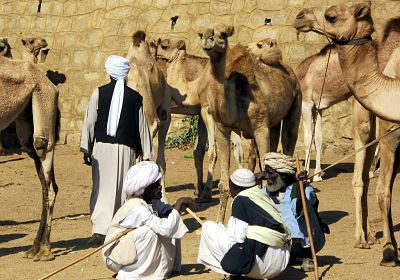
It easy to simply throw every poor country into the same bucket and assume that it will always remain so. However, every nation has a different past and a different culture, which is one of the reasons that we must take these factors into account when judging how well they fare today. Most countries, such as Eritrea, a relatively small country on the African coast, have complex backgrounds. In an effort to better understand the current state of the country, one must first ask the question: why is Eritrea poor?
Eritrea’s modern history dates to the late 1800s. It was during this time that European colonization was widespread throughout Africa. In Eritrea’s case, the Italians invaded during this time.
The country tolerated the Italians up until World War II when the British took control of the area. At this point in time, Eritrea was a relatively well-developed country. In the 1950s, due to Ethiopia’s sacrifices in World War II, the lands that now belong to Eritrea were “awarded” to Ethiopia.
If the country was so developed then, why is Eritrea poor now? The concise answer to this is that Ethiopia was poorer than Eritrea, and thus the Ethiopian government focused on building strong industries within Ethiopian lands and neglected the Eritrean economy. This marked the beginning of the country’s recession. Then, in 1961, the most influential event in Eritrean history began: the war for independence from Ethiopia. This left little resources for the development of a stable industry.
What made this war especially chaotic was the continued influence of the Cold War. These events complicated matters so much so, that it left little resources for development of a stable industry. Why is Eritrea poor? This is why.
The war ended in after 30 years in 1991 and the country was formally established in 1993. Unfortunately, the Ethiopian military destroyed large parts of the country during the war, including whatever industrial buildings Eritrea had to its disposal.
An effective government was not established yet, and many Eritreans, during and after the war, had to fend for themselves. Eritreans were left to their own demise that they developed a culture of self-reliance, which they now pride themselves in.
This self-reliance, in the end, turned out to be more harmful than helpful. In 2006, during a severe drought, the country’s government declined humanitarian aid from NGOs such as the U.S.-based Mercy Corps and the Ireland-based Concern for this reason. At this time, 80 percent of the population lived off of subsistence farming, and the country housed an undernourished population of about 30 percent. Eritrea also had to recover from another war with Ethiopia, which lasted between 1998 and 2000.
Why is Eritrea poor? The answer to this question lies in the country’s conviction of trying to make ends meet on its own and its endless clashing with Ethiopia.
Due to these issues, the international community has not been very keen to invest in the country more recently. Eritrea has industries which are waiting to be capitalized on, such as minerals and a wide seafront, but it has a lack of money to begin these endeavors. Landmines left over from the previous wars also make mining especially expensive, leaving mineral deposits untouched.
There is an improvement on the horizon though: the Eritrean government is paying its citizens more fairly and is looking do some initial landscape scouting for mining. Furthermore, the country’s GDP has consistently grown since 2008.
– Michal Burgunder
Photo: Flickr

Human Rights Violations in Uganda
President Yoweri Museveni was elected for yet another five-year term in February 2016, putting him in power for at least the next 30 years. The election process was claimed to have been obstructed by removing the freedoms of expression, assembly and association of citizens. Violations of these freedoms were carried out by security forces.
Government officials and police repeatedly tried to keep journalists and media outlets out of commission by using physical force or by shutting down entire operations. For example, soldiers from the special forces stopped a local television station from covering some campaign meetings of the opposing candidate, Dr. Kizza Besigye from the Forum for Democratic Change (FDC). Furthermore, the Uganda Communications Commission blocked social media sites on election day for what they said was “national security reasons.” These violations prevented the flow of information and obstructed citizens’ rights to obtain valuable information.
The police repeatedly interrupted campaign rallies for Besigye by using force against protesters and even arresting Besigye himself, detaining him before releasing him with no charges laid. Police even opened fire on FDC supporters in Kampala, killing one and injuring many others. Throughout the election process, the police targeted FDC supporters and anyone associated with Besigye’s campaign.
Although non-governmental organizations (NGOs) are allowed in the country, they are not given an easy pass. The NGO Act, which went into effect in March of 2016, vaguely presents its policy, leaving room for interpretation as to how it can be applied. Several NGO offices were broken into last year and thieves took computers, internet servers, projectors and more. Although a committee was formed to investigate, no progress on the case has been made.
These human rights violations in Uganda should be a concern for the country, the continent of Africa, and the world. They showcase just how far people can go in mistreating those who disagree with or challenge them. Hopefully with time and continued help from NGOs, human rights violations can be significantly reduced in the country of Uganda.
– Emily Arnold
Photo: Flickr
5 Causes of Poverty in Angola
5 Causes of Poverty in Angola
Understanding Poverty in Angola
The devastation of war, the high fertility rate, limited access to healthcare, lack of quality education for all and income inequality partially due to government corruption are the primary causes of poverty in Angola. Fortunately, there is evidence of improvements. The government is beginning to expand its economy which will create jobs. It is also making strides to become transparent, which can increase accountability. Plus, Angola is investing in water, electricity and transportation to improve the lives of its people. Nonprofit organizations also help impoverished Angolans by providing healthcare and schools. With time and effort, Angola’s poverty rate should decrease.
– Kristen Reesor
Photo: Flickr
How to Help the Extreme Poor in India
Donate
According to the United Nations International Children’s Emergency Fund (UNICEF), 47 percent of Indian girls are married by the age of 18. While it is illegal for girls in India to marry before the age of 18, many still do because their families live in poverty.
One method to combat child marriage is education. The non-profit Girls Not Brides, for example, is currently fundraising for Shadhika, an organization that pays tuition for at-risk Indian girls. Right now, they are $8,568 away from a $30,000 goal.
Donations to this cause enable more Indian girls living in extreme poverty to attend school and avoid underage marriage. By donating to this and other similar organizations, those who are not currently in India can still assist those in poverty.
Contact Congress
For 2017, the U.S. government plans to spend $49.5 million of foreign aid on health in India. Half of this aid will be allocated for HIV/AIDS. To ensure the effectiveness of this aid, Congress is currently in the process of potentially passing the Global Health Innovation Act (H.R. 1660).
This act requires the United States Agency for International Development (USAID) to give an annual report to Congress describing the “development and use of global health innovations” in their work.
Emailing or calling elected representatives will support this bill on top of promoting the use of health innovation to achieve an HIV/AIDS-free generation. Representatives need to know that their constituents are interested in a goal in order for it to get the attention it deserves.
Shop
Shopping is another way to help the extreme poor in India. Currently, about ten million Indian women are commercial sex workers–the Anchal Project wants to change that.
The Anchal Project employs Indian women, 85 percent of whom were once in the sex trade, to create and make original designs for ecologically sound clothing and fabrics (mainly scarves).
Shopping here will support women in their goal of earning full-time employment and leading change in their families and communities, in effect supporting the extreme poor in working their way out of poverty.
Stay Informed
As most of the world’s poor live in India, the country is a great focus for The Borgen Project and other organizations working to fight poverty. Read up on current struggles and efforts to improve conditions for the poor in India to better learn how you can keep helping in the future.
While people are often told that they as an individual can change the world, it often seems that the change desired is too arduous to achieve. Nevertheless, a community of people can come together to end global poverty and help the extreme poor in India.
– Sean Newhouse
Photo: Flickr
Six of the Most Common Diseases in Morocco
A large number of deaths over the years due to common diseases in Morocco can be overwhelming and make solutions seem nearly impossible. However, it is important to recognize improvements that have been made in areas of sanitation and medical implementation while still remaining aware of those at risk.
– Mikaela Frigillana
Photo: Flickr
Why is the Cost of Living in Norway So High?
With its capital, Oslo, ranked as the 59th most expensive city in the world, Norway is anything but cheap. The high cost of living in Norway is a result of its egalitarian social system, which relies on a value-added tax system and minimal variations between incomes among its citizens to sustain its unique economy and socioeconomic structure. However, the social welfare system provided by the Norwegian government as well as the low unemployment rate in Norway are the positive results of the pricey standard of living.
A key feature that defines the high cost of living in Norway is the increased tax rate. From income tax (starting at 28 percent) to value-added tax, Norway’s tax structure strengthens its egalitarian social system. One of the benefits of using this type of social system is that there is a very minimal differentiation between incomes in Norway. This prevents wage-gaps and renders social classes in Norway to practically nonexistent.
While inadequate pay for minimum wage is a problem among many developed countries, Norway has abandoned this concept all together. Most citizens in different employments sectors, from education to food service, earn a living wage. Although this boosts the price of common goods significantly, it also ensures that Norway’s working class does not become impoverished. This socioeconomic ideology is responsible for reducing Norway’s unemployment rate to a minuscule 3.4 percent.
Education, health care and transportation in Norway are all subsidized by the government. High taxes provide for quality public services. This is especially evident in health care for Norwegian families; cash-for-care benefits, as well as free prenatal visits, including maternal and paternal leave, are all covered by the Norwegian government.
Mutual functionalism between Norway’s citizens and government not only allows its economy to thrive but its democratic process too as well. By rewarding workforce participation with quality social welfare, the Nordic model is an economic solution to ensure societal development. Although the cost of living in Norway may seem inopportune at first glance, there is no doubt that the Norwegian social system provides exceptional benefits for its citizens.
– Kaitlin Hocker
Photo: Flickr
How to Help People in Cuba
Since the 1990s, Cuba has been in a severe economic slump. Every day, Cubans face shortages of everything from food to medical supplies to clothes. The Cuban state struggles daily with crumbling infrastructure and inadequate housing and transportation. In light of these tough financial times, it is useful to know how to help people in Cuba.
Effective Ways to Help People in Cuba
Political outreach
The U.S. embargo of Cuba is responsible in large part for the inaccessibility of everything from food to internet access. For more than 50 years, U.S.-Cuban relations have been dominated by the governments of the two countries. It is high time for more U.S. citizens to become involved in the relationship.
Americans can help Cubans by advocating for better relations and an ease of the embargo to their elected officials. U.S.-Cuba relations are a low-priority issue for most Americans. A little effort from American citizens alongside a little political outreach can go a long way.
Visit Cuba
Tourism is Cuba’s second-largest industry today. International visitors directly address the country’s desperate need to inject foreign money into the country’s struggling economy. Even with the new travel restrictions, visiting Cuba can be a fun and rewarding way to help Cubans. Tourists can have the most positive impact by utilizing privately-owned services such as casas particulares instead of chain-run hotels.
Donate
When visiting Cuba, tourists can do more than put money into the Cuban economy. Most Cubans are unable to access goods such as clothes, medicines and necessary technologies such as flash drives. One of the best ways to help Cubans is to bring as many of these items as possible on a trip to Cuba. Visitors can give these products out to the Cubans that they meet or donate them to specific charities such as the Cuban Red Cross, health clinics or orphanages.
Volunteer
Those who want to help the people in Cuba beyond taking a beach vacation to Varadero can volunteer with various organizations that work to address the needs of the Cuban people. Two prominent groups with special volunteer programs in Cuba are First-Hand Aid and Global Volunteers.
In planning their service, volunteers should be careful to research the mission and impact of each organization. In the past, some charities have run programs with special interests that do not always benefit the Cuban people.
Support domestic charities
Americans can still help the Cuban people without leaving home. There are numerous advocacy groups based in the U.S. and Europe that also work to help the Cuban people through donations and advocacy.
Americans can support these efforts by donating to organizations such as Connect Cuba and Care.org. Again, because of the contentious history of U.S.-Cuba relations, it is important that donors and supporters research each organization’s work and verify that their money will help Cubans.
It can be complicated to figure out how to help people in Cuba. Not every method or charitable organization may have the best impact for Cubans. Nonetheless, the options above offer great opportunities to help the hard-pressed people of Cuba.
– Bret Anne Serbin
Photo: Google
10 Facts About Comoros Refugees
The Comoros is a small island north of Madagascar. It is one of the least populous countries in the world, with a total population of 826,009. The number of Comoros refugees has decreased tremendously since 2001. Here are 10 facts about Comoros refugees and why the number has diminished significantly.
Using various measures of a country’s overall success, child mortality rate, life expectancy, literacy rate, and overall prosperity, we see improvements in life in Comoros. Citizens of Comoros are no longer fleeing persecution or meager conditions. These 10 facts about Comoros refugees display the progress made in the last decade and a half.
– Lucy Voegeli
Photo: Flickr
Plans to Prevent the Degradation of Water Quality in Brunei
Brunei is a sovereign state located in Southeast Asia. Landlocked on all sides by Sarawak in Malaysia except for its South China Sea coastline, the country became a highly industrialized state after it gained independence from the United Kingdom in 1984. The country has a tropical climate characterized by high temperatures and rainfall. Water quality in Brunei has the potential to decrease in the future if action is not taken.
Surface water supply, which makes up about 99 percent of water utilized for all purposes in Brunei, comes from the four river basins of Brunei: Daerah Tutong, Kuala Belait and Temburong. The Brunei River’s upper reaches have been a major freshwater source for the western part of the country. Despite being used for everything from transportation to waste disposal, it has largely been unaffected due to its natural capacity for self-purification.
High levels of water pollution in the Brunei River have been traced to wastewater treatment plants, industrial discharge, and polluted streams. The government has identified population density and urban catchment systems as the most common reasons for the level of pollution prevalent in rivers, especially Brunei. Point and non-point pollution sources – including residential, industrial and agricultural outlets – are currently the main sources of pollution in Brunei River.
Domestic wastes and surface runoff in the rivers of Brunei constitute about 50 percent and 29 percent, respectively, of the load discharged into water courses. An increase in population and greater economic development is likely to have adverse effects on water quality in Brunei.
In the Sungai Liang and Seria areas of the Belait district and in the Berakas area of the Brunei-Muara district, limited reserves of groundwater have been identified.
The country is considering taking steps to address the water problem, including introducing legislation to improve watershed protection and manage pollution.
Six government treatment plants in different parts of the country maintain good drinking water quality in Brunei. Brunei Shell Petroleum (BSP) and Brunei Shell’s Liquefied Natural Gas (LNG) operate private water treatment plants. Bottled water factories make use of advanced water technology in purifying drinking water for the local population.
Under the Tenth National Development Plan, upgrades to existing monitoring systems and quality management frameworks have been proposed by the government. Despite the fact that 99.9 percent of the population is now provided with clean water, the government has evinced intent to maintain high levels and quality of water in the country in order to meet the changing demands of an increasing population and accommodate rapid industrial development.
Water conservation and sustainability measures have been proposed to maintain the supply and distribution of clean water in the country. New designs in focusing on riverside development and integrated water resource management plans have also been unveiled. This has included construction of new water infrastructure, including drainage systems and treatment plants, and further upgrading. Enhancement of water quality monitoring is being proposed with a new water lab and 11 new water quality parameters.
The country has built reservoirs and dams to help prevent seawater intrusion and manage its river flow, utilized hydrological data network with technological advances, secured international cooperation from countries like Singapore and improved water quality monitoring. Furthermore, the country has had initial success in adapting to the threats of climate change.
It is also managing its water resources and provisions by utilizing the Integrated Water Resources Management (IWRM) framework’s goals and action plans. Together, these steps will sustain and enhance the quality of life, together with improving water quality in Brunei, for all Bruneians.
– Mohammed Khalid
Photo: Flickr
Why is Eritrea Poor?
It easy to simply throw every poor country into the same bucket and assume that it will always remain so. However, every nation has a different past and a different culture, which is one of the reasons that we must take these factors into account when judging how well they fare today. Most countries, such as Eritrea, a relatively small country on the African coast, have complex backgrounds. In an effort to better understand the current state of the country, one must first ask the question: why is Eritrea poor?
Eritrea’s modern history dates to the late 1800s. It was during this time that European colonization was widespread throughout Africa. In Eritrea’s case, the Italians invaded during this time.
The country tolerated the Italians up until World War II when the British took control of the area. At this point in time, Eritrea was a relatively well-developed country. In the 1950s, due to Ethiopia’s sacrifices in World War II, the lands that now belong to Eritrea were “awarded” to Ethiopia.
If the country was so developed then, why is Eritrea poor now? The concise answer to this is that Ethiopia was poorer than Eritrea, and thus the Ethiopian government focused on building strong industries within Ethiopian lands and neglected the Eritrean economy. This marked the beginning of the country’s recession. Then, in 1961, the most influential event in Eritrean history began: the war for independence from Ethiopia. This left little resources for the development of a stable industry.
What made this war especially chaotic was the continued influence of the Cold War. These events complicated matters so much so, that it left little resources for development of a stable industry. Why is Eritrea poor? This is why.
The war ended in after 30 years in 1991 and the country was formally established in 1993. Unfortunately, the Ethiopian military destroyed large parts of the country during the war, including whatever industrial buildings Eritrea had to its disposal.
An effective government was not established yet, and many Eritreans, during and after the war, had to fend for themselves. Eritreans were left to their own demise that they developed a culture of self-reliance, which they now pride themselves in.
This self-reliance, in the end, turned out to be more harmful than helpful. In 2006, during a severe drought, the country’s government declined humanitarian aid from NGOs such as the U.S.-based Mercy Corps and the Ireland-based Concern for this reason. At this time, 80 percent of the population lived off of subsistence farming, and the country housed an undernourished population of about 30 percent. Eritrea also had to recover from another war with Ethiopia, which lasted between 1998 and 2000.
Why is Eritrea poor? The answer to this question lies in the country’s conviction of trying to make ends meet on its own and its endless clashing with Ethiopia.
Due to these issues, the international community has not been very keen to invest in the country more recently. Eritrea has industries which are waiting to be capitalized on, such as minerals and a wide seafront, but it has a lack of money to begin these endeavors. Landmines left over from the previous wars also make mining especially expensive, leaving mineral deposits untouched.
There is an improvement on the horizon though: the Eritrean government is paying its citizens more fairly and is looking do some initial landscape scouting for mining. Furthermore, the country’s GDP has consistently grown since 2008.
– Michal Burgunder
Photo: Flickr
Biram Dah Abeid, the Man Fighting Slavery in Mauritania
On an April afternoon in 2012, Biram Dah Abeid held up books of Islamic legal interpretations. A large crowd in front of him watched as he dropped the books into a large box and set them on fire. As the books disintegrated, a tiny part of the legacy of slavery in Mauritania seemed to turn to ash along with them.
The books that Biram Dah Abeid burned contained interpretations of Islamic law that justified slavery. In the North African country of Mauritania, an estimated four percent of the population is currently enslaved.
The origins of slavery in Mauritania are complex. Over 2,000 years ago, Arab slave traders began capturing and enslaving dark-skinned people in the region. Now, slaves in Mauritania are called Haratines. Their owners are light-skinned and are called White Moors.
Slavery in Mauritania was officially banned by the Mauritanian constitution in 1981, but the government made no effort to enforce this. Because large swaths of Mauritania are rural and spread out, many White Moors continued to own slaves. The government did virtually nothing to stop them. Finally, in 2007, Mauritania passed a law making owning slaves a criminal offense. However, as of 2017, only three slave owners have been prosecuted. One of the owners was let out months after his arrest. The other two were sentenced to only a year in prison.
Biram Dah Abeid is fighting against this. In 2008, he started an organization called the Initiative for the Resurgence of the Abolitionist Movement (IRA). The IRA rescues enslaved Mauritanians and engages in large, nonviolent protests to publicize their cause. But Abeid’s protest does not come without cost. In recent years, the Mauritanian government cracked down on IRA activists. After the book burning incident, the President called for Abeid’s execution. Abeid was eventually arrested and detained for months. Three years later, he was arrested again for simply being a member of the IRA. According to the government, it was an “unauthorized organization.” He spent nearly two years in prison before being released.
Being an abolitionist in Mauritania is difficult. Slavery is incredibly entrenched in Mauritanian culture. Most slaves have no concept of who they are, outside of being slaves. And, on top of that, forty-four percent of Mauritanians are impoverished. No matter how much their masters dehumanize them, slaves are hard-pressed to imagine better alternatives. So, for the IRA, ending slavery in Mauritania is not really about removing physical chains. It’s about constructing a new culture—one that doesn’t have slavery as a foundation.
International organizations are now taking note of the vital work the IRA and Biram Dah Abeid are doing. In 2013, Abeid received the U.N. Human Rights Prize. In 2016, he was awarded the Trafficking in Persons Report Heroes Awards.
Ending slavery in Mauritania will be a lengthy process. Changing the mindset of an entire nation does not happen overnight. But the voices of people like Biram Dah Abeid are impossible to drown out. Abeid’s vision is inescapably expansive—in 2019, he plans to run for the Mauritanian presidency. His message is clear: Mauritania needs to become the type of place where anyone can do anything, regardless of how dark their skin is.
– Adesuwa Agbonile
Photo: Flickr