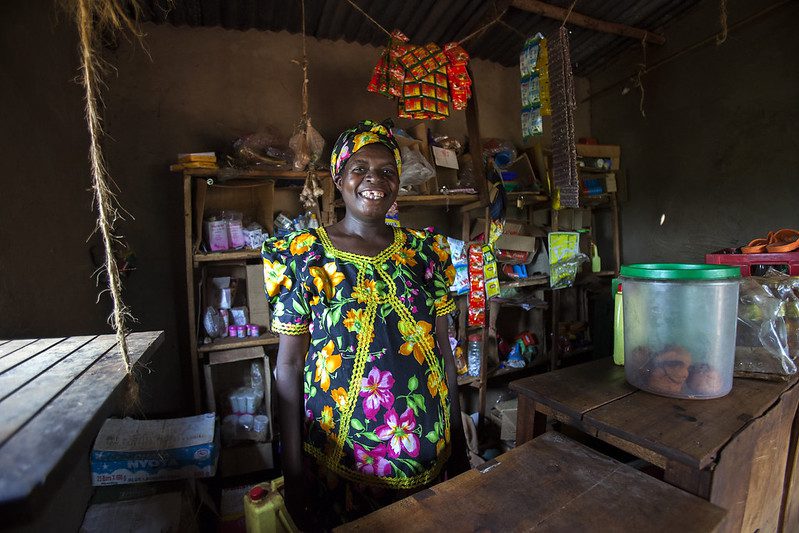
 Women’s recycling programs in Kenya are turning plastic waste into economic opportunity. Women like Lorna Rutto and Nzambi Matee are transforming plastic garbage into economic strength. Rutto, the founder of EcoPost, has repurposed more than 13 million kilograms of plastic into resilient fence posts, generating at least 300 employment opportunities, mostly for women in economically disadvantaged neighborhoods. Simultaneously, Matee, an engineer and the creator of Gjenge Makers, transforms plastic into colorful pavement bricks that, according to reports, are five times stronger than concrete, processing up to 25 metric tons of garbage weekly.
In Kenya, initiatives such as EcoPost and Gjenge Makers demonstrate how recycling serves as a mechanism for economic development, particularly for women. These projects provide more than employment; they cultivate technical skills, foster leadership and empower women to become environmental stewards and entrepreneurs. In a nation that produces more than 22,000 tons of garbage each day, these women-led initiatives are facilitating community sanitation while directly confronting gendered poverty.
Recycling as a Path to Economic Empowerment
In Kenya’s expanding green economy, recycling goes beyond simple street cleanliness; it is fundamentally about generating livelihoods, especially for women in marginalized communities. TakaTaka Solutions, a trash management and recycling company located in Nairobi, employs women in sorting facilities, where they get training to segregate plastics, metals and biological materials for resale. As of 2023, TakaTaka processed up to 95% of collected garbage and created hundreds of formal employment opportunities, mostly for women who were previously engaged in informal labor or were unemployed.
Some initiatives further integrate recycling with entrepreneurship. In Kibera, Nairobi’s biggest informal settlement, the Human Needs Project runs a Women’s Empowerment Center that trains women in trash management, recycled craft production and microenterprise business planning. These projects provide both money and access to computer literacy, accounting and leadership training; skills often inaccessible to women in underprivileged regions.
The Human Needs Project, in collaboration with Mr. Green Africa, has implemented a PET-plastic collecting “cage” system that allows residents, particularly women, to recycle bottles in return for points that can be exchanged for water, sanitation and skills training. Peter Muthaura, the Director of Training and Strategic Partnerships for the initiative, explains:
“This innovative approach incentivizes responsible waste management, promotes a cleaner environment and fosters economic empowerment in the community.” Women’s recycling programs in Kenya are redefining economic roles for women by formalizing waste collection work and offering technical and entrepreneurial training. A formerly inconspicuous, low-prestige occupation has suddenly become a pathway to enhanced autonomy and influence.
From Margins to Leadership
Women in Kenya’s recycling industry are not just generating income; they are assuming leadership positions, transforming community perceptions about garbage and gender roles. The Flipflopi Project in Coastal Kenya, a circular economy program that constructs boats and household products from recycled plastic, has emerged as a platform for empowering women as craftsmen, educators and environmental champions.
The initiative developed a plastic recovery and training center in Lamu County, targeting 60% of the archipelago’s population and provides vocational programs in plastic processing, upcycling, traditional boatbuilding and storytelling skills for women. In its 2019–2021 expeditions, women craftsmen had a significant role in both constructing the boat and facilitating workshops, addressing students and interacting with county authorities.
As Flipflopi co-founder Dipesh Pabari explains: “A multi-colored boat made of flip flops is a conversation starter, no matter who you are.” Women affiliated with Flipflopi are transforming norms by doing outreach events with politicians and media, therefore establishing themselves as prominent advocates in environmental and community development.
Why Recycling Solutions in Kenya Work
The success of Kenya’s recycling projects is attributed not just to innovation but also to the ecosystem, including legislation, community ownership and cultural preparedness for change. Collectively, these elements foster an atmosphere in which women are not only included but essential to the development of the green economy.
- Progressive Environmental Policies. Kenya has shown political commitment to garbage management. The 2017 national plastic bag ban was among the most extensive globally and its implementation established a foundation for enhanced recycling systems. The 2021 Sustainable Waste Management Act officially acknowledged the contributions of community-based waste pickers and required the incorporation of women and youth in county-level waste management plans.
- Decentralized, Community-Driven Models. In contrast to many centralized systems, Kenya’s recycling infrastructure flourishes via local cooperatives and public-private partnerships, mostly managed or maintained by women. This decentralized approach guarantees that solutions are customized to local requirements, whether in urban informal settlements or coastal fishing communities. Flipflopi, for example, depends on local beach-cleaning organizations, mostly led by women, to gather plastic for its community boat-building workshops. M-taka in Kisumu exemplifies the use of technology, social incentives and organized training to educate 1,140 women, train 75 as recycling agents and process more than 103 tons of recyclables, facilitated by community-based buy-back shops and a mobile application.
- Integration with Broader Development Goals. These projects extend beyond recycling; they connect waste management solutions to training, financial empowerment and health education. Companies such as M-taka integrate waste collection initiatives with teaching on responsible waste management and economic skills for women, using digital platforms. A UNDP-supported NAMA research outlines that Kenya’s circular economy program has the potential to generate 1,600 jobs, enhance health and promote income fairness, particularly favoring women in the waste industry.
Scaling the Model
As Kenya’s recycling industry expands, the current issue is to scale effective models while preserving their community-oriented and gender-inclusive foundations. Organizations, politicians and funders are increasingly prioritizing replication, extending validated projects to new counties, farther into informal settlements and allied industries like construction, agriculture and energy.
- Geographic Expansion: M-taka’s Regional Rollout. M-taka, first tested in Kisumu, intends to duplicate its effectiveness across Western Kenya through new satellite centers and collaborations with both government and private stakeholders. It has obtained backing from climate technology investors to implement satellite gathering sites and integrate a mobile application in additional counties in 2025.
- Community Replication: Flipflopi’s Open-Source Toolkit. The Flipflopi Project has progressed beyond the construction of the world’s first recyclable plastic dhow. Through its Lamu-based Design and Training Centre, it currently instructs boat and furniture fabrication using community-sourced plastic.
- Cross-Border Knowledge Sharing Based on East African Campaigns. The Flipflopi Lake Victoria campaign, including a recycled plastic dhow that navigated Kenya, Tanzania and Uganda, highlighted transboundary plastic issues and stimulated regional collaboration. The campaign included community clean-ups and policy discussions in each nation, facilitating a collective vision for East African action on plastic. The women’s recycling programs in Kenya are currently transitioning into a scaling phase, characterized by technology-driven geographic expansion, open-source replication resources and regional advocacy collaborations. These initiatives aim to eliminate plastic waste while disseminating a proven, women-centric circular economy model across East Africa.
Looking Ahead: From Plastic to Power
What started as grassroots initiatives to clean up Kenya’s streets, beaches and rivers has evolved into a robust paradigm of economic empowerment, environmental stewardship and gender fairness. In urban areas and coastal communities, women are transcending the periphery of informal trash labor; they are constructing boats, managing businesses, educating future leaders and influencing the grassroots perspective of sustainability.
As initiatives like M-taka and Flipflopi expand their operations and distribute their frameworks, Kenya’s recycling movement is transitioning from a localized success to a regional model for inclusive green development. The message is clear: with appropriate assistance and foresight, waste is not only an issue to address, but it also serves as a foundation to build on.
– Ray Bechara
Ray is based in Glasgow, Scotland and focuses on Good News for The Borgen Project.
Photo: Flickr

Climate-Smart Agriculture in Jordan Offers Hope
Agriculture’s Water Dilemma
The average Jordanian has access to less than 60 cubic meters of water per year, less than one-fifth of the U.N.’s 500 cubic meter threshold for absolute water scarcity. The problem continues to worsen. The climate crisis is causing reduced precipitation, rising temperatures and more frequent droughts, all exacerbating water scarcity.
Agriculture in Jordan faces a major challenge due to limited water resources. While the sector depends heavily on a steady water supply to grow food, it contributes significantly to the country’s water scarcity. Despite accounting for only about 5.6% of Jordan’s gross domestic product (GDP), agriculture consumes more than 50% of the nation’s freshwater. This imbalance has left many farmers who depend on agriculture for their livelihoods struggling to afford the water needed to sustain their crops.
Farming for the Future
Climate-smart farming in Jordan promises not only to address water scarcity but also to prevent it from intensifying. Using effective water management techniques, Jordan can better nourish its population and support agricultural livelihoods. This approach can potentially boost the country’s economy, benefit the 24.1% of impoverished citizens and help protect the environment.
In 2023, the World Bank launched “My Land,” officially known as the Agriculture, Resilience, Value Chain Development and Innovation (ARDI) project. Aiming to provide funding to 30,000 farming households and create 12,000 new jobs, particularly for women and youth, My Land is a shining example of the potential of climate-smart agriculture in Jordan to stimulate growth beyond crop production. The project also hopes to see benefits from one generation to the next by teaching farmers water-conservation techniques and helping them plant drought-resistant crops.
Complementing the World Bank’s work, the Jordan Hydroponics Agriculture and Employment Development Project (HAED-Jo), funded by the Ministry of Foreign Affairs of the Netherlands, seeks to develop a more efficient and eco-friendly agriculture sector. At farms like Abu Sido and Al-Jabaly, HAED-Jo has introduced a hydroponic system that enables crops to be grown in a water-based medium instead of soil. This technology can potentially reduce water consumption by up to 80%.
A Path Toward Prosperity
As global temperatures rise, Jordan will continue to confront severe water scarcity. Yet, initiatives like My Land and HAED-Jo demonstrate that the country is rising to the challenge with innovation and resilience. This progress matters beyond the environment, as agriculture has two to three times more impact on reducing poverty than other industries. Thus, climate-smart agriculture in Jordan is sowing the seeds of a more food-secure and prosperous future.
– Caroline Clark
Photo: Flickr
How Creative Labs Are Uplifting Women in Kyrgyzstan
Women Empowerment
Women’s empowerment has become a foundational aspect of development and falls under SDG 5, gender equality. The basis is that the more education and knowledge that women have, the more they are able to contribute to the country’s economy as well as their social stability and overall community. However, in developing nations, it can be harder for women to have the necessary resources and their opportunities become limited.
The Creative Economy
Kyrgyzstan is classified as a developing country with strong growth potential but faces significant challenges due to its landlocked geography. The creative economy, particularly sectors that support and uplift artists, especially women, has emerged as an alternative pathway for economic development in the country.
By focusing on women in Kyrgyzstan and harnessing their talents, the country is strengthening its economy by enabling broader participation across various sectors. This approach has led to multiple societal benefits, including increased employment, improved quality of life and a more inclusive society.
The creative economy has also emerged as an innovative means of promoting culture and producing tangible exports, helping Kyrgyzstan grow economically while preserving its cultural heritage.
Women Creative Lab
In 2022, the UNDP launched the Women Creative Lab (WCL) initiative, women-focused workspaces established across Kyrgyzstan. The UNDP describes WCLs as more than just physical spaces; they are environments where women can learn new skills, access opportunities and improve their overall quality of life. By providing women in Kyrgyzstan with a space to create and grow, the initiative addresses gender inequality and enhances education.
The campaign started by targeting more than 25 thematic events and helping them create a safe working space, as well as giving them resources and a network so that they can grow further. The campaign was initiated by the UNDP’s Acceleration initiative with the support of the leading business acceleration in the Kyrgyz Republic, “Welcome KG.”
Expanding the WCL
Since the launch of the first WCL in Osh in 2022, two additional labs have opened in Abad and Batken in 2023, with plans to support more than 200 women across Kyrgyzstan. Since their founding, the WCLs have already empowered hundreds of women, demonstrating how the creative economy can serve as both a development tool and a means of uplifting women.
At these labs, women can take classes, engage in creative and skill-building activities and access a wide range of resources. Beyond creativity, the WCLs provide education on sexual and reproductive health, gender equality, legal rights and financial literacy. These centers have become safe, empowering environments where women in Kyrgyzstan can grow, learn and build the confidence and skills needed to support themselves.
Looking Forward
Kyrgyzstan hopes to grow its creative economy by establishing more creative labs and expanding its reach so that it can help more women. After being operational for three years now, the laboratory has been able to expand to more locations and as they continue to grow, more women are becoming employed and the county’s GDP has increased.
The organization is finding that the laboratories also attract more grassroots NGOs to the area to drive development and establish better initiatives. Through these creative labs in Kyrgyzstan, women are given more opportunities that not only benefit themselves but also the country as a whole.
– Olivia Peters
Photo: Flickr
The Flipflopi Project: Women Recycling Programs in Kenya
In Kenya, initiatives such as EcoPost and Gjenge Makers demonstrate how recycling serves as a mechanism for economic development, particularly for women. These projects provide more than employment; they cultivate technical skills, foster leadership and empower women to become environmental stewards and entrepreneurs. In a nation that produces more than 22,000 tons of garbage each day, these women-led initiatives are facilitating community sanitation while directly confronting gendered poverty.
Recycling as a Path to Economic Empowerment
In Kenya’s expanding green economy, recycling goes beyond simple street cleanliness; it is fundamentally about generating livelihoods, especially for women in marginalized communities. TakaTaka Solutions, a trash management and recycling company located in Nairobi, employs women in sorting facilities, where they get training to segregate plastics, metals and biological materials for resale. As of 2023, TakaTaka processed up to 95% of collected garbage and created hundreds of formal employment opportunities, mostly for women who were previously engaged in informal labor or were unemployed.
Some initiatives further integrate recycling with entrepreneurship. In Kibera, Nairobi’s biggest informal settlement, the Human Needs Project runs a Women’s Empowerment Center that trains women in trash management, recycled craft production and microenterprise business planning. These projects provide both money and access to computer literacy, accounting and leadership training; skills often inaccessible to women in underprivileged regions.
The Human Needs Project, in collaboration with Mr. Green Africa, has implemented a PET-plastic collecting “cage” system that allows residents, particularly women, to recycle bottles in return for points that can be exchanged for water, sanitation and skills training. Peter Muthaura, the Director of Training and Strategic Partnerships for the initiative, explains:
“This innovative approach incentivizes responsible waste management, promotes a cleaner environment and fosters economic empowerment in the community.” Women’s recycling programs in Kenya are redefining economic roles for women by formalizing waste collection work and offering technical and entrepreneurial training. A formerly inconspicuous, low-prestige occupation has suddenly become a pathway to enhanced autonomy and influence.
From Margins to Leadership
Women in Kenya’s recycling industry are not just generating income; they are assuming leadership positions, transforming community perceptions about garbage and gender roles. The Flipflopi Project in Coastal Kenya, a circular economy program that constructs boats and household products from recycled plastic, has emerged as a platform for empowering women as craftsmen, educators and environmental champions.
The initiative developed a plastic recovery and training center in Lamu County, targeting 60% of the archipelago’s population and provides vocational programs in plastic processing, upcycling, traditional boatbuilding and storytelling skills for women. In its 2019–2021 expeditions, women craftsmen had a significant role in both constructing the boat and facilitating workshops, addressing students and interacting with county authorities.
As Flipflopi co-founder Dipesh Pabari explains: “A multi-colored boat made of flip flops is a conversation starter, no matter who you are.” Women affiliated with Flipflopi are transforming norms by doing outreach events with politicians and media, therefore establishing themselves as prominent advocates in environmental and community development.
Why Recycling Solutions in Kenya Work
The success of Kenya’s recycling projects is attributed not just to innovation but also to the ecosystem, including legislation, community ownership and cultural preparedness for change. Collectively, these elements foster an atmosphere in which women are not only included but essential to the development of the green economy.
Scaling the Model
As Kenya’s recycling industry expands, the current issue is to scale effective models while preserving their community-oriented and gender-inclusive foundations. Organizations, politicians and funders are increasingly prioritizing replication, extending validated projects to new counties, farther into informal settlements and allied industries like construction, agriculture and energy.
Looking Ahead: From Plastic to Power
What started as grassroots initiatives to clean up Kenya’s streets, beaches and rivers has evolved into a robust paradigm of economic empowerment, environmental stewardship and gender fairness. In urban areas and coastal communities, women are transcending the periphery of informal trash labor; they are constructing boats, managing businesses, educating future leaders and influencing the grassroots perspective of sustainability.
As initiatives like M-taka and Flipflopi expand their operations and distribute their frameworks, Kenya’s recycling movement is transitioning from a localized success to a regional model for inclusive green development. The message is clear: with appropriate assistance and foresight, waste is not only an issue to address, but it also serves as a foundation to build on.
– Ray Bechara
Photo: Flickr
The Journey To Renewable Energy in Micronesia
Life in Micronesia
While Micronesia’s environment is beautiful, living there isn’t easy. In 2013, 41.2% of the population lived below the national poverty line, a statistic that the World Bank Group estimates to be higher post-COVID-19. Due to its isolated geography, poor mineral deposits and lacking economy, opportunities can be slim.
Electricity is a scarce resource in Micronesia; most of the country is reliant on diesel generators that power a central grid. Most communities do not have day-long access to electricity. Individual households are not the only parties affected by a lack of energy; hospitals have to work with a less-than-ideal power supply as well.
For those with more reliable access to electricity, another problem rears its head. Aging infrastructure causes many power grids to be vulnerable to intense weather like typhoons. This leads to frequent power outages as the grids fail to hold under the conditions.
Fossil Fuels in a Changing World
As an island country, Micronesia experiences some of the highest rates of sea-level rise per year on the planet. A reliance on diesel generators, which produce more pollutants than gasoline engines, exacerbates the issue. Its economic reliance on fisheries and farming causes a unique need to halt the unsustainable fossil fuels use as weather patterns rapidly intensify.
Micronesia’s reliance on diesel generators is more than just an environmental issue however, it is also a financial one. Micronesia has a severe lack of local fossil fuel deposits, this includes resources to fuel these generators. Due to this, Micronesia must outsource its entire fuel supply.
The U.S. used to pay for these fuel imports, but that stopped in 2004. As Micronesia locally lacks typical energy sources, the cost for a fossil fuel economy is too great for Micronesia to handle.
A Plan To Help
In 2004, Micronesia implemented a Strategic Development Plan to outline the goals and benchmarks of renewable energy in Micronesia up until 2023. This plan detailed multiple advancements towards green energy, such as providing sustainable funding for environmental programs and would outline the approach towards green energy for the coming years.
This plan provided an outline that would pave the way for climate and disaster policy, as well as the formation of new climate committees. Through this new focus, renewable energy in Micronesia has grown into a larger force. Solar energy has become prevalent in the country, playing a large role in the hopeful eventual phasing out of the reliance on diesel.
A Green Future
Renewable energy in Micronesia still has a long way to go. The country still has an overwhelming reliance on diesel generators, and most households are still without electricity. However, through actions both past and present, there is undeniable progress ahead.
The World Bank’s recent ARISE Project is set to be a significant boon for the country. The project aims to increase solar construction, creating both mini-grids and home systems. It also aims to strengthen the older grid’s infrastructure to make them more resilient to natural events. This project will help more than 3,000 people gain electrical access.
The FSM recently launched its National Energy Policy through 2050. This policy outlines a future of independent power production as well as public private partnership. It also calls for studies into clean energy sources such as wind, the implementation of hydropower and advancements in architecture for solar.
Looking Ahead
With weather patterns steadily intensifying over time, renewable energy’s steady traction and momentum and an ambitious goal of net zero emissions by 2050, a green future is not only necessary, but inevitable for Micronesia.
– Cayle Harrison
Photo: Wikimedia Commons
Advances in Monitoring Air Pollution in Laos
What Causes Air Pollution in Laos
Numerous sources, including waste burning, vehicle emissions, forest fires, heavy industry and the widespread use of slash-and-burn agriculture, cause air pollution in Laos. Slash-and-burn agriculture is where land is cleared for planting by burning the existing forests in the area.
The region has a long history of using slash-and-burn agriculture and people consider it traditional and effective; however, it contributes significantly to air pollution in Laos.
Negative Effects of Air Pollution
Worldwide air pollution leads to about one in nine deaths. Being exposed to high levels of air pollution can lead to lung cancer, heart disease, respiratory infections and stroke. As well as an increased risk of developing dementia and Alzheimer’s. Air pollution also has economic impacts; in 2019, it accounted for the loss of 6.1% of the global gross domestic product (GDP).
Also, because air pollution causes sickness, it places extra burdens on health systems and can increase the national healthcare spending. Further, when kids miss school due to an air pollution-related illness, they miss valuable time in the classroom and their parents often have to take time off work to look after them. This impacts economic growth.
Poverty and Air Pollution
Living on less than $1.90 per day, 716 million people are exposed to unsafe levels of air pollution. Pollution levels are especially high in lower-middle-income countries, where economies often depend on highly polluting industries.
Low-income communities tend to be disproportionately exposed to unsafe air pollution levels, partly because they tend to have jobs that require them outside performing physical labor. When they get an air pollution-related illness, they also tend to have more limited access to good and affordable health care.
New Air Quality Monitors
The government is combating air pollution in Laos by installing new air quality sensors. So far, 148 schools across the country have installed sensors, ensuring coverage in every district. This provides authorities with localized, real-time data on air quality nationwide. Policymakers can use this data to shape long-term clean air strategies and take immediate actions, such as temporarily closing schools in areas with dangerous pollution levels.
Hands-on training for students, teachers and local officials accompanied the installation of the sensors. In the future, an AI-powered program will use the data collected from the sensors to provide real-time local air quality estimations for more than 8,500 villages in Laos. This will include areas that do not have on-site sensors.
Final Remarks
While air pollution in Laos remains a serious concern, the government’s investment in real-time monitoring marks a major step forward. With sensors now installed across every district and plans to expand AI-powered forecasting, Laos is better equipped to track pollution. Furthermore, this will allow the protection of public health and guide long-term environmental policy. Continued innovation and action will be essential to ensure cleaner air and a healthier future for all Laotians.
– Axtin Bullock
Photo: Wikimedia Commons
Virtual Reality Surgical Training in Low-Resource Countries
5 Ways VR Surgical Training Transforms Countries
Strengthening Surgical Training Systems
Virtual reality surgical training is revolutionizing how surgeons gain critical skills in low-resource nations. By eliminating reliance on cadavers, costly labs and overseas fellowships, these programs empower countries to build strong surgical workforces locally. Early results show marked gains in surgeon competency, speed and confidence. As this technology continues to expand, it holds the potential to transform patient outcomes and strengthen health systems where surgical care has long been out of reach.
– Hayden Chedid
Photo: Flickr
Aboutengue Refugee Camp: Women Achieving Financial Freedom
Fatima Zakaria
In June 2023, Zakaria’s hometown of El Geneina in western Darfur was attacked and her life was altered forever. The 27-year-old social worker for the Ministry of Social Affairs had graduated from university and was looking forward to furthering her studies when war broke out in Sudan. She then fled the war-torn country and made the journey to a refugee camp.
She remarks on the journey, “We were scattered. My family fled in different directions and I got separated from my mother and some of my siblings.” When she was settled into the camp, she reconnected with her mother and siblings, but had lost her father, husband and three of her siblings. During her journey to safety, she was shot in the leg near the border. She has since made a full recovery.
Sudanese Civil War
The Sudanese Civil War has displaced 13 million people from their homes and made 3.8 million refugees since it began in 2023. The conflict broke out over a struggle for power between the Sudanese army and a paramilitary group, the Rapid Support Forces.
During the three years of fighting, the country has experienced a famine and claims of genocide in the western Darfur area. More than 150,000 people have died as a result of a conflict that the United Nations (U.N.) has called the world’s largest humanitarian crisis.
Aboutengue Refugee Camp
Since April 2023, Zakaria has been among the more than 800,000 refugees who have fled to safety in eastern Chad. According to the UNHCR, the U.N. Refugee Agency, the average number of people crossing the border has reached 1,400 daily.
Most refugees are women and girls arriving in Chad’s Wadi Fira and Ennedi Est provinces. Zakaria found safety in Aboutengye, one of five refugee camps in eastern Chad that now provides shelter to more than 50,000 people. Charities such as Médecins Sans Frontières/Doctors Without Borders (MSF) have worked to improve the facilities in such camps.
MSF has helped to build a faecal sludge treatment site, which soon became known as the “poop factory” among the residents. The project provides an innovative solution to treat and safely dispose of sludge from latrines; this process also works sustainably with the environment and involves growing safe-to-eat bananas.
Zakaria’s Work
Zakaria decided to rebuild her life in the camp and use her experience to support other women in the community. She worked with fellow refugees to form an association that joins different women’s groups in the camp. Activities such as making traditional incense and perfumes, basket weaving and handicrafts bring together women from several generations.
Zakaria speaks out on how many of these women have lost their husbands due to conflict and she “created [the association] to empower them on how to generate income in the camp.” She has since opened her small home to the association as a hub for weekly meetings where the women share ideas and experiences. The group discusses challenges they face in the camp and daily life. The haven provides a space for any woman in the settlement to talk through her problems and receive emotional support.
She wishes to continue her education to support her mother and sisters, who face a different life from the one they grew up with. She believes education is the answer to helping more people in her community.
Conclusion
Despite experiencing hardship, from the death of family members to being forced from her home, the Sudanese refugee helps women better their lives. She uses her skills and determination to improve her life, her family and the community of women that now call Aboutengue refugee camp home.
– Phoebe Guildford
Photo: Pixabay
Disability and Poverty in Guinea
Effects of Poverty
Increases in global commodity prices led to rising inflation levels, pushing more people into poverty as they were unable to access affordable food, effectively depriving them of their necessary nutritional intake. The effects of high food inflation caused Guineans to resort to unhealthy coping mechanisms, which have a long-term impact on their daily lives and, ultimately, their ability to earn a living. More than half of the entire population is also experiencing extreme food insecurity and poverty. This ultimately also leads to high rates of malnutrition.
Despite this, the percentage of people below the poverty line has decreased from 55.2% in 2012, suggesting that living conditions are actively improving over time.
Effects of Disability
People with disabilities in Guinea face significant discrimination and are highly vulnerable to violence. For example, people with albinism are subject to many myths and stereotypes about their condition, such as the belief that they bring good luck. This myth often results in these individuals being kidnapped or becoming victims of ritual crimes.
Guinea signed and ratified the United Nations Convention on the Rights of Persons with Disabilities in 2007-8. This convention works to help individuals see disabled people as subjects with rights who are capable of claiming those rights, making their own decisions rather than just objects of charity and social services. After this, Guinea adopted multiple measures to help foster human rights and the rights of people with disabilities. Multiple organizations originated as well in order to protect disabled people.
Organizations Addressing Disability and Poverty in Guinea
Disability and poverty in Guinea correlate, as disabled people have a poverty rate of 14.4%. Numerous organizations advocate for disabled rights, such as the Guinean Network of Disability Organizations for the Promotion of the International Convention on the Rights of Persons with Disabilities (ROPACIDPH). This organization directly advocates for the rights of disabled children and adults with education, health support, training/advice/parental guidance, etc. While there are some good things in place to advocate for disabled people who may be suffering from poverty or other related issues, their lives will only be improved if the laws put in place are strictly enforced. For example, recently, there was an event held in support of the deaf community for the International Day of Sign Languages by ROPACIDPH that its Facebook page showed.
There are also many organizations, like the World Food Programme (WFP), actively working to provide food assistance to those in need. “In 2023, WFP provided vital nutritious food to more than 1 million vulnerable people, including schoolchildren and pregnant or breastfeeding women. This work improves food security and nutrition, reducing maternal malnutrition, mortality risk, low birth weight rates, and malnutrition among children under 5.”
Organizations such as the United Nations Development Programme (UNDP) have also helped people with reduced mobility start 100 businesses to help them become self-sufficient and not need to rely on the government or other people to survive. These businesses were all met with great success. One business has ended up making more than $6,000 a month.
Looking Ahead
As these organizations continue to work to improve the lives of these individuals, their living conditions continue to get better and better with continued support and advocacy. As time has progressed, the poverty level and food insecurity continue to drop, and more help has been provided over the years. Disabled individuals have also become more recognized in Guinean communities, and many conventions were put in place to help support them.
– Bowie Aldrich
Photo: Unsplash
Everything To Know About Hunger in Dominican Republic
The Facts
In 2024, the Dominican Republic ranked 41st out of 127 countries on the Global Hunger Index. The index gave the Dominican Republic a score of 7.8 which they consider to be a “low” ranking. The hunger index is calculated using a weighted score of four categories: undernourishment, child stunting, child wasting and child mortality. The Dominican Republic has steadily decreased their Global Hunger Index score falling from a “moderate” hunger score of 15 in the year 2000.
The percentage of undernourished increases among those under the age of 5 to 7%. Anemia affects 61% of children aged between 6 and 11 months. Children have a higher health risk when exposed to the dangers of malnutrition. It can have many long-term effects on developing children, and in severe cases even cause death.
The World Food Programme (WFP) estimated that one out of three households in the Dominican Republic lacked access to a nutritious diet. However, food insecurity is most intense among those households facing extreme poverty, or the immediate fallout of a natural disaster.
The Why
Poverty, a weak agricultural structure, and natural disasters are the driving factors of hunger in the Dominican Republic. There is a strong correlation between poverty and food insecurity. Impoverished individuals often forgo meals in order to provide for children, pay bills or simply due to a lack of access. Natural disasters disrupt an already tenuous food system on the Caribbean island by destroying crops, flooding agricultural lands and drought.
Facts About Poverty in the Dominican Republic
The Dominican Republic is an upper-middle-income country and ranks 98 out of 189 countries on the Human Development Index. About 23% of the population lives on less than $6.85 USD per day. Approximately 3% of the population is living in extreme poverty. The financial strain of poverty exacerbates the difficulties of food insecurity by reducing purchasing power.
Natural Disasters
The Dominican Republic has experienced extreme storms and hurricanes, sometimes followed by intense droughts. This extreme weather destroys crops, and disrupts their food system. The global Climate Risk Index ranked the Dominican Republic number eight out of the 10 countries most at risk of extreme climatic events.
The country’s poor are the most vulnerable to these extreme weather events because they rely on small-scale agriculture for their livelihoods and sustenance. For example 90% of the direct-victims of storms Olga and Noel were under the poverty line.
The Good News
The Dominican Republic has experienced significant economic development in recent years averaging 5% growth in the last five years. This has lifted almost 3 million people out of poverty within the country.
The World Bank expected the Dominican Republic’s economy to grow by 4% in 2025. This economic growth is going to be key in the country’s financial ability to ameliorate the effects of increasing extreme weather events, and continuing to reduce poverty.
Solutions
Hunger in the Dominican Republic has been on the decline in recent decades. This is due, in no small part, to the work of NGOs like the World Food Programme (WFP). The WFP has a strategy of investing in the country to improve in three key sectors. It is:
The entire WFP budget for Dominican Republic programs it implements amounts to $1.89 billion. This funding has had a massive impact on hunger in the Dominican Republic by alleviating poverty and providing basic services. Since 2017, 1.3 million households have received cash assistance for health care, cement has replaced 9,000 dirt floors and 27,000 Dominicans have received job/business training.
Foreign aid, and the work of NGOs, are essential to the continued economic growth of the Dominican Republic. Sustaining a growing economy within the Dominican Republic is the key to eliminating hunger in the Dominican Republic.
– Justin Doyle
Photo: Unsplash
Path Out of Poverty? Higher Education in Romania
Romania’s Education Trends
The Romanian government allows higher education institutions to operate independently, within the framework of the Romanian legislation. Through budgets and advice from the Ministry of Education, the government creates programs and materials to support higher education in Romania, according to the European Commission. Romania has more public than private institutions, and institutional departments and faculty members oversee internal educational and university matters.
In 2024, a survey revealed that 16.8% of Romanians, aged 18 to 24, left school before completing higher education in Romania, according to the European Union. Through education, individuals learn elementary skills but also prepare to find work and contribute positively to their society and economy. With a growing number of young people leaving the education system early, Romania’s societal and economic progress faces increasing challenges. Another factor affecting Romania is that, unlike other EU nations, many who leave the education system early are women. Given the prevalence of the gender wage gap throughout the world, Romania experiences even greater economic inequities when fewer women complete higher education.
Although the Romanian economy has rebounded since the COVID-19 outbreak, Romania struggled to provide online education, and the pandemic especially caused tremors that still affect the country’s struggling education system. There is a strong correlation between inadequate education and high rates of unemployment. Jobs requiring fewer skills and experience lead to decreased overall wages, working conditions and job mobility for Romanians and minorities living in the country.
Discrepancies: Lack of Funding and Access
According to the International Trade Administration, a report from a Romanian Non-Governmental Organization notes that 38.1% of Romanian children face poverty, with nearly half of the country’s children struggling to access quality education and less able to pursue higher education in Romania. Additionally, only 0.15% of Romania’s GDP is reserved for research, with a slight expansion to 2% by 2024. Low funding rates negatively impact education and job opportunities for Romanians.
Poverty negatively impacts the Roma, an ethnic group of people from northern India who migrated to many European and other nations. Poverty among the Roma both stems from and results in a lack of education. According to the World Bank Group, 70% of the Roma experience poverty and high rates of illiteracy and reduced educational skills caused by the inadequate quality of and access to education. Segregation prevents the Roma from gaining the same level of education as their counterparts in Romania, according to Broken Chalk. Like other populations living in poverty, personal and familial conditions play a significant role in the ability to gain education or attend higher education. Education often becomes a lower priority in households struggling to meet basic needs. The outcome of an uneducated population, in cyclical poverty with no upward mobility, is dire for the Roma.
In addition to the Roma, other Romanians living in poverty struggle with affording education for their family members or themselves. Romania spends less money annually per university student compared to other developed nations, according to the Organisation for Economic Co-operation and Development, with too little financial aid to enable students to afford education. The government’s underinvestment and the resulting lower quality of educational institutions make it less viable for students to achieve a positive gain when paying for an education.
Modernizing the System
Recent governmental policies seek to minimize the effects of poverty through renewed access to education for Romanians and the Roma. The government is allocating funds for educational improvements to target access and quality, as reported by the Organisation for Economic Co-operation and Development. Access to education remains the key concern, especially as Romania increases efforts to extend skills and work habits to minority and impoverished populations. Romanian efforts have specifically earmarked educating teachers on how to engage with students and foster a knowledge of real-world problems and events. These improvements are key to establishing a stronger education system for all citizens and especially promoting learning opportunities in younger generations.
New policies aimed at supporting agencies have been created to encourage Romanian populations to send their children to school with a positive outlook for their future via education. Romania created one such initiative, the Relevant Curriculum, Open Education for All – CRED, which allows the country to assess and directly change certain current policies to improve education, according to CRED. By analyzing its lower educational standards, the government can create a stronger foundation and path for its students to achieve higher education in Romania. A subsection of the CRED project is the Second Chance – ADS, where modern policies allow and give support to those who left education previously to return. By modernizing the Romanian education system, more individuals, including those in rural areas, can access quality education, enabling the population to become more informed and reducing the risk of cyclical poverty.
Progress and Hope via Education
Romania’s current efforts to enhance and improve educational policies and funding will lead to greater access to skilled jobs and a stronger economic outlook, and progress towards inclusive communities and eradicating poverty. New education policies increase professionalism and excellence through the foundational years of education, focusing on individuals’ well-being and well-roundedness and ensuring that students become stronger job applicants, according to the European Commission. By increasing funding and equity and enabling citizens to gain a strong education in the country, minimizing brain drain, the Romanian government will improve the entire country’s outlook. Through education, Romania will thrive and attract individuals from across the world, positively impacting its economy and society. National and international efforts may also increase the hope and positive outlook within Romania among its citizens, fostering hope for a future of equality and prosperity.
– Avery Kachmarsky
Photo: Flickr