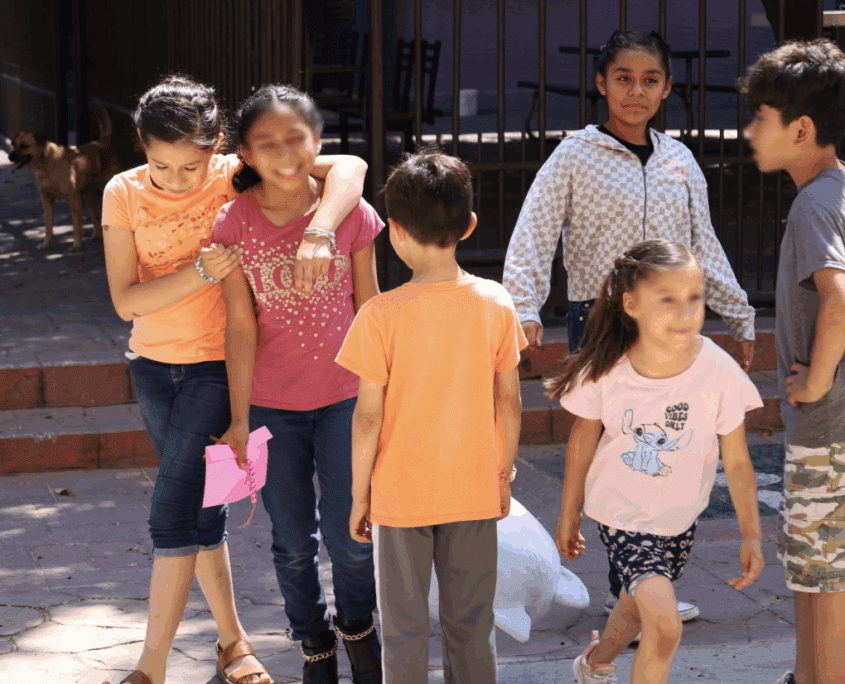
 Ciudad de los Niños is a civil organization serving the community of Tijuana, Mexico. It offers a home for children from unsafe families, as well as childcare, psychological and educational programs. From a guiding value of co-responsibility, the nonprofit shares a commitment with society and families to protect, care for and support children experiencing social disadvantages. These disadvantages include financial hardship, mental health issues, disabilities and not having safe or reliable parental care.
The Borgen Project spoke with Marta Beltrán, director of Ciudad de los Niños; Maryel Nieves, head of communications; Gladys, coordinator of CAI Albergue Infantil; and Cinthia Saavedra, coordinator of Unidad de Servicios Especializados, to gain further insight into the organization’s work.
CAI Albergue Infantil (Children’s Shelter)
The Albergue Infantil is a shelter home for children who have experienced abuse or abandonment from their caregivers. The children’s cases are evaluated by the state. In this process, the children are moved to shelter homes like the Albergue Infantil offered by Ciudad de los Niños. There is no specific time frame for the length of cases, so children can spend anywhere from a few months to several years at the home.
Coordinator Gladys works directly with these children. She focuses on creating a family-like atmosphere and wants the children to have a loving and dignified childhood. She ensures that all fundamental emotional needs are met, guided by love.
Unidad de Servicios especializados (Unit of Specialized Services)
The Unidad de Servicios Especializados is Ciudad de los Niños’ psychological unit. Here, the nonprofit offers therapy to children and parents for mental health, trauma and disabilities.
Typically, the children are between 3 to 17 and a half years old. For kids with disabilities, the unit offers speech therapy, teaches sign language and provides hearing aids. For parents, they work with therapists outside the organization to connect them. Psychiatric services are included at the unit for patients who may need medication.
Prices are adjusted and decided after an assessment of family income. This allows low-income families to access needed psychological services. Equity is practiced, as the price is set using context and understanding of differing situations.
Initially, patients can have a hard time, as the therapists challenge them and help them confront difficult emotions. However, as treatment progresses, patients begin to feel proud of themselves for their successes. Similarly, the workers often have to figure out solutions, but feel very fulfilled seeing their patients’ progress.
Estancia Infantil (Day Care)
Ciudad de los Niños offers a daycare for working parents. To qualify for the program, both parents must be employed. However, the organization makes exceptions. If a parent is continuing their education, they may still qualify, since they cannot be with their child during class. Also, in consideration of summer vacation, children who are alone at home due to their parents’ working hours are accepted into the daycare.
The daycare promotes equity, as low-income families can receive scholarships. Furthermore, the requirement helps ensure that working families have better access to childcare, as there is less competition from families with a stay-at-home parent.
Programa Educativo (Educational Program)
The children at Ciudad de los Niños attend public school and are further supplemented through educational programs at the organization. The organization connects with the schools to understand what each child needs to improve. They also focus on the students’ homework. Additionally, Ciudad de los Niños offers its own curriculum on art, plastic art and ecology.
The education program goes beyond its unit. It is present in all the aforementioned units, most notably at the Unidad de Servicios Especializados. In the case of mental disabilities, the unit implements pedagogy to provide effective aid to patients with neurodivergence.
All of the units work together. A child in the Albergue Infantil may go to therapy at the Unidad de Servicios Especializados and participate in the Programa Educativo after school for a concept they may not have understood at school.
Volunteers
Ciudad de los Niños welcomes volunteers across its programs, including at the Estancia Infantil, which supports young children. Volunteers assist with caregiving, play-based learning and basic needs such as organizing supplies. In the past, volunteers have donated school supplies and toys through independent fundraising efforts. The organization fosters a welcoming environment for volunteers, often including them in group activities and highlighting their contributions on social media.
Looking Ahead
Ciudad de los Niños offers direct aid to the community of children and even parents in Tijuana, Baja California, Mexico. At the Albergue Infantil, children are given a second chance at a childhood filled with love, respect and integrity that they did not receive in their original homes. At the Unidad de Servicios Especializados, children with mental disabilities or traumatic upbringings can seek healing and peace through the help of psychologists and therapists. Likewise, at the Estancia Infantil, hardworking parents receive child care support. This allows for social mobility, as parents can grow their careers or have two incomes instead of one. Finally, in the educational program, children receive further instruction in subjects like arts and ecology and receive help with their homework. Parents and children experiencing financial challenges, mental health concerns, disabilities and unsafe homes can find help at Ciudad de los Niños.
– Andrea Roji
Andrea is based in San Diego, CA, USA and focuses on Good News for The Borgen Project.
Photo: Ciudad de los Niños

#67Strong4Kids: Jennifer Garner Takes Strides of Hope
Garner has been working as a Save the Children artist ambassador for more than a decade. On Sunday, June 22, she was joined in Santa Monica, California, by Peloton instructor Becs Gentry and hundreds of supporters who took strides of hope to raise awareness and funds for children suffering from malnutrition. This was the final stretch of the run, sponsored by Brooks Running. The attendance was to support the charity’s efforts to provide ready-to-use therapeutic food (RUTF) to children in danger of going hungry globally.
“I’m feeling emotional and just really grateful — grateful to people for seeing what I was doing and either joining in or cheering me on,” says Garner. “It just feels like a nice intention to be out there.”
Child Malnutrition
Around the world, one in five deaths among children aged below 5 is associated with severe acute malnutrition. This condition can cause permanent damage to children’s physical and cognitive development and make them more susceptible to illness.
Garner says, “With climate disruptions, conflict and inequality, more children than ever are suffering from the effects of severe malnutrition, a condition that is preventable and treatable. Our 67 runs may be behind us, but the race for kids’ futures is ongoing. Together, we can help. For only $67, a child can receive a six-week course of RUTF and along with it, a chance at a healthier future. Thank you for partnering with Save the Children by joining with Becs Gentry and me. You are part of the solution!”
As of June 22, the #67Strong4Kids campaign has raised $500,000 to support severely malnourished kids globally.
Garner’s Advocacy Efforts
Garner has advocated on Capitol Hill and brought Save the Children’s early childhood education programs to her state of West Virginia. She traveled to Arkansas, California, Kentucky, Mississippi, South Carolina, Tennessee and Washington to meet with lawmakers, press and philanthropists to raise awareness for the foundation.
Conclusion
Jennifer Garner shared that her decision to run every day “was a small promise that I could keep to myself every day, but would be meaningful for me.” She has set a groundbreaking example by taking strides of hope, where each stride counts.
Her drive to take initiative and accept the #67Strong4Kids challenge has inspired countless runners and fans. Through all of its participants, Save the Children has acquired some of the resources needed to support malnourished children globally.
– Abirame Shanthakumar
Photo: Wikimedia Commons
USAID in Ghana: Cuts Could Undermine Progress
USAID in Ghana
Until recently, USAID contributed about $150 million per year to Ghana. The organization funded efforts in maternal and child health, HIV/AIDS and malaria treatment, education accountability and climate-smart agriculture programs through Feed the Future and other initiatives. Other key programs, such as the Strengthening Accountability in Ghana’s Education System (SAGES), have been suspended, putting the quality of education and support systems for thousands of students at risk.
The Resilience in Northern Ghana (RING II) Systems Strengthening Activity, a $21.9 million initiative being implemented (2022 to 2027), is one of the most severely impacted programs. This initiative aimed to improve nutrition, strengthen economic resilience and improve local governance systems in northern Ghana. It collaborated with 17 district assemblies to enhance health, education and social protection services delivery. Undoubtedly, the USAID has been a critical partner to Ghana for many years, enhancing the livelihoods of millions of Ghanaians with these funds.
Widespread Effects Across Sectors
In Ghana’s fisheries sector, USAID-backed plans for the first Marine Protected Area were abruptly canceled. The cancellation imperiled local economies dependent on small pelagic fish like sardines, anchovies and mackerel, which make up about 60% of local fish landings and serve as a primary protein source for millions.
In agriculture, programs that provided seed, training, climate-smart methods and agribusiness support to rural farmers have stopped, jeopardizing food security in regions already suffering from poverty and climate shocks.
Governance initiatives such as the Performance Accountability Activity (PAA) have also been paused, weakening transparency and citizen participation at the district level. While Ghana’s “Ghana Beyond Aid” agenda gains momentum, the sudden withdrawal of U.S. support highlights the difficulty of fulfilling development goals in fragile systems dependent on international partnership.
Local and Multilateral Allies Step In
John Mahama, President of the Republic of Ghana, has ordered urgent action. He has prompted the government to uncap the National Health Insurance Levy, raising GH¢4.2 billion ($300 million) to fill the USAID funding gap in health services. Some local and multilateral organizations have also stepped in to mitigate the impact. The African Development Bank (AfDB) and SEND Ghana have emerged as critical lifelines during this transition, leveraging financial power and policy advocacy.
In late 2023, the African Development Fund, the concessional arm of the AfDB, approved a $102.6 million budget support grant to Ghana’s Ministry of Finance. The funding stabilized public finances and supported critical health, agriculture and infrastructure sectors. Beyond emergency support, AfDB maintains an active project portfolio worth more than $800 million, financing 23 programs nationwide. By 2025, AfDB had committed to deepening investment in Ghana’s transport systems, private sector innovation and cybersecurity infrastructure, signaling a long-term vision beyond stopgap relief.
Meanwhile, SEND Ghana, a local nonprofit focusing on health equity and budget advocacy, has pressured Parliament to make pro-poor spending a national priority. SEND Ghana calls for the transparent use of revenue from the National Health Insurance Levy. It is pushing for those funds to plug gaps in maternal health, school feeding and public education left behind by USAID’s departure. By issuing regular policy briefs and engaging directly with lawmakers, SEND ensures the country’s most vulnerable citizens don’t fall through the cracks during this funding transition.
SEND Ghana applauded the government for uncapping the National Health Insurance Levy (NHIL) and allocating about $8.8 million to the National Health Insurance Fund (NHIF) in the 2025 budget. The organization described it as a significant step toward sustainable health care financing. It also viewed it as progress toward transparent, inclusive and accountable governance.
Final Remarks
An analysis by the Center for Strategic and International Studies (CSIS) noted that halting foreign aid weakens U.S. geopolitical influence and undercuts global security efforts. Foreign assistance isn’t charity, it’s strategic infrastructure.
– Dela Michel
Photo: Unsplash
Devin Hibbard Dismantles the Poverty Cycle With Entrepreneurship
The Power of Belief
When Devin Hibbard was 19, she traveled to Nepal on a medical relief trip with her parents. There, she witnessed her father save a woman’s life after childbirth. However, just days later, the woman passed away. That moment challenged Hibbard’s worldview.
She began to question everything, feeling the weight of how deeply unfair life can be and lost much of the belief she once held. Since then, Hibbard says she has worked hard to rebuild that belief. “And through working with women living in unspeakable poverty,” she shares, “I’ve learned a lot about the power of belief.”
One Necklace Turned Into One Mission
Later, Hibbard traveled to Uganda and met a woman named Millie, who made jewelry from discarded paper. During the civil war, Millie headed to the slums and did whatever she could to survive. Hibbard bought a necklace from Millie and before leaving Uganda, she and her mother purchased necklaces from each of the 100 women living in the mud homes of the slum.
Once she returned to the U.S., Hibbard hosted an event where she sold the beads. The event was so successful that it inspired her to return to Uganda and launch BeadforLife in 2004, a nonprofit organization that helps women dismantle the poverty cycle through entrepreneurship.
Providing the Tools To Succeed
To provide people in developing countries with the tools to become successful entrepreneurs, Devin Hibbard founded Street Business School. While BeadforLife helped women earn income through jewelry-making, Hibbard realized a more structured approach to business education was needed.
Street Business School (SBS) offers programs in valuable skills to people of all ages, genders and countries. Today, it partners with organizations in 37 countries. It has empowered more than 92,000 individuals, helping to break the cycle of poverty through sustainable change.
Hibbard’s vision for Millie and her beads in Uganda blossomed into a nonprofit that is transforming the lives of thousands, helping them dismantle the poverty cycle. It’s important to recognize that overcoming poverty often requires more than just financial support. It involves providing essential resources and knowledge that empower individuals to achieve long-lasting success.
Knowledge is very powerful, but so is the act of believing, both in oneself and others. By instilling this belief, people can create opportunities that lead to profound change. Together, society can achieve far more than we ever imagined.
Conclusion
Hibbard’s work is a powerful reminder that dismantling the poverty cycle isn’t about charity but unlocking potential. Through entrepreneurship, education and unwavering belief in human capability, she’s helping thousands rewrite their futures. Her impact proves that with the right tools and mindset, lasting change is not only possible, it’s inevitable.
– Knia Parks
Photo: Flickr
Ways Ethical Refugee Policy in Europe Is Resisting Politicization
NGOs Defending Asylum Rights
Organizations like Sea-Watch have taken a frontline role in rescuing migrants at sea and advocating for their rights. Based in Germany, Sea-Watch conducts search-and-rescue operations in the Mediterranean and has consistently opposed efforts to criminalize such missions. The organization has also filed legal actions and partnered with legal advocacy groups to challenge EU migration policies undermining asylum rights. Its operations saved more than 1,400 people in 2023 alone, underlining the continuing need for humanitarian intervention at sea. Sea-Watch’s operations exemplify how ethical refugee policy in Europe is practiced on the ground.
Another prominent group, Caritas Europa, represents a wide network of Catholic charities and operates in 46 European countries. Caritas advocates for fair and well-funded asylum systems and recently launched campaigns urging the EU to safeguard refugee services amid budget reallocations. In its 2024 statement, Caritas emphasized the need for migration policies that are “humane, sustainable and based on solidarity.” The organization also directly serves, offering shelter, education and mental health support to asylum seekers across Europe.
The European Council on Refugees and Exiles (ECRE) also plays a key advocacy role at the institutional level. The organization releases policy papers and legal analyses to influence EU asylum directives and budget allocations. ECRE’s 2023–25 Strategic Plan openly criticizes EU externalization policies, which aim to outsource asylum responsibilities. It argues that these efforts are attempts to evade legal obligations under EU and international law. This position is reaffirmed in its 2024 Annual Report, which urges full compliance with the new Asylum Pact while firmly rejecting externalization schemes.
Parliamentary Oversight and Ethical Review
Beyond civil society, EU institutions have played a growing role in reviewing the ethical use of aid in migration deals. In late 2023, the European Ombudsman opened an inquiry into the European Commission’s agreement with Tunisia, which allocated more than $1 billion to limit departures from North Africa. The investigation was launched in response to concerns raised by rights groups about the treatment of sub-Saharan migrants under this deal.
Human Rights Watch and Médecins Sans Frontières reported widespread abuse at Tunisia’s southern borders, including forced expulsions and denial of humanitarian assistance. The Ombudsman called for greater transparency in how development funds are used. It emphasized that EU values must be upheld even in external partnerships. The European Parliament has also debated the appropriateness of tying foreign aid to migration control. Several Members of the European Parliament (MEPs) have called for preserving aid’s primary purpose: supporting health, education and poverty reduction in developing nations.
This debate intensified after reports from organizations like Statewatch and ECRE raised alarms about the growing share of development funding being diverted toward border control efforts. Although no formal resolution has been adopted recently, parliamentary discussions have increasingly highlighted the need for aid transparency, ethical oversight and alignment with the EU’s human rights obligations. Such institutional pushback reflects the importance of maintaining ethical refugee policy in Europe amid rising populism.
National Models for Ethical Refugee Policy
Some EU member states have adopted policy approaches that maintain a humanitarian lens on refugee issues. These country-specific efforts highlight how ethical refugee policy in Europe can be implemented at the national level despite broader EU political tensions. Portugal, for example, significantly increased its resettlement quota under the EU Resettlement Program, welcoming more than 1,000 refugees in 2019 alone.
Unlike other member states, Portugal has not made refugee intake conditional on repatriation agreements or aid cuts. The government has invested in long-term integration, offering language training, job placement services and access to public education for all registered asylum seekers. Sweden and Finland have also introduced digital literacy and mental health support into their refugee resettlement programs, recognizing the importance of holistic approaches to integration.
In Sweden, asylum seekers are granted early access to psychological services and school enrollment even while awaiting case decisions, a model praised by the UNHCR for reducing long-term dependency.
Restoring the Purpose of Development Aid
Critics of the politicization of aid argue that diverting funds from poverty alleviation to border enforcement undermines long-term global development goals. According to the Statewatch NGO, as of 2025, 14% of the EU’s NDICI-Global Europe budget (worth more than $80 billion) is allocated to migration and border management, well above the initial 10% target. This shift risks deprioritizing sectors like health care, climate resilience and education, foundational to reducing poverty.
In contrast, organizations like Oxfam and the International Rescue Committee (IRC) have advocated for aid that addresses the root causes of displacement, such as conflict and inequality. In its 2024 position paper, IRC recommended rechanneling funds toward early warning systems, peace-building initiatives and local economic development programs.
The Development Assistance Committee (DAC) of the Organization for Economic Cooperation and Development (OECD) also warned that conditioning aid on migration cooperation could erode donor credibility and weaken global solidarity. In a 2025 advisory, the DAC urged donor countries to recommit to aid effectiveness principles that prioritize need over negotiation.
Maintaining a Humanitarian Vision
As debates around refugees and European politics continue, the work of NGOs, oversight institutions and reform-minded governments illustrates a counter-current to the politicization of aid. Their efforts demonstrate that development funds can remain focused on poverty alleviation, rather than becoming bargaining chips in migration negotiations.
Challenges persist, including rising anti-immigrant sentiment and electoral pressures. Nonetheless, defenders of ethical refugee policy in Europe continue to offer a roadmap for preserving the integrity of refugee protection and sustainable development. In doing so, they reinforce the principle that support for displaced people should not be dictated by political cycles, but by shared commitments to human dignity and international solidarity.
Continued advocacy, public education and cross-border collaboration will ensure that European policies align with the continent’s humanitarian values.
– Ray Bechara
Photo: Pexels
WhatsApp Tutors in Lebanon Are Educating Refugee Children
The Problem in Lebanon
Education is highly dependent on the infrastructure it lies on. Proper facilities, strong internet and a safe region determine the quality of education. However, in Lebanon, many children, especially those affected by the recent conflict, are facing a lack of access due to overcrowding, cost and legal barriers.
The lack of a strong digital infrastructure primarily explains this, underscoring the importance of education facilities. Regarding Lebanon’s education sector, the system has faced multiple issues, from the refugee influx to a significant port explosion and the COVID-19 pandemic. As a result, public education opportunities began to dwindle as the infrastructure started to collapse. This is where WhatsApp tutors in Lebanon began to change the picture.
WhatsApp Tutors in Lebanon Comes to the Rescue
When the state cannot provide education, WhatsApp tutors in Lebanon rise to the challenge by creating virtual classrooms. On WhatsApp, peer tutors share voice notes containing lessons on various subjects, including math and science.
In the absence of physical classrooms, teachers and tutors use WhatsApp to distribute assignments and collect submissions. A nonprofit called Jusoor has started providing $25 grants to refugee families to help them afford phones and data packages, enabling their participation in virtual education.
To save data and prevent potential outages, educators conducted lessons through chat and audio, which created a community where students began to support other students. To save data and avoid potential outages, educators delivered lessons through chat and audio, fostering a community where students began supporting one another.
The biggest life-saver for many families was that WhatsApp only requires a smartphone. Many other online platforms require a computer or other expensive hardware. WhatsApp allowed tutors in Lebanon to reach more students simply through mobile access.
The Digital Future
Research has found that conducting education through online platforms such as WhatsApp is not as effective as the physical classroom. However, in Lebanon, it is important to understand that WhatsApp and other similar platforms are the only opportunities many kids have.
Learning does not require a building or sophisticated technology. In areas devastated by war and conflict, such as Lebanon, tutors are creating makeshift classrooms using only mobile phones, chat messages and voice notes.
Despite limited resources and unstable conditions, they built a space where education continues, proving that determination and creativity can overcome even the harshest barriers to learning.
– Kallen Zhou
Photo: Wikimedia Commons
From Voice to Value: Data of TracFM Produces Change in Uganda
The nonprofit’s key innovation is not the radio show itself. It has software that transforms thousands of scattered opinions from SMS messages into clear, structured data, offering policymakers undeniable evidence of citizens’ needs.
By systematically collecting and analyzing this citizen-generated data, TracFM is amplifying voices to reduce poverty in a way that is measurable, targeted and impossible to ignore. This data-driven approach is creating a new, more responsive relationship between the Ugandan people and their leaders.
Quantifying Invisibility: Data on Identity
One of the most profound barriers to escaping poverty is invisibility. This lack of legal recognition has tangible consequences, barring individuals from enrolling in school, accessing government health programs or even securing a formal job. Recognizing this, TracFM’s VOICES Campaign tackled the issue by engaging citizens on the importance of civil registration.
The campaign did more than talk; its polls generated quantifiable data, revealing concrete problems like limited knowledge about civil registration and its benefits. This data produces change at a subregional level, allowing local governments to deploy registration units with greater precision, shifting the issue from a collection of anecdotes to an evidence-based policy challenge.
This new civil registration data will undoubtedly support African leaders and the World Bank Group in their goal of ensuring every citizen has a digital identity by 2030. They believe proper identification enables “financial inclusion, improved governance and the empowerment of women and girls.” It also unlocks a wide range of additional benefits.
From Identity to an Individual’s Rights
Another campaign of TracFM targets the complex issue of governance and human rights. Without a clear understanding of their fundamental rights, citizens may be afraid to speak up or assemble. TracFM’s Human Rights Awareness campaign, known as the Sauti Stream, directly confronted this by educating people on their rights to freedom of expression, association and assembly.
The data from the SMS polls created a vital feedback loop, essentially a report on the state of civic literacy, “with 64% of respondents either unaware of their rights or lacking access to information.” Additional data from the reports offer educators and civil society groups insight into which rights are least understood, helping them to tailor their outreach programs accordingly.
This process is a grassroots application of the principles championed by the United Nations Development Program’s (UNDP) “Human Rights-Based Approach to Development.” The approach argues that development is most effective when people are empowered agents of change. The data of TracFM produces change by providing the concrete evidence needed for that empowerment to translate into responsive public engagement, ensuring resources for civic education can be directed where they are needed most.
A Look at Land Ownership
Armed with an identity and knowledge of their rights, citizens can tackle core economic issues like land. Insecure land rights are a primary driver of poverty and conflict, particularly for women and farmers. TracFM’s Land Rights in Uganda campaign addressed this by polling citizens on their knowledge of land laws and their experiences with local land management.
These polls developed data that highlighted where legal literacy was lowest and where citizens felt most powerless. Surprisingly, only 18% of respondents said they had registered their land, stating that the process is “too expensive or complicated.” About 68% of respondents believed that their registration would only benefit the elite and they were not misled in their assumptions.
Given their reduced access to legal counsel and information, the average citizen is vulnerable to land fraud and corruption. Such issues point toward a clear need for greater transparency and more responsible collection of information. The concept of citizen-generated data to improve economic stability is at the forefront of global development. The World Bank’s 2021 report, “Data for Better Lives,” details how such data can help design more effective public services, including land registration programs that secure property rights for people experiencing poverty. This data-driven model also aligns with global trends in governance.
Conclusion
Ultimately, TracFM’s power lies in its process: it captures the human voice, translates it into the language of data and presents it as clear evidence. It proves that data produces change and that citizen-driven information is most effective when voices are not just heard, but counted and given weight.
– Levi Ravnsborg
Photo: Flickr
Recognizing Women’s Unpaid Labor: A Growing Global Priority
According to the International Labor Organization (ILO), these duties keep 708 million women out of the labor market. Recognizing, valuing and supporting women’s unpaid labor by integrating care duties into policy and infrastructure creates greater access to women’s education, employment and leisure.
The Impact of Women’s Unpaid Labor
The effects of unpaid care work are especially pronounced for women in impoverished areas. In low-income countries, women in rural areas spend up to 14 hours daily on unpaid domestic duties. Among women aged 25 to 54, 379 million cite care responsibilities as why they are not part of the workforce. Those with lower levels of education and those living in rural areas face some of the highest barriers to economic participation.
This makes including care and investment in support systems critical to reducing poverty and advancing gender equality. However, countries worldwide are beginning to acknowledge the value of unpaid care work and taking steps to redistribute domestic responsibilities across public and private sectors.
Making Care Visible: Mexico
Increasing the visibility of women’s unpaid labor through empirical evidence is essential to recognizing its importance. According to the National Institute of Statistics and Geography (INEGI), unpaid domestic work accounts for 26.3% of Mexico’s gross domestic product (GDP). To help bring this issue to the forefront, U.N. Women has played a key role in generating and promoting access to data on care work. The economic value of women’s unpaid labor is now visible through tools like Supported Time Surveys and Satellite Account.
In partnership with institutions like El Colegio de Mexico and the National Institute for Women, U.N. Women launched the Care Map, a tool more than 21,000 people used to access information on care services. Its support for local governments also led to evidence-based strategies for establishing care districts, which can now be adopted in other states. Building on these national efforts, U.N. Women Mexico joined the Government of Mexico to create the Global Alliance for Care. The platform has more than 300 members, placing care at the center of public policy.
Creating a quality care system in Mexico is important in recognizing the value of unpaid domestic duties. Barriers preventing women’s economic participation can be overcome by reducing the burden of unpaid labor and treating care as essential infrastructure.
Addressing Time Poverty: Peru
Women in Peru average nearly 40 hours a week on commitments to unpaid labor, which accounts for 52% of their total work time. The physical and emotional burden of care work leaves many women in Peru time-poor, limiting their educational opportunities, political participation and professional advancement. Findings from the 2023-2024 Young Lives Surveys reveal that women and girls are less likely to be employed than their male counterparts, spending more daily hours on unpaid care work.
However, Peru has taken significant measures to lessen the demanding domestic duties placed on women. The Transforming Care Economies project, led by U.N. Women and funded by the Spanish Agency for International Development, has advanced opportunities for caregivers. Since its launch in 2023, more than 350 caregivers have enhanced their basic and personal care skills, improving the quality of support given to those in need.
Alongside this, 70 public officials have received training in care policies and 16 civil society organizations are actively supporting local care facilities. These achievements lay the groundwork for securing the right to quality care and improving caregivers’ lives locally, paving the way for broader institutional recognition and support. By addressing time poverty through improved care systems, Peru actively supports women’s empowerment and greater access to education, employment and participation in public life.
Transforming Women’s Work: Kenya
Oxfam’s 2019 Household Care Survey shows that women in Kenya spend an estimated five hours daily on care work, while men spend just one. The COVID-19 pandemic deepened this disparity, pushing many women out of paid employment as they took on increased caregiving responsibilities due to school closures, the shift to remote learning and the shutdown of child care services.
Access to quality child care reduces the burden of unpaid care work on women. Yet, services remain expensive for low-income families and are often limited to urban areas. This lack of access forces many mothers out of the workforce, especially in rural communities.
Kidogo, a Kenyan nonprofit founded in 2014, works to expand affordable, high-quality child care in low-income areas. Supporting working mothers in informal settlements improves their chances of securing better employment. Kenya’s largest child care provider, Kidogo, serves more than 9,500 children aged less than 5, consistently exceeding development milestones and performing well in primary school. The organization has also influenced key policy reforms, including the Nairobi City County Child Care Facilities Act (2017) and the County Early Childhood Education Bill (2018).
By recognizing and addressing the unequal distribution of care, Kenya can promote professional and personal growth for women.
Looking Ahead
Valuing and supporting unpaid care work is key to reducing poverty and advancing gender equality. Creating access to quality care systems allows women to gain time and opportunities for education, work and leadership. Investing in care as essential infrastructure empowers women, strengthens communities and builds a more just and inclusive economy.
– Beatrice Punt
Photo: Flickr
Addressing Food Insecurity in Honduras: The CELAC 2030 Plan
As 43 million people—approximately 7% of the population—are still malnourished in the Latin American and Caribbean (LAC) region, CELAC emphasizes the right to food as a priority. Accordingly, the CELAC 2030 plan encourages governments to implement national policies that legally recognize the right to food as a human right. The plan is to further drive policies that allow sustainable food growth, access to adequate nutrition and support for local family farming.
In March 2025, 26 countries met in Honduras to assess progress on the CELAC 2030 plan and launch the Food Security and Nutrition Platform to strengthen commitment. With the support of the FAO, World Food Programme and Inter-American Development Bank (IDB), the platform is expected to hold states accountable more effectively. With these continuous efforts, food insecurity has decreased over the past two years despite challenges from extreme weather. In line with this global movement and the CELAC 2023 plan framework, Honduras, one of the poorest countries on the continent, has also taken notable steps.
Efforts to Combat Food Insecurity in Honduras
With the national poverty rate at 64% and more than half of the population living in extreme poverty, 1.5 million people in Honduras suffer from food insecurity. Frequent climate shocks such as drought, flood and hurricane have also contributed to Honduras experiencing the highest increase in food insecurity in the LAC region over the past decade.
Another contributing factor is the structure of the agricultural sector. Only a small number of large-scale farmers grow competitive crops that dominate exports, while most farms are small-scale, producing primarily for personal consumption. As an example, 95% of coffee farms in Honduras practise family farming, with many struggling to access broader markets to earn sustainable incomes. In response, the Honduran Minister of Agriculture held the first CELAC coffee summit in 2024. This helped small-scale farmers gain access to bigger markets as it improved the local economy and expanded market opportunities. Honduras has also invested in agricultural research and technology to increase productivity and encourage sustainable farming.
Supporting Organizations
The World Food Programme (WFP) has supported these efforts by training smallholder farmers on how to access bigger markets and promoting local and sustainable food businesses. Additionally, it has assisted in disaster risk management, providing resources to prevent and respond to extreme weather. According to the WFP’s latest annual report, this support has directly benefited 1.4 million people and an additional 2.2 million people indirectly.
The Parliamentary Front Against Hunger has also played a role in addressing food insecurity. It has been involved in meetings regarding the CELAC 2030 plan, where it promoted stronger legislation and monitoring mechanisms and ways to improve resource allocation. Specifically in Honduras, its regional Parliamentary Front Against Hunger has supported various legislation to legally recognize and protect the right to food.
Looking Ahead
The CELAC 2030 Plan has set a clear roadmap to combat hunger and improve nutrition across the LAC region. This framework has also helped address food insecurity in Honduras through efforts such as supporting smallholder farmers, improving responses to climate-related challenges and introducing right-to-food legislation. While challenges remain, coordinated regional efforts like CELAC and the ongoing efforts of the Honduran government can potentially drive progress toward a more food-secure future.
– Lucy Cho
Photo: Unsplash
Modernizing Agriculture in Kenya: Technology and Tools
While Kenya remains heavily reliant on its farmland, the population is growing rapidly. It is predicted to hit 81 million by 2039. The increasing population has caused farmers to relocate to make room for new residents. As a result, many farmers have moved to less ideal farmland, facing various climate challenges.
Challenges Facing Kenya’s Agriculture Sector
Most regions within Kenya are arid, with 80% of the country’s climate ranging between arid and semi-arid. The nation has been experiencing intense droughts followed by torrential rain for nearly a decade. This has caused a strain on many rural farming communities, as 95% of their crops rely on rainfall for adequate production. In March 2025, an estimated 2.2 million Kenyans experienced food insecurity, while more recent predictions in June 2025 approximate the number to be closer to 2.8 million.
Due to the rising population and food insecurity rates, integrating technology tools and new scientific developments for agriculture in Kenya can be key to ensuring an adequate food supply. This could benefit those in Kenya and other countries plagued by food insecurity. Agricultural technology in Kenya involves a wide array of approaches, ranging from digital services to climate-smart farming techniques advanced by science. These tools address many common agricultural concerns in Kenya, including climate-related struggles, product yields and overall knowledge of farmland and crops.
Digital Services and Platforms
In partnership with the World Bank, Kenya’s Ministry of Agriculture implemented the Kenya Climate-Smart Agriculture Project and the National Agriculture & Rural Inclusive Growth Project. These gave Kenyan farmers access to various online support services in hopes of increasing production and profit. In addition, the collaboration led to the development of the Big Data Platform and the Kenya Agricultural Observatory Platform (KAOP). The Ministry also introduced the One Million Farmer Platform, which fostered collaboration between 24 AgTech startups and 27 county governments, connecting 1.1 million farmers.
The platforms have been vital in sharing high-resolution geospatial data with farmers and employees within the agriculture sector. These tools work by assessing specific coordinates to a location and delivering information about the geography, which has helped optimize land usage. The online services also provide advice to farmers tailored to their specific needs, such as seed and fertilizer suggestions. In addition to geographic data, the KAOP is notable for its weather forecast accuracy. The platform uses satellite-based information and shares weather advisories and patterns with the public via online messaging. This has allowed farmers to better prepare their farmland for inconstant weather events like heavy rain.
A popular app in Kenya tailored to smallholder farmers is iCow. The service works by utilizing SMS to better inform farmers on how to care for livestock, for example, providing information on disease management. In addition to SMS, iCow provides search engines to help farmers find experts nearby and also shares an online database full of information ranging from crops and soils to climate instability. Currently, 1.6 million individuals in Kenya utilize iCow and the service has sent more than 110 million messages to farmers.
Climate-Smart Farming
The joint effort between scientists at the Kenya Agricultural and Livestock Research Organization (KALRO) and the Alliance of Bioversity International and CIAT introduced a new bean for farmers in Kenya. Nyota beans are genetically modified to thrive in droughts and grow within shorter periods. Farmers who have grown Nyota beans have reported increased crop yields and profits. In Kenya, the bean consumption rate outweighs the bean production rate by 155,000 metric tons. However, the Nyota bean could decrease the deficit in the coming years.
New developments have allowed scientists to detect nutrient, water and carbon levels throughout Kenya to determine the most efficient technique for planting and growing crops in a certain area. They also observe the best soil and watering techniques in regions with frequent drought and water scarcity. Scientists share the information with farmers through hundreds of “farmer field schools” administered by KALRO. The farmers who used the farming techniques reported a crop yield increase of 20% and a 20% decrease in fertilizer use.
Conclusion
With shifting climate patterns and a growing population facing food insecurity, Kenya’s agricultural sector faces mounting pressure. In response, integrating modern technologies has become a significant step forward. From digital platforms that deliver localized weather forecasts and farming guidance to climate-smart innovations, modern technologies are addressing many of the top concerns of individuals living in Kenya. The success of these initiatives emphasizes the growing potential of agriculture technology and sustained investment and collaboration are crucial to expanding these accomplishments.
– Grace Johnson
Photo: Freepik
Ciudad de los Niños: A Non-Profit’s Impact on Tijuana’s Children
The Borgen Project spoke with Marta Beltrán, director of Ciudad de los Niños; Maryel Nieves, head of communications; Gladys, coordinator of CAI Albergue Infantil; and Cinthia Saavedra, coordinator of Unidad de Servicios Especializados, to gain further insight into the organization’s work.
CAI Albergue Infantil (Children’s Shelter)
The Albergue Infantil is a shelter home for children who have experienced abuse or abandonment from their caregivers. The children’s cases are evaluated by the state. In this process, the children are moved to shelter homes like the Albergue Infantil offered by Ciudad de los Niños. There is no specific time frame for the length of cases, so children can spend anywhere from a few months to several years at the home.
Coordinator Gladys works directly with these children. She focuses on creating a family-like atmosphere and wants the children to have a loving and dignified childhood. She ensures that all fundamental emotional needs are met, guided by love.
Unidad de Servicios especializados (Unit of Specialized Services)
The Unidad de Servicios Especializados is Ciudad de los Niños’ psychological unit. Here, the nonprofit offers therapy to children and parents for mental health, trauma and disabilities.
Typically, the children are between 3 to 17 and a half years old. For kids with disabilities, the unit offers speech therapy, teaches sign language and provides hearing aids. For parents, they work with therapists outside the organization to connect them. Psychiatric services are included at the unit for patients who may need medication.
Prices are adjusted and decided after an assessment of family income. This allows low-income families to access needed psychological services. Equity is practiced, as the price is set using context and understanding of differing situations.
Initially, patients can have a hard time, as the therapists challenge them and help them confront difficult emotions. However, as treatment progresses, patients begin to feel proud of themselves for their successes. Similarly, the workers often have to figure out solutions, but feel very fulfilled seeing their patients’ progress.
Estancia Infantil (Day Care)
Ciudad de los Niños offers a daycare for working parents. To qualify for the program, both parents must be employed. However, the organization makes exceptions. If a parent is continuing their education, they may still qualify, since they cannot be with their child during class. Also, in consideration of summer vacation, children who are alone at home due to their parents’ working hours are accepted into the daycare.
The daycare promotes equity, as low-income families can receive scholarships. Furthermore, the requirement helps ensure that working families have better access to childcare, as there is less competition from families with a stay-at-home parent.
Programa Educativo (Educational Program)
The children at Ciudad de los Niños attend public school and are further supplemented through educational programs at the organization. The organization connects with the schools to understand what each child needs to improve. They also focus on the students’ homework. Additionally, Ciudad de los Niños offers its own curriculum on art, plastic art and ecology.
The education program goes beyond its unit. It is present in all the aforementioned units, most notably at the Unidad de Servicios Especializados. In the case of mental disabilities, the unit implements pedagogy to provide effective aid to patients with neurodivergence.
All of the units work together. A child in the Albergue Infantil may go to therapy at the Unidad de Servicios Especializados and participate in the Programa Educativo after school for a concept they may not have understood at school.
Volunteers
Ciudad de los Niños welcomes volunteers across its programs, including at the Estancia Infantil, which supports young children. Volunteers assist with caregiving, play-based learning and basic needs such as organizing supplies. In the past, volunteers have donated school supplies and toys through independent fundraising efforts. The organization fosters a welcoming environment for volunteers, often including them in group activities and highlighting their contributions on social media.
Looking Ahead
Ciudad de los Niños offers direct aid to the community of children and even parents in Tijuana, Baja California, Mexico. At the Albergue Infantil, children are given a second chance at a childhood filled with love, respect and integrity that they did not receive in their original homes. At the Unidad de Servicios Especializados, children with mental disabilities or traumatic upbringings can seek healing and peace through the help of psychologists and therapists. Likewise, at the Estancia Infantil, hardworking parents receive child care support. This allows for social mobility, as parents can grow their careers or have two incomes instead of one. Finally, in the educational program, children receive further instruction in subjects like arts and ecology and receive help with their homework. Parents and children experiencing financial challenges, mental health concerns, disabilities and unsafe homes can find help at Ciudad de los Niños.
– Andrea Roji
Photo: Ciudad de los Niños