The Flipflopi Project: Women Recycling Programs in Kenya
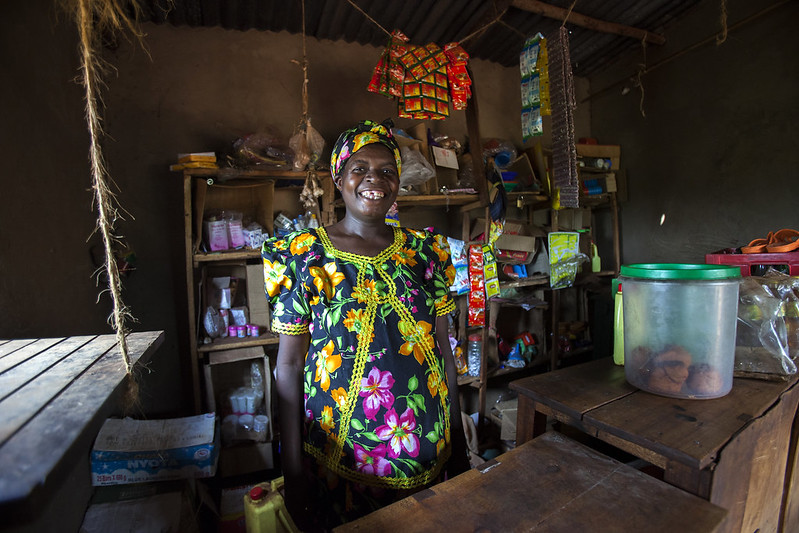 Women’s recycling programs in Kenya are turning plastic waste into economic opportunity. Women like Lorna Rutto and Nzambi Matee are transforming plastic garbage into economic strength. Rutto, the founder of EcoPost, has repurposed more than 13 million kilograms of plastic into resilient fence posts, generating at least 300 employment opportunities, mostly for women in economically disadvantaged neighborhoods. Simultaneously, Matee, an engineer and the creator of Gjenge Makers, transforms plastic into colorful pavement bricks that, according to reports, are five times stronger than concrete, processing up to 25 metric tons of garbage weekly.
In Kenya, initiatives such as EcoPost and Gjenge Makers demonstrate how recycling serves as a mechanism for economic development, particularly for women. These projects provide more than employment; they cultivate technical skills, foster leadership and empower women to become environmental stewards and entrepreneurs. In a nation that produces more than 22,000 tons of garbage each day, these women-led initiatives are facilitating community sanitation while directly confronting gendered poverty.
Recycling as a Path to Economic Empowerment
In Kenya’s expanding green economy, recycling goes beyond simple street cleanliness; it is fundamentally about generating livelihoods, especially for women in marginalized communities. TakaTaka Solutions, a trash management and recycling company located in Nairobi, employs women in sorting facilities, where they get training to segregate plastics, metals and biological materials for resale. As of 2023, TakaTaka processed up to 95% of collected garbage and created hundreds of formal employment opportunities, mostly for women who were previously engaged in informal labor or were unemployed.
Some initiatives further integrate recycling with entrepreneurship. In Kibera, Nairobi’s biggest informal settlement, the Human Needs Project runs a Women’s Empowerment Center that trains women in trash management, recycled craft production and microenterprise business planning. These projects provide both money and access to computer literacy, accounting and leadership training; skills often inaccessible to women in underprivileged regions.
The Human Needs Project, in collaboration with Mr. Green Africa, has implemented a PET-plastic collecting “cage” system that allows residents, particularly women, to recycle bottles in return for points that can be exchanged for water, sanitation and skills training. Peter Muthaura, the Director of Training and Strategic Partnerships for the initiative, explains:
“This innovative approach incentivizes responsible waste management, promotes a cleaner environment and fosters economic empowerment in the community.” Women’s recycling programs in Kenya are redefining economic roles for women by formalizing waste collection work and offering technical and entrepreneurial training. A formerly inconspicuous, low-prestige occupation has suddenly become a pathway to enhanced autonomy and influence.
From Margins to Leadership
Women in Kenya’s recycling industry are not just generating income; they are assuming leadership positions, transforming community perceptions about garbage and gender roles. The Flipflopi Project in Coastal Kenya, a circular economy program that constructs boats and household products from recycled plastic, has emerged as a platform for empowering women as craftsmen, educators and environmental champions.
The initiative developed a plastic recovery and training center in Lamu County, targeting 60% of the archipelago’s population and provides vocational programs in plastic processing, upcycling, traditional boatbuilding and storytelling skills for women. In its 2019–2021 expeditions, women craftsmen had a significant role in both constructing the boat and facilitating workshops, addressing students and interacting with county authorities.
As Flipflopi co-founder Dipesh Pabari explains: “A multi-colored boat made of flip flops is a conversation starter, no matter who you are.” Women affiliated with Flipflopi are transforming norms by doing outreach events with politicians and media, therefore establishing themselves as prominent advocates in environmental and community development.
Why Recycling Solutions in Kenya Work
The success of Kenya’s recycling projects is attributed not just to innovation but also to the ecosystem, including legislation, community ownership and cultural preparedness for change. Collectively, these elements foster an atmosphere in which women are not only included but essential to the development of the green economy.
- Progressive Environmental Policies. Kenya has shown political commitment to garbage management. The 2017 national plastic bag ban was among the most extensive globally and its implementation established a foundation for enhanced recycling systems. The 2021 Sustainable Waste Management Act officially acknowledged the contributions of community-based waste pickers and required the incorporation of women and youth in county-level waste management plans.
- Decentralized, Community-Driven Models. In contrast to many centralized systems, Kenya’s recycling infrastructure flourishes via local cooperatives and public-private partnerships, mostly managed or maintained by women. This decentralized approach guarantees that solutions are customized to local requirements, whether in urban informal settlements or coastal fishing communities. Flipflopi, for example, depends on local beach-cleaning organizations, mostly led by women, to gather plastic for its community boat-building workshops. M-taka in Kisumu exemplifies the use of technology, social incentives and organized training to educate 1,140 women, train 75 as recycling agents and process more than 103 tons of recyclables, facilitated by community-based buy-back shops and a mobile application.
- Integration with Broader Development Goals. These projects extend beyond recycling; they connect waste management solutions to training, financial empowerment and health education. Companies such as M-taka integrate waste collection initiatives with teaching on responsible waste management and economic skills for women, using digital platforms. A UNDP-supported NAMA research outlines that Kenya’s circular economy program has the potential to generate 1,600 jobs, enhance health and promote income fairness, particularly favoring women in the waste industry.
Scaling the Model
As Kenya’s recycling industry expands, the current issue is to scale effective models while preserving their community-oriented and gender-inclusive foundations. Organizations, politicians and funders are increasingly prioritizing replication, extending validated projects to new counties, farther into informal settlements and allied industries like construction, agriculture and energy.
- Geographic Expansion: M-taka’s Regional Rollout. M-taka, first tested in Kisumu, intends to duplicate its effectiveness across Western Kenya through new satellite centers and collaborations with both government and private stakeholders. It has obtained backing from climate technology investors to implement satellite gathering sites and integrate a mobile application in additional counties in 2025.
- Community Replication: Flipflopi’s Open-Source Toolkit. The Flipflopi Project has progressed beyond the construction of the world’s first recyclable plastic dhow. Through its Lamu-based Design and Training Centre, it currently instructs boat and furniture fabrication using community-sourced plastic.
- Cross-Border Knowledge Sharing Based on East African Campaigns. The Flipflopi Lake Victoria campaign, including a recycled plastic dhow that navigated Kenya, Tanzania and Uganda, highlighted transboundary plastic issues and stimulated regional collaboration. The campaign included community clean-ups and policy discussions in each nation, facilitating a collective vision for East African action on plastic. The women’s recycling programs in Kenya are currently transitioning into a scaling phase, characterized by technology-driven geographic expansion, open-source replication resources and regional advocacy collaborations. These initiatives aim to eliminate plastic waste while disseminating a proven, women-centric circular economy model across East Africa.
Looking Ahead: From Plastic to Power
What started as grassroots initiatives to clean up Kenya’s streets, beaches and rivers has evolved into a robust paradigm of economic empowerment, environmental stewardship and gender fairness. In urban areas and coastal communities, women are transcending the periphery of informal trash labor; they are constructing boats, managing businesses, educating future leaders and influencing the grassroots perspective of sustainability.
As initiatives like M-taka and Flipflopi expand their operations and distribute their frameworks, Kenya’s recycling movement is transitioning from a localized success to a regional model for inclusive green development. The message is clear: with appropriate assistance and foresight, waste is not only an issue to address, but it also serves as a foundation to build on.
– Ray Bechara
Ray is based in Glasgow, Scotland and focuses on Good News for The Borgen Project.
Photo: Flickr
