Laos’ Commitment to Waste Management
Laos, known as the Lao People’s Democratic Republic, is one of the most impoverished countries in Southeast Asia. However, over the last 20 years, its economy has been one of the fastest-growing in the region, resulting in an increase in the amount of waste generated. Waste management systems struggle to keep up with this increased waste. Waste management in Laos is “limited to urban centers” and tends to be poorly managed with just 40%-60% of waste collected. Pollution affects the Lao people negatively, resulting in around 10,000 deaths per year, according to a 2021 study by the World Bank. With waste management emerging as a dire issue, the World Bank, the United Nations Development Programme (UNDP) and the Global Green Growth Institute (GGGI) are offering support to address the issue.
The Larger Part of the Issue
Around four million tonnes of plastic waste discharges into the world’s seas annually, mostly originating from rivers in Asia such as the Mekong, which goes through Vietnam, Thailand, Cambodia and Laos. About 70 million people rely on this river for food and resources, especially in Laos, though it is “one of the dirtiest in the world.” The Laotian lifestyle is transitioning from a “traditional and subsistence-based lifestyle” to a more urban lifestyle that focuses more on consumerism and imported goods.
The lack of waste dump sites and formal infrastructure significantly and directly impacts the health of citizens, especially when resorting to disposal practices such as burning, burying trash and discarding waste in rivers. Testing of the water sources across more than 3,000 households in Laos shows that E.Coli in drinking water contaminated 86% of the household population. Furthermore, even for homes using bottled water, a staggering 85% of individuals had E. Coli in their bottled water.
Making the Effort
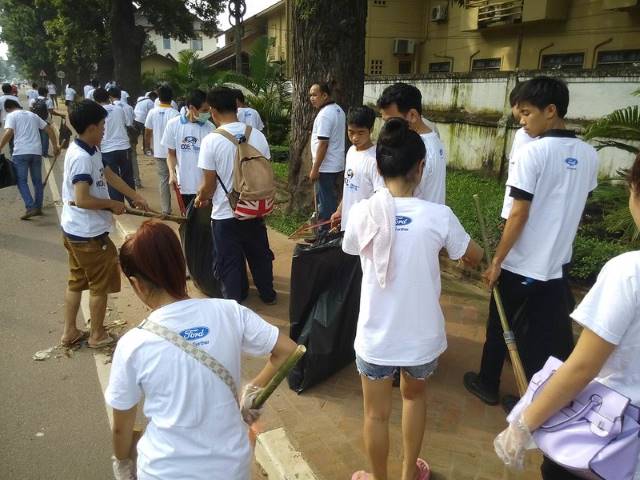
Laos citizens view plastics as a luxury item, portraying a sign of economic progression. However, this mindset also contributes to plastics becoming the second-largest type of waste, accounting for up to 24% of total waste generated by Laos. But, even as plastic and other wastes are prevalent, cities such as Luang Prabang are making an effort to keep the area’s streets clean. With the locals taking action to actively keep the city clean, these city-dwellers set the example for other city-dwellers in Laos. Responsibility is on communities and households, especially as Laos has a small budget for addressing the waste management issue.
A World Bank 2022 Get CLEAN and GREEN – Solid waste and Plastic Management in Lao PDR report recommends strategies to resolve the waste management issue. One strategy is to move from a linear to a “circular economy.” This would reduce waste by “reusing, repairing, refurbishing and recycling existing materials and products.”
The UNDP’s Work
The UNDP gathered a focus group of around 30 university students from diverse economic backgrounds, finding that close to 90% of students realize how poor waste management impacts the planet. The organization gave students suggestions for taking action, such as establishing task forces in communities and using social media to share information on helping as green advocates.
The UNDP also found that students who learned to separate waste in schools were eager to follow waste separation procedures. An online UNDP survey shows that social media would influence the mindsets and behaviors of more than 80% of respondents. The UNDP considers the immediate banning of plastic as critical.
The GGGI is aiding in solid waste management in the capital city of Vientiane, formulating a 10-year Strategy and Action Plan. It also has created four project activities:
- Decentralized garbage collection services
- A Waste Bank and the designation of the role of waste pickers
- Organic waste segregation systems and private composting companies
- Glass recycling involving 10 elementary schools to maximize waste disposal
Looking Ahead
While the Lao PDR transitions to a more urban economy and struggles with waste, organizations have offered solutions to support a more sanitary Laos, which will benefit the health and well-being of people. As education reaches citizens and offers them pathways out of poverty, Laos can create a safer, cleaner and more prosperous country for its populace. And if the country does lean more toward a “circular economy,” Laos could be on its way to reaching a net carbon neutral status by 2040.
– Jerrett Phinney
Photo: Flickr
