How Creative Labs Are Uplifting Women in Kyrgyzstan
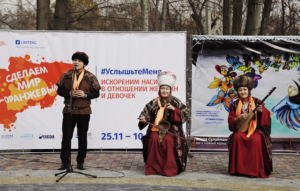 Located in central Asia, Kyrgyzstan is a landlocked country nestled between two mountain ranges. Since its independence from the Soviet Union in 1991, the country has been focusing on developing, working recently with the United Nations Development Programme (UNDP). In 2022, the UNDP launched its first women-centered creative labs working to achieve Sustainable Development Goals (SDGs) 4 and 5: quality education and gender equality.
Women Empowerment
Women’s empowerment has become a foundational aspect of development and falls under SDG 5, gender equality. The basis is that the more education and knowledge that women have, the more they are able to contribute to the country’s economy as well as their social stability and overall community. However, in developing nations, it can be harder for women to have the necessary resources and their opportunities become limited.
The Creative Economy
Kyrgyzstan is classified as a developing country with strong growth potential but faces significant challenges due to its landlocked geography. The creative economy, particularly sectors that support and uplift artists, especially women, has emerged as an alternative pathway for economic development in the country.
By focusing on women in Kyrgyzstan and harnessing their talents, the country is strengthening its economy by enabling broader participation across various sectors. This approach has led to multiple societal benefits, including increased employment, improved quality of life and a more inclusive society.
The creative economy has also emerged as an innovative means of promoting culture and producing tangible exports, helping Kyrgyzstan grow economically while preserving its cultural heritage.
Women Creative Lab
In 2022, the UNDP launched the Women Creative Lab (WCL) initiative, women-focused workspaces established across Kyrgyzstan. The UNDP describes WCLs as more than just physical spaces; they are environments where women can learn new skills, access opportunities and improve their overall quality of life. By providing women in Kyrgyzstan with a space to create and grow, the initiative addresses gender inequality and enhances education.
The campaign started by targeting more than 25 thematic events and helping them create a safe working space, as well as giving them resources and a network so that they can grow further. The campaign was initiated by the UNDP’s Acceleration initiative with the support of the leading business acceleration in the Kyrgyz Republic, “Welcome KG.”
Expanding the WCL
Since the launch of the first WCL in Osh in 2022, two additional labs have opened in Abad and Batken in 2023, with plans to support more than 200 women across Kyrgyzstan. Since their founding, the WCLs have already empowered hundreds of women, demonstrating how the creative economy can serve as both a development tool and a means of uplifting women.
At these labs, women can take classes, engage in creative and skill-building activities and access a wide range of resources. Beyond creativity, the WCLs provide education on sexual and reproductive health, gender equality, legal rights and financial literacy. These centers have become safe, empowering environments where women in Kyrgyzstan can grow, learn and build the confidence and skills needed to support themselves.
Looking Forward
Kyrgyzstan hopes to grow its creative economy by establishing more creative labs and expanding its reach so that it can help more women. After being operational for three years now, the laboratory has been able to expand to more locations and as they continue to grow, more women are becoming employed and the county’s GDP has increased.
The organization is finding that the laboratories also attract more grassroots NGOs to the area to drive development and establish better initiatives. Through these creative labs in Kyrgyzstan, women are given more opportunities that not only benefit themselves but also the country as a whole.
– Olivia Peters
Olivia is based in Newport, RI, USA and focuses on Good News and Technology for The Borgen Project.
Photo: Flickr
