Aboutengue Refugee Camp: Women Achieving Financial Freedom
 A Sudanese refugee helps women achieve financial freedom in a camp in Chad. Fatima Zakaria works with women across Aboutengye to build a new independent life away from the conflict in Sudan.
Fatima Zakaria
In June 2023, Zakaria’s hometown of El Geneina in western Darfur was attacked and her life was altered forever. The 27-year-old social worker for the Ministry of Social Affairs had graduated from university and was looking forward to furthering her studies when war broke out in Sudan. She then fled the war-torn country and made the journey to a refugee camp.
She remarks on the journey, “We were scattered. My family fled in different directions and I got separated from my mother and some of my siblings.” When she was settled into the camp, she reconnected with her mother and siblings, but had lost her father, husband and three of her siblings. During her journey to safety, she was shot in the leg near the border. She has since made a full recovery.
Sudanese Civil War
The Sudanese Civil War has displaced 13 million people from their homes and made 3.8 million refugees since it began in 2023. The conflict broke out over a struggle for power between the Sudanese army and a paramilitary group, the Rapid Support Forces.
During the three years of fighting, the country has experienced a famine and claims of genocide in the western Darfur area. More than 150,000 people have died as a result of a conflict that the United Nations (U.N.) has called the world’s largest humanitarian crisis.
Aboutengue Refugee Camp
Since April 2023, Zakaria has been among the more than 800,000 refugees who have fled to safety in eastern Chad. According to the UNHCR, the U.N. Refugee Agency, the average number of people crossing the border has reached 1,400 daily.
Most refugees are women and girls arriving in Chad’s Wadi Fira and Ennedi Est provinces. Zakaria found safety in Aboutengye, one of five refugee camps in eastern Chad that now provides shelter to more than 50,000 people. Charities such as Médecins Sans Frontières/Doctors Without Borders (MSF) have worked to improve the facilities in such camps.
MSF has helped to build a faecal sludge treatment site, which soon became known as the “poop factory” among the residents. The project provides an innovative solution to treat and safely dispose of sludge from latrines; this process also works sustainably with the environment and involves growing safe-to-eat bananas.
Zakaria’s Work
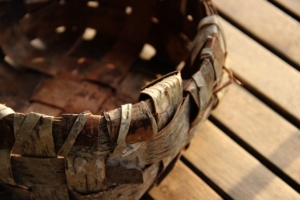
Zakaria decided to rebuild her life in the camp and use her experience to support other women in the community. She worked with fellow refugees to form an association that joins different women’s groups in the camp. Activities such as making traditional incense and perfumes, basket weaving and handicrafts bring together women from several generations.
Zakaria speaks out on how many of these women have lost their husbands due to conflict and she “created [the association] to empower them on how to generate income in the camp.” She has since opened her small home to the association as a hub for weekly meetings where the women share ideas and experiences. The group discusses challenges they face in the camp and daily life. The haven provides a space for any woman in the settlement to talk through her problems and receive emotional support.
She wishes to continue her education to support her mother and sisters, who face a different life from the one they grew up with. She believes education is the answer to helping more people in her community.
Conclusion
Despite experiencing hardship, from the death of family members to being forced from her home, the Sudanese refugee helps women better their lives. She uses her skills and determination to improve her life, her family and the community of women that now call Aboutengue refugee camp home.
– Phoebe Guildford
Phoebe is based in Cardiff, Wales and focuses on Good News for The Borgen Project.
Photo: Pixabay
