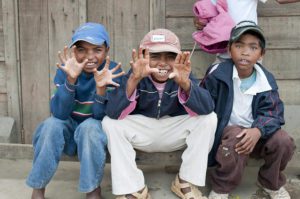
Even with the 2013 election of a new president that ended a five-year political deadlock, poverty in Madagascar was still a huge problem. Electing Hery Rajaonarimampianina brought fresh hope to the people of Madagascar. However, the National Assembly voted to impeach him after just 18 months of his presidency because they did not feel that he was following through with his campaign promises. Ultimately, they were unsuccessful, but the political situation remains unbalanced. Even though Madagascar has rich soil for crops and a wide variety of wildlife, political turmoil has damaged it for years. Due to this, poverty remains an ongoing issue.
Political and Economic Instability
The restoration of political stability could mean great things for Madagascar. John Stremlau, the vice president of peace programs at the Carter Center in the United States said after the 2013 election, “It has great resources, it has great promise, but it has been hurt by the sanctions that have been in place now for five years. The per capita income is very low, down to less than a dollar a day for 90% of the people, so that this is a new beginning, an opportunity, but the hard work of building a democratic process has only just begun.”
The best way for Madagascar to reduce poverty is to utilize economic growth. Harsh weather hit multiple cities in 2017, which affected agriculture in the areas. In fact, the weather ruined rice crops, a popular trade food and export item. The production of rice fell while the price of it increased. While working on repairing the damage from lost crops, the country has increased economically in other ways.
Besides rice, items like cloves, vanilla, cocoa beans and essential oils have flourished, increasing the performance of goods exported to other countries. Economic growth has increased from 4.2% to 5% from 2017 to 2018. With this growth, the country is more likely to achieve its goal of reducing the number of people living below the poverty line by the year 2020. The next step is to provide financial inclusion to those without access to financial services to further ensure the rise out of poverty.
Poverty and Malnutrition
Food poverty affects the children of Madagascar much more than the adults of the country. More than half of Madagascar’s children are chronically malnourished, creating an effect called “stunting.” They are half the size they should be, and some children will not even make it to secondary school, let alone adulthood. Malnutrition damages the body and mind, sometimes irreversibly.
Malnutrition is an increasing concern for parents. “They are seven, they should be much bigger,” said Rasoanandranson, a mother of five children. Her boys at eight years of age resemble 5-year-old children. Families grow small quantities of crops rich in nutrients like sweet potato, avocado and maize, but the harvest only lasts two to three months tops. Unfortunately, mothers like Rasoanandranson eventually have to sell their food for other much-needed household items, hygiene items and school supplies.
Hope still exists for these families and in the near future. In May 2017, the country set out to achieve its goal of reducing malnutrition from 47% to 38% by 2021. It can achieve this goal by building more nutrition centers and recruiting more volunteers to educate villages on proper nutrition. There is another player to this game that will help fight malnutrition, and that is clean water and sanitation services.
Hygiene and Sanitation
Poverty in Madagascar has affected the water and sanitation systems as well. More than half of the people in Madagascar do not have sanitation systems or access to clean drinking water. There seems to be plenty of water in the capital city of Antananarivo and other nearby cities, but the water has experienced severe contamination. Trash lines the edges of rivers and streams, and heavy rains wash away street debris into the water supplies. Waste from households without proper sanitation systems also washes away into the water supply.
On top of contaminated water, the piping systems that were previously installed are defective and leak at least 40% of clean water. With the population rising, conditions will only worsen; however, volunteers are working to improve the piping systems and educate people about safe water practices and sanitation. They have even started facilities to wash clothing to prevent people from further polluting the river by washing their clothes in it.
Programs like USAID, WaterAid and WASH are trying to improve conditions by first educating the community about food security and environmental programs. Secondly, they plan to improve local, community-based governance of water and sanitation resources. Thirdly, they will roll out a program called Triggering Health Seeking Behavior Change to promote good hygiene at the household level. The final process is access to credit for the people to microfinance products for clean water and sanitation systems. With all the issues from malnutrition and contaminated water, how is Madagascar’s health care?
The Health Care System in Madagascar
In the capital city Antananarivo, there are public and private hospitals that provide basic medical treatments and small operations. However, for more complex surgeries, patients are transferred to a hospital in South Africa. Although medical services are actually free to the community, people who can afford them often receive the advice to take out private, international health insurance for different situations such as going to a larger hospital for more extensive surgeries.
The most common diseases in Madagascar are malaria, leprosy and tuberculosis. The health care system is working to combat these diseases and, going back to the lack of clean water, it is strongly advised that people boil tap water before drinking or using it to cook. Though most of the hospitals are in cities and towns, Christian missionaries run hospitals in rural areas in case some people can not make it to town, but they cannot reach all areas.
Nonprofit organizations and volunteers are currently working to improve access to proper education about nutrition, sanitation and financial stability. Madagascar is on its way to becoming a better country for its people. Hopefully, the political situation will improve, and the government will begin doing its part to end poverty in Madagascar.
– Kayla Cammarota
Photo: Flickr

Poverty in Madagascar
Even with the 2013 election of a new president that ended a five-year political deadlock, poverty in Madagascar was still a huge problem. Electing Hery Rajaonarimampianina brought fresh hope to the people of Madagascar. However, the National Assembly voted to impeach him after just 18 months of his presidency because they did not feel that he was following through with his campaign promises. Ultimately, they were unsuccessful, but the political situation remains unbalanced. Even though Madagascar has rich soil for crops and a wide variety of wildlife, political turmoil has damaged it for years. Due to this, poverty remains an ongoing issue.
Political and Economic Instability
The restoration of political stability could mean great things for Madagascar. John Stremlau, the vice president of peace programs at the Carter Center in the United States said after the 2013 election, “It has great resources, it has great promise, but it has been hurt by the sanctions that have been in place now for five years. The per capita income is very low, down to less than a dollar a day for 90% of the people, so that this is a new beginning, an opportunity, but the hard work of building a democratic process has only just begun.”
The best way for Madagascar to reduce poverty is to utilize economic growth. Harsh weather hit multiple cities in 2017, which affected agriculture in the areas. In fact, the weather ruined rice crops, a popular trade food and export item. The production of rice fell while the price of it increased. While working on repairing the damage from lost crops, the country has increased economically in other ways.
Besides rice, items like cloves, vanilla, cocoa beans and essential oils have flourished, increasing the performance of goods exported to other countries. Economic growth has increased from 4.2% to 5% from 2017 to 2018. With this growth, the country is more likely to achieve its goal of reducing the number of people living below the poverty line by the year 2020. The next step is to provide financial inclusion to those without access to financial services to further ensure the rise out of poverty.
Poverty and Malnutrition
Food poverty affects the children of Madagascar much more than the adults of the country. More than half of Madagascar’s children are chronically malnourished, creating an effect called “stunting.” They are half the size they should be, and some children will not even make it to secondary school, let alone adulthood. Malnutrition damages the body and mind, sometimes irreversibly.
Malnutrition is an increasing concern for parents. “They are seven, they should be much bigger,” said Rasoanandranson, a mother of five children. Her boys at eight years of age resemble 5-year-old children. Families grow small quantities of crops rich in nutrients like sweet potato, avocado and maize, but the harvest only lasts two to three months tops. Unfortunately, mothers like Rasoanandranson eventually have to sell their food for other much-needed household items, hygiene items and school supplies.
Hope still exists for these families and in the near future. In May 2017, the country set out to achieve its goal of reducing malnutrition from 47% to 38% by 2021. It can achieve this goal by building more nutrition centers and recruiting more volunteers to educate villages on proper nutrition. There is another player to this game that will help fight malnutrition, and that is clean water and sanitation services.
Hygiene and Sanitation
Poverty in Madagascar has affected the water and sanitation systems as well. More than half of the people in Madagascar do not have sanitation systems or access to clean drinking water. There seems to be plenty of water in the capital city of Antananarivo and other nearby cities, but the water has experienced severe contamination. Trash lines the edges of rivers and streams, and heavy rains wash away street debris into the water supplies. Waste from households without proper sanitation systems also washes away into the water supply.
On top of contaminated water, the piping systems that were previously installed are defective and leak at least 40% of clean water. With the population rising, conditions will only worsen; however, volunteers are working to improve the piping systems and educate people about safe water practices and sanitation. They have even started facilities to wash clothing to prevent people from further polluting the river by washing their clothes in it.
Programs like USAID, WaterAid and WASH are trying to improve conditions by first educating the community about food security and environmental programs. Secondly, they plan to improve local, community-based governance of water and sanitation resources. Thirdly, they will roll out a program called Triggering Health Seeking Behavior Change to promote good hygiene at the household level. The final process is access to credit for the people to microfinance products for clean water and sanitation systems. With all the issues from malnutrition and contaminated water, how is Madagascar’s health care?
The Health Care System in Madagascar
In the capital city Antananarivo, there are public and private hospitals that provide basic medical treatments and small operations. However, for more complex surgeries, patients are transferred to a hospital in South Africa. Although medical services are actually free to the community, people who can afford them often receive the advice to take out private, international health insurance for different situations such as going to a larger hospital for more extensive surgeries.
The most common diseases in Madagascar are malaria, leprosy and tuberculosis. The health care system is working to combat these diseases and, going back to the lack of clean water, it is strongly advised that people boil tap water before drinking or using it to cook. Though most of the hospitals are in cities and towns, Christian missionaries run hospitals in rural areas in case some people can not make it to town, but they cannot reach all areas.
Nonprofit organizations and volunteers are currently working to improve access to proper education about nutrition, sanitation and financial stability. Madagascar is on its way to becoming a better country for its people. Hopefully, the political situation will improve, and the government will begin doing its part to end poverty in Madagascar.
– Kayla Cammarota
Photo: Flickr
Sierra Leone’s Dying Mangroves
Yelibuya, an island in Sierra Leone, provides a case study of mangroves and their importance to life in marine areas. The coastline sinks further into the ocean year by year as a direct result of the high proportion of the diminishing mangroves that buoy Yelibuya. Many community elders and members are aware of the necessity to maintain the trees. In efforts to find a way to save the mangroves, new ideas on sustainable farming are being implemented throughout the country.
The Dangers of Losing the Mangroves
The ocean is starting to swallow Yelibuya like a fish swallows a lure. As the essential mangrove trees disappear from deforestation, the island seems to be sinking into the ocean, causing further erosion. Fresh food and water are imported, but because of its location near Sierra Leone’s capital, its main profit for Yelibuya comes from fish, salt and rice farming.
Over-harvested or dying trees means the soil, which was once reinforced by mangrove roots, is beginning to crumble away, leading to landslides and the destruction of homes and the shoreline. Elders in the central town of Yelibuya estimate that they have lost 300 meters of coastline over the last 30 years. Many of the inhabitants would leave if they could, but they cannot abandon their families or businesses.
As the island sinks, the tides rise and erode groves of trees, making it difficult for more trees to grow. A disaster in 2017, the Freetown landslide, wiped out many homes and killed more than 1,000 people. The primary protection against rising ocean is Sierra Leone’s dying mangroves, which also double as the main source for heat and fuel since Yelibuya possesses no alternative fuel.
Solutions to preserve Sierra Leone’s dying Mangroves
Over the last 30 years, the size of global mangrove forests in hectares had decreased from 167,700 to 100,000 as of 2005. As more renewable energy and alternative farming options become available, however, this number can turn around. In fact, the rate of deforestation had already decreased from the 1990s compared to the 1980s.
Recent projects introduced by a branch of USAID in West Africa partnered with rice farmers to integrate mangroves into their fields (agro-silviculture) instead of cutting down trees to build fences. Though the plan was met with apprehension by some community members, many were excited by the idea of not harvesting trees each year. In 2017, 55 percent of farmer pledged to use agro-silviculture in their rice farms. As of June 2018, the selected areas for the rice agro-silviculture case study in Sierra Leone are reaping the benefits of healthier lands from preventing soil erosion.
Increasing Sustainability
The Ramsar Convention on Biological Diversity is an inter-governmental treaty studying ways to improve the coastline biodiversity and poverty reduction in Sierra Leone. Ramsar is looking into work on water policies and other strategies in the country, such as sustainable development, energy, poverty reduction and food security. It is working to develop and integrate programs such as the Poverty Reduction Strategy, Sierra Leone’s Vision 2025 and the Food Security Framework that directly link poverty and its effect on the environment.
In 2000, when Sierra Leone officially contracted with Ramsar, it was believed that “traditional fishing and agro-forestry for fuelwood can be sustainably managed in collaboration with an existing EU-funded Artisanal Fishing Community Development Program.” The goals of the convention are to promote sustainability in coastline development, poverty reduction and the introduction of alternative fuels. All of these goals would contribute to the preservation of Sierra Leone’s dying mangroves.
Maintaining Sustainability
A report released in 2016 shows that 1 percent of the mangroves in Sierra Leone Coastal landscape disappear each year. It is essential to find alternative fuels so that Yelibuya’s inhabitants can support the growth of the mangroves rather than depend on them for firewood too. Many other communities found ways to introduce new methods of fueling and construction, and the availability of these new methods for Yelibuya will determine its adaption to using mangroves as environmental protection rather than fuel.
Overall, Sierra Leone recognizes the wetland and mangrove crisis, and many inhabitants show eagerness to adopt new mangrove-friendly fuel options. The magnitude of Yelibuya’s sinking problem illustrates a connection between poverty and the inaccessibility of alternative fuels and how these two problems impact the land and marine life. Hopefully, as awareness spreads and new methods are adopted, the roots of mangroves will grow to sustain the buoyant communities that depend on these trees.
Photo: Flickr
Norwegian Airlines and UNICEF: Humanitarian Missions
Since 2007, two organizations, Norwegian Airlines and UNICEF, have been working together to raise money and support for UNICEF’s humanitarian aid missions. Everyone from the flight crews up to Norwegian Airlines CEO, Bjorn Kos, participates. The partnership started in 2007 when Norwegian airlines began transporting supplies for emergency aid to Yemen on their planes and making yearly donations to UNICEF. In the 10 years since they began working together, Norwegian Airlines raised over $2.5 million for UNICEF.
The ‘Fill A Plane’ Program: Central African Republic
The partnership between Norwegian Airlines and UNICEF escalated in 2014 with the maiden voyage of their first “Fill a Plane” program. Norwegian and UNICEF boast that they fill every inch of a 737 Dreamliner with humanitarian aid. This humanitarian aid includes medical supplies, medication and education supplies. The destination of “Fill a Plane’s” first flight was to Bangui, the capital city of the Central African Republic.
Norwegian Airlines posted a touching Youtube video in 2014 about their first humanitarian flight. In the video, they noted that 8.5 tons of humanitarian aid were loaded onto their 737 in Copenhagen and flown to Bangui in the Central African Republic. This aid went to the thousands of internally displaced people under the care of UNICEF.
The ‘Fill A Plane’ Program: Jordan and Yemen
In 2015, Norwegian Airlines again sent another flight under their “Fill a Plane” partnership program. This time the plane was sent to Jordan to deliver humanitarian supplies to Syrian refugees in the Za’atari refugee camp. Norwegian Airline’s CEO, Bjorn Kos, opens the video by stating that, at the time, Za’atari was the world’s second-largest refugee camp. The contents of this flight focused heavily on educational aid.
There were no flights in 2016, so in 2017 Norwegian Airlines sent two. The first mission was to Bamako, Mali in March 2017. Here school supplies were an important part of the mission. The video shows Norwegian Airline employees taking part in classes as well as bringing food from the flight to the children’s hospital. The second mission was to bring aid to Yemen. Tons of food and cholera medication for 300,000 children were loaded onto the 787 Dreamliner, a much larger plane than the previous 737’s. The aid had to be offloaded in Djibouti due to the dangerous conflict in Yemen.
Future Flights
The future of the partnership between Norwegian Airlines and UNICEF looks promising. In 2018, Norwegian Airlines sent its largest “fill a plane” flight to Chad. The plane held over 13,000 kilos, over 28,000 pounds, of humanitarian aid to Chad. This flight also included the Norwegian Minister of International Development, who is shown in the video helping the Norwegian Crew members and other employees load the cabin with boxes of supplies.
In every video, the Norwegian Airlines CEO, Bjorn Kos looks genuinely happy to help his company do its part in humanitarian aid around the world. The CEO does not charge when he gives speeches and seminars; he only asks that a donation is made to UNICEF. With recognition from his own government and on the world stage, hopefully, the partnership between Norwegian Airlines and UNICEF will continue to grow and more flights can be sent each year, helping those in need.
Photo: Google
Yemen Peace Talks Could Mean the End of the Conflict
The humanitarian crisis in Yemen is cause for despair; however, the recent Yemen peace talks in Sweden and outreach programs providing humanitarian aid are offering new hope to those suffering from the conflict. Through the Yemen peace talks, the United Nations was able to negotiate a ceasefire agreement on December 18, putting at least a pause on the war until countries can reach a further agreement. This finally opens the door to providing humanitarian aid.
Opposed to War in Yemen
Despite President Trump’s wishes, the Senate ended all aid in military assistance to Saudi Arabia following the peace talks. Thanks to Senator Mike Lee of Utah and Senator Bernie Sanders of Vermont for writing the agreement, the War Powers Act was used to assert Congress’ role in military power, overriding the White House. According to the New York Times, Trump was against the end of military assistance in fear that it would cost America “billions” of dollars in arms sales, putting the fear of losing money in front of regard for human life (a reference to the Saudi Prince having allegedly killed American journalist Jamal Khashoggi).
The humanitarian crisis currently taking place in Yemen was caused by war, and the only way to stop it is to end the war and promote peace. Humanitarian organizations such as Save the Children and CARE, along with several other organizations, wrote a letter to the U.S. government to use their influence to end the war. Providing more military support will only perpetuate the problem; whereas, peace will resolve it. Lise Grande, the United Nations humanitarian coordinator for Yemen, stated that the priority must be to increase access to currency and ensure that Yemenis are able to access shipments of food.
Humanitarian Aid
With the ceasefire in play, the focus can be shifted to the humanitarian crisis and helping the suffering people in Yemen. About half of Yemen’s population is subject to starvation and is in dire need of aid as a result of the war. “The big countries say they are fighting each other in Yemen, but it feels to us like they are fighting the poor people,” said Mr. Hajaji to the New York Times. Hajaji is a father who has already lost one child to starvation and is afraid of losing his second, who is struggling to stay alive.
According to Save the Children’s fact sheet, about 85,000 children are estimated to have died from starvation and disease since the beginning of the war in Yemen. Despite the high numbers of people who have died or are suffering from starvation, organizations like Save the Children are making a difference and increasing the number of survivors. This organization has treated nearly 100,000 children suffering from malnutrition and is operating mobile health clinics in the hardest-to-reach areas.
Ways to Help
People from the U.S. can help alleviate this issue in numerous ways. One such method is by contacting Senators and U.S. representatives through the United States Senate website and urge them to give aid and resources to Yemen. Since Yemen’s famine is income based, the best thing the people can do to aid is to donate money to those in need to survive. Organizations like Save the Children are also distributing cash and vouchers for food to families as well as education and safe spaces for children to keep getting an education despite the harsh circumstances and ongoing recovery from war trauma.
The International Rescue Committee (IRC) is providing outreach through healthcare, nutrition, water/sanitation services and by providing financial assistance to those struggling survive. Norwegian Refugee Council (NRC) is providing education, food security, shelter and water outreach to many Yemenis. Volunteer and/or donating to these organizations will help their work reach more people.
The resolution of the Yemen peace talks to enact a cease-fire and the U.S. halting its military assistance to Saudi Arabia serve as a positive catalyst for change in the right direction. The ongoing battle is now the aid for Yemenis in an attempt to end their critical condition of poverty. Organizations such as Save the Children, IRC, NRC and UNICEF are providing outreach and saving people’s lives, making significant progress in the work to end Yemen’s humanitarian crisis.
– Anna Power
Photo: Flickr
9 Cool Facts About the State Department
The Department of State (DOS) is an executive office that is responsible for international relations. It serves as an advisory role to the President and represents the United States at the United Nations. But, there’s much more to it than just negotiating foreign treaties and running embassies. Here are 9 cool facts about the State Department.
10 Cool Facts About the State Department
The State Department is responsible for the United States’ foreign policy and international relations. It operates in the United States and in its missions based in other countries. Despite its serious and global role, the State Department does some cool things. These 10 cool facts about the State Department show that it is about more than just policies; it offers adventurous careers, scholarships and awards and even lessons on the United State’s art history.
– Ewa Devaux
Photo: Google
TaRL Africa: Improving Education in Sub-Saharan Africa
Considerable progress has been made to increase the rate of educational enrollment for children living in developing countries. Between 1950 and 2010, the average years of schooling completed by adults living in developing countries more than tripled; between 2000 and 2010, secondary school enrollment in Zambia increased by 75 percent. Morocco is experiencing a similar rate of growth in enrollment, indicating that the gap in enrollment between poor and wealthy countries is dwindling.
Educational System Improvement
Globally, trillions of dollars are being dedicated to improving educational systems. Government expenditure on education as a percentage of GDP is higher than ever before at a rate of almost 5 percent. In emerging markets, households are spending a greater percentage of their GDP per capita on education than households in developed nations. Governments and their people are fully convinced of the promise that education holds for reshaping the future, especially in developing countries.
Education has been shown to have enormous benefits in all facets of life. For individuals, education increases lifetime earnings, reduces the chance of living in poverty and leads to better health. For communities, education can increase long-term development, lead to more rapid economic growth, cause greater social cohesion and increase social mobility.
A New Challenge
With overall enrollment numbers climbing year after year, it may seem as though a crisis in educational attainment is a thing of the past. Unfortunately, school enrollment alone does not guarantee the presence of learning. Some alarming statistics underscore upbeat reports of increases in school enrollment.
In fact, 125 million children in the world are not attaining functional levels of literacy or numeracy after four years of education. In Malawi and Zambia, only 10 percent of the students were able to read a single word by the second grade; in Pakistan, 40 percent of 3rd-grade children could not perform simple subtraction.
An analysis of the current learning crisis by The World Bank attributes this lack of learning milestones in developing communities to four key factors. The four immediate determinants are learner preparation, teacher skills and motivation, the availability of relevant inputs and school management and governance. The current state of learning outcomes is not necessarily a setback, but an inevitable hurdle in the way of unlocking the full potential of education.
Teaching at the Right Level (TaRL)
MIT’s Abdul Latif Jameel Poverty Action Lab (J-PAL) and Indian NGO Pratham sought to address the issue of sub-par learning outcomes in Sub-Saharan Africa, a region desperately in need of educational reform. In association with African governments, they developed the Teaching at the Right Level (TaRL) Africa initiative. TaRL Africa attempts to take an evidence-based, yet novel approach to structuring education for young children in order to increase in long term retention and overall learning outcomes.
When students first join the program, they take assessment tests to gauge their current level of knowledge on relevant academic concepts. The students are then placed into groups based on their needs rather than age alone and regularly evaluated throughout the year to ensure that they are reaching key milestones on an individual basis. Evaluations by J-Pal and Pratham of TaRL initiatives have shown that the cost-effective approach gives instructors the opportunity to make a greater impact on the learning outcomes of children.
Innovative and Scalable
In October 2018, J-Pal and Pratham launched a dedicated website for TaRL Africa as part of an initiative to improve the reach of their program throughout Sub-Saharan Africa and around the world. One of the key components of TaRL is its scalability. The program is built to be able to be easily replicated and adaptable for any classroom’s needs. Although the website doesn’t give you access to the entire program itself, they are hoping to introduce teachers, administrators and potential donors to the benefits of the program.
Co-Impact, a global philanthropic collaborative for systems change, was recently tasked with narrowing down a pool of over 250 education, health and economic opportunity initiatives to just five that would be awarded $80 million and technical support. On January 15, TaRL Africa became one of the five recipients of the Co-Impact grant, increasing the reach of the program to over three million students over the next five years.
Regarding the grant, the Executive director of J-PAL said “This grant represents the critical importance of using evidence from rigorous impact evaluations to drive decision making. [W]e can disrupt the status quo and transform lives.” This potential to increase educational levels is inspiring and should encourage other organizations to become a part of a quickly growing, knowledge-giving solution.
– John Chapman
Photo: Flickr
10 Facts About Living Conditions in Ireland
In the past century, Ireland has transformed from a poor agricultural country into one of the best places to live in Europe. Industrialization and foreign investments have brought wealth to the country, which has been used to improve the lives of Irish citizens. These 10 facts about living conditions in Ireland are not without their pitfalls; however, they demonstrate what is possible when an economic boom is met with social conscientiousness.
10 Facts About Living Conditions in Ireland
Ireland has made enormous leaps in development in the past century, enabling the country to improve its living conditions exponentially. The world happiness index has shown that people are willing to tolerate a high cost of living when the quality is above and beyond. However, there will have to be solutions developed for those who find the cost of living too far out of reach, or the current problems will only grow worse.
– Jackie Mead
Photo: Upsplash
How Gender Impacts Water, Sanitation and Hygiene
In many developing countries, gender inequality in access to water, sanitation and hygiene (WASH for short) creates additional risks and hardships for women and girls, in addition to all equalities that women must endure. As of 2015, 2.1 billion people globally did not have access to safe water services and 4.5 billion did not have access to a safely managed sanitation service. In order to improve access to these services and the livelihoods of women in developing countries, it is essential that policy-makers view WASH as a gendered issue and involve women in decision-making.
Water Collection
In the absence of basic water services, individuals must travel to a water source to collect water for their household. This burden disproportionately falls on women, with women and girls responsible for water collection in eight out of 10 households without water on the premises. More than 73 percent of water collection is done by women, and 6.9 percent is done by girls under the age of 15. While water collection can be important to the social lives of women, as it offers an opportunity to communicate with women from different households, it poses a risk to women’s safety and takes away time that could be spent on other activities.
In sub-Saharan Africa, it takes approximately 33 minutes to travel to and from a water source in rural areas, and 25 minutes in urban areas. Many people have to make this trip more than once per day. During this trip, women may be vulnerable to gender-based violence, including sexual assault while traveling on their own. For girls, water collection takes away from time that could be spent on obtaining an education. For women, this is the time that could be spent on childcare, housework or income-generating activities.
Sanitation and Hygiene Issues
Many people do not have access to latrines in developing countries and therefore practice open defecation. In Central and Southern Asia and sub-Saharan Africa, nine out of 10 individuals openly defecate in fields, forests, bushes and bodies of water. Women and girls may require additional privacy when defecating, and therefore in some cultures can only do so at night. This increases the risk of violence, and suppressing their bodily functions during the day can lead to urinary tract infections and chronic constipation.
Menstruating can also be extremely difficult in these settings, with many women lacking access to basic products and services. Many schools lack private bathroom facilities for girls, causing many girls to leave school once they reach puberty. If they do stay, they often stay home while they are menstruating, decreasing their chances for educational success. Adult women are also impacted, and may not be able to work at certain locations if they do not have gender-segregated bathroom facilities.
Additionally, without water, sanitation and hygiene become increasingly difficult. Even if women and girls do have access to private toilets, if they do not have clean water to wash their hands, this poses a serious health risk for them and for others. In general, women are more likely to be exposed to dirty water, as they do a majority of household work, including taking care of young children. Contact with wastewater increases the risk of disease for many women.
Issues to Consider
Those trying to solve the problems associated with water, sanitation and hygiene must take into account a few different factors. First, in emergency situations, such as natural disasters or conflict, water may become additionally scarce, increasing hardships for women and girls. They may have to walk farther to collect water, making them more likely to experience violence.
On the other hand, cultural or social constraints may confine women to the home during more dangerous times, further decreasing their access to water and sanitation facilities. Second, household gender dynamics and societal gender roles need to be considered. If gender roles are radically altered, particularly if women are given more power than they initially possessed, this could increase gender-based violence because men feel as though they are losing control.
Moving Forward
Involving women in efforts to improve water, sanitation and hygiene is crucial in solving these issues and is already underway in many communities. Women are influential in raising awareness about water and sanitation issues, and improving water and sanitation can greatly empower them.
A study by the International Water and Sanitation Center conducted in 15 countries found that water and sanitation projects that included women were more effective and sustainable. For example, in Zimbabwe, female community members were involved in committees on WASH, and this highlighted community health concerns and provided insights for the construction and maintenance of water sources. Similarly, a project in Uganda worked with women to help them build rainwater harvesting jars, decreasing the amount of time needed for water collection.
Projects like these are being conducted in developing countries around the world, and the general lesson remains the same- involve women in decision-making at every level and remain conscious of the role played by specific cultural contexts in these issues. Efforts that effectively work with communities have the potential to vastly decrease the problems associated with water, sanitation and hygiene for women and girls, reducing gender inequalities and improving livelihoods of everyone.
– Sara Olk
Photo: Flickr
Top 10 Facts About Life Expectancy in Cambodia
Currently, Cambodia has the 122nd highest ranking in the world in terms of life expectancy. The men in the country are projected to live an average of 67.3 years and the women are projected to live 71.2 years. The following top 10 facts about life expectancy in Cambodia will provide a better understanding and insight into how the Cambodian people live and what mostly affects their lives.
Top 10 Facts About Life Expectancy in Cambodia
In many ways, these top 10 facts about life expectancy in Cambodia show how far the nation has come in an attempt to recover from the severe consequences it has suffered because of the instability and corruption of its past political regimes. At the same token, some of these facts are an example of opportunities that the country can use to continue its growth and to achieve the goal of alleviating poverty.
– Jordan Melinda Washington
Photo: Flickr
5 NGOs That are Petitioning to End the War in Yemen
The war in Yemen between Houthi rebels and the Saudi led coalition has created the world’s largest humanitarian crisis. Despite the dire situation, there is reason to hope. On November 26, five NGOs petitioned the U.S. Government to call an end to the war. Two days later, the U.S. Government announced it would add an additional $24 million to USAID’s Office of Food for Peace. On December 13, the Senate voted to end the United States support of the Saudi coalition. These are the five NGOs that are petitioning to end the war in Yemen.
Since 2015, there have been more than 16,000 civilians casualties, 22.2 million people, including 11 million children, are in need of aid and eight million are at risk of famine. The war has led to a host of other problems as well, including a cholera outbreak and a lack of access to clean water. Many organizations are trying to stop the conflict in Yemen. These are 5 nonprofit organizations working hard to protect the people of Yemen.
These are the 5 NGOs that are petitioning to end the war in Yemen
These 5 NGOs that are petitioning to end the war in Yemen are all fighting for a better world for the world’s poor. Through their work, they were able to spur the government into action. Since the petition, millions of dollars have been added to the aid package for Yemen, and the U.S. has voted to end its military involvement in the conflict.
Photo: Flickr