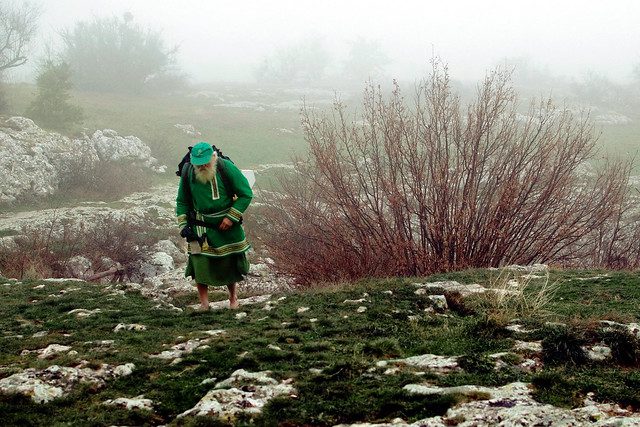
The elderly population is the fastest growing age group worldwide, and two-thirds of its population lives in low-income and middle-income countries. Such geographic locations have greater likelihoods of humanitarian crises, and the impacts of humanitarian disasters in these countries are more severe. Research shows the aged and disabled in Ukraine also have higher rates of poverty than younger, non-disabled people, making them more vulnerable during disasters. More than one-fifth of Ukraine’s population (more than 9.5 million people) were over the age of 60 in 2018. The country also is facing one of the world’s most acute global crises today.
Increased Vulnerability and Disproportionate Effects
According to HelpAge International (HAI), marginalization is having greater effects on older individuals, especially older women and the disabled. Since 2014, older persons have constituted more than one-third of the conflict-affected population — equivalent to more than one million people. Many of them have fled their homes due to violence along the contact line — a line dividing government-controlled areas (GCA) from non-government-controlled areas (NGCA). The number of affected people continues to rise as the ceaseless fighting impacts the mental health of the aged and disabled in Ukraine. These populations must contend with widespread landmines and restricted access to nutrition, healthcare, housing, pensions, fuel and public transportation.
Residents living along either side of the contact line and in NGCA are among the most vulnerable in Ukraine because humanitarian access is severely restricted in these areas.
The majority of individuals residing in and displaced from NGCA collect pensions. However, they can claim their pensions only if they are registered as internally displaced persons (IDPs) in GCA. They must also undergo complex and discriminatory vetting for pension verification, including home visits, physical identification in banks and additional safeguards. This approach is riddled with liabilities and creates serious humanitarian consequences because pensions are the sole source of income for most pensioners in NGCA. If approved, administrative requirements demand the aged and disabled travel through five checkpoints along the contact line every few months to avoid pension suspension. These individuals spend 50 to 80 percent of their monthly pension on travel expenses. Consequently, many seniors are cut off from their pensions because they either are physically unable to travel to GCA or cannot afford the trip.
Pensions are not the only reason seniors cross the contact line. They also cross to visit with family, obtain documentation and access medical services. The many restrictions imposed on crossing result in older and disabled persons waiting at entry and exit checkpoints for extended periods of time without adequate facilities like toilets, drinking water or shelter. Red tape often prohibits them from crossing with necessary items like medications and food as these may not be permitted goods. People also must renew their electronic passes on regular basis if they plan to cross — a near impossibility for much of the senior population who has no computer or internet access. These conditions are detrimental to the well-being of the aged and disabled, creating a dire need for mental health services, psychosocial support and life-saving aid.
Forgotten in the Midst of Crises
Marginalizing the older and disabled during disasters is not unique to Ukraine. In 2015, HAI interviewed hundreds of seniors across Ukraine, Lebanon and South Sudan. In all three countries, there was evidence of neglect. Most interviewees said they had never met with anyone to discuss their needs nor did they have sufficient information about available assistance. Almost 50 percent complained that health services were not equipped to treat their age-related conditions, and nearly half said they suffered from anxiety or depression.
Humanitarian Relief for the Aged and Disabled in Ukraine
HAI has worked with the elderly in Ukraine for more than 10 years and has provided them with community safe spaces. The organization has also directed advocacy and coordination efforts with NGOs and UN agencies to ensure that seniors are not excluded from receiving services and psychosocial support. HAI has established support groups and provided home-based care activities, assistive devices and hygiene kits to those of advanced age. However, despite the organization’s humanitarian assistance, a survey they conducted in 2018 showed that those aged 60 and older are still suffering.
The findings were echoed at a 2018 conference organized by the European Commission and the UN Office for the Coordination of Humanitarian Affairs in Brussels. The conference highlighted the support that the WHO and partners have given Ukraine to help combat the devastating effects of the country’s ongoing crisis. During the conference, it also was noted that despite the efforts of the WHO and its health partners, Ukrainian health needs still are on the rise. Speakers attributed the lack of improvement to a weak health system, limited disease prevention and insufficient treatment for chronic illnesses.
The conference also confirmed that the European Union (EU) will provide an additional €24 million to conflict-affected persons in eastern Ukraine, bringing their aid total for Ukraine to more than €677 million. The money will be used to fulfill the essential needs of the most vulnerable populations along the contact line, including IDPs and those in NGCA.
With coordinated efforts and increased humanitarian funding, permanent change for Ukraine is on the horizon.
– Julianne Russo
Photo: Pixabay

10 Organizations That Help Women Around the World
Women face difficulties all over the world but especially in developing countries. Global nonprofit organizations play a key role in promoting female empowerment in areas such as education, health care and employment. They recognize that when you empower women, you empower entire communities and countries.
Here are 10 organizations that help women around the world.
10 Organizations that Help Women Around the World
This nonprofit organization was founded in 2007 and works to provide women in Uganda with access to microcredit loans, business and leadership development training, literacy, health initiatives and more. Karen Sugar, Women’s Global Empowerment Fund Founder, created the organization with the idea that microfinance, when bundled with educational programming, can increase the potential for women’s empowerment and success.
The goal of this organization is to help promote a world where women are free to make their own decisions about kids and marriage. The organization strives to create a safe space where women can make these decisions without conflict. According to its website, the Center for Reproductive Rights is the only global legal advocacy organization dedicated to reproductive rights.
World Pulse makes the list of organizations that help women by using the power of technology and social media to connect women worldwide. They are a social network that gives women the opportunity to connect, unite, share, launch movements and run for office. Overall, World Pulse’s goal is to create a world, online and off, where women can flourish.
Through the idea that creativity empowers, The Girl Effect builds vibrant youth brands. The organization operates globally, from places like Ethiopia to the Philippines, to help girls and women worldwide share their stories of growing into adulthood through mobile platforms. Through self-expression and community support, The Girl Effect believes that every girl can begin to value herself, build quality relationships and get access and education about things she needs.
The Global Fund for Women supports and advocates for groups led by women who demand equal rights in their communities. This organization fights for some of the most important ingredients for women’s human rights: reproductive rights, freedom from violence, leadership and more.
New Light is an organization that provides children of sex workers with a safe haven—especially at night time. The organization is located deep inside the red-light district of Kalighat, Kolkata. New Light has grown from caring for nine children in the year 2000 to 250 children of many different ages currently. The organization provides education, healthcare, nutritional support, a recreational facility, HIV/AIDS care, income opportunities for the mothers and residential care. New Light also fights against gender-based violence.
The mission of this organization is to promote leadership in women and girls in their communities. The goal is to educate women on Conscious Social Change, which is a methodology that “employs mindfulness throughout the process of designing a social solution.” Global Grassroots works to create a world where all women and girls have the ability to pursue their own dreams and ideas and turn them into something impactful in their own community. There are two main programs: Academy for Conscious Change, which works with marginalized and impoverished women in post-conflict regions and Young Women’s Academy for Conscious Change which is for young women who are between high school graduation and university enrollment.
Global Goods Partners’ (GGP) goal is to provide artisan jobs for women. This not-for-profit social enterprise has partnered with over 60 artisan, women-led organizations throughout Asia, Africa and the Americas. GGP invests all of the proceeds from product sales to provide training, funding and sustainable market access.
BRAC fights against the obstacles that prevent children in developing countries from receiving a quality education including violence, discrimination, displacement and extreme poverty. Although BRAC works to help every child, the organization focuses especially on women and girls and making sure they have the ability to take control of their own lives. The organization provides educational programs in six countries, boasting the largest secular, private education system worldwide. There are more than 900,000 students enrolled in BRAC primary schools all over the world.
The Campaign for Female Education (CAMFED) is an international non-profit focused on supporting marginalized girls to succeed through education. CAMFED, which is African-led has supported approximately 2.6 million children to go to school. There are 120,000 women involved in their alumnae network that multiplies donor investments in girls’ education.
– Malena Larsen
Photo: Flickr
Donate Bras to Help Women in Developing Countries
Undergarments are an everyday article of clothing for women in thriving and wealthy countries. However, in developing countries, bras are often a rarity. Rather than throwing out gently-used undergarments, it is worthwhile to donate bras and make a difference for women in rural and poor communities. In addition to empowering women, the recycling of bras saves money and resources, uses less water and energy and creates a lower carbon footprint. The second-hand clothing market also provides affordable clothing and encourages global entrepreneurship. The following four organizations offer this option for making a difference to developing countries, women and girls and the environment.
I Support the Girls
I Support the Girls’ mission is to help women and girls regain self-respect and dignity by providing them with feminine products. The organization collects and disburses donations of second-hand bras to national and international women and girls who are homeless, refugees, escaping domestic violence and more. Whatever the struggle and wherever the location, I Support the Girls’ goal is to make sure every woman has access to feminine necessities. To date, it has collected approximately 500,000 bras to women worldwide and donated to more than 500 shelters and organizations.
The Bra Recyclers
“If it doesn’t fit… recycle it” is the mission of The Bra Recyclers, LLC. The Bra Recyclers has donated approximately two million gently-used bras to more than 100 domestic and international organizations. Along with supplying undergarments to women in need, it collects and donates bras in hopes of reducing the number of bras in landfills. In addition to supporting girls and women who are escaping domestic violence and human trafficking, the company also donates to breast cancer survivors who lack adequate health insurance.
Free the Girls
This nonprofit organization works in El Salvador, Mozambique and Costa Rica with on-the-ground partners. The goal of Free the Girls is to equip girls and women with the ability to earn an income selling bras in the second-hand market. Free the Girls works to turn gently-used bras into economic opportunity for women in these developing countries. After being featured on CNN’s Freedom Project in 2012, the organization gained the ability to ship more than 30,000 bras to Mozambique, and the number of women in its program grew from three to 24.
Your Smalls Appeal
An organization that started in 2016, Your Smalls Appeal’s goal is to help women and girls in Africa. It collects and donates bras and feminine products for women in impoverished areas in The Gambia, a small country in West Africa. The organization receives and distributes all styles and sizes of bras and sends them to those in need. Additionally, in rural areas of Africa, girls often miss school while they are menstruating. With the help of menstruation kits from Your Smalls Appeal, girls can continue to attend school with dignity and cleanliness.
A commonplace article of clothing to one woman is life-changing for another. Whether for personal comfort and dignity or financial advancement, worldwide access to undergarments is crucial. The four groups above work to decrease waste worldwide, create jobs in developing areas and empower, comfort and support women, wherever they are located.
– Malena Larsen
Photo: Flickr
How Money Spent on the Super Bowl Could End World Hunger
The first Superbowl took place on January 15, 1967. Tickets to attend cost only $12, and was the only Super Bowl in history to not sell out. The halftime show was comprised of local high school marching bands. Nowadays, tickets cost thousands of dollars, the halftime show goes all out with famous headliners, people host their own Superbowl parties and millions of people watch. Unfortunately, while cities spend millions of dollars every year to host a Superbowl game, people around the world, and even around the corner, are suffering from poverty. Below is a basic breakdown of different costs that go into the Superbowl and other ways that this money could be spent to help fight global poverty.
How Money Spent on the Super Bowl Could Be Used to Help People
Realistically, not all consumers are going to pile their money together to help contribute to alleviating world hunger. But, if even just a few consumers donated that $81 dollars or a company like Pepsi opted to spend half of the Super Bowl sponsorship money to a cause that helps fight global poverty, it would make a huge difference because every dollar counts. While the fight against global poverty is one that takes time and money, it is a fight that can be won.
Photo: Flickr
Top 10 Facts About Living Conditions in New Zealand
Nestled in the Pacific, just off the coast of Australia, New Zealand is a two-island country made up of the North and South Island. The two islands combined have a population of 3.7 million people. New Zealand is a country with booming tourism and many sites to see. In many ways, the country is doing well in providing for its citizens, but there are some areas that still need improvement. Here are the top 10 facts about living conditions in New Zealand.
Top 10 Facts About Living Conditions in New Zealand
Photo: Flickr
Top 10 Facts About Living Conditions in Morocco
Morocco is a country rich in history and tradition with a unique culture that comes from Arab, Berber, French and African influences. While the country faces several economic, political and social challenges, it has also been experiencing continued growth in GDP, indicating the progress in its development. Evidence of the country’s domestic progress can be seen through its efforts in increasing school enrollment and literacy rates and reducing poverty. It has also displayed its progress internationally by taking the lead on environmental progress in the region. Here are the top 10 facts about living conditions in Morocco.
Top 10 Facts About Living Conditions in Morocco
Looking to the Future
These 10 facts about living conditions in Morocco illustrate the government’s efforts to not only achieve economic growth but develop overall. The U.N. Development Program indicated that the Human Development Index for Morocco had increased from 0.458 in 1990 to 0.667 2017. The Moroccan government’s 2019 agenda for development is focused on education and a huge investment in its citizens for the purpose of economic transformation.
Photo: Flickr
5 Facts About Health Care in Haiti
Haiti is known as the poorest country in the Western Hemisphere. Unsurprisingly, the Caribbean country also reports some of the lowest health indicators in the world due to a number of factors including weak infrastructure and low public health care spending. Keep reading to learn the top five facts about health care in Haiti.
5 Facts About Health Care in Haiti
The health care system in Haiti is constantly under strain, due to low government spending and frequent natural disasters. Poor health across the country debilitates its growth and development. The World Bank has made several policy recommendations targeted at changing the status quo in Haiti. Chief among them is a reallocation of resources from hospitals to more preventative care and primary clinics.
– Morgan Harden
Photo: Unsplash
Marginalized Population: The Aged and Disabled in Ukraine
The elderly population is the fastest growing age group worldwide, and two-thirds of its population lives in low-income and middle-income countries. Such geographic locations have greater likelihoods of humanitarian crises, and the impacts of humanitarian disasters in these countries are more severe. Research shows the aged and disabled in Ukraine also have higher rates of poverty than younger, non-disabled people, making them more vulnerable during disasters. More than one-fifth of Ukraine’s population (more than 9.5 million people) were over the age of 60 in 2018. The country also is facing one of the world’s most acute global crises today.
Increased Vulnerability and Disproportionate Effects
According to HelpAge International (HAI), marginalization is having greater effects on older individuals, especially older women and the disabled. Since 2014, older persons have constituted more than one-third of the conflict-affected population — equivalent to more than one million people. Many of them have fled their homes due to violence along the contact line — a line dividing government-controlled areas (GCA) from non-government-controlled areas (NGCA). The number of affected people continues to rise as the ceaseless fighting impacts the mental health of the aged and disabled in Ukraine. These populations must contend with widespread landmines and restricted access to nutrition, healthcare, housing, pensions, fuel and public transportation.
Residents living along either side of the contact line and in NGCA are among the most vulnerable in Ukraine because humanitarian access is severely restricted in these areas.
The majority of individuals residing in and displaced from NGCA collect pensions. However, they can claim their pensions only if they are registered as internally displaced persons (IDPs) in GCA. They must also undergo complex and discriminatory vetting for pension verification, including home visits, physical identification in banks and additional safeguards. This approach is riddled with liabilities and creates serious humanitarian consequences because pensions are the sole source of income for most pensioners in NGCA. If approved, administrative requirements demand the aged and disabled travel through five checkpoints along the contact line every few months to avoid pension suspension. These individuals spend 50 to 80 percent of their monthly pension on travel expenses. Consequently, many seniors are cut off from their pensions because they either are physically unable to travel to GCA or cannot afford the trip.
Pensions are not the only reason seniors cross the contact line. They also cross to visit with family, obtain documentation and access medical services. The many restrictions imposed on crossing result in older and disabled persons waiting at entry and exit checkpoints for extended periods of time without adequate facilities like toilets, drinking water or shelter. Red tape often prohibits them from crossing with necessary items like medications and food as these may not be permitted goods. People also must renew their electronic passes on regular basis if they plan to cross — a near impossibility for much of the senior population who has no computer or internet access. These conditions are detrimental to the well-being of the aged and disabled, creating a dire need for mental health services, psychosocial support and life-saving aid.
Forgotten in the Midst of Crises
Marginalizing the older and disabled during disasters is not unique to Ukraine. In 2015, HAI interviewed hundreds of seniors across Ukraine, Lebanon and South Sudan. In all three countries, there was evidence of neglect. Most interviewees said they had never met with anyone to discuss their needs nor did they have sufficient information about available assistance. Almost 50 percent complained that health services were not equipped to treat their age-related conditions, and nearly half said they suffered from anxiety or depression.
Humanitarian Relief for the Aged and Disabled in Ukraine
HAI has worked with the elderly in Ukraine for more than 10 years and has provided them with community safe spaces. The organization has also directed advocacy and coordination efforts with NGOs and UN agencies to ensure that seniors are not excluded from receiving services and psychosocial support. HAI has established support groups and provided home-based care activities, assistive devices and hygiene kits to those of advanced age. However, despite the organization’s humanitarian assistance, a survey they conducted in 2018 showed that those aged 60 and older are still suffering.
The findings were echoed at a 2018 conference organized by the European Commission and the UN Office for the Coordination of Humanitarian Affairs in Brussels. The conference highlighted the support that the WHO and partners have given Ukraine to help combat the devastating effects of the country’s ongoing crisis. During the conference, it also was noted that despite the efforts of the WHO and its health partners, Ukrainian health needs still are on the rise. Speakers attributed the lack of improvement to a weak health system, limited disease prevention and insufficient treatment for chronic illnesses.
The conference also confirmed that the European Union (EU) will provide an additional €24 million to conflict-affected persons in eastern Ukraine, bringing their aid total for Ukraine to more than €677 million. The money will be used to fulfill the essential needs of the most vulnerable populations along the contact line, including IDPs and those in NGCA.
With coordinated efforts and increased humanitarian funding, permanent change for Ukraine is on the horizon.
– Julianne Russo
Photo: Pixabay
5 Organizations Working to Reduce Poverty in Liberia
As peace returned to Liberia, the focus has shifted to improve living conditions for 50.9% of the population who live below the poverty line. Here are just some of the organizations working to reduce poverty in Liberia.
5 Organizations Working to Reduce Poverty in Liberia
Economic growth, gender equality, education and health care are some of the focuses of post-war Liberia. With the efforts of these nonprofit organizations, the government and local communities, Liberia will likely continue to make positive reforms for its people.
Photo: Flickr
African Welfare Programs
Basic welfare programs were introduced in select African states toward the end of the colonial age. Rather than aiding the poorest citizens, the earliest programs were social security schemes designed to assist affluent wage-earners, predominantly white, in their retirement. The majority, who made meagre wages or subsisted through barter exchange, did not qualify for benefits. African welfare programs remain underdeveloped and their qualifying criteria often exclude the neediest citizens. But increasingly, African leaders are seeing welfare programs both as an effective way to reduce poverty and as a tool for leveraging political advantage.
Welfare Programs in Tanzania
In 2013, Tanzania launched the Productive Social Safety Net (PSSN) to assist its poorest citizens through small monthly “cash transfers.” The program has rapidly expanded coverage from 2 percent of the population in its first year to more than 10 percent in 2018. With this program, every recipient receives an unconditional sum that translates to about $5. Beneficiaries can qualify for additional funds by enrolling their children in schools and ensuring they attend regular health check-ups. A “cash-for-work” scheme enables members of a beneficiary’s household to earn around $1 per day for contributing labor to public works projects.
PSSN is geared toward Tanzania’s poorest. Funds are directed toward communities in the lowest-income bracket, but each community elects the households it deems most in need. The governing agency then conducts its own checks to ensure the elected beneficiaries are eligible. A 2016 report led by the World Bank found that 48 percent of PSSN beneficiary households land in the lowest decile for consumer spending. At around $13, average monthly cash transfer values represent about one-fifth of total monthly expenditure for PSSN households.
Welfare Program in Kenya
Kenya began making together a wide-ranging welfare system during the height of the aids crisis. With support from UNICEF, the Kenyan government piloted a cash transfers program targeting households with orphans and vulnerable children in 2004. It was found that most beneficiaries used their transfers to buy basic necessities like food and school supplies, quelling fears the funds would be squandered. As of 2015, approximately 250,000 Kenyan households received transfers at a flat rate of around $21.
Since 2003, the Kenyan government has funded elementary education for all school-aged children. Reports show that this has not only been highly effective in increasing school enrolment and extending the duration of children’s’ education but has also boosted Kenyan test scores to the top level across the continent. However, there are some bad sides to this program as well. Although tuition is paid for, there are still costs that need to be picked up by parents or guardians, such as mandatory uniforms, which can act as barriers for the poorest families. Another critique launched against Kenya public schools is that they are underrepresented in slums and poorer villages, drawing the charge that the policy could be better aligned to help Kenya’s poorest children.
The Future of African Welfare Programs
Many other African states are moving alongside Kenya and Tanzania in establishing what can be called African welfare programs and systems. In 2013, Senegal launched a cash transfers program that now assists around 20 percent of the nation’s poorest households. The Ghanaian and Zambian governments have both taken recent steps to raise revenue for child benefits. Wealthier nations like South Africa and Botswana are building on their existing welfare systems as well.
African welfare programs are emerging far earlier than those in European, Asian or Latin American nations when considered these programs in terms of Gross National Income (GNI). So far, all indications suggest they are helping lift the poorest from dire poverty and are boosting the economy through buoyed consumer spending. Welfare is not going to eliminate poverty on its own, but it may speed along its decline and improve lives as it does so.
– Jamie Wiggan
Photo: Unsplash
The Effects of Tourism in Honduras
Honduras has a population of over 9 million people. Tourism accounts for 10.4 percent of Honduras’ GDP, and this percentage has been continually rising in recent years. It is estimated that 1 million international tourists will visit the country this year alone. Tourism in Honduras has both negative and positive effects on the country’s residents. While tourism provides a boost for the economy, it can adversely affect the environment.
Negative Effects
In recent years, tourism has exponentially grown in Honduras. One such example can be seen in Roatán. Tourism in Roatán created a widening gap between the rich and the poor. As of 2016, 60.9 percent of the people of Honduras lived in poverty. Unless one works in tourism, it is likely he or she will be impoverished.
In addition, tourism can have harmful effects on the environment. Tourism in Honduras is no exception. From 1985 to 2004, development in Roatán increased overall by 300 percent. Due to this development, lush trees and mangroves were removed. Also, tourism can negatively impact coral reefs. Roatán is situated by the Meso-American reef.
Positive Effects
However, not all aspects of tourism are so bleak. Responsible tourism in Honduras and across the globe can work to mitigate the negative effects. For example, reusable water bottles can help eliminate waste. Additionally, supporting businesses that hire locals can benefit more people.
Agricultural jobs have decreased greatly in recent years throughout the Caribbean. In Honduras, during the past 20 years, nearly one-third of the revenue from agriculture has been lost. With tourism, people can switch away from an agriculture-based society. Indeed, tourism offers development and economic growth. In Honduras, tourism contributes to 14.6 percent of the economy and it creates numerous jobs. In the last five years, one in five new jobs in Honduras was in the field of tourism. Additionally, tourism accounts for 12.9 percent of jobs in Honduras. These employment opportunities provide a new outlet of work for people living in touristic cities.
Also, tourism raises awareness on issues that people may have never encountered before visiting the region. With increased knowledge, travelers can return home and work to implement positive changes. Traveling abroad is a wonderful learning experience. Tourists find themselves immersed in a culture other than their own. With such rich histories, tourism provides an excellent mode of hands-on learning.
Organizations Working to Combat the Negative Effects
Thankfully, there are organizations actively fighting the negative effects of tourism in Honduras and throughout the globe. For example, The International Ecotourism Society (TIES) encourages sustainability and conservation in tourist areas. This nonprofit organization offers classes in tourism management, ecotourism and sustainable growth. Through their certificate program, participants learn about conservation and responsible tourism.
The Center for Responsible Travel (CREST), another non-profit, seeks to reform current tourism policies to protect the cultural diversity and people of tourist cities. CREST consults members of the tourism industry to share knowledge regarding ecotourism, stewardship, and innovations in tourism. In addition, the organization has projects promoting safe and responsible tourism based in countries across the globe, with their most recent project located in Cuba.
– Carolyn Newsome
Photo: Pixabay