As the world continues to heat up from causes both natural and manmade, nations across the globe are seeing once fertile land becoming barren and unproductive. Some consider this process, known as desertification, irreversible. Officially, the United Nations defines desertification as “the degradation of land in arid, semi-arid and dry sub-humid areas.” The shrinking of arable land threatens food and water security for those in poor and rural areas. Poverty and desertification go hand in hand in a vicious cycle. It is important to understand where this phenomenon tends to occur and what the causes of desertification are.
Where Does Desertification Occur?
Desertification is most common in Africa. More specifically, areas of sub-Saharan Africa see the largest amount of devastation from this environmental issue. By 2030, the U.N. Food and Agriculture Organization (FAO) calculates that upwards of two-thirds of Africa’s fertile, productive soil will be lost if desertification continues.
In Ethiopia, FAO calculates that desertification causes the loss of 92,000 hectares of woodlands every year, along with 2 billion tons of fertile, productive soil. As a result, Ethiopian citizens cannot rely on food security. Senegal, a country all the way across the continent from Ethiopia, also struggles with the harsh effects of desertification. Here, desertification causes low productivity in agriculture and has forced Senegal’s citizens to migrate.
Africa is not the only victim, however. Mexico’s citizens are suffering, too. Many entering the U.S. from Mexico are fleeing poverty caused by land degradation, according to the Natural Heritage Institute. The state of Oaxaca, where fruit trees native to Mexico once flourished, possesses dry patches of land no longer useful for agriculture. Every year, nearly one million Mexican citizens have little choice but to migrate away from the barren land that threatens job opportunities and food security.
The Causes of Desertification
Desertification is caused by a number of different issues. Human hands or natural occurrences can exacerbate or spark desertification. In areas of low precipitation, like Sub-Saharan Africa, long droughts that turn arid land to unproductive, barren soil are a frequent cause of desertification. Drought alters just about everything including farming opportunity, food and water security, population growth and migration. Drought exacerbates poverty, which is already an issue in many Sub-Saharan countries like Ethiopia and Senegal. Many people in these areas are unable to confront what causes desertification without proper preparation.
Human activities are also what cause desertification in many cases. Overcultivation or overcropping occurs in population-dense areas around the globe. Soil nutrients deplete and become unproductive in areas where growers overuse and overharvest formerly arable land. In Nigeria, over cultivation is a major issue threatening the livelihood of its citizens who depend on the nearly infertile land for agriculture.
Overgrazing of livestock is another root issue of desertification. Farmers would formerly graze livestock by moving the animals around, but this is no longer the case. Cattle grazing in a permanent space prevents the regeneration of the plants the animals are feeding on. Overgrazing makes the soil unusable since the land is unable to keep up with the needs of the livestock. This is a large threat in the Central Asian rangelands, like Mongolia and Kazakhstan.
The Good News
The world can combat this phenomenon by understanding the causes of desertification and implementing various acts to aid in regenerating arable land. The United Nations Convention to Combat Desertification (UNCCD), established in 1994, is working to improve conditions and increase productivity in vulnerable areas of the world. The organization created the Great Green Wall Initiative, in which the goals are to expand arable land, generate more economic opportunities and increase food and water security in struggling areas, among other objectives.
Action Against Desertification, an initiative built off of the Green Wall Initiative, is helping six African countries (Ethiopia, Senegal, Burkina Faso, The Gambia, Niger and Nigeria) that struggle most profoundly with desertification by educating farmers about more sustainable agricultural practices, planting millions of seedlings to expand arable land and rehabilitating desertified forests.
In May of 2017, the China-U.N. Peace and Development Trust Fund created the Juncao Technology project to combat desertification, erosion and hunger in Asian and African countries. The project’s approach is to replace wood with grass. This, in turn, will help to soften the blow of overgrazing and generate clean energy, all while preventing soil erosion and desertification.
Further, the UNCCD is working to achieve land degradation neutrality (LDN), which is defined as “a state whereby the amount and quality of land resources, necessary to support ecosystem functions and services and enhance food security, remains stable or increases within specified temporal and spatial scales and ecosystems.”
– Anna Giffels
Photo: Flickr

The Role of STEM in Developing Countries and Potential Benefits
STEM and Economic Progress
STEM education fosters a skill set that stresses critical thinking and problem-solving abilities. This type of skill set encourages innovation among those who possess it. Similarly, a country’s economic development and stability are dependent on its ability to invent and develop new products. Technological innovation in the modern age is only obtainable through the expertise of specialists with knowledge of recent STEM research. Therefore, the role of STEM in developing countries is important because a country’s economy is completely dependent on new developments from technology and science.
Overall, the economic performance of metropolises with higher STEM-oriented economies is superior to those with lower STEM-oriented economies. Within these metropolises, there is lower unemployment, higher incomes, higher patents per worker (a sign of innovation), and higher imports and exports of gross domestic products. According to many experts, this holds true at a national level as well. The world’s most successful countries tend to efficiently utilize the most recent scientific developments and technologies.
In recent years, there is a major increase in the number of science and engineering degrees earned in India. India now has the largest number of STEM graduates in the world, putting the country on the right track for economic development. This has led to widespread innovation in India and a consistent increase in its gross domestic product. The role of STEM in developing countries can thus improve its economy. As of early 2019, India has seen an increase of 7.7 percent in its total GDP.
STEM and Health Care
Over the past 50 years, the Western world has made remarkable progress in medical science. With new breakthroughs developed through vaccinations and treatment, many serious diseases in developing countries are now curable. Common causes of death for children in developing countries are diseases such as malaria, measles, diarrhea and pneumonia. These diseases cause a large death toll in developing countries, but they have been largely eradicated from developed countries through proper vaccinations. As a result, these diseases take a large toll on the children of developing countries. In developing countries, a high percentage of the population is under 15 years of age. As such, it is important to prevent diseases that affect children under 15.
Lately, Brazil has seen an epidemic level of yellow fever which has resulted in numerous deaths. Brazil has addressed this by implementing a mass immunization campaign. In particular, this program will deliver vaccines to around 23.8 million Brazilian citizens in 69 different municipalities. The role of STEM in developing countries with preventable diseases will be vital to improving health and life expectancy rates.
Engineering and Infrastructure
Engineers build, create and design machines and public works to address needs and improve quality of life. Engineers construct and maintain a nation’s infrastructure, such as its fundamental facilities and systems. This includes roads, waterways, electrical grids, bridges, tunnels and sewers. Infrastructure is vital to a country, as it enables, maintains and enhances societal living conditions.
Subsequently, poor infrastructure can seriously hinder a nation’s economic development. This is the case in many African countries. Africa controls only 1 percent of the global manufacturing market despite accounting for 15 percent of the world’s total population. Ultimately, poor infrastructure, such as transportation, communications and energy, stunts a country’s ability to control a larger share of the national market.
Afghanistan has improved its energy infrastructure, using a large portion of the assistance received from the U.S. Through this effort, they have been able to reduce electricity loss from 60 percent to 35 percent. Consequently, they have improved long term sustainability and created a reliable energy system for their citizens. The role of STEM in developing countries is important on a large scale, improving infrastructure to impact their citizens’ daily lives.
STEM and the Future of the World
Societies seeking new scientific knowledge and encouraging creative and technological innovations will be able to properly utilize new technologies, increase productivity, and experience long term sustained economic growth. The developing societies that succeed will be able to improve the living standards of its population. As our world becomes more interconnected, countries prioritizing STEM education and research will make significant advances in alleviating poverty and sustaining economic, cultural and societal growth. Undoubtedly, the role of STEM in developing countries is of significant importance, just as it is in our modern world.
– Randall Costa
Photo: Flickr
Tourism’s Effect on the Greek Economy
Despite this financial turmoil, tourism presents a bright light for the Greek economy in increased revenue. Tourists’ interest in Greece began to boom during the 2004 Olympics, held in Athens. Although the Olympics have been cited as the main cause of the economic crisis in Greece, tourist industries in Athens were surveyed and concluded “the Games upgraded the validity of Athens on the international tourist market.” Since the 2004 Olympics, Athens, on average, has lengthier tourist stays than other major urban destinations, such as Paris and Barcelona. Athenian hotels have also become more efficient since the Games. And ticket purchases for historical sites have also seen an incline.
Tourism Helps the Greek Economy
This surge in tourism has sparked a large revenue intake for the Greek economy. In 2018, travel services in Greece reported an intake of 16 billion euros, approximately $18 billion, up 14 million euros since 2017. They attribute this surplus to a 40 percent increase in travel receipts and a 53 percent increase in travel sales. That year, the effect of tourism on Greece’s gross domestic product was an estimated 20.6 percent, reaching $44.6 billion. In fact, this is double the global average of 10.4 percent. This means one out of every five euros spent in Greece stems from travel and tourism.
Greece is happy with how tourism initiatives have been implemented in the past several years. The country also acknowledges 988,000 jobs lie in its tourism and travel industries. In 2019, Greece expects this job market to reach 1 million jobs. As such, travel and tourism is the largest employer in Greece. Minister of Tourism of the Hellenic Republic Elena Kountoura has noted Greece’s plan for the continued growth of the tourism sector: “We intend to maintain Greece’s strong momentum in tourism and maximize its benefits for the local communities across Greece, acknowledging tourism’s immense value as a major driving force for employment, economic and social prosperity.”
The reparation of the Greek economy has developed a dependence on tourism and travel. From the deep blue waters of the Aegean Sea to historical sites such as Delphi, people from all over the world flock to witness a small piece of Greece’s beauty. What they may not realize, however, is they are working to support an economy on the mends. And the positive effect of tourism will continue to increase annually, as Greece works toward financial stability.
– Claire Bryan
Photo: Flickr
How Companies Will Help Lower Kanpur’s Pollution
Health Problems From Pollution
Kanpur is home to 3 million people and contains a hazardous amount of pollution that is gradually killing the city. This can lead to health problems for its citizens as well as create a more difficult environment for the vulnerable population. Kanpur generates 400 tonnes of waste that often contaminates underground water sources, which leads to disease. In 2015, 40,000 patients were seen at the Murari Lal Chest Hospital, but in 2016 this number jumped to 64,000. The people seen are those who are able to afford healthcare, but many are not able to seek out medical help for pollution-related health problems.
The Central Pollution Control Board (CPCB) has recently come up with a solution to help lower Kanpur’s pollution. It’s called cloud seeding, it’s a process that involved a mixture of salt and silver iodide. These two substances are transported and dispersed through flares in an aircraft. Although these chemicals sound harmful, it actually is a very beneficial process that creates artificial rain. Artificial rain can be used in numerous ways, like providing relief during a severe drought, but in the case, it’s used to cleanse the air in a sense, thus reducing pollution.
Important Renewable Energy
Kanpur is working harder to put renewable energy to use. The city plans on ramping up clean energies daily through the use of solar energy. Clean energy is a great way to leave a smaller carbon footprint but have a bigger impact on reducing pollution. This power will be generated through a power grid to be used by the people on a regular basis. This method of reducing pollution is fairly new for those residing in Kanpur. Kanpur’s electric company, Kesco, will be taking the lead on this project with the solar power plants. This energy project will supply energy to 7.44 million homes and also improve employment in the area through the creation of new jobs in the solar energy field.
As we can see, Kanpur is finally taking the initiative when it comes to reducing pollution in the city. Not only is the city providing employment opportunities for its residents but it is also working to protect the environment by implementing a clean energy source. The CPCB is also working hard to create artificial rain to make sure that the air stays clean. These creative solutions are definitely working towards a major overall goal of making sure to help lower Kanpur’s pollution.
Photo: Unsplash
How USAID Provides Refugee Food Assistance
Food Assistance
USAID assists refugees by providing emergency refugee food assistance to 25 countries. In particular, USAID’s food assistance reaches Lebanon, Jordan, Ethiopia, Chad, Uganda and Bangladesh. One of the world’s biggest refugee camps lies in the southeastern corner of Bangladesh, in Cox’s Bazar. There, an estimated 868,000 Rohingya refugees seek safe haven. In order to escape western Myanmar, refugees must travel on foot through forests and turbulent waters. Often times, refugees do not have enough food for the trip and witness the deaths of loved ones. By the end of this journey, many refugees have nowhere to live and no source of living. Fortunately, USAID’s programs offer assistance.
Furthermore, USAID’s Office of Food for Peace and the United Nations’ World Food Programme partnered to assist those seeking peace, who lack a home and food. USAID and WFP provide packs of high-energy biscuits as meal replacements for arriving refugees. Moreover, USAID gives WFP resources to buy rice from Bangladesh’s national rice reserve. However, it takes time to distribute food to refugee camps. USAID even supports CARE International, which provides U.S. imported food to Cox’s Bazar.
Relief Tactics
Altogether, USAID programs lay out plans for permanent and stable recoveries using four types of relief tactics. Firstly, USAID provides locally and regionally purchased food, which is more quickly accessible than imported food. Secondly, if local food is unavailable, USAID provides U.S.-grown food. Thirdly, if imported food distorts local prices, USAID offers paper or electronic food vouchers. These vouchers allow refugees to purchase local food and support local communities. Fourthly, if more flexible solutions are required, USAID supplies cash, mobile or debit card transfers.
Beyond relief tactics, USAID helps improve global stability. Every year, USAID assists more than 40 to 50 million people worldwide with emergency food assistance. In 2018 alone, USAID gave more than $690 million to help refugees around the world. Overall, numerous countries benefit from USAID. By providing refugee food assistance, USAID plays a huge role in helping millions living in extreme poverty.
– Fita Mesui
Photo: Flickr
Five Ways to Fight Gender Inequality
Five Ways to Fight Gender Inequality
There are 130 million girls in the world who are not in school. Although there has been a significant boost in girls’ enrollment in schools, there is still much progress to be made. Girls are more likely than boys to never receive an education. There are 15 million girls in the world of primary-school age who will never enter a classroom, compared to about 10 million boys. Although there are countless boys and girls worldwide who face barriers when trying to receive an education, there are several specific forms of discrimination that only affect girls. These include forced marriages at a young age, gender-based violence in school settings and certain cultural or religious norms that restrict girls’ access to education.Education is an extremely valuable resource for girls. According to the World Bank, better-educated women tend to be healthier, participate in formal labor markets, earn higher incomes and marry at a later age. By receiving an education, girls can develop fundamental skills and gain invaluable knowledge that allows them to thrive in their careers and simply make decisions that will improve their lives.
The Borgen Project is currently building support for the Keeping Girls in School Act (H.R.2153/ S.1071) which requires the Department of State and USAID to review and update the U.S. global strategy to empower adolescent girls. Click here to ask your Member of Congress to cosponsor the Keeping Girls in School Act: Email Congress
Globally, women have less political representation than men. Around the world, 62 percent of countries have never had a female head of government or state for at least one year in the past half-century, including the United States. The number of women in political positions compared to men is alarmingly disproportionate. In global legislatures, women are outnumbered four to one. Gender equality in political positions is a rarity as only three countries have 50 percent or more women in parliament in single or lower houses. By having an equal presence of women in politics or leadership positions, the interests and values of females will be better represented on the political level.For many women, it is hard to achieve economic success and move up the socioeconomic scale. Throughout the world, women work for long hours of unpaid domestic jobs. In some places, females do not have the right to own land, earn an income and progress their careers due to job discrimination.
The Women’s Entrepreneurship and Economic Empowerment Act (S.2347) — signed into law in January 2019 — is one initiative that is aimed at removing several of these barriers through a number of policy objectives. One such policy change has to do with expanding support for small and medium-sized enterprises that are owned, managed and controlled by women.
An unprecedented number of countries have laws against domestic violence and sexual assault. However, these laws often go ignored, jeopardizing women and girls’ rights to their safety and justice. Every day, 137 women across the world are killed by a family member or intimate partner. This statistic is a disturbing example of the severity of violence toward women.Females are more likely to experience sexual violence than men.Approximately 15 million girls aged 15 to 19 worldwide have been raped at some point in their lives. Beyond sexual harassment, women and girls are vulnerable to human trafficking as they account for 71 percent of all human trafficking victims. In many cases, females are trafficked as child brides and/or sold as sex slaves. The extent of sexual violence toward women and young girls is an extreme violation of human rights.
Menstrual hygiene management is necessary for girls and young women to attend school and participate in their daily lives, however, this necessity is not always guaranteed. The women most affected by ineffective menstrual care live in poverty. Often, girls will stay home from school when on their periods because they do not have access to sanitary products and/or their schools lack the necessary facilities.Dangerous ignorance and societal judgments about menstruation exist worldwide. Some cultures believe a menstruating girl causes harm to everything she touches. For instance, in rural Nepal, girls on their periods are sometimes forced out of their homes, forbidden from being in contact with people, animals and even plants. These girls are forced to stay in “menstrual huts” which can be harmful and potentially fatal. These misleading cultural taboos lead to ostracism, early marriage and the endangerment of girls’ futures. Young women in refugee camps also have a difficult time accessing safe and security sanitary products.
Fortunately, the U.S. House of Representatives recently passed the Refugee Sanitation Facility Safety Act (H.R.615) which “amends current standards of care for refugee women and children to include providing safe and secure access to sanitation facilities, especially for women, girls and vulnerable populations.”
In some cultures, it is acceptable if not expected for girls to marry at a young age. Every year, 12 million girls marry before the age of 18 worldwide. Child marriage most affects girls and is mainly fueled by gender inequality and poverty. This practice is a violation of human rights as it prohibits women from making decisions about their own lives. It deprives young girls of a childhood and an education, but it also has other disturbing effects.Girls who are forced into marriage may be sexually harassed by their partner and have an increased risk of getting sexually transmitted diseases, cervical cancer, malaria and death from childbirth. Girls Not Brides is one of the most prominent organizations working to raise awareness on these issues by partnering with more than 1,000 civil societies across the globe.
These five ways to fight gender inequality are crucial to help women and girls around the world reach their full potential and ultimately attain gender equality.
– Marissa Pekular
Photo: Flickr
Top 10 Wild Facts About Living Conditions in Poland
Situated in Central Europe, Poland neighbors Slovakia, Ukraine and the Czech Republic to the North, Russia, Lithuania and the Baltic Sea to the South, Belarus to the East and Germany to the West. Home to the eighth largest economy in the European Union, 30 percent of the nation’s landscape is covered with forests partially due to the national reforestation program. While the nation has begun to gradually reduce poverty, nearly 15 percent of the Polish population face poverty. Listed below are the top 10 facts about the living conditions in Poland.
Top 10 Facts About Living Conditions in Poland
The Eastern European country finds itself prospering economically amidst below average life satisfaction, high unemployment in young adults and low fertility rates. The good fortune of the Polish people is a central interest of the government. These 10 facts about living conditions in Poland indicate that contributions to the sustainment of the country are helping as literacy rates are on the rise, the minimum wage has increased and poverty has waned in recent years.
– Gwendolin Schemm
Photo: Flickr
How to Provide Clean Water to the Poor
The Water Project
The Water Project is an organization that builds sustainable sources of clean water for poor communities. In March 2019, they improved an existing well in the village of Lungi in Sierra Leone and the well provides clean water today. The well was initially completed in 2000, but did not provide water from March to July. During those months, people relied on a nearby swamp for water. The swamp was unhygienic and far away. After deepening the well and giving it a new hand pump, 333 people had access to water year-round. The Water Project also provided hygiene training, which included teaching the community how to create hand-wash stations using a jerry can, string, and some sticks.
Another method for cleansing water of pathogens before consumption is solar disinfection, referred to as SODIS, where water is placed in a clear plastic bottle and left in sunlight to disinfect. When done correctly, it is a zero cost method of purifying water. In a project that lasted from 2013 to 2015, HELVETAS, a Swiss organization, introduced the SODIS method to the region of Benin. The method was taught at schools and brought to the local government and it resulted in 66,000 people learning how to disinfect their water.
AtmaGo
Other ways to provide clean water to the poor come from technological innovation, such as AtmaGo. Initially launched in Indonesia as a website, it has since become an Android app for originally for building a web of information about water prices. Families in some areas could spend 10 percent of their income on clean water from a vendor, not knowing that better prices could be found nearby. With AtmaGo, this knowledge became more readily available, allowing clean water to become a safe part of a family’s budget. AtmaGo has since taken on other functions, including disaster relief and preparedness. Now, more than one million people in Indonesia use the app.
Hippo Water Roller
Simple innovations can also provide clean water to the poor. A prime example is the Hippo Water Roller, a barrel that can be filled with water, and then rolled long distances via handle. It helps people more much more water than is possible with the containers most communities use, and rolling a barrel is easier than carrying a container. It is a significant boon for communities that have to travel long distances for their water supply.
This has been useful to the communities of Tanna Island in Vanuatu. World Vision International distributed Hippo Rollers to communities in Southwest Tanna, where many live on narrow ridges away from the ocean and cannot rely on wells. The result is a journey of 100 to 300 meters down to rivers, creeks or the sea. The containers often held only 20 liters of water for transport at a time. The Hippo Roller, by contrast, holds 90 liters of water and can be transported more easily. As a result, Tanna communities have easier access to clean water, which means more time for the children who help with water collection to study.
Wide-scale installation, increased communication and simple innovation are all ways to provide clean water to the poor, and anyone can help implement them. New, more efficient methods of water preservation and transportation are always in demand. The organizations undertaking these efforts require constant funding and a steady supply of manpower. Thanks to dedicated organizations and people from all walks of life, solutions that provide clean water to the poor remain plentiful.
– Mason Sansonia
Photo: Flickr
Top 10 Facts About Living Conditions in Australia
Australia is a sovereign country located “down under” in the Southern Hemisphere and is the largest country in Oceania which homes the Australia mainland continent, Tasmania and a variety of other small islands. Australia was first inhabited by indigenous Australians until the British arrived in the late 18th century where they then split the country into six colonies including New South Wales, Victoria, Queensland, South Australia, Western Australia and Tasmania. These colonies eventually united to form the Commonwealth of Australia. Although Australia still lacks a growth in wages and salaries and has limited affordable housing, it has other highly developed aspects of living. These are the top 10 facts about living conditions in Australia.
10 Facts About Living Conditions in Australia
Living conditions in Australia compared to the rest of the world rank high. Education is abundant and most Australians find their standards of living satisfying. However, these 10 facts of living conditions in Australia portray the need for improvement in water quality and poverty rates that are affecting the everyday lives of Australian citizens.
– Jessica Curney
Photo: Flickr
What Are the Causes of Desertification?
As the world continues to heat up from causes both natural and manmade, nations across the globe are seeing once fertile land becoming barren and unproductive. Some consider this process, known as desertification, irreversible. Officially, the United Nations defines desertification as “the degradation of land in arid, semi-arid and dry sub-humid areas.” The shrinking of arable land threatens food and water security for those in poor and rural areas. Poverty and desertification go hand in hand in a vicious cycle. It is important to understand where this phenomenon tends to occur and what the causes of desertification are.
Where Does Desertification Occur?
Desertification is most common in Africa. More specifically, areas of sub-Saharan Africa see the largest amount of devastation from this environmental issue. By 2030, the U.N. Food and Agriculture Organization (FAO) calculates that upwards of two-thirds of Africa’s fertile, productive soil will be lost if desertification continues.
In Ethiopia, FAO calculates that desertification causes the loss of 92,000 hectares of woodlands every year, along with 2 billion tons of fertile, productive soil. As a result, Ethiopian citizens cannot rely on food security. Senegal, a country all the way across the continent from Ethiopia, also struggles with the harsh effects of desertification. Here, desertification causes low productivity in agriculture and has forced Senegal’s citizens to migrate.
Africa is not the only victim, however. Mexico’s citizens are suffering, too. Many entering the U.S. from Mexico are fleeing poverty caused by land degradation, according to the Natural Heritage Institute. The state of Oaxaca, where fruit trees native to Mexico once flourished, possesses dry patches of land no longer useful for agriculture. Every year, nearly one million Mexican citizens have little choice but to migrate away from the barren land that threatens job opportunities and food security.
The Causes of Desertification
Desertification is caused by a number of different issues. Human hands or natural occurrences can exacerbate or spark desertification. In areas of low precipitation, like Sub-Saharan Africa, long droughts that turn arid land to unproductive, barren soil are a frequent cause of desertification. Drought alters just about everything including farming opportunity, food and water security, population growth and migration. Drought exacerbates poverty, which is already an issue in many Sub-Saharan countries like Ethiopia and Senegal. Many people in these areas are unable to confront what causes desertification without proper preparation.
Human activities are also what cause desertification in many cases. Overcultivation or overcropping occurs in population-dense areas around the globe. Soil nutrients deplete and become unproductive in areas where growers overuse and overharvest formerly arable land. In Nigeria, over cultivation is a major issue threatening the livelihood of its citizens who depend on the nearly infertile land for agriculture.
Overgrazing of livestock is another root issue of desertification. Farmers would formerly graze livestock by moving the animals around, but this is no longer the case. Cattle grazing in a permanent space prevents the regeneration of the plants the animals are feeding on. Overgrazing makes the soil unusable since the land is unable to keep up with the needs of the livestock. This is a large threat in the Central Asian rangelands, like Mongolia and Kazakhstan.
The Good News
The world can combat this phenomenon by understanding the causes of desertification and implementing various acts to aid in regenerating arable land. The United Nations Convention to Combat Desertification (UNCCD), established in 1994, is working to improve conditions and increase productivity in vulnerable areas of the world. The organization created the Great Green Wall Initiative, in which the goals are to expand arable land, generate more economic opportunities and increase food and water security in struggling areas, among other objectives.
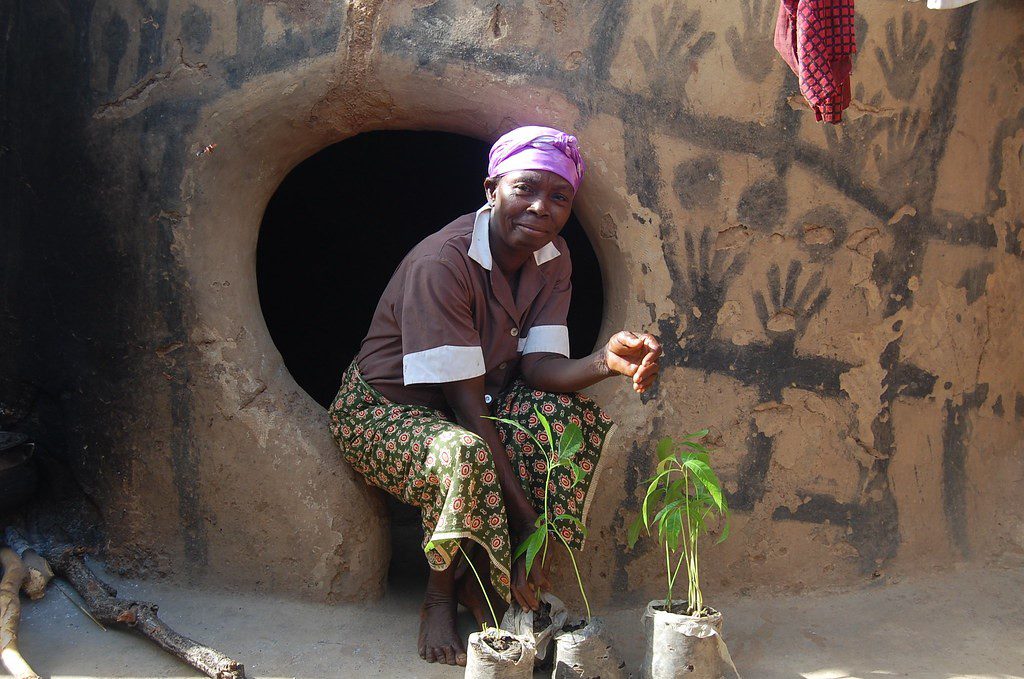
Action Against Desertification, an initiative built off of the Green Wall Initiative, is helping six African countries (Ethiopia, Senegal, Burkina Faso, The Gambia, Niger and Nigeria) that struggle most profoundly with desertification by educating farmers about more sustainable agricultural practices, planting millions of seedlings to expand arable land and rehabilitating desertified forests.
In May of 2017, the China-U.N. Peace and Development Trust Fund created the Juncao Technology project to combat desertification, erosion and hunger in Asian and African countries. The project’s approach is to replace wood with grass. This, in turn, will help to soften the blow of overgrazing and generate clean energy, all while preventing soil erosion and desertification.
Further, the UNCCD is working to achieve land degradation neutrality (LDN), which is defined as “a state whereby the amount and quality of land resources, necessary to support ecosystem functions and services and enhance food security, remains stable or increases within specified temporal and spatial scales and ecosystems.”
– Anna Giffels
Photo: Flickr
Top Five Facts About Girls’ Education in North Korea
North Korea is known for limiting its citizens’ access to government information and news around the globe. One topic in North Korea that may not be as well known is their education system, more specifically, girls’ access to education. These five facts on girls’ education in North Korea highlight both the positives as well as what needs to be improved.
Top Five Facts About Girls’ Education in North Korea
Primary education in North Korea is free and mandatory. This is especially great for families who are suffering in poverty and cannot afford an education for their children. Young girls around the world are more likely to be denied access to an education due to monetary restrictions, so this is a great achievement for the country of North Korea.
Gender discrimination makes it difficult for women in North Korea to attend universities. In 2017, 26 North Koreans spoke with Human Rights Watch and explained how life in their country is challenging, especially for young girls and women. Due to their patriarchal culture, young girls and women are excluded from opportunities ranging from improving their education, joining the military and being involved in politics. They are instead encouraged to stay at home and take care of children and household chores.
In North Korea, social status affects where children go to school. Based on the father’s wealth, education and social status, this determines where the child can go to university, where they can live and where they can work. The five social statuses of these children include the special, nucleus, basic, complex and hostile. If a young girl has a father with poor social status, this not only limits their educational opportunities but virtually every other major decision in their lifetime.
North Korea’s only private university, Pyongyang University for Science and Technology, previously only allowed men to attend. However, it has been reported in recent years that women are now allowed to attend. This is a great victory for young women in North Korea. Careers in science and technology are notoriously lacking women. Women taking these courses and potentially working in a science or technological field would be quite progressive for this country.
Education in North Korea focuses on nationalist propaganda. Information that includes propaganda for the country starts in nursery school, children are exposed to current and previous political leaders in North Korea who are only shown in a positive light, even if it’s false information. Many children’s first words are political leaders names. Several political courses about the Kim dynasty are required, and if students do not perform well in their courses, physical punishment is sometimes enforced. When young girls are not receiving a well-rounded education, especially when it starts at such a young age, it prevents them from being aware of what’s actually occurring in their own country and around the world.
It is very difficult to know exactly what conditions are like for young girls getting an education in North Korea. There is limited information on most topics concerning North Korea and their human rights violations. What is known to the general public is that the country needs to improve its patriarchy culture that affects women and their general education standards.
Although young girls in North Korea have access to basic and free education, many other factors that they cannot control affect what kind of education they receive. The education that young girls do receive is not always historically accurate and aims to influence students in the country to approve of their political leaders. These five facts about girls’ education in North Korea proves that the country’s education system is far from perfect.
Photo: Unsplash