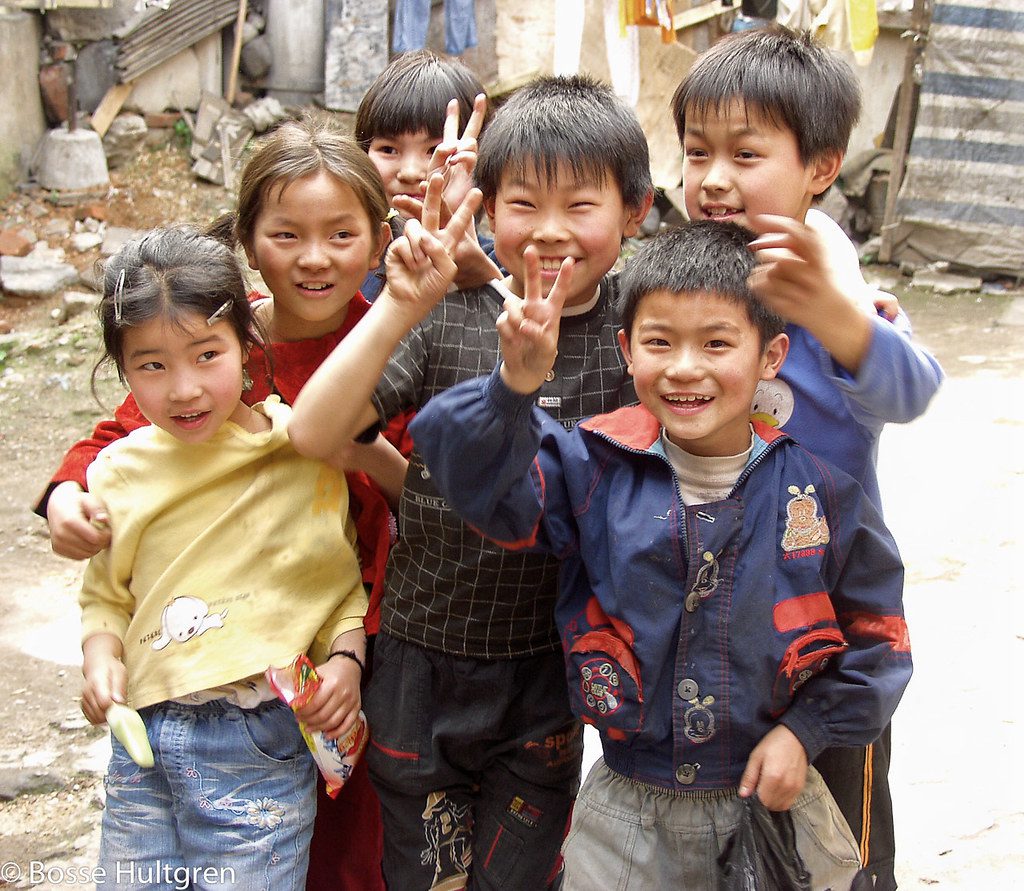
China, one of the most populated countries in the world, is home to many children with special needs. According to statistics from China Disabled Persons’ Federation, there are 80 million people with various disabilities living in China today, constituting six percent of the total population.
More than one million babies are born with birth defects annually and a baby is born with a disability every 30 seconds in China. To aid these children, various organizations are fighting to improve how children with disabilities in China can receive an education.
Regulations of Education of Persons with Disabilities
In 2017, Human Rights Watch reported that the Chinese government released an updated Regulations of Education of Persons with Disabilities to replace the out-of-date 1994 regulations.
According to the Watch’s report, the regulations mandated local governments to plan and fund resources to the education of people with disabilities as an encouragement to enhance education for children with disabilities in China. The Watch further reported that the regulation examined teacher training, evaluation and required schools to develop individualized educational plans for students with a disability.
Human Rights Watch stressed that it is vital to identify and remove barriers to learning and changing practices in schools. The nonprofit further reported that it is essential to provide reasonable accommodations that meet the individual needs of each student, including those with disabilities.
The Watch defines reasonable accommodation in the Convention on the Rights of Persons with Disabilities as “necessary and appropriate modification and adjustments not imposing a disproportionate or undue burden.” In this aspect, children with disabilities in China can receive such accommodations, if they so require.
Community-Based Day Care Centers for Children with Disabilities in China
UNICEF works with the China Disabled Persons’ Federation to expand access to necessary social services for children with disabilities. According to UNICEF, they developed a model for community-based day care centers.
The centers meet the social service needs of children with disabilities in China and help parents cope with the additional childcare responsibilities, according to UNICEF. At these centers, UNICEF reports that disabled children can access rehabilitation services and participate in sports, games and activities fulfilling education and awareness-raising purposes.
In addition, UNICEF assists with annual surveys that gather data for policy recommendations to improve the lives of the families and children with disabilities in China. The rise in enrollment reflects UNICEF’s efforts to support these children so they can complete the entire nine years of basic education in China.
Learning in Regular Classrooms
According to the World Bank, the educational policy for children with disabilities in China is unique in that it admits several disabled children with specific educational needs into regular schools. The World Bank reported that in China, this method of special education is referred to as “Learning in Regular Classrooms”(LRC).
In LRC practice, the World Bank reported that resource rooms allow students with specific educational needs to study in regular classroom environments. The rooms mimic regular classrooms but supply additional resources for children with specific educational needs, such as extra teaching equipment and accommodations, textbook resources and aides.
International China Concern
International China Concern (ICC), was founded in 1993 by David Gotts after witnessing firsthand the suffering of abandoned Chinese children with disabilities in desperate conditions. ICC seeks to empower and train local staff to save lives, support families, transform communities and change public attitudes towards children with disabilities in China. According to ICC, the organization’s reputation and relationships in China place it in an excellent position to aid through family-style group homes and provide specialist services for the neediest children.
Michele Harris, Board Chair of USA Office at China Concern, voiced her outlook on the foundation’s success.
“I am inspired by ICC’s ability to sow the seeds of regard within the children and young adults they love and care for, the welfare officials they respect and work beside, and the caregivers they train and mentor. We must feel pride in their accomplishments and see every individual as a unique and powerful piece of God’s image.”
According to a newsletter by American Friends of ICC, students like 12-year-old Suisui are determined to overcome their obstacles, in his case, cerebral palsy.
The newsletter highlights that while some students might complain about school, Suisui not only attends with delight but he wheels himself to class 30 minutes each way. The article reflects how Suisui thoroughly enjoys going to daily classes and works hard, an embodiment of his learning potential. The newsletter attributes that Suisui can count, recognize numbers and perform simple math.
Through ICC’s Child Sponsorship Program, people can volunteer and get matched with a child and embark on a life-changing journey to transform lives.
Rights of Persons with Disabilities
To aid the fight for equal education, The World Bank has signed the United Nations Convention of the Rights of Persons with Disabilities to affirm their commitment to Sustainable Development Goal 4 (SDG4). SDG4 ensures equal access to all levels of education for persons with disabilities by 2030.
Children with disabilities in China need as many people as possible to make a difference. UNICEF provides different ways to aid and uplift those with special needs, whether it be in your area or overseas in China.
– Carolina Chavez
Photo: Creative Commons

Eradicating Energy Poverty in Bangladesh
Bangladesh recently transitioned from a lower-income country to a lower-middle-income country as per the World Bank’s GDP per capita benchmark. Bangladesh’s Global Domestic Product (GDP) growth rate went from 6.5% in 2012 to 7.3% in 2017.
The demand for electricity rose, as a result, thrusting the government into focusing on eradicating energy poverty in Bangladesh. However, misuse and improper management of energy contributed to the shortage of electricity, and load shedding became a daily phenomenon. Here are some additional facts about energy poverty in the country.
Facts About Energy Poverty in Bangladesh
Only around 59.6% of the people in Bangladesh have access to electricity with 180 kilowatt-hours of energy per capita in use, which is very low in comparison to other countries. Rural areas tend to suffer more as they face more load shedding than urban areas.
Bangladesh heavily relies on natural gas and furnace oil, followed by coal, for electricity generation. As of February 2017, the installed power capacity shows the reliance on natural gas is 62%.
This raises concerns over energy security due to the increasing fuel imports and high dependence on coal and gas for electricity generation. Yet, the country has been failing to meet its electricity demand. Therefore, it is trying to focus on meeting its energy needs and providing access to electricity all over the country.
Progress in Eradicating Energy Poverty in Bangladesh
In September 2018, there was significant progress in eradicating energy poverty in Bangladesh when the country managed to meet its energy production target of 20,000 MW. Bangladesh also set a new target of generating 24,000 MW of electricity by 2021, 40,000 MW by 2030 and 60,000 MW by 2041.
As of 2018, the number of power plants amounted to 108, a significant increase from the 27 power plants in 2009. Bangladesh ranked 90th among 115 nations on the global Energy Transition Index (ETI) which benchmarks countries on how well they balance their energy security and access with environmental sustainability and affordability.
Bangladesh made progress due to a strong political commitment, a stable policy regime, the use of grid expansion and generation sources and an investment-friendly environment in the infrastructure sector.
Some Upcoming Projects for Eradicating Energy Poverty in Bangladesh
Expansion of Renewable Energy
On March 1, 2019, the World Bank approved $185 million to add up to 310 MW renewable energy generation capacity and also to mobilize around $212 million from the private sector, commercial banks, and other sources to meet the increasing demand for electricity. The Scaling-up Renewable Energy Project in Bangladesh by the World Bank will build the first 50 MW segment of a large solar panel energy park in the Feni district. This project should provide better access to clean energy and cut emissions by an equivalent of 377,000 tons of carbon dioxide per year.
With the rapid economic growth in the country, Bangladesh has made some notable progress in addressing its growing electricity demand. Through increased diversification of its energy mix and more ambitious projects on the way, energy poverty in Bangladesh should reduce.
– Farihah Tasneem
Photo: Flickr
5 Ways Veterinary Care Improves Livestock Health in Africa
Ensuring good livestock health in Africa is not easy. Herds often face extreme weather conditions, zoonotic diseases and malnourishment making it difficult to maintain successful farms. Some of these diseases, such as the African swine fever, Brucellosis, Fowl Pox and Rift Valley fever can wipe out entire herds and livestock if left untreated. Many of these zoonotic diseases can be linked to human epidemics as well, contributing to millions of human deaths. A decrease in livestock production due to disease, weather and malnourishment means food shortages and increasing poverty and disease across Africa.
5 Ways Veterinary Care Improves Livestock Health in Africa
With the African economy relying so heavily on livestock and agricultural production, the need for access to veterinary care has become a top priority. The number of trained veterinarians increased in African countries over the past few years for several reasons. The United States Agency for International Development (USAID), the Food and Agriculture Organization (FAO) and a number of nonprofits and government organizations are working together to provide African countries with veterinary assistance. Together, they hope to improve livestock health for a sustainable agriculture industry. Here are just a few initiatives to promote veterinary services:
Through the USAID supported program Feed the Future Livestock for Growth (L4G) farmers in rural Mali can receive free training to become auxiliary veterinarians. This program provides farmers the opportunity to acquire medical training, professional development, superior animal care techniques, vaccines and medical equipment. The veterinarians can then provide quality livestock care to their entire community. Since 2015, L4G has successfully trained 79 auxiliary veterinarians in Mali, improving conditions in 76,000 households in over 800 communities. L4G has also increased vaccine security from 10 percent to 22 percent, saving half a million animals from disease. The Feed the Future initiative alone estimates that over 5 million people are no longer living in hunger and $10 billion has been generated by the agricultural industry since 2011.
The Strengthening of Livestock Services in Angola (SANGA) project is an FAO and EU initiative. It accelerates medical services for livestock and increases veterinary training for animal health auxiliaries in Angola. This project combines efforts of both public veterinary services and private animal auxiliary programs. SANGA develops a sustainable practice throughout the country to improve livestock health and eliminate food insecurity. SANGA hopes to use its resources to train 120 animal health auxiliaries and 20 veterinary technicians.
In 2017, the Bill and Melinda Gates Foundation awarded a 14.4 million dollar grant to the animal health company Zoetis. Over three years, these funds will support animal health technology and veterinary services through the African Livestock Productivity and Health Advancement (ALPHA) initiative in Eastern Africa. This initiative will provide access to quality animal care and veterinary assistance to improve livestock health in Africa in countries like Ethiopia, Nigeria and Uganda. Funds will go directly to technical training and disease prevention as well as the development of animal infrastructure.
This program brings universal veterinary care training to rural communities in Tanzania. World Vets deploys trained professionals to respond to the most critical needs of the agricultural industry throughout the country by providing locals with quality training and equipment. This program also donates $1 million a year to local veterinary assistance establishments to purchase medical supplies and prepare for emergency animal health needs.
This organization partners with the FAO, EU, World Organization for Animal Health and local governments to provide livestock vaccines and medicines that are easily accessible to the poorest and most isolated farmers in Africa. By developing sustainable agricultural practices to promote animal health, treatment for livestock diseases is better managed. Containing livestock diseases and eliminating malpractice in treatment will increase livestock production rate and improve livestock health in Africa.
Healthier Animals Can Reduce Poverty
Without the help of nonprofit and government programs, these initiatives to provide veterinary assistance to improve livestock health in Africa would have little to no success. Vet training gives local farmers the opportunity to utilize their own experience and technical training to give livestock the best care possible. Healthier animals mean more food, production revenue and booming agricultural industry for the entire continent, reducing the number of people living in poverty.
– Becca Cetta
Photo: Creative Commons
A Path to Better Education For Children With Disabilities In China
China, one of the most populated countries in the world, is home to many children with special needs. According to statistics from China Disabled Persons’ Federation, there are 80 million people with various disabilities living in China today, constituting six percent of the total population.
More than one million babies are born with birth defects annually and a baby is born with a disability every 30 seconds in China. To aid these children, various organizations are fighting to improve how children with disabilities in China can receive an education.
Regulations of Education of Persons with Disabilities
In 2017, Human Rights Watch reported that the Chinese government released an updated Regulations of Education of Persons with Disabilities to replace the out-of-date 1994 regulations.
According to the Watch’s report, the regulations mandated local governments to plan and fund resources to the education of people with disabilities as an encouragement to enhance education for children with disabilities in China. The Watch further reported that the regulation examined teacher training, evaluation and required schools to develop individualized educational plans for students with a disability.
Human Rights Watch stressed that it is vital to identify and remove barriers to learning and changing practices in schools. The nonprofit further reported that it is essential to provide reasonable accommodations that meet the individual needs of each student, including those with disabilities.
The Watch defines reasonable accommodation in the Convention on the Rights of Persons with Disabilities as “necessary and appropriate modification and adjustments not imposing a disproportionate or undue burden.” In this aspect, children with disabilities in China can receive such accommodations, if they so require.
Community-Based Day Care Centers for Children with Disabilities in China
UNICEF works with the China Disabled Persons’ Federation to expand access to necessary social services for children with disabilities. According to UNICEF, they developed a model for community-based day care centers.
The centers meet the social service needs of children with disabilities in China and help parents cope with the additional childcare responsibilities, according to UNICEF. At these centers, UNICEF reports that disabled children can access rehabilitation services and participate in sports, games and activities fulfilling education and awareness-raising purposes.
In addition, UNICEF assists with annual surveys that gather data for policy recommendations to improve the lives of the families and children with disabilities in China. The rise in enrollment reflects UNICEF’s efforts to support these children so they can complete the entire nine years of basic education in China.
Learning in Regular Classrooms
According to the World Bank, the educational policy for children with disabilities in China is unique in that it admits several disabled children with specific educational needs into regular schools. The World Bank reported that in China, this method of special education is referred to as “Learning in Regular Classrooms”(LRC).
In LRC practice, the World Bank reported that resource rooms allow students with specific educational needs to study in regular classroom environments. The rooms mimic regular classrooms but supply additional resources for children with specific educational needs, such as extra teaching equipment and accommodations, textbook resources and aides.
International China Concern
International China Concern (ICC), was founded in 1993 by David Gotts after witnessing firsthand the suffering of abandoned Chinese children with disabilities in desperate conditions. ICC seeks to empower and train local staff to save lives, support families, transform communities and change public attitudes towards children with disabilities in China. According to ICC, the organization’s reputation and relationships in China place it in an excellent position to aid through family-style group homes and provide specialist services for the neediest children.
Michele Harris, Board Chair of USA Office at China Concern, voiced her outlook on the foundation’s success.
“I am inspired by ICC’s ability to sow the seeds of regard within the children and young adults they love and care for, the welfare officials they respect and work beside, and the caregivers they train and mentor. We must feel pride in their accomplishments and see every individual as a unique and powerful piece of God’s image.”
According to a newsletter by American Friends of ICC, students like 12-year-old Suisui are determined to overcome their obstacles, in his case, cerebral palsy.
The newsletter highlights that while some students might complain about school, Suisui not only attends with delight but he wheels himself to class 30 minutes each way. The article reflects how Suisui thoroughly enjoys going to daily classes and works hard, an embodiment of his learning potential. The newsletter attributes that Suisui can count, recognize numbers and perform simple math.
Through ICC’s Child Sponsorship Program, people can volunteer and get matched with a child and embark on a life-changing journey to transform lives.
Rights of Persons with Disabilities
To aid the fight for equal education, The World Bank has signed the United Nations Convention of the Rights of Persons with Disabilities to affirm their commitment to Sustainable Development Goal 4 (SDG4). SDG4 ensures equal access to all levels of education for persons with disabilities by 2030.
Children with disabilities in China need as many people as possible to make a difference. UNICEF provides different ways to aid and uplift those with special needs, whether it be in your area or overseas in China.
– Carolina Chavez
Photo: Creative Commons
How to Improve the Lives of Cocoa Farmers in Côte d’Ivoire
In 2017, the cocoa crisis left many farmers without pay for their work. George Koffi Kouame, a 50-year-old cocoa farmer, told the BBC that he had delivered 1.8 tons of cocoa and had not been paid. This is the result of plummeting cocoa prices, which led up to 80 percent of cocoa buyers to terminate their contracts with farmers.
Living Conditions
However, even without this crisis, most cocoa farmers in Côte d’Ivoire are struggling. As a condition of their poverty, many lack adequate access to education, healthcare and drinking water.
Only 43 percent of farming communities observed in a study by Barry-Callebaut, a major chocolate manufacturer, had a health facility in their village. For 54 percent of the communities, the nearest health facility was, on average, 12 kilometers away, a little over seven miles.
Additionally, 25 percent of villages did not have a primary school, with 22 percent of villages having no school at all. While 87.4 percent of villages had a primary school located within five kilometers, having a school in each village ensures that education is accessible even to the most impoverished, as they may not have the means to travel for schooling.
Finally, access to safe drinking water is also a concern for some cocoa farmers. While 32 percent obtain some of their drinking water from the national water supply and 63 percent have access to pumped water, 5 percent of farming communities do not have access to either source. This suggests that they mainly drink surface water, which is more likely to be unsanitary.
Rural Côte d’Ivoire is in desperate need of better and more abundant schools and healthcare facilities, as well as access to drinkable water in certain villages. These changes would help improve the standard of living of cocoa farmers and their families more generally, potentially aiding in efforts to raise them out of poverty.
Financial Inclusion
Cocoa farmers in Côte d’Ivoire are generally excluded from formal financial services. Rates for all residents of Côte d’Ivoire are high, with 53 percent of men and 64 percent of women lacking access to financial services.
Because of this, the crop cycle generally determines the financial lives of cocoa farmers. Cocoa farmers harvest from October to January and make their money for the year during this period. Then, from February to September, farmers must make the money they earned from this harvest last, as cocoa farming is the main source of income for most farmers.
If their money begins to run out during these months, many are forced to take informal loans with high-interest rates in order to make ends meet. Then, when the next harvest begins generating income, paying back these loans reduces their profit and makes it difficult to save money for the following year.
To improve the financial health of cocoa farmers in Côte d’Ivoire and help them rise out of poverty, more financial products need to be available. Access to formal loans is incredibly important, as loans through the banking sector will have lower interest rates and be easier to repay. Many farmers would benefit from being able to get formal loans for school fees, as these are due before the harvest season has begun.
Additionally, education programs to teach farmers how to best manage their money in combination with access to savings accounts can help farmers become financially sustainable over time. Advans, an international microfinance group, has been working in Côte d’Ivoire since 2015, helping farmers set aside money for the future.
Crop Yields
Another solution, proposed by Barry-Callebaut, is to help farmers increase their crop yields, thereby increasing their income. Farmers sometimes do not use pesticides and fertilizers, decreasing their cocoa yields, partly due to low access to financial services. Improving access to financial services, as well as implementing educational programs for farmers to help them learn better agricultural practices, has the potential to significantly increase farmers’ yields over time.
Overall, improving financial inclusion and crop yields has the potential to help cocoa farmers in Côte d’Ivoire rise out of poverty. Additionally, improving education, healthcare and drinking water access will improve their quality of life. As information about cocoa farming continues to be collected, this knowledge will hopefully be used to benefit impoverished farmers.
– Sara Olk
Photo: Flickr
Energy for Growth Hub
Energy for Growth Hub’s Purpose
According to their site, Energy for Growth means “affordable reliable energy” to power all manner of businesses. The lack of energy in developing countries holds back the inhabitants from prosperity. It’s difficult for an economy to prosper when a hospital or school can’t be powered in order to use its equipment because it doesn’t have access to electricity.
It’s hard for those in first world countries to imagine a country where less than fifty percent of a population has access to electricity. In Chad, for example, fewer than 10 percent of residents in the sub-Saharan country had access to electricity in 2016. Chad is one area in sub-Saharan Africa that would be positively affected by widespread electricity.
Todd Moss, Executive Director of Energy for Growth and previous the chief operating officer at the Center for Global Development, believes the future of countries like Chad is tied to widespread electricity and not just electricity for use in households but also for businesses, farms, hospitals and schools.
Energy and Jobs
Job creation is just one positive result of powering a country that lacks affordable and widespread electricity. The nonprofit states that energy is the foundation with which modern economies thrive. Without electricity, there wouldn’t be power in homes, hospitals or schools. There wouldn’t be computers or medical equipment or even phone lines in order to call for emergencies. Vehicles would be sparse, as many gas-powered vehicles depend on a functioning battery to operate.
Batteries also power public transportation and improve agricultural practices, such as utilizing a basic farm tractor or timed irrigation equipment. The nonprofit believes all industries and energy sectors require or can benefit from electricity. In each of those industries, there are possibilities of employment. Power is the foundation of development.
Grid Modernization
Without a functional electrical grid, it would be difficult for a developing country to thrive. Energy for Growth Hub is interested in both off-grid and on-grid living. The nonprofit’s main focus is not on household energy, as most nonprofits. It focuses on reliability, cost, large-scale energy operations and working with the available resources of each country, such as untapped coal. Though the nonprofit believes sustainability is a wiser choice long-term, Energy for Growth Hub understands some countries could utilize cheaper solutions rather than the cleaner and more expensive counterparts, such as wind and solar power.
Focusing on households leads to small solutions, whereas a large-scale approach has a spillover effect since the grid will also move towards households. A strong economy, at its most basic level, has some form of an electrical grid. An affordable grid that is used not only for urban but also rural residents leads to further development and reduced poverty. This is another important goal for the organization.
In 1990, only 16 percent of residents in sub-Saharan Africa had access to electricity. In 2016, the number had increased to 42 percent. The Rockefeller Foundation, Chevron, General Electric, Pritzker Innovation Fund and others have funded Energy for Growth Hub and believe in its vision of helping “developing countries achieve the high-energy future they need to become prosperous and economically competitive.”
Photo: Flickr
Women in Government: Representation in Rwanda
A Shift in Gender Representation
The genocide in Rwanda marked a change in gender representation because, after the violence had subsided, 70 percent of the surviving population was women. This was a result of the practice of killing men and allowing women to survive as sex slaves during the genocide. However, it was not only the new gender disparity that caused an increase in women’s roles in government, but the country also introduced quotas requiring 30 percent of candidates for public office to be women.
It is important to note that the Rwandan government decided to increase the representation of women in government through candidate quotas in political parties rather than seat reservations in parliament. According to a study by Mala Htun published in Perspective on Politics, “Women and men belong to all political parties; members of ethnic groups, by contrast, frequently belong to one only.” By using quotas, the Rwandan government is acknowledging the bipartisan nature of women in government.
Therefore, the most efficient way to establish a higher representation of women in government is to promote their representation within political parties because they are a cross-cutting group, meaning that women have an active political presence across the political spectrum. This thoughtful approach to increasing women’s representation in the Rwandan government has resulted in record-breaking numbers of women becoming involved in political life in Rwanda and setting positive examples for young girls throughout the country.
The Difficulties Women in Government Face
The presence of women in such politically powerful positions in Rwanda has not come without difficulties. Many women face backlash from their families or husbands for sacrificing domestic work in order to become political leaders. In fact, Berthilde Muruta, Executive Secretary in the Rubavu District noted that “there are people who think that we come to meet men, or for other business, which makes it hard to be trusted by our husbands.” Additionally, female politicians in Rwanda are oftentimes not seen as equals to the men in similar positions.
According to Claudette Mukamana, a District Vice Mayor, “When people see you holding any of those [elected] positions as women, the very first question asked by everyone is: Will she be able to perform her duties? Is she capable of holding such a position?” Despite these difficulties, the presence of so many women in the Rwandan government has resulted in the passing of several key pieces of legislation to improve the lives of women and girls throughout the country.
These reforms include legislation to alter the Civil Code to allow women to have equal inheritance rights as men, equal pay, consequences for gender discrimination and harassment in the workplace and further prevention and consequences for violence against women and children. In addition, with 7 of the 14 supreme court justices in Rwanda now being women, new laws were passed requiring that both boys and girls must attend primary and secondary school.
Areas to Improve
A lot still needs to change in regards to the perception of women’s roles in society. Furthermore, there is still more progress to be made, especially in terms of violence against women. The Rwandan government performed a study that showed that two out of every five women ages 15 and older had been physically abused at least one time in their lives. As more women are elected to office, hopefully, more people will change their perspective in these areas and these statistics will represent that improvement.
The representation of women in the Rwandan government has led to significant advancements for the rights of women and girls throughout the country. Globally women only hold 21.9 percent of all elected seats in government. Promoting the equality of men and women in political positions in Rwanda and around the world is integral to solving many of the issues governments face. Although the system is not yet perfected, the world could learn a lot about the importance of women in government from Rwanda.
Photo: Flickr
Digital Bangladesh Is Making Progress
Information and Communication Technology
By 2021, the government aims to integrate Information & Communication Technology (ICT) as a key tool in eradicating poverty and establishing good governance as well as improving the quality of education, healthcare and law enforcement. The government has already laid out some of the foundation work for realizing Digital Bangladesh, such as preparing the National ICT Policy 2009 and the Right to Information Act 2009.
Some of the strategies being used to implement Digital Bangladesh include increasing the coverage of broadband internet connection and cellphone communication throughout the country in order to exchange information and access different types of services, integrating ICT into the school curriculum and improving the capacity and management of healthcare services. Other important areas Digital Bangladesh will improve are increased efficiency in judicial processes, improved coverage of social safety-net programs, reduced environmental impact as well as increased access to banking and financial services.
The Benefits of Digitizing
With more than 120 million cellphone subscribers and 43 million internet subscribers, the population of Bangladesh has been able to enjoy the benefits of digitizing different services around the country. Some examples of these digital services include admission registration to academic institutions, the publication of exam results online, online submission of tax returns, online banking systems and bill payments and filing complaints to police stations. Even video conferencing and telemedicine services are now available in rural areas of the country.
The Access to Information (a2i) Program, supported by UNDP and USAID since 2007, has been the driving force for Digital Bangladesh with the aim of increasing transparency, improving governance and reducing inefficiency in providing public services around the country. On average, six million e-services are provided per month to rural and remote areas through the 407 City Corporation Digital Centers, 321 Municipality Digital Centers and 4,547 Union Digital Centers.
Digitizing is helping to streamline government affairs. More than 25,000 websites of different unions, sub-districts, districts, departments and ministries are connected through the National Web Portal. This portal contains information for more than 43,000 government offices. Furthermore, activities are much more environmentally friendly now that the Prime Minister’s Office as well as around 20 ministries, 4 departments, 64 Deputy Commissioner’s offices and 7 Divisional Commissioner’s offices are using e-filing system. This created an efficient paper-less environment in offices.
Digital Banking
In terms of digital payments, as of December 2015, 18 banks are now operating mobile financial services in Bangladesh. Transactions have risen significantly to 120 percent on average since 2011. This amounts to $1.3 billion on average per month. Although these transactions are a small portion of the entire economy, it is still a notable shift towards digital services, thus a step closer to Digital Bangladesh.
More than one billion transactions in 2015, worth around $20 billion, were done digitally. Furthermore, 70 percent of government payments were also digital. As of 2016, around 38 million people in Bangladesh had utilized mobile money services, reflecting the shift from a cash-dominant economy to a more digital payment economy. The availability of mobile money orders has also been a remarkable stride towards Digital Bangladesh, especially for the rural areas in the country.
Furthermore, around 300 of the Digital Centers have been involved with rural e-Commerce, allowing people to purchase items that are not easily available in remote areas. It has also allowed small-scale women entrepreneurs to participate with 5000 women entrepreneurs who are involved with the e-Commerce platform called “ejoyeeta.com,” which consists of goods produced by these women.
Improvements Still Needed
Bangladesh still has a long way to go in terms of fully digitizing itself. The National Identification System needs to be fully implemented and incorporated with important services in order to improve access to digital financial services. Since human capital is an essential element when it comes to adopting new technology, programs aimed at incorporating ICT-based education from primary to tertiary level schools should be prioritized. Finally, having political stability is a necessity in realizing Digital Bangladesh, given how political turmoil is often a setback when it comes to the development of different sectors in the country, including ICT.
The progress Bangladesh has made so far in realizing its 2021 goal cannot be overlooked despite its lacking in certain areas. However, with the increase in different digital services and activities around the country, Bangladesh is gradually lifting itself up and shifting towards a more ICT based economy, making Digital Bangladesh a potential reality.
Photo: Flickr
Antenatal Care in Nigeria
Maternal health concerns the health of women during pregnancy, childbirth and the postpartum period. During this time, major causes of maternal mortality include hemorrhaging, infection, high blood pressure and obstructed labor.
Every day, 830 women die from preventable causes related to pregnancy and birth. In fact, 99 percent of maternal deaths occur in developing countries. It is necessary for policy innovation in developing countries because sustained use of maternal and antenatal care and increased rates of institutionalized delivery reduce maternal mortality.
Antenatal Care in Nigeria
Of the women who did access and antenatal care, 41 percent did not deliver in a health care facility. Nigeria ranks in the top 16 nations in maternal mortality: 576 deaths per 100,000 births. Containing only 2.45 percent of the world’s population, Nigeria contributes to 19 percent of maternal deaths globally.
There is a stark difference in the number of women who seek antenatal care in urban and rural areas: 75 percent versus 38 percent, respectively. Studies also show that more skilled professionals attended births in urban areas, revealing that 67 percent of women had a trained professional helping them. In rural areas, only 23 percent of women had the help of trained professionals. In these rural areas, only 8 percent of newborns receive postnatal care, whereas 25 percent of children do so in urban environment.
Due to the lack of health coverage and used resources, many of Nigeria’s infants die from preventable causes. Approximately:
Ways to Increase Access to Antenatal Care in Nigeria
Improving maternal and antenatal care in Nigeria can encourage women to utilize services such as improved facility infrastructure and amenities. Policy innovation in Nigeria can result in better equipment, more available drugs and an increase in overall comfort for the spaces.
In a study of antenatal patients in Nigeria, women responded positively to increased interpersonal interactions with providers. The study also suggested that improved maternal care should include access to providers who have technical performance skills and experience. Improved maternal care also includes access to providers who display empathy for their patients. Furthermore, policy innovation in Nigeria could improve increased access to facilities for those in rural areas.
Accessed to maternal and antenatal care in Nigeria can be improved with policy innovations made throughout the country. By making health facilities more accessible to more women and giving them the supplies and support they need, Nigeria will be able to decrease its maternal mortality rate and save its families from preventable complications of during pregnancy and infancy.
– Michela Rahaim
Photo: Flickr
Top 10 Facts About Living Conditions in Kazakhstan
As Kazakhstan grows into its own identity, it has been trying to promote prosperity across its many regions. The following top 10 facts about living conditions in Kazakhstan illustrate the ways it is developing as a nation.
Top 10 Facts About Living Conditions in Kazakhstan
The above top 10 facts about living conditions in Kazakhstan depict both the struggles and the successes of a young nation. With the help of international partners like the United States Agency for International Development (USAID), Kazakhstan can continue to manage its economic growth and address regional disparities.
– Peter S. Mayer
Photo: Flickr
Early Childhood Education in Kenya Could Combat Poverty
The Tayari Program
In 2014, Kenya introduced a new pilot program for children aged four to six who were enrolled in both public and private education. The program, named “Tayari” after the Kiswahili word for “readiness,” is a “cost-effective, scalable” program with three facets to prepare young children for successful educations. It includes a learning model to help children gain mathematical, reading and even emotional development skills. Teachers receive specific training, guides and materials. In addition to specific teaching styles and a rigid curriculum, children are taught about healthy eating and personal hygiene, specifically the importance of handwashing.
Understanding the actual significance of the program is crucial, which is why Moses Ngware, a senior research scientist at the African Population and Health Research Centre, conducted extensive research on Tayari. His team looked at the impact, cost and scalability of the program. Using randomized controls, they found that students had a three-month advantage over their classmates who were not part of the program. They also found that improving a student’s scores 8 percentage points through Tayari only cost policymakers about $7 per year.
The program addresses important shortcomings within the education system in Kenya, such as “ inadequate provision of age-appropriate and context relevant quality teaching and learning materials.” There is also a shortage of teachers who can guide their students in the classroom. The program was found to be so successful in Kenyan classrooms that it has the potential to change lives throughout Sub-Saharan Africa. While the research is overwhelmingly positive, more data and more time in the program is necessary to know its ultimate effects. The program, like its learners, is still very young.
Education and Poverty Reduction
Improving a child’s chance for a good education is always a good thing, but it could be worth something even more. Could early access to the skills needed to succeed in school lead to a better life in terms of income and wealth? The data shows that early childhood programs and education are already part of strategies to alleviate poverty because of its success rates.
A study in Ypsilanti, Michigan found that at-risk children who were placed in a pilot preschool program achieved greater success than the control group. By 19, they possessed a better economic potential and had better social skills. By 27, they had fewer arrests and higher incomes. The older these children got, the more noticeable their academic and economic achievements were when compared to the control group.
The Carolina Abecedarian Project is one of the oldest programs in this field. Originally conducted between 1972 and 1985 in North Carolina, the comprehensive early education program was for young children at risk for developmental delays and dropping out of school. Not only did participants do better academically than their control peers, but as adults, they had significantly higher incomes, were more likely to have been “consistently employed” and less likely to engage in criminal behavior. The program was so successful that the organization rolled it out to other states and it is now international.
Early childhood programs are not going to eliminate poverty, but by giving children the social and academic skills needed to better succeed at life, they’re offering a real foundation upon which to build future success. Tayari, the program for early childhood education in Kenya, is cheap, easy to roll out and may really help the poorest of Kenya, maybe even the poorest of Sub-Saharan Africa.
Photo: Unsplash