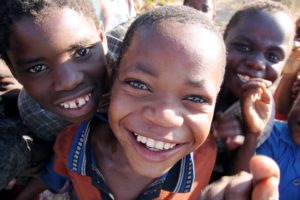
Malawi Project, Inc. is a 501(c)(3), Christian, nonprofit, humanitarian organization that focuses primarily on improving the physical and spiritual health of men, women and children in Malawi. Founded in 1999 and headquartered in Indianapolis, Indiana, the Malawi Project has provided aid to Malawi in areas as diverse as education, medicine, famine relief, agriculture and community development. The Borgen Project had the opportunity to speak with Richard Stephens, co-founder of the organization about the Malawi Project’s impact to date.
The Borgen Project: Is the Malawi Project the biggest provider of humanitarian aid to Malawi?
Richard Stephens: First, allow me to give some background about the nation and people of Malawi. According to USAID, More than one-half of the country’s 17 million people live below the poverty line, and more than one-third consume less than the required daily calories, contributing to the stunting of nearly one-half of children under 5 years of age.
The agency notes, “Malawi continues to score poorly on major health indicators for maternal, infant and under-5 mortality. Eighty-five percent of households engage in agricultural activities and most rely almost exclusively on rain-fed subsistence farming that is particularly vulnerable to cyclical droughts.
These challenges are compounded by threats from the highest rates of deforestation and population growth in the region.” Only 50 percent of children complete primary school, and of those, only 60 percent successfully pass the exam to access public secondary school; only 15 percent of girls are enrolled in secondary school.” However, the Malawi Project would not be the largest provider of humanitarian aid to Malawi.
TBP: What is the organization’s biggest accomplishment?
RS: According to Dambisa Moyo, a recognized Zambian economist, in her book “Dead Aid,” developed nations delivered over $1 trillion in aid to Africa over the past 50 years. The result? Moyo notes that from 1970 to 1998 when that aid was at its peak, the unemployment picture went from a low of 11 percent in 1970 to a high of 66 percent in 1998.
Obviously, something was wrong in the way aid was administered. The Malawi Project is proud of its stance of supplying its aid packages in such a way as to inspire creative thinking among the recipients, development of oversight and management by in-country local management, and the creation of an infrastructure to carry out their own work with little or no outside oversight or management.
The Project supports grassroots development of businesses, churches and community groups that will build up and develop the nation from within. Action for Progress is an example. Made up of business, church and community leaders from all three regions of Malawi, this not-for-project organization is taking the lead in the identification of specific need areas and the successful distribution and follow up reporting on nearly all of the aid currently being delivered to Malawi by the Malawi Project.
In the past 26 years, more than 375 forty-foot shipping containers have delivered over $300 million in aid from the Malawi Project. This aid has been delivered to every region, every religion and every walk of life. Additionally, more than 800 people have traveled to Malawi with Project teams to assist the citizens.
More than $3 million in cash infusion has been delivered in the form of locally purchased food, and through a food processing plant constructed under the sponsorship of [our organization] employing more than 100 people, purchasing raw food materials from over 1,000 Malawi farmers, and feeding over 60,000 people a day — as well as an agricultural village, inspired by the Malawi Project, is training 50 farm families a year in current agricultural practices. Additionally, a five-building, 110-bed medical complex serves the needs of people north of the capital and a 27-building childcare center takes care of more than 160 parentless children. These programs are now working independently of support from the Malawi Project and many others are in the development stage of creating this same independent approach to their future.
TBP: Does the Malawi Project ever collaborate with other humanitarian organizations? If so, could you provide some examples?
RS: Yes, the Malawi Project has teamed up with Feed the Children, Nourish the Children, USAID and the governments of Canada, Sweden, Israel, Holland and Germany to supply food and medical assistance to Malawi. Organizations such as Universal Aid and Compassionate Resources in Canada, World Emergency Relief, Amigo International, Breedlove Foods in the U.S. have supplied food, medical assistance and agricultural assistance through the Malawi Project. Hoffnung fur kinder in Germany, Children’s Hope Fund in Hong Kong and Aid to Africa in Washington D.C. have all given financial assistance. Healing Hands International has supplied technical expertise in areas of food processing and agricultural development. Proctor and Gamble, Adidas and Nike are but a sampling of corporations that have extended assistance through the donations of various products.
TBP: How many Malawians have been helped by the Malawi Project?
RS: “The number would be impossible to estimate, but one can note that medical supplies have gone into every district of the nation, to some 600 medical facilities, and school supplies and textbooks have been delivered to well over 1,000 schools and colleges throughout the nation.”
The scope of the Malawi Project work and the impact it has made in Malawi make it an excellent humanitarian organization. In fact, GreatNonprofits recognized the organization as a top-rated nonprofit in both 2017 and 2018. Yet, Stephens’ answers reveal that there is still great need throughout Malawi. Thus, he and the rest of the Malawi Project have no desire to end their work in this country any time soon.
– Jacob Stubbs
Photo: Wikimedia

ACCORD: Finding Strategies for Peace in Africa
Political unrest, ethnic tensions and legacies of colonial exploitation beget chaos and violence in many parts of Africa. Wars, border disputes and ethnic violence cause destruction, divide families and disrupt economies, consequences which create and perpetuate poverty. Fortunately, some nonprofits are partnering with local communities, leaders and intellectuals to work toward conflict resolution, and ultimately, peace in Africa.
About ACCORD
The African Centre for the Constructive Resolution of Disputes (ACCORD) is a nonprofit civil society organization and think tank that specializes in conflict management, analysis and prevention. Vasu Gounden, who believes that innovative solutions to conflict in Africa must come from the minds of African citizens, established it in 1992 in Durban, South Africa. ACCORD works closely with international organizations like the U.N. and the African Union (AU) to facilitate negotiations, train mediators and encourage healthy relationships among African leaders. The organization also conducts extensive research through analysis and experience-sharing events and Pennsylvania University’s prestigious ranking process has ranked it as one of the top 100 think tanks worldwide.
Strategies for Peace
ACCORD’s six pillars for peace illustrate the organization’s strategy for establishing peace in Africa through activism and dialogue. ACCORD recognizes the importance of listening to key stakeholders like women and youth, who peace processes often underrepresent, by working to elevate their roles in mediation and post-conflict reconstruction. The organization also works with Regional Economic Communities (RECs) to develop peacebuilding strategies like mediation training, dialogue frameworks and reconciliation strategies. The regional dimensions of most security challenges in Africa (border disputes, multinational ethnic group tensions, ideological extremism and cross-border displacement) put RECs in a unique position to prevent and troubleshoot conflicts. This relationship is at the forefront of ACCORD’s strategy; the first pillar for peace is “to reinforce the institutional capacity of the AU and RECs to prevent and peacefully resolve conflicts.”
Troubleshooting, Brainstorming and Problem Solving
ACCORD regularly organizes and hosts high-level retreats and roundtable events with the AU, U.N., RECs and civil society organizations (CSOs) to address such issues as civil wars, sexual and gender-based violence and socio-economic impediments to peace and development. These roundtables build networks linking African peace workers and mediators across the continent. Scholars agree that CSOs link social, geographic and economic groups in society and play a critical role in providing domestic oversight and upholding institutions. ACCORD’s retreats and workshops, like its Lessons Learned from Inclusive National Peacebuilding Processes workshop, connect CSOs in order to foment peace in Africa. Discussions at roundtable events troubleshoot peacekeeping mechanisms like early warning systems (which analyze and predict conflict) and encourage peer-to-peer collaboration on women’s rights, mediation strategy, education, economic development and other issues.
ACCORD has also been working to combat the sexual violence that often accompanies conflict. In February 2019, the organization participated in a Training of Trainers course to inform African peacekeeping institutions about how to prevent sexual exploitation and abuse in peacekeeping operations. In light of a recent scandal wherein, more than 43 U.N. peacekeepers received accusations of sexual exploitation or abuse, training like this is crucial in preventing future incidences of sexual violence.
Training and Mediating
ACCORD has intervened in 34 countries across Africa, employing peacemaking, peacekeeping and peacebuilding strategies to mediate and contain conflict, developing capacities for peace. The organization has been running a peace program in Burundi, one of the poorest countries in the world, since 1995. Throughout the Burundi civil war, ACCORD trained community leaders, civil society, political actors and other key stakeholders in conflict prevention, management and transformation.
Additionally, ACCORD has launched a peace initiative in the Central African Republic (CAR), and in November 2018, hosted a dialogue for members of the CAR’s negotiating team. Themes during the dialogue included negotiation techniques, classical and nonverbal communication, the concept of strategic compromise and ways of dealing with armed groups.
Peace and Poverty Relief
Conflict monitoring, analysis, prevention and resolution are integral in establishing foundations for peace in Africa. Many recognize the connection between conflict and poverty, and how it can be detrimental to communities. Only when conflict-ridden communities establish peace, economic prosperity and collective well-being can become reality. ACCORD works with community leaders, civil society organizations, individuals and other stakeholders across Africa to establish foundations for peace and conflict management.
– Nicollet Laframboise
Photo: Flickr
Child Labor in Ghana
Ghana, a small African country nestled between Togo and Ivory Coast, is one of the highest achieving nations in the sub-Saharan region. It is the world’s second-largest producer of both cocoa beans and gold, and this generative economy has propelled much of the Ghanaian population out of poverty.
While ahead in some regards, Ghanaian children are still subject to human trafficking. According to the United Nations’ International Labour Organization, over 152 million children around the world are forced into the workforce. Africa is among the worst offending areas, and as such, brings child labor in Ghana to international concern.
Child labor is a National Issue
Currently, one out of every six children is involved in child labor in Ghana. Offending sectors are numerous and widespread; 88 percent of children work in agriculture, typically harvesting cocoa beans, while 2.3 percent are fishermen. Others are subjected to domestic or sexual work.
Many Ghanaian children participate in child labor due to desperation and ignorance. While free public education is available in Ghana, many families cannot afford the uniforms and books required to enroll in school. Poverty is, therefore, cyclical in these circumstances – much more than cheap labor is being exchanged. A child is also selling his or her childhood, dignity and future potential to their traffickers.
Lake Volta Region
Lake Volta is the largest man-made lakes in the sub-Saharan region. It is notoriously known as an area where the worst forms of child labor prosper. Here, one-third of children between the ages of seven and 14 work full-time.
Children are valued workers on Lake Volta because their labor is affordable and efficient. Recently, the lake’s fish population has decreased considerably. Fishermen, therefore, do not have the financial means to accommodate other sources of labor. Furthermore, children provide the nimble fingers needed to untangle fish from the minuscule-sized holes in fishing nets.
Aside from posing as a serious human rights violation, work on Lake Volta is quite dangerous for Ghanaian children. Nets often get stuck on objects underneath the surface. This forces children to go diving in order to prevent tears in the nets. Drowning is a concern, as well as contracting several illnesses including bilharzia and guinea worm.
Government Effort
The central government made several, moderate efforts to control the unbridled child labor in Ghana. In 2017, the National Plan of Action for the Elimination of Human Trafficking was enacted. With it, the government identified itself as an entity against the exploitation of its young generation. Children working in mines are a specific concern for the government, as mercury poisoning is prevalent among workers in this sector. Feeding programs have also been instilled in schools and refugee camps in order to protect children from malnourishment.
These efforts, while well-intentioned, are not efficiently enforced in the country. This leaves many children in enslavement, or at risk of falling into this dark reality.
International Action
Child labor is a human rights violation to which the international community has responded with animosity and vigor. There are countless organizations working to end all forms of child labor and trafficking.
APPLE is just one NGO that specifically works to hinder the growth of child labor in Ghana. This organization has stationed itself in fishing villages around the Lake Volta region. Their efforts to eliminate child labor compromises of immediate and long-term solutions. The banning of nets with small holes is believed to decrease the value of children on the lake, and education is provided in order to warn families of the calamities that human trafficking inflicts.
While the sub-Saharan region is not the only area that violates international human rights laws, child labor in Ghana is on the rise. Efforts to protect the most innocent collection of the population need to be mobilized with the utmost zeal. These children need aid in order to liberate, educate and relocate those displaced by this practice.
– Annie O’Connell
Photo: Flickr
10 Facts About Life Expectancy in Iceland
Iceland, one of the healthiest European countries, lies between the Greenland Sea and the North Atlantic Ocean. Icelanders tend to outlive people from other richer, warmer and more educated countries. Below are 10 facts about life expectancy in Iceland that determine what factors may help Icelanders live longer lives.
10 Facts About Life Expectancy in Iceland
Icelanders show that lifestyle can have a major effect on how long people live. Both the Icelandic people and their government made efforts to improve their health statistics by reducing the consumption of fossil fuels and drugs and increasing physical activity. These top 10 facts about life expectancy in Iceland are full of lessons that people of other nations can learn and apply as successful health interventions.
– Navjot Buttar
Photo: Flickr
Top 7 Facts About Education in Sudan
7 Facts About Hunger in Venezuela
Food shortages across Venezuela started to rise in 2013, around the time of President Hugo Chávez’s death. Less than a year later, the nation’s oil-dependent economy began to tank and inflation began to soar. Venezuela could no longer afford the cost of its imported basic goods, resulting in nationwide shortages in food and medicine. While the nation’s instability worsens, people are going hungry in Venezuela. Here are the top seven facts about hunger in Venezuela.
7 Facts About Hunger in Venezuela
As food shortages continue and people remain hungry, these seven facts about hunger in Venezuela show that the country is in a clear humanitarian crisis. While there are aid efforts out there, supplies must be sent in as nonpartisan support. So long as aid efforts adhere to this restriction, there is hope for hunger relief in Venezuela.
—Suzette Shultz
Photo: Wikimedia Commons
10 Facts about Child Labor in Iran
Child labor is defined by the International Labor Organization as the exploitation of children through any form of work that deprives children of their childhood and interferes “with their ability to attend regular school, and is mentally, physically, socially or morally harmful.” The Human Rights Watch estimates that around 70 million children around the world are currently working in hazardous conditions across many sectors, including agriculture, mining and domestic labor. Unfortunately, in Iran, the number of child laborers continues to grow. Keep reading to learn the top 10 facts about child labor in Iran.
10 Facts About Child Labor in Iran
Child labor in Iran is not only a serious issue but a worsening one. These facts about child labor in Iran demonstrate the critical need for aid in the region. Poverty is at the heart of the problem and organizations are working to reduce these extreme conditions, in turn getting the children the help they need.
– Natalie Malek
Photo: Flickr
5 Facts About the Recent Hepatitis E Outbreak in Namibia
Hepatitis E is a condition where an individual’s liver is inflamed due to infection of the Hepatitis E virus. While it is a serious condition, it often does not receive as much attention as it should; as a result, the disease has proven difficult to eradicate globally. Namibia, for example, has been experiencing a Hepatitis E outbreak since 2017, in which 40 people have died and thousands of others contracted the disease.
5 Facts About the Recent Hepatitis E Outbreak in Namibia
Worryingly, the rainy season is set to begin again in November. Because the virus is most often spread through contaminated water, the influx of water to the country will increase the chances of transmission. Hopefully, as the outbreak grows in severity, the government and the public will respond with renewed vigor to improve the country’s infrastructure and bring the virus to an end.
Final Thoughts
The current hepatitis E outbreak in Namibia is certainly concerning, but it provides several opportunities for the country to improve its standards of living. By fixing the sanitation infrastructure and water systems, the spread of the virus will slow and the prosperity of citizens will increase. Addressing hepatitis E will also allow the country’s officials to reinforce health care systems against other, more deadly outbreaks.
– Molly Power
Photo: Flickr
What is the Malawi Project?
Malawi Project, Inc. is a 501(c)(3), Christian, nonprofit, humanitarian organization that focuses primarily on improving the physical and spiritual health of men, women and children in Malawi. Founded in 1999 and headquartered in Indianapolis, Indiana, the Malawi Project has provided aid to Malawi in areas as diverse as education, medicine, famine relief, agriculture and community development. The Borgen Project had the opportunity to speak with Richard Stephens, co-founder of the organization about the Malawi Project’s impact to date.
The Borgen Project: Is the Malawi Project the biggest provider of humanitarian aid to Malawi?
Richard Stephens: First, allow me to give some background about the nation and people of Malawi. According to USAID, More than one-half of the country’s 17 million people live below the poverty line, and more than one-third consume less than the required daily calories, contributing to the stunting of nearly one-half of children under 5 years of age.
The agency notes, “Malawi continues to score poorly on major health indicators for maternal, infant and under-5 mortality. Eighty-five percent of households engage in agricultural activities and most rely almost exclusively on rain-fed subsistence farming that is particularly vulnerable to cyclical droughts.
These challenges are compounded by threats from the highest rates of deforestation and population growth in the region.” Only 50 percent of children complete primary school, and of those, only 60 percent successfully pass the exam to access public secondary school; only 15 percent of girls are enrolled in secondary school.” However, the Malawi Project would not be the largest provider of humanitarian aid to Malawi.
TBP: What is the organization’s biggest accomplishment?
RS: According to Dambisa Moyo, a recognized Zambian economist, in her book “Dead Aid,” developed nations delivered over $1 trillion in aid to Africa over the past 50 years. The result? Moyo notes that from 1970 to 1998 when that aid was at its peak, the unemployment picture went from a low of 11 percent in 1970 to a high of 66 percent in 1998.
Obviously, something was wrong in the way aid was administered. The Malawi Project is proud of its stance of supplying its aid packages in such a way as to inspire creative thinking among the recipients, development of oversight and management by in-country local management, and the creation of an infrastructure to carry out their own work with little or no outside oversight or management.
The Project supports grassroots development of businesses, churches and community groups that will build up and develop the nation from within. Action for Progress is an example. Made up of business, church and community leaders from all three regions of Malawi, this not-for-project organization is taking the lead in the identification of specific need areas and the successful distribution and follow up reporting on nearly all of the aid currently being delivered to Malawi by the Malawi Project.
In the past 26 years, more than 375 forty-foot shipping containers have delivered over $300 million in aid from the Malawi Project. This aid has been delivered to every region, every religion and every walk of life. Additionally, more than 800 people have traveled to Malawi with Project teams to assist the citizens.
More than $3 million in cash infusion has been delivered in the form of locally purchased food, and through a food processing plant constructed under the sponsorship of [our organization] employing more than 100 people, purchasing raw food materials from over 1,000 Malawi farmers, and feeding over 60,000 people a day — as well as an agricultural village, inspired by the Malawi Project, is training 50 farm families a year in current agricultural practices. Additionally, a five-building, 110-bed medical complex serves the needs of people north of the capital and a 27-building childcare center takes care of more than 160 parentless children. These programs are now working independently of support from the Malawi Project and many others are in the development stage of creating this same independent approach to their future.
TBP: Does the Malawi Project ever collaborate with other humanitarian organizations? If so, could you provide some examples?
RS: Yes, the Malawi Project has teamed up with Feed the Children, Nourish the Children, USAID and the governments of Canada, Sweden, Israel, Holland and Germany to supply food and medical assistance to Malawi. Organizations such as Universal Aid and Compassionate Resources in Canada, World Emergency Relief, Amigo International, Breedlove Foods in the U.S. have supplied food, medical assistance and agricultural assistance through the Malawi Project. Hoffnung fur kinder in Germany, Children’s Hope Fund in Hong Kong and Aid to Africa in Washington D.C. have all given financial assistance. Healing Hands International has supplied technical expertise in areas of food processing and agricultural development. Proctor and Gamble, Adidas and Nike are but a sampling of corporations that have extended assistance through the donations of various products.
TBP: How many Malawians have been helped by the Malawi Project?
RS: “The number would be impossible to estimate, but one can note that medical supplies have gone into every district of the nation, to some 600 medical facilities, and school supplies and textbooks have been delivered to well over 1,000 schools and colleges throughout the nation.”
The scope of the Malawi Project work and the impact it has made in Malawi make it an excellent humanitarian organization. In fact, GreatNonprofits recognized the organization as a top-rated nonprofit in both 2017 and 2018. Yet, Stephens’ answers reveal that there is still great need throughout Malawi. Thus, he and the rest of the Malawi Project have no desire to end their work in this country any time soon.
– Jacob Stubbs
Photo: Wikimedia
Living Conditions in Saint Pierre and Miquelon
A short distance from the Canadian province of Newfoundland and Labrador lies Saint Pierre and Miquelon, an overseas collectivity of France. Its remoteness and obscurity marks it as culturally, economically and demographically distinct from the rest of North America. Living conditions in Saint Pierre and Miquelon compare well with much of the developed world in some respects, but not all. Below are the top 10 facts about living conditions in Saint Pierre and Miquelon.
10 Facts About Living Conditions in Saint Pierre and Miquelon
Though living conditions in Saint Pierre and Miquelon are not intolerable, opportunities for improvement exist. The archipelago’s relative remoteness allows it to avoid the attention of outsiders, yet it has not escaped the forces of globalization, of which the economic and cultural consequences have been tremendous. These top 10 facts about living conditions in Saint Pierre and Miquelon ought to dispel any notion that this is an inconsequential territory.
– Philip Daniel Glass
Photo: Flickr
5 Facts About Organized Crime in the Northern Triangle
Two previously published articles on The Borgen Project’s website have mentioned the issues of violence, poverty and corruption in the Northern Triangle of Central America (NTCA). This article’s focus is on the organized crime in the northern triangle that engenders the violence and corruption, which includes street gangs, drug cartels and paramilitary organizations. Daily life in the NTCA is rife with immediate danger from many different sources.
5 Facts About Organized Crime in the Northern Triangle
Organized crime in the Northern Triangle is one of the biggest obstacles to promoting stability and welfare in the region, exacerbated by many political and economic factors—the largest being the influence of international gangs. Corruption also enables many of the organized crime entities to operate with impunity, which in turn forces immigrants northward to flee threats of violence, extortion and forced recruitment. However, other articles have touched upon growing international visibility of the corruption—and efforts to fight it—in the Northern Triangle, and the spotlight on corruption has revealed the full extent of these gangs’ power and influence over the region.
In addition, U.S. Congress has introduced legislation targeted at addressing the root causes of migration from the NTCA which includes the threat of gang violence and organized crime. One such bill, the United States-Northern Triangle Enhanced Engagement Act already passed in the House of Representatives in July 2019. Click here to encourage your Senators to support this bill when it is introduced in the Senate.
– Rob Sprankle
Photo: Flickr