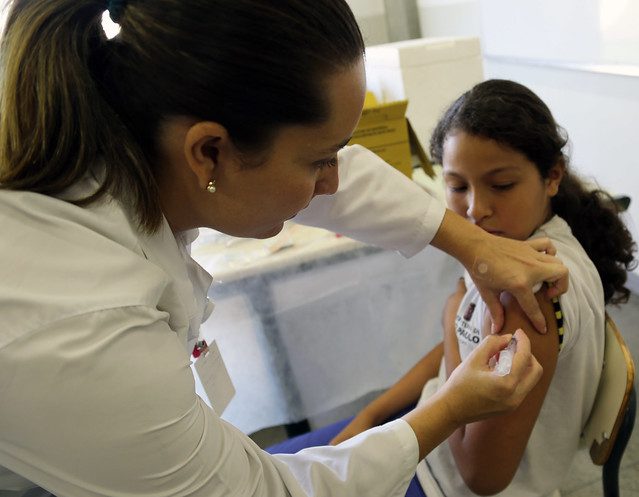
 Vaccine hesitancy, the reluctance or refusal to vaccinate despite the availability of vaccines, has been around since the invention of the vaccine. Recently, there has been an increase in vaccine hesitancy in developing countries due to safety concerns and long-term effects. With this skepticism, outbreaks of vaccine-preventable diseases that were once thought mostly eradicated such as measles, pertussis and diphtheria, have increased in frequency around the world.
This year, the World Health Organization named vaccine hesitancy one of the top 10 threats to global health. Vaccines remain the safest and most cost-effective ways of preventing diseases. Currently, vaccines save between two and three million lives a year.
Furthermore, if coverage improves, vaccines can save an additional 1.5 million lives per year. The reasons for vaccine hesitancy are complex, but a vaccine advisory group identified complacency, inconvenience in accessing vaccines and a lack of confidence as some of the root causes. With these factors identified, if now becomes a question of how to fight these causes of vaccine hesitancy in developing countries.
Complacency
Some health experts have theorized that vaccine skepticism stems from the fact that vaccines are so effective that parents no longer remember or fear vaccine-preventable diseases like measles and polio. Instead, they may focus their anxieties on the safety of vaccines, effects or the number and timing of injections.
Without a proper understanding of the devastating effects of these diseases, parents have less of a motivation to vaccinate. EU Health Commissioner Vytenis Andriukatis said at an international health conference, “We have become victims of our own success.”
Convenience
Vaccine hesitancy in developing countries is often bolstered by the need for medical infrastructure. Inadequacy and the inequities in health systems like poverty, the disparity in infant mortality and life expectancy and a need for trained providers damages community trust.
To combat this, many countries have implemented mandatory vaccinations in schools, with mixed results. In India, for example, during their measles and rubella vaccination campaign, parents objected to their children being vaccinated without their consent, stalling the campaign in court.
Rwanda, on the other hand, was successful in its HPV vaccination campaign by coupling it with an information campaign. The campaign targeted parents and explained the need for this vaccine.
Confidence
Much of the anti-vaxxer movement is built in misinformation. Vaccine hesitancy in developing countries often stems from rumors about vaccines. For instance, that the polio and HPV vaccines caused infertility and impotency. The movement stems from general concerns about the safety of vaccines.
Health workers, especially those operating in the communities, are the parents’ most trusted health advisors and act as the biggest influencer of vaccination decisions. Because of their position, they must be supported so that they may provide parents with credible information. The most effective campaigns to fight vaccine hesitancy in developing countries are the ones that tailor to the community. Healthcare workers in the community are vital for implementing these campaigns.
In Rwanda, for example, healthcare workers went door to door to explain the benefits of the HPV vaccine. They focused on the fact that the vaccination is meant to prevent cancer. The workers brought diagrams of the female reproductive system. They also dispelled rumors by explaining that cervical cancer is far more likely to cause infertility than vaccines. Because the campaigned was tailored to the community, it was met with a lot of success.
Overcoming Vaccine Hesitancy
While there is an increase in vaccine hesitancy in developing countries and around the world, immunization campaigns are experiencing successes. Transmission of wild poliovirus, for example, may stop in Afghanistan and Pakistan this year. Additionally, cervical cancer may be eliminated in 181 countries by the end of the century.
To keep this up, health officials have to be proactive in fighting vaccine hesitancy in developing countries by fighting complacency, making access to healthcare more convenient and building confidence by creating programs tailored to the community.
– Katharine Hanifen
Photo: Flickr

Poverty and Health in Argentina
Though Argentina does not suffer from the same issues of illiteracy and income inequality that other countries do, the South American nation has other problems to focus on, namely national health issues and their intersection with poverty. According to 2017 estimates, about one in every four Argentinians lives below the poverty line.
This means that many in Argentina do not have access to proper medical personnel or equipment, as well as medicine. Though this number may seem fairly standard compared to other South American countries, Argentina’s largely agrarian communities suffer from extremely limited access to sufficient education or medical facilities. As a result, even those not considered impoverished may not have the proper means to receive medical treatment, thus creating a vicious cycle of poverty’s effect on health in Argentina.
An Unstable System
Argentina’s health system is in part to blame for this issue. Argentina created a system comprised of a public and a private sector, the former of which is meant to provide all Argentinians with universal healthcare and free coverage. In theory, this seems like an advantageous idea as it is meant to directly address everyday health issues for every citizen. However, it actually perfectly exemplifies poverty’s effect on health in Argentina. The reality is that problems like regional socioeconomic disparities have caused the system to work inefficiently, meaning that those in less educated, more rural areas do not usually receive the same quality of care and coverage as those in wealthier urban communities. This unfortunate issue is quite cyclical since poorer communities simply do not have a viable way to resolve it.
Local Perspectives
Zack Tenner, a Pre-Med university student who spent a month earlier this summer working in Argentina with Child Family Health International, commented on Argentina’s health and poverty issues in an interview with The Borgen Project. “Argentina prides itself on a universal healthcare system which guarantees the ability for all citizens and tourists to see a doctor without cost. Despite its attempts to create a working and efficient system, Argentina’s emergency departments are overburdened,” said Tenner.
“The homeless and impoverished populations do not have enough access to education on how to properly use the system to their benefit, meaning that they end up being stuck with the same limited healthcare and access to medicine as before. This is definitely a timely issue that should be one of Argentina’s top priorities, as national health is a huge factor in so many different facets of everyday life.”
Rural Challenges
The flawed healthcare system is not helping poverty’s effect on health in Argentina. In more rural and agrarian communities, Argentinians are exposed to more risks of disease and injury as well. Aside from the constant risk of minor injuries from agriculture and operating machinery, diseases and viruses like Typhoid and even Zika occur in Argentina.
In other words, the Argentinians with probably the highest risk of injury or disease and subsequent healthcare and medicine are also the citizens with the least sufficient access to viable sources of healthcare. Argentina is on the right track in terms of creating a universal healthcare system.
That said, the South American nation needs to implement a more complete system that truly affords people from all walks of life with adequate medicine and treatment. Otherwise, poverty’s effect on health in Argentina will continue and, with it, a seemingly inescapable cycle.
NGO Involvement
All that in mind, there are still several NGOs focused on improving the healthcare and treatment situations in Argentina. Child Family Health International, for example, aims to increase awareness of primary care and treatment issues in Argentina by bringing in students and doctors from other countries to work with Argentinian physicians and patients. Aside from that, other larger entities such as the World Health Organization are also working to increase awareness of health issues in Argentina. This organization provides pertinent data and information regarding Argentina’s healthcare and coverage system to incite activism and aid for the South American nation.
As for organizations focused on more specific health-related issues, the AIDS Healthcare Foundation has worked since its creation in 2013 to provide support for testing and treatment of HIV/AIDS in Argentina. In fact, the organization supports seven Argentinian clinics and their nearly 12,000 patients and has performed more than 120,000 HIV tests for citizens in the last six years.
As long as organizations like these continue to create awareness and provide assistance, the healthcare and treatment situations will continue to improve, thus lessening poverty’s effect on health in Argentina.
– Ethan Marchetti
Photo: Flickr
Combating Vaccine Hesitancy in Developing Countries
This year, the World Health Organization named vaccine hesitancy one of the top 10 threats to global health. Vaccines remain the safest and most cost-effective ways of preventing diseases. Currently, vaccines save between two and three million lives a year.
Furthermore, if coverage improves, vaccines can save an additional 1.5 million lives per year. The reasons for vaccine hesitancy are complex, but a vaccine advisory group identified complacency, inconvenience in accessing vaccines and a lack of confidence as some of the root causes. With these factors identified, if now becomes a question of how to fight these causes of vaccine hesitancy in developing countries.
Complacency
Some health experts have theorized that vaccine skepticism stems from the fact that vaccines are so effective that parents no longer remember or fear vaccine-preventable diseases like measles and polio. Instead, they may focus their anxieties on the safety of vaccines, effects or the number and timing of injections.
Without a proper understanding of the devastating effects of these diseases, parents have less of a motivation to vaccinate. EU Health Commissioner Vytenis Andriukatis said at an international health conference, “We have become victims of our own success.”
Convenience
Vaccine hesitancy in developing countries is often bolstered by the need for medical infrastructure. Inadequacy and the inequities in health systems like poverty, the disparity in infant mortality and life expectancy and a need for trained providers damages community trust.
To combat this, many countries have implemented mandatory vaccinations in schools, with mixed results. In India, for example, during their measles and rubella vaccination campaign, parents objected to their children being vaccinated without their consent, stalling the campaign in court.
Rwanda, on the other hand, was successful in its HPV vaccination campaign by coupling it with an information campaign. The campaign targeted parents and explained the need for this vaccine.
Confidence
Much of the anti-vaxxer movement is built in misinformation. Vaccine hesitancy in developing countries often stems from rumors about vaccines. For instance, that the polio and HPV vaccines caused infertility and impotency. The movement stems from general concerns about the safety of vaccines.
Health workers, especially those operating in the communities, are the parents’ most trusted health advisors and act as the biggest influencer of vaccination decisions. Because of their position, they must be supported so that they may provide parents with credible information. The most effective campaigns to fight vaccine hesitancy in developing countries are the ones that tailor to the community. Healthcare workers in the community are vital for implementing these campaigns.
In Rwanda, for example, healthcare workers went door to door to explain the benefits of the HPV vaccine. They focused on the fact that the vaccination is meant to prevent cancer. The workers brought diagrams of the female reproductive system. They also dispelled rumors by explaining that cervical cancer is far more likely to cause infertility than vaccines. Because the campaigned was tailored to the community, it was met with a lot of success.
Overcoming Vaccine Hesitancy
While there is an increase in vaccine hesitancy in developing countries and around the world, immunization campaigns are experiencing successes. Transmission of wild poliovirus, for example, may stop in Afghanistan and Pakistan this year. Additionally, cervical cancer may be eliminated in 181 countries by the end of the century.
To keep this up, health officials have to be proactive in fighting vaccine hesitancy in developing countries by fighting complacency, making access to healthcare more convenient and building confidence by creating programs tailored to the community.
– Katharine Hanifen
Photo: Flickr
The Impact of Credit Access in Micronesia
A lack of credit access in Micronesia is limiting Micronesia’s ability to develop effective solutions to widespread poverty. Limited credit regulation and poor banking infrastructure (Micronesia has only 14 bank branches per 100,000 adults) have hindered attempts at poverty reduction. An estimated 16 percent of the population lives below the international poverty line (individuals or families whose income per person is less than $1.90 per day) while an estimated 42 percent of the population lives below the national poverty line.
Infrastructure
A lack of effective financial regulation plays an important role in this problem, as Micronesia lacks both the public (credit registry) and private (credit bureau) infrastructure necessary to ensure that financial institutions can confidently provide loans to businesses and individuals. This has produced an extremely small lending practice in Micronesia, as banks and other institutions face a substantial risk when offering loans. Beyond simply the difficulty in verifying that debtors can pay back their loans, there is little legal protection for creditors. When a debtor defaults on a loan, secured creditors do not receive payment first, and if a debtor files for bankruptcy, there are no legal guidelines establishing relief for the creditor. This creates little incentive for lending institutions to grant credit, as there are often serious questions about the prospect of getting their money back.
While poor financial regulation may not appear to have an immediate effect on the spread of poverty, it plays a substantial role in limiting prospects for poverty reduction. The two largest sectors of Micronesia’s economy are the service industry and agriculture, which together make up around 81 percent of Micronesia’s GDP. The lack of credit access in Micronesia has amplified the structural difficulties of poverty, as many lack the money necessary to purchase land or start a business. They also cannot reliably acquire such capital from banks, which harms the overall growth of these vital sectors.
Credit access also plays a substantial role in agricultural production. The agriculture industry in Micronesia is declining as it holds an incredibly small portion of Micronesia’s total exports compared to agriculture’s importance in the country’s GDP. Around seven percent of Micronesia’s exports are in agriculture, and the sector is seeing its impact decline overall, as few can afford to remain farmers. Credit access enables farmers to acquire better agricultural inputs, which functions to provide a long-term solution to poverty in Micronesia by raising income levels across the impoverished population, growing individual incomes and strongly affecting Micronesia’s economy.
Business confidence
Beyond simply limiting access for those seeking the startup funds to create a business, the lack of effective credit infrastructure has hampered overall business confidence and undermined faith in the prospects for sustained growth. Constraints on capital have limited the ability for pre-existing businesses to ensure continued access to the money necessary to provide financial stability. This lack of confidence, while largely sentiment-based, has produced an environment which harms overall prospects for economic activity.
The Good News
Fortunately, the Asian Development Bank (ADB) has begun investing in local banking infrastructure to develop credit access in Micronesia as a part of its Private Sector Development program. In a series of loans beginning in 2006, the ADB has provided over $9 million to Micronesia, with the goal of improving bank credit and narrowing the gap between public and private employment to develop more jobs in the private sector. The program has thus far been a success, as the employment gap has decreased by 20 percent signaling the growth of private industry. The ADB can offer loans for land ownership via a partnership with the Federated States of Micronesia Development Bank (FSMDB). It can also improve building infrastructure with one loan recipient saying that he was able to make his used clothing store earthquake-resistant to protect his business against a sudden loss in revenue.
Moreover, Micronesia is implementing reforms to protect financial institutions and improve the government’s capacity to register security rights in moveable properties. As a part of the World Bank’s Doing Business program, established in 2008, Micronesia had the goal of improving legal protections for creditors. Since then, the Micronesian government has developed more reforms which allow for the use of moveable assets as collateral when seeking credit and expanding security agreements to codify the use of such assets.
One cannot underestimate the importance of credit access in Micronesia as it plays an integral role in maintaining vital sectors of the Micronesian economy. Not only does credit impact the country’s economic growth, but it also helps lift individuals out of poverty by providing sustained sources of income. While Micronesia requires more work to develop stronger infrastructure, the Micronesian Government, with the help of the ADB, has begun taking steps in the right direction.
– Alexander Sherman
Photo: Flickr
8 Shocking Facts About Fidel Castro
As the political leader of Cuba from 1959 to 2008, Fidel Castro, nicknamed El Comandante, was the “face of left-wing totalitarianism”. Though Castro’s educational reforms significantly improved the system of education in Cuba, they often came at the hand of communist policies that left its citizens impoverished as well. While most of Castro’s reforms proved harmful, a few paved the way for advances in Cuban health and education. Here are eight shocking facts about Fidel Castro.
8 Shocking Facts about Fidel Castro
These eight shocking facts about Fidel Castro cannot encapsulate 49 years of supremacy, though they can provide a glimpse into Cuban life under his rule. While Castro passed away in 2016, his death cannot erase the influence his policies had on Cuba. However, organizations, such as CARE and the Foundation for Human Rights in Cuba (FHRC) are implementing programs to increase living conditions in Cuba.
Organizations Working to Rebuild Castro’s Cuba
CARE, an organization that began working in Cuba during the Special Period, is doing great work to reinstate the food security Cuba lost during the fall of the Soviet Union. With projects such as the Strengthening Dairy Value Chain Project (SDVC) and the Co-Innovation Project, CARE is working with Cuban farmers to improve agricultural practices. CARE made Cuban food security a national priority by providing rural farmers with access to new farming technologies, helping them in diversifying their food supply and figuring out ways to make food products more accessible at the local level. While Castro’s rule limited non-governmental farmland ownership to 18 percent, Cuba now allows its citizens 66.29 percent of farmland ownership, meaning that Cuba now has the ability and freedom to achieve its food security goals.
FHRC uses non-violence to protect the rights of Cuban citizens. Through the Cuban Repressors Program, the FHRC has created a safe place for Cuban citizens to report violent Cuban government officials. The program provides Cuban activists with cameras and smartphones that allow them to record inhumane activity. It also distributes photos and pamphlets with images of repressive perpetrators to communities and posts identified repressors on the internet. Since the launch of the program, these methods have identified 93 repressors, and with the number of reported repressors decreasing each month, the FHRC is succeeding in attaining justice for the Cuban people.
U.S. Relations with Cuba
Years after Raul Castro took over presidential responsibilities from his brother, President Obama announced that the U.S. and Cuba would restore its diplomatic ties in an effort to normalize relations between the two countries. Obama began to ease U.S. trade and travel restrictions with Cuba that were upheld for decades due to Castro’s abusive policies. However, the Trump Administration is making efforts to roll back Obama’s policies and enforce new economic sanctions on Cuba. With Cuba’s newly elected president, Miguel Díaz-Canel, only time will tell how the U.S.- Cuba relationship will develop.
Photo: Flickr
10 Facts About Life Expectancy in Argentina
Between 2010 and 2014, mortality from HIV/AIDS rose from 3.2 deaths per 100,000 people to 3.4 deaths per 100,000. Some people in Argentina also face water scarcity, a lack of basic services and supplies, low wages and limited access to food markets. These 10 facts about life expectancy in Argentina display the quality of life and health of Argentinians.
10 Facts About Life Expectancy in Argentina
Argentina, Bolivia, Brazil and Paraguay created a joint initiative to study the socio-economic conditions of the more rural regions to discover why diseases plague certain parts of their countries and not others. With an increasing life expectancy, Argentina’s has one of the largest labor forces in the world. Universal access to health care is Argentina’s end goal and some of the information in these 10 facts about life expectancy in Argentina demonstrate that things are looking positive for the future.
– Adam Townsend
Photo: Flickr
The Good News About South Korea’s $8 Million Aid
North Korea has since become a nation of poverty. The greatest threats to North Korea are its water pollution, waterborne diseases, deforestation, soil erosion and degradation. In 2017, one in five North Koreans did not have access to clean water and 41 percent of people were undernourished. Since the country’s poverty level has been increasing, North Korea has been reliant on international aid. Recently, South Korea has announced it will be sending $8 million in food aid to North Korea.
The good news about South Korea’s $8 million aid is that it expected to begin reducing tension between the opposing governments while reducing poverty levels in the North. North Korea previously chose not to accept aid from the South. The Supreme Leader, Kim Jong-un, is now open to receiving the aid due to the current harvest being the worst in the past decade and the current drought problem, which is currently the worst it has been in over three decades.
Expected Benefits
Taking a Stand
Tensions between North and South Korea have been high since the end of World War II. In a press release, the South Korea Unification Ministry made it clear to the public that its tension with North Korea was not a reason to deny the country humanitarian aid. South Korea’s aid will begin to lessen those tensions. It will also provide food and medical aid to the suffering population and begin to reduce the poverty levels.
Most countries have been hesitant to send international aid to North Korea due to their involvement in missile and nuclear weapons developments. South Korea is taking a stand and using compassion to state that political issues do not affect the fact that almost half of the North Korean population is starving and in need of help.
– Chelsea Wolfe
Photo: Pixabay
Current Developments in the Samoan Fishing Industry
Samoa is a small island that relies heavily on two main exports, coconut products and fish. Although the Samoan economy grew significantly from diverse agriculture products such as taro, its current focus shifted to fishing industry development. Since the majority of poor Samoans work within the fishing and agriculture industries, improving the fishing industry can help the livelihoods of poor Samoans. The Samoan government and the World Bank are seeing progress in the growing Samoan fishing industry. The poverty rate decreased from 26.9 percent in 2008 to 18.8 percent in 2013, in part due to investment in underappreciated industries, such as the fishing industry.
Current Aquaculture Status
The Strategy for Development of Samoa (SDS) views aquaculture as an important pre-requisite to effective fish farming. Since 2007, Tilapia culture in earthen ponds has been successful but there are several constraints to further development in the Samoan fishing industry. A lack of feeds, technology, skills and limited access to markets impedes faster development. Despite the low technology, aquaculture is viewed as a practical means of increasing fisheries production, providing an additional source of food to those in poverty and generating income to local communities.
Four Initiatives
The Minister of Agriculture and Fisheries, La’aulialemalietoa Leuatea Schmidt, created four main goals in 2017 to boost the fisheries sector. The four initiatives are Samoa’s Tuna Management and Development Plan 2017-2021, the revival of the Fish Aggregating Devices (F.A.Ds) Project, repair work on research vessel F.V. Ulimasao and delivery of 20 tablets to monitor deployed F.A.Ds. The 20 tablets are used to observe and assess the impact of the F.A.Ds on food security and the livelihoods of Samoans.
The F.V. Ulimasou research vessel was repaired through financial assistance from the World Bank. The vessel is used to train fishery personnel and test new technology and fishing gear. About 30 percent of exports derive from the fishing sector and over 90 percent of exported fish is tuna. For this reason, the minister targets the growing industry in order to further develop the economy and the Samoan fishing industry.
Assistance from the World Bank
Thousands of Samoan families and local producers plan to benefit from a $20 million grant from the World Bank. The Samoa Agriculture and Fisheries Productivity and Marketing Project was created in 2019 and will include construction and rehabilitation of infrastructure, such as cold storage at fish markets. Samoa is frequently affected by hurricanes and part of the grant is directed towards constructing disaster-resilient fishery buildings.
The grant will also help grow Samoa’s capacity to export fish and fish products. Hon. Lopao’o Natanielu Mua, Samoa’s Minister for Agriculture and Fisheries said, “We look forward to working with the World Bank to achieve our goal of increased food, improved nutrition and more secure incomes for Samoans.” At least 30 percent of matching grants will go towards female farmers and fishers.
Future Outlooks
The poverty rate has continually declined thanks to efforts by the Samoan government, the Asian Development Bank (ADB), the World Bank and various organizations. The Asian Development Bank supported Samoa since 1966 and committed $190 million in loans, $134 million in grants and $33 million in technical assistance in the small island country. ADB’s future assistance to Samoa will focus on energy investment, disaster-resilient roads, upgraded port facilities and job creation. With continued efforts from external organizations, the livelihood of Samoans will improve.
– Lucas Schmidt
Photo: Flickr
Violence Against Indigenous Women
Recently, activist groups in the U.S. have brought attention to a staggering problem: the increasing number of missing or murdered indigenous women and girls. Violence against indigenous women and girls does not only occur in the U.S. Native women all around the world also find themselves trapped in the margins of justice, vulnerable to various forms of violence. This article will consider three common threads that perpetuate these patterns and the initiatives taken to stop them.
Economic Exploitation
Due to centuries of displacement and disenfranchisement that nation-state expansion caused, many indigenous communities around the world have limited access to economic opportunity. As a result, indigenous women must often work in highly exploitative labor, which can take the form of slavery and/or human trafficking.
In Nepal, girls of Tharu origin or Kamlaris frequently find themselves in a coordinated system of bondage. While the Nepal government prohibited this system in 2000, the economic scarcity that some Tharu families face allows for this exploitation to survive, according to the Asian Indigenous Women’s Network.
Violence against indigenous women takes the form of debt bondage in several other Asian countries. Cases have popped up in China, Cambodia, Myanmar, Thailand and other countries in the region. In Latin America, economic exploitation is a detriment to the well-being of indigenous women and girls, with life-threatening child labor forced upon many native communities.
Encroachment onto Indigenous Land
Land-grabbing for economic or political reasons threatens many indigenous communities around the world. In many cases, this weakens the solidarity instrumental in ensuring the well-being of community members, leaving women and girls more vulnerable. Seventy-six percent of people living on tribal land and 96 percent of perpetrators of sexual violence against indigenous women in the U.S., for example, are of non-native identity.
In Asia-Pacific countries, the appropriation of land for private or public use met with resistance and has led to the increased terrorization of indigenous communities, according to the U.N. The military forces of the Philippines, Myanmar, Papua New Guinea and Fiji have all used rape and murder of women and girls as a war tactic.
Governmental Negligence
Combating the multifaceted forms of violence against indigenous women and girls is a tall task; political negligence of the problem makes it even harder.
Consider one particularly harmful U.S. policy which states that tribes do not have legal jurisdiction over criminal acts that nonmembers commit. In 2013, this law changed to allow prosecution in cases of domestic violence, but sexual assault and trafficking crimes still lie outside tribes’ legal power. Of course, the federal level could try these crimes, but law enforcement often fails to respond in an adequate or timely manner. Even in urban settings, nearly a third of perpetrators of violence against indigenous women do not receive justice in the U.S., according to the Urban Indian Health Institute.
There is a similar dynamic playing out in New Zealand, where Maori women often face discrimination. If they bring a complaint to the government, it may not be fruitful, as “[t]he government has a poor record of recognizing and protecting Maori rights and interests generally,” says indigenous legal scholar Kerensa Johnston.
Confronting the Challenge
To address violence against indigenous women and girls, two different types of solutions are necessary. First, governments must implement immediate-relief policies: the U.N. notes that many countries have invested in support services for women and girls affected by violence and in awareness campaigns to prevent violence from even occurring. Policies can also work to improve data collection to ensure that fewer cases go unaddressed; Washington state just passed a bill with this aim.
As the U.N. warns, however, solving this problem will require more than tinkering around the edges. Histories of inequities make justice elusive, putting native women and girls at a higher risk for gender-based violence. The U.N. report suggests that communities and countries will find a path forward only once they recognize this history.
– James Delegal
Photo: Flickr
Abiy Ahmed’s Political Accomplishments
On April 2, 2018, Abiy Ahmed became the prime minister of Ethiopia. Ahmed has a history of being in the military, formerly serving as an army intelligence officer. He also has a bachelor’s degree in computer engineering and a master of arts degree in transformational leadership. Yet, these facts do not even compare to Abiy Ahmed’s political accomplishments thus far.
Abiy Ahmed as Prime Minister
At 42 years old, Ahmed is the youngest African leader to have a leadership position. In his first 12 months of office, Ahmed has already enacted political reforms that will privatize state-owned sugar plants, railways and industrial parks. He also intends to partially privatize Ethiopian airlines, telecom, electric power corporation and shipping & logistics services enterprises. These four industries are the most crucial for Ethiopia since Ethiopia considers them “the four crown jewels of the economy.” Ahmed’s privatization process has already garnered international support, gaining $1.2 billion dollars for Ethiopia from the World Bank. This is the largest loan a Sub-Saharan country in Africa has ever received. Ahmed is not only implementing reforms that are leading to global outreach, but he is also bringing in more money for Ethiopia’s economy in doing so.
Repression in Ethiopia
Many consider Ethiopia to be one of the most politically repressive countries. Historically, leaders would lock journalists for doing their jobs or torture inhabitants of detention centers. The political repression has not completely improved, but Ahmed is making sure to take steps in that direction. He has already admitted to the repression that exists and even to the government using torture. Ahmed is attempting to undo Ethiopia’s brutal history of repression by admitting to it and releasing the prisoners. This will not fix Ethiopia’s problems overnight, but it is a small step that should bring the country to a better place for itself and its citizens.
Despite the fact that Ahmed has committed some very important actions that could ultimately impact Ethiopia’s economy, the results have not always been positive. Communal violence has broken out since Ahmed has been in office, resulting in messy and confusing times for many of Ethiopia’s citizens. Ethiopia has an incredibly big, diverse population, which makes it one of the more difficult ones to govern. Many of its citizens still live in poverty and the literacy rates reach only half the population. While Ahmed’s new policies and reforms will be beneficial, that does not mean they will have overall positive effects. However, there is some hope amidst the chaos. It means that the citizens care and that they are looking for something to believe in. Abiy Ahmed’s political accomplishments could be that hope.
Ethiopia still has a long way to go. Abiy Ahmed’s political accomplishments are already paving the way to Ethiopia gaining a more benign government and country. The small steps he is taking will be significant in enacting big change.
– Haley Saffren
Photo: Flickr
10 Facts About Life Expectancy in Estonia
Estonia, a beautiful, Baltic country with a historically turbulent background, is a striking model of a nation that refuses to let adversities stand in the way of its mission for improvement. Despite Estonia’s many challenges over the last two decades, it continues to prove that positive change is possible, no matter how small. These 10 facts about life expectancy in Estonia demonstrate the most notable progress the country has made in pursuit of a longer and higher quality of life for its people.
10 Facts About Life Expectancy in Estonia
Despite its turbulent past, Estonia has proven over the last two decades that it is capable of great improvement. These improvements come in the form of technological advancement, transparent and efficient health care and government initiatives focused on accessing all citizens and ensuring they receive the care they need.
– Ashlyn Jensen
Photo: Flickr