• Link to X
  • Link to Facebook
  • Link to Instagram
  • Link to TikTok
  • Link to Youtube
  • About
    • About Us
      • President
      • Board of Directors
      • Board of Advisors
      • Financials
      • Our Methodology
      • Success Tracker
      • Contact
  • Act Now
    • 30 Ways to Help
      • Email Congress
      • Call Congress
      • Volunteer
      • Courses & Certificates
      • Be a Donor
    • Internships
      • In-Office Internships
      • Remote Internships
    • Legislation
      • Politics 101
  • The Blog
  • The Podcast
  • Magazine
  • Donate
  • Click to open the search input field Click to open the search input field Search
  • Menu Menu

Tag Archive for: USAID

Information and news about mobile technology

Posts

Global Poverty, Hunger, USAID

Feed the Future Initiative Fights Hunger in Bangladesh


Bangladesh, a primarily agricultural society, has been plagued by poverty and malnutrition for many years. The 2010 USAID-funded Feed the Future training program, however, has empowered farmers to increase their yields. The program has improved economic status and given the Bangladeshi people the means to fight back against hunger. This can particularly be seen in the life of Taroni Kanto Shikari, whose economic status improved to the point where he could send his son to school and his daughter to college.

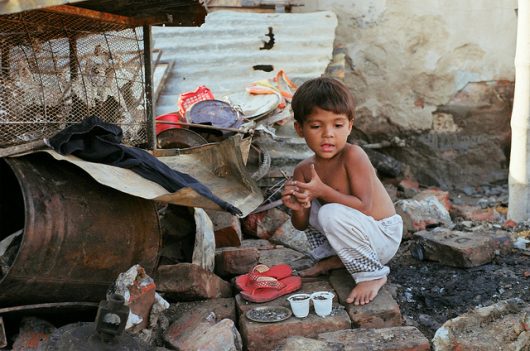
Hunger and food insecurity continue to plague many Asian countries, and Bangladesh is no exception. The country has a population of 160 million. Over 40% of that population lives on less than one dollar per day and struggles with food insecurity. A stagnating economy, rising inflation and unpredictable natural disasters all contribute to hunger in Bangladesh. As the nation’s population grows, so does its rates of hunger and malnutrition.

Malnutrition is extremely prevalent in Bangladesh, particularly among children and pregnant women. In 2015, worldhunger.org reported that 51% of pregnant women in Bangladesh do not consume adequate amounts of vitamin A. The site also reported that over 40% of adolescent girls are iron deficient and anemic. Bangladesh also has a high wasting and stunting rate, both of which stem from malnutrition and can permanently inhibit a child’s growth.

Battling Hunger Through Education

In 2010, USAID began the Feed the Future initiative, an ongoing program that fights back against hunger and malnutrition. The program operates by equipping farmers with the tools and the knowledge to increase their crop yields. The initiative consists of training seminars to teach farmers in Bangladesh better farming techniques and to equip them with better seeds and fertilizers.

Feed the Future has been very effective towards fighting hunger in Bangladesh, as can be seen in the life of Taroni Kanto Shikari, a rice farmer from the southern region of Bangladesh. As a rice farmer, Taroni’s income is dependent upon his yield. After all, Taroni says, “Rice is our life, rice is everything.” In 2010, Taroni attended USAID agricultural training, where he learned how to increase his rice yields with better seeds, fertilizer and techniques.

As a result of Taroni’s USAID-training, his rice production practically doubled and has increased steadily by 18% each season. His rice now requires one-third less fertilizer, reducing his production costs. He is also able to produce more vegetables with these new techniques, significantly increasing nutrient intake for his family. Taroni’s income has dramatically increased, and he can now afford to send his daughter to medical school and buy a bicycle for his son to attend school.

Hunger and malnutrition in southern Asian countries such as Bangladesh are rising issues. The problem will continue to worsen as populations rise and natural disasters ravage the region. Initiatives such as USAID’s Feed the Future program, however, are operating in countries around the world to give farmers like Taroni the tools to fight back against hunger and malnutrition.

– Chasen Turk

Photo: Flickr
March 5, 2017
https://borgenproject.org/wp-content/uploads/borgen-project-logo.svg 0 0 Borgen Project https://borgenproject.org/wp-content/uploads/borgen-project-logo.svg Borgen Project2017-03-05 01:30:192024-12-13 17:56:47Feed the Future Initiative Fights Hunger in Bangladesh
Developing Countries, Education, Global Poverty, Women

Camions of Care for Women and Education

Women and EducationWomen are estimated to menstruate for an average of 3,000 days throughout their lifetimes. This highlights the necessity for adequate access to sanitation and health services for women’s hygiene. A project called Camions of Care, founded by 18-year-old Nadya Okamoto from Portland, has made a monumental impact on relieving incidence of disease and social exclusion among women worldwide.

Since the establishment of Camions of Care, the organization has facilitated the transmission of more than 27,000 period care packages to women globally. A 2013 United Nations Children’s Fund (UNICEF) case study of menstrual hygiene in Burkina Faso and Niger emphasized challenges such as inadequate sanitation facilities, lack of knowledge regarding periods and the cultural impact of stigma regarding menstruation. Addressing these challenges is pivotal in establishing better practices for women’s hygiene. The study also cites that empowering women through education and personal support is imperative to improving local sanitation practices.

A journal published by the Public Library of Science (PLOS) also attributes poor knowledge of healthy menstruation practices to decreased school attendance among girls in Uganda.

The United States Agency for International Development (USAID) reinforces evidence that women and girls without access to satisfactory female hygiene facilities are more likely to miss school and work, and can be subject to higher rates of sexual assault. USAID also attributes improved sanitation facilities to promoting economic development, while also affording women “dignity, privacy and security.”

The non-profit organization also aids partners such as New Avenues for Youth, Central City Concern, Rose Haven, Free Hot Soup and Self Enhancement, Inc. and has impacted women across 19 states within the U.S. through foundations of “advocacy, youth leadership and service”. The Hasbro Community Action Hero Awards program has also recognized Okamoto’s homeless relief organization for exceptional commitment to advancing women’s health.

– Amber Bailey

Photo: Flickr

February 5, 2017
https://borgenproject.org/wp-content/uploads/borgen-project-logo.svg 0 0 Borgen Project https://borgenproject.org/wp-content/uploads/borgen-project-logo.svg Borgen Project2017-02-05 01:30:072024-05-27 23:59:06Camions of Care for Women and Education
Global Poverty, Health, Water

Water Quality in Lebanon

Quality in LebanonLocated along the eastern edge of the Mediterranean Sea and sandwiched between Syria and Jordan, the country of Lebanon seems to thrive in an otherwise dry and arid region of the world. In the Middle East where neighboring countries are strapped for sufficient and renewable water resources, Lebanon is fortunate to have the benefit of a coastal border as well as above adequate rainfall. The greatest strength for the country’s water supply stems not from the water itself, but from the efforts that are being made to improve the water quality in Lebanon.
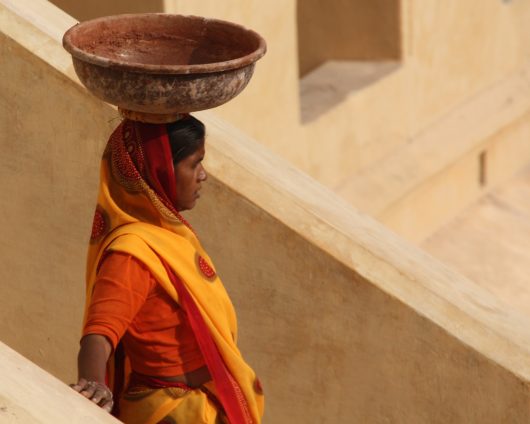
According to the CIA World Factbook, Lebanon has a population of 6.2 million. The majority of this number lives along the Mediterranean coast, with approximately one-third of the population concentrated in the capital city of Beirut and its immediate surrounding areas. Although the area may be rich in the plenitude of beaches, the water quality in Lebanon is impacted by pollution that greatly restricts use and supply.

Most of the country’s water is used for agriculture, which necessitates the use of pesticides and other harsh elements. These toxins seep back into the underground supply through irrigation, causing more pollution to the measure of water quality in Lebanon. Open dumps where sewage and industry waste are deposited into the Mediterranean exist along the entirety of the country’s western sea border. The water that is collected from the sea and river basins is often contaminated with the sewage deposits, while poor filtration can lead to high amounts of sodium and chloride intrusions.

The population concentration in Beirut further erodes the water quality in Lebanon. Water is rationed throughout the country, while inadequate water transportation systems corrode existing pipelines. Many have access to water for only a few hours a day. Those who can afford to buy bottled water do. Those not financially capable of this luxury resort to digging their own wells for water, causing them to consume water from the underground water supply that has been poisoned by agricultural irrigation.

Water-related infections and diseases are common across the country. Diarrhea, dysentery, typhoid and hepatitis have all been reported. Public outrage over the inferior water quality in Lebanon has led to public debate and advocacy work, causing encouraging responses from both the local and international communities.

The World Bank created the Greater Beirut Water Supply Project in 2010 to address the sparse water supply for the high population concentration. The project is planned for completion in 2019 with the goal to provide poor households in south Beirut with water pipeline connectivity. The country’s parliament also passed the National Water Sector Strategy in 2012, a plan to invest in the infrastructure to ensure better water quality in Lebanon and more reliable delivery.

The United States is also involved in the efforts to improve the water quality in Lebanon. In 2013, the Lebanon Water Project was started with the help of the United States Agency for International Development (USAID). This five-year project’s goal is to address infection and diseases caused by poor water quality in 1,200 schools across the country. So far, the project has installed new water tanks and updated filtration systems in more than 400 schools. These organizations and projects are helping to ensure that the Lebanese population, regardless of location, will have better access to clean and affordable water.

– Jeffery Silvey

Photo: Flickr

February 2, 2017
https://borgenproject.org/wp-content/uploads/borgen-project-logo.svg 0 0 Borgen Project https://borgenproject.org/wp-content/uploads/borgen-project-logo.svg Borgen Project2017-02-02 01:30:532024-12-13 17:56:35Water Quality in Lebanon
Education, Global Poverty

Pakistan Reading Project

Pakistan Reading Project
Muhammad Baligh Ur Rehman, Pakistan’s Minister of State for Federal Education, spoke this month of the fundamental importance of reading, citing the first word taught in Quran, ‘Iqra’ which means ‘read.’ The minister’s statement came in response to an education workshop hosted by the Pakistan Reading Project and USAID.

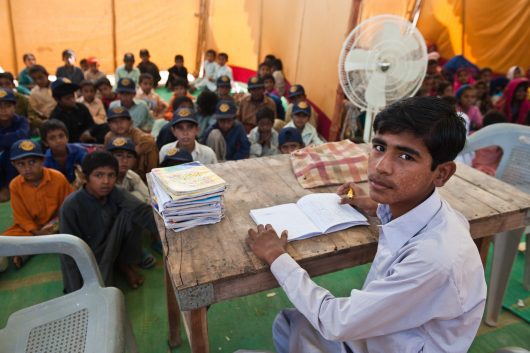
The four-day workshop gathered educators from provincial groups across Pakistan to frame individual Reading Improvement Strategies (RIS) to be finalized and applied to their respective provinces as part of official educational programming. This workshop was just one of many that the Pakistan Reading Project has organized to provide support for provincial and regional departments of education throughout Pakistan. The primary focus is the enhancement reading instruction strategies for children in grades one and two. The $165 million, five-year project is, through such workshops as these, promoting the adaptation and implementation of sustainable policies to improve teaching and education standards.

The Pakistan Reading Project’s strategy is threefold: improve learning environments for reading in the classroom, advance policies and systems for reading instruction and rally community-based support for reading. In doing so, the project intends to reach 1.3 million students in grades one and two with reading interventions, not to mention training more than 23,000 teachers in reading instruction and developing reading curricula for more than 100 collegiate teaching programs.

From scholarships and grants for students pursuing teaching degrees to mobile bus libraries that bring books directly to children and their communities, the Pakistan Reading Program aims to comprehensively integrate reading into the lives of Pakistani children. The holistic approach of incorporating reading into both the institutional and communal lives of Pakistanis ensures the sustainability of the project’s efforts. In this way, children in Pakistan will be developmentally prepared for educational challenges they will face throughout their lives and consequently better able to pursue their goals and break from the cycle of poverty.

– Robin Lee

Photo: Flickr

January 2, 2017
https://borgenproject.org/wp-content/uploads/borgen-project-logo.svg 0 0 Borgen Project https://borgenproject.org/wp-content/uploads/borgen-project-logo.svg Borgen Project2017-01-02 01:30:572024-12-13 17:56:27Pakistan Reading Project
Developing Countries, Technology

Five Space Inventions Helping the Developing World

Five Space Inventions Helping the Developing World
From non-stick frying pans to squirt guns to keeping our homes warm, innovations that originated as space inventions are used each and every day right here on earth. But, some space inventions have become even more useful than ever imagined, and are now helping fight poverty in the developing world. Here is a look at five space inventions and some of the ways each helps to alleviate human suffering.

Baby Blankets

From NASA’s efforts in the 1980s to create a material that could both insulate and cool astronauts facing extreme temperatures during spacewalks came phase-change materials, or PCM’s. Although this material never made it into astronaut’s gloves, the space invention that emerged proved effective for insulating. In 2013, Jen Chen created a company called Embrace Innovations, which makes swaddles and blankets using PCM technology. The Embrace business model is simple: buy a blanket or swaddle for your baby and one is donated to a baby in need in the developing world. To date, 200,000 babies have been reached across 10 countries.

Solar Energy

When NASA began studying Environmental Research Aircraft and Sensor Technology (ERAST) to develop uninhabited aircraft that could sustain long-duration flights without interruption, the need for new innovative solar power sources became paramount. Among the space inventions that resulted: single-crystal silicon solar cells that significantly reduced the cost of solar power. With billions still living without electricity worldwide, solar power has proved effective in helping get clean water, mobile charging, and general illumination to the developing world.

Freeze-dried Food

Through an alliance with Nestle, in the pre-Apollo era, NASA developed a technique for freeze-drying food which made the transportation of numerous orbital delight feasible. Today, freeze-dried food is used to prevent spoilage while providing life-saving nutrient-rich substance to people suffering from hunger in the developing world. For example, Stop Hunger Now, a non-profit based out of Raleigh, North Carolina, operates meal-packing programs in 20 cities worldwide. They ship dehydrated rice and soy meals that are fortified with 23 nutrients and vitamins to not only help solve the problem of hunger in the world but also help provide essential nutrients to those living with a vitamin or mineral deficiency.

Baby Formula

In an effort to alleviate some of the challenges of eating in space while also reducing waste, NASA, with the contracted help of Marietta Laboratories, worked with micro-algae to develop a special three-in-one food source. The invention didn’t work out as space-food; however, Marietta’s research provided the technology used to place nutritional supplements into infant formula and baby food. One in four children around the world suffers from chronic malnutrition that stunts their growth. And, due to poverty and poor nutrition, an estimated 200 million children under age five suffer from under-developed cognition. With nutrient-enriched baby food, organizations helping to fight poverty and malnutrition in the developing world have a better chance to reach children during the most critical stages of development — conception to two years.

Satellites

Some space inventions have not only changed the world but also changed the way we look at it. While the link between satellites, NASA and space are obvious, their ability to help feed those living in the developing world is a bit more complex. Satellites can generate images of vegetation that, in turn, can measure “greenness” and provide real-time rainfall data and imagery. Thus, this space invention helps officials and policy-makers monitor for potential crop failures throughout the developing world. With better prediction capabilities comes better awareness, and with better awareness comes the ability to prevent food shortages. NASA has even teamed up with the USAID through a new environmental monitoring program in West Africa called SERVIR-West Africa. The program plans to enhance the use of data collected from satellite imagery to help fight hunger by helping officials better manage climate issues that affect crop harvesting and nutritional planning.

– Ashley Henyan

Photo: Flickr

January 1, 2017
https://borgenproject.org/wp-content/uploads/borgen-project-logo.svg 0 0 Borgen Project https://borgenproject.org/wp-content/uploads/borgen-project-logo.svg Borgen Project2017-01-01 01:30:202024-12-13 17:56:27Five Space Inventions Helping the Developing World
Education, Global Poverty, USAID

Notre Dame and USAID Team Up to Improve Education in Haiti

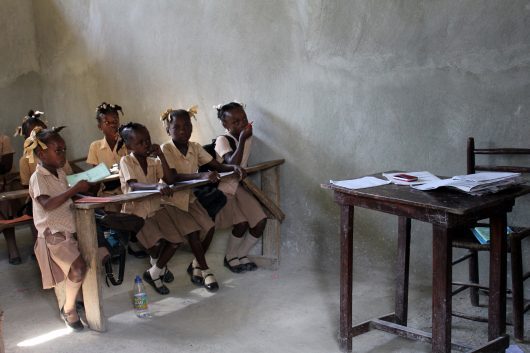
Notre Dame and USAID Team Up to Improve Education in HaitiFor many years, Haiti has not only been the poorest country in the Western Hemisphere, but also one of the most destitute in the world. Rocked by earthquakes, cholera epidemics and hurricanes over the past few years, the country has struggled to improve many facets of life for its citizens. As such, education in Haiti faces many obstacles, including teacher training, accessibility and funding.

Currently, almost 80 percent of teachers have not been exposed to the proper training prior to their tenure as educators, and half of those working in the country’s few public institutions lack basic teaching qualifications.

Public schools are almost non-existent in Haiti – almost 90 percent of establishments are run by religious organizations and non-government entities. Because these schools are private, they require tuition fees in order to operate, which is often a huge burden for families in a country where the average annual income is roughly $800.

More than half of all children do not attend school, and the development of education in Haiti must contend with the staggering fact that over half of Haitian adults are illiterate, and as many as 50 percent of second graders cannot read even one word.

However, in an effort to improve the quality of life for millions around the world, USAID has teamed up with 6 U.S. universities to develop innovative solutions to a variety of problems. By awarding over $3 million in grants to graduate students across the country, USAID has committed to improving the lives of people across the globe.

As part of this effort, the University of Notre Dame was awarded a grant in December 2012 to take on the challenge of literacy in Haiti. The grant will cover 150 schools and as many as 30,000 children and will work in tandem with the Haitian Catholic Church over the next four years. Additionally, USAID has partnered with Haiti’s Ministry of Education to the tune of $6.3 million to improve early-grade reading and writing skills.

The University of Notre Dame is certainly familiar with the daunting task of improving the lives of Haiti’s young students. In 2014, the university’s Alliance for Catholic Education (ACE) launched the “Read to Learn” initiative, aiming to reach 7,000 children in 52 schools by expanding Creole reading programs, the native language of 95 percent of Haitians.

Although recent years have been tumultuous and full of challenges for the country, its people remain resilient and dedicated to improving their communities and the lives of their children. With the help of organizations such as ACE and USAID that are committed to improving literacy and education in Haiti, students throughout the island have hope for better education and a brighter tomorrow.

– Emily Marshall

Photo: Flickr

December 20, 2016
https://borgenproject.org/wp-content/uploads/borgen-project-logo.svg 0 0 Borgen Project https://borgenproject.org/wp-content/uploads/borgen-project-logo.svg Borgen Project2016-12-20 01:30:372024-12-13 17:56:22Notre Dame and USAID Team Up to Improve Education in Haiti
Global Poverty, Poverty Reduction

Poverty in Vanuatu

Free stock photo of alaska, background, bahamas Stock Photo

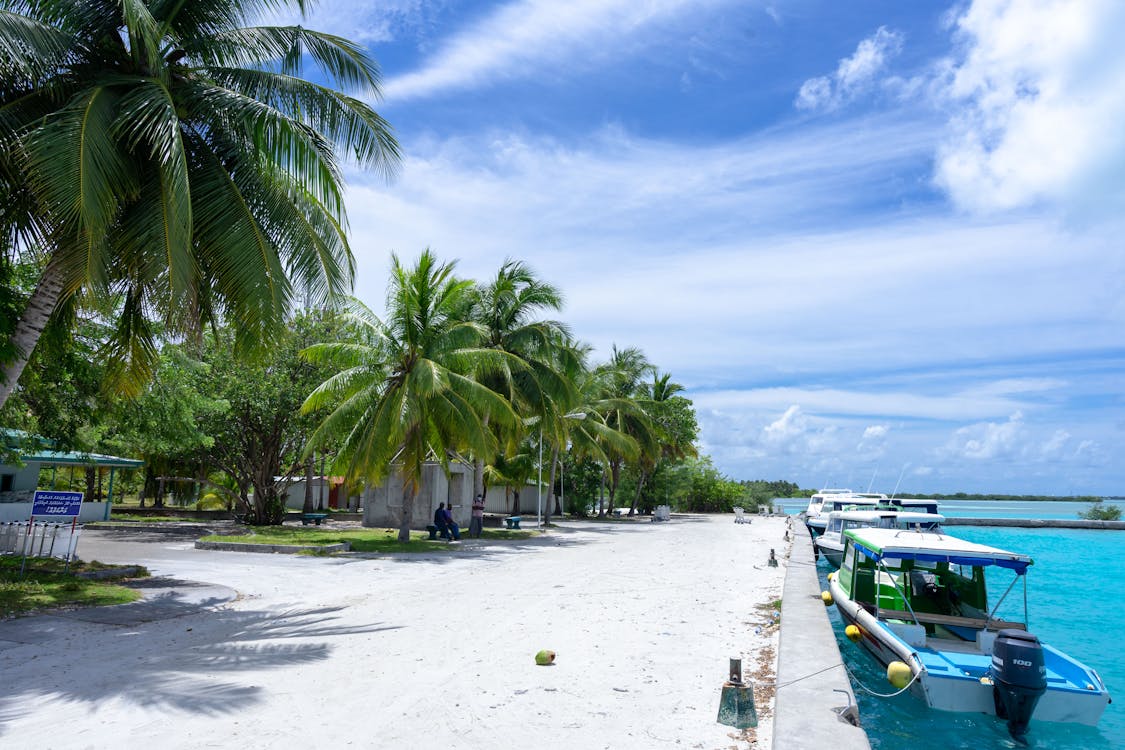
Vanuatu is a country in the southwestern Pacific Ocean that consists of 13 main islands and many smaller ones. With a total population of 318,007, Vanuatu is one of the smallest nations in the world. Despite aggregate economic growth, of those living in this country, approximately 16% lived below the international poverty line, while 4% faced unemployment in 2020. Furthermore, 75% of the population lives in rural areas with limited access to health care and other social amenities.

Causes of Poverty in Vanuatu

Geography plays a key role in understanding poverty in Vanuatu. The country consists of more than 80 islands and is characterized by rugged terrain, volcanic activity and dense tropical forests. The dispersed nature of its islands makes infrastructure development challenging, limiting access to basic services such as health care, education and transportation, particularly in rural areas where the majority of the population resides.

Additionally, the susceptibility to natural disasters, including cyclones and earthquakes, further exacerbates poverty by disrupting livelihoods and infrastructure. Limited arable land (1.8% of the total land) and reliance on subsistence agriculture also contribute to economic vulnerability. These geographic factors collectively contribute to Vanuatu’s high poverty rate.

Even in a relatively small island nation, the plight of people experiencing poverty in urban and rural areas is not easily delineated. Indeed, different areas experience varied iterations of development. For example, from 2006 to 2010, the rate of poverty declined from approximately 20% to 18% in Port Vila, the capital city. However, it increased from approximately 12% to 24% in Luganville during the same period. These discrepancies emerge largely because of geographic location, which determines principal economic activities such as fishing and tourism.

Access to basic foodstuffs also depends on weather patterns and agricultural production, which are especially interdependent on small, shallow islands. These coastal communities are threatened by rising sea levels and increasingly frequent tropical storms, such as Cyclone Pam, which swept through the Pacific in 2015 and destroyed up to 96% of food crops on some of Vanuatu’s southernmost islands.

Solution

Although Vanuatu is susceptible to extreme weather, traditionally sound building practices offer light but flexible protection and help minimize fatalities in emergencies. An increase in telecommunication infrastructure also proved to be life-saving. When Cyclone Pam hit, SMS text alerts notified island residents. In many cases, it was the only effective warning system that allowed citizens to prepare accordingly. This access to modern technology can help growing populations confront increasingly frequent extreme weather movements.

Despite these obstacles, the ADB reports that Vanuatu’s overall poverty rate is low relative to other small nations in the Pacific. Recently, increases in tourism, agricultural production, foreign aid and investment have been reflected in Vanuatu’s positive economic growth. Furthermore, the United States Agency for International Development (USAID) recognizes the delicate geographic circumstances of Pacific islands such as Vanuatu, as nearly 50% of the Pacific Islander population lives within a mile of a coastline. Therefore, USAID is committed to alleviating poverty in Vanuatu by building infrastructure that will withstand pressures from both climate change and extreme weather.

By understanding the unique circumstances of island nations such as Vanuatu, the U.S. and other global economic powerhouses can allocate aid in ways that are both culturally and geographically appropriate, helping to lift these vulnerable populations out of poverty.

– Laurel Klafehn
Photo: Flickr
Updated: May 27, 2024

December 5, 2016
https://borgenproject.org/wp-content/uploads/borgen-project-logo.svg 0 0 Borgen Project https://borgenproject.org/wp-content/uploads/borgen-project-logo.svg Borgen Project2016-12-05 01:30:192024-05-27 14:14:21Poverty in Vanuatu
Global Poverty, Women and Female Empowerment

Gender in Agriculture: From Policy to Practice (GAPP)

GAPP
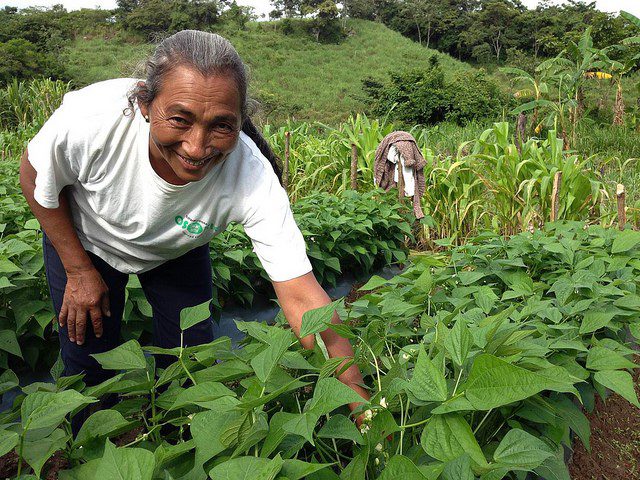
In Honduras, as in many places, gender conceptions influence national prosperity. Reimagining the ways that men and women can contribute to their communities and economies and learning how to share the societal load can stimulate poverty alleviation.

More than 1.7 million people in Honduras live in poverty, and many live on less than $1.25 per day. Many impoverished people live in rural areas. In fact, 46 percent of all Hondurans live in rural areas, where the primary occupation is farming. About 38 percent of all Honduran employment is in agriculture, and many farmers are struggling to make ends meet.

USAID and Feed the Future have made significant strides in assisting the Honduran farming community by improving technologies and management practices to help farmers increase the value of their agricultural products. However, there is still a long way to go, particularly in regard to supporting female farmers.

Income gaps and marginal political representation have crippled Honduran women’s leadership in the agricultural sector, despite the fact that in western Honduras alone, more than 40 percent of farming households are headed by women.

For three years, USAID and Feed the Future have partnered with Lutheran World Relief (LWR) in a project called Gender in Agriculture: From Policy to Practice (GAPP). Aiming to stimulate women’s leadership in Honduran agricultural communities, the program is training female farmers in leadership, public speaking and investing. Its hope is that as female farmers become more involved in local political processes, they will gain access to public funding and loans that tend only to benefit male farmers.

One recent GAPP success is a municipal agreement that part of the civic budget reserved for gender activities be specifically applied to women-led agricultural enterprises.

In addition to empowering female farmers in Honduras to demand their own rights, GAPP also funds programs to educate male leaders about the importance of gender equity in agriculture.

Using the concept of “new masculinities,” GAPP teaches male community members to appreciate women’s crucial role in the agricultural sector. According to one male GAPP advocacy training participant, Maximo Mejía, “Being a man isn’t, as they say, being a big shot, but understanding and seeking equality with your partner.”

While the provision of funding and new technologies does alleviate the difficulties faced by female farmers in Honduras, helping people rethink gender roles and stereotypes will help ensure that economic stagnation dissipates.

Feed the Future continues to train women to grow home gardens, farm fish and utilize the latest farming technologies, while GAPP teaches female farmers in Honduras how to use their voices to gain the civic support they need.

At the same time, Honduran men are relearning not only women’s roles in their economy, but also their own roles in caregiving and family health. This mutual empowerment of men and women will help break the poverty cycle in Honduras.

– Robin Lee

Photo: Flickr

November 30, 2016
https://borgenproject.org/wp-content/uploads/borgen-project-logo.svg 0 0 Borgen Project https://borgenproject.org/wp-content/uploads/borgen-project-logo.svg Borgen Project2016-11-30 01:30:282024-12-13 17:56:10Gender in Agriculture: From Policy to Practice (GAPP)
Foreign Aid

Camp Hope: A Safe Haven For Thousands

Camp Hope
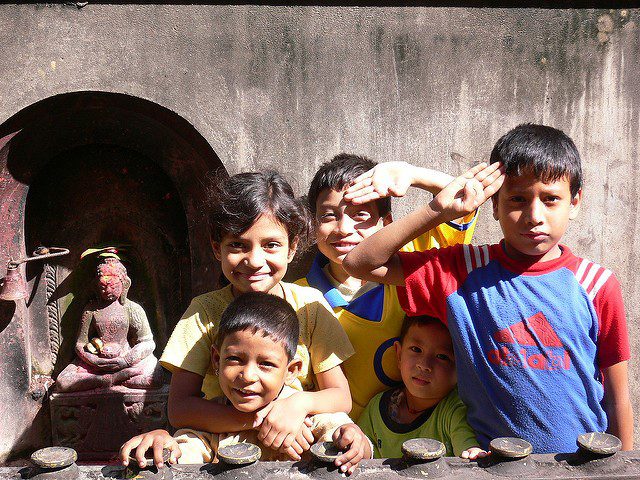
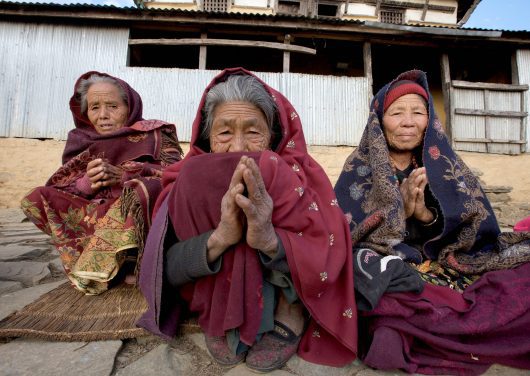
Nepal’s Camp Hope is a privately and publicly funded safe haven for displaced families from the Sindhupalchowk district north of Kathmandu, Nepal. Camp Hope spans one square kilometer and is made up of a series of large tents. The tents, which were provided by the U.S. Agency for International Development (USAID), have enough strength to withstand the annual monsoon season in Nepal. USAID assisted Nepal providing shelter and protection for 310,000 Nepalese people displaced by earthquakes.

Nepal’s Camp Hope was made possible thanks to the combined efforts of USAID and Sangeeta Shrestha. Shrestha is the camp founder and runs a world-class boutique heritage hotel called Dwarika. Shrestha had a great deal of trouble finding a location for Camp Hope because the local government would not relinquish any land to the cause. Thankfully, Shrestha says, “a local youth club came offering their football ground, so here we are.”

In order to make Nepal’s Camp Hope possible, Shrestha has enlisted numerous volunteers and specific members of her hotel staff. Certain volunteers are in charge of checking and registering every individual before they are permitted access to the camp. The engineers and technicians who work in hotel Dwarika are responsible for building the many tent structures that make up Nepal’s Camp Hope.

Shrestha and her hotel supply Camp Hope with food. Camp Hope is striving to meet the emotional and social needs of the thousands of displaced individuals. In order to accomplish this feat, Camp Hope provides spaces for prayer, tents for creating crafts and has built a local school with 83 students currently enrolled. All of these programs help Camp Hope residents slowly recover from the tragic earthquake that changed their lives.

A devastating earthquake ripped through the Sindhupalchowk district on April 25, 2015. Fortunately, 500,000 families managed to survive despite the fact that their villages had been reduced to rubble. Those 500,000 families equated to approximately 88 percent of the dwellings in that district.

The earthquake was the worst natural disaster in Nepal in the last 80 years. Unfortunately, Nepal would suffer a second earthquake only 17 days later, followed by a series of aftershocks. Both of the earthquakes combined resulted in 6,200 deaths in Nepal alone, over 14,000 injuries across the country, and massive landslides that engulfed over 130,000 homes. According to the U.N., 8 million people were said to have been affected.

This is why Nepal’s Camp Hope is viewed as such a pivotal sanctuary for everyone who is a part of it. The overall atmosphere and environment is filled with laughter, conversation, activities and interaction between the residents.

The residents give vitality to Camp Hope, which truly feels like a unified community within a village. Although Camp Hope is a wondrous place for displaced individuals, the main mission is to rebuild the villages that were destroyed by the earthquakes. The U.S. and Nepal’s governments are working together to help rebuild the communities that were affected.

It was decided at the International Conference on Nepal’s Reconstruction that U.S. funding for emergency relief and recovery efforts would be raised to $130 million.

Part of that funding will help establish 1,000 temporary educational centers for misplaced children. Not enough can be said about the valiant efforts put forth by the Nepalese government, the U.S. and Camp Hope. Millions of people have been positively affected and stronger communities will be built in the future.

– Terry J. Halloran

Photo: Flickr

November 28, 2016
https://borgenproject.org/wp-content/uploads/borgen-project-logo.svg 0 0 Borgen Project https://borgenproject.org/wp-content/uploads/borgen-project-logo.svg Borgen Project2016-11-28 01:30:452024-12-13 17:55:57Camp Hope: A Safe Haven For Thousands
Aid, Aid Effectiveness & Reform, Global Poverty, USAID

Studies Find Americans Overestimate Foreign Aid Spending

Foreign Aid Spending
Much of what Americans believe about foreign aid spending is wrong. A recent Kaiser Family Foundation poll of 1,505 people found most couldn’t accurately place the percentage of its federal budget the U.S. spends on foreign aid. The average amount they guessed is 26 percent; the answer is less than 1 percent. Only one in every 20 people answered the question correctly.

Where do these misconceptions come from?

The U.S. spends more in net amount than any other country on foreign aid; the total came to some $32 billion in 2014. However, when looking at aid spending as a percentage of gross national income (GNI) , the amount the country and residents abroad take in as income, the U.S. spends a mere 0.19 percent of the wealth it receives each year in aid.

The American contribution falls flat behind larger benefactors like Sweden which donates 1.1 percent of its GNI, or Luxembourg at 1.07 percent and Norway at 0.99 percent.

The misconceptions of Americans regarding foreign aid are showing no signs of clearing up on their own. Another poll conducted by WorldPublicOpinion.org in 2010 found the median estimate Americans believe their country spent on foreign aid was 25 percent. When the poll asked them what would be an “appropriate” amount, the median answer was 10 percent.

These findings might even be humorous if so many people around the world weren’t living amid crushing levels of poverty. The erroneous views Americans hold of foreign aid spending have a direct impact on millions of people who struggle each day with hunger and a lack of economic opportunities.

Americans also host conflicting views regarding foreign aid based on their party affiliation. A survey conducted by yougov.com in 2016 revealed 49 percent of Americans identifying as Democrats believed U.S. aid should go to the poorest countries, while 59 percent of those identifying as Republicans believed aid should go to countries who support U.S. foreign policy.

Overall, 39 percent of Americans believed in aid for poor countries and 41 percent believed aid should be directed based on foreign policy support.

Our misconceptions of foreign aid influence how we think about the topic. In the Kaiser Family Foundation poll, 56 percent of those interviewed believed the U.S. spends too much on foreign aid.

However, when presented with the actual situation, namely the fact that the U.S. spends less than 1 percent of its $4 trillion federal budget on foreign aid, the poll found the number of Americans who think the U.S. is overspending on the aid dropped to 28 percent.

The wording of the questions also makes a difference. When the poll posed the question to Americans, “Do you think the U.S. is now spending too much, too little, or about the right amount on foreign aid?” 56 percent of respondents said too much.

However, when researchers modified the question to ask, “Do you think the U.S. is now spending too much, too little, or about the right amount in efforts to improve health for people in developing countries?” the percentage of those saying too much dropped to 28 percent.

Despite perceptions of corruption, elected officials tend to act in accordance with public opinion when faced with overwhelming support for spending measures. By dispelling the myths surrounding U.S. foreign aid spending, aid legislation will face less opposition as more Americans come forward to support it.

– Will Sweger

Photo: Flickr

November 26, 2016
https://borgenproject.org/wp-content/uploads/borgen-project-logo.svg 0 0 Borgen Project https://borgenproject.org/wp-content/uploads/borgen-project-logo.svg Borgen Project2016-11-26 01:30:462024-12-13 17:55:51Studies Find Americans Overestimate Foreign Aid Spending
Page 72 of 92«‹7071727374›»

Get Smarter

  • Global Poverty 101
  • Global Poverty… The Good News
  • Global Poverty & U.S. Jobs
  • Global Poverty and National Security
  • Innovative Solutions to Poverty
  • Global Poverty & Aid FAQ’s
Search Search

Take Action

  • Call Congress
  • Email Congress
  • Donate
  • 30 Ways to Help
  • Volunteer Ops
  • Internships
  • Courses & Certificates
  • The Podcast
Borgen Project

“The Borgen Project is an incredible nonprofit organization that is addressing poverty and hunger and working towards ending them.”

-The Huffington Post

Inside The Borgen Project

  • Contact
  • About
  • Financials
  • President
  • Board of Directors
  • Board of Advisors

International Links

  • UK Email Parliament
  • UK Donate
  • Canada Email Parliament

Get Smarter

  • Global Poverty 101
  • Global Poverty… The Good News
  • Global Poverty & U.S. Jobs
  • Global Poverty and National Security
  • Innovative Solutions to Poverty
  • Global Poverty & Aid FAQ’s

Ways to Help

  • Call Congress
  • Email Congress
  • Donate
  • 30 Ways to Help
  • Volunteer Ops
  • Internships
  • Courses & Certificates
  • The Podcast
Scroll to top Scroll to top Scroll to top