• Link to X
  • Link to Facebook
  • Link to Instagram
  • Link to TikTok
  • Link to Youtube
  • About
    • About Us
      • President
      • Board of Directors
      • Board of Advisors
      • Financials
      • Our Methodology
      • Success Tracker
      • Contact
  • Act Now
    • 30 Ways to Help
      • Email Congress
      • Call Congress
      • Volunteer
      • Courses & Certificates
      • Be a Donor
    • Internships
      • In-Office Internships
      • Remote Internships
    • Legislation
      • Politics 101
  • The Blog
  • The Podcast
  • Magazine
  • Donate
  • Click to open the search input field Click to open the search input field Search
  • Menu Menu

Tag Archive for: USAID

Information and news about mobile technology

Posts

Foreign Aid, Global Poverty

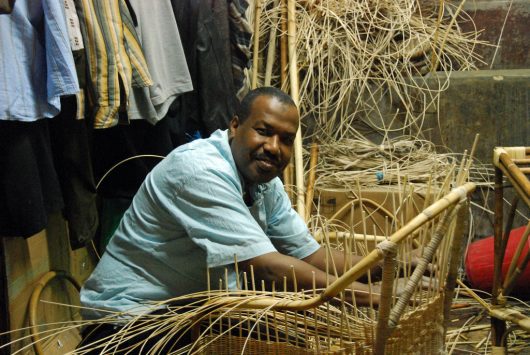
Foreign Aid for Tanzania

Foreign Aid for Tanzania
The United Republic of Tanzania, located in the southeastern great lake region of the African continent, has received foreign aid from the United States since around 1961. That year, John F. Kennedy passed the Foreign Assistance Act, which formed USAID, and began a new era of global cooperation.

The then recently independent nation of Tanganyika teamed up with USAID in an effort to increase the number of educated workers in public service. A few years later, in 1964, Tanganyika and the nation of Zanzibar united to form the country now known as Tanzania.

Over the decades that would pass, the United States maintained an important role providing foreign aid for Tanzania through USAID.

From efforts in 1973 to improve the lives of Tanzania’s poorest through agricultural innovation and funding to combating the rise of HIV/AIDs in the 1980s, USAID has been involved every step of the way.

Today, Tanzania is one of Africa’s fastest growing economies. Positive trends took off in 2013 when Tanzania experienced record GDP growth of 7.3 percent, an increase from the year before of 6.9 percent. Things are looking up with growth expected to continue at least seven percent a year for the foreseeable future thanks to a support from public investment in infrastructure, energy, and transportation.

While this progress is an undeniable success, there is still a lot of work to be done for the Tanzanian people. Poverty persists as a serious issue afflicting the populace, with 46 percent of people living on $1.90 per day. Agriculture, which employs 75 percent of the population, along with empowerment of women and youth are essential to continued growth.

Tanzania has remained a recipient of United States Foreign Assistance for a long time thanks to manageable rates of ethnic tension, political stability and sustained economic growth. As the largest contributor of foreign aid for Tanzania, the United States must maintain its funding and support of the African nation in order to assure the current goal of middle-income status by 2025.

– Aaron Walsh

Photo: Flickr
November 25, 2016
https://borgenproject.org/wp-content/uploads/borgen-project-logo.svg 0 0 Borgen Project https://borgenproject.org/wp-content/uploads/borgen-project-logo.svg Borgen Project2016-11-25 01:30:522024-12-13 17:56:12Foreign Aid for Tanzania
Global Poverty

Saving Mothers and Reducing Maternal Mortalities in Africa

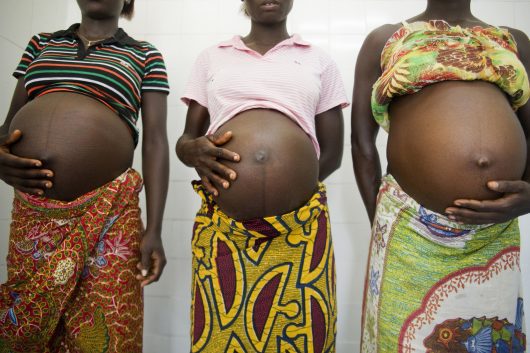
Saving Mothers, Giving Life Reduces Maternal Mortalities in Africa
Almost every two minutes, a woman dies from preventable causes during pregnancy or childbirth. Delays in seeking care, reaching care and receiving care are the primary causes of neonatal and maternal mortalities in Africa. Saving Mothers, Giving Life is a public-private partnership launched by U.S. Secretary of State Hillary Clinton in 2012 as a five-year initiative to reduce avoidable maternal mortalities in Africa.

For every 1.6 million annual births in Uganda, almost 6,000 women and 34,000 newborns do not survive. In fact, approximately one in 44 Ugandan women will die due to maternal-related complications. These dangers are comparably high in Zambia and Nigeria, as well as in other parts of Africa.

Saving Mothers, Giving Life (SMGL), in coordination with the Ugandan and Zambian governments, addresses this problem by improving supply systems and better equipping health care facilities, providing training to enhance the quality of delivery and emergency response services, mobilizing communities to demand better delivery and family planning services and advancing communication and transportation systems which render health care facilities more accessible.

Since SMGL’s inception, Ugandan institutional maternal mortalities have decreased by 45 percent, and the number of cesarean sections has increased by 31 percent. Stillborn and perinatal mortality rates are down 5 percent, while neonatal mortalities have dropped 6 percent. Similar dramatic success has been recorded in Zambia.

SMGL’s remaining two-and-a-half years will be dedicated to reducing maternal and infant mortalities in Nigeria, a nation which alone accounts for 25 percent of newborn deaths and 14 percent of maternal deaths worldwide. USAID recently pledged $18 million to SMGL toward efforts in Nigeria’s Cross River State.

Hopefully, the rapid results that Uganda and Zambia experienced following SMGL involvement indicate the kind of progress the Cross River State can anticipate over the next two years. With the continued dedication of initiatives like SMGL, it seems likely that maternal mortalities in Africa will become increasingly rare.

– Robin Lee

Photo: Flickr

November 23, 2016
https://borgenproject.org/wp-content/uploads/borgen-project-logo.svg 0 0 Borgen Project https://borgenproject.org/wp-content/uploads/borgen-project-logo.svg Borgen Project2016-11-23 01:30:352024-12-13 17:56:09Saving Mothers and Reducing Maternal Mortalities in Africa
Development, Global Poverty

Improving Maternal and Child Health Through Innovations

Improving Maternal and Child Health
The problem of poverty is not too big to tackle, but it is a huge issue. Chief Strategy Officer and Vice President of Strategy and Learning at PATH, Amie Batson, believes the answer is innovation, and she is especially optimistic about innovations geared toward improving maternal and child health. She worked with the United States Agency for International Development (USAID) on its Child Survival: Call to Action initiative that “challenges the world to reduce child mortality.”

This initiative united the governments of India, Ethiopia and the U.S. to work with UNICEF toward the goal of making sure every child reaches his or her fifth birthday. By 2035, Child Survival: Call to Action strives to reduce the number of deaths before age 5 to only 20 in every 1,000.

“We have the tools, the treatments and the technology to save millions of lives every year, and there is no excuse not to use them,” said UNICEF Executive Director Anthony Lake. He also stated that countries must focus on “scaling-up coverage of high-impact, low-cost treatments, sparking greater innovation and spurring greater political will to reach the hardest-to-reach children.”

One such low-cost practice proven to be effective in improving maternal and child health is “kangaroo mother care.” This practice involves immediate and prolonged skin-to-skin contact between mother and child after a child is born. Research shows that this contact results in exclusive breastfeeding, which is especially important for children in developing countries. It also helps with thermal regulation and creates a psychological connection between mother and child. It is a simple change with lasting impact.

Many other notable innovations involve giving women access to family planning. Sayan Press produces an injectable contraceptive available in small doses through an easy-to-use injection device. Its availability and ease of use allow community-level workers to hand it out, thus expanding its accessibility.

Batson encourages nonprofits and governments alike to continue the search for innovators as a way of reducing the number of preventable deaths among women and children.

“Local innovators have incredible ingenuity and capacity to drive ‘frugal’ innovations—low-cost, life-saving innovations tailored to local needs,” she said, encouraging countries to look within for their solutions.

Through the collaboration of organizations like USAID and PATH, it has been shown that even as few as 11 innovations can make a significant difference. There is much hope for the future of women and children’s health, and the best place to start is here.

– Rebecca Causey

Photo: Flickr

November 21, 2016
https://borgenproject.org/wp-content/uploads/borgen-project-logo.svg 0 0 Borgen Project https://borgenproject.org/wp-content/uploads/borgen-project-logo.svg Borgen Project2016-11-21 01:30:462024-12-13 17:56:08Improving Maternal and Child Health Through Innovations
Education, Global Poverty, Technology

The Rise of Online Education in Developing Countries

Online Education in Developing Countries
In 2012, Battushig Myanganbayar, a boy from a Mongolian village, became one of only 340 students out of 150,000 to earn a perfect score in an MIT Circuits and Electronics class. That class was the first Massive Open Online Course — a free mode of accessible international online education offered at MIT.

Stories like Myanganbayar’s are certainly inspiring, but access to online education in developing countries isn’t the norm. Most MOOC users are educated, wealthy and employed. However, MOOCs present incredible opportunities to students around the globe. Consequently, the United States Agency for International Development (USAID) and EducationUSA have taken the initiative to raise awareness about and increase access to MOOCs and online education in developing countries.

USAID partnered with Coursetalk in 2014 for the Advancing MOOCs for Development Initiative (AMDI) to raise awareness about MOOC opportunities in populations that could benefit from them the most, such as unemployed and uneducated women. Through establishing relationships with NGO, college, university, business or foundation communities, USAID will work toward increasing enrollment in MOOCs in developing countries.

The Technology and Social Change Group (TASCHA) at the University of Washington’s Information School and nonprofit development organization IREX are also involved in the initiative to help conduct research in Columbia, the Philippines and South Africa.

Another organization called EducationUSA — a network of student advising centers to support higher education around the world — is bringing educational opportunities into the classrooms of students who wouldn’t have access to them otherwise. Through the support of the Bureau of Educational and Cultural Affairs, EducationUSA has hosted impactful MOOC camps hosted by Fulbright alumni and U.S. embassy staff. MOOC camps are free, open to the public and occur in more than 60 countries.

MOOCs have pros and cons. The largest complaint about MOOCs is that it could be considered “cultural imperialism” that stunts the growth of a country’s organic progress. Some argue that bringing elite education from the developed world offers a short-term solution to a select group of people in the developing world. As a result, MOOCs inhibit the progress of the long-term goal to improve a country’s education system.

Despite the obvious downsides to MOOCs, one might consider them a temporary necessary evil. One key example where this is true is Kepler University in Rwanda that combines online learning with in-person seminars. Eventually, graduates from Kepler will go on to be the well-prepared educators for the next generation as well as innovators and politicians who are integral to the development of Rwanda.

In support of online education in developing countries, Bill Gates has said that he believes in a “future in which world-class education is only a few taps away for anyone in the world.” With the rapid growth of MOOCs and the support they are receiving from U.S. foreign aid programs, it looks like the future is now.

– Sabrina Yates

Photo: Flickr

November 21, 2016
https://borgenproject.org/wp-content/uploads/borgen-project-logo.svg 0 0 Borgen Project https://borgenproject.org/wp-content/uploads/borgen-project-logo.svg Borgen Project2016-11-21 01:30:262024-06-10 03:10:28The Rise of Online Education in Developing Countries
Aid, Global Poverty

USAID and Coca-Cola: Improving Watershed Management

Watershed Management
To expand the Water and Development Alliance, Coca-Cola and USAID are donating a combined investment of $22 million to provide safe water and sanitation to communities throughout Africa, Asia, Latin America and the Middle East. Coca-Cola and USAID, through WADA, act in 22 countries worldwide including 16 countries in Africa.

The Water and Development Alliance hosts volunteers in the local communities to participate in watershed management. Keeping the locals involved in the process of establishing improved attitudes and behaviors promotes the importance of maintaining positive health benefits, such as better hygiene and sanitation. This also advocates for smart water usage, thus preventing wastefulness and ultimately protecting the environment while providing economic benefits.

The Global Environment and Technology Foundation encourages the development of new projects and continued progress as the partnership manager. GETF is a non-profit from Washington, D.C. that aims to build partnerships, such as the one between Coca-Cola and USAID, to aid humanity. The three core issues at the center of GETF’s mission are safe water and sanitation, clean energy and climate change reversal, as well as overall sustainability for communities around the world.

In places like Chimoio, Mozambique, the TextAfrica water treatment plant received the funding for restoration and expansion as the facility now benefits 25,000 people in the surrounding area. Partnerships between public and private entities can do a lot of good with adequate funding and oversight to fix problems anywhere in the world. Successful sanitation and hygiene education campaigns are spreading to over one million people across West Java, Indonesia through another WADA-supported project.

The partnership is not limited to Coca-Cola, USAID and GETF. A local non-profit in Kano State, Nigeria called Women Farmer’s Advancement Network helped implement eased water and sanitation access directly in their communities. Also, in Tarija, Bolivia, stakeholder forum PROAGUA raised support for improved water resources and watershed management to the benefit of 150,000 living within the large basin area.

It is important to remember that joining for a common purpose can aid in the fight against poverty, hunger and illness. GETF works to ensure that more successful partnerships such as this may form and make a difference in the lives of real people everywhere. Coca-Cola and USAID continue to strengthen their bond and find new innovative ways to bring basic needs to those struggling to maintain their way of life.

– Aaron Walsh

Photo: Flickr
November 19, 2016
https://borgenproject.org/wp-content/uploads/borgen-project-logo.svg 0 0 Borgen Project https://borgenproject.org/wp-content/uploads/borgen-project-logo.svg Borgen Project2016-11-19 01:30:162024-05-27 23:54:13USAID and Coca-Cola: Improving Watershed Management
Foreign Aid, Global Poverty

Why Foreign Aid in Ghana is a Smart Investment

Foreign Aid in Ghana
As the United States heads into its 2017 fiscal year, it plans to spend $4 billion less on foreign aid than it planned in 2016. Cuts like these may reflect growing fears that foreign aid is at best ineffective, or at worst detrimental. But when the money is funneled into smart investments — as is happening with aid in Ghana — it can benefit everyone, giver and receiver alike.

Foreign aid comes under frequent fire for its long-term effects on recipient countries. Opponents argue that it usually ends up lining the pockets of corrupt bureaucrats, and even when it gets to the people who need it, it depresses local economic development, increases dependency and perpetuates destitution. The standard argument is simple: if a wealthy country is distributing a good for free, local producers of that good cannot possibly compete. They succumb to falling prices and stop producing it. When there are no producers, consumers are forced to rely on foreign aid to obtain it, causing that aid to continue in a self-reinforcing, never-ending cycle.

But aid doesn’t have to be just a matter of giving handouts. Used smartly, foreign dollars can boost struggling economies and help build the infrastructure necessary for continued development. In Ghana, for example, USAID recently partnered with the Ghana Grains Council to carry out the sixth annual Pre-Harvest Agribusiness Forum, which aimed to “foster long-term business relationships, discussions, and the exchange of ideas in order to drive economic growth in Ghana’s agricultural sector.”

Many believe that USAID simply gives free food to the hungry, but the Agribusiness conference is one example of how the agency uses its money much more carefully than that implied. By providing a forum for participants in the agricultural industry to interact, network and share best practices, it is contributing to a more powerful, robust food market that will help decrease dependence on foreign funds. With programs like this, aid in Ghana will not always have to be a reality.

In addition, when poorer countries begin to flourish, the benefits are felt throughout the globe. Half of U.S. exports go to developing nations; more purchasing power in Ghana, therefore means more purchases from Americans. Beyond the trade benefits, economic stability can bring more political stability, so a strong economy in a volatile region can help to keep the area from descending into chaos. When all is said and done, aid in Ghana is good not just for Ghanaians, but for Americans as well.

– Madeleine Read

Photo: Flickr

November 18, 2016
https://borgenproject.org/wp-content/uploads/borgen-project-logo.svg 0 0 Borgen Project https://borgenproject.org/wp-content/uploads/borgen-project-logo.svg Borgen Project2016-11-18 01:30:532024-06-05 04:10:53Why Foreign Aid in Ghana is a Smart Investment
Education, Global Poverty

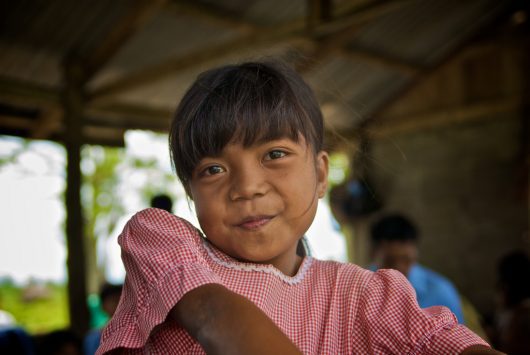
Basa Pilipinas: Childhood Literacy in the Philippines

Basa Pilipinas: Childhood Literacy in the Philippines
The United States Agency for International Development and the Philippines Department of Education collaborated over the last three years to improve childhood literacy in the Philippines through a program called Basa Pilipinas, or “Read Philippines.” Basa Pilipinas aims to enhance reading skills in English, Filipino and other mother tongues for one million children in grades one through three. Begun in January 2013, the $39.7 million program is scheduled to conclude on Dec. 31 of this year.

On Oct. 26, 2016, Trey Hicks of the U.S. Senate Foreign Relations Committee visited several Cebu elementary schools to reiterate a commitment to childhood literacy in the Philippines. Hicks led reading activities for the children and was joined by USAID Office of Education Chief Brian Levey, who remarked: “Education…set[s children] on a path towards making informed and healthy decisions and taking advantage of limitless economic opportunities.” As Basa Pilipinas draws toward a conclusion, its effects on children and education will continue to evince themselves.

Operating at the classroom level, Basa Pilipinas expands access to reading materials. Roughly 8 million copies of teaching and learning materials, including teacher’s guides and textbooks in both English and local dialects, were distributed throughout the Philippines in the last three years.

Likewise, Basa works to improve reading delivery systems. The program assists the Philippines Department of Education in setting valid early grade reading standards and regulating teacher training in the school systems. Providing hands-on professional development to teachers ensures newly established reading standards are met. Modifications such as these at the systemic level establish achievable literacy goals for students and teachers alike.

Teacher training in literacy instruction is perhaps most crucial to the goals set forth through Basa Pilipinas. Almost 13,000 teachers received training on effective reading instruction, and nearly 3,500 Department of Education supervisors and school heads strategized teacher training support and Learning Action Cells facilitation. LACs are a “group-based intervention for improving teaching practice.” Through these programs “colleagues study content and pedagogies together, plan lessons collaboratively, and conduct action research as a group.” LACs are sustainable, low-cost ways to afford ongoing teacher development.

Basa Pilipinas has directly benefitted more than 1.6 million students, and 2 million more have been indirectly influenced. Evaluations of Basa Pilipinas in 2015 revealed the increased fluency of students by an additional nine words per minute as well as a 23 percent advancement in reading comprehension. And because most of the education reforms Basa imposed were on the systemic and teacher-training level, these dramatic improvements should only be the beginning of the progress in childhood literacy in the Philippines.

– Robin Lee

Photo: Flickr

November 16, 2016
https://borgenproject.org/wp-content/uploads/borgen-project-logo.svg 0 0 Borgen Project https://borgenproject.org/wp-content/uploads/borgen-project-logo.svg Borgen Project2016-11-16 01:30:032024-12-13 17:56:05Basa Pilipinas: Childhood Literacy in the Philippines
Foreign Aid, Global Health, Global Poverty

President Obama and the Global Health Security Agenda (GHSA)

Health Security Agenda
On Nov. 4, President Obama signed an executive order advancing the Global Health Security Agenda (GHSA), which the administration started in 2014. As a result, the United States will now prioritize the GHSA on a presidential level.

As part of the GHSA, the United States has joined with 55 different countries, nonprofit organizations and for-profit companies.  The GHSA’s top goals include the improvement of research accountability and outbreak detection, and 22 countries have already begun to evaluate outbreak responses and identify areas to improve upon.

Philippe Douste-Blazy, the under-secretary general of the United Nations, suggests that the WHO needs to focus on outbreak response as one of its five main priorities in order to ensure that the global health goals will be met by 2030.

According to USAID, the “GHSA promotes global health security as a national priority through targeted capacity building activities, such as improving laboratory systems, strengthening disease surveillance, improving biosafety and biosecurity, expanding workforce development, and improving emergency management.”

USAID also proposes to support the GHSA initiative by addressing animal health, human health and the environment. USAID’s Bureau for Global Health Assistant Administrator, Dr. Ariel Pablos Mendez, says that USAID’s attention to animal health is particularly important: 70 percent of new infectious disease outbreaks begin in animals.

WaterAid also celebrates the GHSA’s anticipated role in improving the safety of drinking water, sanitation and hygiene. WaterAid explains that the spread of infectious diseases such as cholera could end with access to safe water.

The GHSA’s intent to combat antimicrobial resistance relates directly to water quality. Access to safe water could prevent up to 60 percent of diarrhea cases. These cases require treatment with antibiotics, and increased use of antibiotics can lead to antibiotic resistance among bacteria.

People and diseases travel rapidly due to the spread of globalization. The CDC summarizes, “A disease threat anywhere can mean a threat everywhere.” The GHSA is designed to detect and prevent this spread of disease. “No single nation can be prepared,” the order declares, “if other nations remain unprepared to counter biological threats.”

– Madeline Reding

Photo: Flickr

November 12, 2016
https://borgenproject.org/wp-content/uploads/borgen-project-logo.svg 0 0 Borgen Project https://borgenproject.org/wp-content/uploads/borgen-project-logo.svg Borgen Project2016-11-12 01:30:362024-05-27 23:54:14President Obama and the Global Health Security Agenda (GHSA)
Global Poverty

Poverty Reduction Through Entrepreneurship

Poverty Reduction Through Entrepreneurship
There are two types of programs most commonly associated with helping the global poor.

The first is government to government aid. The second is a direct service NGO that performs tasks like building wells and distributing medicine. However, another effective way to boost poverty reduction is through entrepreneurial assistance.

There is a persistent impression of the world’s poor as being entirely dependent on others and incapable of improving their own lives. Contrary to this belief, there is a vibrant entrepreneurial spirit in the developing world. After all, given the lack of government support in these regions, citizens have to become creative in order to simply survive. The problem is just that most of these individuals lack the knowledge, skills or financial means to turn their ideas into reality.

The Transformational Business Network (TBN) explains that growing entrepreneurship can be a powerful means of poverty reduction for three main reasons. First, it provides individuals with the tools to improve their own circumstances as opposed to relying on aid from foreign governments or NGO’s. Second, it gives people the means of achieving a sustainable income. Third, it improves overall economic growth which benefits all the citizens of a country.

The TBN identifies microfinancing as a popular means of facilitating entrepreneurship in the developing world. Microfinancing involves providing individuals with small loans, usually a couple hundred dollars, to help them set up micro businesses. Microfinancing has shown a large degree of success with an extremely high loan repayment rate and has grown into a multi-billion dollar global enterprise creating millions of entrepreneurs.

Microfinancing does have its limits. The Carnegie Council identifies two different types of entrepreneurship: opportunity entrepreneurship and necessity entrepreneurship. Opportunity entrepreneurship involves the creation of real businesses that have the capacity for significant growth. Necessity entrepreneurship usually involves self-employed individuals who are barely surviving.

The Global Entrepreneurship Monitor project found that opportunity entrepreneurship is a much more effective way of growing a nation’s economy and lifting entire populations out of abject poverty than necessity entrepreneurship. Microfinancing, however, tends to create more necessity entrepreneurs.

USAID’s PACE initiative is currently engaging in a comprehensive strategy to increase both necessity and opportunity entrepreneurship by partnering with over 40 accelerators, incubators and seed-stage impact investors. According to the PACE initiative website, the idea is “to catalyze private-sector investment into early-stage enterprises and identify innovative models or approaches that help entrepreneurs bridge the” gap between promising enterprises and potential investors.

The PACE initiative also hopes to expand the entrepreneurship knowledge base by partnering with a number of organizations including the Omidyar Network, the Argidius Foundation and Emory University. Together these groups are launching a research project designed to assess the efficacy of accelerator programs, providing these programs with “statistical data and market insight to better inform their own decision-making.”

It’s clear that the future of anti-poverty efforts will and should involve an increased investment in entrepreneurial enterprises.

– James Long

Photo: Flickr

November 10, 2016
https://borgenproject.org/wp-content/uploads/borgen-project-logo.svg 0 0 Borgen Project https://borgenproject.org/wp-content/uploads/borgen-project-logo.svg Borgen Project2016-11-10 06:38:082024-12-13 17:56:02Poverty Reduction Through Entrepreneurship
Global Poverty

At-Risk Youth in Morocco Given Great Opportunity

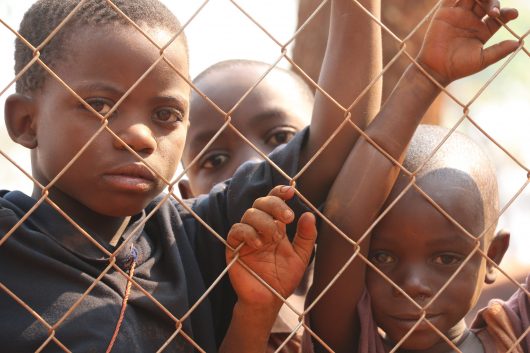
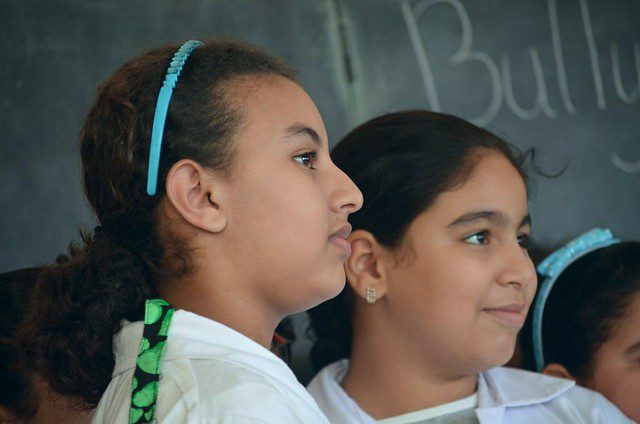
At-Risk Youth in MoroccoYouth facing unemployment in Morocco are extremely vulnerable to a life of crime and drugs and USAID refuses to let this continue.

Issues in the education system have led to dismal circumstances for youth in Morocco, and this government agency is striving to help those already affected by the problems while simultaneously working to solve the root of them.

In the country of Morocco, most students enrolled in the first grade are not predicted to graduate. Drop-out rates are high although 97 percent of children are currently enrolled in school. Moroccan students rank as some of the lowest on international test scores.

Change has become necessary in order for the at-risk youth in Morocco to be properly educated and prepared to provide for themselves and their families.

USAID has partnered with government and nonprofit organizations to implement plans for reform. Research in 2015 suggested that poor and limited teacher training along with a minimal amount of additional reading materials for students were the two main causes of the students’ poor test results.

The Reading for Success-Small Experimentation program has the following three main focuses: a different approach to teaching Arabian phonics, new training guides for teachers and instructors and summer reading activities to cut down on the loss students encounter over the summer months when not in school.

The program began in September 2015 and is set to run until March 2018. It will introduce over 9,000 students in the first and second grade to a new approach to reading, have 180 teachers complete the reformed training and develop effective guidebooks as a resource for teachers, coaches and instructors as they navigate this new approach.

Working even harder to affect real and lasting change, the final goal of the program is to have 800 students participate in the summer reading programs. The Washington Post quoted First Lady Michelle Obama when she said, “research shows that if kids take a break from learning all summer, they not only miss out on new information and skills, they can actually lose up to three months’ worth of knowledge from the previous year.”

The new implementations for summer learning in Morocco will not only help students retain knowledge from the previous year but also equip them for another year of prosperous learning.

But what about the kids who have already finished elementary school?

USAID is also working to help the older youth of Morocco, who make up one-third of the country’s population. Of this one-third, 40 percent do not have jobs and/or are not currently enrolled in school.

The government has partnered with USAID in the cities of Tangiers and Tetouan to provide unemployed youth with vocational training. Their activity, the Favorable Opportunities to Reinforce Self-Advancement for Today’s Youth, began in 2012 and works to increase confidence by training youth in professional skills and giving academic support such as tutoring.

It is doing more than teach skills; this program is giving at-risk youth in Morocco purpose. One student participating in a sewing class in Tangiers told a USAID deputy assistant administrator that “if it wasn’t for this program, [I] would most certainly be on the street selling drugs.”

Morocco is making incredible progress as 12,000 youth are being mentored through this program, and those still enrolled in school are given more and more opportunities for success. The education and vocational skills given to one-third of this nation are sure to positively impact the other two-thirds as well.

– Rebecca Causey

Photo: Flickr

November 8, 2016
https://borgenproject.org/wp-content/uploads/borgen-project-logo.svg 0 0 Borgen Project https://borgenproject.org/wp-content/uploads/borgen-project-logo.svg Borgen Project2016-11-08 05:04:072024-05-27 23:53:48At-Risk Youth in Morocco Given Great Opportunity
Page 73 of 92«‹7172737475›»

Get Smarter

  • Global Poverty 101
  • Global Poverty… The Good News
  • Global Poverty & U.S. Jobs
  • Global Poverty and National Security
  • Innovative Solutions to Poverty
  • Global Poverty & Aid FAQ’s
Search Search

Take Action

  • Call Congress
  • Email Congress
  • Donate
  • 30 Ways to Help
  • Volunteer Ops
  • Internships
  • Courses & Certificates
  • The Podcast
Borgen Project

“The Borgen Project is an incredible nonprofit organization that is addressing poverty and hunger and working towards ending them.”

-The Huffington Post

Inside The Borgen Project

  • Contact
  • About
  • Financials
  • President
  • Board of Directors
  • Board of Advisors

International Links

  • UK Email Parliament
  • UK Donate
  • Canada Email Parliament

Get Smarter

  • Global Poverty 101
  • Global Poverty… The Good News
  • Global Poverty & U.S. Jobs
  • Global Poverty and National Security
  • Innovative Solutions to Poverty
  • Global Poverty & Aid FAQ’s

Ways to Help

  • Call Congress
  • Email Congress
  • Donate
  • 30 Ways to Help
  • Volunteer Ops
  • Internships
  • Courses & Certificates
  • The Podcast
Scroll to top Scroll to top Scroll to top