• Link to X
  • Link to Facebook
  • Link to Instagram
  • Link to TikTok
  • Link to Youtube
  • About
    • About Us
      • President
      • Board of Directors
      • Board of Advisors
      • Financials
      • Our Methodology
      • Success Tracker
      • Contact
  • Act Now
    • 30 Ways to Help
      • Email Congress
      • Call Congress
      • Volunteer
      • Courses & Certificates
      • Be a Donor
    • Internships
      • In-Office Internships
      • Remote Internships
    • Legislation
      • Politics 101
  • The Blog
  • The Podcast
  • Magazine
  • Donate
  • Click to open the search input field Click to open the search input field Search
  • Menu Menu

Tag Archive for: USAID

Information and news about mobile technology

Posts

Developing Countries, Global Poverty, Health

Ways to Fight Ebola in the DRC

Ways to Fight Ebola in the DRCThe Democratic Repulic of the Congo (DRC) has been ravaged by violence and a deadly Ebola epidemic. Thousands have died, however, there may be hope on the horizon. A vaccine and cure for the terrible virus may soon end the years of pain and suffering caused by Ebola. Here are some ways to fight Ebola in the DRC.

Ebola in the DRC

The Congo has dealt with Ebola outbreaks before and managed to contain them before they grew out of control. The current outbreak, however, is proving to be difficult to contain as there have been more than 2,500 cases. Almost 1,800 people have died and the virus is spreading fast. With cases having been confirmed in neighboring Uganda, the World Health Organization says that there is a high risk that Ebola could spread into Rwanda and South Sudan as well. 

Challenges

The main obstacles to containment are a mistrust of doctors and violent conflict. Unfortunately, violent conflicts spill over into clinics where doctors are attacked for providing life-saving treatments for Ebola patients. In addition, a recent study found that almost 25 percent of Congolese people think Ebola is fake due to a lack of trust and the spread of misinformation. Some people even believe that Ebola is a money-making scheme and a way to suppress voters. Unfortunately, distrust means many Congolese avoid formal health care and decline vaccines.

Potential Cure

Scientists have been trialing two new antibody-based treatments. The success of these two treatments has been so great that Ebola may no longer be considered incurable. The two drugs, REGN-EB3 and mAb-114, have both increased survival rates to around 90 percent. REGN-EB3 is a drug invented by the pharmaceutical company Regeneron. mAb-114 is an antibody that was drawn from the blood of an Ebola survivor.

Recently, both treatments were involved in a study to test their effectiveness in comparison with the current drug Zmapp that has a mortality rate of 49 percent. The two new drugs, REGN-EB3 and mAb-114, were both found to have mortality rates under 35 percent. Even more encouraging, the mortality rates for the two drugs drops to below 15 percent when patients are treated as soon as they are infected. A major obstacle in the fight to control the epidemic is that patients wait a long time to seek medical attention. The new more effective treatments could convince people to seek help earlier since their mortality rates are better than the older treatments.

Possible Vaccine

American pharmaceutical company Merck has created an experimental vaccine that has proven to be very effective. Merck uses ring vaccination to vaccinate those who have come in contact with an Ebola patient. Using this method, almost 200,000 people in the DRC and its neighboring countries no longer have to worry about contracting Ebola. The vaccine has given 97 percent protection for those who have taken it. The United States Department of Health and Human Services recently announced that it will fund Merck’s vaccine production, with a $23 million investment signaling good news in the fight to contain (and prevent) Ebola in the DRC.

– Gaurav Shetty
Photo: Flickr


September 20, 2019
https://borgenproject.org/wp-content/uploads/borgen-project-logo.svg 0 0 Kim Thelwell https://borgenproject.org/wp-content/uploads/borgen-project-logo.svg Kim Thelwell2019-09-20 01:30:202024-05-29 23:12:56Ways to Fight Ebola in the DRC
Global Poverty, Poverty, Poverty Reduction

Pressing Freedoms: How a Free Press Reduces Poverty

Free Press Reduces Poverty
Strong governments and effective leadership offer lasting improvements for those living in poverty, as they provide social and economic structure for a nation. Efficiency and transparency of government actions and regulations are the first steps toward protecting individual rights. The promotion of transparent governments leans toward a democratic governing system, where citizens may have the right to elect their officials and representatives. The free press and its contributions to democracy in helping to eradicate poverty may not always be at the forefront of aid organizations’ initiatives. Many organizations, however, do recognize that journalists help provide transparency about the states of governments to the people and that a free press reduces poverty.

What is a Free Press and Who Has One?

A free press means that private and public newspapers, magazines or radio programs have the right to report the news without being controlled by the government. This critical freedom from the government’s powers means that the press may act as the people’s eyes and ears for the shifts and changes within the institutions of power.

Unfortunately, more than a third of the world lives under presses that are not free or media coverage that their governments highly control and censor. In the Reporters Without Borders’ 2019 World Press Freedom Index, it is unsurprising that more developed and economically stable countries find themselves at the top of the ranking. Norway comes in first, followed by Finland, Sweden, the Netherlands and Denmark. Ranking at the bottom are countries with highly restrictive governments or some of the poorest nations, such as Yemen, Syria, Sudan and Turkmenistan.

How Does a Free Press Reduce Poverty?

A free press reduces poverty by allowing for an open exchange of information and opinions among ordinary citizens; there is no need for government clearance to learn about the day to day government actions. Journalism provides transparency which helps decrease the risk of corruption in governments and holds them accountable for their actions. A free press helps provide a channel of information about government actions for public assessment and debate. Citizens can see exactly how governments spend taxes or what revenues from big industries they receive. They can even see inside houses of governments where administrators sign laws. Knowledge about the government and freedom to express opinions without fear empowers ordinary citizens.

Debate and exchanging information and ideas is a foundational component of democratic practices. Free presses allow for free debate among the people and not just the political leaders. While debates among community members may not immediately change laws, the debate itself establishes self-autonomy, because everyone participates in conversations and decisions that affect their lives.

Countries with stronger economies and less poverty require strong and stable governments to utilize their resources and to participate in foreign markets. Strong governments strive to enable the political voices of even the poorest populations. Improving governance includes maintaining fair laws, respecting human rights and combating corruption. By promoting all of these, a free press can reduce poverty.

Who is Fighting for Freedom of the Press?

The USAID is one organization that has recognized how a free press reduces poverty. By strengthening journalistic skills, building economic self-sustainability of media outlets and working to legally protect press independence, USAID promotes freedom of the press in 35 countries. The organization’s work in Afghanistan produced a national network of 50 Afghan-owned and operated radio stations.

Reporters Without Borders advocates for a free press in order to promote democracy, development and individual empowerment. It helps journalists gain access to equipment anywhere from bulletproof vests to insurance. Working in countries across five continents, the organization monitors a great number of countries’ treatment of journalists and their rankings of press freedom.

The Windhoek Declaration

Some countries, like Namibia, decided to take matters into their own hands. The 1991 Declaration of Windhoek on “Promoting an Independent and Pluralistic African Press” helped establish a foundation for a free press in Africa by joining the forces of journalists, editors and media owners across the continent. The Windhoek Declaration helped spark the establishment of the Media Institute of Southern Africa (MISA). MISA’s continental email alert system hoped to make the world aware of violations of media freedom as soon as they occurred, bringing national attention to the power and importance of journalists. Inspired by the success of the Windhoek Declaration, similar support for free press like the Declaration of Santiago in Chile, the Declaration of Sana’a in Yemen and the Declaration of Sofia in Bulgaria, soon followed.

The globe recognizes the Windhoek Declaration and leaders of the conference even consulted with the U.N. for the implementation of International Press Freedom Day every May 3rd. The Declaration has inspired and allowed journalists to start their own independent newspapers like MediaFax in Mozambique and The Monitor in Malawi.

The purpose of a free press is to empower ordinary citizens, no matter their economic status. By providing honest information, journalists help hold political leaders accountable and decrease government corruption. Through the democratic power of debate, even the poorest populations can have a political voice.

– Maya Watanabe
Photo: Flickr

September 19, 2019
https://borgenproject.org/wp-content/uploads/borgen-project-logo.svg 0 0 Kim Thelwell https://borgenproject.org/wp-content/uploads/borgen-project-logo.svg Kim Thelwell2019-09-19 07:30:502024-05-29 23:10:28Pressing Freedoms: How a Free Press Reduces Poverty
Global Poverty, Poverty, Poverty Reduction

15 Facts About Poverty in Afghanistan

Poverty in Afghanistan
Afghanistan continues to be a major focus of U.S. foreign policy. Yet, while there are hundreds of news articles about the country’s politics, there is less information about the country’s people. Below are 15 facts about poverty in Afghanistan to provide insight into the problems Afghanistan’s poorest citizens face every day.

15 Facts About Poverty in Afghanistan

  1. About 90% of Afghans Struggle to Live on Their Current Income: Over the past decade, poverty in Afghanistan has risen to record-breaking heights. From 2008 to 2018, the number of Afghans reporting that their current income was insufficient to support their family grew from 60% to 90%. Keep this number in mind when reading the other 15 facts about poverty in Afghanistan. These facts apply to 90 percent of the country’s citizens.
  2. Well-being is at Global Record Lows: Poverty not only affects people economically or physically – there is an emotional toll as well. According to a 2018 Gallup poll, only 36% of Afghans said that they smiled or laughed the previous day. When asked to rate their lives on a scale of 0 (worst) to 10 (best), Afghan citizen responses averaged 2.7. Most recently, in 2016, Afghan citizen responses on the same question averaged 4.2.
  3. Education has Become a Luxury for Children: A 2018 U.N. report noted that more than 2 million children aged 6-14 worked to support their families. With an average of 58% of Afghan families unable to afford food, full-time work becomes a higher priority than education. In February 2019, UNICEF, the U.N. and the government of Afghanistan launched a long-term education response program projected to help half a million children in the country. The program hopes to raise an additional $35 million within the next year to help support education infrastructure and secure teachers, supplies and similar needs for schools across the entire country.
  4. Undereducated Afghan Citizens are the Most Vulnerable: Undereducated citizens suffer the most during economic downturns in Afghanistan, with an unemployment rate of 8% and underemployment (employed, but unable to cover living costs) of 41%. With the difficulty of getting an education, the cycle of poverty continues for many families.
  5. Armed Conflict is the Top Reason for Poverty: Poverty in Afghanistan has direct links to increases and decreases in Taliban control in the country. When the Taliban increased its influence in Afghanistan between 2012 and 2017, the number of citizens living in poverty increased from 38% to 55%. The World Bank believes that political settlement with the Taliban would be an important step forward to attract the return of capital and skilled workers from overseas.
  6. Youth Migration is a Problem: Since 2015, about 146,000 young Afghan workers moved to Europe per year in hopes of starting a better life. The government still struggles to keep young people in the country and implemented a 2015 initiative to help the 700,000 entrants into the Afghan workforce find jobs. However, the program was unsuccessful in generating enough funding to make an impact.
  7. Displacement: In 2018, conflict and drought displaced more than 550,000 new Afghan citizens. Between displacement and a dwindling young professional population, it is difficult for Afghanistan to keep skilled workers to further its economy.
  8. Government Corruption Fuels the Fire: The economy in Afghanistan grew only 2% in 2018. The World Bank has reported that the sluggish economy is a direct result of government corruption. This means aid to struggling areas is often delayed or never arrives and economic growth benefits only the country’s highest elite (and former warlords).
  9. Iran Affects Afghanistan’s Poverty: Approximately 2.5 to 3 million Afghans left home to pursue better economic opportunities in Iran. These migrants have been a vital part of the economy as they send their Iranian wages home to their families. Unfortunately, as the Iranian economy has crashed, so have the available wages. The rial lost approximately 70% of its value, drastically decreasing the ability of workers to support their families back home.
  10. Programs Struggle with a Lack of Information: Due to conflicts and a lack of resources, it has been 40 years since the Afghan government has been able to conduct a proper census or any similar survey of the population. This makes planning and poverty initiatives difficult, as there is no data available to support decisions on where to invest aid.
  11. Afghanistan Ran on an “Artificial” Economy: From 2011 to 2014, Afghanistan had an artificial economy, meaning that economic growth and development were wholly reliant on external foreign aid with little to no internal input. With foreign aid and troops dropping after 2014, the country has struggled to reignite its economy.
  12. Research Gives Hope: The World Bank implemented a test program in 2015 to help improve economic outcomes for poor citizens. The program provided households in the Balkh province with a temporary stipend and financial coaching. The results showed a 20% decrease in the number of households below the national poverty line, a 30% increase in consumption, a 17% decrease in depression among women and a 53% reduction in debt. The World Bank published these findings in 2019, providing the first-ever evidence of similar targeted programs for poor areas in conflict regions.
  13. Trends Predict Further Growth: Based on current trends, the World Bank believes there is hope for further economic growth in Afghanistan. The 2019 World Bank assessment of Afghanistan confirmed prospects are looking positive for Afghanistan, with a projected 2.5% growth in 2019 and up to 3.5% growth in 2021.
  14. Continued Aid is Critical: As of 2019, grants support more than 75% of Afghanistan’s public expenditures. The U.N. humanitarian workers warn that the withdrawal of aid to Afghanistan could derail the slow but steady growth the country has experienced since 2001.
  15. The 2020 Aid Package is Under Congressional Review Right Now: The Department of State and USAID have requested approximately $532.8 million in aid for the financial year 2020. At the time of writing, this request has not yet received approval.

Concluding Thoughts

There are tangible issues that fuel poverty, and these 15 facts about poverty in Afghanistan represent only a part of the complex issues the country’s economy faces. Remember that a country is more than just its politics – it comprises people. Others can help the Afghani people through various actions in order to reduce the suffering of millions of Afghan citizens.

– Melanie Rasmussen
Photo: Flickr

September 18, 2019
https://borgenproject.org/wp-content/uploads/borgen-project-logo.svg 0 0 Jennifer Philipp https://borgenproject.org/wp-content/uploads/borgen-project-logo.svg Jennifer Philipp2019-09-18 01:30:492024-05-29 23:12:5315 Facts About Poverty in Afghanistan
Global Poverty

10 Pieces of Good News About the Northern Triangle

thenortherntriangle
Many know the Northern Triangle countries of Honduras, Guatemala and El Salvador for their high crime rates and their role in the refugee crisis at the southern border of the U.S. The good news about the Northern Triangle, however, is that crime and murder rates are declining, there has been notable poverty reduction and the economy is growing in the region. The future of the Northern Triangle is not as bleak as news coverage often indicates. These 10 facts provide information on the good news about the Northern Triangle.

10 Pieces of Good News About the Northern Triangle

  1. From 2008 to 2013, educational initiatives in Honduras created 800 new preschools. Additionally, access to education in impoverished communities increased from 36 percent to 50 percent. The educational initiatives also provided training for teachers employed at the new schools.
  2. During the past decade, Guatemala’s agricultural diversity has expanded, and it is now a top regional exporter of green beans, fruit and other types of produce. This has created more prosperity for small farmers.
  3. In El Salvador, economic growth has occurred steadily as well. In 2013, its GDP per capita was $3,516 and its exports were $5.5 billion. Four years later, El Salvador’s GDP per capita was $3,895 and its exports were $5.8 billion.
  4. From 2016 to 2017, the Northern Triangle’s homicide rates fell by 23 percent. Salvadoran murder rates fell by 34 percent and Honduran murder rates fell by 28 percent, with a comparable decline in Guatemala.
  5. Thanks in large part to USAID agricultural programs, the Guatemalan economy added 78,000 new jobs from 2013 to 2017. The new jobs created $160 million and specifically benefited the Western Highlands, a region that is a frequent source of migrants.
  6. From 2011 to 2016, USAID provided assistance to Salvadoran businesses. By 2016, there were 22,000 new jobs in the Salvadoran economy. The higher number of employment opportunities led to higher incomes and provided non-violent alternatives to youth at risk of being involved in gang violence.
  7. Poverty increases rates of illegal migration, but thanks to U.S. assistance, rates of illegal migration from the Northern Triangle were lower in 2017 than they had been since 1971. The three-year U.S. led initiative to reduce illegal migration through development aid was effective.
  8. The Honduran government is taking measures to reform the criminal justice system. In 2011, Honduras introduced a new Comprehensive Coexistence and Security Policy. In 2011, Honduras overhauled its police force, ousting large numbers of officers deemed unfit to serve. The country closed many mismanaged Honduran prisons, showing its commitment to respecting human rights.
  9. A commission formed to investigate corruption in the Honduran government launched its investigations in 2017. Although the investigated officials have made it difficult for the commission to conduct its work, it has continued to exist. The Honduran people and anti-corruption forces within the government continue to support the commission, indicating a commitment to respecting democratic norms. As the country’s economic situation improves, its people feel freer to demand a fair society.
  10. Guatemalan anti-corruption forces have seen unprecedented success. With support from the U.N., the Guatemalan anti-corruption commission was able to successfully conduct cases against multiple corrupt former presidents. In 2015, the commission forced President Molina, who previously engaged in fraud, to resign; he later became imprisoned.

These countries are building new schools and growing crops, while crime rates are falling and they are taking steps to fight corruption. These examples all spell good news for the Northern Triangle. It it is easy to be ignorant of the progress taking place when the media characterizes the Northern Triangle as a place defined merely by poverty and violence. It is also vital for people to note that the good news about the Northern Triangle links to U.S. aid, which funds programs that create new jobs and new opportunities in the region. If this aid continues along with a commitment to progress, then the dream of a brighter future in the Northern Triangle can become a reality.

– Emelie Fippin
Photo: Flickr

September 17, 2019
https://borgenproject.org/wp-content/uploads/borgen-project-logo.svg 0 0 Kim Thelwell https://borgenproject.org/wp-content/uploads/borgen-project-logo.svg Kim Thelwell2019-09-17 07:30:142024-05-29 23:10:2610 Pieces of Good News About the Northern Triangle
Global Poverty

5 Facts About Climate Change in Central America

climate change in Central America
The effects of climate change are more apparent in some areas than others. Central America is one of these areas with drought, high temperatures and floods contributing to agricultural problems and a rise in migration out of the region and into the U.S. These five facts about climate change in Central America provide a glimpse of how it affects the country and the people who live there.

5 Facts About Climate Change in Central America

  1. Drought: In 2014, climate change in Central America took the shape of a severe drought that plagued the residents of Central America’s dry corridor. In the same year, the U.S. saw an increase in migrants from that region. As the drought persists, high numbers of Central American migrants continue to arrive at the southern border of the U.S., because they cannot sufficiently feed their families. The summer of 2018 included severe drought, and 100,000 Honduran families and two million residents across the Northern Triangle were at risk of malnutrition. The governments of the three Northern Triangle countries entered a state of emergency. The drought was especially destructive to Honduran farmers, many of whom are subsistence farmers living in poverty. Rural Honduran farmers could not easily access the agricultural resources necessary to combat the effects of the drought.
  2. Food Insecurity: In the aftermath of the summer 2018 drought, two million Central Americans were at risk of food insecurity. The region especially suffered from the impact of the 2018 drought as it still had not recovered from droughts that took place from 2014 to 2016. In 2018, Honduras lost 80 percent of its bean and maize crops. Honduras, Guatemala and El Salvador lost a total of 281,000 hectares of beans and maize.
  3. The Northern Triangle: Most Central American migrants arriving in the U.S. are from the Northern Triangle. The effects of climate change on the region are becoming increasingly severe. Predictions determine that temperatures there will increase by as much as two degrees by 2050, following increases that have already taken place since 1950. Flooding and prolonged periods of drought accompany the current rise in temperature and will become more severe as temperatures rise. USAID studies predict that some areas of Honduras will see a 60 percent increase in flooding and that Guatemala’s rainfall levels will become dangerously low within the next 10 years. The same studies predict that El Salvador’s coastline will shrink by as much as 28 percent within the next 100 years. One can link the current rise in migration to the effects of climate change in Central America.
  4. Summer 2018 Droughts: The intensity of the summer 2018 droughts can partly explain the size of the 2018 wave of Central American migrants sometimes referred to as the migrant caravan. In rural areas, a lack of irrigation systems made the drought especially disastrous. According to officials from U.S. Customs and Border Protection, crop failure was a fundamental reason for migration from Central America in 2018. Migrants left Central America to escape poverty and gang violence, but they also left to escape the effects of climate change.
  5. Agricultural Reform: USAID initiatives in Central America emphasize agricultural reform. USAID combats the effects of climate change in Central America by providing farmers with what they need to deal with droughts and floods. Thanks to initiatives like Feed the Future, 98.7 thousand Guatemalan agricultural producers implemented new technology and farming techniques in 2017. In the same year, 45,000 Honduran agricultural producers implemented new technology and farming techniques. Feed the Future also provided Honduran farmers with the resources and training needed to allow for increased crop diversity and animal agriculture. Diversity and reduced reliance on crops like corn and beans are vital to maintaining the region’s agricultural economy in the face of climate change.

Climate change in Central America is already causing serious problems and will continue to do so in the future. On a positive note, USAID and others are cooperating with Central American governments to respond to the changes taking place. Countries in the area are already implementing innovative, agriculture-based solutions. The efforts of aid organizations will continue to be vital as the global climate continues to change.

– Emelie Fippin
Photo: Flickr

September 13, 2019
https://borgenproject.org/wp-content/uploads/borgen-project-logo.svg 0 0 Kim Thelwell https://borgenproject.org/wp-content/uploads/borgen-project-logo.svg Kim Thelwell2019-09-13 07:36:062019-10-18 06:33:425 Facts About Climate Change in Central America
Developing Countries, Development, Food & Hunger, Global Poverty

5 Facts About Feed The Future in Ethiopia

Feed The Future in Ethiopia

USAID began assisting Ethiopia with improvements to food security and nutrition after the country was devasted by a famine-causing drought in the 1970s. Under the Feed the Future program — designed by the Obama Administration — further initiatives have been implemented to ameliorate hunger and improve the economy. Here are five facts about Feed the Future in Ethiopia.

5 Facts About Feed The Future in Ethiopia

  1. Feed the Future symbolizes a commitment to help Ethiopia become a self-sustaining nation. The organization is committed to a detailed short-term plan that is expected to minimize extreme poverty, malnutrition and hunger in the long-run. The plan will assist Ethiopia in its endeavors to become a lower-middle-class country within the next six years.
  2. The plan focuses on agricultural development in Ethiopia. Feed the Future provides farmers with updated “technology and practices,” which encourages productive and sustainable farming in the agriculture-based country. This includes the implementation of a Farm Service Center Project from 2015-2017 to aid in credit access, food security and gender equality. Thanks to the program, 100,000 farmers are able to deploy new, innovative technologies from 20 new private retail farm service centers.
  3. Coffee is a key crop. From January 2018 to April 2019, the organization helped Ethiopia send 6,000 kilograms of dried coffee to Germany and Japan. Feed the Future is focusing on increasing coffee seedling profitability by investing in “wet mills and sun-drying facilities” among smallholder farms. These investments can improve the quality of the seedlings in coffee-producing regions like Amhara and Oromia.
  4. Government cooperation is critical to success. The organization’s improvements to Ethiopia’s agricultural sector complements Addis Ababa’s new Growth and Transformation Plan to improve agriculture and industrialization. Addis Ababa is also partnered with other organizations like the Gates Foundation to further agricultural development.
  5. The organization is helping to reduce poverty. Feed the Future reports a 12 percent decrease in poverty in the areas where the organization has been active over a two year period (2015-2017). Feed the Future programs target efforts in regions where the poverty rate is 35 percent, on average.

Feed the Future is an American investment. Helping another country boost its economy can result in gains for the United States. Today, 11 of the United States’ top trading partners are previous recipients of USAID and hopefully owing to the efforts of Feed the Future and other organizations, one day, Ethiopia can also join these ranks.

– Rebekah Askew
Photo: Flickr

September 12, 2019
https://borgenproject.org/wp-content/uploads/borgen-project-logo.svg 0 0 Kim Thelwell https://borgenproject.org/wp-content/uploads/borgen-project-logo.svg Kim Thelwell2019-09-12 01:30:562024-05-29 23:12:285 Facts About Feed The Future in Ethiopia
Development, Global Poverty, Women's Empowerment

Programs Through the U.S. Embassy in Cambodia

programs through the US embassy in cambodia
The purposes of embassies around the world are to represent different country’s governments in another country and facilitate relationships between them. It is the responsibility of government agencies to address current global issues. As a result, many embassies assist in development initiatives in the countries they are based in. Embassies do this in many ways, especially through collaborating with local organizations, sponsoring organizations or creating new embassy-based programs. Below are two of the most sustainable and beneficial programs that the U.S. embassy works on in Cambodia.

SHE Investments Incubator Program

Women run 65 percent of the micro-businesses in Cambodia and most of those businesses do not have the resources or the engagement to propel them to their higher potential. In fact, women only account for one percent of formal business owners, whether small or large businesses. The mission of SHE Investments is to support women business founders in a male-dominated industry with the goal of impacting Cambodian communities both socially and economically.

SHE investments started as an idea in 2013 and fully launched in 2014. USAID Cambodia sponsors this organization through the Development Innovations (DI) Cambodia project, one of the programs through the U.S. Embassy in Cambodia.

In 2016, the organization applied for the DI grant through USAID. SHE Investments received a small grant that went towards the development of Ngeay Ngeay, a free database to help women-led businesses register with their local government agencies, such as the Ministry of Commerce. This helped to transform the organization’s possibilities with technology because it had not tried to utilize those resources to the fullest extent prior to the grant. The DI grant also provided workshops in social media and branding, which opened the organization’s network to different corporate partners.

“I didn’t have any skills for video before. It looked really hard. But [the DI trainers] made it really simple for someone who has never edited before,” said Seng GeachLeang, the Communications and Community Engagement Officer.

With the support of USAID and the programs through the U.S. Embassy in Cambodia, SHE investments was able to expand its inaugural program, the SHE Incubator Program. It works to assist micro-businesses with five paid employees or less in order to give them personal training and preparation for running a larger scale business one day. The workshops, delivered over the course of six months, are in the Khmer language.

In order to create sustainable change, SHE investments tracks the growth of the small businesses over time to determine the impact of their assistance, whether or not there is an increase in household income, women’s empowerment and comfort with decision-making as a result of their assistance.

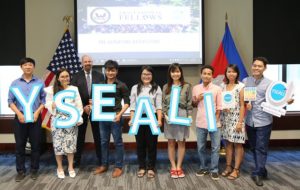
Young Southeast Asian Leaders Initiative (YSEALI)

Another one of the programs through the U.S. Embassy in Cambodia not only reaches the country’s own youth but also those in neighboring countries. The Young Southeast Asian Leaders Initiative (YSEALI) supports and provides opportunities for youth across all Southeast Asian countries.

In 2013, YSEALI began its movement to engage young adults from 18 to 35 years old in leadership development and relationship making. The program is unique because it connects young adults from different countries in the region with each other. This is to promote unity and belonging as well as strengthen diplomatic ties between Southeast Asia and the U.S.

The leaders can apply to become members at any time. Once in the group, they focus on topics and issues that youth in the regions determine themselves. This has included but has not limited to, professional women empowerment, food security and foreign relations. Programs within YSEALI include professional and academic fellowships to the United States, regional workshops and grant funding.

It is evident that the benefits of YSEALI are on an even larger scale than it seems. According to the Huffington Post, during the 2015 and 2016 academic year, over 55,000 Association of Southeast Asian Nation (ASEAN) students studied in the U.S. and their economic contribution to the U.S. economy was $1.7 billion. This mutually beneficial relationship ensures the prioritizing of the future of personal development of ASEAN youth. These young adults are the future change-makers in their region of the world.

Still, including these programs, there are a number of other programs through the U.S. embassy in Cambodia and each is unique. Many of the programs provide avenues of support for young adults as they make up approximately 65 percent of people in the Southeast Asian region. With the help of organizations and programs like those in this article, there are opportunities to make lasting change for the better in Cambodian communities.

– Melina Benjamin
Photo: Flickr

September 11, 2019
https://borgenproject.org/wp-content/uploads/borgen-project-logo.svg 0 0 Kim Thelwell https://borgenproject.org/wp-content/uploads/borgen-project-logo.svg Kim Thelwell2019-09-11 14:27:262024-05-29 23:10:25Programs Through the U.S. Embassy in Cambodia
Global Poverty

Making Nutrition Attainable for Impoverished Countries like Bangladesh

Making Nutrition Attainable
There are roughly 15.2 million children under the age of 5 in Bangladesh, according to the World Health Organization (WHO). Malnutrition affected about half of this population for years. However, there has been some success in lowering this amount by making nutrition attainable. The WHO records that growth stunting reduced from 41 percent in 2011 to 36 percent in 2014. The percentage of underweight children also dropped from 36 percent to 33 percent between 2011 and 2014.

Although Bangladesh’s economy has progressed and the country has experienced a reduction in poverty, food insecurity remains a concern for about 35 percent of its citizens. The International Food Policy Research Institute recommends that children who consume at least four different food groups a day will be 22 percent less likely to experience stunting. In spite of the food insecurity, each day there are more possibilities for making nutrition attainable for poor countries.

Processed Foods

A very common misconception among big companies and corporations is that poor countries would not be able to purchase their food. Therefore, many companies do not venture to sell to these countries in fear of failure. However, in countries like Bangladesh, India and Nigeria, people purchase over 80 percent of the food rather than relying on home-grown. In Bangladesh, 75 to 90 percent of low-income urban consumers and about 40 percent of low-income rural consumers purchase their food. Fifty to 70 percent of the food people purchase in these countries is processed.

Although there are many unhealthy packaged foods, there is also a market for nutritional processed goods. A study in Nepal found that 80 to 90 percent of the country’s children of 6 to 23 months of age ate commercially-produced packaged foods. In Nigeria, people buy 80 million MAGGI bouillon broth cubes every day. These bouillon cubes carry essential nutritional qualities such as iron and other key micronutrients. There is a need for more similarly packaged and processed foods that provide nutritional density and quality.

Making Nutrition Attainable

In an effort to improve the situation, Groupe Danone and Grameen Bank collaborated to make a fortified yogurt factory in Bangladesh. Danone is the world’s largest yogurt maker with more than $21 billion in annual sales. Muhammad Yunus, the Bangladeshi microfinance pioneer and founder of Grameen Bank, first suggested making baby food, however, a yogurt factory became the ultimate choice.

The company is successfully putting enough vitamin A, iron, zinc and iodine into the 60 and 80-gram cups of yogurt to meet 30 percent of a child’s daily needed diet. Overall, the local children who are often poor and malnourished benefit from the yogurts the factory produces. There is still a lot of work to do. The consumer demand increasing in the U.S. leads many businesses to cut sugar out of their products by at least 20 percent. However, for countries in Africa and Asia, there has yet to be this kind of motion.

The Danone and Grameen Factory Help People

The Danone and Grameen factory’s main goal is not to make large revenue, but rather to provide nutrition and education. Professor Muhammad Yunus of Grameen Bank hopes to share a lesson in manufacturing, business and humanitarian efforts for the developing world and the West. He believes that in starting this project, “You don’t see the money-making aspect, but how you can help people.” The project has employed the rural community through its links with the farmers which serve the factory. The yogurt company pays the local workers and farmers more than any customer does. Many employees are earning $60 a week, a substantial amount for rural Bangladesh.

Many private sector companies are hesitant to step into this effort because of the misinformation that affordable nutrition cannot be profitable. Professor Yunus hopes to educate these companies by challenging them to begin thinking about running their businesses in a different manner. For Danone, this project provides a clearer understanding of marketing food in South Asia and entering in a more profitable market in India.

The Impact

Danone and organizations like Feed the Future strive to make nutrition attainable in Bangladesh. As of January 2018, the U.S. Government selected Bangladesh as one of the 12 Feed the Future target countries. Feed the Future, under the U.S. Government Global Food Security Strategy, is a global hunger and food security initiative. It has established a strategy for making nutrition attainable. Feed the Future aims to intensify production while diversifying agriculture. It uses high-value, multi-nutrient products. Feed the Future’s target beneficiaries include rice farmers, the landless poor who are net purchasers of rice, small and medium-size farmers who can diversify production, agricultural-based enterprises and people employed in the fishing and aquaculture sector. In poor countries, companies such as Danone make nutrition attainable by placing more importance on those in need than on the profit it makes. Government organizations like Feed the Future also help in providing food security to poor countries like Bangladesh.

– Francisco Benitez
Photo: USAID

September 11, 2019
https://borgenproject.org/wp-content/uploads/borgen-project-logo.svg 0 0 Kim Thelwell https://borgenproject.org/wp-content/uploads/borgen-project-logo.svg Kim Thelwell2019-09-11 08:01:142024-05-29 23:10:20Making Nutrition Attainable for Impoverished Countries like Bangladesh
Global Poverty, Health

How Chlorhexidine is Lowering Infant Mortality

ChlorhexidineAn estimated 390,000 babies die within their first months of life annually due to severe infections. For the past decade or so, USAID has been combating this number with a low-cost yet highly effective antiseptic called Chlorhexidine. The chemical is typically used in hospitals to either disinfect the skin before a surgery or to sterilize surgical equipment, but USAID says that the antiseptic “can also be used to protect the umbilical stumps of newborns to prevent life-threatening complications from an infection.” These infections, USAID explains, can in part be a regular consequence of the traditional home birthing practices found in poorer countries. After conducting multiple studies, it has been shown that even a “one-time chlorhexidine treatment can lower the risk of severe infection [in infants] by 68 percent and infant death by 23 percent.”

Countries Adopting Chlorhexidine

Because it is relatively cheap, easy to manufacture and proven to be effective, around 30 nations throughout Africa and Asia either expressed interest in the antiseptic or have begun working with USAID to integrate the antiseptic into their healthcare system over the past several years.

Case Study: Nepal

Nepal was the first nation to implement the treatment back in 2011. It has since reduced the likelihood of infant illness and mortality by 34 percent. The success in Nepal is what inspired a chain-reaction that lead to the antiseptic being adopted into a variety of different countries—but the success of the disinfectant did not come without its challenges.

Before Chlorhexidine was initiated into their health system, the World Health Organization (WHO) recommended that the nation adopt a dry care system to treat the umbilical cord; this system required that the mother keep her child’s umbilical stump clean and dry until the stump fell off on its own while she kept an eye out for any signs of infection.

Due to cultural barriers, this suggestion was not followed. USAID said that mothers in Nepal had been used to routinely applying unsanitary substances such as turmeric, ash, cow dung or a mercury-based red cosmetic powder used by Hindu women to the umbilical stump by hand. Thankfully Nepal has been impressed with the results Chlorhexidine has supplied but the earlier setbacks in treatment shed an important light for USAID and its partners on how complex assimilating a scientifically safe treatment into impoverished nation’s culture can actually be.

Today, both single-dose tubes of the antiseptic are freely distributed to all expecting mothers in their eighth month of pregnancy and a one-on-one training session explaining how to safely apply the gel after cutting the umbilical cord.

Case Study: Pakistan

Pakistan implemented the treatment in 2014. Pakistan reportedly has the third-highest newborn mortality rate in the world, with umbilical cord infections serving as the second leading cause of death to Pakistani newborns. Seeing as Pakistan is a much larger and complex country, it faced a different set of challenges than Nepal when it came to making the antiseptic widespread.

There were some cultural barriers to overcome in Pakistan as well—many Pakistani women used to treat umbilical cords with surma, a lead-based concoction)—but the main challenge the nation had to overcome was to bring together all the government and private offices working towards a Chlorhexidine treatment program independently. To convene all of these health offices together and collaborate on an implementation plan was no small feat and took around a full year, and then the plans were formally adopted another year later, in 2016.

Of course, Chlorhexidine comes with its own set of risks. Although it has been found to reduce infections, it has also been discovered to cause rashes and burns on some skin types. Even so, the use of Chlorhexidine in both Nepal and Pakistan shows that although the process of assimilating treatment is not always easy or quick, it yields hopeful results that encourage nations in the surrounding areas to adopt the life-saving drug as well.

– Haley Hiday
Photo: Flickr

September 9, 2019
https://borgenproject.org/wp-content/uploads/borgen-project-logo.svg 0 0 Kim Thelwell https://borgenproject.org/wp-content/uploads/borgen-project-logo.svg Kim Thelwell2019-09-09 09:39:222024-05-27 23:53:49How Chlorhexidine is Lowering Infant Mortality
Developing Countries, Development, Education, Global Poverty

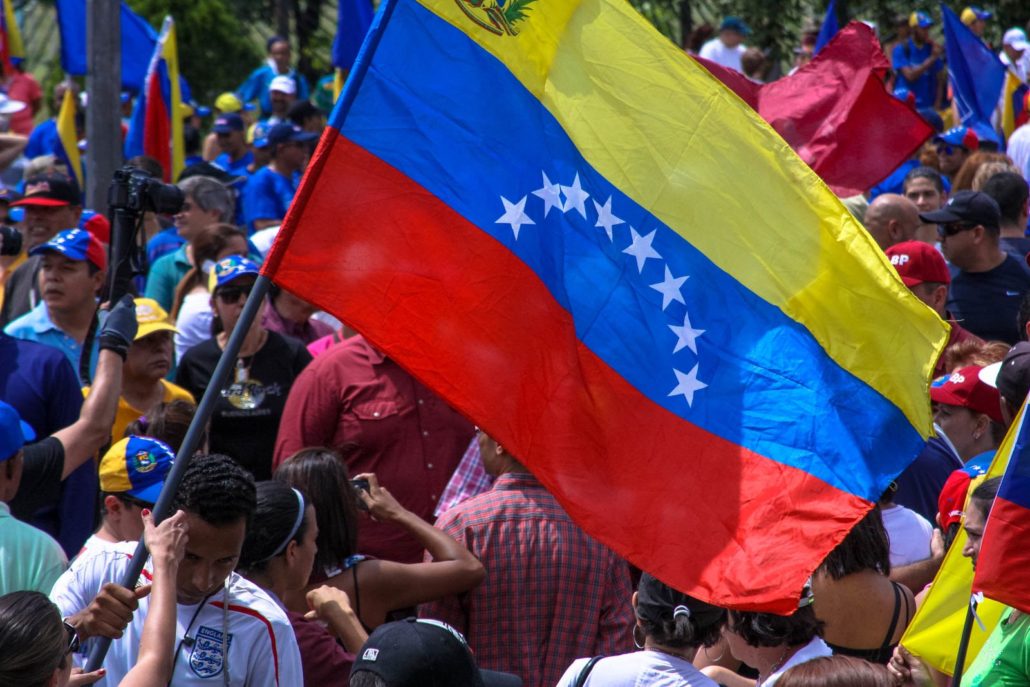
Why Are Venezuelans Fleeing?

Venezuelans Fleeing
As the beneficiary of the world’s largest oil reserves, Venezuela was once the wealthiest nation in Latin America. However, in 2014, the economy began to collapse. The Bolivar, its currency, has gone into free fall, leaving millions unable to afford even the most basic necessities. According to Bloomberg’s Café con leche index, a cup of coffee today costs the same as 1,800 cups in January 2018. As food and health care become more difficult to come by, many Venezuelans are faced with the decision of struggling to get by or fleeing the country.

Why Flee?

Every day, thousands of Venezuelans leave their country in search of safety and stability, many of them arriving in Colombia. The International Rescue Committee has been supporting families in need in Cúcuta, a border city, since April 2018.

Venezuela is millions in debt while the only commodity that the country relies on is oil. Unfortunately, the value of oil has plummeted. In 2014, the price of oil was about $100 a barrel. Then several countries started to pump too much oil as new drilling technology could dredge up what was previously inaccessible, but businesses globally were not buying more gasoline. Too much oil caused the global price to drop to $26 in 2016. Today the price hovers around $50, which means that Venezuela’s income has been cut in half.

At the same time, Venezuelan President Nicolas Maduro’s hostility towards foreign business has created a corporate exodus. Companies such as United, General Motors and Pepsi have left entirely and unemployment in Venezuela could reach 25 percent this year. To try and keep up, Maduro has raised the minimum wage three times in 2019 in order to provide a little short-term relief to the poor. Currently, the minimum wage is at 18,000 bolivars per month, which is around $6.70 U.S.

How Many Venezuelans Have Left?

According to the U.N., more than three million people have already left Venezuela since the crisis began, and that number is increasing at a rapid rate. Approximately one million people, several lacking official documentation, have gone to neighboring Colombia. However, Peru is the second most popular destination country for Venezuelan refugees, with over 500,000. Ecuador follows, with over 220,000, Argentina with over 130,000, Chile with over 100,000 and Brazil with 85,000 immigrants.

By the end of 2019, the number of Venezuelans fleeing the country should reach 5.3 million. Nearly 300,000 children have fled the homes and lives they once knew, and approximately 10 percent of the country’s total population has already left.

The Way Out

The majority of those fleeing Venezuela do so on foot, and the road begins close to Cúcuta. Many people pay smugglers to use a trocha, which is an illegal border crossing through a river. On the Colombian side of the border has become a huge open-air market for all the things that people cannot get in Venezuela anymore. Vendors advertise medicines and cigarettes, candy and phone minutes for people to call home.

Sadly, some do not make the journey on foot. In Cúcuta, the temperature can hit 90 degrees Fahrenheit. However, on other parts of the route, the road climbs to 10,000 feet above sea level and temperature can drop below freezing. Walking this route takes approximately 32 days. The mountain pass, La Nevera, translates to the Refrigerator. Aid groups and residents have opened their homes and set up shelters along the path. However, the number of Venezuelans fleeing the country has surpassed the number of shelters available along the way, making space for only the lucky few.

The Impact

The emotional wellbeing of children who have fled Venezuela is of high concern. Sometimes traveling alone, boys and girls disrupt their education and are in great danger of falling behind in school and never catching up again. On the contrary, some parents leave their children behind when they leave the country. These children often gain material benefits from their parents’ migration, because sending hard currency to relatives provides greater access to food, medicine and other lacking necessities.

Furthermore, tensions between Venezuelans fleeing the country and citizens of other countries is often high. Colombia has had to reach out to the international community for help in dealing with the influx of migrants. Hospitals and elementary schools in Cúcuta have been overwhelmed, and administrators complain about the central government’s failure to reimburse them for the cost of caring for migrants. The national government has suspended the issuance of temporary visas, and the U.S. Agency for International Development, or USAID, has promised $30 million in assistance.

In Ecuador, anti-immigrant sentiments reached a highpoint when a Venezuelan allegedly stabbed to death his pregnant Ecuadorian girlfriend, Diana Ramirez Reyes, in front of police and scared residents of the city of Ibarra. Since then, President Lenin Moreno decreed a tougher immigration policy that requires incoming Venezuelans to present a document certifying they had a clean criminal record in Venezuela. However, such documents are costly to obtain in Venezuela.

Similarly, Peru and Chileans have developed hesitation toward Venezuelans fleeing the country. People cannot renew work permits in Peru and as of 2018, the country decided to stop issuing them. A recent survey in Chile found that many natives disapprove of the number of immigrants coming in. Seventy-five percent of those responding to the survey thought that the number of immigrants was excessive.

Who is Helping?

Since April 2018, the IRC has been working in Cúcuta supporting Venezuelans and vulnerable Colombians with specialized services for women and children, cash assistance and health care. Aid organizations and families are also working to help immigrants along the route. The Colombian Red Cross has a small aid station on the outskirts of Pamplona, a city in Colombia’s Norte de Santander region.

The U.S. government has also helped by providing about $200 million in humanitarian aid to address the crisis in the region. Most of this money has gone to Colombia as do the majority of Venezuelans fleeing the country.

UNICEF has appealed for $69.5 million to meet the needs of uprooted children from Venezuela and those living in host and transit communities across the LAC region. It is working with national and local governments, host communities and partners to ensure access to safe drinking water, sanitation, protection, education and health services for Venezuelans fleeing the country.

– Grace Arnold
Photo: Flickr
 

September 8, 2019
https://borgenproject.org/wp-content/uploads/borgen-project-logo.svg 0 0 Kim Thelwell https://borgenproject.org/wp-content/uploads/borgen-project-logo.svg Kim Thelwell2019-09-08 07:30:472024-05-29 23:09:48Why Are Venezuelans Fleeing?
Page 55 of 92«‹5354555657›»

Get Smarter

  • Global Poverty 101
  • Global Poverty… The Good News
  • Global Poverty & U.S. Jobs
  • Global Poverty and National Security
  • Innovative Solutions to Poverty
  • Global Poverty & Aid FAQ’s
Search Search

Take Action

  • Call Congress
  • Email Congress
  • Donate
  • 30 Ways to Help
  • Volunteer Ops
  • Internships
  • Courses & Certificates
  • The Podcast
Borgen Project

“The Borgen Project is an incredible nonprofit organization that is addressing poverty and hunger and working towards ending them.”

-The Huffington Post

Inside The Borgen Project

  • Contact
  • About
  • Financials
  • President
  • Board of Directors
  • Board of Advisors

International Links

  • UK Email Parliament
  • UK Donate
  • Canada Email Parliament

Get Smarter

  • Global Poverty 101
  • Global Poverty… The Good News
  • Global Poverty & U.S. Jobs
  • Global Poverty and National Security
  • Innovative Solutions to Poverty
  • Global Poverty & Aid FAQ’s

Ways to Help

  • Call Congress
  • Email Congress
  • Donate
  • 30 Ways to Help
  • Volunteer Ops
  • Internships
  • Courses & Certificates
  • The Podcast
Scroll to top Scroll to top Scroll to top