• Link to X
  • Link to Facebook
  • Link to Instagram
  • Link to TikTok
  • Link to Youtube
  • About
    • About Us
      • President
      • Board of Directors
      • Board of Advisors
      • Financials
      • Our Methodology
      • Success Tracker
      • Contact
  • Act Now
    • 30 Ways to Help
      • Email Congress
      • Call Congress
      • Volunteer
      • Courses & Certificates
      • Be a Donor
    • Internships
      • In-Office Internships
      • Remote Internships
    • Legislation
      • Politics 101
  • The Blog
  • The Podcast
  • Magazine
  • Donate
  • Click to open the search input field Click to open the search input field Search
  • Menu Menu

Tag Archive for: United Nations

Posts

Development, Global Health, Global Poverty, United Nations

UN 15-Year Executive Summary on AIDS: Hopes and Lessons

UN 15-Year Executive Summary on AIDS: Hopes and Lessons
Over the past 15 years, many lessons have been learned, and much hope has been gained toward the future of eradicating HIV. The U.N. Executive Summary on Aids, published this last month, highlights many hopes and lessons learned over that time period.

U.N. Secretary General Ban Ki-Moon writes in the introduction, “The AIDS response has been like no other. From the start it has put the focus on people and put their needs first. It has been a turning point for the recognition of health as a human right.”

The HIV response has been one of the greatest unifying factors in the modern world. Hundreds of countries have put aside their differences, be it social, political or economic, to combat the spread of AIDS. In 2001, $4.9 billion was invested in combattng HIV, today that number is over $32 billion.

With experience comes the opportunity to learn and share. Here are a few of lessons from the past 15 years:

Global access to antiretroviral treatment is key

As more and more people have received access to HIV testing, those who are infected are more likely to receive the proper treatment—helping them live better lives and preventing the virus from spreading to others. In 2001, one million people worldwide were on HIV antiretroviral therapy.

In 2014, that number had grown to over 15 million. The goal is to give medical access to all infected individuals by 2030.

The impact generated by people receiving treatment is the bar by which success is measured. This is because of the direct correlation between HIV treatment and death from AIDS. The summary states, “Treatment access has resulted in AIDS-related deaths declining by more than 42% between 2004 and 2014.

An estimated 1.2 million [1.0 million–1.5 million] people died of AIDS-related causes globally in 2014, but in the absence of antiretroviral therapy, AIDS-related deaths would have risen to 2.0 million by 2014.”

Transmission prevention among children

Infants born with HIV has been a focus strategy in AIDS globally. Millions of children were becoming orphans due to infected parents dying from AIDS. In 2009 14.4 million children were orphaned due to AIDS, over the last 6 years that number dropped to 13.3 million.

Another major concern was the transfer of HIV from pregnant mothers to children. In 2001, 580,000 children were infected with HIV. Today that number has been reduced by a little over 50 percent. The strategy educates and recognizes that childbirth is not the only means of infection, but even breastfeeding can lead to HIV infection.

The prevention strategy aggressively targets pregnant women who are infected with HIV. By providing testing, education and treatment, the transmission has been successfully halted and is now being reversed. The goal is to reduce the number to less than 50,000 HIV infections among children by 2030.

Safe Sex and HIV awareness

The youth are the leaders of tomorrow. Educating and preparing them to lead the world tomorrow is one of the keys in fighting HIV and AIDS. When HIV first became widely known in the 1980’s and 1990’s, many misunderstandings prevailed. The disease was thought to be only spread by homosexuals and many did not understand how it was contracted.

As time has gone by, campaigns to spread HIV awareness have led to young people understanding the two best methods of preventing HIV transmission—reducing the number of sexual partners and using condoms.

In 2001, awareness among youth worldwide about HIV was at 25 percent, with most being in developed nations. Today, that number is close to 35 percent. The goal is to raise awareness over 90 percent by the year 2030. The goal of reducing multiple sexual partners has been modest at the most, but still progressive.

Globally, condom use has increased, but levels are still too infrequent among youth in Central and Western Africa (large HIV-populated regions). Sub-Saharan Africa is a huge target population and conservative efforts have been made to allow access to contraceptives such as condoms.

Financing and Aid will allow us to reach the U.N. goals

Over the past 15 years, the fight has moved from millions of dollars to billions being spent annually. This has allowed the resources needed to be allocated appropriately.

The world has learned from HIV that political commitment for public health investments can continuously be created and when adequate levels of spending on health is allowed, it leads to unprecedented levels of success.

At this point in time, the United States cannot waiver in its support of programs funding HIV and AIDS prevention. Hard lessons learned have helped us unite and combat one of the deadliest outbreaks in world history. The road ahead is still going to be hard, but it is not out of reach.

– Adnan Khalid

Sources: UNAIDS, World Bank
Photo: UN AIDS

September 12, 2015
https://borgenproject.org/wp-content/uploads/borgen-project-logo.svg 0 0 Borgen Project https://borgenproject.org/wp-content/uploads/borgen-project-logo.svg Borgen Project2015-09-12 10:37:232020-06-30 09:07:34UN 15-Year Executive Summary on AIDS: Hopes and Lessons
Food Security, United Nations

Ecosystem Based Adaptation for Food Security Conference

Ecosystem Based Food Security Conference 2015
More than 1,400 participants gathered in Nairobi, Kenya for the second annual Ecosystem Based Adaptation for Food Security Conference. This year’s theme is “Re-imagining Africa’s Food Security Now and into the Future under a Changing Climate,” and the conference included round tables, discussions and plenary sessions that explored how to sustainably use African soils.

The overarching idea behind the conference was to generate discussion and propose solutions to Africa’s food crisis by focusing on using the resources at hand and capitalizing on existing adaptations in the food production chain that may aid food producers in the face of impending climate change.

The conference did not just focus on food production, however, but also addressed the labor behind food production, including supporting the expansion of local agricultural businesses and employment for women and youth in Africa.

Building on the thematic discussions throughout the conference, attendees had the opportunity to discuss how to maximize policy framework and develop an action plan to ensure not only food security, but livelihood security as well.

Organized in collaboration with a number of United Nations agencies, the conference took place July 30 and 31, 2015, at the U.N. Complex in Nairobi, Kenya.

– Gina Lehner

Sources: International Policy Digest, 2nd Africa Food Security Conference
Photo: EBASouthE

September 10, 2015
https://borgenproject.org/wp-content/uploads/borgen-project-logo.svg 0 0 Borgen Project https://borgenproject.org/wp-content/uploads/borgen-project-logo.svg Borgen Project2015-09-10 11:00:512024-12-13 17:52:16Ecosystem Based Adaptation for Food Security Conference
Activism, Global Poverty, Poverty Reduction, United Nations

UN Report: Overall Global Poverty Has Dropped Dramatically

z1-thumbs up
The U.N.’s 2015 Millennium Development Goals Report, which was released earlier this month, has published findings that show a sharp improvement in overall global poverty.

The U.N.’s report highlights the progress that has been made since their Millennium Development Goals were first established in 2000. This plan, which set targets and timeframes for how to make an impact in global poverty by 2015, has ultimately been remarkably successful.

“What the goals did, by prioritizing and focusing, was actually put together major international donors, civil society partners on the ground, national governments focusing on the same sets of issues,” Mark Suzman, a U.N. official, told NPR. “And that allowed for a focusing of both policy change and resources and attention.”

The report highlights a number of significant changes that have been made since its inception over a decade ago. According to the report, the amount of people living in extreme poverty has dropped to less than half of what it was in 1990, from 1.9 billion to 836 million. The report also points out that overall primary school enrollment in developing regions has reached 91 percent.

“The report confirms that the global efforts to achieve the goals have saved millions of lives and improved conditions for millions more around the world,” said U.N. Secretary General Ban Ki-moon.

The report doesn’t shy away from the work that still needs to be done, however. The report’s findings also include the fact that around one billion people still defecate in the open and 28 percent of children in South Asia younger than five can be classified as “moderately or severely underweight.”

“These successes should be celebrated throughout our global community,” Ki-moon added. “At the same time, we are keenly aware of where we have come up short.”

– Alexander Jones

Sources: Aizenman, Economic Times, Sengupta

September 7, 2015
https://borgenproject.org/wp-content/uploads/borgen-project-logo.svg 0 0 Borgen Project https://borgenproject.org/wp-content/uploads/borgen-project-logo.svg Borgen Project2015-09-07 01:30:482020-06-30 18:45:11UN Report: Overall Global Poverty Has Dropped Dramatically
Aid, Global Poverty, Humanitarian Aid, United Nations

UN Funds Humanitarian Efforts in Central African Republic

Humanitarian_Efforts
On August 11, the United Nations Common Humanitarian Fund allocated $13.2 million to humanitarian efforts in the Central African Republic (CAR) in order to provide much needed life-saving aid to those affected by the ongoing conflict in the African country.

The funds will go toward supporting local humanitarian aid agencies that provide clean drinking water, access to education and healthcare, food, protection, and shelter to vulnerable and displaced people. Though the amount of funds will provide some people with necessary help, it is not nearly what is needed to be able to provide aid for the entire population in need.

“Thanks to donors who have contributed in 2015, this CHF allocation allows humanitarian partners to continue helping thousands of displaced people and host families,” said Aurélien Agbénonci, the UN’s Humanitarian Coordinator in the African country. “However, it is only three percent of the $415 million we still need by the end of the year if we are to save more lives and reach all people in acute need in 2015.”

The Civil War in the Central African Republic between the Muslim Séléka alliance and the anti-Balaka militias with CAR government forces, which are predominantly Christian, began at the end of 2012 and has claimed many civilian lives and displaced many more. Additionally, the Lord’s Resistance Army continues operations within the southeastern region of the country.

According to the United Nations Office of the Coordination of Humanitarian Affairs (OCHA), as of June 2015, there are about 463,400 refugees from the Central African Republic, and 368,900 internally displaced people. In total, OCHA concludes that there are presently 2.7 million people in the Central African Republic who are in critical need of humanitarian aid.

Unfortunately, the CAR is reportedly “one of the most difficult and dangerous environments in the world for aid workers.” On July 22, the UN condemned a surge of violence against aid workers along with the July 18 attack on a World Food Program food convoy which left a driver dead.

It is crucial that international humanitarian aid organizations continue to demonstrate their commitment to aiding those in need. The UN’s latest allocation of funds, though not sufficient to provide for every single victim, sent the right message. Aid organizations must never falter in the effort to protect and preserve the lives of innocent civilians, even in the face of danger.

– Jaime Longoria

Sources: UN Office for the Coordination of Humanitarian Affairs, UN News Centre 1, UN News Centre 2
Photo: UN News Centre

September 5, 2015
https://borgenproject.org/wp-content/uploads/borgen-project-logo.svg 0 0 Borgen Project https://borgenproject.org/wp-content/uploads/borgen-project-logo.svg Borgen Project2015-09-05 07:15:062024-06-11 02:48:14UN Funds Humanitarian Efforts in Central African Republic
Aid Effectiveness & Reform, Education, Global Poverty, Sustainable Development Goals

Education and the Sustainable Development Goals

Education and the Sustainable Development GoalsLong idolized were the Millennium Development Goals, a set of eight targets created and adopted by the United Nations in 2000. Central to their aim was the eradication of global poverty by improving maternal health and access to clean water, food and education while reducing the number of people living on under $1.25 a day across the developing world.

However, the days of the Millennium Development Goals are over. They expired this year after 15 years mixed with success and failure. A new set of global development goals is now on the horizon: the Sustainable Development Goals. Once again, there will be a specific goal tailored to improve equal education access for all. But before delving into how that goal is currently shaping up, it is worth examining how education fared with the Millennium Development Goals.

Goal two of The Millennium Development Goals aimed to achieve universal primary education. The goal only had one target: “ensure that, by 2015, children everywhere, boys and girls alike, will be able to complete a full course of primary schooling.”

Unfortunately, this target was not met. On the bright side, the number of children globally that now attend primary school has risen dramatically since 1990. Enrollment in the developing world has risen to 91 percent, but the goal was for universal primary education, meaning all children everywhere. There is also still a fairly large gender gap in some areas. Of the 57 million kids out of school, 33 million are in Sub-Saharan Africa and 55 percent of those 33 million children are girls.

So where are the Sustainable Development Goals heading in terms of education development in the next 15 years? First off, education gets another specific goal for itself. The target this time is to “ensure inclusive and equitable quality education and promote lifelong learning opportunities for all,” not all that different from the Millennium Development Goal before it.

The Sustainable Development Goals’ “vision is to transform lives through education, recognizing the important role of education as a main driver of development.” Looking to continue with the progress created by the Millennium Development Goals, goal four of the Sustainable Development Goals will look to expand access to all by providing 12 years of free, publicly-funded, high-quality equal education. Nine of these years will be compulsory.

Particular emphasis is put on the quality of education going forward. By increasing quality of education, the 100-year education gap between the developed and developing has the potential to be reduced. Another benefit of an improvement in the quality of education is that it will improve learning outcomes. How can this be done? By “strengthening inputs, processes and evaluation of outcomes and mechanisms to measure progress.”

Another facet to quality education is ensuring that the teachers are well trained, empowered, motivated and supported. This ensures a higher level of quality when it comes to education.

Often seen as a gateway out of poverty, education is an extremely important issue when it comes to development in the developing world. It will be interesting to track the evolution of the Sustainable Development Goals’ development toward a fully-fledged goal. Hopefully, it can continue the inroads created by the Millennium Development Goals and improve education for the millions of children without it.

– Gregory Baker

Sources: UNDP, UNESCO UN Millennium Goals, UN Sustainable Development,
Photo: Flickr

September 3, 2015
https://borgenproject.org/wp-content/uploads/borgen-project-logo.svg 0 0 Borgen Project https://borgenproject.org/wp-content/uploads/borgen-project-logo.svg Borgen Project2015-09-03 09:41:122024-06-04 04:33:48Education and the Sustainable Development Goals
Development, Extreme Poverty, Food & Hunger, Global Poverty, Poverty Reduction

How the UN Fights Global Poverty

How the UN Fights Global Poverty2015 represents an important year for the United Nations to eradicate extreme poverty and hunger.
Among the goals that the United Nations has to eradicate poverty and hunger are: to reduce by half the amount of people that make less than $1 per day, accomplish employment and work for everyone including minorities such as women and to reduce by half the amount of people who are suffering from hunger.

The United Nations partners with different organizations and foundations in order to achieve these goals to eradicate poverty.

The Zero Hunger Challenge, the Scaling Up Nutrition (SUN) Movement and the UNDP-IKEA Foundation are three movements that the United Nations are partnering with.

1. Zero Hunger Challenge

U.N. Secretary-General Ban Ki-moon gives the invitation to every country to work for the future, a future in which every person has adequate nutrition and doesn’t lack food.

The Zero Hunger Challenge involves having no stunted children, 100 percent access to adequate food, sustainable food systems, 100 percent increase in smallholder productivity and zero food waste.

According to this challenge, the investment in agriculture, rural development and equality of opportunity helps to eradicate hunger.

This challenge promotes different strategies and cooperation in order to strive for results that combat hunger.

2. Scaling Up Nutrition (SUN) Movement

The principle of this movement is that everyone has the right to good nutrition and food. This movement is supported by donors, people from the government, the United Nations and various others.

This movement seeks to address malnutrition by activities such as implementing programs and collaborations.

The principles of engagement are to be transparent and honest about the impact that collective action has, bring solutions that can be proven and interventions to scale, have a commitment to support the rights and equity of all human beings, resolve conflicts if they arise, be responsible so stakeholders can feel collectively accountable to the commitments, establish priorities and be communicative toward what works and what doesn’t.

3. UNDP-IKEA Foundation

This is a foundation that is benefiting 50,000 women from India.

This foundation has helped 9,000 dairy producers to form a company through provided financial literacy training. Profits also double within a year through the participation of the members.

The United Nations also contributes with other organizations, such as the UNDP and Brazil’s Natura Cosméticos, which brings training to beauty advisors in areas that vary from direct sales to customer training.

It is clear that the United Nations uses different methods to obtain results in the different humanity issues that it focuses on.

While they address different issues such as climate change, terrorism, food production, human rights, health emergencies and many others, global poverty and the eradication of extreme poverty and hunger is under the Millennium Development Goals that the United Nations has, and partnering with different associations, movements, organizations and foundations has resulted in a way to reach for success in addressing these issues in the year of 2015.

– Diana Fernanda Leon

Sources: United Nations 1, United Nations 2, Scaling Up Nutrition
Photo: Flickr

September 3, 2015
https://borgenproject.org/wp-content/uploads/borgen-project-logo.svg 0 0 Borgen Project https://borgenproject.org/wp-content/uploads/borgen-project-logo.svg Borgen Project2015-09-03 05:09:282024-05-27 09:24:20How the UN Fights Global Poverty
Global Poverty, Nonprofit Organizations and NGOs, United Nations

Giving Directly to the Poor, No Strings Attached

Giving Directly to the Poor, No Strings Attached
What if we could give directly to the poor and let them decide what they most need to spend the money on? GiveDirectly does just that. It is the only nonprofit that gives cash transfer directly to the poor.

The New York-based nonprofit was created in 2008 by President and Co-founder, Paul Niehaus with the belief that people should spend their money how they wish. Niehaus says, “no one person has the same goal or aspiration.”

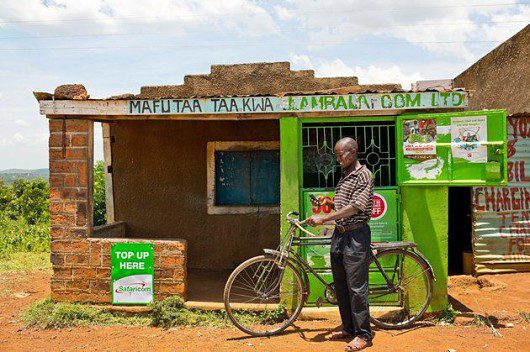
How does it work? People donate money through the organization’s website and extremely poor people in Kenya and Uganda receive cash transfer through their mobile phones. The recipient does not even need a mobile phone, just a SIM card so that they can use it on someone else’s mobile phone and receive the money.

The results of this method have been the distribution of $1,000, roughly a year’s income, to thousands of extremely poor families in Kenya and Uganda. GiveDirectly’s method not only cuts costs but also gets rid of opportunities for corruption by eliminating the middleman.

GiveDirectly is leading the way in transparency and data-driven decision making by streaming in realtime, key performance metrics on its website. The organization has also done randomized controlled trials on their programs, just like pharmaceutical companies to evaluate drugs. These tests are not usually done by charities because of their cost, difficulty and time consumption, despite being the best method for determining if programs are actually working.

The results of GiveDirectly’s methodology speak for themselves. After one year of receiving transfers, families had increased their earnings by 34 percent and increase their assets by 52 percent. There was also a decrease in those going to bed hungry by 36 percent and a decrease in the number of days kids went without food by 42 percent.

People improved their living situations by investing in their homes, their livelihoods and their savings, not on more alcohol or tobacco.

As a result, more organizations are following suit. The U.N.’s World Food Program with annual funding of $4 billion was only spending $10 million of it on cash and voucher programs, in 2009. In 2014, the cash and voucher programs expense increased to $1.25 billion across 87 programs in 56 countries.

GiveDirectly can serve as a test lab for the improvement of large institutional cash programs. It is running tests that will give the recipients more control of when they receive their money and another test on possible suggestions of how recipients can best spend their money. It is also giving advice on using cash relief after natural disasters.

As a result of its incredible effectiveness, GiveDirectly is receiving a major donation from Facebook co-founder, Dustin Moskovitz and his wife Cari Tuna. They are donating a bulk of their wealth, $25 million through their foundation Good Ventures, which is more than GiveDirectly’s 2014 budget.

Moskovitz and Tuna want to do the most good possible and have supported exhaustive research to conclude which organizations are the most effective and cost-efficient. Tuna believes if GiveDirectly could have some influence on changing institutional spending from not so cost-effective programs to cash transfers, it would be a great feat.

– Paula Acevedo

Sources: GiveDirectly, Huffington Post, Reason.com

Locker Dome

August 23, 2015
https://borgenproject.org/wp-content/uploads/borgen-project-logo.svg 0 0 Borgen Project https://borgenproject.org/wp-content/uploads/borgen-project-logo.svg Borgen Project2015-08-23 01:30:332020-04-24 14:18:03Giving Directly to the Poor, No Strings Attached
United Nations

Stars to Support World Humanitarian Day

world_humanitarian_day
Many celebrities have answered the call of the United Nations relief arm by posting and tweeting to raise awareness and hype for this year’s World Humanitarian Day on August 22.

The U.N. has asked young and digitally-connected people to talk about the compelling stories of people in need by sharing these tales on social media platforms like Twitter and Facebook.

Stars have already taken to their profiles by using the hashtag ShareHumanity, which will be observed across the world’s U.N. system and beyond, promoting a change for World Humanitarian Day.

Australian singer Cody Simpson, Chinese martial artist Jet Li, actress Shay Mitchell and British singer Leona Lewis have all endorsed the campaign. Brazilian football player Ricardo Kaka sponsored the initiative by sharing people’s stories of endurance, faith and optimism.

The Share Humanity campaign calls on people to donate their social media feeds to inspire “a greater sense of responsibility, solidarity and social activism, using the far-reaching impact of social media,” said the U.N. Office for the Coordination of Humanitarian Affairs.

Simpson, 18, shared his reasoning behind his activism. “I’m getting behind #ShareHumanity because it’s a way of showing that we haven’t forgotten that there are millions living in humanitarian crises,” he said. “I hope others will join us in this massive display of public support calling for a more humane world.”

Along with Simpson, Mitchell and Lewis are promoting this cause by sharing different inspiring accounts. Mitchell is sharing the story of Oliver, titled Welcome to Skateistan, while Lewis tells the story of Khaled, called Baby in the Rubble: Syria’s White Helmets.

According to the U.N., in 2015, 78 million people globally are in need of food, education, health care or shelter. To help save these people, the world needs to raise $16.4 billion to eradicate this problem. In a video sanctioned by World Humanitarian Day, the U.N. asks that humanitarians share their stories about giving back, so that the world may potentially raise this money to make a drastic change.

“Share an incredible journey. Share new friends. Share a miraculous status. Share something that needs to be stopped. Share something that should never stop. Share humanity,” the video said. It shows several videos of incredible and shocking moments that all appear to be videotaped on a cell phone due to the pixelated low quality. Since most videos posted on social media are taken from cell phones, the video makes a good point: phones and social media are the gateway to making a difference.

The power of digital devices and social media can change the world. People who understand and wish to act on this can join Messengers of Humanity. In association with Share Humanity, Messengers of Humanity creates an online presence for those who want to change the world. The people involved in Messengers of Humanity see the influence of social media and know mindfulness is the primary stage in driving achievement. They practice their social networks to communicate about matters that need to change and to transform the world we live in.

On the World Humanitarian Day website, there is a live feed that shows each person who has donated their social media feed to the cause. There are too many people to count. These are the numbers that are needed to really create change in the world. To help, search #ShareHumanity or visit worldhumanitarianday.org.

– Fallon Lineberger

Sources: Look to the Stars, World Humanitarian Day
Photo: Daily Record

August 22, 2015
https://borgenproject.org/wp-content/uploads/borgen-project-logo.svg 0 0 Borgen Project https://borgenproject.org/wp-content/uploads/borgen-project-logo.svg Borgen Project2015-08-22 01:30:482020-07-02 10:10:27Stars to Support World Humanitarian Day
United Nations

Latin America’s Green Initiatives Improve Livelihoods

Green_Initiatives
According to the Food and Agriculture Organization of the United Nations (FAO), one in three households use wood as their main source of fuel for cooking, with over half of all wood produced in the world being used as energy.

Although this resource may be an efficient means of living for the present generation, it is neither an environmentally-friendly nor a sustainable one. This is why countries in Latin America are teaming up to adopt innovative approaches to preserving forests and reducing climate change through Reduce Emissions from Deforestation and Forest Degradation (REDD+).

In an article by The World Bank, REDD+ is described as being “a global initiative to help create a financial value for the carbon stored in forests; it offers developing countries incentives to reduce emissions from forest land, while developed countries pay for the carbon that is not released into the atmosphere as a result of forest conservation.”

With only about a quarter of the world’s original old-growth forests intact, environmental initiatives in countries such as Chile, El Salvador and Mexico have begun through REDD+. These include plans such as strengthening communication within local communities, developing new approaches to measuring the amount of carbon lost in trees, helping communities affected by natural events restore their landscape and building community management of natural resources.

Collectively, these investments are saving the trees, but more importantly are ensuring a step in the right direction to achieving a thriving planet for our future generations. These initiatives will not just protect forested areas, but will also help preserve most of the world’s freshwater sources and aid in mitigating the effects of climate change. Since trees absorb carbon emissions, this in turn helps to keep the world’s temperatures from rising.

Forests have always been vital to the survival of mankind, but their preservation does not just benefit one individual: it helps everyone, from the businessman across the world to the poor farmer reliant on the forest’s ecosystem for his livestock’s wellbeing. Whether for food, timber or medicine, forests are important and protecting them ultimately helps improve and benefit the lives of all. By implementing green initiatives today, we are protecting the people of Latin America from the inevitable damage that comes from cutting down just one more tree.

– Nikki Schaffer

Sources: FAO, World Bank
Photo: World Bank

August 22, 2015
https://borgenproject.org/wp-content/uploads/borgen-project-logo.svg 0 0 Borgen Project https://borgenproject.org/wp-content/uploads/borgen-project-logo.svg Borgen Project2015-08-22 01:30:092024-05-27 09:27:32Latin America’s Green Initiatives Improve Livelihoods
Advocacy, Global Poverty, Nonprofit Organizations and NGOs, United Nations

U.N. Accredits “Freedom Now” NGO

z1 Borgen Project
The United Nations recently accredited the nonprofit, Freedom Now, as an official Non-Governmental Organization, when only one month before, its application had been denied.

Freedom Now is an American nonprofit organization that works to help free those who have been imprisoned as a result of discrimination based on sex, race, gender and other criteria. This is an advocacy group, which not only provides legal advocacy to clients but also advocates in the public sphere to raise awareness of illegal detentions taking place around the world.

In the original vote, the application was denied by a United Nations committee, arguably because this organization seeks to undermine the country’s own system. One example of a country voting against Freedom Now to further its own agenda is China, which has a history of imprisoning people who disagree with the government. Currently, Freedom Now has a campaign to free a Chinese Nobel Peace Laureate Liu Xiaobo, who is currently serving an 11-year sentence that began in 2009 for “undermining the state authorities,” according to the Nobel Prize website.

While some countries like China and Russia strongly opposed the accreditation, the United States made the final accreditation possible. Following the rejection, the issue was brought to the U.N.’s Economic and Social Council, or ECOSOC, which had the power to vote again on July 20.

With its NGO status, Freedom Now can continue to grow its work as a nonprofit helping those imprisoned based on their identity, but this process has also sparked controversy in the international political sphere. Now, perhaps the United Nations will seek to reform its accreditation system, in which countries that have not always met the UN’s human rights standards are still part of the forces deciding whether or not to give an organization a title of “U.N. NGO.” Freedom Now is teaching us about illegal detentions, but this situation has helped bring public attention to the corruption that allows these detentions to take place.

– Rachelle Kredentser

Sources: India Times, Freedom Now, Nobel Prize, New York Times

August 15, 2015
https://borgenproject.org/wp-content/uploads/borgen-project-logo.svg 0 0 Borgen Project https://borgenproject.org/wp-content/uploads/borgen-project-logo.svg Borgen Project2015-08-15 01:30:072024-05-27 09:27:14U.N. Accredits “Freedom Now” NGO
Page 32 of 44«‹3031323334›»

Get Smarter

  • Global Poverty 101
  • Global Poverty… The Good News
  • Global Poverty & U.S. Jobs
  • Global Poverty and National Security
  • Innovative Solutions to Poverty
  • Global Poverty & Aid FAQ’s
Search Search

Take Action

  • Call Congress
  • Email Congress
  • Donate
  • 30 Ways to Help
  • Volunteer Ops
  • Internships
  • Courses & Certificates
  • The Podcast
Borgen Project

“The Borgen Project is an incredible nonprofit organization that is addressing poverty and hunger and working towards ending them.”

-The Huffington Post

Inside The Borgen Project

  • Contact
  • About
  • Financials
  • President
  • Board of Directors
  • Board of Advisors

International Links

  • UK Email Parliament
  • UK Donate
  • Canada Email Parliament

Get Smarter

  • Global Poverty 101
  • Global Poverty… The Good News
  • Global Poverty & U.S. Jobs
  • Global Poverty and National Security
  • Innovative Solutions to Poverty
  • Global Poverty & Aid FAQ’s

Ways to Help

  • Call Congress
  • Email Congress
  • Donate
  • 30 Ways to Help
  • Volunteer Ops
  • Internships
  • Courses & Certificates
  • The Podcast
Scroll to top Scroll to top Scroll to top
