• Link to X
  • Link to Facebook
  • Link to Instagram
  • Link to TikTok
  • Link to Youtube
  • About
    • About Us
      • President
      • Board of Directors
      • Board of Advisors
      • Financials
      • Our Methodology
      • Success Tracker
      • Contact
  • Act Now
    • 30 Ways to Help
      • Email Congress
      • Call Congress
      • Volunteer
      • Courses & Certificates
      • Be a Donor
    • Internships
      • In-Office Internships
      • Remote Internships
    • Legislation
      • Politics 101
  • The Blog
  • The Podcast
  • Magazine
  • Donate
  • Click to open the search input field Click to open the search input field Search
  • Menu Menu

Tag Archive for: United Nations

Posts

Developing Countries, Women & Children

Maternal Death Rates Plummet Worldwide

maternal_deaths
Maternal deaths have been cut nearly in half since 1990 according to a new report by the United Nations and World Bank. Thanks to increased access to reproductive and family planning health services, mortality rates have shrunk to 216 per 100,000 live births in 2015 from 385 in 1990.

East Asia made especially notable progress, reducing its mortality rate from 90 to 27. Nine countries: Bhutan, Cambodia, Cape Verde, East Timor, Iran, Laos, The Maldives, Mongolia and Rwanda have cut rates by up to 75-90 percent.

While optimistic, experts warn that progress has been inequitable among developing countries and has fallen well short of the Sustainable Development Goal to achieve a worldwide reduction of maternal deaths of 75 percent.

“Many countries will make little progress, or even fall behind, over the next 15 years if we don’t make a big push now,” said Executive Director for the United Nations Population Fund (UNPF), Dr. Babatunde Osotimehin.

Nearly all maternal deaths occur in developing countries, 70 percent in sub-Saharan Africa alone, and most cases occur in rural and remote communities where women face inadequate access to medical care.maternal_death_rates
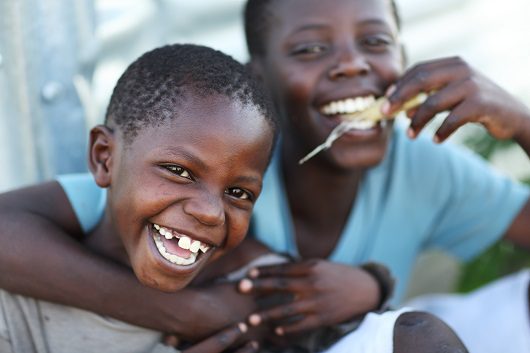
Common causes of maternal death include infections, severe bleeding, high blood pressure during pregnancy and complications during delivery – risks that health officials urge are entirely preventable.

That’s why the World Health Organization (WHO), within the framework of the newly launched UN Global Strategy for Women’s, Children’s and Adolescent’s Health, has begun a vigorous campaign to address the disconnect between expectant mothers and well-trained healthcare providers in impoverished communities.

Under the mandate of the Global Strategy, the WHO will partner with local governments to ensure that every mother has access to prenatal and antenatal care, that health care providers are performing at globally set standards, and that healthcare systems are receiving the resources and funding they need to respond to the patient needs.

The organization has designed and implemented training materials and is offering public policy guidance and progress tracking programs.

To achieve the Sustainable Development Goal, however, the U.N. and WHO acknowledge that their strategy will need to couple delivery of care with educational initiatives.

They will engage women in marginalized communities, teaching them practices to maintain their health and the health of their babies – lessons that the organizations believe will challenge traditional and cultural modes of thinking about healthcare.

The World Bank has expressed confidence in these efforts and has reported receiving increasingly reliable birthing data from local governments. “Ending maternal deaths by 2030 is an achievable goal if we redouble our efforts,” said World Bank Senior Director of Health, Nutrition and Population, Dr. Tim Evans.

– Ron Minard

Sources: Reuters, UN, WHO, World Bank
Photo: Pixabay, Flickr

December 3, 2015
https://borgenproject.org/wp-content/uploads/borgen-project-logo.svg 0 0 Borgen Project https://borgenproject.org/wp-content/uploads/borgen-project-logo.svg Borgen Project2015-12-03 01:30:582024-12-13 18:05:27Maternal Death Rates Plummet Worldwide
Development, Education, Global Poverty, United Nations

Real Change from the Education 2030 Framework for Action

Education_2030_Framework
The Education 2030 Framework for Action (FFA) was adopted and launched at a meeting held alongside the 38th UNESCO General Conference at the organization’s headquarters on Nov. 4.

Governments and private sector investors from around the world agreed to support the FFA, committing to make the Education 2030 agenda a success by 2030.

The FFA is designed as a consultation program, working alongside government education organizations. The program intends to keep educational stakeholding on track toward achieving the 2030 Education agenda.

UNESCO’s Director-General Irina Bokova said that she is hopeful that the FFA will help to encourage and enforce the four principles of the Agenda: the universal right to quality free and compulsory education; the acknowledgement that education is a public responsibility; the importance of providing adults with lifelong learning opportunities; and that gender equality is paramount.

“The conviction guiding our policy is that inequality is not a matter of fate,” said Director-General Bokova. “We have the responsibility to act to ensure that students’ background does not determine their educational prospects and future opportunities.”

But the FFA is concerned with more than students’ test scores and attendance. The program is intended to create a foundation for global citizenship, peace promotion, human dignity and tolerance.

Through using education as a holistic and inspirational medicine, UNESCO is hoping that Education 2030 will improve global educational prospects.

UNESCO was not alone in the unveiling of the FFA, partnering with the powerful co-convenors of Education 2030, including the United Nations Development Programme, the United Nations Populations Fund, the United Nations High Commissioner for Refugees, the United Nations Children’s Fund, the United Nations Entity for Gender Equality and the Empowerment of Women, and the World Bank.

But the Director-General Bokova acknowledged that it’s going to take more than a list of big-name supporters to make the FFA a success. It’s going to take a serious financial commitment from individual governments.

“This calls for new funding, to bridge the annual U.S. $40 billion funding gap, to invest where needs are most acute. We need every country to meet the target of allotting six percent of Gross Domestic Product to education,” said Director-General Bokova. “We need to reach the overall goal of directing 0.7 percent of all Official Development Assistance to education. To leave no one behind, we need more investment and smarter investment, backed by stronger policies.”

President of the World Bank Group Jim Yong Kim added to Director-General Bokova’s point, saying, “To end poverty, boost shared prosperity, and achieve the Sustainable Development Goals, we must use development financing and technical expertise to effect radical change. We must work together to ensure that all children have access to quality education and learning opportunities throughout their lives, regardless of where they are born, their gender, or their family’s income.”

– Claire Colby

Sources: UNESCO, Women of China
Photo: Flickr

November 20, 2015
https://borgenproject.org/wp-content/uploads/borgen-project-logo.svg 0 0 Borgen Project https://borgenproject.org/wp-content/uploads/borgen-project-logo.svg Borgen Project2015-11-20 01:30:152024-06-04 04:33:52Real Change from the Education 2030 Framework for Action
Developing Countries, Global Poverty, Health, Sanitation, United Nations

UN World Toilet Day is Here!

UN_World_Toilet_Day_is_Here
The name might result in a few giggles, but the importance behind the U.N.’s World Toilet Day is no laughing matter.

The annual day of action was established in order to bring awareness to sanitation issues around the world. It is estimated that 2.4 billion people — or approximately one out of every three people in the world — still do not have access to adequate sanitation.

Furthermore, around 1 billion people are forced to practice open defecation, due to a widespread lack of toilets and proper sanitation in several developing countries.

Poor sanitation and open defecation pose obvious and significant health risks, spreading diseases such as diarrhea, cholera and dysentery. It is estimated that approximately 1,000 children under the age of five die every day due to diarrhea and chronic undernutrition attributed to poor sanitation and hygiene practices where they live.

The lack of public toilets is also linked to violence against women, as women are more at risk of sexual assault when they must venture out alone into secluded places after dark to relieve themselves.

Sanitation is often termed a “silent crisis” as it has evaded the extent of media coverage and awareness devoted toward other key development issues. World Toilet Day seeks to address this lack of attention and was established with the exact purpose of dispelling the taboos, disgust and discomfort associated with discussing and addressing global sanitation issues.

World Toilet Day was initially established by the World Toilet Organization, a group whose main mission is “raising a stink for sanitation” on the world stage. The Organization was founded in 2001 and held its first annual World Toilet Summit on Nov. 19 of that year.UN_World_Toilet_Day

Every year thereafter, the organization has been steadily working to disseminate information and create awareness for sanitation as a topic of conversation on the global development agenda. Jack Sim, a retired Singaporean businessman and founder of the World Toilet Organization, has been hailed for his efforts through the organization to help dispel the taboos associated with openly talking about toilets, sanitation and human waste.

In recognition of the need to emphasize global sanitation issues, the U.N. General Assembly passed the “Sanitation for All” resolution in 2013 designating Nov. 19 to be the official U.N. World Toilet Day. UN-Water has taken the lead in working with governments and stakeholders to expand World Toilet Day in scope and recognition.

The message behind World Toilet Day has found widespread support across the globe, especially within countries currently struggling with serious sanitation issues.

India is one such country, where Prime Minister Narendra Modi recently launched a campaign tackling sanitation issues. Accordingly, India has set an ambitious target to build enough toilets for more than 600 million people by 2019.

In the past, World Toilet Day has had a different focus every year. This year, the theme is “Sanitation and Nutrition,” particularly emphasizing the importance of toilets, clean water and proper hygiene in supporting nutrition and health.

The theme for 2014 was “Equality and Dignity” and in 2012 it was “I Give a Shit, Do You?” Every year, several communities around the world take part in World Toilet Day, hosting awareness and fundraising events in line with the theme, such as the “Urgent Run” marathon-style event.

World Toilet Day is certainly one of the more provocative commemorative days, and it has been an all-around success in using humor and light-heartedness to reframe how we discuss toilets and sanitation issues that still cause trouble for billions.

As the World Toilet Organization notes, “[Today] is the day to stand up (or sit down or squat if you prefer) to do something about it.”

– Jace White

Sources: The Guardian, Sustainable Sanitation Alliance, UN 1, UN 2, UN 3, UN 4, Voice of America, World Health Organization, World Toilet Organization 1, World Toilet Organization 2
Photo: Wikimedia, Flickr

November 19, 2015
https://borgenproject.org/wp-content/uploads/borgen-project-logo.svg 0 0 Borgen Project https://borgenproject.org/wp-content/uploads/borgen-project-logo.svg Borgen Project2015-11-19 01:52:082024-05-27 09:28:21UN World Toilet Day is Here!
Aid, Food & Hunger, Food Aid, Global Poverty

ShareTheMeal App Uses Technology to Fight Global Hunger

ShareTheMealThere are 795 million undernourished people in the world today. That’s one in nine people who are not getting enough food to lead a healthy life.

Those numbers make hunger and malnutrition the number one risk to health worldwide. That makes malnutrition a greater threat than AIDS, malaria and tuberculosis combined.

Enter the United Nations World Food Programme (WFP), the largest humanitarian agency fighting hunger today. Each year, the WFP reaches 80 million people with food assistance in around 80 countries.

As an initiative that relies completely on voluntary donations, two managers at WFP, Sebastian Stricker and Bernhard Kowatsh, have created a way to make donating even easier by using technology to fight global hunger.

In fact, thanks to them, donating is right at your fingertips.

That’s because they’ve created an app. It’s called ShareTheMeal.

Currently being hailed as the first of its kind, this free app allows iOS and Android users to fund food rations for as little as $0.50. While a small sum to most in the Western world, in other, poorer parts of the planet, the value can be life-saving. The sum is enough to provide the vital nutrition an individual needs a day.

“The simple act of sharing a meal is how people all over the world come together,” said Ertharin Cousin, the WFP’s executive director, “This digital version of sharing a meal is a tangible way that generation zero hunger can act to end hunger.”

Pilot tests for the app were performed in June 2015 across Germany, Austria and Switzerland. Using the technology to fight global hunger, more than 120,000 users provided more than 1.7 million meals for schoolchildren in the southern African country of Lesotho.

The money coming from Thursday’s global launch of ShareTheMeal will initially be used to support 200,000 Syrian refugee children living in the Zaatari camp in Jordan who participate in the WFP’s school meals program.

“By Christmas, we hope to have gathered enough shared meals, to feed these children for one year,” ShareTheMeal’s head of growth Massimiliano Costa says.

Improvements to hunger and living conditions in refugee camps as well as among Syrian communities is widely viewed as crucial to encouraging Syrians not to embark on risky travel to Europe.

If the app does well, the project will expand to other countries and regions. The WFP is already looking at the numbers. With two billion smartphone users worldwide, that statistic outnumbers the hungry children in the world 20 to 1.

The United Nations’ has set the ambitious goal of ending world hunger by 2023. Perhaps ShareTheMeal is the answer.

– Kara Buckley

Sources: ShareTheMeal, Forbes, Reuters, The Guardian                                                                                                                                                                                                                      Photo: Pixabay

November 17, 2015
https://borgenproject.org/wp-content/uploads/borgen-project-logo.svg 0 0 Borgen Project https://borgenproject.org/wp-content/uploads/borgen-project-logo.svg Borgen Project2015-11-17 01:30:112024-12-13 18:05:24ShareTheMeal App Uses Technology to Fight Global Hunger
Extreme Poverty, Global Poverty

Global Poverty Rates Drop Below 10 Percent

Global_Poverty_Rates_Drop
A new report by the World Bank has some promising news. For the first time ever, they are expecting to see extreme global poverty rates drop below 10 percent.

Jim Yong Kim, the World’s Bank president, is delighted by the positive news that was published last month.

“This is the best news story in the world today,” he said. “These projections show us that we are the first generation in human history that can end extreme poverty.”

While the numbers are only projections, they are a step in the right direction to champion extreme poverty, an issue that continues to plague millions of people worldwide.

Extreme poverty was once defined as living on or below $1.25 a day. However, the World Bank has adjusted the daily wages and increased that amount to $1.90. The change reflects the cost of living differences across countries while “preserving the real purchasing power of the previous yardstick.”

In 2012, it was estimated by the World Bank that nearly 902 million people lived at or below the poverty line. That number equated to 12.8 percent of the population. Now, in 2015, that number has predicted to drop to 9.6 percent, or 702 million people.

The World Bank has attributed declining poverty to “healthy economic growth rates in emerging markets”. Investments in the realms of education and health are also contributors.

Last month, the United Nations, in collaboration with 193 countries, created a target to eliminate poverty by 2030. Kim called the goal “a highly ambitious target”. He warns that sluggish economic growth, coupled with conflicts and volatile financial markets will most likely stunt that wishful target.

“But it remains within our grasp, as long as our high aspirations are matched by country-led plans that help the still millions of people living in extreme poverty,” he added.

According to the World Bank, approximately half of the world’s poor will come from conflict-infected countries by the year 2020. As it currently stands, Sub-Saharan Africa hosts half of the world’s poor, an issue that the World Bank calls “a growing concern”.

“While some African countries have seen significant successes in reducing poverty, the region as a whole lags the rest of the world in the pace of lessening poverty,” they add.

Kaushik Basu, the chief economist for the World Bank says that the future of global poverty still holds some uncertainty, stating, “There is still some turbulence ahead.”

However, that “turbulence” remains overshadowed by the fact that global poverty has been slashed in half since 1990, a statistic that leaves much to be celebrated.

– Alyson Atondo

Sources: CNN, The Guardian, Al Jazeera, Time
Photo: Pixabay

November 10, 2015
https://borgenproject.org/wp-content/uploads/borgen-project-logo.svg 0 0 Borgen Project https://borgenproject.org/wp-content/uploads/borgen-project-logo.svg Borgen Project2015-11-10 01:30:292024-12-13 18:05:20Global Poverty Rates Drop Below 10 Percent
Children, Development, Education, Global Poverty

The Rising Potential For “The Educational Journey of a Girl”

“Over 31 million primary school-age girls are out of school despite progress in achieving universal primary education,” a report published by the Global Business Coalition for Education found.

This study was released on the International Day of the Girl Child, a time “to recognize girls’ rights and the unique challenges girls face around the world,” says the UN.

The study produced an infographic and report which followed a female’s educational journey from birth to adulthood, offering insight into the obstacles faced by many seeking an education.

The infographic illustrated many of the disadvantages girls must overcome but, due to their circumstances, may be unable to. For example, a child born to a literate mother is five times more likely to survive beyond the age of 5.

However, girls who start engaging in child labor tend to be between 5-7 years old and few of them are given the opportunity of enrolling in school, which means millions never make it.

While the study recognizes that many businesses already do a great deal to empower girls in secondary education, the report encouraged companies to begin making investments at an earlier age.

“Examining the wider life cycle of a girl and investing sooner would have economic and societal benefits and help companies to support girls to become the leaders, consumers, employees, employers and innovators of the future,” says A World at School, a global campaign working to place all children in school.

After surveying 32 companies that invest in girls, the report discovered that early support in a child’s education is more helpful and transformative because it aids in building foundations in subjects, such as numeracy and literacy, which could advance them later in life.

The study suggests that the key to enabling more girls to receive an education lies in early investment; starting early will help prepare them with the necessary skills they will need to advance at work and in life.

In fact, the infographic also revealed that girls who complete both primary and secondary education “are likely to earn income, have fewer unwanted pregnancies, and break the poverty cycle.”

To build a more involved and sustainable role in girls’ educational development, the report has issued the following recommendations:

  1. Build broad-based partnerships
  2. Invest now, invest early
  3. Expand the business case for girl’s education
  4. Grow the evidence base
  5. Strengthen the corporate voice for girl’s education
  6. Play an active role in addressing the global crisis
  7. Make the health and education link for girls
  8. Train the next generation of employees and business leaders
  9. Work with the international donor community to scale what works in girl’s education

For many children’s education, their only hope rests in receiving support during their early years. As Executive Chair of GBC-Education Sarah Brown said, “We know all too well that the economic empowerment of a woman does not start when she is an adult. It starts when she is a girl.”

– Nikki Schaffer

Sources: A World at School, UN
Photo: A World at School

October 28, 2015
https://borgenproject.org/wp-content/uploads/borgen-project-logo.svg 0 0 Borgen Project https://borgenproject.org/wp-content/uploads/borgen-project-logo.svg Borgen Project2015-10-28 01:30:552024-12-13 18:05:17The Rising Potential For “The Educational Journey of a Girl”
Development, Global Poverty, United Nations, Women and Female Empowerment

UN Sustainable Development Summit Highlights Women’s Rights

 Sustainable_Development_Summit
Global economics, health and sustainability are some of the usual discussion points at the United Nations. However, at the recently held U.N. Sustainable Development Summit, Ban Ki-moon, the U.N.’s secretary-general, put the spotlight on women’s empowerment.

“We cannot achieve our 2030 Agenda for Sustainable Development without full and equal rights for half of the world’s population, in law and in practice. We cannot effectively respond to humanitarian emergencies without ensuring women and girls are protected and their needs prioritized,” said Ban Ki-moon during an event hosted by U.N. Women and China.

The Sustainable Development Summit discussed the Sustainable Development Goals, which are a follow-up to the Millennium Development goals created in 2000. These Sustainable Development Goals include the goal to “achieve gender equality and empower all women and girls.”

To this end, Ban Ki-moon asked leaders to commit to ending gender inequality, pointing to “This means urgently addressing structural barriers, such as unequal pay.” He also discussed other gender inequalities, such as the importance of women’s bodily autonomy, gender violence and the encouragement of women’s participation in the workforce.

The United Nations, founded in 1945, began addressing gender inequalities prior to this summit. In 2010, The United Nations Entity for Gender Equality and the Empowerment of Women, or U.N. Women, began. U.N. Women helps to streamline the U.N.’s efforts in advancing gender equality in all member states.

This past summer, the United Nations Security Council condemned the use of sexual violence during wartime, in reference to Syria and Iraq.

To help encourage gender equality to reality by 2030, businesses pledged millions of dollars At the Business and Philanthropy Leader’s Forum, co-hosted by U.N. Women, The Bill and Melinda Gates Foundation and the Alibaba Group.

Now global citizens wait to see how many of the 17 Sustainable Development Goals will become a reality. With the recent attention to women’s rights, the United Nations starts the journey to make gender equality a reality within member states.

– Rachelle Kredentser

Sources: UN 1, UN 2, UN 3, UN Women, UN 4, UN 5
Photo: Pixabay

October 3, 2015
https://borgenproject.org/wp-content/uploads/borgen-project-logo.svg 0 0 Borgen Project https://borgenproject.org/wp-content/uploads/borgen-project-logo.svg Borgen Project2015-10-03 11:17:182024-12-13 18:05:12UN Sustainable Development Summit Highlights Women’s Rights
Activism, Advocacy, Global Poverty, United Nations

Ending Extreme Poverty: Politics Weighs Us Down

Ending Extreme Poverty: Politics are Weighing Us Down
In November, The United Nations Climate Change Summit will commence in Paris, France, the last of three paired conferences that set to discuss action regarding two great problems of our time: extreme poverty and climate change. Even though extreme poverty has been cut in half since 1980, political systems are making it difficult to envision the end of extreme poverty by 2030.

Since 2000 when the UN adopted the Millennial Development Goals (MDGs), major victories have been made in regard to extreme poverty. Compared to 1990, the number of people in the world living on less than $1.25 per day has dropped from 1.9 billion to 836 million.

Despite the efforts of the 17 Sustainable Development Goals (SDGs) implemented in September 2015, politics may be halting the fight to eradicate extreme poverty.

Due to war and climate change, 59.5 million people worldwide have left their homes, a global displacement figure that has not been this high since World War II.

With this high displacement, the European Union (EU) has failed to find homes for a mere 60,000 asylum seekers. Since the EU has a population of over 500 million, political leaders have no excuse for finding homes.

In regards to the UN’s Third Financing for Development Summit this past July in Ethiopia, the goal was to discuss ways to finance the end to extreme poverty in 2030.

One key phrase from the conference linked climate, environment, and development: “All of our actions need to be underpinned by our strong commitment to protect and preserve our planet and natural resources, our biodiversity and our climate.”

Unfortunately, no dates or commitment to the clause ensures physical action, lacking a sense of urgency that should be present.

As the Climate Change summit approaches, world leaders will decide a necessary strategy in regard to the growing problem with climate change and its connection to extreme poverty.

With only 15 years left to solve extreme poverty, world leaders and the general population cannot expect the matter to solve itself. More compromise and effort is needed with all world leaders to solve extreme poverty.

– Alexandra Korman

Sources: Arab News, Devex, Irish Examiner
Photo: Flickr

October 3, 2015
https://borgenproject.org/wp-content/uploads/borgen-project-logo.svg 0 0 Borgen Project https://borgenproject.org/wp-content/uploads/borgen-project-logo.svg Borgen Project2015-10-03 09:46:132024-12-13 18:04:58Ending Extreme Poverty: Politics Weighs Us Down
Global Poverty

Millions of Iraqis Don’t Have Health Care Access


The conflict between the government of Iraq and ISIL resulted in millions of Iraqis without health care access. The ongoing conflict has created widespread insecurity in the region, and this insecurity keeps people away from an area which in turn keeps funding very low.

Humanitarian organizations, including the World Health Organization (WHO), have only received $5.1 million out of the $61 million they need from the international community to provide health care services. As a result, 84 percent of frontline programs have been stopped. This has left 3 million Iraqis without health care access.

Vital services include trauma care, primary healthcare, outbreak detection and management, immunizations, and reproductive health care services.

According to a spokesperson for WHO, Tarik Jasarevic, 5.8 million kids need to be vaccinated in 2015 and 2016. It is imperative these children receive polio vaccinations considering cases of polio have occurred in Iraq in 2014 — fortunately none have been reported since April 2015. Currently, the polio vaccination campaign has a $45 million funding gap.

U.N. agencies and their partners are looking to fundraise $498 million to cover costs of shelter, food, water and other life-saving services for the rest of 2015. This is a challenging task, given only 15 percent of it was secured as of July 2015.

Despite the insecurity in the region, shouldn’t the international community provide the necessary funding, given the unfortunate situation 3 million Iraqis are in? Such aid would also keep those affected from having to resort to desperate means and join radicalized organizations.

– Paula Acevedo

Sources: United Nations Radio, UN News Centre
Photo: Flickr

September 19, 2015
https://borgenproject.org/wp-content/uploads/borgen-project-logo.svg 0 0 Borgen Project https://borgenproject.org/wp-content/uploads/borgen-project-logo.svg Borgen Project2015-09-19 01:30:042024-06-11 02:48:13Millions of Iraqis Don’t Have Health Care Access
Development, Global Poverty

Senate Pushes Through Green Climate Fund

Senate Appropriations Committee Pushes Through Action on Green Climate FundThe Green Climate Fund, an “operating entity of the financial mechanism” of the United Nation’s Framework for Climate Change Convention, is a critical component of the successful outcome of the Paris climate negotiations in December. Without it, an agreement is “impossible,” says French President Francois Hollande.

The fund, headquartered in South Korea, is essentially a financial intermediary between developed and developing nations. Developing nations — many of which stand to face harsher climate-related incidents — are not keen on signing a climate deal to cut emissions.

Their rationale is that economic development, which is badly needed, is difficult in the absence of hydrocarbons and abundant, cheap energy. A global deal on cutting emissions would hurt the poor countries more, which are the same countries that have historically contributed substantially less greenhouse gas emissions than the developed nations.

Instead, they are demanding reparations and assistance from developed countries in exchange for signing onto any binding climate deal. The money will go toward reducing greenhouse gas emissions in developing countries and helping them to build resilience to future climate shocks.

Some developed countries including the United States have, until recently, been balking at the idea of giving developing countries money for climate-related disasters and paying for them to reduce emissions. This stance has thwarted previous climate talks and threatens the COP21 negotiations.

However, the Senate Committee on State and Foreign Operations has pushed through action on funding for the Green Climate Fund. Although the legalese wording in the subcommittee document effectively blocked funding by requiring that a subsequent act of Congress was needed to approve funding, the wording was removed during the Full Committee Markup.

The bill includes an unidentified amount of “limited funding” for the Green Climate Fund. The president’s $500 million request represents one-hundredth of 1 percent of the federal budget. The United States is now one of more than 30 countries that have dedicated money to the Green Climate Fund.

– John Wachter

Sources: Green Climate Fund, The Hill 1, The Hill 2, RFI, Sierra Club, United States Senate 1, United States Senate 2, United States Senate 3
Photo: Flickr

September 15, 2015
https://borgenproject.org/wp-content/uploads/borgen-project-logo.svg 0 0 Borgen Project https://borgenproject.org/wp-content/uploads/borgen-project-logo.svg Borgen Project2015-09-15 01:30:272024-12-13 18:04:59Senate Pushes Through Green Climate Fund
Page 31 of 44«‹2930313233›»

Get Smarter

  • Global Poverty 101
  • Global Poverty… The Good News
  • Global Poverty & U.S. Jobs
  • Global Poverty and National Security
  • Innovative Solutions to Poverty
  • Global Poverty & Aid FAQ’s
Search Search

Take Action

  • Call Congress
  • Email Congress
  • Donate
  • 30 Ways to Help
  • Volunteer Ops
  • Internships
  • Courses & Certificates
  • The Podcast
Borgen Project

“The Borgen Project is an incredible nonprofit organization that is addressing poverty and hunger and working towards ending them.”

-The Huffington Post

Inside The Borgen Project

  • Contact
  • About
  • Financials
  • President
  • Board of Directors
  • Board of Advisors

International Links

  • UK Email Parliament
  • UK Donate
  • Canada Email Parliament

Get Smarter

  • Global Poverty 101
  • Global Poverty… The Good News
  • Global Poverty & U.S. Jobs
  • Global Poverty and National Security
  • Innovative Solutions to Poverty
  • Global Poverty & Aid FAQ’s

Ways to Help

  • Call Congress
  • Email Congress
  • Donate
  • 30 Ways to Help
  • Volunteer Ops
  • Internships
  • Courses & Certificates
  • The Podcast
Scroll to top Scroll to top Scroll to top