Education in Namibia and Its Role in Development
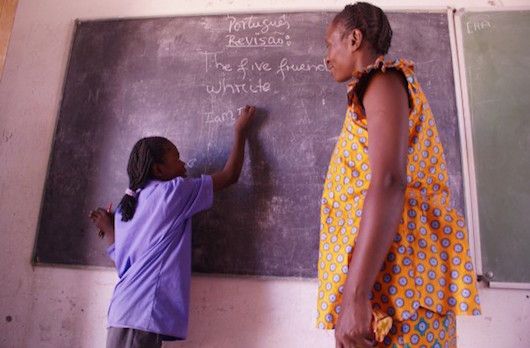
The United Nations recently presented its Human Development Report in Windhoek, Namibia. The Report included the U.N.’s Human Development Index (HDI) which not only measures a nation’s economic well-being but also that of its citizens. Many find the HDI useful because it takes into account the citizenry’s quality of life.
The Report provided sobering news for the host nation when it was revealed its HDI rank was 126 out of 188. Despite its status as an upper middle-income nation, Namibia ranks fairly low on quality of life metric.
The HDI shows that a rising gross domestic product cannot cover up the citizen’s poor standard of living. The HDI points out that there is wealth inequality, poverty, poor healthcare and educational underperformance in Namibia.
Babatunde Omilola, the United Nations Development Programme’s chief of development planning in New York offered his opinion on solutions to these issues. In particular, Omilola noted that Namibia “could do better if it invests more in education.”
For example, Namibia invests billions of dollars in its education, yet only 30 percent of 12th graders in 2013 met the requirements for college admissions. With statistics showing that college graduates earn more throughout their lifetime, Namibia’s lack of collegiate students translates to unrealized potential.
By improving education in Namibia, it is likely that its citizens will benefit from increased opportunities and a higher HDI as the country tries to overcome a staggering poverty rate of 30 percent.
Omilola also noted that education “allows people to enhance their capabilities by providing them with acquired skills and knowledge.”
He then concludes this by saying Namibia’s “Education and skills need to be boosted.”
With a greater focus on education in Namibia, it is hoped that the country will produce more college graduates that have 21st century skills. These graduates will be able to fill the nation’s skills gap, and take advantage of the nation’s abundant resources.
– Andrew Wildes
Sources: Capacity4dev, World Bank, UNDP, Namibian 1, Namibian 2, Namibian Sun, WHO
Photo: UNDP
