• Link to X
  • Link to Facebook
  • Link to Instagram
  • Link to TikTok
  • Link to Youtube
  • About
    • About Us
      • President
      • Board of Directors
      • Board of Advisors
      • Financials
      • Our Methodology
      • Success Tracker
      • Contact
  • Act Now
    • 30 Ways to Help
      • Email Congress
      • Call Congress
      • Volunteer
      • Courses & Certificates
      • Be a Donor
    • Internships
      • In-Office Internships
      • Remote Internships
    • Legislation
      • Politics 101
  • The Blog
  • The Podcast
  • Magazine
  • Donate
  • Click to open the search input field Click to open the search input field Search
  • Menu Menu

Tag Archive for: Technology

Posts

Developing Countries, Education, Global Poverty

STEM Education Grows in Developing Countries

STEM-Education-in-Developing-Countries

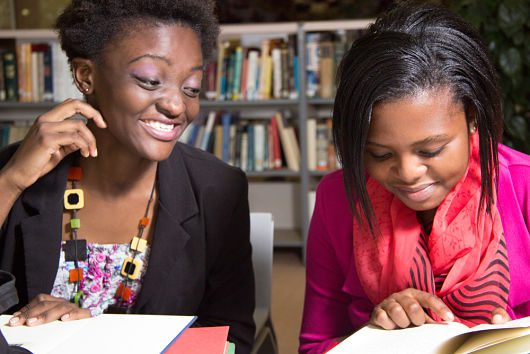
The fields of Science, Technology, Engineering and Mathematics (STEM) are being heavily encouraged in developed countries, but developing regions are also encouraging and financing STEM education.

STEM focuses on the areas of education that have a scientific focus. Students who earn these types of degrees are able to gain employment in information technology (IT), medicine, higher education and many other fields.

Encouraging STEM growth in developing countries is important because many new jobs are being created in the booming medicine, computer and IT industries worldwide. Educating people in these fields is going to bring tremendous growth to the nation’s economy and help get people out of poverty.

India has been working hard to promote STEM in their educational programs. Even in the United States, the results of their nascent success are visible. However, regions all over Africa are also promoting STEM education to help bolster their economies.

India still suffers from tremendous poverty throughout the country, but the country is trying to change this partly through educational initiatives. The India STEM Foundation strives to build up STEM education as described in their vision: “To create a world where young people are encouraged to celebrate fun and excitement of science and technology, and inspire them to take science and technology based career paths to become tomorrow’s much needed technology leaders.”

To get that vision to come to life, the foundation supports robotics programs and competitions for children. They have many world partners helping to create these positive learning environments such as Lego, John Deere, Caterpillar and United Technologies, to name a few.

Africa is another place that is using education, specifically STEM education, to move people out of poverty. In 2014, the World Bank approved financing for “19 university-based Centers of Excellence in seven countries in West and Central Africa. These competitively selected centers will receive funding for advanced specialized studies in science, technology, engineering and mathematics (STEM)-related disciplines, as well as in agriculture and health.”

The World Bank is hopeful that this financing will help fill the shortage of skilled workers that Africa is facing in health, telecommunications and industry. Another benefit of financing universities in Africa will be that more students will have STEM education in relative proximity to their homes instead of having to travel abroad for education. This allows more students to have the option of a good higher education. Also, since those students will be trained in their own countries, the skilled workers have an incentive to remain in their regions strengthening the skilled labor force and even creating economic growth.

The United Nations has published findings that affirm that STEM education “can remove poverty and reduce inequality in developing countries.” However, there are several cultural challenges that countries face when implementing long-term improvements in STEM, including children losing interest in STEM classes and the gender stereotypes that often leave girls behind.

Those issues are being addressed. Robotic camps are popping up all over the world, not just in India, and they help encourage children’s interest in STEM fields through fun activities. In addition, more and more women are emerging into STEM fields and breaking down some common gender barriers.

STEM education is becoming more of a focus as our world becomes ever more digital. With the wonderful encouragement that children in developing parts of the world are getting, STEM education and the respective fields should continue improving.

– Megan Ivy

Sources: George Mason University, India STEM Foundation, UN, World Bank
Photo: Benignant De Eagle
July 10, 2015
https://borgenproject.org/wp-content/uploads/borgen-project-logo.svg 0 0 Borgen Project https://borgenproject.org/wp-content/uploads/borgen-project-logo.svg Borgen Project2015-07-10 12:06:552024-06-05 02:12:08STEM Education Grows in Developing Countries
Global Poverty, Technology

E-Libraries Bridge Digital Divide Across Sri Lanka

E-Libraries Bridge Digital Divide Across Sri Lanka-TBP
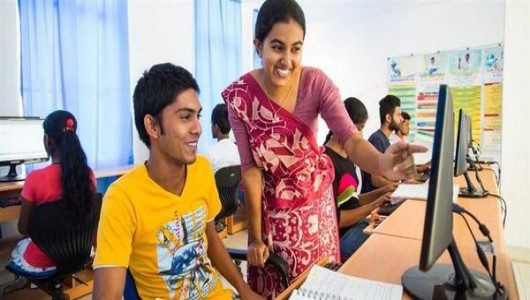
The Sri Lankan government installed e-library computer centers in hundreds of community centers and places of worship across Sri Lanka to combat the country’s digital divide, increase digital literacy and stimulate the economy in rural areas.

The Program, e-Library Nenasala (eLNP), is completely free to the public, no matter what background a person comes from. “The eLibray Nenasalas have literally opened the gateway to wisdom and knowledge in rural Sri Lanka,” explains Nenasala’s website.

The program originally began in an environment of despair and desparation— the tsunami in the Indian Ocean of December 26, 2004. A total of 35,000 Sri Lankans died that day. Family members and friends urgently needed access to communication and information, and both were facilitated by the e-library program.

The computer centers across Sri Lanka have increased the country’s computer usage and technological literacy rate from below 10 percent in 2004, to nearly 40 percent today.

Computers and internet access have given communities access to life-changing services and information. Children can stream videos on learning the English language; women can learn about nutrition, breast-feeding, sanitation and vaccinations. Farmers can learn how to increase their crop yields, and entrepreneurs have access to information on how to start a business. Migrant workers staying in Sri Lanka can also Skype with family members in far-away countries.

Community members, thanks to their access to computers, now have access to assistance with how to write a resume or conduct a job search. Adults can fill out important applications online such as passports or driver’s licenses; they can also take government examinations.

The Nenasala computer centers also bring the community together; teens are trained in computer skills, and then volunteer to teach older community members.

“Without a doubt, the e-Library Nenasala Program is making a real and lasting impact on the lives of poor rural residents throughout Sri Lanka. People are getting locally relevant information and hands-on experience in the subject areas that matter most to them. Community members have a real investment in these centers, which promotes their longevity and sustainability for many years to come,” explained Deborah Jacobs, who directs the global libraries initiative at the Gates Foundation.

So far, 283 e-Library computer centers have been built. When the program first began, the government “knew that the low-income, rural residents it was targeting wouldn’t necessarily flock to the Nenasalas, or ‘wisdom centers.’ Fear, distrust, or just plain unfamiliarity would likely keep them away” explained Impatient Optimists, The Gates Foundation’s website.

For this reason, the e-library computer centers are based in some of the most trustworthy places of all— places of worship. This unconventional cultural adaptation has been critical in the success of the E-Library Program. “These institutions are seen as community centers and places of learning. They are familiar, welcoming, and trusted,” said Impatient Optimists.

E-Libraries can be found in Muslim Mosques, Buddhist Temples, Christian churches and Hindu Kovils across Sri Lanka.

Temples have been an especially effective location for the e-libraries because of their traditional, ancient association with learning as well as their role as the center of the village. The temples of Sri Lanka are also open to all people, no matter the race, gender, age or even religion. Small donations from the community help to keep the e-libraries functioning and up-to-date.

The eLNP program has been so effective that it received the Gates Foundation’s Access to Learning Award, a one million dollar value. The award began 15 years ago to promote providing the world’s poor with access to technology.

The organization plans to use the money to upgrade hardware at various locations. eLNP also plans to begin a new program where community members can temporarily rent tablets and install education software for children where there is not ample access to schooling.

The Sri Lankan government hopes to increase computer literacy and usage rates through the Nenasala computer centers to 75 percent by 2016.

– Aaron Andree

Sources: Bill & Melinda Gates Foundation, Impatient Optimists, Philanthropy News Digest

July 6, 2015
https://borgenproject.org/wp-content/uploads/borgen-project-logo.svg 0 0 Borgen Project https://borgenproject.org/wp-content/uploads/borgen-project-logo.svg Borgen Project2015-07-06 09:50:112020-11-18 12:23:52E-Libraries Bridge Digital Divide Across Sri Lanka
Global Poverty, Technology

10 Facts About Internet in Africa

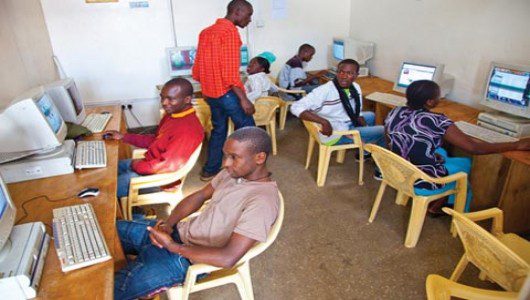
Internet in Africa-TBPWhile most members of developing nations have access to the Internet in their homes, in their workplaces and in various public locations, many Africans struggle to access the Internet. Here are 10 facts about the progress and struggles regarding Internet in Africa:


1. In October 2007, the International Telecommunication Union (ITU) held the first part of its Connect the World series in Kigali, Rwanda to demonstrate its commitment to foster development of telecommunications across Africa, a key aspect of the Millennium Development Goals.

2. As a continent, Africa has seen steady growth in Internet penetration since its rate of .78 percent in 2000. Internet has now reached 20.7 percent of Africa, but there are major disparities in Internet access and use across the continent.

3. The leading countries with the highest Internet penetration rates are Morocco at 56 percent, Egypt at 50 percent and South Africa at 49.8 percent. Meanwhile, various nations throughout the continent are still at rates below 2 percent. Despite these differences, all African nations have experienced Internet growth in recent years.

4. The majority of African countries have Internet penetration rates below 10 percent, which is well below the 20 percent benchmark rate determined for Internet access to benefit countries economically.

5. A total of 10.7 percent of African households have Internet access. Meanwhile, almost half of African Internet users access the Internet via mobile device. Social media usage accounts for about a third of Internet use for these users.

6. Bandwidth is significantly more scarce across Africa than in developing nations, making Internet access much more expensive across the continent. In recent years, increased investment in infrastructure such as national landing stations has allowed some bandwidth expansion, therefore slightly increasing capacity for connectivity.

7. According to Kojo Boakye, policy manager of the Alliance for Affordable Internet, no developing countries have met the ITU’s affordability benchmark of connectivity costing less than 5 percent of monthly income for the world’s potential users that survive on less than two dollars per day. He said that, for many countries in Africa, the cost of fixed broadband comprises almost half of an average citizen’s monthly income.

8. Internet users in Africa pay up to 40 times more for access than users in developed countries. There are many initiatives in place to decrease these rates, but there has been substantial difficulty in implementation. One of these goals involves establishing at least one Internet eXchange Point (IXP) in every African nation in order to promote the construction of infrastructure that makes Internet access cheaper and faster. Another initiative is in place to migrate from analog to digital broadcasting in order to free up unused spectrum, thus increasing access opportunities. However, by June 2014, only 19 countries had begun this transition and only three had completely transitioned. Another initiative is to accelerate adoption of IPv6, which ensures enough availability of IP addresses to allow anything capable of having an IP address to connect to the Internet. South Africa and Egypt account for 97 percent of all of the IPv6 addresses in the continent, which indicates major lagging for the rest of Africa. This development is seen as necessary for long term expansion of Internet.

9. The Internet contributes 1.1 percent to the overall African GDP, which is substantially lower than the global average contribution of over 4 percent. There are large disparities across the continent, with the contribution to GDP being 3.3 percent in Senegal and .8 percent in Nigeria. These rates are measured using iGDP, which evaluates use of networks and services in private consumption, public expenditure, private investment and trade balance.

10. Key players in Africa’s Internet community come together with global members of the industry for the annual Africa Internet Summit. Participants discuss the continent’s challenges and use it as a platform to exchange knowledge. This year’s conference was themed “Beyond connection: Internetworking for African Development,” and took place in Tunisia from May 24 – June 3.

– Arin Kerstein

Sources: All Africa, International Telecommunication Union, Internet Society, Africa Internet Summit, IT Web Africa
Photo: Africa Renewal

July 2, 2015
https://borgenproject.org/wp-content/uploads/borgen-project-logo.svg 0 0 Borgen Project https://borgenproject.org/wp-content/uploads/borgen-project-logo.svg Borgen Project2015-07-02 15:28:292024-06-04 03:53:0310 Facts About Internet in Africa
Technology

The New Blackberry Makes its Way to Africa

blackberry

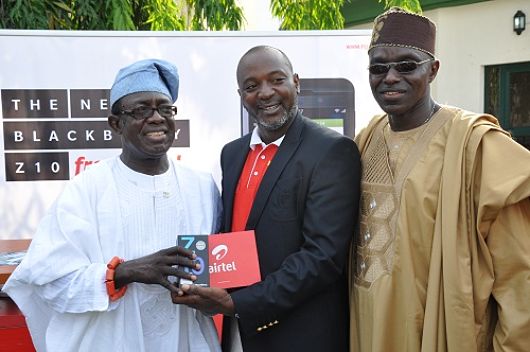
In Nigeria and South Africa, Blackberry has launched its latest smartphone, the Blackberry Leap. According to the company, this smartphone offers more than a day’s battery life, even with heavy use.

This latest version of the phone has switched out its old keyboard to feature a new touchscreen, much like the Apple iPhone. The new touchscreen keyboard features error correction and multilingual support.

Many may question why a consumer would buy this phone when there are much more popular phones like iPhone, Android and Samsung.

The Blackberry, jokingly referred to as the “Crackberry,” was once the must-have device for executives. It was the first smartphone that allowed easy and constant access to email and the Internet. The easy-to-use QWERTY keyboard allowed executives to respond to emails without being tied to a computer.

But with the emergence of the Apple iPhone, it quickly lost its dominance as the number one smartphone in the market.

Would you buy an unpopular smartphone? The answer from consumers in Africa is… yes.

Over the past four years, the Blackberry Curve has been the most popular smartphone in South Africa. A recent survey conducted by Vodacom in South Africa found that Blackberries make up 23 percent of the smartphone market. In Nigeria, Blackberries make up 40 percent of the smartphone market.

But why have Blackberry phones become so popular in African countries?

The first reason is that Blackberries are a status symbol; they were once the phones used by top executives. People strive to achieve the same success associated with the phones.

Additionally, an attractive feature of this phone is its low-cost data bundles. In fact, Users can send messages for free using the Blackberry Messenger (BBM). This makes the phones well-suited for less capable mobile networks.

And lastly, Blackberries are able to stay updated without the purchase of a new smartphone. In developing countries, phones are upgraded less frequently. Before the introduction of the Blackberry Leap, the most up-to-date Blackberry in South Africa was 3 years old.

There is still room for growth for Blackberry in African countries. In a poll conducted by GeoPoll, 17 percent of people reported that they would buy a Blackberry as their next phone.

It is predicted to keep its number one spot in Africa as the most popular smartphone brand partly because of its popularity with students.

The Blackberry brand has transitioned from being known as the phone for high power executives to the most popular, affordable phone used in developing countries. Of course, affordability is an important aspect when purchasing a smartphone. Blackberry has allowed consumers in developing countries to afford a smartphone without sacrificing technology, mobile network service or various communication abilities.

– Kerri Szulak

Sources: Inside Blackberry, IT News Africa, The Conversation
Photo: TechLoy

July 1, 2015
https://borgenproject.org/wp-content/uploads/borgen-project-logo.svg 0 0 Borgen Project https://borgenproject.org/wp-content/uploads/borgen-project-logo.svg Borgen Project2015-07-01 09:00:372021-12-13 07:17:58The New Blackberry Makes its Way to Africa
Global Poverty

The Blockchain and Poverty

blockchain
Satoshi Nakamoto was the pseudonym under which a person or persons released the invention of the Bitcoin, and more importantly, the Blockchain. Bitcoin has proved to be influential and has a fervent user-base that believes it holds the keys to upending the banking and finance world through decentralized cryptocurrency. The power behind Bitcoin, however, lies with the Blockchain. And the power of the Blockchain has the potential to spawn new technologies and help the poor.

The Blockchain technology developed by “Satoshi Nakamoto” has been hailed as a practical solution to the “Byzantine General’s Problem.” It does not completely solve the Byzantine General’s Problem, but it does enough to bypass the issue to the extent that it should pose no issue in reality. The Byzantine General’s Problem proposes the flaw of sharing information between, say, two Generals. If one wants to tell the other to “attack point A,” he or she may send a message, but then he will never be sure if the other General got the message. The Blockchain is important because it solves the problem of “double spending” by providing a practical solution to the Byzantine General’s Problem. This means that there is no risk of a Bitcoin being spent twice, which would be similar to counterfeiting money. The Blockchain does this by creating a public ledger that records every transaction that ever took place with Bitcoin. Essentially, the Blockchain enables trust without the need for identity.

Blockchain technology could be used in wide-ranging applications. For example, NASDAQ recently announced that it will be testing Blockchain technology to record transactions of share trades for privately-held companies. Brian Singer explained in an interview with Forbes that he believes that Bitcoin and the Blockchain can substantially reduce poverty around the globe. Singer argues that the ability to have undeniable, transparent ownership of something that everyone can trust is imperative. Ownership of, say, a Bitcoin is ownership overvalue. This undeniable ownership of value that is recognized in a system no matter what anyone says is what causes Singer to believe that the Blockchain technology behind Bitcoin can have a profound impact on the poor. Bitcoin has already caused disruption in the remittance business; immigrants have been using Bitcoin to send money back home. Bitcoin does not demand costly extra fees like Western Union.

The Blockchain also removes the need for a third party, such as a computer server. One purpose of a bank is to store value safely and efficiently and also manage exchanges of value at high rates using credit card and debit card systems, which are centralized. The Blockchain can safely and effectively protect your value from “double spending” and digital theft – only by mistake of the user can it be stolen – and at the same time avoid the pesky fees and rules that banks impose.

Because of the Blockchain’s ability to essentially create trust without identity in a system, it lends itself to secondary innovations such as being used for other distributed systems that are without a central point, such as one server that contains all necessary information. Although distributed systems are not new, the Blockchain could help facilitate the creation of even more. These systems are in many ways more powerful than a centralized system. They rely on much less digital and physical infrastructure, such as a server run by a third party. These systems can run independently of authority. Distributed systems of all sorts have many advantages that lend themselves to the poor. By curtailing the need for a trusted authority or more infrastructures, it makes it easier for the poor to use and access these technologies from their respective countries and makes them more reliable.

It is possible that new innovations will emerge that are of particular use to the poor, as seen when people use the Blockchain and Bitcoin to bypass traditional remittance markets. The possibilities are endless; new companies are popping up and attempting to leverage this new technology. Like the Internet or other technologies, it can be difficult at first to see where the end of the tunnel leads, and the Blockchain may be no different. With smartphones becoming more and more common even amongst the poor, innovations on the Blockchain may hold hidden solutions.

– Martin Yim

Sources: Brookings, Marketplace, Forbes, The Guardian
Photo: The Cointelegraph

June 18, 2015
https://borgenproject.org/wp-content/uploads/borgen-project-logo.svg 0 0 Borgen Project https://borgenproject.org/wp-content/uploads/borgen-project-logo.svg Borgen Project2015-06-18 12:09:112020-07-14 15:41:52The Blockchain and Poverty
Technology

FCC Proposal Seeks to Bridge the Digital Divide

FCC-Proposal-Bridges-Digital-DivideThe head of the Federal Communications Commission has proposed an update to the FCC’s 30-year-old Lifeline program. The program was created in 1985 as a way of ensuring that low-income households would not lose phone service if company rates were raised. Under the old provisions of the program, the FCC provides these households with a subsidy of $9.25 to use to pay for mobile/landline phone service.



At the time of the program’s conception, it was phones that were considered crucial to participation in the economy and society. In the modern day, however, it is the internet that is most useful in the rapid exchange of information. FCC Head Tom Wheeler recognizes that the internet serves as a vital gateway to economic opportunity and recently proposed a new dimension of the program—giving the subsidy recipients the choice of putting the money toward internet, phone service, or some combination of the two. Wheeler argues that the existing Lifeline program doesn’t provide enough, as broadband rates are too high; the current subsidy barely covers cell phone bills.

What would an update to the program cost? The proposal outlines that the expanded program will be covered by the universal service fee that consumers pay on the bills from landline telephone companies and wireless phone service providers. In 2014, at least 12 million households were served by Lifeline at the cost of $1.7 billion, paid for by surcharges on customer phone bills.

Although internet access seems pervasive in American society today, only 48% of American adults making under $30,000 have access to internet, in contrast to the 95% in the $150,000 and up income bracket. This means no access to educational programs, employment opportunities, or online social programs that could help pull these households above the poverty line. The reason isn’t that low-income consumers don’t see the benefits of the internet. They simply cannot afford the often astronomical broadband rates.

Providers like CenturyLink, Cox, and Comcast already have programs helping to grant internet access to low-income families, but these efforts have come under attack. Comcast, for example, offers an Internet Essential program at a monthly cost of $10. A limited number of customers are eligible for the program, however, and it has been criticized for very slow speeds of 5MB per second. Broadband, as defined by the FCC, should have download speeds of up to 25MB per second and higher.

Non-profit organizations hope that the proposed change will help bridge the so-called “digital divide” that contributes to the vast income gap. If America paves the way on this issue, perhaps other countries will follow suit in assisting their underprivileged populations.

Wheeler believes that if the subsidy helps to make even a marginal difference, internet providers will see the benefits in giving discounts to low-income consumers. The private sector will gain access to a whole new market.

In addition to the suggestion of an expanded subsidy, some point out that the government could alternately pay subsidies directly to broadband providers. This way, they could get a better deal than low-income families can get on their own.

The new proposal is scheduled to undergo voting on June 18, and a final vote is expected to take place by the end of the year.

– Katie Pickle

Sources: Wired, Tech Times
Photo: Trinity P3

June 15, 2015
https://borgenproject.org/wp-content/uploads/borgen-project-logo.svg 0 0 Borgen Project https://borgenproject.org/wp-content/uploads/borgen-project-logo.svg Borgen Project2015-06-15 01:18:222020-07-16 12:24:52FCC Proposal Seeks to Bridge the Digital Divide
Technology, Water

Water Billboards: Turning Humidity Into Potable Water

Water-Billboards
Receiving only a half-inch of precipitation annually, the 7.6 million residents of Lima, Peru are in the midst of a serious water shortage. One point two million Limans do not have running water at all, and 700,000 people have no access to clean water for drinking or bathing. With advanced climate change affecting the natural water sources of the Andes, engineers from Peru’s University of Engineering and Technology (UTEC) have turned to science, and specifically water billboards, for an answer.

Like a magician pulls a rabbit from a hat, they’ve figured out a way to pull water from thin air.

The process of scientific magic occurs inside a billboard in Lima’s Bujama District, erected by a group of UTEC engineers in partnership with marketers from the Mayo Publicidad ad agency. The billboard takes advantage of Lima’s high degree of humidity, nearly 90 percent in the summer months, and transforms this moisture into usable water.

When moist air hits the billboard, five condensers cool it and convert it into liquid form. The newly created water goes through reverse-osmosis purification and then flows into a 20-liner storage tank at the billboard’s base. The filtration system is simple and straightforward, though not entirely self-sufficient, because it uses electricity from Lima’s power lines.

Active for 3 months, the billboard has had a significant effect. It has produced nearly 2,500 gallons of water, averaging 26 gallons a day. According to the UTEC engineers involved, this is equivalent to the water consumption of hundreds of families per month.

Efforts have been made in the past to magically pull water from the air. Most notably Eole, a French company, installed a wind turbine in Abu Dhabi that was said to generate more than 370 gallons of water a day. The commercial launch of this technology, however, came at too high of a price.

That’s the genius of UTEC’s water billboard – if the technology expands, it will be inexpensive to install thanks to funding from advertisers. The inaugural billboard costs only $1,200 to construct, and advertises both UTEC and the technology itself. UTEC has not gone unrewarded, since the erection of the billboard enrollment has substantially increased. It hopes that companies will see UTEC’s own results and seek to advertise on water billboards themselves.

It is unclear whether more billboards like this one will be installed throughout Lima, but UTEC’s water billboard has successfully started new discussions about providing clean water. Advertising can be more than a commercial tool; it has potential as an effective method of helping those in need.

– Katie Pickle

Sources: Popular Mechanics, Time
Photo: Fast Coexist

June 6, 2015
https://borgenproject.org/wp-content/uploads/borgen-project-logo.svg 0 0 Borgen Project https://borgenproject.org/wp-content/uploads/borgen-project-logo.svg Borgen Project2015-06-06 04:00:292020-07-17 20:39:11Water Billboards: Turning Humidity Into Potable Water
Development, Technology

The Importance of Technology for Development

Importance of Technology Development
Technology is constantly developing and with its exponential growth there is much to look forward to in its role in ending world poverty.

“The effect of the Internet in broadening and enhancing access to information and communication may be greatest in poorer nations,” according to Harvard University. If developing countries gain more access to the Internet it can be a driving force to lift families out of poverty. The knowledge provided through the internet can maintain health, educate families, and open doors for boys and girls who are unable to attend school.


Technology Sparks Development


Another benefit the Internet offers for the poor is the ability to get microloans. Microloans give people the chance to start a business who cannot typically afford it. Businesses like SamaSource and Regent Park’s Access Microloan program have helped women to start catering businesses and finish their education. “SamaSource is an innovative social business that connects women and youth living in poverty to work opportunities via the Internet from Africa,” according to The Huffington Post.

Microloans are helping families and communities come out of poverty. When women have the capabilities to start up their businesses, they have the opportunity to invest their money in other areas in their lives. Children and communities benefit from flourishing women who are lifted out of poverty. Microloans sustain development in poor countries and expand economic growth.

The U.N. recognizes the benefits that internet access offers to developing countries. “Through both simple and sophisticated techniques, the Internet can help eradicate poverty, educate people, sustain the environment and create healthier populations,” says the U.N. As developed countries continue to progress in the field of technology, developing nations are falling behind.

However, access to the Internet is improving. Google has recently invested $1 billion in satellites to provide Internet access to people in developing countries. Along with Internet acess, businesses are also investing in mobile technology. Mobile banking services allow families to monitor their and better spend their money.

Technology is the golden ticket to achieving the goal of ending poverty by 2030.

– Kimberly Quitzon

Sources: Harvard, The Huffington Post, United Nations
Photo: SAP:Business Innovation

May 24, 2015
https://borgenproject.org/wp-content/uploads/borgen-project-logo.svg 0 0 Borgen Project https://borgenproject.org/wp-content/uploads/borgen-project-logo.svg Borgen Project2015-05-24 04:00:372024-06-11 02:34:28The Importance of Technology for Development
Global Poverty, Technology

Outernet Delivers Information Equality

outernet
An estimated 60 percent of the world’s population has no Internet access. Of the people with regular Internet access, several million can only access censored information. Syed Karim, founder of Outernet, plans to change all that.

In 2012, Karim founded Outernet to bring the Internet to the remotest parts of the globe. To him, information is a human right as basic as food or water, and the Internet is the best information delivery system in history. Outernet is a datacasting company that could change the way isolated communities receive Internet. Using hardware of its own design, the company can bounce prepackaged streams of data off small satellites and onto Wi-Fi-enabled devices anywhere in the world.

Outernet’s hardware innovations come in three forms. The first is the durable 24-inch satellite dish that receives the data stream. Designed like a folding colander, the dish can expand and contract by unfolding a series of overlapping panels. It can fold down small enough to fit into a bucket, making it easy to transport. Instead of the small motor most satellite dishes use to rotate, the Outernet dish articulates on a threaded screw that makes it extra durable, especially under windy conditions. Outernet has also perfected a device called a Lantern that serves as both a data stream receiver and a portable Wi-Fi hot spot. Lanterns are about the size of water bottles and can receive almost any information on the Internet.

Perhaps the most impressive of Outernet’s accomplishments is its fleet of CubeSats, shoebox-sized satellites that bounce uni-directional data down to Earth’s surface. This past March, the U.K. Space Agency agreed to fund the fleet of CubeSats. By 2016, Outernet plans to have three of the tiny, inexpensive satellites in orbit, each delivered by piggybacking on launches for larger projects. “It costs about $100,000 per kilogram,” Karim said. “The cost of the launch is much more expensive than the satellite itself.”

The service Outernet provides is not the same as conventional Internet access. It works more like a conventional radio. The signal is one-way and generalized. As Syed Karim put it, “When you talk about the internet, you talk about two main functions: communication and information access… It’s the communication part that makes it so expensive.” Because the service is only information, not communication, it is also much harder to jam. The signal sent from Outernet’s CubeSats is almost impossible to censor.

If Outernet succeeds in its mission, basic information will become available to everyone, everywhere. Censorship will be, if not a thing of the past, then at least much more difficult to pull off. Farmers in rural India could request price predictions for the upcoming year before deciding what to plant. Schools in rural Africa could download the most up-to-date lessons and facts to learn from, and not rely on old, potentially inaccurate textbooks. Information could become as widely distributed as food or electricity, and the world could take one more step toward equality.

– Marina Middleton

Sources: World.Mic, Outernet, Gizmodo, Wired
Photo: Indie GoGo

May 11, 2015
https://borgenproject.org/wp-content/uploads/borgen-project-logo.svg 0 0 Borgen Project https://borgenproject.org/wp-content/uploads/borgen-project-logo.svg Borgen Project2015-05-11 12:00:002020-07-18 11:45:15Outernet Delivers Information Equality
Global Poverty

Digital Poverty

Digital Poverty
The digital age has improved quality of life for many people around the world. The digital era has become a great asset to today’s world and has helped with business, community and even the economy. However, as prevalent as technology has become, there are still many countries that live with little or no access to technology; limited access means limited benefits. Among those countries living in what is called digital poverty, they are, more often than not, developing nations. So, what is digital poverty exactly and how does it affect the economy?

“Digital poverty is the inability to use IT, either due to the lack of access or due to the lack of skills,” said Thierry Geiger, co-editor of the Global Information Technology Report. “It is really a form of poverty because without digital access, without digital skills, you cannot tap into the huge potential of technology to improve your lives and create opportunities.”


Digital Poverty and Economic Growth


There’s an apparent link between countries with slow economic growth and limited access to technology, which results in digital poverty, according to a new report. The Global Information Technology Report for 2015 stated that only a minority of the world’s population has internet access; meaning, the economic and even social benefits that arise from being digitally involved are not reached. Approximately 39 percent of the world’s population has access to the internet. Additionally, many of the nations that do not have access to technology are failing to address digital poverty as a means to end poverty in general. Invoking simple, technology-focused reforms can not only help develop the economy, but boost productivity as well. Technology can also help improve education, communication and business practices.

According to Geiger, technology has a powerful impact on economies, especially those which are struggling to sustain their country’s needs. Digital poverty affects nations’ unemployment rates, increases inequalities and financial demands, particularly in countries with emerging and developing economies. In order to help in economic growth, countries need to establish a more advanced, digitally acquainted population.

Geiger also emphasized that the notion that technology is prevalent around the world is actually a myth because only a small percentage of the world’s population has access to technology. According to the report, out of 143 nations, among the top countries that have access to technology and use it as means for communication and economic impact are Singapore, United States, Norway, United Kingdom, Sweden, Japan, Netherlands and Finland. Additionally, the countries that have minimal access includes Yemen, Haiti, Burundi, Madagascar and Angola.

There are also countries that have made significant improvements in technological developments. The report revealed that among the countries that ranked high in development include Latvia, Macedonia, El Salvador and Armenia. The report reveals that those countries that utilize technologies have improved their economies by 20 percent, compared to 10 percent in nations who have not.

Aside from government actions and reforms, the population needs to be willing to become part of the digital world. Governments and content developers producing better and more relevant content can help with the job market, people’s income in particular. Providing the people with an incentive to advocate for technological advancements can help bring nations closer to the digital age. As countries become more digitally acquainted, digital poverty will decrease and in the process, more people will begin to see an increase in economic growth and a reduction in poverty rates.

– Nada Sewidan

Sources: VOA News, WE Forum
Photo: Flickr

April 26, 2015
https://borgenproject.org/wp-content/uploads/borgen-project-logo.svg 0 0 Borgen Project https://borgenproject.org/wp-content/uploads/borgen-project-logo.svg Borgen Project2015-04-26 16:00:202020-06-25 15:50:24Digital Poverty
Page 24 of 29«‹2223242526›»

Get Smarter

  • Global Poverty 101
  • Global Poverty… The Good News
  • Global Poverty & U.S. Jobs
  • Global Poverty and National Security
  • Innovative Solutions to Poverty
  • Global Poverty & Aid FAQ’s
Search Search

Take Action

  • Call Congress
  • Email Congress
  • Donate
  • 30 Ways to Help
  • Volunteer Ops
  • Internships
  • Courses & Certificates
  • The Podcast
Borgen Project

“The Borgen Project is an incredible nonprofit organization that is addressing poverty and hunger and working towards ending them.”

-The Huffington Post

Inside The Borgen Project

  • Contact
  • About
  • Financials
  • President
  • Board of Directors
  • Board of Advisors

International Links

  • UK Email Parliament
  • UK Donate
  • Canada Email Parliament

Get Smarter

  • Global Poverty 101
  • Global Poverty… The Good News
  • Global Poverty & U.S. Jobs
  • Global Poverty and National Security
  • Innovative Solutions to Poverty
  • Global Poverty & Aid FAQ’s

Ways to Help

  • Call Congress
  • Email Congress
  • Donate
  • 30 Ways to Help
  • Volunteer Ops
  • Internships
  • Courses & Certificates
  • The Podcast
Scroll to top Scroll to top Scroll to top